白髮蕭蕭兩鬢邊,青山綠水總依然。人生何異南柯夢,捻指光陰十八年。
白发萧萧两鬓边,青山绿水总依然。人生何异南柯梦,捻指光阴十八年。
White hair, thin and sparse, at both temples;the green hills and blue waters are just as they always were.How is a human life any different from the Southern Bough dream?In a snap of the fingers, eighteen years have flown.
十八年,景物鮮,旃檀紫竹民塵凡。且將龍女擎珠出,鶴馭盤旋下九天。
十八年,景物鲜,旃檀紫竹民尘凡。且将龙女擎珠出,鹤驭盘旋下九天。
Eighteen years, and all the scene is fresh; sandalwood and purple bamboo, clear of the mortal dust.Let the Dragon Girl come forth now, holding up her pearl,and the crane carriage wheel down from the Nine Heavens.
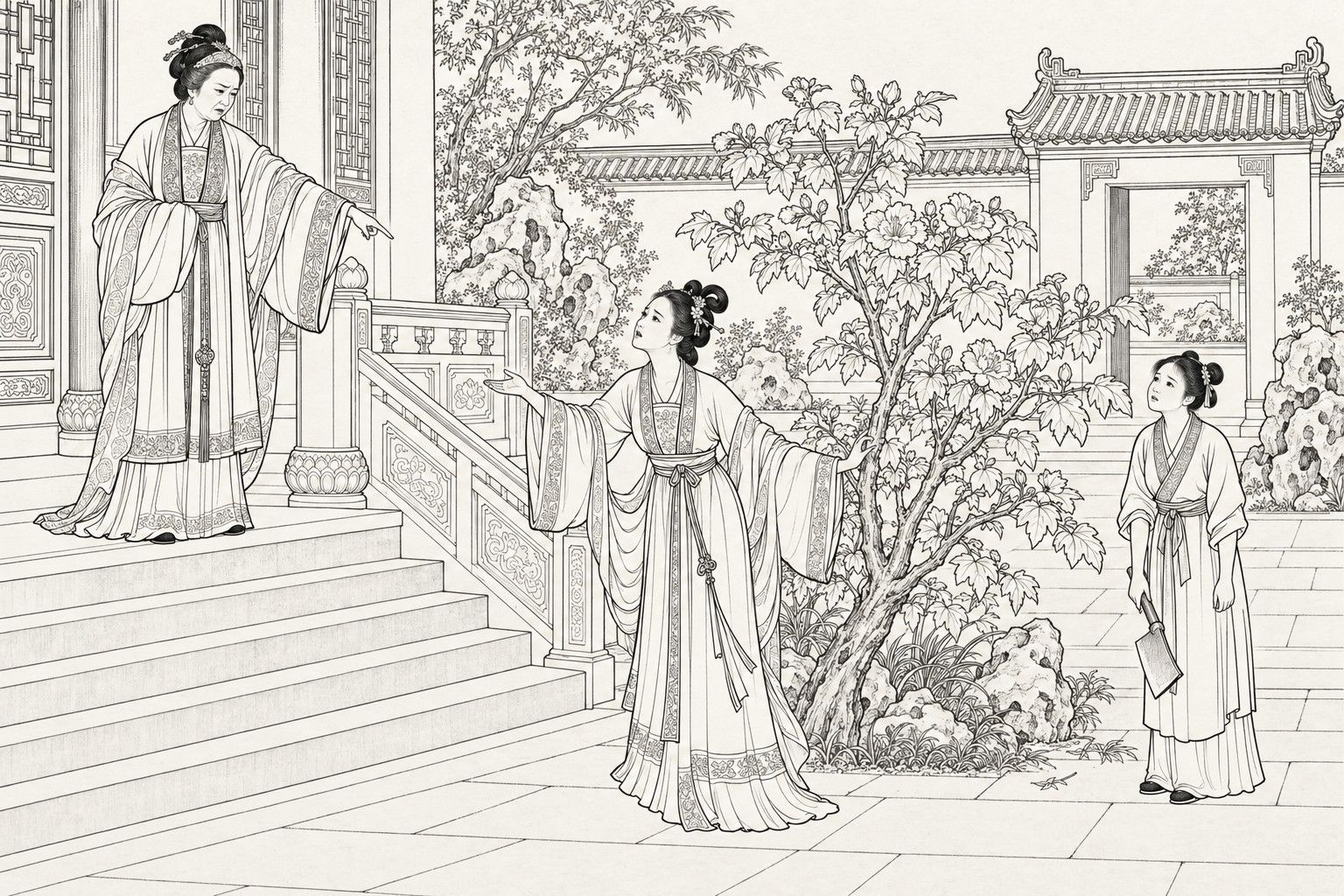
不說退之鎖閉著湘子,且表夫人竇氏思量:「伯伯在日,朝夕拜禱天地,求得這個姪兒湘子,不料生下來整日啼哭,費盡了心神,幸而養得長成,替他娶了林學士的女兒蘆英,今已三年,並沒男女花兒,豈不是韓門該絕。常聞犀牛望月,角內生祥;蚌蛤含珠,朝陽遊戲。蘆英這般不生長,如何是好?」心生一計,喚梅香請蘆英出來,問道:「階下那一枝是什麼樹?」蘆英道:「婆婆,是一枝芙蓉樹。」竇氏道:「叫梅香拿刀來,砍了這枝樹。」蘆英道:「婆婆,莫要砍他,留下與媳婦早晚看看罷。」竇氏道:「我只見他開花,不見他結子,要他何用?」蘆英道:「婆婆,
不说退之锁闭着湘子,且表夫人窦氏思量:「伯伯在日,朝夕拜祷天地,求得这个姪儿湘子,不料生下来整日啼哭,费尽了心神,幸而养得长成,替他娶了林学士的女儿芦英,今已三年,并没男女花儿,岂不是韩门该绝。常闻犀牛望月,角内生祥;蚌蛤含珠,朝阳游戏。芦英这般不生长,如何是好?」心生一计,唤梅香请芦英出来,问道:「阶下那一枝是什么树?」芦英道:「婆婆,是一枝芙蓉树。」窦氏道:「叫梅香拿刀来,砍了这枝树。」芦英道:「婆婆,莫要砍他,留下与媳妇早晚看看罢。」窦氏道:「我只见他开花,不见他结子,要他何用?」芦英道:「婆婆,
We shall not tell how Han Yu kept Xiangzi locked up. Our story turns to his wife, Lady Dou, who was thinking to herself: “When my brother-in-law was alive, he prayed to Heaven and Earth morning and night, and was granted this nephew of ours, Xiangzi. Who would have thought that once he was born he would cry all day long? He wore us out, heart and soul, but happily we brought him up, and we married him to Academician Lin’s daughter, Luying. That was three years ago now, and not one little flower, boy or girl. Is the Han family doomed to die out, then? I’ve often heard it said that when the rhinoceros gazes at the moon, a lucky sign grows inside its horn, and that the clam holding its pearl frolics in the morning sun. Yet Luying brings forth nothing at all. What’s to be done?” A plan came to her. She called the maid Meixiang and sent her to ask Luying to come out. “What tree is that below the steps?” she asked. “It’s a hibiscus, Mother,” said Luying. “Have Meixiang fetch a knife,” said Lady Dou, “and cut that tree down.” “Don’t cut it down, Mother,” said Luying. “Leave it for your daughter-in-law to look at morning and evening.” “All I ever see it do is flower,” said Lady Dou. “I never see it set seed. What use is it?” Luying said, “Mother,
花與人相似,人生總是花,
花与人相似,人生总是花,
Flowers and people are much alike;a human life is a flower, after all.
雄花不結子,雄筍不抽芽。」
雄花不结子,雄笋不抽芽。」
A male flower never sets seed;a male shoot never sends up a sprout.”
竇氏道:「媳婦,我說與你聽:
窦氏道:「媳妇,我说与你听:
“Daughter,” said Lady Dou, “hear what I have to say:
石上栽芙蓉,根基入土中,
石上栽芙蓉,根基入土中,
Plant a hibiscus on a rock,and still its roots go down into the earth;
好花不結子,枉費我兒功。」
好花不结子,枉费我儿功。」
a fine flower that sets no seedmakes all my boy’s labour go for nothing.”
蘆英道:「
一片良田地,懶牛夜不耕;
芦英道:「
一片良田地,懒牛夜不耕;
Luying answered: “
Here is a stretch of good farmland,but the lazy ox won’t plough it at night;
春時不下種,苗從何處生?」
春时不下种,苗从何处生?」
if no seed is sown in spring,where are the shoots to come from?”
竇氏道:「原來如此。梅香,快請大叔來,待我問他。」梅香道:「老爺關鎖大叔在書房內,那個敢放他出來。」竇氏便把鑰匙遞與梅香,叫他去請湘子。湘子道:「夫人叫我,有何事故?」梅香道:「夫人與小姐在堂上絮絮叨叨,不知說些什麼話,叫我來請大叔去會問。」湘子只得近前相見。竇氏道:「姪兒,我娶蘆英小姐為汝為妻,只指望生男育女,接續香火。今已三載,並不生育,我心中好不憂悶。適間問他,他說汝居室情疏,恩愛間闊,這是何故?」湘子道:「嬸娘不必問我,我有詩一首,念與嬸娘聽。」詩云:
窦氏道:「原来如此。梅香,快请大叔来,待我问他。」梅香道:「老爷关锁大叔在书房内,那个敢放他出来。」窦氏便把钥匙递与梅香,叫他去请湘子。湘子道:「夫人叫我,有何事故?」梅香道:「夫人与小姐在堂上絮絮叨叨,不知说些什么话,叫我来请大叔去会问。」湘子只得近前相见。窦氏道:「姪儿,我娶芦英小姐为汝为妻,只指望生男育女,接续香火。今已三载,并不生育,我心中好不忧闷。适间问他,他说汝居室情疏,恩爱间阔,这是何故?」湘子道:「婶娘不必问我,我有诗一首,念与婶娘听。」诗云:
“So that’s how it is,” said Lady Dou. “Meixiang, go and ask the young master to come here at once. I want to question him.” “The master has locked the young master in the study,” said Meixiang. “Who would dare let him out?” So Lady Dou handed Meixiang the key and told her to go and fetch Xiangzi. “What does her ladyship want me for?” said Xiangzi. “Her ladyship and Miss Luying have been going on and on in the hall,” said Meixiang. “I don’t know what about. She sent me to fetch you, young master — she wants to see you and ask you something.” Xiangzi had no choice but to go and present himself. “Nephew,” said Lady Dou, “I brought Miss Luying into this house to be your wife, hoping only that the two of you would have sons and daughters to keep the incense burning. Now it has been three years and she hasn’t had a child, and I’m sick at heart over it. Just now I asked her, and she says that you are cool to her in the bedchamber and keep love and tenderness at a distance. Why is that?” “There’s no need to ask me, Aunt,” said Xiangzi. “I have a poem. Let me recite it for you.” It went:
惜精惜氣養元神,養得精神養自身。
惜精惜气养元神,养得精神养自身。
I spare my essence, spare my breath, to nourish my primal spirit;with essence and spirit nourished, I nourish my own self.
爐中煉就大丹藥,不與人間度子孫。
炉中炼就大丹药,不与人间度子孙。
In my furnace I bring the great elixir to perfection;I won’t spend it begetting sons and grandsons for the world of men.
竇氏聽見湘子說出這話,便哭道:「我兒差矣!自古男子生而願為之有室,女子生而願為之有家。汝年紀小小的,妻子又少艾,如何不思想接續祖宗香火,說出這等絕情絕義的話?伯伯姆姆死在九泉也不瞑目了。」湘子道:「佛言人係於妻子,七寶舍宅之,其患有甚於牢獄。牢獄有散逸之文,妻子無合魂之理。情慾所愛,投泥自溺。人能透得此關,即出塵世,是以姪兒與蘆英相敬如賓,望嬸娘恕罪。」蘆英道:「這事羞人答答的,說他怎麼。」一溜煙跑入房中去了。竇氏扯住了湘子,再三再四勸諭他。湘子道:「嬸娘,你那裡曉得,生死事大,非同小可,古人有言說得好:
窦氏听见湘子说出这话,便哭道:「我儿差矣!自古男子生而愿为之有室,女子生而愿为之有家。汝年纪小小的,妻子又少艾,如何不思想接续祖宗香火,说出这等绝情绝义的话?伯伯姆姆死在九泉也不瞑目了。」湘子道:「佛言人系于妻子,七宝舍宅之,其患有甚于牢狱。牢狱有散逸之文,妻子无合魂之理。情欲所爱,投泥自溺。人能透得此关,即出尘世,是以姪儿与芦英相敬如宾,望婶娘恕罪。」芦英道:「这事羞人答答的,说他怎么。」一溜烟跑入房中去了。窦氏扯住了湘子,再三再四劝谕他。湘子道:「婶娘,你那里晓得,生死事大,非同小可,古人有言说得好:
When Lady Dou heard Xiangzi say this, she burst into tears. “My boy, you’re wrong!” she said. “Since ancient times, when a boy is born, his parents wish for him to have a wife, and when a girl is born, they wish for her to have a home. You’re so young, and your wife is young and lovely — how can you not think of carrying on the incense of your ancestors? How can you say such heartless, unfeeling things? Your father and mother will never close their eyes in the Nine Springs below.” “The Buddha says,” said Xiangzi, “that a man bound to wife and children, to the seven treasures and his house and home, suffers worse than in any prison. A prison has its writ of release, but wife and children can never be one soul with you. Loving what lust and desire love, a man throws himself into the mud and drowns. Whoever can break through this barrier leaves the dusty world at once. That is why your nephew and Luying treat each other with the respect due to guests. I hope you will forgive me, Aunt.” “Oh, this is too shaming,” said Luying. “Why talk about it?” And she was off to her room like a puff of smoke. Lady Dou caught hold of Xiangzi and pleaded with him again and again, over and over. “Aunt, you don’t understand,” said Xiangzi. “Life and death are a great matter, no small thing. The ancients put it well:
三個魚兒一個頭,同心合膽水中游。
三个鱼儿一个头,同心合胆水中游。
Three little fish that share a single headswim through the water, one in heart and gall.
愚人不識魚兒意,不是冤家不聚頭。」
愚人不识鱼儿意,不是冤家不聚头。」
Fools can’t see what the fish are telling them:none but fated foes ever meet head to head.”
竇氏與湘子正在那裡絮聒,恰好退之朝中回來看見了,便道:「夫人,在此說些什麼?」竇氏道:「我在此勸湘子讀書。」退之道:「湘子是我鎖在書房內的,那個放他出來?」竇氏道:「老身取鑰匙放出來的。」退之道:「湘子過來,我且問汝,汝這幾日所讀何書?所作何事?」湘子道:「仲由說:「有民人焉,有社稷焉,何必讀書,然後為學。』」退之提起竹片把湘子就打,道:「汝這癡呆蠢子!也曾曉得孔子說:『是故惡夫佞者』麼?」湘子道:「孔子問禮於老聃,老聃便是仙人的宗祖,道侶的班頭,孔子也不曾說他御人以口給,叔父怎的就把一個佞字兒加我?」退之道:「知雄守雌,知白守黑,便是老聃之教,老聃也何曾文過飾非?汝既要學道修真,須索要讀書明理,為何丟了黃金掰綠磚?我只打死汝這不才畜生便了!提竹片亂打湘子一頓。湘子叫道:「嬸娘救我一救,叔父打得我太重了。」竇氏跪下勸道:「相公,你哥嫂臨終之時再三囑咐相公愛護湘子,今日這般打他,曉得的說是相公教訓這不肖子,不曉得的只說相公負了哥嫂囑咐,不看管他,望相公且饒湘子這一次。」退之哭道:「夫人,人家養得兒子,指望成人,求取功名,改換門閭,我家止有這不肖之子,又不肯讀書習上,反學那雲遊乞丐營生,耽誤青春。嗚呼老矣,是誰之愆?諺云:『桑條從小捋,大來捋不直』,怎麼教我不打這畜生!」竇氏道:「韓家只有這一點骨血,恨只恨當初錯留那兩個道人,把他哄壞了。」退之道:「我留那道人,只指望他習文學武,做一個文武全才替朝廷出力,與韓門爭氣。誰知這道人哄他出家,誤了他終身。如今再休提起這話,只是緊緊的教訓他,自然回心轉意了。」竇氏道:「相公且省煩惱,待老身慢慢勸他學好就是。」退之方才放手。
窦氏与湘子正在那里絮聒,恰好退之朝中回来看见了,便道:「夫人,在此说些什么?」窦氏道:「我在此劝湘子读书。」退之道:「湘子是我锁在书房内的,那个放他出来?」窦氏道:「老身取钥匙放出来的。」退之道:「湘子过来,我且问汝,汝这几日所读何书?所作何事?」湘子道:「仲由说:「有民人焉,有社稷焉,何必读书,然后为学。』」退之提起竹片把湘子就打,道:「汝这痴呆蠢子!也曾晓得孔子说:『是故恶夫佞者』么?」湘子道:「孔子问礼于老聃,老聃便是仙人的宗祖,道侣的班头,孔子也不曾说他御人以口给,叔父怎的就把一个佞字儿加我?」退之道:「知雄守雌,知白守黑,便是老聃之教,老聃也何曾文过饰非?汝既要学道修真,须索要读书明理,为何丢了黄金掰绿砖?我只打死汝这不才畜生便了!提竹片乱打湘子一顿。湘子叫道:「婶娘救我一救,叔父打得我太重了。」窦氏跪下劝道:「相公,你哥嫂临终之时再三嘱咐相公爱护湘子,今日这般打他,晓得的说是相公教训这不肖子,不晓得的只说相公负了哥嫂嘱咐,不看管他,望相公且饶湘子这一次。」退之哭道:「夫人,人家养得儿子,指望成人,求取功名,改换门闾,我家止有这不肖之子,又不肯读书习上,反学那云游乞丐营生,耽误青春。呜呼老矣,是谁之愆?谚云:『桑条从小捋,大来捋不直』,怎么教我不打这畜生!」窦氏道:「韩家只有这一点骨血,恨只恨当初错留那两个道人,把他哄坏了。」退之道:「我留那道人,只指望他习文学武,做一个文武全才替朝廷出力,与韩门争气。谁知这道人哄他出家,误了他终身。如今再休提起这话,只是紧紧的教训他,自然回心转意了。」窦氏道:「相公且省烦恼,待老身慢慢劝他学好就是。」退之方才放手。
Lady Dou and Xiangzi were still going at it when Han Yu came home from court and saw them. “My dear,” he said, “what are you talking about here?” “I’ve been urging Xiangzi to study,” said Lady Dou. “I locked Xiangzi in the study,” said Han Yu. “Who let him out?” “I took the key and let him out myself,” said Lady Dou. “Come here, Xiangzi,” said Han Yu. “Let me ask you: what books have you been reading these last few days? What have you been doing?” “Zhong You said,” Xiangzi replied, “‘There are people to govern and altars of the land and grain to tend. Why must a man read books before he counts as learned?’” Han Yu snatched up the bamboo rod and laid into Xiangzi. “You idiot, you dolt!” he said. “Don’t you know that Confucius said, ‘This is why I hate glib talkers’?” “Confucius went to ask Lao Dan about the rites,” said Xiangzi, “and Lao Dan is the forefather of the immortals and the head of all who follow the Way. Yet Confucius never said that he met people with a ready tongue. So why, Uncle, do you pin the word ‘glib’ on me?” “‘Know the male, but keep to the female; know the white, but keep to the black’ — that is Lao Dan’s teaching,” said Han Yu. “When did Lao Dan ever gloss over his faults and cover up his wrongs? If you want to study the Way and seek perfection, you still have to read books and understand the principles of things. Why throw away gold for a green brick? I’ll beat you to death, you worthless brute, and be done with it!” And he took the bamboo rod and rained blows on Xiangzi. “Aunt, save me!” cried Xiangzi. “Uncle is beating me too hard!” Lady Dou knelt and pleaded, “Husband, when your brother and his wife were dying, they begged you again and again to love and look after Xiangzi. If you beat him like this today, those who know will say you are disciplining an unworthy son, but those who don’t will say you have betrayed your brother’s dying wishes and don’t take care of him. Please, husband, spare Xiangzi this once.” Han Yu wept. “My dear,” he said, “when people raise a son, they hope he’ll grow up, win fame and office and raise the standing of the family. Our family has only this one unworthy son, and he won’t study and better himself — instead he learns the trade of wandering beggars and wastes his youth. ‘Alas, when old age comes, whose fault will it be?’ As the proverb says, ‘Straighten a mulberry shoot while it’s small; once it’s grown it won’t come straight.’ How can you ask me not to beat the brute?” “The Han family has only this one drop of flesh and blood,” said Lady Dou. “What I regret, what I bitterly regret, is that we ever made the mistake of keeping those two Daoists. They’ve led him astray.” “When I kept those Daoists,” said Han Yu, “all I hoped was that he would learn letters and arms from them and become a man accomplished in both, to serve the court and do the Han family credit. Who could have known they would talk him into leaving home and ruin his whole life? Let’s say no more about it. We need only keep him under strict discipline, and he’ll come round of his own accord.” “Spare yourself the grief, husband,” said Lady Dou. “Leave it to me to coax him gently into mending his ways.” Only then did Han Yu let him go.
湘子回到書房中,悶悶不樂,坐在那裡調神運氣。兩個當值的近前道:「大叔不要愁煩,我們尋些恁麼替大叔解悶何如?」湘子道:「世上有什麼東西解得悶?」當值的道:「插牌、鬥草、打雙陸、下象棋、綽紙牌、鬥六張、擲骰子、蹴氣球,都是解得悶。」湘子道:「這些博戲都要耗散精神,消費時日,我不喜歡去弄他。」一個道:「吃酒可以解得悶。」一個道:「果是酒好,快些拿來,待大叔吃幾碗,把那愁都趕了去。」湘子道:「怎見得飲酒可以解悶?」這一個道:「
湘子回到书房中,闷闷不乐,坐在那里调神运气。两个当值的近前道:「大叔不要愁烦,我们寻些恁么替大叔解闷何如?」湘子道:「世上有什么东西解得闷?」当值的道:「插牌、斗草、打双陆、下象棋、绰纸牌、斗六张、掷骰子、蹴气球,都是解得闷。」湘子道:「这些博戏都要耗散精神,消费时日,我不喜欢去弄他。」一个道:「吃酒可以解得闷。」一个道:「果是酒好,快些拿来,待大叔吃几碗,把那愁都赶了去。」湘子道:「怎见得饮酒可以解闷?」这一个道:「
Back in the study, Xiangzi sat there in low spirits, attuning his spirit and circulating his breath. The two servants on duty came up to him. “Don’t fret, young master,” they said. “Why don’t we find something to take your mind off your troubles?” “What is there in the world that can drive away gloom?” said Xiangzi. “Dominoes, grass-fighting, double sixes, chess, cards, six-card contests, dice, kicking the ball,” said the servants. “Any of those will drive away gloom.” “Games like that all squander one’s vital spirit and waste one’s days,” said Xiangzi. “I don’t care to play them.” “A drink will drive away gloom,” said one of them. “That’s it — wine’s the thing!” said the other. “Fetch some quick, and let the young master down a few bowls and chase all his cares away.” “And how do you make out that drinking will drive away gloom?” said Xiangzi. One of them answered, “
酒是儀狄所造,好者甘香清冽,稱為青州從事;惡者渾濁淡酸,號為鬲上督郵。春時有翠葉紅花,可以賞心樂事;夏時有涼亭水閣,可以避暑乘陰;秋時有菊蕊桂香,可以手挼鼻嗅;冬時有深山霽雪,可以逸性陶情。趁著四時的景物鮮妍,攜樽挈榼,邀二三知己友人,吆三喝五,擲綠推紅,履舄雜遝,觥籌交錯,那時節百慮俱捐,萬愁都卸。
酒是仪狄所造,好者甘香清冽,称为青州从事;恶者浑浊淡酸,号为鬲上督邮。春时有翠叶红花,可以赏心乐事;夏时有凉亭水阁,可以避暑乘阴;秋时有菊蕊桂香,可以手挼鼻嗅;冬时有深山霁雪,可以逸性陶情。趁着四时的景物鲜妍,携樽挈榼,邀二三知己友人,吆三喝五,掷绿推红,履舄杂遝,觥筹交错,那时节百虑俱捐,万愁都卸。
Wine was first made by Yi Di; the good kind is sweet and fragrant, clear and cool, and is called the Aide from Qingzhou;the bad kind is cloudy, thin and sour,and is known as the Inspector Above the Diaphragm.In spring there are green leaves and red flowersto gladden the heart and make merry;in summer there are cool pavilions and halls by the waterto escape the heat in the shade;in autumn there are chrysanthemum buds and the scent of cassiato crush in the hand and breathe in;in winter there are deep mountains under clearing snowto free your spirit and delight your heart.While the four seasons’ scenes are fresh and lovely, take along your jugs and hampers, invite two or three friends who know you well, call out ‘Three!’ and shout ‘Five!’, throw for the green and push for the red, shoes and slippers all in a jumble, goblets and tallies flying back and forth — and then a hundred worries are cast aside and ten thousand sorrows laid down.
這才是:
斷送一生惟有,破除萬事無過,遠山橫黛蘸秋波,不飲旁人笑我。」
这才是:
断送一生惟有,破除万事无过,远山横黛蘸秋波,不饮旁人笑我。」
That’s just it:
what wastes a whole life away is only — what best breaks up all cares is none but — brows dark as far hills, dipping to eyes like autumn ripples: if I don’t drink, the others laugh at me.”
湘子道:「酒能迷真亂性,惹禍招災,故大禹惡旨酒而卻儀狄,只有那騷人狂客,借意忘情,取他做掃愁帚,釣詩鉤。我卻不歡喜吃他。」一個道:「天有酒星,地有酒泉,聖賢有酒德。堯舜千鍾,仲尼百瓢,子路嗑嗑,也須百榼。李白貪杯而得道,劉伶愛飲以成仙。從古至今,不要說聖賢君子與他周旋不捨,就是天上呂神仙,也三醉岳陽人不識。從來沒有一個是斷除不吃的,大叔為何說他這許多不好?」湘子道:「你們那裡曉得這酒的不好,古來有詩為證,我且念與你們聽著。詩云:
湘子道:「酒能迷真乱性,惹祸招灾,故大禹恶旨酒而却仪狄,只有那骚人狂客,借意忘情,取他做扫愁帚,钓诗钩。我却不欢喜吃他。」一个道:「天有酒星,地有酒泉,圣贤有酒德。尧舜千钟,仲尼百瓢,子路嗑嗑,也须百榼。李白贪杯而得道,刘伶爱饮以成仙。从古至今,不要说圣贤君子与他周旋不舍,就是天上吕神仙,也三醉岳阳人不识。从来没有一个是断除不吃的,大叔为何说他这许多不好?」湘子道:「你们那里晓得这酒的不好,古来有诗为证,我且念与你们听着。诗云:
“Wine befuddles the true self and throws the nature into disorder,” said Xiangzi. “It invites calamity and brings on disaster. That is why Yu the Great hated fine wine and sent Yi Di away. Only poets and wild roisterers use it to forget their feelings, and take it for a broom to sweep away sorrow and a hook to fish up poems. As for me, I don’t care to drink it.” “Heaven has its Wine Star,” said one of them, “and Earth its Wine Spring, and the sages have the Virtue of Wine. Yao and Shun drank a thousand cups, Confucius a hundred gourdfuls, and Zilu, babbling away, needed a hundred jugs at least. Li Bai loved his cup and attained the Way; Liu Ling loved to drink and became an immortal. From ancient times till now — never mind the sages and gentlemen who could never bear to part with it — even the immortal Lü up in Heaven got drunk three times at Yueyang without anyone knowing him. There’s never been a man yet who gave it up altogether. Why do you say so many bad things about it, young master?” “What do you know of the evils of wine?” said Xiangzi. “There’s an old poem to prove them. Let me recite it for you. It goes:
儀狄當時造禍根,迷真亂性不堪聞。
仪狄当时造祸根,迷真乱性不堪闻。
When Yi Di made it long ago, he planted the root of disaster;it befuddles the true self and disorders the nature — too shameful to tell.
醉時膽大包天外,惹禍招災果是真。」
醉时胆大包天外,惹祸招灾果是真。」
Once drunk, a man’s gall swells to wrap the sky;that it invites calamity and brings on disaster is true indeed.”
一個道:「大叔,酒既解不得悶,我們領大叔到秦樓楚館之中,邀幾個知心幫閒的朋友,烹龍庖鳳,拆白道綠,低唱淺斟,偎紅倚翠,直到那日上三竿,猶自鸞顛鳳倒;蝶戀蜂狂,一點靈犀沁心透骨。真個可解悶也。」湘子道:「若說起色,一發是陷人坑了,如何解得愁悶?古來也有詩為證:
一个道:「大叔,酒既解不得闷,我们领大叔到秦楼楚馆之中,邀几个知心帮闲的朋友,烹龙庖凤,拆白道绿,低唱浅斟,偎红倚翠,直到那日上三竿,犹自鸾颠凤倒;蝶恋蜂狂,一点灵犀沁心透骨。真个可解闷也。」湘子道:「若说起色,一发是陷人坑了,如何解得愁闷?古来也有诗为证:
“Young master,” said one of them, “if wine can’t drive away your gloom, we’ll take you to the houses of pleasure and invite a few obliging friends who know how to show a man a good time. We’ll dine on stewed dragon and roast phoenix, trade jokes and banter, sing soft songs and sip slow cups, and snuggle up to the girls in red and green, until the sun is three poles high and we’re still tumbling head over heels like luan and phoenix — butterflies doting, bees running wild, and that one bright thread of the magic rhinoceros horn stealing right through heart and bone. That really would drive your gloom away!” “If you’re talking about lust,” said Xiangzi, “that’s an even deadlier pit to trap a man. How could it drive away gloom? There’s an old poem to prove that too:
二八佳人體似酥,腰間仗劍斬愚夫。
二八佳人体似酥,腰间仗剑斩愚夫。
A beauty of twice eight, her body soft as cream,wears at her waist a sword to cut down fools.
雖然不見人頭落,暗裡叫君骨髓枯。
虽然不见人头落,暗里叫君骨髓枯。
Though you never see a head roll,in secret she dries the marrow from your bones.
古人又有詩專說這酒色財氣四樣的不好,我也念與你們聽。詩云:
古人又有诗专说这酒色财气四样的不好,我也念与你们听。诗云:
The ancients have another poem about the evils of all four — wine, lust, wealth and wrath. I’ll recite that one for you too. It goes:
酒色財氣四堵牆,多少迷人裡面藏。
酒色财气四堵墙,多少迷人里面藏。
Wine, lust, wealth and wrath are four walls;how many lost souls lie hidden inside!
若有世人跳得出,便是神仙不老方。」
若有世人跳得出,便是神仙不老方。」
If anyone in this world can leap out of them,that is the immortals’ recipe for never growing old.”
當值的道:「依大叔這般說,人都在愁城中過日子了,怎麼得一日快活?」湘子道:「果然人是在愁城中過日子的,有〔山坡羊〕為證,你們聽著:
当值的道:「依大叔这般说,人都在愁城中过日子了,怎么得一日快活?」湘子道:「果然人是在愁城中过日子的,有〔山坡羊〕为证,你们听着:
“If it’s as you say, young master,” said the servants, “then everyone spends their days in a city of sorrow. How is anyone to have a single happy day?” “People really do spend their days in a city of sorrow,” said Xiangzi. “There is a song to the tune ‘Sheep on the Mountain Slope’ to prove it. Listen:
想人生空忙了一世,攢家財都成何濟?看看年老,漸漸把你容顏退。親的是你兒,熱的是你女,有朝一日無常來到,那一個把你輪回替?傷悲!不回頭,待幾時!傷悲!葉落歸根在那裡?」
想人生空忙了一世,攒家财都成何济?看看年老,渐渐把你容颜退。亲的是你儿,热的是你女,有朝一日无常来到,那一个把你轮回替?伤悲!不回头,待几时!伤悲!叶落归根在那里?」
Think: all your life you bustle about in vain;what good is all the wealth you hoard?Before you know it you’re old,and little by little your looks fade away.Your son is your nearest, your daughter your dearest, but one fine day, when death comes calling, which of them will take your place on the wheel of rebirth?Alas!If you won’t turn back,how long will you wait!Alas!When the leaf falls, where is the root it can go home to?”
當值的道:「大叔小小年紀,那裡去學得這許多說話來?可不辜負了老爺夫人撫養的思念。」湘子道:「你們且安心去睡。不要在此絮叨。」當值的唯唯而退,背地裡商議道:「老爺吩咐我們仔細看守大叔,我們必須小心謹慎,不可托大誤事。」一個道:「我和你假睡在門外,聽他說些恁麼言語,若是他走了出來,就一把捉住了他,通報老爺便是。」這個道:「說得有理,大家小心仔細。」湘子在房中暗忖:「叔父如此嚴謹,終久誤我修行大事。我算起來三十六著走為上著,此時不走更待何時?」只得捱到二更天氣,脫了靴帽衣袍,挽起陰陽雙髻,穿上一領布衣,悄悄地走到竇氏房門外,拜辭道:「我韓湘自幼蒙嬸娘恩養成人,未曾報答,今日不孝拋撇了嬸娘,不知何年月日,再得相見?」又到蘆英房前說道:「小姐,我雖與你做了三年親,卻是同牀不同枕,同席不同衾,有名無實,誤你一生。今朝別你修行去,兩下分離不要悲。」湘子拜辭已罷,聽見譙樓上鼓打三更,欲要往前門走,無奈前門緊閉,只得留詩一首,爬牆而走。詩云:
当值的道:「大叔小小年纪,那里去学得这许多说话来?可不辜负了老爷夫人抚养的思念。」湘子道:「你们且安心去睡。不要在此絮叨。」当值的唯唯而退,背地里商议道:「老爷吩咐我们仔细看守大叔,我们必须小心谨慎,不可托大误事。」一个道:「我和你假睡在门外,听他说些恁么言语,若是他走了出来,就一把捉住了他,通报老爷便是。」这个道:「说得有理,大家小心仔细。」湘子在房中暗忖:「叔父如此严谨,终久误我修行大事。我算起来三十六着走为上着,此时不走更待何时?」只得挨到二更天气,脱了靴帽衣袍,挽起阴阳双髻,穿上一领布衣,悄悄地走到窦氏房门外,拜辞道:「我韩湘自幼蒙婶娘恩养成人,未曾报答,今日不孝抛撇了婶娘,不知何年月日,再得相见?」又到芦英房前说道:「小姐,我虽与你做了三年亲,却是同床不同枕,同席不同衾,有名无实,误你一生。今朝别你修行去,两下分离不要悲。」湘子拜辞已罢,听见谯楼上鼓打三更,欲要往前门走,无奈前门紧闭,只得留诗一首,爬墙而走。诗云:
“Young as you are, young master,” said the servants, “where did you pick up so much of this talk? Won’t it be a poor return for all the master and mistress have done in raising you?” “Just go to bed and set your minds at rest,” said Xiangzi. “Don’t stand here nattering at me.” The servants murmured their assent and withdrew, and behind his back they put their heads together. “The master told us to keep a close watch on the young master,” they said. “We must be careful and on our guard, and not get careless and botch the job.” “You and I will lie outside the door and pretend to sleep,” said one, “and listen to what he says. If he comes out, we’ll grab him and report to the master.” “Good thinking,” said the other. “Let’s both keep our wits about us.” In his room Xiangzi thought to himself, “My uncle is so strict that in the end he’ll ruin the great work of my cultivation. The way I reckon it, of the thirty-six stratagems, running away is the best. If I don’t go now, when will I?” So he waited until the second watch. Then he took off his boots, cap and robe, did his hair up in two knots, one for yin and one for yang, put on a plain cotton gown and crept to the door of Lady Dou’s room. There he bowed in farewell. “I, Han Xiang, have owed my upbringing to your kindness since I was small, Aunt, and I have never repaid it. Today, unfilial as I am, I am leaving you. Who knows in what year, what month, on what day we shall meet again?” Then he went to Luying’s room and said, “Miss Luying, though you and I have been married for three years, we have shared a bed but not a pillow, shared a mat but not a quilt — husband and wife in name but not in fact — and I have spoiled your whole life. Today I leave you to cultivate the Way. Now that we part, do not grieve.” When Xiangzi had made his farewells, he heard the drum on the watchtower strike the third watch. He meant to go out by the front gate, but the front gate was locked fast, so he could only leave a poem behind and climb over the wall. It went:
懶讀詩書怕做官,日高兀自抱琴眠。
懒读诗书怕做官,日高兀自抱琴眠。
Too lazy to read the classics, afraid of holding office,I sleep on, hugging my lute, though the sun is high.
今朝跳出迷魂陣,始信壺中別有天。
今朝跳出迷魂阵,始信壶中别有天。
Today I’ve leapt out of the maze that bewitches the soul,and now I believe there’s another heaven inside the gourd.
到得天明,兩個當值的不見了湘子,抱著他的巾靴衣服,在那裡假哭。
到得天明,两个当值的不见了湘子,抱着他的巾靴衣服,在那里假哭。
When day broke, the two servants on duty found Xiangzi gone. Clutching his cap, boots and clothes, they sat there putting on a show of weeping.
退之走來,問道:「汝兩個為何在此啼哭?大叔如今在那裡?」一個道:「老爺,不好說得,怪哉,怪哉!蝦蟆生出翅來,昨宵穩穩的藏在房裡,不知幾時輕輕飛出月台?」一個道:「稀有,稀有!網巾圈兒會走,昨宵端端正正掛在壁頭,今朝光光禿禿剩得頭上一個刷帚。」退之道:「汝這兩個狗才!我怎樣吩咐汝來!汝放大叔走了出去,倒在此支吾搪塞,想是汝得了賊道人的錢財,故此放大叔跟他去了。我只把汝這兩個狗才送到官去,查問大叔下落。」兩個道:「老爺息怒,大叔既逃走出去,我們替了大叔罷。」退之道:「大叔怎麼替做得?」當值的道:「老爺沒有公子,小的們原是老爺義男,老爺另眼相看,抬舉小的們起來,就是大叔一般了。」退之道:「這狗才害瘋了!」當值的道:」我不瘋,嬰兒姹女總無功,一個姪兒容不得,如何做得主人翁?」退之聞言,放聲大哭道:「湘子,你拋家棄產往那裡去了?我五十四歲無男無女,一旦閻君來召,鬼使來催,誰人在我眼前披麻祭掃?豈不痛殺我也!」有詩為證:
退之走来,问道:「汝两个为何在此啼哭?大叔如今在那里?」一个道:「老爷,不好说得,怪哉,怪哉!虾蟆生出翅来,昨宵稳稳的藏在房里,不知几时轻轻飞出月台?」一个道:「稀有,稀有!网巾圈儿会走,昨宵端端正正挂在壁头,今朝光光秃秃剩得头上一个刷帚。」退之道:「汝这两个狗才!我怎样吩咐汝来!汝放大叔走了出去,倒在此支吾搪塞,想是汝得了贼道人的钱财,故此放大叔跟他去了。我只把汝这两个狗才送到官去,查问大叔下落。」两个道:「老爷息怒,大叔既逃走出去,我们替了大叔罢。」退之道:「大叔怎么替做得?」当值的道:「老爷没有公子,小的们原是老爷义男,老爷另眼相看,抬举小的们起来,就是大叔一般了。」退之道:「这狗才害疯了!」当值的道:」我不疯,婴儿姹女总无功,一个姪儿容不得,如何做得主人翁?」退之闻言,放声大哭道:「湘子,你抛家弃产往那里去了?我五十四岁无男无女,一旦阎君来召,鬼使来催,谁人在我眼前披麻祭扫?岂不痛杀我也!」有诗为证:
Han Yu came along and asked, “Why are you two crying here? Where is the young master?” “My lord,” said one, “it’s hard to say. Strange, strange! The toad has sprouted wings! Last night he lay safe and snug in his room, and who knows when he flitted off, light as air, over the moon terrace?” “Rare, rare!” said the other. “The hairnet ring can walk! Last night it hung on the wall, all neat and square; this morning it’s bald and bare, and there’s nothing left on top but a scrubbing brush.” “You pair of curs!” said Han Yu. “What did I tell you? You let the young master get away, and now you stand here hemming and hawing. I suppose those thieving Daoists paid you, and that’s why you let the young master go off with them. I’ll hand you two curs over to the magistrate and have him find out where the young master has gone.” “Calm your anger, my lord,” said the two of them. “Since the young master has run away, we’ll take his place.” “How can anyone take the young master’s place?” said Han Yu. “My lord has no son,” said the servants, “and we humble ones have always been your adopted sons. If my lord would show us special favour and raise us up, we’d be just as good as the young master.” “The cur has gone mad!” said Han Yu. “I’m not mad,” said the servant. “Of Infant and Fair Maid you’ve made nothing at all; a man who can’t find room for one nephew, how can he be master of the house?” At these words Han Yu burst into loud sobs. “Xiangzi!” he cried. “You’ve thrown away your home and your inheritance — where have you gone? I’m fifty-four, without son or daughter. One day, when King Yama summons me and his ghostly runners come to hurry me off, who will stand before me in mourning hemp, to sweep my grave and make the offerings? It’s enough to break my heart!” There is a poem to prove it:
兩邊鬢髮似銀條,半邊枯樹怕風搖。
两边鬓发似银条,半边枯树怕风摇。
The hair at both temples is like strands of silver;a tree half withered dreads the shaking wind.
家有黃金千萬兩,堂前無子總徒勞。
家有黄金千万两,堂前无子总徒劳。
Though your house holds gold by the thousand thousand taels,with no son before your hall it is all in vain.
竇氏、蘆英聽得退之哭響,連忙走出來,看見退之哭倒在地上,竇氏慌忙扶起道:「相公為何如此?」退之道:「湘子出家去了。」竇氏道:「是真是假?」退之道:「這巾靴衣服不是他的?脫下在此,爬牆去了。」蘆英哭道:「他與媳婦雖是恩愛情疏,卻是相敬如賓,從來沒有一些兒言語,諺云:『女人無夫身無主,』他如今去修行,教媳婦舉眼看何人?」竇氏道:「媳婦且自奈煩。」蘆英哭回繡房去了。退之道:「夫人,姪兒負我和你撫養之恩也不必說,只是我看見他的衣服東西,心中便要悽慘,可點火來把這些東西燒了罷。」竇氏道:「燒了卻也可惜,不如賞與當值的罷。」退之依言,就賞了張千、李萬,差他們到各府州縣,城裡城外、關津渡口、街坊市井、叢雜去處、山林寺觀、幽僻所在,遍貼招帖,尋訪湘子。
窦氏、芦英听得退之哭响,连忙走出来,看见退之哭倒在地上,窦氏慌忙扶起道:「相公为何如此?」退之道:「湘子出家去了。」窦氏道:「是真是假?」退之道:「这巾靴衣服不是他的?脱下在此,爬墙去了。」芦英哭道:「他与媳妇虽是恩爱情疏,却是相敬如宾,从来没有一些儿言语,谚云:『女人无夫身无主,』他如今去修行,教媳妇举眼看何人?」窦氏道:「媳妇且自奈烦。」芦英哭回绣房去了。退之道:「夫人,姪儿负我和你抚养之恩也不必说,只是我看见他的衣服东西,心中便要凄惨,可点火来把这些东西烧了罢。」窦氏道:「烧了却也可惜,不如赏与当值的罢。」退之依言,就赏了张千、李万,差他们到各府州县,城里城外、关津渡口、街坊市井、丛杂去处、山林寺观、幽僻所在,遍贴招帖,寻访湘子。
Hearing Han Yu’s loud weeping, Lady Dou and Luying hurried out and found him fallen on the ground in tears. Lady Dou hastily helped him up. “Husband, what is all this?” she said. “Xiangzi has left home to be a Daoist,” said Han Yu. “Is it really true?” said Lady Dou. “Aren’t these his cap and boots and clothes?” said Han Yu. “He took them off and left them here, and climbed over the wall.” Luying wept. “Though there was little love or tenderness between him and your daughter-in-law,” she said, “we treated each other with the respect due to guests, and there was never a cross word between us. As the proverb says, ‘A woman without a husband is a woman without a master.’ Now that he’s gone off to cultivate the Way, who is your daughter-in-law to look to?” “Bear it as best you can, daughter,” said Lady Dou. Luying went back to her chamber in tears. “My dear,” said Han Yu, “never mind that our nephew has repaid all our care so poorly. It’s just that when I see his clothes and things my heart aches. Light a fire and burn them all.” “It would be a pity to burn them,” said Lady Dou. “Better give them to the servants on duty.” Han Yu did as she said and gave them to Zhang Qian and Li Wan. Then he sent the two of them off to every prefecture, district and county — in the towns and outside them, at passes, fords and ferry landings, in streets, wards and markets, in busy, crowded places, in mountain forests, temples and monasteries and in remote, out-of-the-way spots — to paste up notices everywhere and seek out Xiangzi.
那招帖如何寫:
那招帖如何写:
And how did the notice read?
刑部侍郎韓,為緝訪事:照得本府原籍永平府昌黎縣,不幸今月今日五更時分,有公子韓湘子越牆走出,尋訪道師,頭挽陰陽丫髻,身穿茶褐衲衣,手敲漁鼓唱清詞,腳踏芒鞋多耳。不論軍民人等收留,酬謝青蚨;沿途報信到吾廬,百兩白金不誤。右招帖諭眾通知。
刑部侍郎韩,为缉访事:照得本府原籍永平府昌黎县,不幸今月今日五更时分,有公子韩湘子越墙走出,寻访道师,头挽阴阳丫髻,身穿茶褐衲衣,手敲渔鼓唱清词,脚踏芒鞋多耳。不论军民人等收留,酬谢青蚨;沿途报信到吾庐,百两白金不误。右招帖谕众通知。
Han, Vice Minister of Justice, in the matter of a search. Be it known that this household, whose native place is Changli County in Yongping Prefecture, has suffered the misfortune that at the fifth watch on this day of this month, the young gentleman Han Xiangzi went over the wall and away in search of a Daoist master. His hair is done up in two forked knots, one for yin and one for yang; he wears a tea-brown patched robe; in his hands he beats a fish drum and sings pure songs; on his feet he wears straw sandals with many loops. Whoever takes him in, soldier or civilian, will be rewarded in cash; whoever sends word to my house from anywhere along the road will have a hundred taels of silver without fail. The above notice is issued for the information of all.
招帖雖然各處分貼,畢竟湘子沒有蹤跡,退之鬱悶,不在話下。
招帖虽然各处分贴,毕竟湘子没有踪迹,退之郁闷,不在话下。
But though the notices were pasted up everywhere, there was never a trace of Xiangzi, and Han Yu sank into gloom. But of that no more.
且說湘子離了書房,爬過牆頭,黑地裡奔到城門邊。城門還不曾開,那許多做買做賣的經紀,都挨擠在城門口,等候開門。有說家中事務長短的,有說官府貪廉的,有計較生意希圖賺錢的,有談論別人家是非的,也有互答唱山歌的,也有單唱弋陽腔曲子的,紛紛攘攘,唧唧噥噥,好不熱鬧。只有湘子寧心定性,坐在石塊上,再不做聲。內中有一個人,手提著一盞小燈籠兒,在那裡走來走去,看見湘子不做聲不做氣,便叫道:「師父,從古來說得好:
『朝臣待漏五更寒,鐵甲將軍夜渡關。山寺日高僧未起,算來名利不如閒。』
我們為著這幾分利己,沒奈何早起晏眠,你出家人吃著十方,穿著十方,既不貪圖名利,又沒有榮辱得喪,這般時候正好在梅花帳內,軟草茵中,長伸淌腳,安穩睡一覺,何苦也這般早起來等開門?」湘子未及開言,內中一個人道:「朋友,你那裡曉得這道人的心事?他是衝州撞府,街坊上說真方、賣假藥,慣會油嘴騙錢的花子,假裝這般模樣。據我說起來,他心裡有做不得賊,挖不得壁洞的苦,你這朋友怎麼把那山中的高僧來比他?」又一個道:「呆朋友,道路各別,養家一般,你我為利己,難道這小師父是個神仙?他早起晏眠,不過也只為利己心重,如何說他做不得賊挖不得壁洞?」一個道:「他或者是牢獄中重犯囚徒,爬牆上屋,逃走出來的,裝做這般模樣,恐怕開口露出馬腳來,故此夾著這張嘴。」一個道:「他這般小小年紀,想是不學好,被父母打罵一場,氣苦不過;或者功名上沒緣,羞恥不過;或者是妻子被人搭上了,忿氣不過,沒奈何裝做這忍辱的模樣也不見得。」一個道:「列位老兄,趙錢孫李,各人心裡,何苦說人道人,替人耽憂。《千字文》上說得好:『罔談彼短,靡恃己長。』又有詩云:
『各人自掃門前雪,莫管他家瓦上霜。』
開了門,大家跑之夭夭,沒要緊在這裡討舌頭的便宜。」眾人道:「這位老兄說得極是。」大家拍手拍腳笑了一場。湘子目睜口呆,猶如聾啞的一般,不敢回答一句。說猶未了,管城的來開了門,各人搶先跑去了,只剩下湘子一個,尋思道:「我如今是巨魚脫網,困鳥離籠,此時不去,更待何時!」他口唱道情,趲行前去。詞名《桂枝香》:
且说湘子离了书房,爬过墙头,黑地里奔到城门边。城门还不曾开,那许多做买做卖的经纪,都挨挤在城门口,等候开门。有说家中事务长短的,有说官府贪廉的,有计较生意希图赚钱的,有谈论别人家是非的,也有互答唱山歌的,也有单唱弋阳腔曲子的,纷纷攘攘,唧唧哝哝,好不热闹。只有湘子宁心定性,坐在石块上,再不做声。内中有一个人,手提着一盏小灯笼儿,在那里走来走去,看见湘子不做声不做气,便叫道:「师父,从古来说得好:
『朝臣待漏五更寒,铁甲将军夜渡关。山寺日高僧未起,算来名利不如闲。』
我们为着这几分利己,没奈何早起晏眠,你出家人吃着十方,穿着十方,既不贪图名利,又没有荣辱得丧,这般时候正好在梅花帐内,软草茵中,长伸淌脚,安稳睡一觉,何苦也这般早起来等开门?」湘子未及开言,内中一个人道:「朋友,你那里晓得这道人的心事?他是冲州撞府,街坊上说真方、卖假药,惯会油嘴骗钱的花子,假装这般模样。据我说起来,他心里有做不得贼,挖不得壁洞的苦,你这朋友怎么把那山中的高僧来比他?」又一个道:「呆朋友,道路各别,养家一般,你我为利己,难道这小师父是个神仙?他早起晏眠,不过也只为利己心重,如何说他做不得贼挖不得壁洞?」一个道:「他或者是牢狱中重犯囚徒,爬墙上屋,逃走出来的,装做这般模样,恐怕开口露出马脚来,故此夹着这张嘴。」一个道:「他这般小小年纪,想是不学好,被父母打骂一场,气苦不过;或者功名上没缘,羞耻不过;或者是妻子被人搭上了,忿气不过,没奈何装做这忍辱的模样也不见得。」一个道:「列位老兄,赵钱孙李,各人心里,何苦说人道人,替人耽忧。《千字文》上说得好:『罔谈彼短,靡恃己长。』又有诗云:
『各人自扫门前雪,莫管他家瓦上霜。』
开了门,大家跑之夭夭,没要紧在这里讨舌头的便宜。」众人道:「这位老兄说得极是。」大家拍手拍脚笑了一场。湘子目睁口呆,犹如聋哑的一般,不敢回答一句。说犹未了,管城的来开了门,各人抢先跑去了,只剩下湘子一个,寻思道:「我如今是巨鱼脱网,困鸟离笼,此时不去,更待何时!」他口唱道情,趱行前去。词名《桂枝香》:
Our story turns to Xiangzi. Leaving the study, he climbed over the top of the wall and hurried through the dark to the city gate. The gate was not open yet, and a great crowd of hawkers and traders were jostling in the gateway, waiting for it to open. Some talked over the ins and outs of their household affairs; some talked of which officials were greedy and which were honest; some reckoned up their business, hoping to turn a profit; some gossiped about the rights and wrongs of other people’s families; some sang folk songs back and forth; and some sang Yiyang tunes on their own. What a bustle and a hubbub, what a buzzing and a murmuring — it was lively indeed! Only Xiangzi kept his heart calm and his nature still. He sat on a stone and never made a sound. Among the crowd was a man with a little lantern in his hand, walking back and forth. Seeing Xiangzi make neither sound nor stir, he called out, “Master, the old saying puts it so well:
‘Courtiers wait for the dawn audience in the fifth-watch cold; generals in iron armour cross the passes by night;at the mountain temple the sun is high and the monks are still abed: reckon it up, and fame and gain are not worth an idle hour.’
The likes of us have no choice but to rise early and go to bed late for the sake of a little profit. But you who have left home eat on the alms of the ten directions and dress on the alms of the ten directions. You don’t hanker after fame or gain, and you have no honour or disgrace, gain or loss to worry about. At an hour like this you ought to be behind a plum-blossom curtain on a soft mat of grass, with your legs stretched out, sleeping sound. Why on earth get up so early too and wait for the gate to open?” Before Xiangzi could open his mouth, another man in the crowd said, “Friend, what do you know of what’s on this Daoist’s mind? He’s one of those beggars who roam from town to town, talking up true remedies and selling fake drugs in the street, old hands at sweet-talking people out of their money, and he’s got himself up like this for show. If you ask me, he’s sore at heart that he can’t turn thief and dig through walls. How can you compare him with the eminent monks in the mountains, friend?” “You fool, friend,” said another, “everyone has his own road, but we’ve all got families to feed. You and I are out for our own profit — do you think this little master is an immortal? If he rises early and goes to bed late, it’s only because he’s keen on his own profit too. How can you say he’s sore that he can’t turn thief and dig through walls?” “Maybe he’s a convict,” said another, “a serious offender who climbed over walls and across roofs to break out of jail, and he’s dressed himself up like this. He’s afraid that if he opens his mouth he’ll give himself away, so he’s keeping it clamped shut.” “Young as he is,” said another, “I expect he’s gone to the bad, got a beating and a scolding from his parents, and couldn’t bear the hurt; or maybe he’s had no luck in the examinations and couldn’t bear the shame; or maybe somebody’s carrying on with his wife and he couldn’t bear the rage, and so he’s got no choice but to put on this long-suffering look. Who’s to say?” “Gentlemen, brothers,” said another, “Zhao, Qian, Sun or Li, every man’s heart is his own. Why talk about other people and fret on their behalf? The Thousand Character Classic puts it well: ‘Do not talk of others’ failings; do not rely on your own strengths.’ And there’s a poem that says:
‘Let each man sweep the snow from his own doorstep, and never mind the frost on his neighbour’s tiles.’
When the gate opens we’ll all scamper off. There’s no call to stand here scoring points with our tongues.” “Well said, brother!” said everyone, and they all clapped their hands and stamped their feet and had a good laugh. Xiangzi just stared dumbly, as if he were deaf and mute, and did not dare answer a word. Before they had finished talking, the keeper of the gate came and opened it, and everyone rushed off, each trying to be first, until only Xiangzi was left. He thought to himself, “Now I’m a great fish slipped out of the net, a trapped bird let out of its cage. If I don’t go now, when will I?” Singing a Daoist song as he went, he hurried on his way. The song was to the tune “Fragrance of the Cassia Branch”:
至今日,便離城,訪仙家,做好人。看你為官為宦,圖些甚?辭別了六親,跳出了火坑,把酒色財氣都休論,兩離分。華堂精舍都不愛,我愛臥松陰。
至今日,便离城,访仙家,做好人。看你为官为宦,图些甚?辞别了六亲,跳出了火坑,把酒色财气都休论,两离分。华堂精舍都不爱,我爱卧松阴。
From this day on I leave the city to seek out the immortals and be a good man.Look at you, an official, a man of rank:what are you after?I’ve taken leave of all my kin and leapt out of the fiery pit; wine, lust, wealth and wrath — say no more of them; we go our separate ways.Fine halls and elegant lodges I don’t care for at all;what I love is to lie in the shade of the pines.
天清月皎,白雲弄巧。脫離了業海波濤,不顧家中老小,把家緣棄了,把家緣棄了。逕往山中學道,日勤勞,但得成功就,飛升上九霄。
天清月皎,白云弄巧。脱离了业海波涛,不顾家中老小,把家缘弃了,把家缘弃了。径往山中学道,日勤劳,但得成功就,飞升上九霄。
The sky is clear, the moon is bright,the white clouds play their pretty tricks.I’ve broken free of the billows on the sea of karma, with no thought for old or young at home; I’ve cast off my family ties, I’ve cast off my family ties.Straight to the mountains I go to study the Way, toiling day after day; and once my work is done, I’ll fly up to the highest heaven.
畢竟不知湘子此去若何,且聽下回分解。
毕竟不知湘子此去若何,且听下回分解。
But how did Xiangzi fare on this journey? To learn what happened next, read the next chapter.