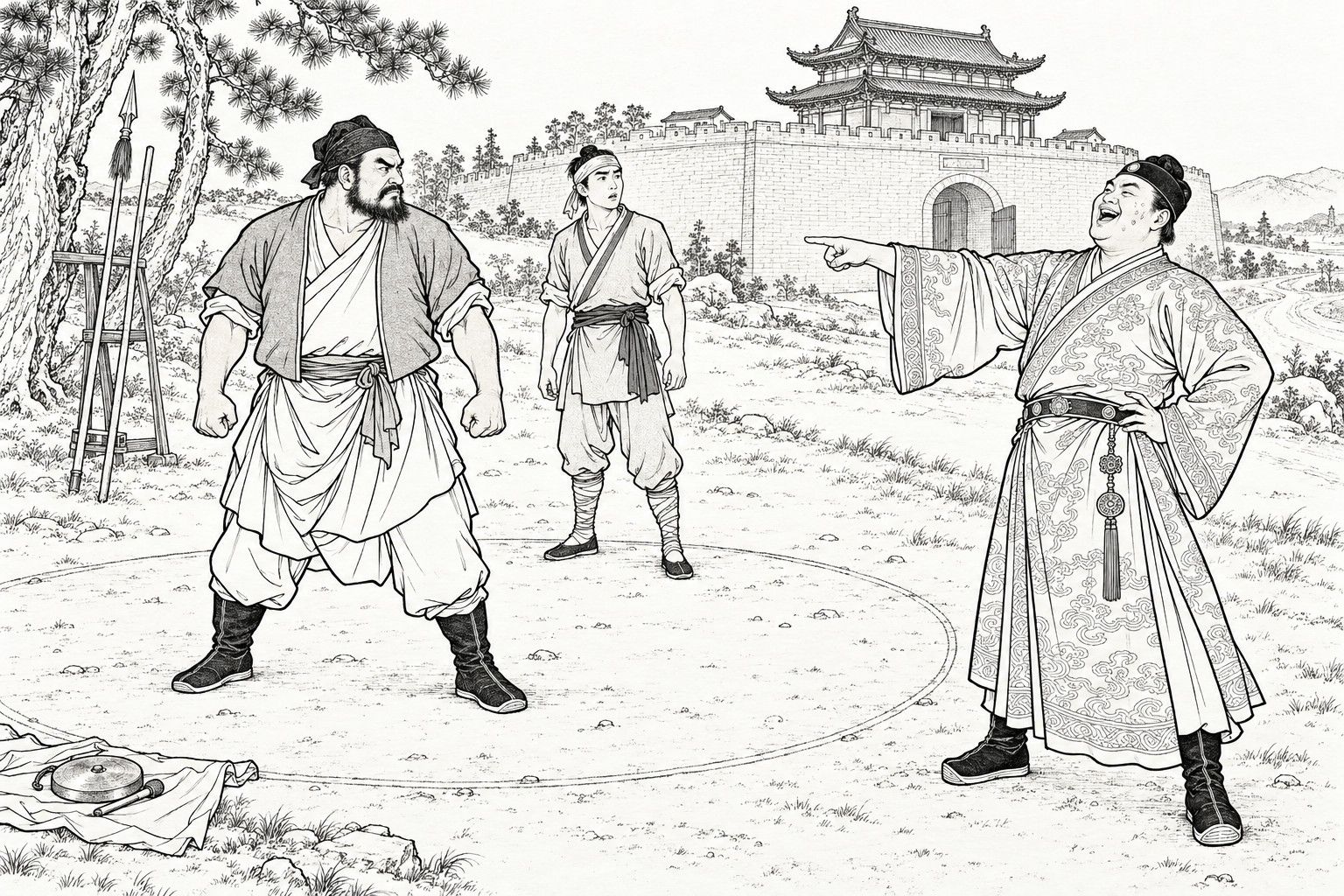
話說廖廷貴帶領著數十個匪徒,各持刀槍器械,來到豆腐店,把周家父子拉出來,按倒就打。幸虧街坊各舖戶出來勸解,廖廷貴叫眾人把豆腐店全都摔了,連磨盤也都摔碎了,水桶也劈了,一概的傢伙全摔淨了。廖廷貴帶著人走了,周得山父子渾身是傷,周得山見把屋中東西都拆了,自己買賣也不能做了,周得山一想說:「兒呀,咱們活不成了,打架咱們不得人,打官司咱們也沒人情勢利。我這大的年歲,從沒受過人這樣欺負,咱們活著惹不起他,我揣上一張陰狀;我一死到陰間告他。周茂你到錢塘縣去喊冤,給我報仇,叫你娘到臨安府去告他,我這條老命不要了。」周茂也是想著要報仇,也不能攔他父親。父子兩個正說著話,外面進來一個人,周茂一看,這個人認識,也是這本地的泥腳,素常無所不為,敬光棍,怕財主,欺負老人,此人姓毛,外號叫毛嚷嚷。他就在這門口住,起先廖廷貴帶著人來,他也不出來,這等人家都走了,他跑出來到豆腐店,說;「誰敢上這裡來拆豆腐店?好呀,在我眼皮底下,真如抓了我的臉一樣,不知道我姓毛的在這住嗎?方纔我是沒在家,要是我在家,得把他們砍了。」他正指手畫腳,大嚷大叫,自稱人物,和尚由外面進來,照定毛嚷嚷就是一個嘴巴。毛嚷嚷一瞧,說:「好和尚,你敢打我?」和尚說:「打還是好的,誰叫你在這裡放肆?」毛嚷嚷說:「好和尚,咱們倆是一場官司。」和尚說:「你出來。」毛嚷嚷出來被和尚揪倒就打,打了三下。毛嚷嚷說:「該我打你了。」掄起拳頭就打和尚。和尚數著一來,二來,三來,和尚說:「該我打你了。」一擰拐子,把毛嚷嚷翻下去。和尚打了他三下,和尚也不多打,說:「你該打我了。」和尚自己就躺下。毛嚷嚷又打了三下,還想多打,和尚又把他翻下去。大眾瞧著,也沒人勸解,都說和尚公道,打毛嚷嚷三下,和尚就叫他打,毛嚷嚷打三下,非得和尚把他擰躺下。眾人正瞧著和尚跟他一對打三下,就聽旁邊有人說:「別打,我來也。」眾人一看,來者這人好樣子,身高九尺以外,膀闊三停,頭戴皂緞色六瓣壯士帽巾,上按六顆明珠,身穿皂緞色箭袖袍,腰繫絲鸞帶,薄底靴子,閃披一件皂緞色英雄大氅,上繡三藍色富貴花,面似烏金紙,粗眉大眼,海下一部鋼髯灑滿前胸,來者乃是鐵面天王鄭雄。
话说廖廷贵带领着数十个匪徒,各持刀枪器械,来到豆腐店,把周家父子拉出来,按倒就打。幸亏街坊各铺户出来劝解,廖廷贵叫众人把豆腐店全都摔了,连磨盘也都摔碎了,水桶也劈了,一概的家伙全摔净了。廖廷贵带着人走了,周得山父子浑身是伤,周得山见把屋中东西都拆了,自己买卖也不能做了,周得山一想说:「儿呀,咱们活不成了,打架咱们不得人,打官司咱们也没人情势利。我这大的年岁,从没受过人这样欺负,咱们活着惹不起他,我揣上一张阴状;我一死到阴间告他。周茂你到钱塘县去喊冤,给我报仇,叫你娘到临安府去告他,我这条老命不要了。」周茂也是想着要报仇,也不能拦他父亲。父子两个正说着话,外面进来一个人,周茂一看,这个人认识,也是这本地的泥脚,素常无所不为,敬光棍,怕财主,欺负老人,此人姓毛,外号叫毛嚷嚷。他就在这门口住,起先廖廷贵带着人来,他也不出来,这等人家都走了,他跑出来到豆腐店,说;「谁敢上这里来拆豆腐店?好呀,在我眼皮底下,真如抓了我的脸一样,不知道我姓毛的在这住吗?方才我是没在家,要是我在家,得把他们砍了。」他正指手画脚,大嚷大叫,自称人物,和尚由外面进来,照定毛嚷嚷就是一个嘴巴。毛嚷嚷一瞧,说:「好和尚,你敢打我?」和尚说:「打还是好的,谁叫你在这里放肆?」毛嚷嚷说:「好和尚,咱们俩是一场官司。」和尚说:「你出来。」毛嚷嚷出来被和尚揪倒就打,打了三下。毛嚷嚷说:「该我打你了。」抡起拳头就打和尚。和尚数着一来,二来,三来,和尚说:「该我打你了。」一拧拐子,把毛嚷嚷翻下去。和尚打了他三下,和尚也不多打,说:「你该打我了。」和尚自己就躺下。毛嚷嚷又打了三下,还想多打,和尚又把他翻下去。大众瞧着,也没人劝解,都说和尚公道,打毛嚷嚷三下,和尚就叫他打,毛嚷嚷打三下,非得和尚把他拧躺下。众人正瞧着和尚跟他一对打三下,就听旁边有人说:「别打,我来也。」众人一看,来者这人好样子,身高九尺以外,膀阔三停,头戴皂缎色六瓣壮士帽巾,上按六颗明珠,身穿皂缎色箭袖袍,腰系丝鸾带,薄底靴子,闪披一件皂缎色英雄大氅,上绣三蓝色富贵花,面似乌金纸,粗眉大眼,海下一部钢髯洒满前胸,来者乃是铁面天王郑雄。
Now, Liao Tinggui led several dozen ruffians, each with a sword, a spear or some other weapon, to the beancurd shop. They dragged Zhou and his son outside, threw them down and beat them. Luckily the neighbours and the shopkeepers along the street came out and pleaded with them to stop. Liao Tinggui had his men smash up the whole beancurd shop: they broke even the millstone to pieces, split the water buckets and smashed every last thing in the place. Then Liao Tinggui went off with his men. Zhou Deshan and his son were covered in wounds. Zhou Deshan saw that everything in the house had been wrecked and that he could no longer carry on his trade. He thought it over. “Son,” he said, “we can’t go on living. In a fight we’re no match for them, and if we take it to court we’ve no friends or influence. All my long life I’ve never been bullied like this. While we’re alive we can’t stand up to him. I’ll take a petition to the underworld with me, and once I’m dead I’ll lodge my complaint against him down there. Zhou Mao, you go to Qiantang County and cry out your wrongs and avenge me, and have your mother go to Lin’an Prefecture and bring charges against him. I’m done with this old life of mine.” Zhou Mao was set on revenge too, and he did not try to hold his father back. Father and son were still talking when a man came in from outside. Zhou Mao knew him at a glance. He was another local lout who would stop at nothing: he fawned on toughs, feared the rich and bullied the old. His surname was Mao, and he was known as Mao the Loudmouth (Mao Rangrang). He lived right by the shop door. When Liao Tinggui came with his men he had kept out of sight, but now that they had all gone he came running out to the beancurd shop. “Who dares come here and wreck a beancurd shop?” he said. “Well, I never! Right under my nose! It’s as good as clawing my own face. Don’t they know that I, Mao, live here? I just happened to be out. If I’d been at home, I’d have cut the lot of them down.” He was waving his arms about, yelling at the top of his voice and making himself out to be somebody, when the monk came in from outside and slapped Mao the Loudmouth smack across the face. Mao the Loudmouth stared at him. “Why, you monk! You dare hit me?” “A slap is getting off lightly,” said the monk. “Who said you could come in here and carry on like this?” “Right, monk,” said Mao the Loudmouth, “you and I are going to court over this.” “Come outside,” said the monk. Mao the Loudmouth came out, and the monk grabbed him, threw him down and hit him: three blows. “My turn to hit you,” said Mao the Loudmouth, and swung his fists at the monk. The monk counted, “One, two, three.” “My turn to hit you,” said the monk. With a twist of the elbow he flipped Mao the Loudmouth underneath. The monk hit him three times and not once more. “Your turn to hit me,” he said, and lay down of his own accord. Mao the Loudmouth hit him three times and wanted to go on, but the monk flipped him under again. The crowd looked on, and nobody stepped in to stop it. Everyone said the monk was fair: when he had hit Mao the Loudmouth three times he let Mao hit him, and when Mao had hit him three times the monk always twisted him back down. The crowd was watching the monk and Mao trade blows, three apiece, when someone at the side called out, “Stop! Here I come!” Everyone looked. What a fine figure of a man! He stood over nine feet tall and was broad across the shoulders. On his head was a six-panelled warrior’s cap of black satin, set with six bright pearls. He wore a black satin archer’s robe, a silk sash at his waist and thin-soled boots, and thrown over his shoulders was a black satin hero’s cloak, embroidered in three shades of blue with peonies, the flowers of wealth and rank. His face was dark as black-gold paper, with thick brows and big eyes, and a beard like steel wire spread over his chest. It was Zheng Xiong, the Iron-Faced Heavenly King.
書中交代:鄭雄前者由常山縣馬家湖,跟濟公分手,自己回到家中,沒事也不上錢塘關來。只因鄭雄有一個朋友,姓陳叫陳聲遠,乃是東路保鏢的鏢頭,也在這臨安城住家,人也極其厚道。這天陳聲遠沒事,帶著家人出來閒游,走在錢塘關外,見著有一個賣藝的在那裡練把式,圍著許多瞧熱鬧的人。陳聲遠一看,這個賣藝的,練的拳腳精通,受過名人指教,大概不是久慣走江湖的,他也不會說江湖話,也沒人把錢。在外面做生意的,算命打卦,全憑說話,應該是,未從要練先交代交代說:「眾位,在下是遠方人,不是久慣賣藝的,因為貴方寶地,投親不遇,訪友不著,把盤資花完了。在下在家中練過幾趟鄉拳。我也不知子弟老師在哪裏住家,未能登門遞帖,前去拜望。眾位有錢幫把錢,沒錢幫站腳助威,幫個人緣。」應當得有一套江湖話,交代明白。陳聲遠一看,這個賣藝的,也不會說話,練了好幾趟也沒有幾個給捺錢的。陳聲遠一想:「君子到處有成人之美,我下去幫他練一趟,給他幾吊錢墊勢場子,周濟周濟他。」想罷叫家人陳順:「去到錢塘關裡恆源館錢舖,給我拿五吊錢來,回頭我幫他練完了,你把錢串揪斷了,給往場子裡捺。把廠有規矩,不准帶串捺。」陳順就答應,到錢舖取了五吊錢來,陳聲遠進了場子說;「朋友,我幫你練一回。」賣藝的趕緊作揖說:「子弟太爺貴姓?」陳聲遠說:「我姓陳,我看你不是久慣江湖賣藝的樣子。」賣藝人說:「可不是,我也無法,我的朋友沒找著,困在這裡。子弟爺,你幫我,我給你接接拳,還是站在旁邊給你報報名?」陳聲遠說:「你也不用接拳,你旁邊看著罷。」說著剛要練,只見由外面跳進一個人來,說:「朋友先等等練,我也幫個場子。咱們兩個人揸揸拳。」陳聲遠說:「可以。」一看這人身高八尺,頭帶粉綾緞軟帕包巾,身穿粉綾緞箭袍,腰繫絲鸞帶,單襯襖,薄底靴子,閃披一件粉綾緞英雄大氅,上繡藍牡丹花,面似油粉,一面的麻子斑點,長的透著奸詐的樣子。陳聲遠剛跟這人一揸拳,偏巧陳聲遠胸前岔了氣了,陳聲遠趕緊往外路圈子一跳,說:「朋友慢動手,我岔了氣了。」
书中交代:郑雄前者由常山县马家湖,跟济公分手,自己回到家中,没事也不上钱塘关来。只因郑雄有一个朋友,姓陈叫陈声远,乃是东路保镖的镖头,也在这临安城住家,人也极其厚道。这天陈声远没事,带着家人出来闲游,走在钱塘关外,见着有一个卖艺的在那里练把式,围着许多瞧热闹的人。陈声远一看,这个卖艺的,练的拳脚精通,受过名人指教,大概不是久惯走江湖的,他也不会说江湖话,也没人把钱。在外面做生意的,算命打卦,全凭说话,应该是,未从要练先交代交代说:「众位,在下是远方人,不是久惯卖艺的,因为贵方宝地,投亲不遇,访友不着,把盘资花完了。在下在家中练过几趟乡拳。我也不知子弟老师在哪里住家,未能登门递帖,前去拜望。众位有钱帮把钱,没钱帮站脚助威,帮个人缘。」应当得有一套江湖话,交代明白。陈声远一看,这个卖艺的,也不会说话,练了好几趟也没有几个给捺钱的。陈声远一想:「君子到处有成人之美,我下去帮他练一趟,给他几吊钱垫势场子,周济周济他。」想罢叫家人陈顺:「去到钱塘关里恒源馆钱铺,给我拿五吊钱来,回头我帮他练完了,你把钱串揪断了,给往场子里捺。把厂有规矩,不准带串捺。」陈顺就答应,到钱铺取了五吊钱来,陈声远进了场子说;「朋友,我帮你练一回。」卖艺的赶紧作揖说:「子弟太爷贵姓?」陈声远说:「我姓陈,我看你不是久惯江湖卖艺的样子。」卖艺人说:「可不是,我也无法,我的朋友没找着,困在这里。子弟爷,你帮我,我给你接接拳,还是站在旁边给你报报名?」陈声远说:「你也不用接拳,你旁边看着罢。」说着刚要练,只见由外面跳进一个人来,说:「朋友先等等练,我也帮个场子。咱们两个人揸揸拳。」陈声远说:「可以。」一看这人身高八尺,头带粉绫缎软帕包巾,身穿粉绫缎箭袍,腰系丝鸾带,单衬袄,薄底靴子,闪披一件粉绫缎英雄大氅,上绣蓝牡丹花,面似油粉,一面的麻子斑点,长的透着奸诈的样子。陈声远刚跟这人一揸拳,偏巧陈声远胸前岔了气了,陈声远赶紧往外路圈子一跳,说:「朋友慢动手,我岔了气了。」
A word of explanation: Zheng Xiong had parted from Ji Gong some time before at Ma Family Lake in Changshan County and gone home, and with no business there he had not been out to the Qiantang Gate. What brought him now was this. Zheng Xiong had a friend named Chen Shengyuan, an escort master on the eastern routes, who also made his home here in Lin’an and was a thoroughly decent man. One day, with nothing to do, Chen Shengyuan went out for a stroll with a servant. Outside the Qiantang Gate he came on a street performer going through his routines, with a crowd of onlookers gathered round to watch. Chen Shengyuan looked him over. The man was expert with fist and foot and had been taught by a famous master; he was probably not long used to roaming the rivers and lakes. He could not talk the jianghu talk, and nobody gave him any money. People who make a living on the road, fortune-tellers and diviners alike, live entirely by their tongues. By rights, before he started he should have said his piece: “Gentlemen, I am a stranger from far away, not long in this trade. I came to your honoured district to join my relatives and found them gone, to look up my friends and could not find them, and I have spent all my travelling money. At home I learned a few rounds of country boxing. I do not know where the gentlemen masters of this place live, so I have not been able to call at their doors with my card and pay my respects. Those of you with money, help with money; those without, help by standing here and cheering me on, and lend me your goodwill.” He ought to have had a whole run of jianghu patter like that and made everything plain. Chen Shengyuan saw that this performer did not know how to talk; he had gone through several routines, and hardly anyone had thrown him a coin. Chen Shengyuan thought, “A gentleman helps others succeed wherever he goes. I’ll go down and do a routine with him and give him a few strings of cash to get his pitch going. That will help him out.” With that he called his servant Chen Shun. “Go to the Hengyuan money shop inside the Qiantang Gate and fetch me five strings of cash. When I’ve finished my turn with him, tear the strings apart and throw the coins into the ring. Show grounds have their rules: you mustn’t throw them in on the string.” Chen Shun said he would and went to the money shop for the five strings. Chen Shengyuan stepped into the ring. “Friend, I’ll do a turn with you.” The performer hurriedly bowed with clasped hands. “And your honoured name, good sir?” “Chen,” said Chen Shengyuan. “You don’t look to me like a man long used to performing on the road.” “Indeed I’m not,” said the performer. “I had no choice. I didn’t find my friend, and now I’m stuck here. Sir, since you’re helping me out, shall I spar with you, or stand to one side and call out your name to the crowd?” “No need to spar with me,” said Chen Shengyuan. “Just stand aside and watch.” He was about to begin when a man leapt into the ring. “Hold on a moment, friend, before you start. I’ll lend a hand at the show too. Let’s the two of us cross fists.” “Very well,” said Chen Shengyuan. He looked the man over. He was eight feet tall, with a soft cap of pink damask wrapped round his head, a pink damask archer’s robe, a silk sash at his waist, an unlined jacket and thin-soled boots, and a pink damask hero’s cloak embroidered with blue peonies thrown over his shoulders. His face was white as greasepaint and spotted all over with pockmarks, and he had a crafty, treacherous look about him. Chen Shengyuan had barely crossed fists with him when, as luck would have it, he got a stitch in his chest. Chen Shengyuan quickly leapt out to the edge of the ring. “Easy, friend, hold your hand. I’ve got a stitch.”