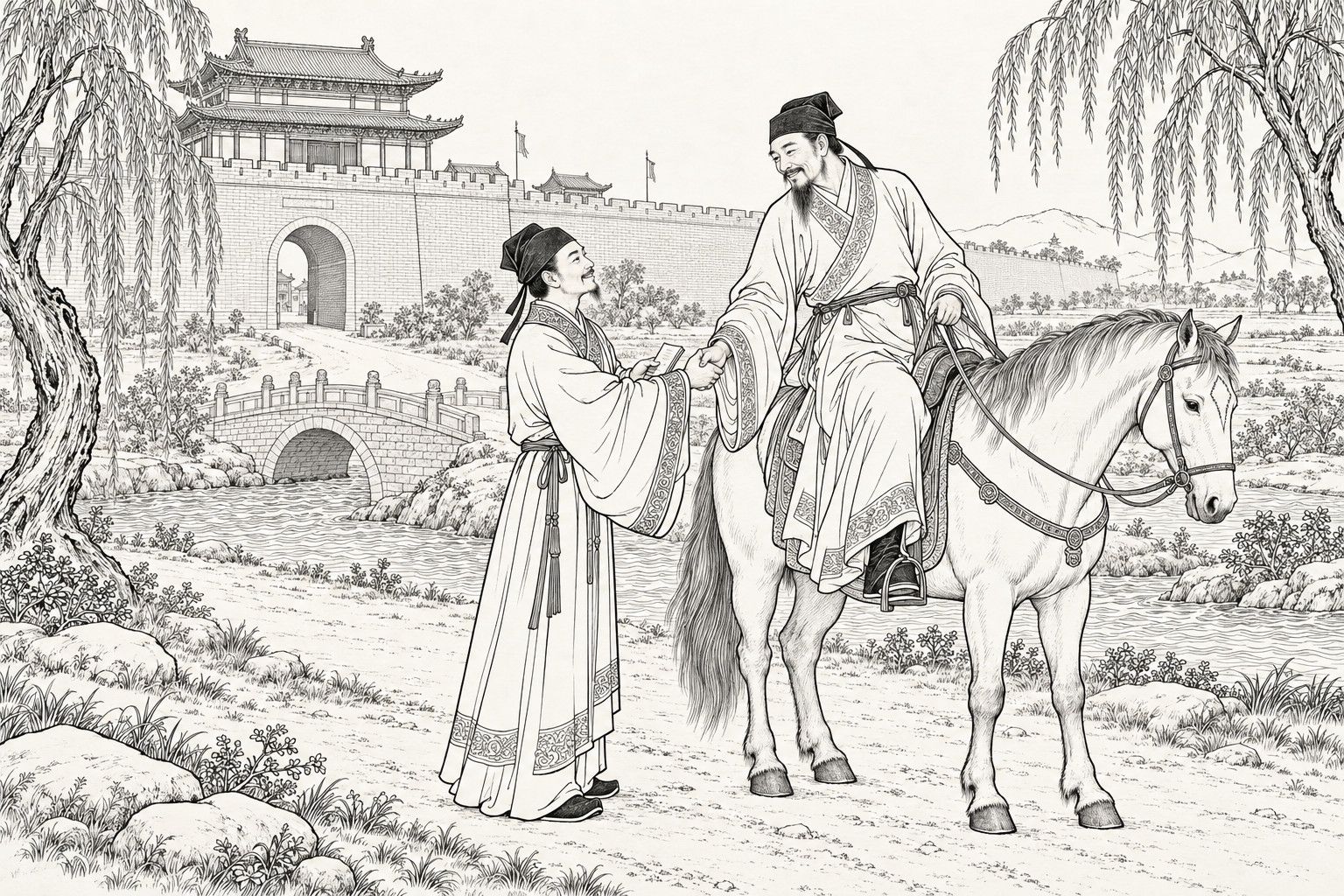
予姊夫之祖,宋公諱燾,邑廩生。一日,病臥,見吏持牒牽白顛馬來,云:「請赴試。」公言:「文宗未臨,何遽得考?」吏不言,但敦促之。公力疾乘馬從去,路甚生疎,至一城郭,如王者都。移時,入府廨,宮室壯麗,上坐十餘官,都不知何人,惟關壯繆可識。簷下設几墩各二,先有一秀才坐其末,公便與連肩。几上各有筆札,俄題紙飛下,視之,八字云:「一人二人,有心無心。」二公文成,呈殿上,公文中有云:「有心為善,雖善不賞;無心為惡,雖惡不罰。」
予姊夫之祖,宋公讳焘,邑廪生。一日,病卧,见吏持牒牵白颠马来,云:「请赴试。」公言:「文宗未临,何遽得考?」吏不言,但敦促之。公力疾乘马从去,路甚生疎,至一城郭,如王者都。移时,入府廨,宫室壮丽,上坐十余官,都不知何人,惟关壮缪可识。檐下设几墩各二,先有一秀才坐其末,公便与连肩。几上各有笔札,俄题纸飞下,视之,八字云:「一人二人,有心无心。」二公文成,呈殿上,公文中有云:「有心为善,虽善不赏;无心为恶,虽恶不罚。」
The grandfather of my elder sister’s husband was Lord Song, whose name was Tao, a stipend licentiate of my county. One day, as he lay ill in bed, he saw a clerk come in holding a summons and leading a horse with a white blaze on its forehead. “Please come and sit the examination,” the clerk said. “The Examiner has not come yet,” said Song. “How can there be an examination so soon?” The clerk said nothing, only pressed him to come. Song forced himself up from his sickbed, mounted the horse and went with him. The road was quite strange to him. They came to a walled city like a king’s capital. After a while they entered a government hall, its buildings grand and splendid. Seated up above were ten or more officials. He had no idea who any of them were, except Lord Guan, whom he recognized. Under the eaves stood two small tables and two stools. A licentiate was already sitting at the far end, and Song sat down beside him, shoulder to shoulder. On each table were brush and paper. Presently the paper with the topic came floating down. He looked at it: eight characters. “One man, two men; with intent, without intent.” When the two of them had finished their essays, they handed them up into the hall. Song’s essay said, among other things: “Whoever does good with intent, though it be good, shall not be rewarded. Whoever does evil without intent, though it be evil, shall not be punished.”
諸神傳讚不已,召公上,諭曰:「河南缺一城隍,君稱其職。」公方悟,頓首泣曰:「辱膺寵命,何敢多辭!但老母七旬,奉養無人,請得終其天年,惟聽錄用。」上一帝王像者,即令「稽母壽籍。」有長鬚吏,捧冊翻閱一過,白「有陽算九年。」共躊躇間,關帝曰:「不妨令張生攝篆,九年瓜代,可也。」乃謂公「應即赴任,今推仁孝之心,給假九年,及期,當復相召。」又勉勵秀才數語,二公稽首並下,秀才握手,送諸郊野,自言:長山張某,以詩贈別,都忘其詞,中有「有花有酒春常在,無燭無燈夜自明」之句。公既騎,乃別而去,及抵里,豁若夢寤。
诸神传赞不已,召公上,谕曰:「河南缺一城隍,君称其职。」公方悟,顿首泣曰:「辱膺宠命,何敢多辞!但老母七旬,奉养无人,请得终其天年,惟听录用。」上一帝王像者,即令「稽母寿籍。」有长须吏,捧册翻阅一过,白「有阳算九年。」共踌躇间,关帝曰:「不妨令张生摄篆,九年瓜代,可也。」乃谓公「应即赴任,今推仁孝之心,给假九年,及期,当复相召。」又勉励秀才数语,二公稽首并下,秀才握手,送诸郊野,自言:长山张某,以诗赠别,都忘其词,中有「有花有酒春常在,无烛无灯夜自明」之句。公既骑,乃别而去,及抵里,豁若梦寤。
The gods passed it from hand to hand and could not praise it enough. They called Song up and told him, “A City God is wanted in Henan. You are fit for the post.” Only then did Song understand. He knocked his head on the ground and wept. “I am unworthy of so great a favour,” he said. “How could I dare refuse? But my old mother is past seventy, and there is no one else to look after her. I beg to be allowed to see her to the end of her days. After that I am yours to command.” One seated at the top, who looked like an emperor, at once gave the order: “Look up his mother’s span in the register of years.” A clerk with a long beard brought a ledger and leafed through it. “Nine more years among the living,” he reported. As they all hesitated, Lord Guan said, “Why not let the scholar Zhang hold the seal for now? In nine years Song can take over from him.” Then they said to Song, “You ought to take up your post at once. But in recognition of your kindness and filial devotion, you are granted nine years’ leave. When the time comes, you will be summoned again.” They also said a few words of encouragement to the other licentiate. The two of them bowed their heads to the ground and went down together. The licentiate took Song’s hand and saw him off as far as the open country outside the walls. He said he was a man named Zhang, from Changshan. He gave Song a poem in parting. Song forgot nearly all of it, but it had these lines: “With flowers and with wine, it is always spring; no candle and no lamp, yet the night is bright.” Song mounted the horse, said goodbye and rode away. When he reached his village, it was as if he had woken from a dream.
時卒已三日。母聞棺中呻吟,扶出半日,始能語。問之長山,果有張生於是日死矣。後九年,母果卒,營葬既畢,浣濯入室而歿。其岳家居城中西門內,忽見公鏤膺朱幩,輿馬甚眾,登其堂,一拜而行,相共驚疑,不知其為神,奔訊鄉中,則已歿矣。公有自記小傳,惜亂後無存,此其略耳。
时卒已三日。母闻棺中呻吟,扶出半日,始能语。问之长山,果有张生于是日死矣。后九年,母果卒,营葬既毕,浣濯入室而殁。其岳家居城中西门内,忽见公镂膺朱幩,舆马甚众,登其堂,一拜而行,相共惊疑,不知其为神,奔讯乡中,则已殁矣。公有自记小传,惜乱后无存,此其略耳。
By then he had been dead for three days. His mother heard groaning inside the coffin. They helped him out, and it was half a day before he could speak. They made inquiries at Changshan: a scholar named Zhang had indeed died on that very day. Nine years later his mother did die. When the burial was over, Song washed himself, went into his room and died. His wife’s family lived in the city, just inside the west gate. Suddenly they saw him arrive, his horses in carved breast-straps and scarlet trappings, with a great train of carriages and riders. He came up into their hall, bowed once and left. They were all amazed and puzzled, not knowing he had become a god. They hurried to his village to ask, and found he was already dead. Lord Song wrote a short account of his own life, but sadly it was lost in the troubles. This is the gist of it.