喬生,晉寧人。少負才名。年二十餘,猶偃蹇。為人有肝膽。與顧生善;顧卒,時恤其妻子。邑宰以文相契重;宰終於任,家口淹滯不能歸,生破產扶柩,往返二千餘里。以故士林益重之,而家由此益替。史孝廉有女,字連城,工刺繡,知書。父嬌愛之。出所刺「倦繡圖」,徵少年題詠,意在擇婿。生獻詩云:
「慵鬟高髻綠婆娑,早向蘭窗繡碧荷;刺到鴛鴦魂欲斷,暗停針線蹙雙蛾。」
又贊挑繡之工云:
「繡線挑來似寫生,幅中花鳥自天成;當年織錦非長技,幸把回文感聖明。」
女得詩喜,對父稱賞。父貧之。女逢人輒稱道;又遣媼矯父命,贈金以助燈火。生嘆曰:「連城我知己也!」傾懷結想,如飢思啖。
乔生,晋宁人。少负才名。年二十余,犹偃蹇。为人有肝胆。与顾生善;顾卒,时恤其妻子。邑宰以文相契重;宰终于任,家口淹滞不能归,生破产扶柩,往返二千余里。以故士林益重之,而家由此益替。史孝廉有女,字连城,工刺绣,知书。父娇爱之。出所刺「倦绣图」,征少年题咏,意在择婿。生献诗云:
「慵鬟高髻绿婆娑,早向兰窗绣碧荷;刺到鸳鸯魂欲断,暗停针线蹙双蛾。」
又赞挑绣之工云:
「绣线挑来似写生,幅中花鸟自天成;当年织锦非长技,幸把回文感圣明。」
女得诗喜,对父称赏。父贫之。女逢人辄称道;又遣媪矫父命,赠金以助灯火。生叹曰:「连城我知己也!」倾怀结想,如饥思啖。
Qiao was a scholar of Jinning. While still young he had a name for his talent, yet at past twenty he was still getting nowhere. He was a man of loyalty and courage. He was friends with a scholar named Gu, and when Gu died he often helped Gu’s widow and children. The county magistrate admired Qiao’s writing and held him in high regard. When the magistrate died in office, his family were stranded and could not get home, and Qiao spent all he had to take the coffin back, a journey of more than two thousand li there and back. For this the scholars of the region thought all the more of him, but his family grew poorer still. A provincial graduate named Shi had a daughter called Liancheng, who was skilled at embroidery and well read. Her father doted on her. He brought out a piece she had embroidered, “Tired of Embroidery”, and invited young men to write poems on it, meaning to choose a son-in-law. Qiao offered this poem:
“Lazy locks piled high, a swaying cloud of green, /early at the orchid window she stitches jade-green lotus; /her needle reaches the mandarin ducks, and her soul is near to breaking —/ quietly she stops her thread and knits her moth brows.”
And he praised the skill of her needlework in another:
“The silk she draws through paints as if from life; /the flowers and birds on the cloth seem made by Heaven. /The woven brocade of old was no great art —/ it was luck that its palindrome moved a wise ruler.”
Liancheng was delighted with the poems and praised them to her father, but her father thought Qiao too poor. Whenever she met anyone, she spoke well of him. She also sent an old woman, pretending it was her father’s wish, to give him money for his lamp oil. “Liancheng understands me!” Qiao sighed. He poured out his whole heart in longing for her, like a starving man who dreams of food.
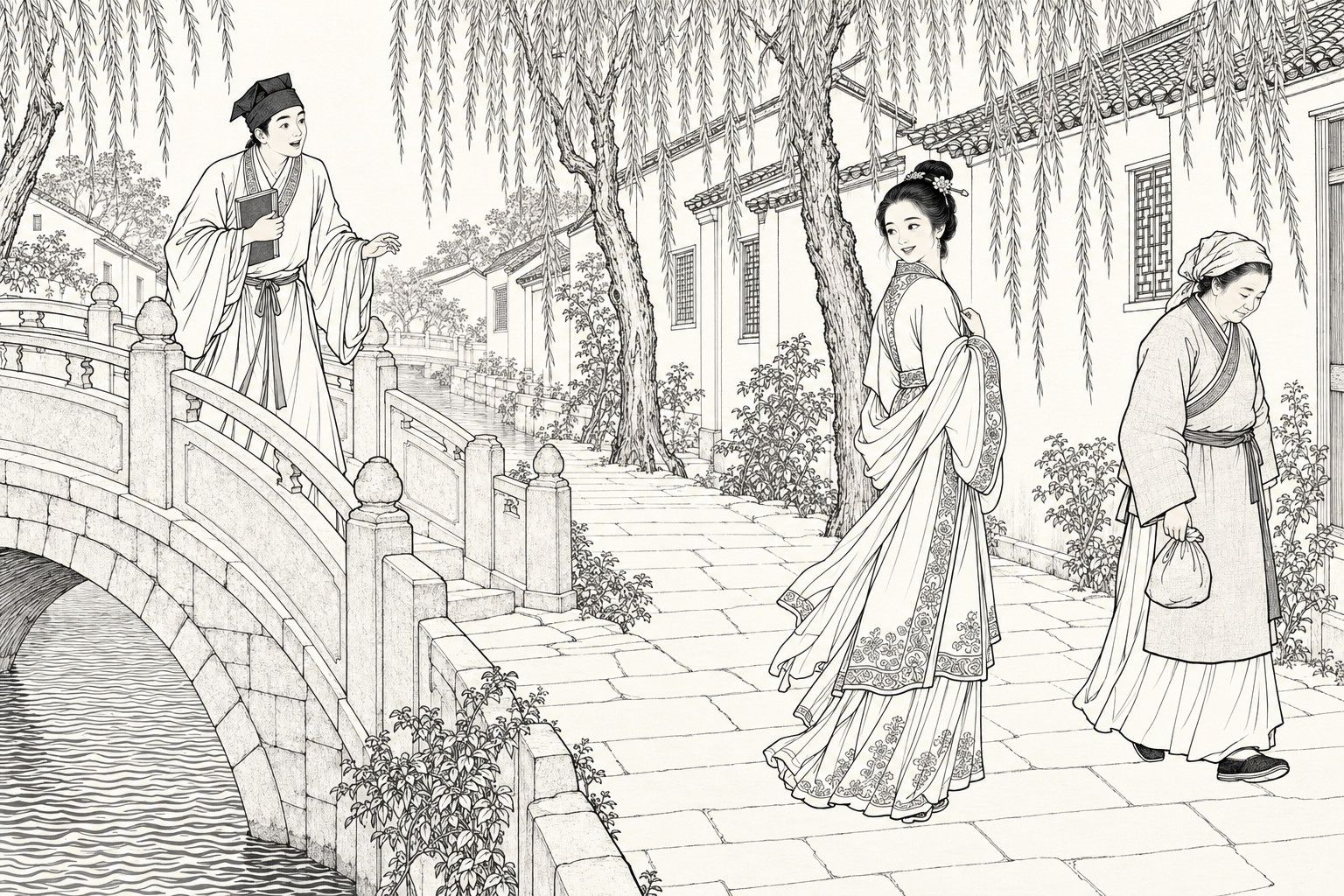
無何,女許字于鹺賈之子王化成,生始絕望;然夢魂中猶佩戴之。未幾,女病瘵,沉痼不起。有西域頭陀,自謂能療;但須男子膺肉一錢,搗合藥屑。史使人詣王家告婿。婿笑曰:「痴老翁,欲我剜心頭肉也!」使返。史乃言于人曰:「有能割肉者妻之。」生聞而往,自出白刃,刲膺授僧。血濡袍褲,僧敷藥始止。合藥三丸。三日服盡,疾若失。史將踐其言,先告王。王怒,欲訟官。史乃設筵招生,以千金列幾上,曰:「重負大德,請以相報。」因具白背盟之由。生怫然曰:「僕所以不愛膺肉者,聊以報知己耳,豈貨肉哉!」拂袖而歸。女聞之,意良不忍,托媼慰諭之。且云:「以彼才華,當不久落。天下何患無佳人?我夢不祥,三年必死,不必與人爭此泉下物也。」生告媼曰:「『士為知己者死』,不以色也。誠恐連城未必真知我;但得真知我,不諧何害?」媼代女郎矢誠自剖。生曰:「果爾,相逢時,當為我一笑,死無憾。」媼既去,逾數日,生偶出,遇女自叔氏歸,睨之。女秋波轉顧,啟齒嫣然。生大喜曰:「連城真知我者!」會王氏來議吉期,女前症又作,數月尋死。生往臨吊,一痛而絕。史舁送其家。
无何,女许字于鹾贾之子王化成,生始绝望;然梦魂中犹佩戴之。未几,女病瘵,沉痼不起。有西域头陀,自谓能疗;但须男子膺肉一钱,捣合药屑。史使人诣王家告婿。婿笑曰:「痴老翁,欲我剜心头肉也!」使返。史乃言于人曰:「有能割肉者妻之。」生闻而往,自出白刃,刲膺授僧。血濡袍裤,僧敷药始止。合药三丸。三日服尽,疾若失。史将践其言,先告王。王怒,欲讼官。史乃设筵招生,以千金列几上,曰:「重负大德,请以相报。」因具白背盟之由。生怫然曰:「仆所以不爱膺肉者,聊以报知己耳,岂货肉哉!」拂袖而归。女闻之,意良不忍,托媪慰谕之。且云:「以彼才华,当不久落。天下何患无佳人?我梦不祥,三年必死,不必与人争此泉下物也。」生告媪曰:「『士为知己者死』,不以色也。诚恐连城未必真知我;但得真知我,不谐何害?」媪代女郎矢诚自剖。生曰:「果尔,相逢时,当为我一笑,死无憾。」媪既去,逾数日,生偶出,遇女自叔氏归,睨之。女秋波转顾,启齿嫣然。生大喜曰:「连城真知我者!」会王氏来议吉期,女前症又作,数月寻死。生往临吊,一痛而绝。史舁送其家。
Before long the girl was promised to Wang Huacheng, the son of a salt merchant, and only then did Qiao give up hope; yet even in his dreams his soul still cherished her. Not long after, the girl fell ill with consumption and lay in bed beyond all cure. An ascetic monk from the Western Regions said he could heal her, but he would need one qian of flesh from a man’s chest to pound into the medicine. Shi sent someone to the Wang house to tell his future son-in-law. The young man laughed. “The silly old man! He wants me to gouge out the flesh over my heart!” The messenger came back. So Shi announced, “Whoever can cut his flesh for her shall have her for his wife.” When Qiao heard this he went there, drew his own bare blade, cut a piece from his chest and handed it to the monk. Blood soaked his gown and trousers, and it stopped only when the monk spread medicine on the wound. The monk made the medicine into three pills. She took them over three days, and the illness was gone as if it had never been. Shi meant to keep his word, and first told Wang. Wang was furious and was going to take him to court. So Shi laid a feast and invited Qiao. He set out a thousand in gold on the table and said, “I owe you a great debt. Let me repay you with this.” And he explained in full why he had to break his promise. Qiao flushed with anger. “I did not grudge the flesh of my chest only to repay the one who understood me. Am I selling meat?” He shook out his sleeves and went home. When the girl heard of this she could hardly bear it, and sent the old woman to comfort him and reason with him. She also said, “With his gifts he will not be down for long. Why should he fear there are no beautiful girls in the world? I have had an ill-omened dream: in three years I am sure to die. There is no need to fight anyone for something already bound for the grave.” Qiao said to the old woman, “‘A man will die for the one who understands him’ — not for her looks. My real fear is that Liancheng may not truly understand me. If only she truly understands me, what harm is there in our not marrying?” The old woman swore on the girl’s behalf that she was sincere, and laid bare her heart for her. “If that is so,” said Qiao, “then when we meet, let her give me one smile, and I can die without regret.” The old woman left. A few days later Qiao happened to go out and met the girl on her way back from her uncle’s house. He gave her a sidelong look. She turned her clear eyes on him, parted her lips and smiled sweetly. Qiao was overjoyed. “Liancheng truly understands me!” Just then the Wangs came to settle the wedding day, and the girl’s old illness came back. Within a few months she was dead. Qiao went to mourn her, and at one burst of grief he died. Shi had him carried home.