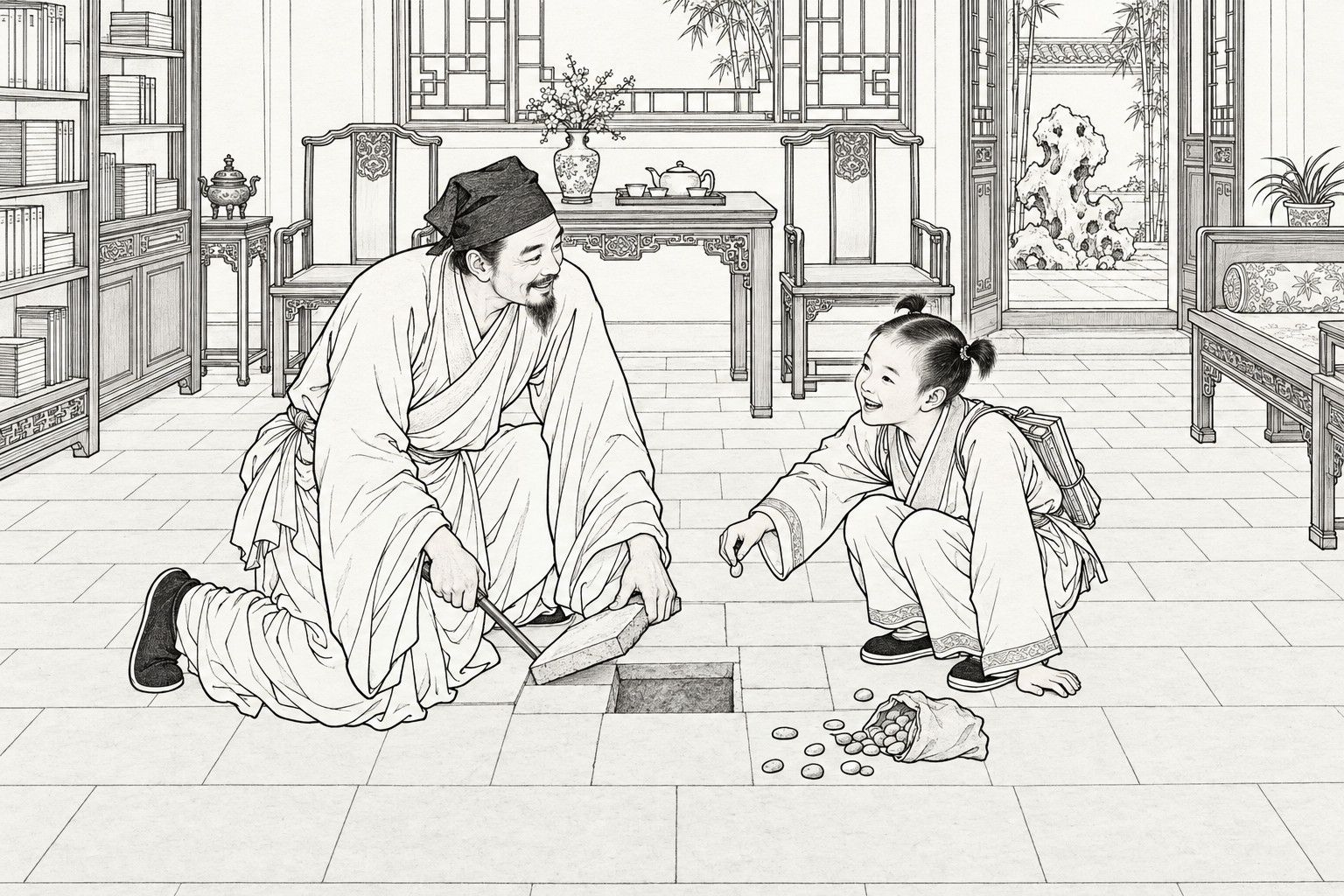
柳芳華,保定人。財雄一鄉,慷慨好客,座上常百人。急人之急,千金不靳。賓友假貸常不還。惟一客宮夢弼,陝人,生平無所乞請。每至,輒經歲。詞旨清灑,柳與寢處時最多。柳子名和,時總角,叔之。宮亦喜與和戲。每和自塾歸,輒與發貼地磚,埋石子偽作埋金為笑。屋五架,掘藏幾遍。衆笑其行稚,而和獨悅愛之,尤較諸客昵。
柳芳华,保定人。财雄一乡,慷慨好客,座上常百人。急人之急,千金不靳。宾友假贷常不还。惟一客宫梦弼,陕人,生平无所乞请。每至,辄经岁。词旨清洒,柳与寝处时最多。柳子名和,时总角,叔之。宫亦喜与和戏。每和自塾归,辄与发贴地砖,埋石子伪作埋金为笑。屋五架,掘藏几遍。众笑其行稚,而和独悦爱之,尤较诸客昵。
Liu Fanghua was a man of Baoding. His wealth was the greatest in the district. He was generous and loved guests, and there were often a hundred at his table. He ran to help anyone in trouble and did not grudge a thousand taels. Guests and friends who borrowed from him often never paid it back. Only one guest, Gong Mengbi, a man of Shaanxi, never once asked him for anything. Whenever he came, he stayed a year. His talk was clear and free, and Liu spent more time with him than with anyone, even sharing his rooms. Liu’s son, named He, was then a little boy with his hair in two tufts, and called Gong “Uncle.” Gong, too, liked to play with Liu He. Whenever the boy came home from school, Gong would prise up the floor bricks with him and bury pebbles, pretending to bury gold, for a joke. The house had five bays, and they dug and buried under nearly all of them. Everyone laughed at Gong for behaving like a child, but Liu He loved him, and was closer to him than to any other guest.
後十餘年,家漸虛,不能供多客之求,於是客漸稀;然十數人徹宵談讌,猶是常也。年既暮,日益落,尚割畝得直,以備雞黍。和亦揮霍,學父結小友,柳不之禁。無何,柳病卒,至無以治凶具。宮乃自出囊金,為柳經紀。和益德之。事無大小,悉委宮叔。宮時自外入,必袖瓦礫,至室則拋擲暗陬,更不解其何意。和每對宮憂貧。宮曰:「子不知作苦之難。無論無金;即授汝千金,可立盡也。男子患不自立,何患貧?」
后十余年,家渐虚,不能供多客之求,于是客渐稀;然十数人彻宵谈䜩,犹是常也。年既暮,日益落,尚割亩得直,以备鸡黍。和亦挥霍,学父结小友,柳不之禁。无何,柳病卒,至无以治凶具。宫乃自出囊金,为柳经纪。和益德之。事无大小,悉委宫叔。宫时自外入,必袖瓦砾,至室则抛掷暗陬,更不解其何意。和每对宫忧贫。宫曰:「子不知作苦之难。无论无金;即授汝千金,可立尽也。男子患不自立,何患贫?」
Ten-odd years later the household’s wealth was running down, and Liu could no longer meet the demands of so many guests, so they came less often. Still, a dozen or so talking and feasting all night long was nothing unusual. In his old age, as things went further downhill, he was still selling off his land field by field to pay for chicken and millet for his guests. Liu He spent freely too, making friends of his own among the young as his father had, and Liu did not stop him. Before long Liu fell ill and died, and there was not even the means to pay for a coffin. Gong took money from his own purse and saw to Liu’s funeral. Liu He was all the more grateful, and left everything, large or small, to Uncle Gong. Whenever Gong came in from outside, he always had broken tiles and pebbles in his sleeve, and when he reached the rooms he tossed them into dark corners. No one could make out what he meant by it. Liu He often fretted to Gong about being poor. Gong said, “You don’t know how hard it is to earn by toil. Never mind having no money: if I gave you a thousand taels, you would run through it at once. A man should worry about not standing on his own feet. Why worry about being poor?”
一日,辭欲歸。和泣囑速返,宮諾之,遂去。和貧不自給,典質漸空。日望宮至,以為經理,而宮滅跡匿影,去如黃鶴矣。先是,柳生時,為和論親於無極黃氏,素封也。後聞柳貧,陰有悔心。柳卒,訃告之,即亦不弔;猶以道遠曲原之。和服除,母遣自詣岳所,定婚期,冀黃憐顧。比至,黃聞其衣履穿敝,斥門者不納。寄語云:「歸謀百金,可復來;不然,請自此絕。」和聞言痛哭。對門劉媼,憐而進之食,贈錢三百,慰令歸。母亦哀憤無策。因念舊客負欠者十常八九,俾擇富貴者求助焉。和曰:「昔之交我者為我財耳。使兒駟馬高車,假千金,亦即匪難;如此景象,誰猶念曩恩、憶故好耶?且父與人金貲,曾無契保,責負亦難憑也。」母固強之。和從教。凡二十餘日,不能致一文;惟優人李四,舊受恩卹,聞其事,義贈一金。母子痛哭,自此絕望矣。
一日,辞欲归。和泣嘱速返,宫诺之,遂去。和贫不自给,典质渐空。日望宫至,以为经理,而宫灭迹匿影,去如黄鹤矣。先是,柳生时,为和论亲于无极黄氏,素封也。后闻柳贫,阴有悔心。柳卒,讣告之,即亦不吊;犹以道远曲原之。和服除,母遣自诣岳所,定婚期,冀黄怜顾。比至,黄闻其衣履穿敝,斥门者不纳。寄语云:「归谋百金,可复来;不然,请自此绝。」和闻言痛哭。对门刘媪,怜而进之食,赠钱三百,慰令归。母亦哀愤无策。因念旧客负欠者十常八九,俾择富贵者求助焉。和曰:「昔之交我者为我财耳。使儿驷马高车,假千金,亦即匪难;如此景象,谁犹念曩恩、忆故好耶?且父与人金赀,曾无契保,责负亦难凭也。」母固强之。和从教。凡二十余日,不能致一文;惟优人李四,旧受恩恤,闻其事,义赠一金。母子痛哭,自此绝望矣。
One day Gong took his leave, saying he was going home. Liu He wept and begged him to come back soon. Gong promised, and left. Liu He was too poor to support himself, and bit by bit everything went to the pawnshop. Every day he looked for Gong to come and set his affairs in order, but Gong had vanished without a trace, gone like the yellow crane. Some time before, while Liu was alive, he had arranged a match for his son with the Huang family of Wuji, who were rich though they held no office. Later, hearing that Liu had grown poor, Huang secretly regretted it. When Liu died and word was sent to him, Huang did not even come to mourn; they still excused him on account of the distance. When Liu He came out of mourning, his mother sent him in person to his future father-in-law to fix the wedding day, hoping Huang would take pity on him. When he arrived, Huang heard that his clothes and shoes were worn through and told the gatekeeper not to let him in. He sent out a message: “Go home and raise a hundred taels, then you may come again. Otherwise, let us end it here.” Hearing this, Liu He wept bitterly. Granny Liu, who lived across the road, took pity on him. She brought him in and fed him, gave him three hundred cash, comforted him, and sent him home. His mother, too, grieved and raged but could see nothing to be done. Then she thought that eight or nine of every ten of their old guests owed them money, and told him to pick out the rich and well-placed ones and ask them for help. Liu He said, “The people who befriended me before did it for my money. If I drove a carriage and four, borrowing a thousand taels would be easy. Looking like this, who will remember old kindness or old friendship? Besides, when Father gave people money there was never a contract or a guarantor. It would be hard to prove any debt.” His mother insisted, and he did as he was told. In more than twenty days he could not raise a single coin. Only Li Si, an actor, who had once been helped by them, heard what had happened and out of decency gave them one tael. Mother and son wept bitterly, and from then on gave up hope.