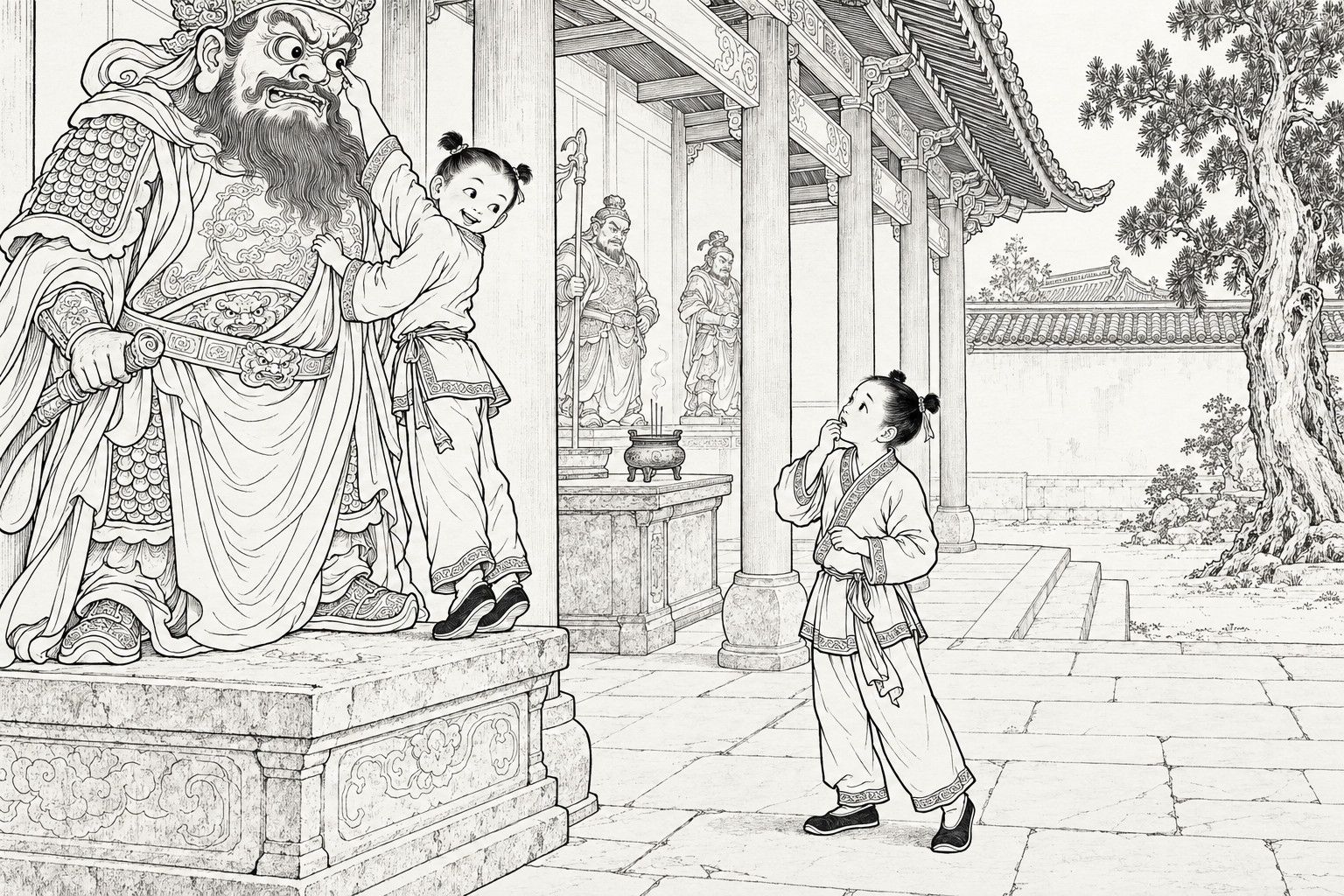
余鄉唐太史濟武,數歲時,有表親某,相攜戲寺中。太史童年磊落,膽即最豪。見廡中泥鬼,睜琉璃眼,甚光而巨;愛之,陰以指抉取,懷之而歸。既抵家,某暴病,不語移時。忽起,厲聲曰:「何故抉我睛!」噪叫不休。眾莫之知。太史始言所作。家人乃祝曰:「童子無知,戲傷尊目,行奉還也。」乃大言曰:「如此,我便當去。」言訖,仆地遂絕。良久而甦 ;問其所言,茫不自覺。乃送睛仍安鬼眶中。
余乡唐太史济武,数岁时,有表亲某,相携戏寺中。太史童年磊落,胆即最豪。见庑中泥鬼,睁琉璃眼,甚光而巨;爱之,阴以指抉取,怀之而归。既抵家,某暴病,不语移时。忽起,厉声曰:「何故抉我睛!」噪叫不休。众莫之知。太史始言所作。家人乃祝曰:「童子无知,戏伤尊目,行奉还也。」乃大言曰:「如此,我便当去。」言讫,仆地遂绝。良久而甦 ;问其所言,茫不自觉。乃送睛仍安鬼眶中。
When the academician Tang Jiwu of my home district was a small boy of a few years, he went to play at a temple with a cousin of his. Even as a child the academician was open and bold, with the stoutest nerve of anyone. In the side gallery he saw a clay ghost staring out with glass eyes, very bright and very big. He took a liking to them. When no one was looking he pried one out with his finger, tucked it in his robe and took it home. As soon as they reached the house, the cousin was taken suddenly ill and lay for a while without a word. Then all at once he rose and cried in a harsh voice, “Why did you gouge out my eye?” He went on shouting and would not stop. No one knew what he meant. Only then did the academician tell what he had done. The family prayed, “A child who knew no better hurt your honoured eye in play. It will be given back to you at once.” Then the cousin said loudly, “In that case, I will go.” With that he fell to the ground and stopped breathing. After a long while he came round; asked what he had been saying, he had no idea. So they took the eye back and set it in the ghost’s socket again.