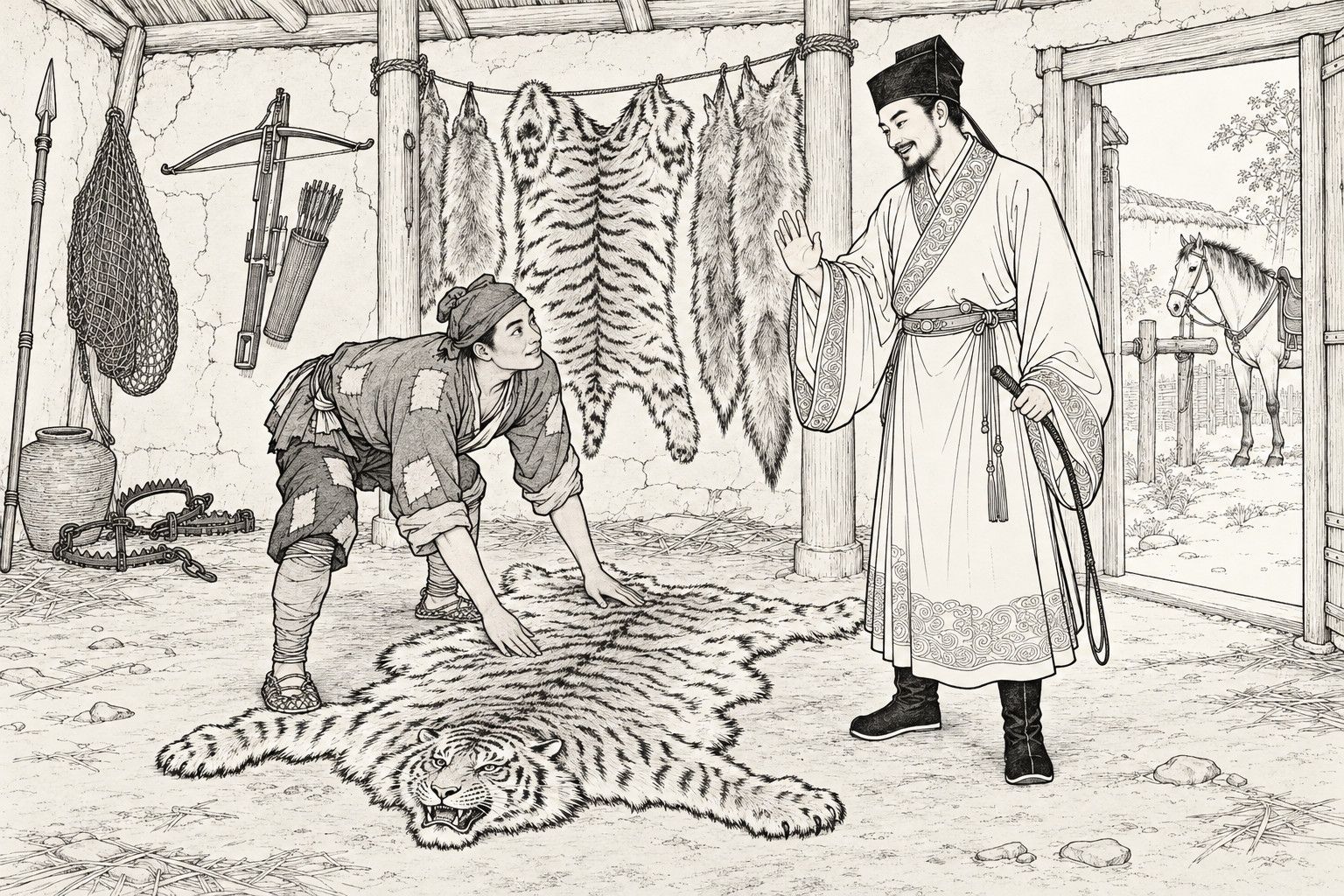
武承休,遼陽人。喜交遊,所與皆知名士。夜夢一人告之曰:「子交遊遍海內,皆濫交耳。惟一人可共患難,何反不識?」問:「何人?」曰:「田七郎非與?」醒而異之。詰朝,見所與遊,輒問七郎。客或識為東村業獵者。武敬謁諸家,以馬箠撾門。未幾,一人出,年二十餘,貙目蜂腰,著膩帢,衣皂犢鼻,多白補綴。拱手於額而問所自。武展姓字;且託途中不快,借廬憩息。問七郎,答云:「即我是也。」遂延客入。見破屋數椽,木岐支壁。入一小室,虎皮狼蛻,懸布楹間,更無杌榻可坐。七郎就地設皋比焉。武與語,言詞樸質,大悅之。遽貽金作生計。七郎不受。固予之。七郎受以白母。俄頃將還,固辭不受。武強之再四。母龍鐘而至,厲色曰:「老身止此兒,不欲令事貴客!」武慚而退。歸途展轉,不解其意。適從人於舍後聞母言,因以告武。
武承休,辽阳人。喜交游,所与皆知名士。夜梦一人告之曰:「子交游遍海内,皆滥交耳。惟一人可共患难,何反不识?」问:「何人?」曰:「田七郎非与?」醒而异之。诘朝,见所与游,辄问七郎。客或识为东村业猎者。武敬谒诸家,以马箠挝门。未几,一人出,年二十余,䝙目蜂腰,着腻帢,衣皂犊鼻,多白补缀。拱手于额而问所自。武展姓字;且托途中不快,借庐憩息。问七郎,答云:「即我是也。」遂延客入。见破屋数椽,木岐支壁。入一小室,虎皮狼蜕,悬布楹间,更无杌榻可坐。七郎就地设皋比焉。武与语,言词朴质,大悦之。遽贻金作生计。七郎不受。固予之。七郎受以白母。俄顷将还,固辞不受。武强之再四。母龙钟而至,厉色曰:「老身止此儿,不欲令事贵客!」武惭而退。归途展转,不解其意。适从人于舍后闻母言,因以告武。
Wu Chengxiu was a man of Liaoyang. He loved company, and his friends were all men of note. One night he dreamt that someone said to him, “You have friends all over the land, but they are friends made without judgement. There is only one man who would share your troubles, and him, of all people, you do not know.” “Who?” he asked. “Is it not Tian Qilang?” He woke and wondered at it. The next morning he asked every friend he met about Qilang. One of his guests knew him: he was a hunter in the eastern village. Wu went respectfully to call at his house and rapped on the gate with his riding whip. Before long a man came out, a little over twenty, with a wildcat’s eyes and a wasp’s waist. He wore a greasy cap and black breeches covered in white patches. He raised his clasped hands to his brow and asked where the visitor was from. Wu gave his name and, pretending he had been taken unwell on the road, asked to rest in the house. When he asked for Qilang, the man answered, “That’s me,” and invited him in. Wu saw a broken-down house of a few rafters, its walls propped up with forked poles. They went into a small room. Tiger skins and wolf pelts hung everywhere between the pillars, and there was not so much as a stool or a bed to sit on. Qilang spread a tiger skin on the ground for him. Wu talked with him and found his speech plain and honest, and was delighted with him. He at once offered him money to live on. Qilang would not take it. Wu insisted. Qilang took it in to tell his mother, and in a moment came back to return it, firmly refusing. Wu pressed him again and again. Then the mother came tottering out and said sternly, “This boy is all I have. I won’t have him serving a rich gentleman!” Wu withdrew, ashamed. All the way home he turned it over and could not understand what she meant. As it happened, one of his attendants had overheard the mother behind the house, and he told Wu what she had said.
先是,七郎持金白母。母曰:「我適睹公子,有晦紋,必罹奇禍。聞之:受人知者分人憂,受人恩者急人難。富人報人以財,貧人報人以義。無故而得重賂,不祥,恐將取死報於子矣。」武聞之。深歎母賢;然益傾慕七郎。翼日,設筵招之,辭不至。武登其堂,坐而索飲。七郎自行酒,陳鹿脯,殊盡情禮。越日,武邀酬之,乃至。款洽甚懽。贈以金,即不受。武託購虎皮,乃受之。歸視所蓄,計不足償,思再獵而後獻之。入山三日,無所獵獲。會妻病,守視湯藥,不遑操業。浹旬,妻奄忽以死。為營齋葬,所受金,稍稍耗去。武親臨唁送,禮儀優渥。既葬,負弩山林,益思所以報武;而迄無所得。武探得其故,輒勸勿亟。切望七郎姑一臨存;而七郎終以負債為憾,不肯至。武因先索舊藏,以速其來。七郎檢視故革,則蠹蝕殃敗,毛盡脫,懊喪益甚。武知之,馳行其庭,極意慰解之。又視敗革,曰:「此亦復佳。僕所欲得,原不以毛。」遂軸鞟出,兼邀同往。七郎不可,乃自歸。七郎念終不足以報武,裹糧入山,凡數夜得一虎,全而餽之。武喜,治具,請三日留。七郎辭之堅。武鍵庭戶,使不得出。賓客見七郎樸陋,竊謂公子妄交。武周旋七郎,殊異諸客。為易新服,卻不受;承其寐而潛易之,不得已而受之。既去,其子奉媼命,返新衣,索其敝裰。武笑曰:「歸語老姥,故衣已拆作履襯矣。」自是,七郎日以兔鹿相貽,召之即不復至。
先是,七郎持金白母。母曰:「我适睹公子,有晦纹,必罹奇祸。闻之:受人知者分人忧,受人恩者急人难。富人报人以财,贫人报人以义。无故而得重赂,不祥,恐将取死报于子矣。」武闻之。深叹母贤;然益倾慕七郎。翼日,设筵招之,辞不至。武登其堂,坐而索饮。七郎自行酒,陈鹿脯,殊尽情礼。越日,武邀酬之,乃至。款洽甚懽。赠以金,即不受。武托购虎皮,乃受之。归视所蓄,计不足偿,思再猎而后献之。入山三日,无所猎获。会妻病,守视汤药,不遑操业。浃旬,妻奄忽以死。为营斋葬,所受金,稍稍耗去。武亲临唁送,礼仪优渥。既葬,负弩山林,益思所以报武;而迄无所得。武探得其故,辄劝勿亟。切望七郎姑一临存;而七郎终以负债为憾,不肯至。武因先索旧藏,以速其来。七郎检视故革,则蠹蚀殃败,毛尽脱,懊丧益甚。武知之,驰行其庭,极意慰解之。又视败革,曰:「此亦复佳。仆所欲得,原不以毛。」遂轴鞟出,兼邀同往。七郎不可,乃自归。七郎念终不足以报武,裹粮入山,凡数夜得一虎,全而餽之。武喜,治具,请三日留。七郎辞之坚。武键庭户,使不得出。宾客见七郎朴陋,窃谓公子妄交。武周旋七郎,殊异诸客。为易新服,却不受;承其寐而潜易之,不得已而受之。既去,其子奉媪命,返新衣,索其敝裰。武笑曰:「归语老姥,故衣已拆作履衬矣。」自是,七郎日以兔鹿相贻,召之即不复至。
What had happened was this. When Qilang took the money to his mother, she said, “I just saw that young gentleman. There are dark lines on his face: he is bound to meet some terrible disaster. I have heard it said: he who is understood by a man shares that man’s sorrows; he who takes a man’s kindness hastens to save him in trouble. The rich repay with money; the poor repay with their loyalty. To be given a large gift for no reason is a bad omen. I fear he will want you to repay him with your life.” When Wu heard this he sighed deeply at the mother’s wisdom, but he admired Qilang all the more. The next day he laid on a feast and invited him; Qilang declined and did not come. So Wu went to his house, sat down in the hall and asked for a drink. Qilang poured the wine himself and set out dried venison, doing everything that friendship and courtesy required. The day after, Wu invited him to return the hospitality, and this time he came. They got on very happily. Wu offered him money, and he refused at once. Wu said it was to buy tiger skins, and then he took it. At home he looked over the skins he had stored and reckoned they were not enough to repay it, so he thought he would hunt again before presenting them. He spent three days in the mountains and caught nothing. Then his wife fell ill, and he stayed by her to nurse her with medicines, with no time for his trade. Ten days later she suddenly died. The funeral services and burial ate up, little by little, the money he had been given. Wu came himself to condole and see her off, and his gifts were generous. After the burial Qilang took his crossbow into the hills, more set than ever on repaying Wu, but he caught nothing at all. Wu found out why and told him not to hurry. He longed for Qilang just to come and visit him, but Qilang was troubled by his debt and would not come. So Wu asked first for the skins he already had, to bring him sooner. Qilang looked over his old hides: they were moth-eaten and rotten, the hair all fallen out. He was more downcast than ever. When Wu heard of it he rode to his house and did all he could to comfort him. Looking at the spoiled hides, he said, “These are fine too. It was never the fur I wanted.” He rolled up the bare hides and carried them out, and asked Qilang to come along with him. Qilang would not, so Wu went home alone. Qilang thought that this still fell short of repaying Wu. He packed food and went into the mountains, and after several nights he got a tiger, which he sent to Wu whole. Wu was delighted. He laid on a feast and asked him to stay three days. Qilang firmly declined. Wu locked the gates so that he could not leave. The guests, seeing how plain and rough Qilang was, whispered that the young master had made a foolish friend. But Wu attended to Qilang quite unlike all his other guests. He gave him new clothes to change into; Qilang would not take them. Wu waited till he was asleep and secretly changed them, and he had no choice but to accept. After he left, his son came on the old woman’s orders to return the new clothes and ask for the old rags. Wu laughed. “Go home and tell the old lady the old clothes have been unpicked to line shoes.” From then on Qilang sent him hares and deer every day, but when invited he would no longer come.
武一日詣七郎,值出獵未返。媼出,踦門語曰:「再勿引致吾兒,大不懷好意!」武敬禮之,慚而退。半年許,家人忽白:「七郎為爭獵豹,毆死人命,捉將官裏去。」武大驚,馳視之,已械收在獄。見武無言,但云:「此後煩恤老母。」武慘然出;急以重金賂邑宰,又以百金賂仇主。月餘無事,釋七郎歸。母慨然曰:「子髮膚受之武公子,非老身所得而愛惜者矣。但祝公子終百年,無災患,即兒福。」七郎欲詣謝武。母曰:「往則往耳,見武公子勿謝也。小恩可謝,大恩不可謝。」七郎見武;武溫言慰藉,七郎唯唯。家人咸怪其疏;武喜其誠篤,益厚遇之。由是恆數日留公子家。餽遺輒受,不復辭,亦不言報。
武一日诣七郎,值出猎未返。媪出,踦门语曰:「再勿引致吾儿,大不怀好意!」武敬礼之,惭而退。半年许,家人忽白:「七郎为争猎豹,殴死人命,捉将官里去。」武大惊,驰视之,已械收在狱。见武无言,但云:「此后烦恤老母。」武惨然出;急以重金赂邑宰,又以百金赂仇主。月余无事,释七郎归。母慨然曰:「子发肤受之武公子,非老身所得而爱惜者矣。但祝公子终百年,无灾患,即儿福。」七郎欲诣谢武。母曰:「往则往耳,见武公子勿谢也。小恩可谢,大恩不可谢。」七郎见武;武温言慰藉,七郎唯唯。家人咸怪其疏;武喜其诚笃,益厚遇之。由是恒数日留公子家。餽遗辄受,不复辞,亦不言报。
One day Wu went to see Qilang, who was out hunting and not yet back. The old woman came out and, standing in the doorway, said, “Don’t come luring my boy away again. You mean him no good!” Wu bowed to her respectfully and withdrew, ashamed. About half a year later a servant suddenly announced, “Qilang got into a fight over a leopard and beat a man to death. They’ve taken him off to the magistrate.” Wu was horrified and rode to see him. He was already in irons in the jail. When he saw Wu he said nothing but, “From now on, please look after my old mother.” Wu came out stricken. He hurried to bribe the county magistrate with a large sum, and gave a hundred taels of silver to the dead man’s family. After a month or so the case was dropped and Qilang was set free. His mother said with feeling, “Your hair and skin you now owe to Master Wu. They are no longer mine to cherish. I pray only that the young gentleman lives out his hundred years without disaster or trouble. That will be your good fortune.” Qilang wanted to go and thank Wu. His mother said, “Go if you must, but don’t thank Master Wu when you see him. A small kindness can be thanked; a great kindness cannot.” Qilang went to see Wu. Wu comforted him warmly; Qilang only said yes, yes. Wu’s household all thought it strange that he was so cool, but Wu liked his sincerity and treated him more generously still. From then on Qilang often stayed several days at a time at Wu’s house. He took the gifts Wu gave him and no longer refused them, nor did he speak of repaying.