于七一案,連坐被誅者,棲霞、萊陽兩縣最多。一日俘數百人,盡戮于演武場中,碧血滿地,白骨撐天。上官慈悲,捐給棺木,濟城工肆,材木一空。以故伏刑東鬼,多葬南郊。甲寅間,有萊陽生至稷下,有親友二三人亦在誅數,因市楮帛,酹奠榛墟,就稅舍于下院之僧。明日,入城營幹,日暮未歸。忽一少年,造室來訪。見生不在,脫帽登床,著履仰臥。僕人問其誰,合眸不對。既而生歸,則暮色朦朧,不甚可辨。自詣床下問之,瞠目曰:「我候汝主人,絮絮逼問,我豈暴客耶!」生笑曰:「主人在此。」少年即起著冠,揖而坐,極道寒暄,聽其音,似曾相識。急呼燈至,則同邑朱生,亦死于七之難者。大駭卻走,朱曳之云:「僕與君文字之交,何寡于情?我雖鬼,故人之念,耿耿不忘。今有所瀆,願無以異物猜薄之。」生乃坐,請所命。曰:「令女甥寡居無偶,僕欲得主中饋。屢通媒約,輒以無尊長命為辭。幸無惜齒牙餘惠。」先是,生有女甥,早失恃,遺生鞠養,十五始歸其家。俘至濟南,聞父被刑,驚而絕。生曰:「渠自有父,何我之求?」朱曰:「其父為猶子啟櫬去,今不在此。」問:「女甥向依阿誰?」曰:「與鄰媼同居。」生慮生人不能作鬼媒。朱曰:「如蒙金諾,還屈玉趾。」遂起握生手,生固辭,問:「何之?」曰:「第行。」勉從與去。
于七一案,连坐被诛者,栖霞、莱阳两县最多。一日俘数百人,尽戮于演武场中,碧血满地,白骨撑天。上官慈悲,捐给棺木,济城工肆,材木一空。以故伏刑东鬼,多葬南郊。甲寅间,有莱阳生至稷下,有亲友二三人亦在诛数,因市楮帛,酹奠榛墟,就税舍于下院之僧。明日,入城营干,日暮未归。忽一少年,造室来访。见生不在,脱帽登床,着履仰卧。仆人问其谁,合眸不对。既而生归,则暮色朦胧,不甚可辨。自诣床下问之,瞠目曰:「我候汝主人,絮絮逼问,我岂暴客耶!」生笑曰:「主人在此。」少年即起着冠,揖而坐,极道寒暄,听其音,似曾相识。急呼灯至,则同邑朱生,亦死于七之难者。大骇却走,朱曳之云:「仆与君文字之交,何寡于情?我虽鬼,故人之念,耿耿不忘。今有所渎,愿无以异物猜薄之。」生乃坐,请所命。曰:「令女甥寡居无偶,仆欲得主中馈。屡通媒约,辄以无尊长命为辞。幸无惜齿牙余惠。」先是,生有女甥,早失恃,遗生鞠养,十五始归其家。俘至济南,闻父被刑,惊而绝。生曰:「渠自有父,何我之求?」朱曰:「其父为犹子启榇去,今不在此。」问:「女甥向依阿谁?」曰:「与邻媪同居。」生虑生人不能作鬼媒。朱曰:「如蒙金诺,还屈玉趾。」遂起握生手,生固辞,问:「何之?」曰:「第行。」勉从与去。
In the Yu Qi affair, of all those put to death for their connection with the rebels, the most came from the two counties of Qixia and Laiyang. In a single day several hundred captives were slaughtered on the parade ground. Jade-green blood covered the earth, and white bones were heaped to the sky. The high officials, in their mercy, donated coffins, and the timber in the workshops of Jinan was used up. So it was that most of the ghosts of those easterners who died under the knife were buried outside the south wall of the city. In the jiayin year a scholar of Laiyang came to Jixia. Two or three of his relatives and friends had been among the executed, so he bought paper money and silk to burn, poured libations of wine on the overgrown burial ground, and took lodging with the monks of a small branch temple. The next day he went into the city on business, and at sunset he had not yet come back. Suddenly a young man came to his room to call on him. Finding the scholar out, he took off his hat, climbed onto the bed and lay down on his back with his shoes on. The servant asked who he was. He closed his eyes and did not answer. When the scholar came back, it was already dusk, too dim to make the man out. He went up to the bed himself and asked. The young man glared at him. “I am waiting for your master. Why keep pestering me with questions? Do you take me for a robber?” The scholar laughed. “The master is here.” At once the young man got up, put on his cap, bowed and sat down, and made a great deal of polite talk. His voice sounded familiar. The scholar hurriedly called for a lamp: it was Zhu, a scholar of his own county, who had also died in the Yu Qi affair. Terrified, he backed away. Zhu pulled him back. “You and I were friends in letters. Why so little feeling? Ghost though I am, I have never once forgotten an old friend. I have a favour to ask of you now. I hope you will not think the worse of me because I am no longer of your kind.” So the scholar sat down and asked what he wanted. “Your niece is living alone, without a husband,” said Zhu. “I would like her to run my household. I have sent a go-between to her several times, but each time she refuses, saying she has no elder to give the word. I hope you will not grudge me a word on my behalf.” Now, the scholar had a niece, his sister’s daughter, who had lost her mother young and been left to him to bring up. At fifteen she had gone back to her own family. She was taken captive to Jinan, and when she heard her father had been executed, she died of the shock. “She has her own father,” said the scholar. “Why come to me?” “Her father’s coffin has been dug up and taken away by his nephew,” said Zhu. “He is not here now.” “Whom has my niece been living with?” “With an old woman, a neighbour.” The scholar doubted whether a living man could act as go-between for ghosts. “If you will give me your golden promise,” said Zhu, “I must trouble your jade feet to come with me.” He got up and took the scholar by the hand. The scholar firmly declined, and asked, “Where to?” “Just come,” said Zhu. Reluctantly the scholar went with him.
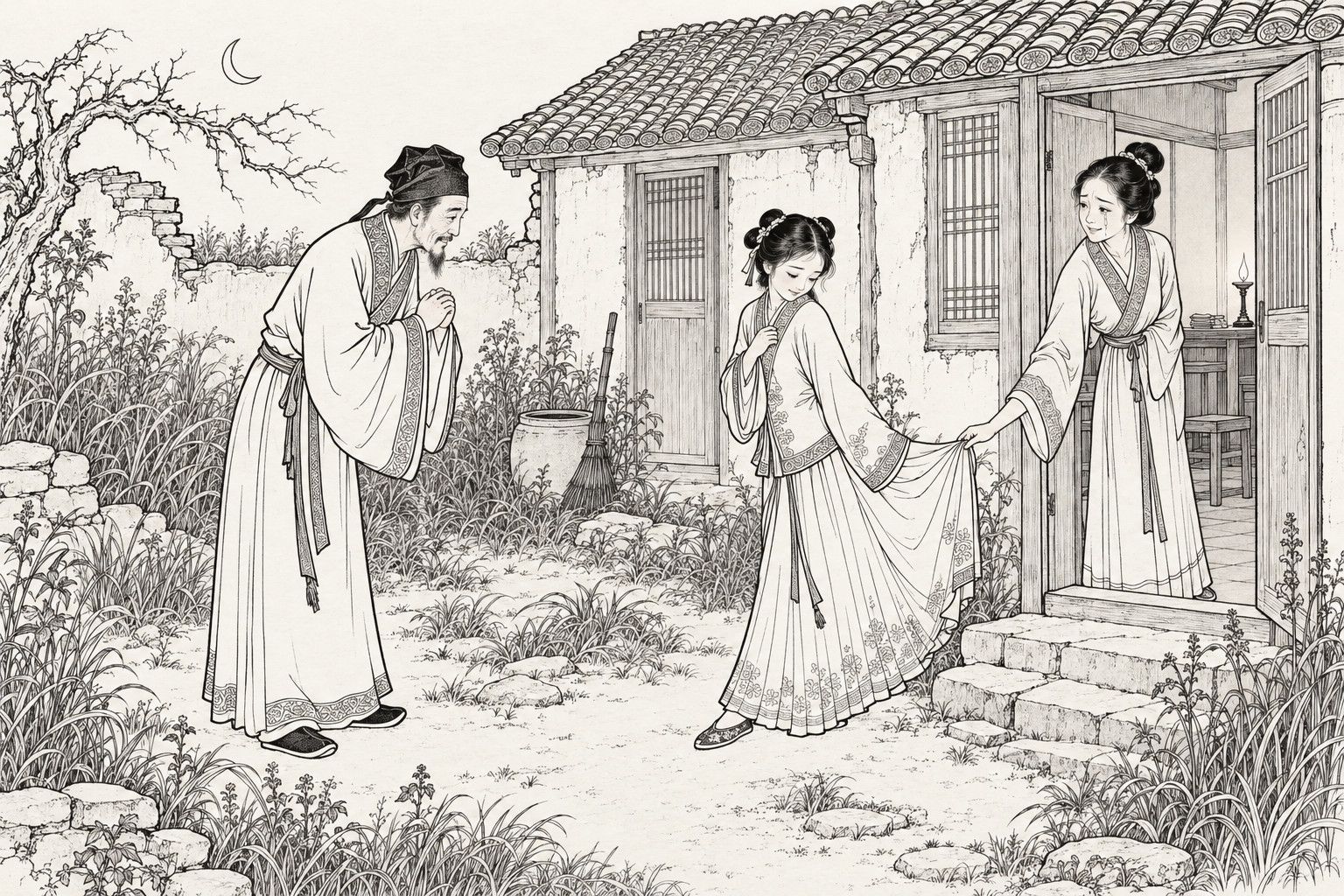
北行里許,有大村落,約數十百家。至一第宅,朱以指彈扉,即有媼出,豁開兩扉,問朱:「何為?」曰:「煩達娘子,云阿舅至。」媼旋反,頃復出,邀生入,顧朱曰:「兩椽茅舍子大隘,勞公子門外少坐候。」生從之入。見半畝荒庭,列小室二。甥女迎門啜泣,生亦泣,室中燈火熒然。女貌秀潔如生,凝目含涕,遍問妗姑。生曰:「具各無恙,但荊人物故矣。」女又嗚咽曰:「兒少受舅妗撫育,尚無寸報,不圖先葬溝瀆,殊為恨恨。舊年伯伯家大哥遷父去,置兒不一念,數百里外,伶仃如秋燕。舅不以沉魂可棄,又蒙賜金帛,兒已得之矣。」生以朱言告,女俯首無語。媼曰:「公子曩托楊姥三五返,老身謂是大好。小娘子不肯自草草,得舅為政,方此意慊得。」言次,一十七八女郎,從一青衣遽掩入,瞥見生。轉身欲遁。女牽其裾曰:「勿須爾!是阿舅。」生揖之。女郎亦斂衽。甥曰:「九娘,棲霞公孫氏。阿爹故家子,今亦『窮波斯』,落落不稱意。旦晚與兒還往。」生睨之,笑彎秋月,羞暈朝霞,實天人也。曰:「可知是大家,蝸廬人焉得如此娟好!」甥笑曰:「且是女學士,詩詞俱大高作。昨兒稍得指教。」九娘微哂曰:「小婢無端敗壞人,教阿舅齒冷也。」甥又笑曰:「舅斷弦未續,若個小娘子,頗能快意否?」九娘笑奔出,曰:「婢子顛瘋作也!」遂去,言雖近戲,而生殊愛好之,甥似微察,乃曰:「九娘才貌無雙,舅倘不以糞壤致猜,兒當請諸其母。」生大悅,然慮人鬼難匹。女曰:「無傷,彼與舅有夙分。」生乃出。女送之,曰:「五日後,月明人靜,當遣人往相迓。」生至戶外,不見朱。翹首西望。月銜半規,昏黃中猶認舊徑。見南面一第,朱坐門石上,起逆曰:「相待已久,寒舍即勞垂顧。」遂攜手入,殷殷展謝。出金爵一、晉珠百枚,曰:「他無長物,聊代禽儀。」既而曰:「家有濁醪,但幽室之物,不足款嘉賓,奈何!」生撝謝而退。朱送至中途,始別。
北行里许,有大村落,约数十百家。至一第宅,朱以指弹扉,即有媪出,豁开两扉,问朱:「何为?」曰:「烦达娘子,云阿舅至。」媪旋反,顷复出,邀生入,顾朱曰:「两椽茅舍子大隘,劳公子门外少坐候。」生从之入。见半亩荒庭,列小室二。甥女迎门啜泣,生亦泣,室中灯火荧然。女貌秀洁如生,凝目含涕,遍问妗姑。生曰:「具各无恙,但荆人物故矣。」女又呜咽曰:「儿少受舅妗抚育,尚无寸报,不图先葬沟渎,殊为恨恨。旧年伯伯家大哥迁父去,置儿不一念,数百里外,伶仃如秋燕。舅不以沉魂可弃,又蒙赐金帛,儿已得之矣。」生以朱言告,女俯首无语。媪曰:「公子曩托杨姥三五返,老身谓是大好。小娘子不肯自草草,得舅为政,方此意慊得。」言次,一十七八女郎,从一青衣遽掩入,瞥见生。转身欲遁。女牵其裾曰:「勿须尔!是阿舅。」生揖之。女郎亦敛衽。甥曰:「九娘,栖霞公孙氏。阿爹故家子,今亦『穷波斯』,落落不称意。旦晚与儿还往。」生睨之,笑弯秋月,羞晕朝霞,实天人也。曰:「可知是大家,蜗庐人焉得如此娟好!」甥笑曰:「且是女学士,诗词俱大高作。昨儿稍得指教。」九娘微哂曰:「小婢无端败坏人,教阿舅齿冷也。」甥又笑曰:「舅断弦未续,若个小娘子,颇能快意否?」九娘笑奔出,曰:「婢子颠疯作也!」遂去,言虽近戏,而生殊爱好之,甥似微察,乃曰:「九娘才貌无双,舅倘不以粪壤致猜,儿当请诸其母。」生大悦,然虑人鬼难匹。女曰:「无伤,彼与舅有夙分。」生乃出。女送之,曰:「五日后,月明人静,当遣人往相迓。」生至户外,不见朱。翘首西望。月衔半规,昏黄中犹认旧径。见南面一第,朱坐门石上,起逆曰:「相待已久,寒舍即劳垂顾。」遂携手入,殷殷展谢。出金爵一、晋珠百枚,曰:「他无长物,聊代禽仪。」既而曰:「家有浊醪,但幽室之物,不足款嘉宾,奈何!」生㧑谢而退。朱送至中途,始别。
They went north about a li and came to a large village of some scores of households, perhaps a hundred. They stopped at a house, and Zhu tapped on the door with his finger. At once an old woman came out and flung open both leaves of the door. “What is it?” she asked Zhu. “Please tell the young lady that her uncle has come.” The old woman went back in and soon came out again to invite the scholar in. Turning to Zhu, she said, “Our two-room cottage is too cramped. Would the young master please sit outside the gate and wait a little?” The scholar followed her in. He saw an overgrown courtyard of half a mu, with two small rooms side by side. His niece met him at the door, sobbing, and the scholar wept too. A lamp glimmered faintly in the room. The girl looked as fine and fresh as she had in life. She gazed at him with tears in her eyes and asked after each of her aunts. “They are all well,” said the scholar, “but my wife has passed away.” She sobbed again. “When I was little you and Aunt brought me up, and I have never repaid you the least bit. I never thought I would be buried in a ditch before you. It grieves me so. Last year my cousin, my uncle’s eldest son, moved Father away, and never gave me a thought. Hundreds of li from home, I am as forlorn as a swallow in autumn. But you did not think a lost soul fit to be abandoned, Uncle — you sent me money and silk. I have received them.” The scholar told her what Zhu had said. She bowed her head and said nothing. “The young master sent old Mrs. Yang here three or five times,” said the old woman. “I thought it was a very good match. But the young lady would not settle it carelessly on her own. Now that her uncle is here to decide, she can be content.” As she was speaking, a girl of seventeen or eighteen, followed by a maid in blue, burst in unannounced. She caught sight of the scholar and turned to flee. The niece caught her by the skirt. “No need for that! It’s my uncle.” The scholar bowed to her, and the girl curtsied in return. “This is Jiuniang,” said the niece, “of the Gongsun family of Qixia. Her father comes from an old family, but now he too is a ‘poor Persian’, and life has not gone his way. She keeps me company morning and evening.” The scholar stole a glance at her. When she smiled, her brows curved like the autumn moon; when she blushed, it was like the clouds at dawn. She was truly a being from heaven. “Of course she is from a great family,” he said. “How could anyone from a snail-shell hut be so lovely?” The niece laughed. “She is a lady scholar besides. Her poems and lyrics are very fine. Yesterday she gave me a little instruction.” Jiuniang smiled faintly. “The little wretch runs people down for no reason. She will make your uncle laugh at me.” The niece laughed again. “Uncle’s broken string has not been restrung. Would a young lady like this suit you?” Jiuniang ran out laughing. “The girl has gone mad!” And she was gone. Though the words were half in jest, the scholar was greatly taken with her. His niece seemed to notice it a little. “Jiuniang has no equal in talent or looks,” she said. “If you won’t hold it against her that she is dust and dirt, Uncle, I will speak to her mother.” The scholar was delighted, but he worried that a man and a ghost could hardly be matched. “No harm in it,” said his niece. “She and you have a bond from a former life.” Then the scholar went out. She saw him off. “In five days,” she said, “when the moon is bright and all is still, I will send someone to fetch you.” Outside the door, the scholar could not see Zhu. He craned his neck and looked west. The moon was a half circle, and in its dim yellow light he could still make out the path he had come by. He saw a house to the south, with Zhu sitting on the stone by its gate. Zhu got up to meet him. “I have been waiting a long while. Please honour my humble house.” Hand in hand they went in, and Zhu thanked him warmly again and again. He brought out a gold wine cup and a hundred pearls of Jin. “I have nothing else of value,” he said. “Let these stand in for the betrothal goose.” Then he said, “There is some cloudy wine in the house, but it is a thing of the dark world, not fit to offer an honoured guest. What a pity!” The scholar waved it away with thanks and withdrew. Zhu saw him halfway home before they parted.
生歸,僧僕集問,隱之曰:「言鬼者妄也,適友人飲耳。」後五日,朱果來,整履搖箑,意甚欣。方至戶,望塵即拜。笑曰:「君嘉禮既成,慶在旦夕,便煩枉步。」生曰:「以無回音,尚未致聘,何遽成禮?」朱曰:「僕已代致之。」生深感荷,從與俱去。直達臥所,則女甥華妝迎笑。生問:「何時于歸?」女曰:「三日矣。」朱乃出所贈珠,為甥助妝。女三辭乃受,謂生曰:「兒以舅意白公孫老夫人,夫人作大歡喜。但言老耄無他骨肉,不欲九娘遠嫁,期今夜舅往贅諸其家。伊家無男子,便可同郎往也。」朱乃導去。村將盡,一第門開,二人登其堂。俄白:「老夫人至。」有二青衣扶嫗升階。生欲展拜,夫人云:「老朽龍鐘,不能為禮,當即脫邊幅。」指畫青衣,進酒高會。朱乃喚家人,另出肴俎,列置生前;亦別設一壺,為客行觴。筵中進饌,無異人世。然主人自舉,殊不勸進。
生归,僧仆集问,隐之曰:「言鬼者妄也,适友人饮耳。」后五日,朱果来,整履摇箑,意甚欣。方至户,望尘即拜。笑曰:「君嘉礼既成,庆在旦夕,便烦枉步。」生曰:「以无回音,尚未致聘,何遽成礼?」朱曰:「仆已代致之。」生深感荷,从与俱去。直达卧所,则女甥华妆迎笑。生问:「何时于归?」女曰:「三日矣。」朱乃出所赠珠,为甥助妆。女三辞乃受,谓生曰:「儿以舅意白公孙老夫人,夫人作大欢喜。但言老耄无他骨肉,不欲九娘远嫁,期今夜舅往赘诸其家。伊家无男子,便可同郎往也。」朱乃导去。村将尽,一第门开,二人登其堂。俄白:「老夫人至。」有二青衣扶妪升阶。生欲展拜,夫人云:「老朽龙钟,不能为礼,当即脱边幅。」指画青衣,进酒高会。朱乃唤家人,另出肴俎,列置生前;亦别设一壶,为客行觞。筵中进馔,无异人世。然主人自举,殊不劝进。
When the scholar got back, the monks and his servant gathered round to ask where he had been. He kept it from them. “Talk of ghosts is nonsense. I was just out drinking with a friend.” Five days later Zhu did come, his shoes neatly tied, waving a fan, in high spirits. He bowed low while he was still at the door. “Your wedding is settled,” he said, laughing, “and the celebration is only hours away. Please come along.” “There has been no answer,” said the scholar, “so I have not even sent the betrothal gifts. How can it be settled so soon?” “I have sent them for you,” said Zhu. The scholar was deeply grateful and went with him. They went straight to Zhu’s bedroom, where the scholar’s niece, splendidly dressed, met him with a smile. “When were you married?” he asked. “Three days ago,” she said. The scholar then took out the pearls Zhu had given him and gave them to her toward her trousseau. She declined three times before she accepted them. Then she said to him, “I told old Lady Gongsun what you wanted, Uncle, and she was very pleased. But she says she is old and has no other kin, and she does not want Jiuniang married far away, so she asks you to go tonight and marry into their house. There are no men in their family, so my husband can go with you.” So Zhu led him there. Near the end of the village the gate of a house stood open, and the two of them went up into its hall. Presently someone announced, “The old lady is here.” Two maids in blue helped an old woman up the steps. The scholar was about to kneel and bow, but she said, “I am old and doddering, and can’t manage the ceremonies. Let us do without formality.” She directed the maids to bring wine for a grand feast. Zhu then called his own servants to bring other dishes and set them in front of the scholar. He also set out a separate pot of wine and poured for the guest himself. The food served at the banquet was no different from the world of the living. But the hosts helped themselves, and did not once press him to eat.