異史氏曰:人情鬼蜮,所在皆然;南北沖衢,其害尤烈。如強弓怒馬,御人于國門之外者,夫人而知之矣。或有劙囊刺橐,攫貨于市,行人回首,財貨已空,此非鬼蜮之尤者耶?乃又有萍水相逢,甘言如醴,其來也漸,其入也深。誤認傾蓋之交,遂罹喪資之禍。隨機設阱,情狀不一;俗以其言辭浸潤,名曰「念秧」。今北途多有之,遭其害者尤眾。
异史氏曰:人情鬼蜮,所在皆然;南北冲衢,其害尤烈。如强弓怒马,御人于国门之外者,夫人而知之矣。或有劙囊刺橐,攫货于市,行人回首,财货已空,此非鬼蜮之尤者耶?乃又有萍水相逢,甘言如醴,其来也渐,其入也深。误认倾盖之交,遂罹丧资之祸。随机设阱,情状不一;俗以其言辞浸润,名曰「念秧」。今北途多有之,遭其害者尤众。
The Historian of the Strange says: The hearts of men are as treacherous as ghosts and water-imps the world over, and on the great highways between north and south the harm is at its worst. There are robbers with strong bows and fierce horses who waylay travellers outside the city gates, and everyone knows about them. Then there are those who slit purses and cut open bags and snatch goods in the market: the traveller turns his head, and his money is gone. Are these not the worst of the ghosts and imps? But there is yet another kind. They meet you by chance, like duckweed drifting together on the water, with words as sweet as new wine. They come on little by little and work their way in deep. You take them for friends made on the road, and so you meet the disaster of losing your money. They set their traps as the chance offers, in all sorts of guises, and because their talk soaks into you, people call them nianyang. Nowadays there are many of them on the northern roads, and a great many people fall victim to them.
余鄉王子巽者,邑諸生。有族先生在都為旗籍太史,將往探訊。治裝北上,出濟南,行數里,有一人跨黑衛馳與同行,時以閑語相引,王頗與問答。其人自言:「張姓。為棲霞隸,被令公差赴都。」稱謂撝卑,祗奉殷勤,相從數十里,約以同宿。王在前則策蹇迫及,在後則祗候道左。僕疑之,因厲色拒去,不使相從。張頗自慚,揮鞭遂去。既暮休于旅舍,偶步門庭,則見張就外舍飲。方驚疑間,張望見王垂手拱立,謙若廝僕,稍稍問訊。王亦以泛泛適相值,不為疑,然王僕終夜戒備之。雞既唱,張來呼與同行,僕咄絕之,乃去。朝暾已上,王始就道。行半日許,前一人跨白衛,約四十許,衣帽整潔,垂首蹇分,盹寐欲墮。或先或後,因循十餘里。王怪問:「夜何作,致迷頓乃爾?」其人聞之,猛然欠伸,言:「青苑人,許姓,臨淄令高檠是我中表。家兄設帳于官署,我往探省,少獲饋貽。今夜旅舍,誤同念秧者宿,驚惕不敢交睫,遂致白晝迷悶。」王故問:「念秧何說?」許曰:「君客時少,未知險詐。今有匪類,以甘言誘行旅,夤緣與同休止,因而乘機騙賺。昨有葭莩親,以此喪資斧。吾等皆宜警備。」王頷之。先是,臨淄宰與王有舊,曾入其幕,識其門客,果有許姓,遂不復疑。因道寒溫,兼詢其兄況。許約暮共主人,王諾之。仆終疑其偽,陰與主謀,遲留不進,相失,遂杳。
余乡王子巽者,邑诸生。有族先生在都为旗籍太史,将往探讯。治装北上,出济南,行数里,有一人跨黑卫驰与同行,时以闲语相引,王颇与问答。其人自言:「张姓。为栖霞隶,被令公差赴都。」称谓㧑卑,祗奉殷勤,相从数十里,约以同宿。王在前则策蹇迫及,在后则祗候道左。仆疑之,因厉色拒去,不使相从。张颇自惭,挥鞭遂去。既暮休于旅舍,偶步门庭,则见张就外舍饮。方惊疑间,张望见王垂手拱立,谦若厮仆,稍稍问讯。王亦以泛泛适相值,不为疑,然王仆终夜戒备之。鸡既唱,张来呼与同行,仆咄绝之,乃去。朝暾已上,王始就道。行半日许,前一人跨白卫,约四十许,衣帽整洁,垂首蹇分,盹寐欲堕。或先或后,因循十余里。王怪问:「夜何作,致迷顿乃尔?」其人闻之,猛然欠伸,言:「青苑人,许姓,临淄令高檠是我中表。家兄设帐于官署,我往探省,少获馈贻。今夜旅舍,误同念秧者宿,惊惕不敢交睫,遂致白昼迷闷。」王故问:「念秧何说?」许曰:「君客时少,未知险诈。今有匪类,以甘言诱行旅,夤缘与同休止,因而乘机骗赚。昨有葭莩亲,以此丧资斧。吾等皆宜警备。」王颔之。先是,临淄宰与王有旧,曾入其幕,识其门客,果有许姓,遂不复疑。因道寒温,兼询其兄况。许约暮共主人,王诺之。仆终疑其伪,阴与主谋,迟留不进,相失,遂杳。
Wang Zixun, from my home parts, was a licentiate of my county. An elder of his clan was a Hanlin academician in the capital, enrolled in the Banners, and Wang set out to visit him. He packed and went north. A few li out of Jinan, a man on a black donkey came riding up and fell in with him, and kept drawing him into idle talk; Wang answered him readily enough. The man said: “My name is Zhang. I’m a runner at the Qixia yamen, sent to the capital on the magistrate’s business.” He spoke of himself very humbly and waited on Wang with great attentiveness. He kept company with Wang for several dozen li and proposed they put up together for the night. When Wang was ahead, he whipped up his donkey to catch up; when Wang fell behind, he waited respectfully at the roadside. Wang’s servant grew suspicious and sent him off sternly, refusing to let him follow. Zhang looked rather ashamed, flourished his whip and rode away. That evening Wang stopped at an inn. Strolling about the gateway, he saw Zhang drinking in the outer rooms. While he was still startled and wondering, Zhang caught sight of him and stood with hands lowered and joined in a bow, as humble as a menial, and asked a few polite questions. Wang took it for an ordinary chance meeting and thought nothing of it, but his servant watched Zhang all night. When the cock crowed, Zhang came to call them to set off together; the servant drove him off with a curse, and he went. Only when the morning sun was up did Wang take the road. After about half a day, there was a man ahead of him on a white donkey, about forty, his clothes and hat neat and clean, his head drooping as he jogged along, nodding with sleep as if about to fall off. Sometimes ahead, sometimes behind, they went on like this for more than ten li. Wang, puzzled, asked: “What were you doing last night, to be in such a daze?” The man started, yawned and stretched, and said: “I’m from Qingyuan, surname Xu. Gao Qing, the magistrate of Linzi, is my cousin. My elder brother teaches in his yamen, and I went to visit him and came away with a few presents. Last night at the inn I had the bad luck to lodge with nianyang men. I was so frightened I didn’t dare shut my eyes, and that’s why I’m in a fog in broad daylight.” Wang asked on purpose: “What do you mean, nianyang?” Xu said: “You haven’t travelled much, sir; you don’t know the dangers and tricks of the road. There are villains about who lure travellers with sweet words, worm their way into stopping and lodging with them, and then cheat them when they get the chance. Just yesterday a distant relative of mine lost his travelling money that way. We should all be on our guard.” Wang nodded. Now, Wang was an old acquaintance of the magistrate of Linzi; he had once served on his staff and knew his retainers, and there had in fact been one named Xu. So he dropped his suspicions, exchanged pleasantries, and asked after Xu’s brother. Xu proposed they put up at the same inn that evening, and Wang agreed. But the servant still suspected he was a fraud. He planned secretly with his master to dawdle and hang back, and so they lost Xu and saw no more of him.
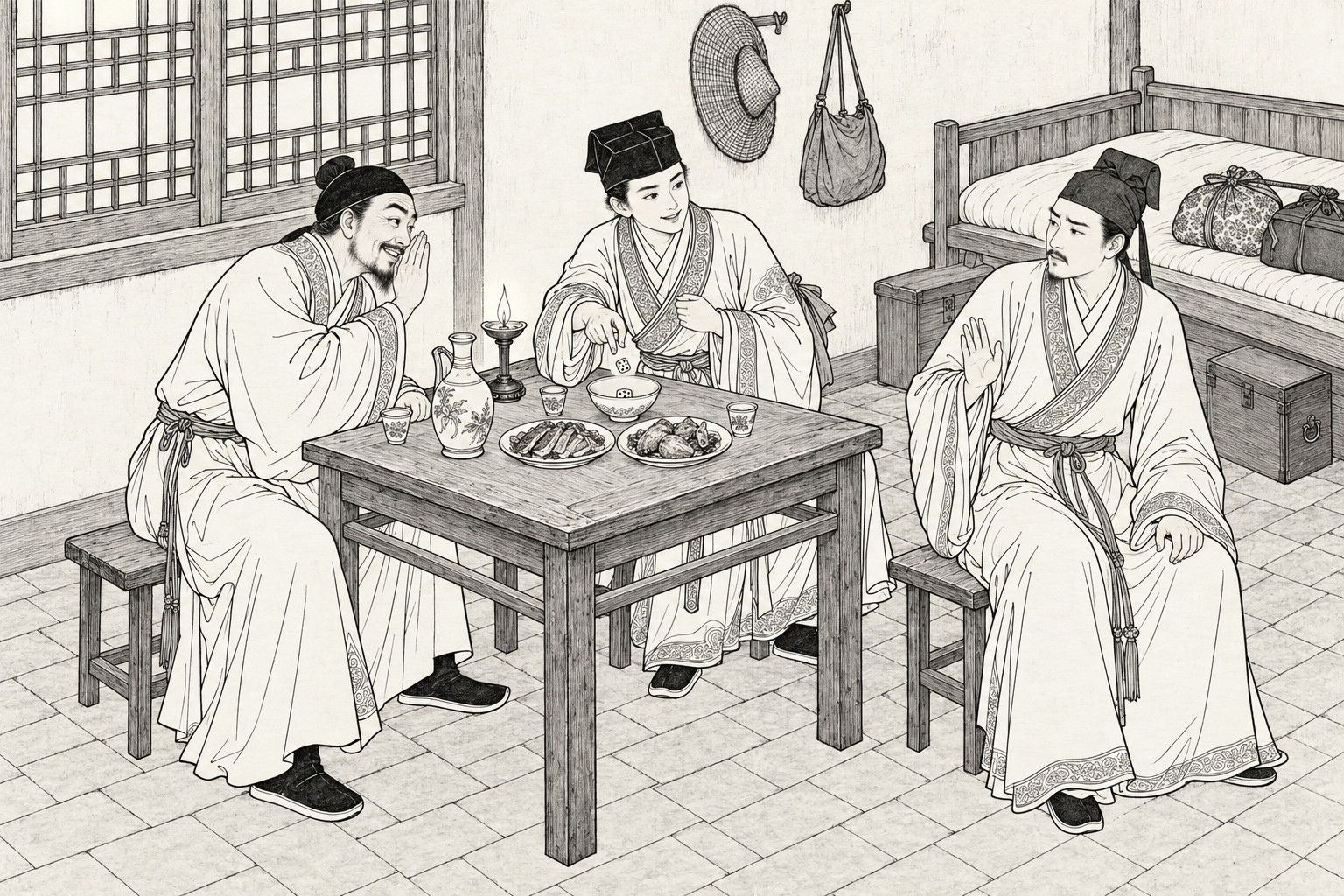
翼日卓午,又遇一少年,年可十六七,騎健騾,冠服修整,貌甚都。同行久之,未交一言。日既夕,少年忽曰:「前去曲律店不遠矣。」王微應之。少年因咨嗟欷歔,如不自勝。王略致詰,少年嘆曰:「僕江南金姓。三年膏火,冀博一第,不圖竟落孫山!家兄為部中主政,遂載細小來,冀得排遣。生平不曾踐涉,撲面塵沙,使人薅惱。」因取紅巾拭面,嘆咤不已。聽其語,操南音,嬌婉若女子。王心好之,稍為慰藉。少年曰:「適先馳出,眷口久望不來,何僕輩亦無至者?日已將暮,奈何!」遲留瞻望,行甚緩。王遂先驅,相去漸遠。晚投旅邸,既入舍,則壁下一床,先有客解裝其上。王問主人,即有一人入,攜之而出,曰:「但請安置,當即移他所。」王視之則許。王止與同舍,許遂止,因與坐談。少間,又有攜裝入者,見王、許在舍,返身遽出,曰:「已有客在。」王審視,則途中少年也。王未言,許急起曳留之,少年遂坐。許乃展問邦族,少年又以途中言為許告。俄頃,解囊出資,堆累頗重,秤兩餘付主人,囑治肴酒,以供夜話。二人爭勸止之,卒不聽。
翼日卓午,又遇一少年,年可十六七,骑健骡,冠服修整,貌甚都。同行久之,未交一言。日既夕,少年忽曰:「前去曲律店不远矣。」王微应之。少年因咨嗟欷歔,如不自胜。王略致诘,少年叹曰:「仆江南金姓。三年膏火,冀博一第,不图竟落孙山!家兄为部中主政,遂载细小来,冀得排遣。生平不曾践涉,扑面尘沙,使人薅恼。」因取红巾拭面,叹咤不已。听其语,操南音,娇婉若女子。王心好之,稍为慰藉。少年曰:「适先驰出,眷口久望不来,何仆辈亦无至者?日已将暮,奈何!」迟留瞻望,行甚缓。王遂先驱,相去渐远。晚投旅邸,既入舍,则壁下一床,先有客解装其上。王问主人,即有一人入,携之而出,曰:「但请安置,当即移他所。」王视之则许。王止与同舍,许遂止,因与坐谈。少间,又有携装入者,见王、许在舍,返身遽出,曰:「已有客在。」王审视,则途中少年也。王未言,许急起曳留之,少年遂坐。许乃展问邦族,少年又以途中言为许告。俄顷,解囊出资,堆累颇重,秤两余付主人,嘱治肴酒,以供夜话。二人争劝止之,卒不听。
Around noon the next day he met a youth of perhaps sixteen or seventeen on a sturdy mule, his cap and clothes neat and trim, and very handsome. They rode together a long while without exchanging a word. When the sun had set, the youth said suddenly: “It isn’t far now to Qulüdian.” Wang made some vague reply. Then the youth began to sigh and sob as if overcome. Wang asked a little about it, and the youth sighed: “My name is Jin, from Jiangnan, south of the Yangzi. Three years of burning lamp oil in the hope of a degree, and I never thought I’d fall even behind Sun Shan! My elder brother is a secretary in one of the ministries, so I brought my family up with me, hoping to take my mind off it. I’ve never travelled before, and this dust and sand in my face is driving me to distraction.” He took out a red handkerchief and wiped his face, sighing and lamenting all the while. He spoke with a southern accent, soft and sweet as a girl’s. Wang took a liking to him and said a few comforting words. The youth said: “I rode on ahead just now, and I’ve been watching for my family a long while, but they don’t come. Why don’t any of my servants turn up either? It will soon be dark. What shall I do?” He lingered, looking back, and rode very slowly. So Wang pressed on ahead and gradually left him behind. In the evening he put up at an inn. When he went into his room, there was a bed by the wall where another guest had already laid out his baggage. Wang asked the innkeeper about it, and just then a man came in, picked up the baggage and carried it out, saying: “Please settle in, sir. I’ll move somewhere else at once.” Wang looked at him: it was Xu. Wang stopped him and asked him to share the room, so Xu stayed, and they sat talking. A little later someone else came in carrying his baggage, saw Wang and Xu in the room, turned round and hurried out, saying: “There are guests here already.” Wang looked closely: it was the youth from the road. Before Wang could speak, Xu jumped up, caught hold of him and made him stay, and the youth sat down. Xu asked him where he was from and of what family, and the youth told Xu what he had said on the road. In a moment he opened his purse and took out his silver, a heavy pile of it, weighed out a tael or so for the innkeeper, and told him to prepare food and wine for an evening of talk. The other two did their best to talk him out of it, but he would not listen.