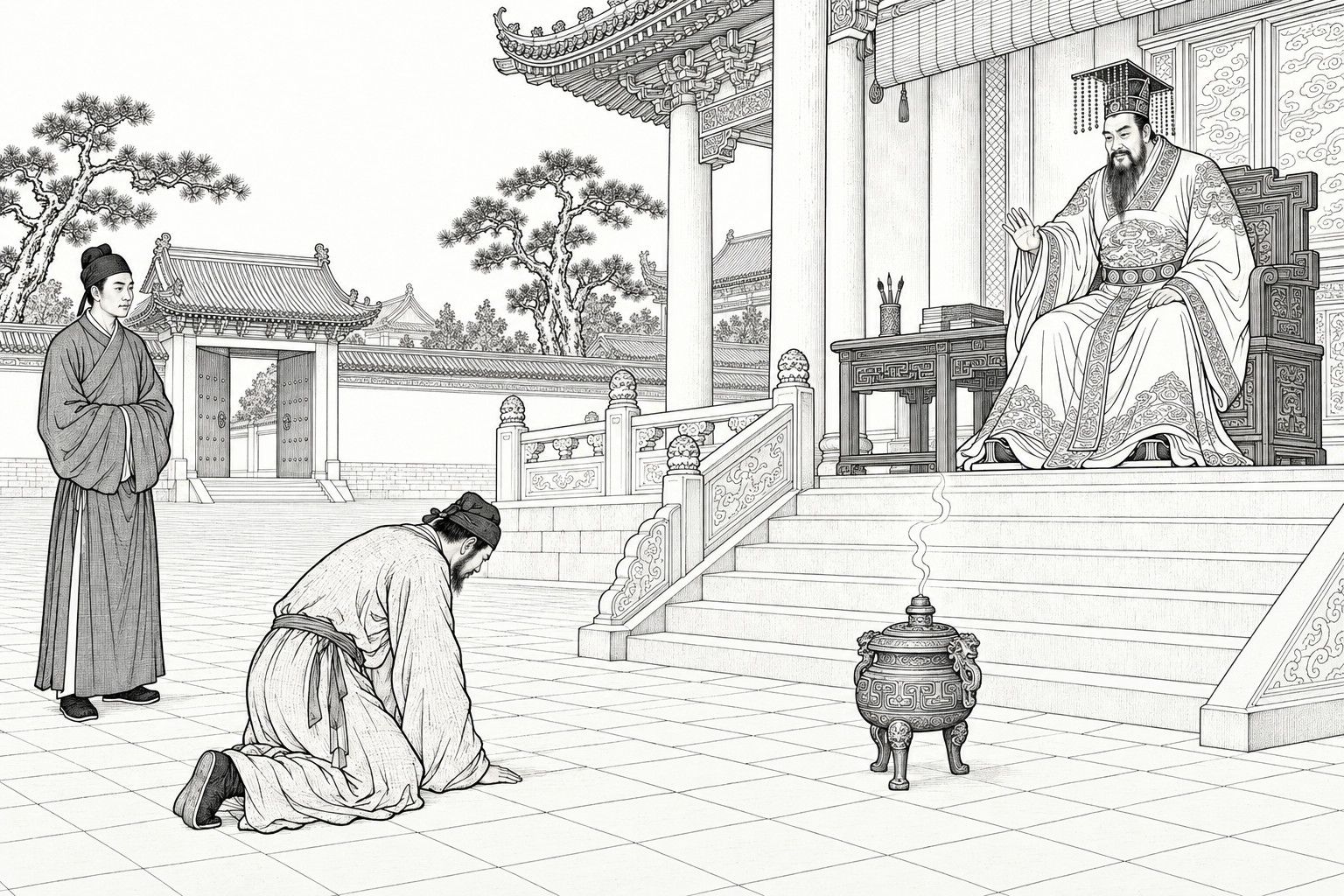
李常久,臨朐人。壺榼於野,見旋風蓬蓬而來,敬酹奠之。後以故他適,路傍有廣第,殿閣弘麗。一青衣人自內出,邀李。李固辭。青衣要遮甚殷。李曰:「素不識荊,得無誤耶?」青衣云:「不誤。」便言李姓字。問:「此誰家?」答云:「入自知之。」入,進一層門,見一女子手足釘扉上。近視,其嫂也。大駭。李有嫂,臂生惡疽,不起者年餘矣。因自念何得至此。轉疑招致意惡,畏沮卻步。青衣促之,乃入。至殿下,上一人,冠帶如王者,氣象威猛。李跪伏,莫敢仰視。王者命曳起之。慰之曰:「勿懼。我以曩昔擾子杯酌,欲一見相謝,無他故也。」李心始安,然終不知其故。王者又曰:「汝不憶田野酹奠時乎?」李頓悟,知其為神。頓首曰:「適見嫂氏受此嚴刑,骨肉之情,實愴於懷。乞王憐宥!」王者曰:「此甚悍妒,宜得是罰。三年前,汝兄妾盤腸而產,彼陰以針刺腸上,俾至今臟腑常痛。此豈有人理者!」李固哀之。乃曰:「便以子故宥之。歸當勸悍婦改行。」李謝而出,則扉上無人矣。歸視嫂,嫂臥榻上,創血殷席。時以妾拂意故,方致詬罵。李遽勸曰:「嫂無復爾!今日惡苦,皆平日忌嫉所致。」嫂怒曰:「小郎若個好男兒;又房中娘子賢似孟姑姑,任郎君東家眠,西家宿,不敢一作聲。自當是小郎大好乾綱,到不得代哥子降伏老媼!」李微晒曰:「嫂勿怒。若言其情,恐欲哭不暇矣。」嫂曰:「便曾不盜得王母籮中線,又未與玉皇香案吏一眨眼,中懷坦坦,何處可用哭者!」李小語曰:「針刺人腸,宜何罪?」嫂勃然色變,問此言之因。李告之故。嫂戰惕不已,涕泗流離而哀鳴曰:「吾不敢矣!」啼淚未乾,覺痛頓止,旬日而瘥。由是立改前轍,遂稱賢淑。後妾再產,腸復墮,針宛然在焉。拔去之,腸痛乃瘳。
李常久,临朐人。壶榼于野,见旋风蓬蓬而来,敬酹奠之。后以故他适,路傍有广第,殿阁弘丽。一青衣人自内出,邀李。李固辞。青衣要遮甚殷。李曰:「素不识荆,得无误耶?」青衣云:「不误。」便言李姓字。问:「此谁家?」答云:「入自知之。」入,进一层门,见一女子手足钉扉上。近视,其嫂也。大骇。李有嫂,臂生恶疽,不起者年余矣。因自念何得至此。转疑招致意恶,畏沮却步。青衣促之,乃入。至殿下,上一人,冠带如王者,气象威猛。李跪伏,莫敢仰视。王者命曳起之。慰之曰:「勿惧。我以曩昔扰子杯酌,欲一见相谢,无他故也。」李心始安,然终不知其故。王者又曰:「汝不忆田野酹奠时乎?」李顿悟,知其为神。顿首曰:「适见嫂氏受此严刑,骨肉之情,实怆于怀。乞王怜宥!」王者曰:「此甚悍妒,宜得是罚。三年前,汝兄妾盘肠而产,彼阴以针刺肠上,俾至今脏腑常痛。此岂有人理者!」李固哀之。乃曰:「便以子故宥之。归当劝悍妇改行。」李谢而出,则扉上无人矣。归视嫂,嫂卧榻上,创血殷席。时以妾拂意故,方致诟骂。李遽劝曰:「嫂无复尔!今日恶苦,皆平日忌嫉所致。」嫂怒曰:「小郎若个好男儿;又房中娘子贤似孟姑姑,任郎君东家眠,西家宿,不敢一作声。自当是小郎大好乾纲,到不得代哥子降伏老媪!」李微晒曰:「嫂勿怒。若言其情,恐欲哭不暇矣。」嫂曰:「便曾不盗得王母箩中线,又未与玉皇香案吏一眨眼,中怀坦坦,何处可用哭者!」李小语曰:「针刺人肠,宜何罪?」嫂勃然色变,问此言之因。李告之故。嫂战惕不已,涕泗流离而哀鸣曰:「吾不敢矣!」啼泪未干,觉痛顿止,旬日而瘥。由是立改前辙,遂称贤淑。后妾再产,肠复堕,针宛然在焉。拔去之,肠痛乃瘳。
Li Changjiu was a man of Linqu. He was out in the fields with a jug of wine when he saw a whirlwind come spinning toward him, and he reverently poured out a libation to it. Later he had occasion to travel elsewhere. By the roadside stood a great mansion, its halls and towers vast and splendid. A servant in black came out and invited Li in. Li firmly declined. The servant barred his way and pressed him very hard. “I have never had the honour of your master’s acquaintance,” said Li. “Isn’t this some mistake?” “No mistake,” said the servant, and he named Li’s surname and given name. “Whose house is this?” Li asked. “Go in and you will know.” Li went in. Passing through the first gate, he saw a woman nailed to a door by her hands and feet. He looked closer: it was his sister-in-law. He was horrified. Li did have a sister-in-law, who had an ugly ulcer on her arm and had not left her bed for over a year. How could she have come to be here? he wondered. Then he began to suspect he had been lured here for some evil purpose, and he stopped short in fear. The servant hurried him on, and he went in. At the foot of the hall he saw a man seated above, capped and sashed like a king, fierce and awesome to behold. Li knelt and bowed down, not daring to look up. The king ordered him pulled to his feet, and reassured him: “Do not be afraid. Some time ago I imposed on you for a cup of wine, and I wished to see you and thank you. That is all.” Li’s heart began to settle, but he still could not understand. “Don’t you remember pouring out wine in the fields?” said the king. Li understood at once, and knew he was a god. He knocked his head on the ground. “Just now I saw my sister-in-law suffering this terrible punishment. She is my own flesh and blood, and it truly wrings my heart. I beg Your Majesty to pity her and pardon her!” “She is a shrew and very jealous,” said the king, “and she deserves this punishment. Three years ago, when your brother’s concubine gave birth and her bowel came out with the child, this woman secretly stuck a needle into the bowel, so that the concubine still has pains in her belly to this day. Is that the act of a human being?” Li pleaded hard for her. At last the king said, “For your sake, then, I will pardon her. When you go home, you must urge that shrew to mend her ways.” Li thanked him and went out. There was no one on the door now. He went home to see his sister-in-law. She was lying on her bed, and the blood from her sore had soaked the mat dark red. Just then the concubine had crossed her in something, and she was in the middle of cursing her. Li hastened to urge her, “Sister, don’t do this any more! All the pain you suffer today comes from your jealousy all these years.” She flew into a rage. “What a fine man you are, little brother! And the wife in your room is as virtuous as Aunt Meng: she lets her husband sleep at one house to the east and bed down at another to the west, and never dares make a sound. No doubt, little brother, you rule your own house splendidly. That doesn’t mean you can tame this old woman on your brother’s behalf!” Li smiled faintly. “Don’t be angry, sister. If I told you the truth, I’m afraid you would be too busy weeping.” “I have never stolen thread from the Queen Mother’s basket,” she said, “nor so much as winked at the Jade Emperor’s incense-table clerk. My conscience is clear. What would I have to weep about?” Li said quietly, “Sticking a needle into someone’s bowel — what should the punishment be for that?” Her face changed. She demanded to know why he said it, and Li told her what had happened. She trembled and could not stop, tears and snot streaming down, and wailed, “I will never dare do it again!” Before her tears had dried she felt the pain stop at once, and within ten days she was well. From then on she changed her ways and came to be known for her virtue. Later, when the concubine gave birth again, her bowel came out again, and there was the needle, plain to see. They pulled it out, and the pain in her bowel was cured.