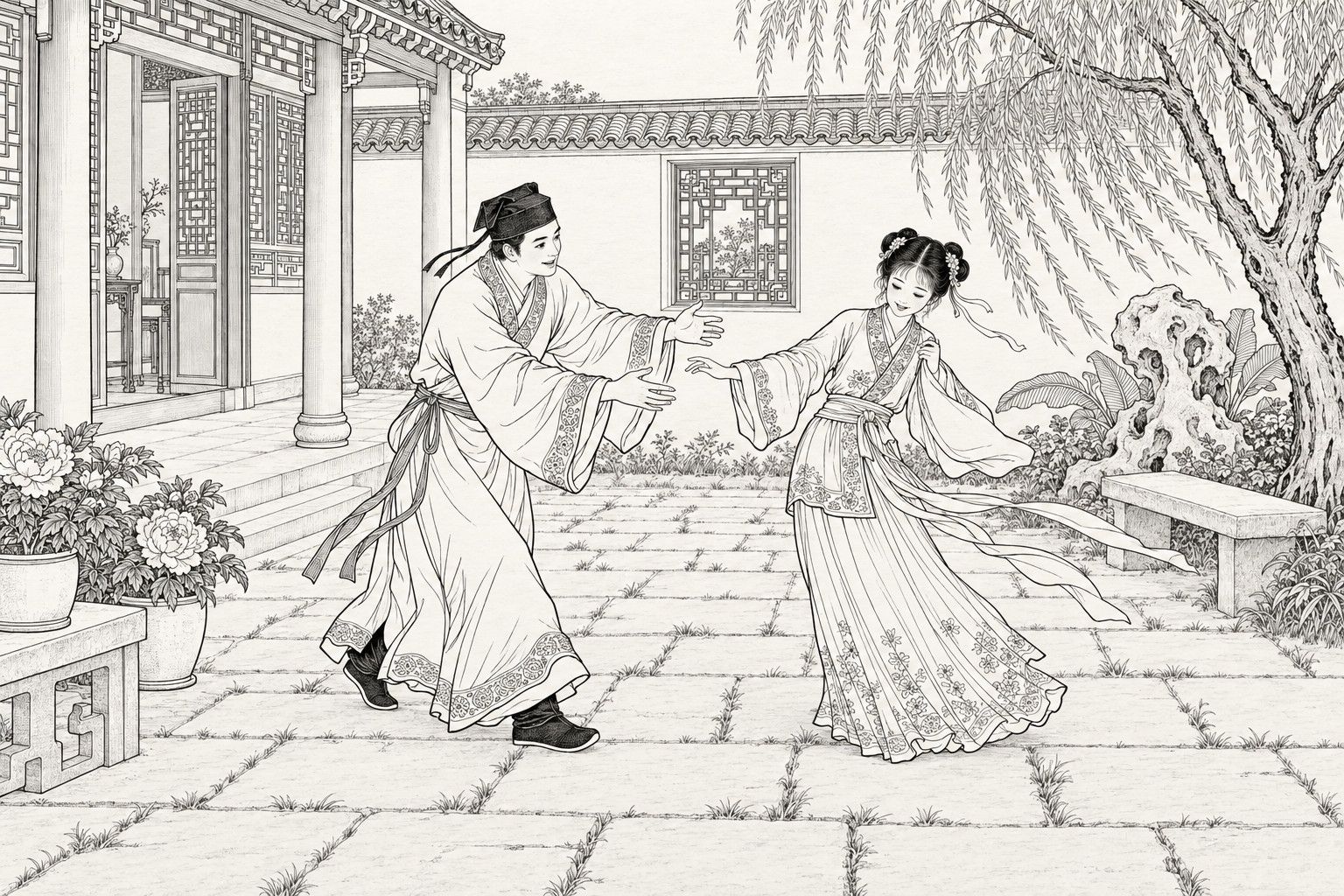
秦郵王鼎,字仙湖。為人慷慨有力,廣交遊。年十八,未娶,妻殞。每遠遊,恆經歲不返。兄鼐,江北名士,友于甚篤。勸弟勿遊,將為擇偶。生不聽,命舟抵鎮江訪友。友他出,因稅居於逆旅閣上。江水澄波,金山在目,心甚快之。次日,友人來,請生移居;辭不去。居半月餘,夜夢女郎,年可十四五,容華端妙,上床與合,既寤而遺。頗怪之,亦以為偶然。入夜,又夢之。如是三四夜。心大異,不敢息燭,身雖偃臥,惕然自警。纔交睫,夢女復來;方狎,忽自驚寤;急開目,則少女如仙,儼然猶在抱也。見生醒,頓自愧怯。生雖知非人,意亦甚得;無暇問訊,直與馳驟。女若不堪,曰:「狂暴如此,無怪人不敢明告也。」生始詰之。答云:「妾伍氏秋月。先父名儒,邃於易數。常珍愛妾;但言不永壽,故不許字人。後十五歲果夭歿,即攢瘞閣東,令與地平。亦無冢誌,惟立片石於棺側,曰:『女秋月,葬無冢,三十年,嫁王鼎。』今已三十年,君適至。心喜,亟欲自薦;寸心羞怯,故假之夢寐耳。」王亦喜,復求訖事。曰:「妾少須陽氣,欲求復生,實不禁此風雨。後日好合無限,何必今宵。」遂起而去。次日,復至,坐對笑謔,懽若生平。滅燭登床,無異生人;但女既起,則遺洩流離,沾染茵褥。一夕,明月瑩澈,小步庭中。問女:「冥中亦有城郭否?」答曰:「等耳。冥間城府,不在此處,去此可三四里。但以夜為晝。」問:「生人能見之否?」答云:「亦可。」生請往觀,女諾之。乘月去,女飄忽若風,王極力追隨。歘至一處,女言:「不遠矣。」王瞻望殊罔所見。女以唾塗其兩眥,啟之,明倍於常,視夜色不殊白晝。頓見雉堞在杳靄中;路上行人,如趨墟市。俄二皂縶三四人過,末一人怪類其兄。趨近之,果兄。駭問:「兄那得來?」兄見生,潸然零涕,言:「自不知何事,強被拘囚。」王怒曰:「我兄秉禮君子,何至縲絏如此!」便請二皂,幸且寬釋。皂不肯,殊大傲睨。生恚欲與爭。兄止之曰:「此是官命,亦合奉法。但余乏用度,索賄良苦。弟歸,宜措置。」生把兄臂,哭失聲。皂怒,猛掣項索,兄頓顛蹷。生見之,忿火填胸,不能制止,即解佩刀,立決皂首。一皂喊嘶,生又決之。女大驚曰:「殺官使,罪不宥!遲則禍及!請即覓舟北發,歸家勿摘提旛,杜門絕出入,七日保無慮也。」王乃挽兄夜買小舟,火急北渡。歸見弔客在門,知兄果死。閉門下鑰,始入。視兄已渺;入室,則亡者已蘇,便呼:「餓死矣!可急備湯餅。」時死已二日,家人盡駭。生乃備言其故。七日啟關,去喪旛,人始知其復甦。親友集問,但偽對之。轉思秋月,想念頗煩。遂復南下,至舊閣,秉燭久待,女竟不至。矇矓欲寢,見一婦人來,曰:「秋月小娘子致意郎君:前以公役被殺,凶犯逃亡,捉得娘子去,見在監押。押役遇之虐。日日盼郎君,當謀作經紀。」王悲憤,便從婦去。至一城都,入西郭,指一門曰:「小娘子暫寄此間。」王入,見房舍頗繁,寄頓囚犯甚多,並無秋月。又進一小扉,斗室中有燈火。王近窗以窺,則秋月坐榻上,掩袖嗚泣。二役在側,撮頤捉履,引以嘲戲。女啼益急。一役挽頸曰:「既為罪犯,尚守貞耶?」王怒,不暇語,持刀直入,一役一刀,摧斬如麻,篡取女郎而出。幸無覺者。裁至旅舍,驀然即醒。方怪幻夢之凶,見秋月含睇而立。生驚起曳坐,告之以夢。女曰:「真也,非夢也。」生驚曰:「且為奈何!」女歎曰:「此有定數。妾待月盡,始是生期;今已如此,急何能待!當速發瘞處,載妾同歸,日頻喚妾名,三日可活。但未滿時日,骨耎足弱,不能為君任井臼耳。」言已,草草欲出。又返身曰:「妾幾忘之,冥追若何?生時,父傳我符書,言三十年後,可佩夫婦。」乃索筆疾書兩符,曰:「一君自佩,一黏妾背。」送之出,志其沒處,掘尺許,即見棺木,亦已敗腐。側有小碑,果如女言。發棺視之,女顏色如生。抱入房中,衣裳隨風盡化。黏符已,以被褥嚴裹,負至江濱;呼攏泊舟,偽言妹急病,將送歸其家。幸南風大競,甫曉,已達里門。抱女安置,始告兄嫂。一家驚顧,亦莫敢直言其惑。生啟衾,長呼秋月,夜輒擁尸而寢。日漸溫煖。三日竟蘇,七日能步;更衣拜嫂,盈盈然神仙不殊。但十步之外,須人而行;不則隨風搖曳,屢欲傾側。見者以為身有此病,轉更增媚。每勸生曰:「君罪孽太深,宜積德誦經以懺之。不然,壽恐不永也。」生素不佞佛,至此皈依甚虔。後亦無恙。
秦邮王鼎,字仙湖。为人慷慨有力,广交游。年十八,未娶,妻殒。每远游,恒经岁不返。兄鼐,江北名士,友于甚笃。劝弟勿游,将为择偶。生不听,命舟抵镇江访友。友他出,因税居于逆旅阁上。江水澄波,金山在目,心甚快之。次日,友人来,请生移居;辞不去。居半月余,夜梦女郎,年可十四五,容华端妙,上床与合,既寤而遗。颇怪之,亦以为偶然。入夜,又梦之。如是三四夜。心大异,不敢息烛,身虽偃卧,惕然自警。才交睫,梦女复来;方狎,忽自惊寤;急开目,则少女如仙,俨然犹在抱也。见生醒,顿自愧怯。生虽知非人,意亦甚得;无暇问讯,直与驰骤。女若不堪,曰:「狂暴如此,无怪人不敢明告也。」生始诘之。答云:「妾伍氏秋月。先父名儒,邃于易数。常珍爱妾;但言不永寿,故不许字人。后十五岁果夭殁,即攒瘗阁东,令与地平。亦无冢志,惟立片石于棺侧,曰:『女秋月,葬无冢,三十年,嫁王鼎。』今已三十年,君适至。心喜,亟欲自荐;寸心羞怯,故假之梦寐耳。」王亦喜,复求讫事。曰:「妾少须阳气,欲求复生,实不禁此风雨。后日好合无限,何必今宵。」遂起而去。次日,复至,坐对笑谑,懽若生平。灭烛登床,无异生人;但女既起,则遗泄流离,沾染茵褥。一夕,明月莹澈,小步庭中。问女:「冥中亦有城郭否?」答曰:「等耳。冥间城府,不在此处,去此可三四里。但以夜为昼。」问:「生人能见之否?」答云:「亦可。」生请往观,女诺之。乘月去,女飘忽若风,王极力追随。歘至一处,女言:「不远矣。」王瞻望殊罔所见。女以唾涂其两眦,启之,明倍于常,视夜色不殊白昼。顿见雉堞在杳霭中;路上行人,如趋墟市。俄二皂絷三四人过,末一人怪类其兄。趋近之,果兄。骇问:「兄那得来?」兄见生,潸然零涕,言:「自不知何事,强被拘囚。」王怒曰:「我兄秉礼君子,何至缧絏如此!」便请二皂,幸且宽释。皂不肯,殊大傲睨。生恚欲与争。兄止之曰:「此是官命,亦合奉法。但余乏用度,索贿良苦。弟归,宜措置。」生把兄臂,哭失声。皂怒,猛掣项索,兄顿颠蹷。生见之,忿火填胸,不能制止,即解佩刀,立决皂首。一皂喊嘶,生又决之。女大惊曰:「杀官使,罪不宥!迟则祸及!请即觅舟北发,归家勿摘提旛,杜门绝出入,七日保无虑也。」王乃挽兄夜买小舟,火急北渡。归见吊客在门,知兄果死。闭门下钥,始入。视兄已渺;入室,则亡者已苏,便呼:「饿死矣!可急备汤饼。」时死已二日,家人尽骇。生乃备言其故。七日启关,去丧旛,人始知其复苏。亲友集问,但伪对之。转思秋月,想念颇烦。遂复南下,至旧阁,秉烛久待,女竟不至。蒙眬欲寝,见一妇人来,曰:「秋月小娘子致意郎君:前以公役被杀,凶犯逃亡,捉得娘子去,见在监押。押役遇之虐。日日盼郎君,当谋作经纪。」王悲愤,便从妇去。至一城都,入西郭,指一门曰:「小娘子暂寄此间。」王入,见房舍颇繁,寄顿囚犯甚多,并无秋月。又进一小扉,斗室中有灯火。王近窗以窥,则秋月坐榻上,掩袖呜泣。二役在侧,撮颐捉履,引以嘲戏。女啼益急。一役挽颈曰:「既为罪犯,尚守贞耶?」王怒,不暇语,持刀直入,一役一刀,摧斩如麻,篡取女郎而出。幸无觉者。裁至旅舍,蓦然即醒。方怪幻梦之凶,见秋月含睇而立。生惊起曳坐,告之以梦。女曰:「真也,非梦也。」生惊曰:「且为奈何!」女叹曰:「此有定数。妾待月尽,始是生期;今已如此,急何能待!当速发瘗处,载妾同归,日频唤妾名,三日可活。但未满时日,骨耎足弱,不能为君任井臼耳。」言已,草草欲出。又返身曰:「妾几忘之,冥追若何?生时,父传我符书,言三十年后,可佩夫妇。」乃索笔疾书两符,曰:「一君自佩,一黏妾背。」送之出,志其没处,掘尺许,即见棺木,亦已败腐。侧有小碑,果如女言。发棺视之,女颜色如生。抱入房中,衣裳随风尽化。黏符已,以被褥严裹,负至江滨;呼拢泊舟,伪言妹急病,将送归其家。幸南风大竞,甫晓,已达里门。抱女安置,始告兄嫂。一家惊顾,亦莫敢直言其惑。生启衾,长呼秋月,夜辄拥尸而寝。日渐温煖。三日竟苏,七日能步;更衣拜嫂,盈盈然神仙不殊。但十步之外,须人而行;不则随风摇曳,屡欲倾侧。见者以为身有此病,转更增媚。每劝生曰:「君罪孽太深,宜积德诵经以忏之。不然,寿恐不永也。」生素不佞佛,至此皈依甚虔。后亦无恙。
Wang Ding of Qinyou, styled Xianhu, was open-handed and strong, and made friends far and wide. At eighteen he was still unmarried: the girl he was to marry had died. Whenever he went travelling he would be gone a year or more. His elder brother, Wang Nai, a well-known scholar north of the Yangtze, was deeply attached to him. He urged Wang to give up roaming and offered to find him a wife. Wang would not listen, and took a boat to Zhenjiang to visit a friend. The friend was away, so he rented an upstairs room at an inn. The river ran clear below, and Mount Jin was in view; he was delighted with the place. The next day his friend came and asked him to move to his house, but Wang declined to leave. He had been there more than half a month when one night he dreamed of a girl of fourteen or fifteen, lovely and graceful, who got into his bed and lay with him. He woke to find he had spent himself. He thought it strange, but put it down to chance. That night he dreamed of her again, and so on for three or four nights. Now he was truly amazed. He dared not put out the candle, and though he lay down, he kept himself on guard. The moment his eyes closed, the girl came to him in a dream again. Just as they began to make love he started awake. He opened his eyes at once, and there was a girl as lovely as an immortal, still plainly in his arms. Seeing him awake, she was suddenly shy and frightened. Wang knew she was not human, but he was very pleased; without stopping to ask questions, he simply took her, riding hard. She seemed unable to bear it. “So rough!” she said. “No wonder I didn’t dare come to you openly.” Only then did Wang ask who she was. “My name is Wu Qiuyue,” she said. “My late father was a famous scholar, deeply versed in reading fate by the Book of Changes. He loved me dearly, but he said I would not live long, so he would not promise me to anyone. Sure enough, I died at fifteen. He laid me in a shallow grave just east of this building, level with the ground. There was no mound and no epitaph, only a small stone set beside the coffin, which said: ‘The girl Qiuyue, buried without a mound. In thirty years she will marry Wang Ding.’ The thirty years are up now, and you have come. I was glad, and longed to offer myself to you, but I was too shy, so I came to you in dreams.” Wang was glad too, and asked to finish what they had begun. “I need a little yang from you if I am to live again,” she said, “but I truly can’t bear such a storm. We’ll have endless joy together later on. Why must it be tonight?” And she got up and left. The next day she came again. They sat face to face, laughing and teasing, as happy as if they had always known each other. They put out the candle and went to bed, and she was no different from a living woman. Only, when she got up, his seed ran out of her and soaked the bedding. One night, when the moon was bright and clear, they strolled in the courtyard. “Are there cities in the world of the dead too?” Wang asked. “Just the same as here,” she said. “The city of the dead isn’t here; it’s three or four li away. But there they take night for day.” “Can the living see it?” “They can.” Wang asked to go and look, and she agreed. They set off by moonlight. She drifted along like the wind, and Wang had to strain to keep up. Suddenly they came to a place. “Not far now,” she said. Wang peered around but could see nothing at all. She smeared spittle on the corners of his eyes and opened them; now he saw twice as clearly as usual, and the night looked no different from broad day. All at once he saw battlements in the mist, and people on the road hurrying along as if to market. Presently two runners in black came by leading three or four men in bonds, and the last of them looked strangely like his brother. Wang hurried closer: it was his brother. “Brother, how did you get here?” he cried. At the sight of him his brother burst into tears. “I don’t know what I’ve done,” he said. “They seized me and made me a prisoner.” “My brother is a gentleman who keeps to the rites,” said Wang angrily. “What has he done to be bound like this?” He begged the two runners to let his brother go for now. They refused, and looked down their noses at him. Wang was furious and about to quarrel with them, but his brother stopped him. “These are the officials’ orders,” he said. “We must obey the law. But I have no money, and they keep squeezing me hard for bribes. When you get home, find some.” Wang gripped his brother’s arm and sobbed aloud. The runner grew angry and gave the rope round his brother’s neck a savage yank, and his brother fell headlong. At the sight, rage filled Wang’s chest past all control. He drew the knife at his belt and struck off the runner’s head on the spot. The other runner shouted, and Wang struck off his head too. The girl was horrified. “Killing officers on duty is a crime beyond pardon!” she said. “Delay, and disaster will catch you! Find a boat and go north at once. When you get home, don’t take down the mourning banner. Shut the gate and let no one in or out, and in seven days you’ll be safe.” Wang took his brother by the arm, hired a small boat that night, and crossed north in all haste. When he reached home there were mourners at the gate, and he knew his brother really had died. He shut the gate and locked it before he went in. His brother had vanished from his side; but in the inner room the dead man had come back to life and was calling, “I’m starving! Quick, bring me some noodle soup!” He had been dead two days by then, and the whole household was aghast. Wang told them everything. After seven days they opened the gate and took down the banner, and only then did people learn that the brother had revived. When friends and relatives gathered to ask, they were told a made-up story. Wang’s thoughts turned to Qiuyue, and he missed her painfully. So he went south again to the old upstairs room, and sat up a long while by candlelight, waiting; but she never came. He was dozing off when a woman appeared and said, “Miss Qiuyue sends her respects to you, sir. Because the runners were killed and the murderer escaped, they arrested her instead, and she is in prison now. The guards are cruel to her. Every day she looks for you to come. You must find some way to help her.” Wang was grieved and enraged, and went with the woman. They came to a walled city and went in through the western quarter. She pointed to a gate. “The young lady is being held here for now.” Wang went in. There were a great many rooms, crowded with prisoners, but no Qiuyue. He went through another small door and saw a lamp burning in a tiny room. He crept up to the window and peeped in. Qiuyue was sitting on the couch, sobbing behind her sleeve. Two guards stood beside her, chucking her under the chin and grabbing at her feet, teasing and taunting her. She wept harder. One guard pulled her by the neck: “You’re a criminal now, and you still keep your virtue?” Wang flew into a rage. Without a word he burst in with his knife — one guard, one stroke — and cut them down like hemp stalks. He snatched the girl and carried her out. Luckily no one noticed. He had only just got back to the inn when he woke with a start. He was marvelling at so bloody a dream when he saw Qiuyue standing there, gazing at him tenderly. He sprang up, drew her down to sit beside him, and told her his dream. “It was real,” she said. “It wasn’t a dream.” “Then what are we to do?” cried Wang in alarm. She sighed. “This was fated. I was not to be born again until the end of the month. But now that things have come to this, how can we wait? Dig up my grave quickly and take me home with you. Call my name often, every day, and in three days I can live. But my time isn’t full yet; my bones will be soft and my legs weak, and I won’t be able to draw water and pound grain for you.” With that she made to go in haste, then turned back. “I almost forgot. What if the underworld comes after us? When I was alive, my father gave me a book of charms, and said that after thirty years husband and wife could wear them.” She asked for a brush and quickly wrote out two charms. “One for you to wear,” she said, “and one to paste on my back.” Wang saw her out and marked the place where she vanished. When he had dug a foot or so he came on the coffin, already rotting. Beside it was a small stone, just as she had said. He opened the coffin: her face looked as if she were alive. He carried her into his room, and her clothes crumbled away in the breeze. When he had pasted on the charm, he wrapped her tightly in quilts and carried her on his back down to the river. There he hailed a boat at its moorings, saying that his sister had been taken suddenly ill and he was bringing her home. Luckily a strong south wind was blowing, and by first light they had reached his village gate. He carried the girl in and settled her, and only then told his brother and sister-in-law. The whole family stared in alarm, but no one dared speak their doubts aloud. Wang opened the quilt and called “Qiuyue!” long and loud, and at night he slept with the body in his arms. Day by day it grew warmer. On the third day she actually came to; on the seventh she could walk. She changed her clothes and went to pay her respects to her sister-in-law, so light and graceful she might have been an immortal. But beyond ten paces she needed someone to lean on; otherwise she swayed in the wind and kept nearly falling over. People who saw her thought she had some ailment, and found her all the more charming. She often urged Wang: “Your sins are very heavy. You should do good works and recite the sutras to atone for them. If you don’t, I fear you won’t live long.” Wang had never been one to court the Buddha, but from then on he became a most devout believer. And no harm came to him afterwards.