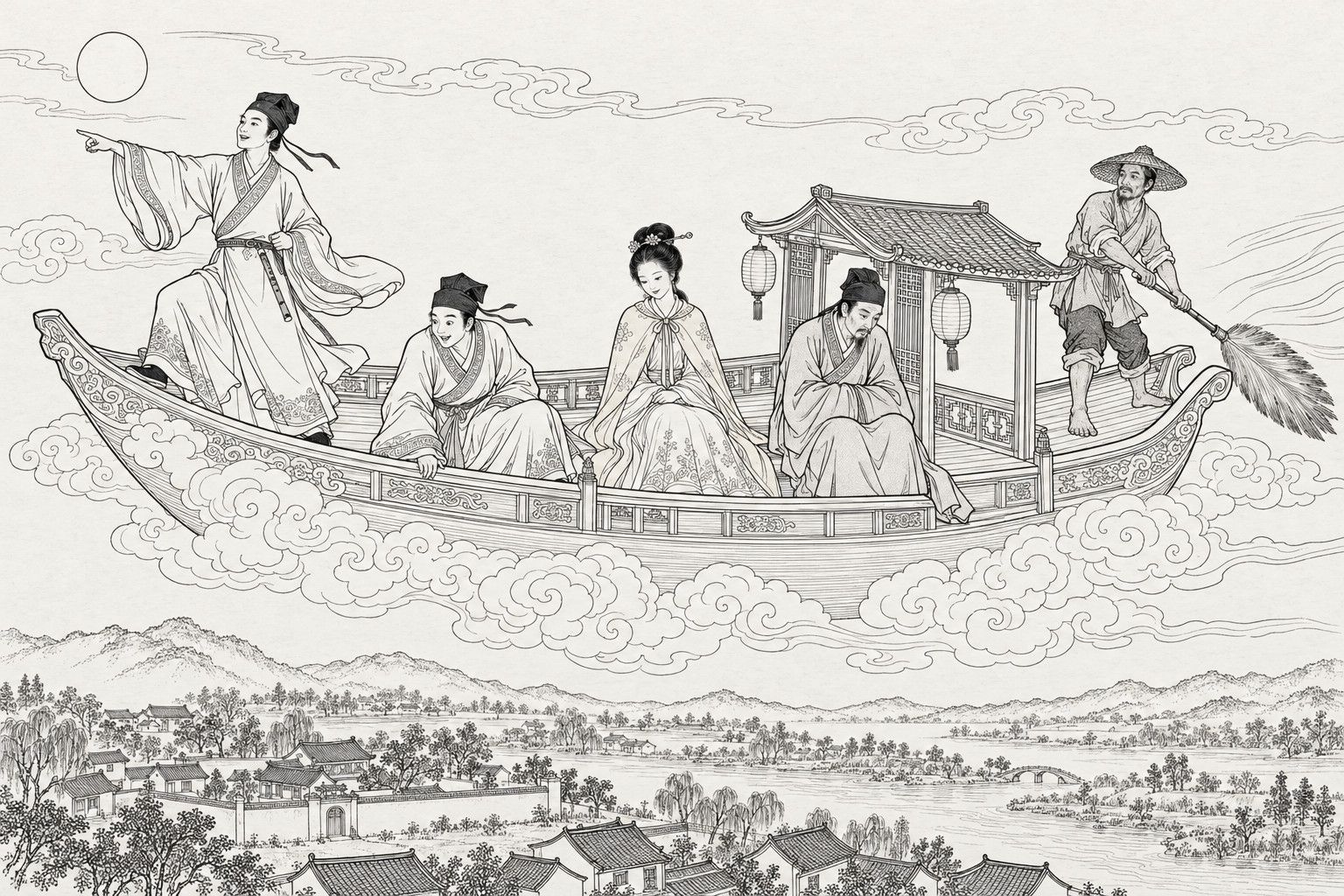
萊州諸生彭好古,讀書別業,離家頗遠。中秋未歸,岑寂無偶。念村中無可共語;惟丘生者,是邑名士,而素有隱惡,彭常鄙之。月既上,倍益無聊,不得已,折簡邀丘。飲次,有剝啄者。齋僮出應門,則一書生,將謁主人。彭離席,肅客入。相揖環坐,便詢族居。客曰:「小生廣陵人,與君同姓,字海秋。值此良夜,旅邸倍苦。聞君高雅,遂乃不介而見。」視其人,布衣潔整,談笑風流。彭大喜曰:「是我宗人。今夕何夕,遘此嘉客!」即命酌,款若夙好。察其意,似甚鄙丘;丘仰與攀談,輒傲不為禮。彭代為之慚,因撓亂其詞,請先以俚歌侑飲。乃仰天再咳,歌「扶風豪士之曲」,相與歡笑。客曰:「僕不能韻,莫報陽春。倩代者可乎?」彭言:「如教。」客問:「萊城有名妓無也?」彭答云:「無。」客默然良久,謂齋僮曰:「適喚一人,在門外,可導入之。」僮出,果見一女子逡巡戶外。引之入。年二八已來,宛然若仙。彭驚絕,掖坐。衣柳黃帔;香溢四座。客便慰問:「千里頗煩跋涉也!」女含笑唯唯。彭異之,便致研詰。客曰:「貴鄉苦無佳人,適於西湖舟中喚得來。」謂女曰:「適舟中所唱『薄倖郎曲』,大佳。請再反之。」女歌云:「薄倖郎,牽馬洗春沼。人聲遠,馬聲杳;江天高,山月小。
掉頭去不歸,庭中生白曉。不怨別離多,但愁懽會少。
眠何處?勿作隨風絮。便是不封侯,莫向臨邛去!」客於襪中出玉笛,隨聲便串;曲終笛止。彭驚歎不已,曰:「西湖至此,何止千里,咄嗟招來,得非仙乎?」客曰:「仙何敢言,但視萬里猶庭戶耳。今夕西湖風月,尤盛曩時,不可不一觀也,能從遊否?」彭留心欲覘其異,諾言:「幸甚。」客問:「舟乎,騎乎?」彭思舟坐為逸,答言:「願舟。」客曰:「此處呼舟較遠,天河中當有渡者。」乃以手向空招曰:「舡來舡來!我等要西湖去,不吝償也。」無何,彩船一隻,自空飄落,煙雲繞之。眾俱登。見一人持短棹;棹末密排修翎,形類羽扇;一搖羽清風習習。舟漸上入雲霄,望南游行,其駛如箭。踰刻,舟落水中。但聞絃管敖曹,鳴聲喤聒。出舟一望,月印煙波,游船成市。榜人罷棹,任其自流。細視,真西湖也。客於艙後,取異肴佳釀,懽然對酌。
莱州诸生彭好古,读书别业,离家颇远。中秋未归,岑寂无偶。念村中无可共语;惟丘生者,是邑名士,而素有隐恶,彭常鄙之。月既上,倍益无聊,不得已,折简邀丘。饮次,有剥啄者。斋僮出应门,则一书生,将谒主人。彭离席,肃客入。相揖环坐,便询族居。客曰:「小生广陵人,与君同姓,字海秋。值此良夜,旅邸倍苦。闻君高雅,遂乃不介而见。」视其人,布衣洁整,谈笑风流。彭大喜曰:「是我宗人。今夕何夕,遘此嘉客!」即命酌,款若夙好。察其意,似甚鄙丘;丘仰与攀谈,辄傲不为礼。彭代为之惭,因挠乱其词,请先以俚歌侑饮。乃仰天再咳,歌「扶风豪士之曲」,相与欢笑。客曰:「仆不能韵,莫报阳春。倩代者可乎?」彭言:「如教。」客问:「莱城有名妓无也?」彭答云:「无。」客默然良久,谓斋僮曰:「适唤一人,在门外,可导入之。」僮出,果见一女子逡巡户外。引之入。年二八已来,宛然若仙。彭惊绝,掖坐。衣柳黄帔;香溢四座。客便慰问:「千里颇烦跋涉也!」女含笑唯唯。彭异之,便致研诘。客曰:「贵乡苦无佳人,适于西湖舟中唤得来。」谓女曰:「适舟中所唱『薄幸郎曲』,大佳。请再反之。」女歌云:「薄幸郎,牵马洗春沼。人声远,马声杳;江天高,山月小。
掉头去不归,庭中生白晓。不怨别离多,但愁懽会少。
眠何处?勿作随风絮。便是不封侯,莫向临邛去!」客于袜中出玉笛,随声便串;曲终笛止。彭惊叹不已,曰:「西湖至此,何止千里,咄嗟招来,得非仙乎?」客曰:「仙何敢言,但视万里犹庭户耳。今夕西湖风月,尤盛曩时,不可不一观也,能从游否?」彭留心欲觇其异,诺言:「幸甚。」客问:「舟乎,骑乎?」彭思舟坐为逸,答言:「愿舟。」客曰:「此处呼舟较远,天河中当有渡者。」乃以手向空招曰:「舡来舡来!我等要西湖去,不吝偿也。」无何,彩船一只,自空飘落,烟云绕之。众俱登。见一人持短棹;棹末密排修翎,形类羽扇;一摇羽清风习习。舟渐上入云霄,望南游行,其驶如箭。逾刻,舟落水中。但闻弦管敖曹,鸣声喤聒。出舟一望,月印烟波,游船成市。榜人罢棹,任其自流。细视,真西湖也。客于舱后,取异肴佳酿,懽然对酌。
Peng Haogu, a licentiate of Laizhou, was studying at his country lodge, a good way from home. At the Mid-Autumn Festival he did not go home, and he was lonely, with no one for company. There was no one in the village worth talking to except a scholar named Qiu, a man of some name in the county, who had long had a secret vice; Peng had always despised him. When the moon rose he felt twice as dreary, and with nothing else for it he wrote a note inviting Qiu. While they were drinking, someone knocked. The study boy went to answer: it was a young scholar who wished to call on the master. Peng left his seat and bowed the guest in. They exchanged bows and sat down together, and Peng asked about his family and where he lived. “I am from Guangling,” said the guest. “My surname is the same as yours, and my courtesy name is Haiqiu. On so fine a night an inn is twice as dreary. I heard you were a man of refinement, so I have come without an introduction.” Peng looked him over: his cotton clothes were clean and neat, and his talk was easy and charming. Peng was delighted. “A kinsman of mine! What night is this, that brings me so fine a guest?” He called for wine at once and treated him like an old friend. The guest seemed to despise Qiu thoroughly. When Qiu looked up to him and tried to make conversation, he was haughty and would not return the courtesy. Peng was embarrassed for Qiu, so he broke into their talk and offered to start the drinking with a rustic song. He threw back his head, cleared his throat twice and sang the Song of the Hero of Fufeng, and they all laughed and made merry. “I cannot sing,” said the guest, “and have nothing to answer so fine a song. May I get someone to sing in my place?” “As you wish,” said Peng. “Are there any famous courtesans in Laizhou?” asked the guest. “No,” said Peng. The guest was silent a long while. Then he said to the study boy, “I have just called someone. She is outside the gate. Bring her in.” The boy went out and found, sure enough, a young woman hesitating outside the door. He showed her in. She was about sixteen, and looked every bit an immortal. Peng was astounded and helped her to a seat. She wore a willow-yellow cape, and her fragrance filled the room. The guest asked her kindly, “A thousand li — that was a hard journey for you!” She smiled and murmured yes. Peng thought this strange and pressed him with questions. “Your part of the world is sadly short of beauties,” said the guest, “so I called her just now from a boat on West Lake.” To the girl he said, “The song you sang in the boat just now, ‘The Faithless Lover’, was very fine. Please sing it again.” She sang: “Faithless lover, leading your horse to bathe in the spring pool. Voices far away, hoofbeats gone; the sky high over the river, the moon small over the hills.
You turned your head and left and did not come back;in the courtyard the dawn grows white.I do not grieve that our partings are many,only that our meetings are so few.
Where do you sleep tonight? Do not drift like willow down on the wind. Even if you never win a lord’s title, do not go to Linqiong!” The guest took a jade flute out of his sock and played along with her voice; when the song ended, the flute stopped. Peng could not stop marvelling. “West Lake is far more than a thousand li from here, and you called her in the blink of an eye. Are you not an immortal?” “I would not dare call myself an immortal,” said the guest. “It is only that ten thousand li are to me like the courtyard outside my door. The wind and moon on West Lake tonight are finer than ever; you really must see them. Will you come along?” Peng, curious to see what strange things he could do, agreed: “I would be delighted.” “By boat or on horseback?” asked the guest. Peng thought sitting in a boat would be easier, and said, “By boat.” “It is a long way to call a boat from here,” said the guest, “but there should be a ferry on the River of Heaven.” He beckoned at the sky. “Boat, come here! Boat, come here! We want to go to West Lake, and we will pay well!” Before long a painted boat came drifting down out of the sky, wrapped in mist and cloud. They all climbed in. There was a man holding a short oar. Its blade was set close with long feathers, like a feather fan, and at each stroke a cool breeze blew. The boat rose slowly into the clouds and sailed south, swift as an arrow. After a quarter of an hour it came down on water. All around was the din of strings and pipes, a clamour of music. They stepped out and looked: the moon lay on the misty waves, and the pleasure boats were crowded like a market. The boatman shipped his oar and let the boat drift. Peng looked closely: it really was West Lake. From the back of the cabin the guest brought out rare dishes and fine wine, and they drank together merrily.
少間,一樓船漸近,相傍而行。隔窗以窺,中有二三人,圍棋喧笑。客飛一觥向女曰:「引此送君行。」女飲間,彭依戀徘徊,惟恐其去,蹴之以足。女斜波送盼。彭益動,請要後期。女曰:「如相見愛,但問娟娘名字,無不知者。」客即以彭綾巾授女,曰:「我為若代訂三年之約。」即起,托女子於掌中,曰:「仙乎,仙乎!」乃扳鄰窗,捉女人,窗目如盤,女伏身蛇遊而進,殊不覺隘。俄聞鄰舟曰:「娟娘醒矣。」舟即蕩去。遙見舟已就泊,舟中人紛紛並去,游興頓消。遂與客言,欲一登岸,略同眺矚。纔作商榷,舟已自攏。因而離舟翔步,覺有里餘。客後至,牽一馬來,令彭捉之。即復去,曰:「待再假兩騎來。」久之不至。行人已稀;仰視斜月西轉,天色向曙。丘亦不知何往。捉馬營營,進退無主。振轡至泊舟所,則人船俱失。念腰橐空匱,倍益憂皇。天大明,見馬上有小錯囊;探之,得白金三四兩。買食凝待,不覺向午。計不如暫訪娟娘,可以徐察丘耗。比訊娟娘名字,並無知者,興轉蕭索。次日遂行。馬調良,幸不蹇劣,半月始歸。方三人之乘舟而上也,齋僮歸白:「主人已仙去。」舉家哀涕,謂其不返。彭歸,繫馬而入。家人驚喜集問,彭始具白其異。因念獨還鄉井,恐丘家聞而致詰;戒家人勿播。語次,道馬所由來。眾以仙人所遺,便悉詣廄驗視。及至,則馬頓渺,但有丘生,以草韁縶櫪邊。駭極,呼彭出視。見丘垂首棧下,面色灰死,問之不言,兩眸啟閉而已。彭大不忍,解扶榻上,若喪魂魄。灌以湯,稍稍能咽。中夜少蘇,急欲登廁;扶掖而往,下馬糞數枚。又少飲啜,始能言。彭就榻研問之。丘云:「下船後,彼引我閒語。至空處,戲拍項領,遂迷悶顛踣。伏定少刻,自顧已馬。心亦醒悟,但不能言耳。是大辱恥,誠不可以告妻子,乞勿洩也!」彭諾之,命僕馬馳送歸。彭自是不能忘情於娟娘。
少间,一楼船渐近,相傍而行。隔窗以窥,中有二三人,围棋喧笑。客飞一觥向女曰:「引此送君行。」女饮间,彭依恋徘徊,惟恐其去,蹴之以足。女斜波送盼。彭益动,请要后期。女曰:「如相见爱,但问娟娘名字,无不知者。」客即以彭绫巾授女,曰:「我为若代订三年之约。」即起,托女子于掌中,曰:「仙乎,仙乎!」乃扳邻窗,捉女人,窗目如盘,女伏身蛇游而进,殊不觉隘。俄闻邻舟曰:「娟娘醒矣。」舟即荡去。遥见舟已就泊,舟中人纷纷并去,游兴顿消。遂与客言,欲一登岸,略同眺瞩。才作商榷,舟已自拢。因而离舟翔步,觉有里余。客后至,牵一马来,令彭捉之。即复去,曰:「待再假两骑来。」久之不至。行人已稀;仰视斜月西转,天色向曙。丘亦不知何往。捉马营营,进退无主。振辔至泊舟所,则人船俱失。念腰橐空匮,倍益忧皇。天大明,见马上有小错囊;探之,得白金三四两。买食凝待,不觉向午。计不如暂访娟娘,可以徐察丘耗。比讯娟娘名字,并无知者,兴转萧索。次日遂行。马调良,幸不蹇劣,半月始归。方三人之乘舟而上也,斋僮归白:「主人已仙去。」举家哀涕,谓其不返。彭归,系马而入。家人惊喜集问,彭始具白其异。因念独还乡井,恐丘家闻而致诘;戒家人勿播。语次,道马所由来。众以仙人所遗,便悉诣厩验视。及至,则马顿渺,但有丘生,以草缰絷枥边。骇极,呼彭出视。见丘垂首栈下,面色灰死,问之不言,两眸启闭而已。彭大不忍,解扶榻上,若丧魂魄。灌以汤,稍稍能咽。中夜少苏,急欲登厕;扶掖而往,下马粪数枚。又少饮啜,始能言。彭就榻研问之。丘云:「下船后,彼引我闲语。至空处,戏拍项领,遂迷闷颠踣。伏定少刻,自顾已马。心亦醒悟,但不能言耳。是大辱耻,诚不可以告妻子,乞勿泄也!」彭诺之,命仆马驰送归。彭自是不能忘情于娟娘。
Soon a big pleasure boat with an upper deck drew near and sailed alongside. Peering through its window, they saw two or three men playing go and laughing noisily. The guest sent a cup flying to the girl. “Drain this, and I will send you on your way.” While she drank, Peng, loath to part with her and afraid she would go, nudged her with his foot. She gave him a sidelong glance. Peng was more stirred than ever and begged her to name a day to meet again. “If you care for me,” she said, “just ask for Juanniang. Everyone knows the name.” The guest took Peng’s silk kerchief and gave it to her. “Let me fix a promise for you: three years.” He stood, lifted her up on the palm of his hand, and said, “An immortal! An immortal!” Then he pulled open the window of the next boat and put her in. The openings of the window were no bigger than a plate, but she lay flat and slid through like a snake, and it seemed no tight squeeze at all. A moment later they heard someone in the other boat say, “Juanniang has woken up.” Then that boat swung away. In the distance they saw it moor, and the people in it all went off together. Peng’s pleasure in the outing was gone at once. He told the guest he would like to go ashore and look around a little together. He had barely raised it when the boat came in to the bank of its own accord. They left the boat and strolled, a li or more as Peng reckoned. The guest came up behind him leading a horse and had Peng hold it. Then he went off again, saying, “I will go and borrow two more.” He was gone a long time and did not come back. The crowds had thinned. Looking up, Peng saw that the slanting moon had turned west and the sky was getting light. Qiu, too, had gone who knew where. Holding the horse, Peng wandered back and forth, not knowing whether to go or stay. He shook the reins and rode to where the boat had moored, but boat and men were both gone. Thinking of his empty purse, he grew more frightened than ever. In broad daylight he noticed a small embroidered bag on the horse. Inside he found three or four taels of silver. He bought food and waited, and before he knew it was nearly noon. He decided he had better look for Juanniang for the moment, and meanwhile find out what had become of Qiu. But when he asked after Juanniang, no one knew the name, and his spirits sank. The next day he set out. The horse was well trained and, luckily, no sluggard; even so it was half a month before he got home. Back when the three of them had boarded the boat and risen into the sky, the study boy had gone home and reported, “The master has gone off with the immortals.” The whole family wept, sure he would never return. Peng got home, tied up the horse and went in. The household gathered round in astonishment and joy, asking questions, and Peng told them the whole strange story. Then it struck him that he had come home alone, and if Qiu’s family heard of it they would demand to know where Qiu was. He warned the household not to spread it. As he talked, he told them where the horse came from. Since it was a gift from an immortal, they all went to the stable to see it. When they got there, the horse had vanished. There was only Qiu, tied by a straw halter beside the trough. Horrified, they called Peng out to see. Qiu stood with his head hanging under the stall, his face ashen like a dead man’s. He said nothing when spoken to; his eyes only opened and shut. Peng could not bear it. He untied him and helped him onto a bed. Qiu lay as if his soul had left him. They poured broth into him, and little by little he could swallow. In the middle of the night he came round a little and urgently needed the privy. They helped him there, and he passed several lumps of horse dung. After a little more to drink, he could speak at last. Peng sat by the bed and questioned him. “After we left the boat,” said Qiu, “he took me aside to chat. When we came to an empty spot he slapped the back of my neck as a joke, and I blacked out and fell. I lay there a moment, and when I looked at myself I was a horse. My mind was clear; I just could not speak. This is a great disgrace. I truly cannot tell my wife and children. Please don’t let it out!” Peng promised, and had a servant take him home quickly on horseback. From then on Peng could not stop thinking of Juanniang.