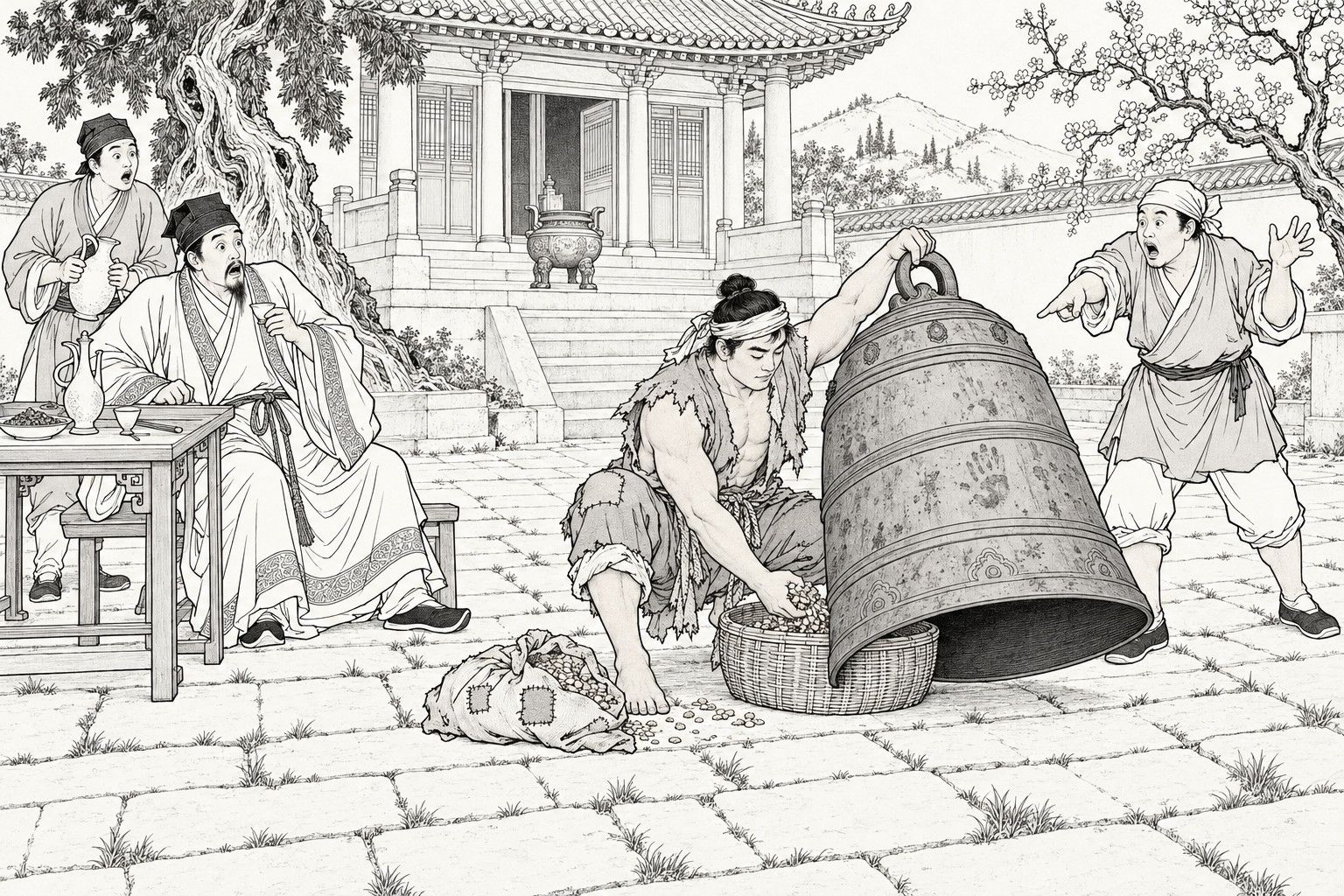
查伊璜,浙人。清明飲野寺中,見殿前有古鐘,大於兩石甕;而上下土痕手跡,滑然如新。疑之。俯窺其下,有竹筐受八升許,不知所貯何物。使數人摳耳,力掀舉之,無少動。益駭。乃坐飲以伺其人。居無何,有乞兒入,攜所得糗糒,堆纍鐘下。乃以一手起鐘,一手掬餌置筐內;往返數四,始盡。已復合之,乃去。移時復來,探取食之。食已復探,輕若啟櫝。一座盡駭。查問:「若男兒胡行乞?」答以:「啗噉多,無傭者。」查以其健,勸投行伍。乞人愀然慮無階。查遂攜歸餌之;計其食,略倍五六人。為易衣履,又以五十金贈之行。後十餘年,查猶子令於閩,有吳將軍六一者,忽來通謁。款談間,問:「伊璜是君何人?」答言:「為諸父行。與將軍何處有素?」曰:「是我師也。十年之別,頗復憶念。煩致先生一賜臨也。」漫應之。自念:叔名賢,何得武弟子?會伊璜至,因告之。伊璜茫不記憶。因其問訊之殷,即命僕馬,投刺於門。將軍趨出,逆諸大門之外。視之,殊昧生平。竊疑將軍誤,而將軍傴僂益恭。肅客入,深啟三四關,忽見女子往來,知為私廨,屏足立。將軍又揖之。少間登堂,則捲簾者,移座者,並皆少姬。既坐,方擬展問,將軍頤少動,一姬捧朝服至,將軍遽起更衣。查不知其何為。眾嫗捉袖整衿訖,先命數人捺查座上不使動,而後朝拜,如覲君父。查大愕,莫解所以。拜已,以便服侍坐。笑曰:「先生不憶舉鐘之乞人耶?」查乃悟。既而華筵高列,家樂作於下。酒闌,群姬列侍。將軍入室,請衽何趾,乃去。查醉起遲,將軍已於寢門外三問矣。查不自安,辭欲返。將軍投轄下鑰,錮閉之。見將軍日無他作,惟點數姬婢養廝卒,及騾馬服用器具,督造記籍,戒無虧漏。查以將軍家政,故未深叩。一日,執籍謂查曰:「不才得有今日,悉出高厚之賜。一婢一物,所不敢私,敢以半奉先生。」查愕然不受,將軍不聽。出藏鏹數萬,亦兩置之。按籍點照,古玩床几,堂內外羅列幾滿。查固止之,將軍不顧。稽婢僕姓名已,即命男為治裝,女為斂器,且囑敬事先生。百聲悚應。又親視姬婢登輿,廄卒捉馬騾,闐咽並發,乃返別查。後查以修史一案,株連被收,卒得免,皆將軍力也。
查伊璜,浙人。清明饮野寺中,见殿前有古钟,大于两石瓮;而上下土痕手迹,滑然如新。疑之。俯窥其下,有竹筐受八升许,不知所贮何物。使数人抠耳,力掀举之,无少动。益骇。乃坐饮以伺其人。居无何,有乞儿入,携所得糗糒,堆累钟下。乃以一手起钟,一手掬饵置筐内;往返数四,始尽。已复合之,乃去。移时复来,探取食之。食已复探,轻若启椟。一座尽骇。查问:「若男儿胡行乞?」答以:「啗噉多,无佣者。」查以其健,劝投行伍。乞人愀然虑无阶。查遂携归饵之;计其食,略倍五六人。为易衣履,又以五十金赠之行。后十余年,查犹子令于闽,有吴将军六一者,忽来通谒。款谈间,问:「伊璜是君何人?」答言:「为诸父行。与将军何处有素?」曰:「是我师也。十年之别,颇复忆念。烦致先生一赐临也。」漫应之。自念:叔名贤,何得武弟子?会伊璜至,因告之。伊璜茫不记忆。因其问讯之殷,即命仆马,投刺于门。将军趋出,逆诸大门之外。视之,殊昧生平。窃疑将军误,而将军伛偻益恭。肃客入,深启三四关,忽见女子往来,知为私廨,屏足立。将军又揖之。少间登堂,则卷帘者,移座者,并皆少姬。既坐,方拟展问,将军颐少动,一姬捧朝服至,将军遽起更衣。查不知其何为。众妪捉袖整衿讫,先命数人捺查座上不使动,而后朝拜,如觐君父。查大愕,莫解所以。拜已,以便服侍坐。笑曰:「先生不忆举钟之乞人耶?」查乃悟。既而华筵高列,家乐作于下。酒阑,群姬列侍。将军入室,请衽何趾,乃去。查醉起迟,将军已于寝门外三问矣。查不自安,辞欲返。将军投辖下钥,锢闭之。见将军日无他作,惟点数姬婢养厮卒,及骡马服用器具,督造记籍,戒无亏漏。查以将军家政,故未深叩。一日,执籍谓查曰:「不才得有今日,悉出高厚之赐。一婢一物,所不敢私,敢以半奉先生。」查愕然不受,将军不听。出藏镪数万,亦两置之。按籍点照,古玩床几,堂内外罗列几满。查固止之,将军不顾。稽婢仆姓名已,即命男为治装,女为敛器,且嘱敬事先生。百声悚应。又亲视姬婢登舆,厩卒捉马骡,阗咽并发,乃返别查。后查以修史一案,株连被收,卒得免,皆将军力也。
Zha Yihuang was a man of Zhejiang. At the Qingming festival he was drinking at a temple out in the country when he saw an ancient bell before the main hall, bigger than a two-picul jar. Yet the marks of earth and hands on it, top and bottom, were smooth and fresh. He wondered at this. Stooping to peer underneath, he found a bamboo basket that would hold about a peck; what was stored in it he could not tell. He had several men grip the bell by its lugs and heave with all their strength. It did not move in the least. He was more astonished than ever. So he sat drinking and waited to see who would come. Before long a beggar came in with the dry rations he had been given and heaped them by the bell. Then with one hand he raised the bell, and with the other he scooped the food into the basket. Only after going back and forth several times was it all in. Then he set the bell down over it again and left. After a while he came back, reached in, took some out and ate it. When he had eaten he reached in again, as easily as if lifting the lid of a box. The whole company was aghast. “A grown man like you — why do you beg?” Zha asked. “I eat too much,” he answered. “No one will hire me.” Seeing how strong he was, Zha urged him to enlist. The beggar looked downcast: he feared he had no way in. So Zha took him home and fed him; by his reckoning the man ate about as much as five or six. He got him new clothes and shoes, and gave him fifty taels of silver to see him on his way. More than ten years later Zha’s nephew was a county magistrate in Fujian, when a General Wu Liuyi unexpectedly came to call on him. As they talked over refreshments, the general asked, “What relation is Yihuang to you?” “He is my uncle,” said the nephew. “Where did you come to know him, General?” “He is my teacher. We have been parted ten years, and I think of him often. Would you be so kind as to ask him to honour me with a visit?” The nephew said yes without much thought. To himself he thought: my uncle is a famous scholar — how would he have a soldier for a disciple? It happened that Yihuang came to visit, and the nephew told him. Yihuang had no memory of it at all. But since the general had asked after him so warmly, he called for his servants and horse and went to leave his card at the general’s gate. The general hurried out and met him outside the main gate. Zha looked at him: a man he had never seen in his life. He privately suspected the general had made a mistake, but the general only bowed lower and grew more respectful. He ushered his guest in, through gate after gate, three or four deep, until Zha suddenly saw women coming and going. Knowing these were the private quarters, he stopped where he stood. The general bowed him on again. Presently they went up into the hall, and the ones rolling up the blinds and moving the chairs were all young girls. When they were seated and Zha was about to ask, the general gave a slight movement of his chin. A girl came in bearing his court robes, and the general rose at once to change. Zha had no idea what he meant to do. When a crowd of old women had finished holding his sleeves and straightening his collar, the general first had several men press Zha down in his seat so that he could not move, and then made him the full prostrations of a court audience, as if before his sovereign or his father. Zha was stunned and could make nothing of it. The prostrations over, the general changed into everyday clothes and sat attending him. “Do you not remember the beggar who lifted the bell, sir?” he said with a smile. Only then did Zha understand. Then a splendid feast was laid out, and the household musicians played below the hall. When the wine was nearly done, the girls stood in rows to wait on him. The general went into the bedroom himself to ask which way his guest would like his bedding laid, and only then withdrew. Zha had drunk a great deal and rose late; the general had already been to the bedroom door three times to ask after him. Zha felt uneasy and said he must be going home. The general threw away his guest’s linchpin and locked the gates, keeping him shut in. Zha saw that all day long the general did nothing but count over his concubines and maids, grooms and servants, his mules and horses, clothes, furnishings and utensils, overseeing the making of registers and warning that nothing be missed out. Zha took it for the general’s household business and did not inquire closely. One day the general came to Zha with the registers in his hand and said, “Everything this worthless man has today, he owes to your great bounty. I dare not keep a single maid or a single thing for myself. Allow me to offer you half.” Zha was aghast and would not accept, but the general would not listen. He brought out tens of thousands in hoarded money and divided that in two as well. They checked everything off against the registers, and the antiques, beds and tables nearly filled the hall and the courtyard outside. Zha firmly begged him to stop, but the general paid no heed. When the names of the maids and menservants had been checked, he ordered the men to pack the baggage and the women to gather up the goods, and charged them to serve Master Zha with respect. A hundred voices answered in awe. He saw the girls and maids into their sedan chairs himself, and the grooms led out the horses and mules; when the whole crowding, clamouring train had set off together, he came back to take leave of Zha. Later Zha was arrested, caught up in the case over the compiling of a history, and in the end he went free. It was all the general’s doing.