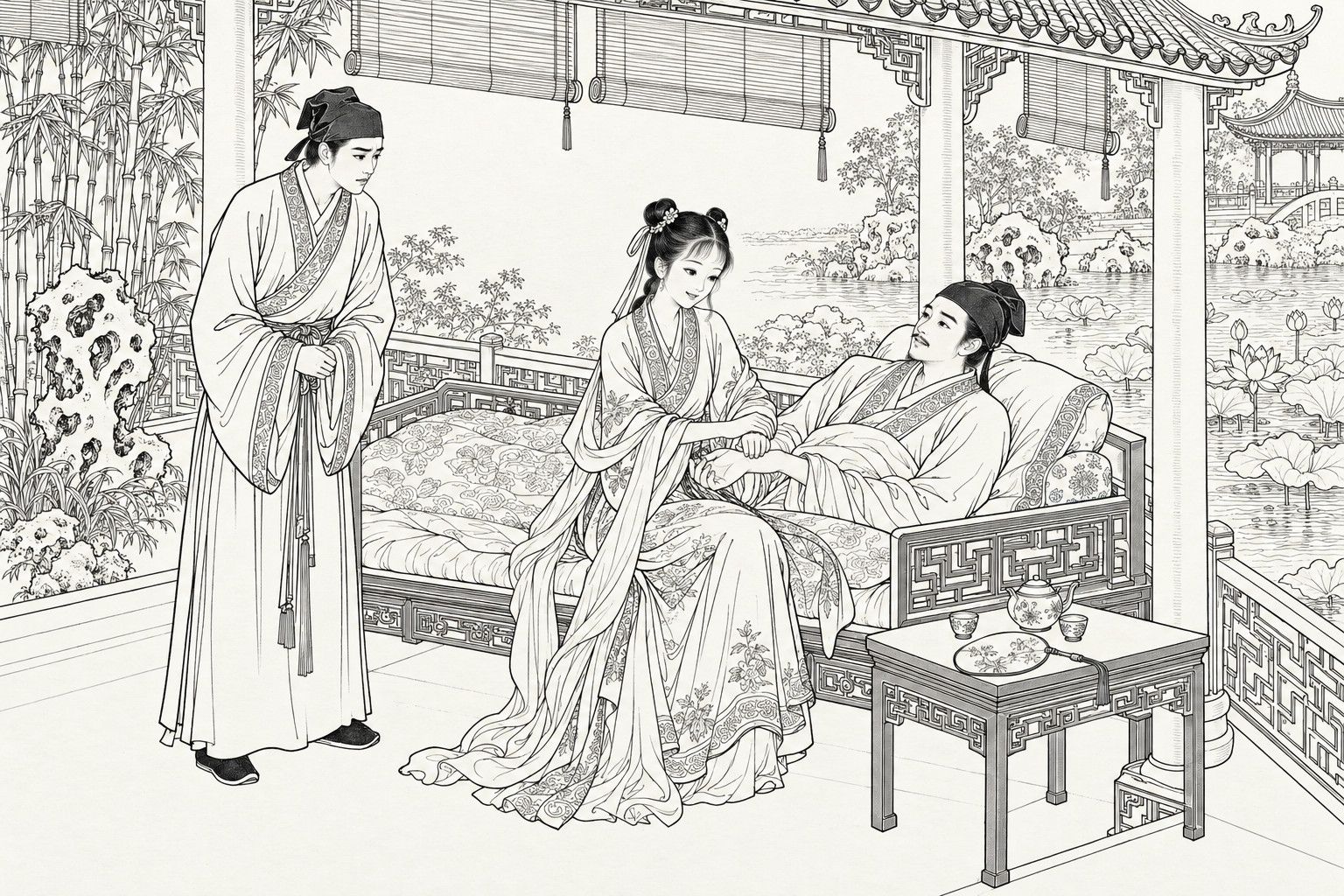
孔生雪笠,聖裔也。為人蘊藉,工詩。有執友令天台,寄函招之。生往,令適卒。落拓不得歸,寓菩陀寺,傭為寺僧抄錄。寺西百餘步,有單先生第。先生故公子,以大訟蕭條,眷口寡,移而鄉居,宅遂曠焉。一日,大雪崩騰,寂無行旅。偶過其門,一少年出,丰采甚都。見生,趨與為禮,略致慰問,即屈降臨。生愛悅之,慨然從入。屋宇都不甚廣,處處悉懸錦幕,壁上多古人書畫。案頭書一冊,簽云:《琅嬛瑣記》。翻閱一過,皆目所未睹。生以居單第,意為第主,即亦不審官閥。少年細詰行蹤,意憐之,勸設帳授徒。生嘆曰:「羈旅之人,誰作曹丘者?」少年曰:「倘不以駑駘見斥,願拜門牆。」生喜,不敢當師,請為友。便問:「宅何久錮?」答曰:「此為單府,曩以公子鄉居,是以久曠。僕皇甫氏,祖居陝。以家宅焚于野火,暫借安頓。」生始知非單。當晚,談笑甚歡,即留共榻。昧爽,即有僮子熾炭火于室。少年先起入內,生尚擁被坐。僮入,白:「太公來。」生驚起。一叟入,鬢髮皤然,向生殷謝曰:「先生不棄頑兒,遂肯賜教。小子初學塗鴉,勿以友故,行輩視之也。」已,乃進錦衣一襲,貂帽、襪、履各一事。視生盥櫛已,乃呼酒薦饌。幾、榻、裙、衣,不知何名,光彩射目。酒數行,叟興辭,曳杖而去。餐訖,公子呈課業,類皆古文詞,並無時藝。問之,笑云:「僕不求進取也。」抵暮,更酌曰:「今夕盡歡,明日便不許矣。」呼僮曰:「視太公寢未;已寢,可暗喚香奴來。」僮去,先以繡囊將琵琶至。少頃,一婢入,紅妝艷絕。公子命彈湘妃。婢以牙撥勾動,激揚哀烈,節拍不類夙聞。又命以巨觴行酒,三更始罷。次日,早起共讀。公子最慧,過目成詠,二三月後,命筆警絕。相約五日一飲,每飲必招香奴。一夕,酒酣氣熱,目注之。公子已會其意,曰:「此婢乃為老父所豢養。兄曠邈無家,我夙夜代籌久矣。行當為君謀一佳偶。」生曰:「如果惠好,必如香奴者。」公子笑曰:「君誠『少所見而多所怪』者矣。以此為佳,君願亦易足也。」
孔生雪笠,圣裔也。为人蕴藉,工诗。有执友令天台,寄函招之。生往,令适卒。落拓不得归,寓菩陀寺,佣为寺僧抄录。寺西百余步,有单先生第。先生故公子,以大讼萧条,眷口寡,移而乡居,宅遂旷焉。一日,大雪崩腾,寂无行旅。偶过其门,一少年出,丰采甚都。见生,趋与为礼,略致慰问,即屈降临。生爱悦之,慨然从入。屋宇都不甚广,处处悉悬锦幕,壁上多古人书画。案头书一册,签云:《琅嬛琐记》。翻阅一过,皆目所未睹。生以居单第,意为第主,即亦不审官阀。少年细诘行踪,意怜之,劝设帐授徒。生叹曰:「羁旅之人,谁作曹丘者?」少年曰:「倘不以驽骀见斥,愿拜门墙。」生喜,不敢当师,请为友。便问:「宅何久锢?」答曰:「此为单府,曩以公子乡居,是以久旷。仆皇甫氏,祖居陕。以家宅焚于野火,暂借安顿。」生始知非单。当晚,谈笑甚欢,即留共榻。昧爽,即有僮子炽炭火于室。少年先起入内,生尚拥被坐。僮入,白:「太公来。」生惊起。一叟入,鬓发皤然,向生殷谢曰:「先生不弃顽儿,遂肯赐教。小子初学涂鸦,勿以友故,行辈视之也。」已,乃进锦衣一袭,貂帽、袜、履各一事。视生盥栉已,乃呼酒荐馔。几、榻、裙、衣,不知何名,光彩射目。酒数行,叟兴辞,曳杖而去。餐讫,公子呈课业,类皆古文词,并无时艺。问之,笑云:「仆不求进取也。」抵暮,更酌曰:「今夕尽欢,明日便不许矣。」呼僮曰:「视太公寝未;已寝,可暗唤香奴来。」僮去,先以绣囊将琵琶至。少顷,一婢入,红妆艳绝。公子命弹湘妃。婢以牙拨勾动,激扬哀烈,节拍不类夙闻。又命以巨觞行酒,三更始罢。次日,早起共读。公子最慧,过目成咏,二三月后,命笔警绝。相约五日一饮,每饮必招香奴。一夕,酒酣气热,目注之。公子已会其意,曰:「此婢乃为老父所豢养。兄旷邈无家,我夙夜代筹久矣。行当为君谋一佳偶。」生曰:「如果惠好,必如香奴者。」公子笑曰:「君诚『少所见而多所怪』者矣。以此为佳,君愿亦易足也。」
Kong Xueli was a descendant of the Sage. He was a man of quiet refinement, and a fine poet. A close friend of his, the magistrate of Tiantai, sent him a letter inviting him to come. Kong went, but the magistrate had just died. Stranded and penniless, unable to get home, he lodged at the Putuo Temple, where the monks hired him to copy texts. A hundred-odd paces west of the temple stood the mansion of Mr. Shan. Mr. Shan was the son of a great family, but a big lawsuit had ruined him; with few of his household left, he had moved away to live in the country, and so the house stood empty. One day, when heavy snow was swirling down and no traveller was on the road, Kong happened to pass its gate. A young man came out, of very fine bearing. Seeing Kong, he hurried over to greet him, asked kindly after his troubles, and begged him to come in. Kong liked him at once and gladly followed him inside. None of the rooms was very large, but brocade curtains hung everywhere, and on the walls were many paintings and pieces of calligraphy by old masters. On the desk lay a book whose label read: Trifling Records of Langhuan. Kong leafed through it: there was nothing in it he had ever seen before. Since the young man lived in the Shan mansion, Kong took him for its owner and did not ask about his family or rank. The young man questioned him closely about his circumstances, was sorry for him, and urged him to set up as a tutor and take pupils. Kong sighed. “I am a wanderer far from home. Who will be my Cao Qiu?” “If you would not spurn a worn-out nag like me,” said the young man, “I should like to be your pupil.” Kong was delighted, but would not presume to be his teacher; he asked to be his friend instead. Then he asked, “Why has the house been shut up so long?” “This is the Shan mansion,” the young man answered. “It stood empty a long time because young Mr. Shan went to live in the country. My family name is Huangfu; our old home is in Shaanxi. Our house was burned in a wildfire, so we have borrowed this place for the time being.” Only then did Kong learn that he was not a Shan. That evening they talked and laughed with great pleasure, and the young man kept him to share his bed. At dawn a boy servant came in and lit a charcoal fire in the room. The young man got up first and went into the inner rooms; Kong was still sitting up wrapped in the quilt. The boy came in and announced, “The old master is coming.” Kong jumped up in alarm. An old man came in, his hair snow-white, and thanked him warmly. “You have not scorned my foolish boy, sir, and have agreed to teach him. The child is only beginning to scribble. Do not treat him as an equal because you are friends.” With that he presented him with a suit of brocade clothes, a sable cap, and socks and shoes. When Kong had washed and combed his hair, wine was called for and food set out. The tables, the couches, the skirts and robes, things he had no names for, dazzled the eye with their splendour. After a few rounds of wine the old man rose, took his leave, and went off trailing his staff. When the meal was over the young master brought out his lessons: all of them were classical prose and poetry, with none of the set essays written for the examinations. Kong asked about this. “I am not seeking a career,” the young master said with a smile. At dusk he poured more wine. “Tonight let us enjoy ourselves to the full,” he said. “From tomorrow it will not be allowed.” He called the boy: “See whether the old master is asleep yet. If he is, you may quietly fetch Xiangnu.” The boy went, and came back first with a lute in an embroidered bag. Shortly afterwards a maid came in, dressed in red and stunningly beautiful. The young master told her to play “The Consorts of the Xiang.” She plucked the strings with an ivory plectrum: the music rose fierce and sorrowful, in rhythms unlike anything Kong had heard before. Then the young master had wine passed round in great goblets, and they did not stop until the third watch. The next day they rose early and studied together. The young master was very quick. Whatever passed before his eyes he could recite, and after two or three months he wrote with startling brilliance. They agreed to drink together every five days, and every time they sent for Xiangnu. One evening, heated with wine, Kong could not take his eyes off her. The young master understood at once. “This maid is one my old father keeps for himself,” he said. “You are far from home, brother, with no family. I have been planning for you day and night for a long time. I mean to find you a good wife.” “If you are kind enough to do that,” said Kong, “it must be someone like Xiangnu.” The young master laughed. “You really are one who ‘has seen little and so marvels at much.’ If you think her a beauty, your wishes are easily satisfied.”
居半載,生欲翱翔郊郭,至門,則雙扉外扃。問之,公子曰:「家君恐交游紛意念,故謝客耳。」生亦安之。時盛暑溽熱,移齋園亭。生胸間腫起如桃,一夜如碗,痛楚呻吟。公子朝夕省視,眠食都廢。又數日,創劇,益絕食飲。太公亦至,相對太息。公子曰:「兒前夜思先生清恙,嬌娜妹子能療之。遣人于外祖處呼令歸,何久不至?」俄僮入白:「娜姑至,姨與松姑同來。」父子疾趨入內。少間,引妹來視生。年約十三四,嬌波流慧,細柳生姿。生望見顏色,嚬呻頓忘,精神為之一爽。公子便言:「此兄良友,不啻同胞也,妹子好醫之。」女乃斂羞容,揄長袖,就榻診視。把握之間,覺芳氣勝蘭。女笑曰:「宜有是疾,心脈動矣。然症雖危,可治,但膚塊已凝,非伐皮削肉不可。」乃脫臂上金釧安患處,徐徐按下之。創突起寸許,高出釧外,而根際餘腫,盡束在內,不似前如碗闊矣。乃一手啟羅衿,解佩刀,刃薄于紙,把釧握刃,輕輕附根而割。紫血流溢,沾染床席,而貪近妖姿,不惟不覺其苦,且恐速竣割事,偎傍不久。未幾,割斷腐肉,團團然如樹上削下之癭。又呼水來,為洗割處。口吐紅丸,如彈大,著肉上,按令旋轉:才一周,覺熱火蒸騰;再一周,習習作癢;三周已,遍體清涼,沁入骨髓。女收丸入咽,曰:「愈矣!」趨步出。生躍起走謝,沉痼若失。而懸想容輝。苦不自已。自是廢卷痴坐,無復聊賴。公子已窺之,曰:「弟為兄物色,得一佳偶。」問:「何人?」曰:「亦弟眷屬。」生凝思良久,但云:「勿須。」面壁吟曰:「曾經滄海難為水,除卻巫山不是雲。」公子會其指,曰:「家君仰慕鴻才,常欲附為婚姻。但止一少妹,齒太稚。有姨女阿松,年十八矣,頗不粗陋。如不見信,松姊日涉園亭,伺前廂,可望見之。」生如其教,果見嬌娜偕麗人來,畫黛彎蛾,蓮鉤蹴鳳,與嬌娜相伯仲也。生大悅,請公子作伐。公子翼日自內出,賀曰:「諧矣。」乃除別院,為生成禮。是夕,鼓吹闐咽,塵落漫飛,以望中仙人,忽同衾幄,遂疑廣寒宮殿,未必在雲霄矣。合巹之後,甚愜心懷。一夕,公子謂生曰:「切磋之惠,無日可以忘之。近單公子解訟歸,索宅甚急,意將棄此而西。勢難復聚,因而離緒縈懷。」生願從之而去。公子勸還鄉閭,生難之。公子曰:「勿慮,可即送君行。」無何,太公引松娘至,以黃金百兩贈生。公子以左右手與生夫婦相把握,囑閉眸勿視。飄然履空,但覺耳際風鳴,久之曰:「至矣。」啟目,果見故里。始知公子非人。喜叩家門。母出非望,又睹美婦,方共忻慰。及回顧,則公子逝矣。松娘事姑孝;艷色賢名,聲聞遐邇。
居半载,生欲翱翔郊郭,至门,则双扉外扃。问之,公子曰:「家君恐交游纷意念,故谢客耳。」生亦安之。时盛暑溽热,移斋园亭。生胸间肿起如桃,一夜如碗,痛楚呻吟。公子朝夕省视,眠食都废。又数日,创剧,益绝食饮。太公亦至,相对太息。公子曰:「儿前夜思先生清恙,娇娜妹子能疗之。遣人于外祖处呼令归,何久不至?」俄僮入白:「娜姑至,姨与松姑同来。」父子疾趋入内。少间,引妹来视生。年约十三四,娇波流慧,细柳生姿。生望见颜色,嚬呻顿忘,精神为之一爽。公子便言:「此兄良友,不啻同胞也,妹子好医之。」女乃敛羞容,揄长袖,就榻诊视。把握之间,觉芳气胜兰。女笑曰:「宜有是疾,心脉动矣。然症虽危,可治,但肤块已凝,非伐皮削肉不可。」乃脱臂上金钏安患处,徐徐按下之。创突起寸许,高出钏外,而根际余肿,尽束在内,不似前如碗阔矣。乃一手启罗衿,解佩刀,刃薄于纸,把钏握刃,轻轻附根而割。紫血流溢,沾染床席,而贪近妖姿,不惟不觉其苦,且恐速竣割事,偎傍不久。未几,割断腐肉,团团然如树上削下之瘿。又呼水来,为洗割处。口吐红丸,如弹大,着肉上,按令旋转:才一周,觉热火蒸腾;再一周,习习作痒;三周已,遍体清凉,沁入骨髓。女收丸入咽,曰:「愈矣!」趋步出。生跃起走谢,沉痼若失。而悬想容辉。苦不自已。自是废卷痴坐,无复聊赖。公子已窥之,曰:「弟为兄物色,得一佳偶。」问:「何人?」曰:「亦弟眷属。」生凝思良久,但云:「勿须。」面壁吟曰:「曾经沧海难为水,除却巫山不是云。」公子会其指,曰:「家君仰慕鸿才,常欲附为婚姻。但止一少妹,齿太稚。有姨女阿松,年十八矣,颇不粗陋。如不见信,松姊日涉园亭,伺前厢,可望见之。」生如其教,果见娇娜偕丽人来,画黛弯蛾,莲钩蹴凤,与娇娜相伯仲也。生大悦,请公子作伐。公子翼日自内出,贺曰:「谐矣。」乃除别院,为生成礼。是夕,鼓吹阗咽,尘落漫飞,以望中仙人,忽同衾幄,遂疑广寒宫殿,未必在云霄矣。合卺之后,甚惬心怀。一夕,公子谓生曰:「切磋之惠,无日可以忘之。近单公子解讼归,索宅甚急,意将弃此而西。势难复聚,因而离绪萦怀。」生愿从之而去。公子劝还乡闾,生难之。公子曰:「勿虑,可即送君行。」无何,太公引松娘至,以黄金百两赠生。公子以左右手与生夫妇相把握,嘱闭眸勿视。飘然履空,但觉耳际风鸣,久之曰:「至矣。」启目,果见故里。始知公子非人。喜叩家门。母出非望,又睹美妇,方共忻慰。及回顾,则公子逝矣。松娘事姑孝;艳色贤名,声闻遐迩。
After half a year Kong wanted to stroll out into the country round the town, but when he came to the gate he found the double doors locked from outside. When he asked about it, the young master said, “My father is afraid that company will distract your mind, so he keeps visitors away.” Kong accepted this. It was the height of summer, hot and steaming, and they moved their study to a pavilion in the garden. A swelling rose on Kong’s chest the size of a peach; in one night it grew as big as a bowl, and he groaned with the pain. The young master watched over him morning and evening, giving up sleep and food. After several more days the sore grew worse, and Kong could take no food or drink at all. The old master came too, and they looked at each other and sighed. “The night before last,” said the young master, “I was thinking about your illness, sir: my little sister Jiaona can cure it. I sent someone to my maternal grandfather’s to call her home. Why is she taking so long?” Just then the boy came in and announced, “Miss Na is here, and the aunt has come with Miss Song.” Father and son hurried off into the inner rooms. A little later the young master brought his sister to see Kong. She was about thirteen or fourteen, her lovely eyes bright with intelligence, her figure graceful as a slender willow. The moment Kong saw her face he forgot to groan, and his spirits lifted. “This is my good friend, as close as a brother born,” said the young master. “Sister, take good care of him.” The girl put away her shyness, drew back her long sleeves, and came to the bed to examine him. As she held his wrist, he caught a fragrance sweeter than orchids. The girl laughed. “No wonder you have this illness: your heart has been stirred. The case is grave, but it can be cured. Only the lump has set hard under the skin, and nothing will do but to cut away skin and flesh.” She took the gold bracelet from her arm, laid it over the sore and slowly pressed it down. The sore rose an inch or so, standing up above the bracelet, and all the swelling round its root was gathered inside the ring, so that it was no longer as wide as a bowl. Then with one hand she opened her silk robe and took the knife from her girdle, its blade thinner than paper. Holding the bracelet and gripping the knife, she cut gently along the root. Purple blood flowed out and stained the bed and mat. But Kong, longing to be close to her beauty, not only felt no pain but was afraid the cutting would be over too soon and he would not be near her for long. Before long she had cut away the rotten flesh, round as a burl sliced off a tree. She called for water and washed the cut. Then from her mouth she brought out a red pill the size of a pellet, set it on the flesh and pressed it and rolled it round. After one turn Kong felt a fiery heat rising; after the second, a tingling itch; when the third turn was done, his whole body was cool and fresh to the marrow of his bones. The girl took the pill back into her mouth and swallowed it. “He’s well!” she said, and hurried out. Kong leapt up and hurried to thank her; his stubborn illness was gone as if it had never been. But his thoughts hung on her face and her radiance, and he could not help himself. From then on he left his books and sat in a daze, with no interest in anything. The young master had seen it. “I have looked about for you, brother,” he said, “and found you a good match.” “Who?” asked Kong. “She too is of my family.” Kong thought a long while, then only said, “No need.” He turned his face to the wall and chanted: “Once you have known the sea, no water is water; once past Mount Wu, no cloud is a cloud.” The young master understood what he meant. “My father admires your great talent,” he said, “and has always wanted to be joined to you by marriage. But he has only the one little daughter, and she is far too young. There is my aunt’s daughter, Song. She is eighteen, and not at all plain. If you don’t believe me, Sister Song walks in the garden every day; wait in the front side room and you can see her.” Kong did as he said, and indeed saw Jiaona come by with a beautiful girl: painted brows curved like a moth’s feelers, tiny bound feet in phoenix slippers. She was every bit Jiaona’s equal. Kong was overjoyed and asked the young master to be his go-between. The next day the young master came out from the inner rooms and congratulated him. “It is settled.” A separate courtyard was made ready, and there the wedding was held. That evening the drums and pipes were so loud that dust came drifting down everywhere. To find himself suddenly sharing the bed curtains with the immortal he had gazed at from afar, Kong began to think that the Palace of Vast Cold need not be up in the clouds after all. After the wedding cup he was utterly content. One evening the young master said to Kong, “I shall never for a day forget the good you have done me in our studies. Young Mr. Shan has settled his lawsuit and come home, and he is pressing hard for his house. We mean to leave this place and go west. It will be hard ever to meet again, and the thought of parting weighs on my heart.” Kong wanted to go with them. The young master urged him to go back to his own home instead; Kong said it was too difficult. “Don’t worry,” said the young master. “I can send you off at once.” Before long the old master brought Song out and gave Kong a hundred taels of gold. The young master took Kong and his wife each by a hand and told them to shut their eyes and not look. They floated off, treading on air; all they knew was the wind whistling in their ears. After a long time he said, “We’re here.” Kong opened his eyes, and there indeed was his old home. Only then did he understand that the young master was not human. Happily he knocked at his family’s door. His mother came out, beyond all her hopes, and when she saw the beautiful bride they rejoiced together. But when Kong looked round, the young master was gone. Song served her mother-in-law with true devotion, and her beauty and goodness were known far and wide.
後生舉進士,授延安司李,攜家之任。母以道遠不行。松娘舉一男,名小宦。生以迕直指罷官,罣礙不得歸。偶獵郊野,逢一美少年,跨驪駒,頻頻瞻顧。細看,則皇甫公子也。攬轡停驂,悲喜交至。邀生去,至一村,樹木濃昏,蔭翳天日。入其家,則金漚浮釘,宛然世族。問妹子,則嫁;岳母,已亡,深相感悼。經宿別去,偕妻同返。嬌娜亦至,抱生子掇提而弄曰:「姊姊亂吾種矣。」生拜謝曩德。笑曰:「姊夫貴矣。創口已合,未忘痛耶?」妹夫吳郎,亦來拜謁。信宿乃去。
后生举进士,授延安司李,携家之任。母以道远不行。松娘举一男,名小宦。生以迕直指罢官,罣碍不得归。偶猎郊野,逢一美少年,跨骊驹,频频瞻顾。细看,则皇甫公子也。揽辔停骖,悲喜交至。邀生去,至一村,树木浓昏,荫翳天日。入其家,则金沤浮钉,宛然世族。问妹子,则嫁;岳母,已亡,深相感悼。经宿别去,偕妻同返。娇娜亦至,抱生子掇提而弄曰:「姊姊乱吾种矣。」生拜谢曩德。笑曰:「姊夫贵矣。创口已合,未忘痛耶?」妹夫吴郎,亦来拜谒。信宿乃去。
Later Kong passed the jinshi examination and was appointed judge of Yan’an, and took his family with him to his post. His mother did not go, because the road was so long. Song bore a son, and they named him Xiaohuan. Kong offended the imperial inspector and was dismissed from office, and the case kept him there, unable to go home. One day he was out hunting in the country when he met a handsome young man on a black colt, who kept turning to look at him. Looking closely, Kong saw it was the young master Huangfu. They reined in their horses and stopped, overcome with grief and joy. The young master invited Kong to come with him. They came to a village where the trees grew so thick and dark that they shut out the sky. When they entered his house, its gate was studded with gilt bosses, just like a great family’s. Kong asked after the sister: she was married. His mother-in-law: she was dead. He was deeply grieved. He stayed the night and left, and came back with his wife. Jiaona came too. She took Kong’s son in her arms, tossed him up and played with him. “Sister, you have muddled our breed,” she said. Kong bowed and thanked her for her kindness long ago. She laughed. “You are a great man now, brother-in-law. The wound has closed, but you haven’t forgotten the pain?” Her husband, young Wu, also came to pay his respects. After two nights they left.
一日,公子有懮色,謂生曰:「天降凶殃,能相救否?」生不知何事,但銳自任。公子趨出,招一家俱入,羅拜堂上。生大駭,亟問。公子曰:「余非人類,狐也。今有雷霆之劫。君肯以身赴難,一門可望生全;不然,請抱子而行,無相累。」生矢共生死。乃使仗劍于門,囑曰:「雷霆轟擊,勿動也!」生如所教。果見陰雲晝暝,昏黑如瑿。回視舊居,無復閈閎,惟見高塚巋然,巨穴無底。方錯愕間,霹靂一聲,擺簸山嶽;急雨狂風,老樹為拔。生目眩耳聾,屹不少動。忽于繁煙黑絮之中,見一鬼物,利喙長爪,自穴攫一人出,隨煙直上。瞥睹衣履,念似嬌娜。乃急躍離地,以劍擊之,隨手墮落。忽而崩雷暴裂,生仆,遂斃。少間,晴霽,嬌娜已能自蘇。見生死于旁,大哭曰:「孔郎為我而死,我何生矣!」松娘亦出,共舁生歸。嬌娜使松娘捧其首;先以金簪撥其齒;自乃撮其頤,以舌度紅丸入,又接吻而呵之。紅丸隨氣入喉,格格作響。移時,醒然而蘇。見眷口滿前,恍如夢寤。於是一門團圞,驚定而喜。生以幽壙不可久居,議同旋里。滿堂交贊,惟嬌娜不樂。生請與吳郎俱,又慮翁媼不肯離幼子,終日議不果。忽吳家一小奴,汗流氣促而至。驚致研詰,則吳郎家亦同日遭劫,一門俱沒。嬌娜頓足悲傷,涕不可止。共慰勸之。而同歸之計遂決。生入城勾當數日,遂連夜趣裝。既歸,以閑園寓公子,恆反關之;生及松娘至,始發扃。生與公子兄妹,棋酒談讌,若一家然。小宦長成,貌韶秀,有狐意。出游都市,共知為狐兒也。
一日,公子有懮色,谓生曰:「天降凶殃,能相救否?」生不知何事,但锐自任。公子趋出,招一家俱入,罗拜堂上。生大骇,亟问。公子曰:「余非人类,狐也。今有雷霆之劫。君肯以身赴难,一门可望生全;不然,请抱子而行,无相累。」生矢共生死。乃使仗剑于门,嘱曰:「雷霆轰击,勿动也!」生如所教。果见阴云昼暝,昏黑如瑿。回视旧居,无复闬闳,惟见高冢岿然,巨穴无底。方错愕间,霹雳一声,摆簸山岳;急雨狂风,老树为拔。生目眩耳聋,屹不少动。忽于繁烟黑絮之中,见一鬼物,利喙长爪,自穴攫一人出,随烟直上。瞥睹衣履,念似娇娜。乃急跃离地,以剑击之,随手堕落。忽而崩雷暴裂,生仆,遂毙。少间,晴霁,娇娜已能自苏。见生死于旁,大哭曰:「孔郎为我而死,我何生矣!」松娘亦出,共舁生归。娇娜使松娘捧其首;先以金簪拨其齿;自乃撮其颐,以舌度红丸入,又接吻而呵之。红丸随气入喉,格格作响。移时,醒然而苏。见眷口满前,恍如梦寤。于是一门团圞,惊定而喜。生以幽圹不可久居,议同旋里。满堂交赞,惟娇娜不乐。生请与吴郎俱,又虑翁媪不肯离幼子,终日议不果。忽吴家一小奴,汗流气促而至。惊致研诘,则吴郎家亦同日遭劫,一门俱没。娇娜顿足悲伤,涕不可止。共慰劝之。而同归之计遂决。生入城勾当数日,遂连夜趣装。既归,以闲园寓公子,恒反关之;生及松娘至,始发扃。生与公子兄妹,棋酒谈䜩,若一家然。小宦长成,貌韶秀,有狐意。出游都市,共知为狐儿也。
One day the young master looked worried. “Heaven is sending down a calamity,” he said to Kong. “Will you save us?” Kong did not know what it was, but at once took it upon himself. The young master hurried out and called his whole family in, and they all bowed to Kong in the hall. Kong was greatly alarmed and asked at once what it meant. “I am not human,” said the young master. “I am a fox. Now the trial of thunder is upon us. If you are willing to throw yourself into danger for us, there is hope that our whole family will live. If not, please take your son and go, and don’t let us drag you down.” Kong swore to live or die with them. So the young master had him stand at the door holding a sword. “When the thunder strikes,” he told him, “do not move!” Kong did as he was told. Sure enough, dark clouds turned the day to night, black as jet. He looked back at the house: the gates were gone, and all he saw was a tall grave mound and a great bottomless pit. As he stood there aghast, a thunderclap shook the hills and mountains; driving rain and a wild wind tore old trees up by the roots. Kong was dazzled and deafened, but stood firm and did not move. Suddenly, in the dense smoke and black fluff, he saw a demon with a sharp beak and long claws snatch someone out of the pit and rise straight up with the smoke. He glimpsed the clothes and shoes, and thought it looked like Jiaona. He leapt up off the ground and struck at it with his sword, and she fell at once. Then all at once the thunder burst with a crash; Kong fell, and was dead. A little later the sky cleared, and Jiaona came to herself. Seeing Kong lying dead beside her, she wept aloud. “Kong died for me! How can I go on living?” Song came out too, and together they carried him back. Jiaona had Song hold his head, and first prised his teeth apart with a gold hairpin; then she took hold of his chin herself, pushed the red pill into his mouth with her tongue, then pressed her lips to his and breathed into him. The red pill went down his throat with the breath, rattling as it went. After a while he woke and came back to life. Seeing his family all gathered before him, he felt as if he had woken from a dream. So the whole family was together again, and once the fright was over they rejoiced. Kong said they could not live long in a tomb, and proposed that they all go back with him to his home. The whole household agreed; only Jiaona was unhappy. Kong asked her to come with young Wu, but feared that Wu’s parents would not part with their young son. They talked it over all day and settled nothing. Suddenly a young servant of the Wu family arrived, streaming with sweat and gasping for breath. In alarm they questioned him: the Wu family too had met the calamity that same day, and every one of them had perished. Jiaona stamped her feet in grief and could not stop weeping. They all comforted her. And so the plan to go back together was settled. Kong went into the city and spent several days on his affairs, then packed in haste through the night. When they were home, he lodged the young master in a vacant garden and always kept it locked from outside; only when he and Song came was the lock opened. Kong and the young master and his sister played chess, drank, talked and feasted together, just like one family. Xiaohuan grew up handsome, with something of the fox about him. When he went about the city, everyone knew him for a fox’s child.
異史氏曰:「余於孔生,不羨其得艷妻,而羨其得膩友也。觀其容可以忘飢,聽其聲可以解頤。得此良友,時一談宴,則『色授魂與』,尤勝于『顛倒衣裳』矣。」
异史氏曰:「余于孔生,不羡其得艳妻,而羡其得腻友也。观其容可以忘饥,听其声可以解颐。得此良友,时一谈宴,则『色授魂与』,尤胜于『颠倒衣裳』矣。」
The Historian of the Strange says: As for Scholar Kong, I do not envy him his beautiful wife; I envy him his intimate friend. To look at her face one could forget hunger; to hear her voice would make one smile. To have such a good friend, and to talk and feast with her now and then, where ‘her looks give and his soul answers’, would be better still than ‘clothes put on upside down’.