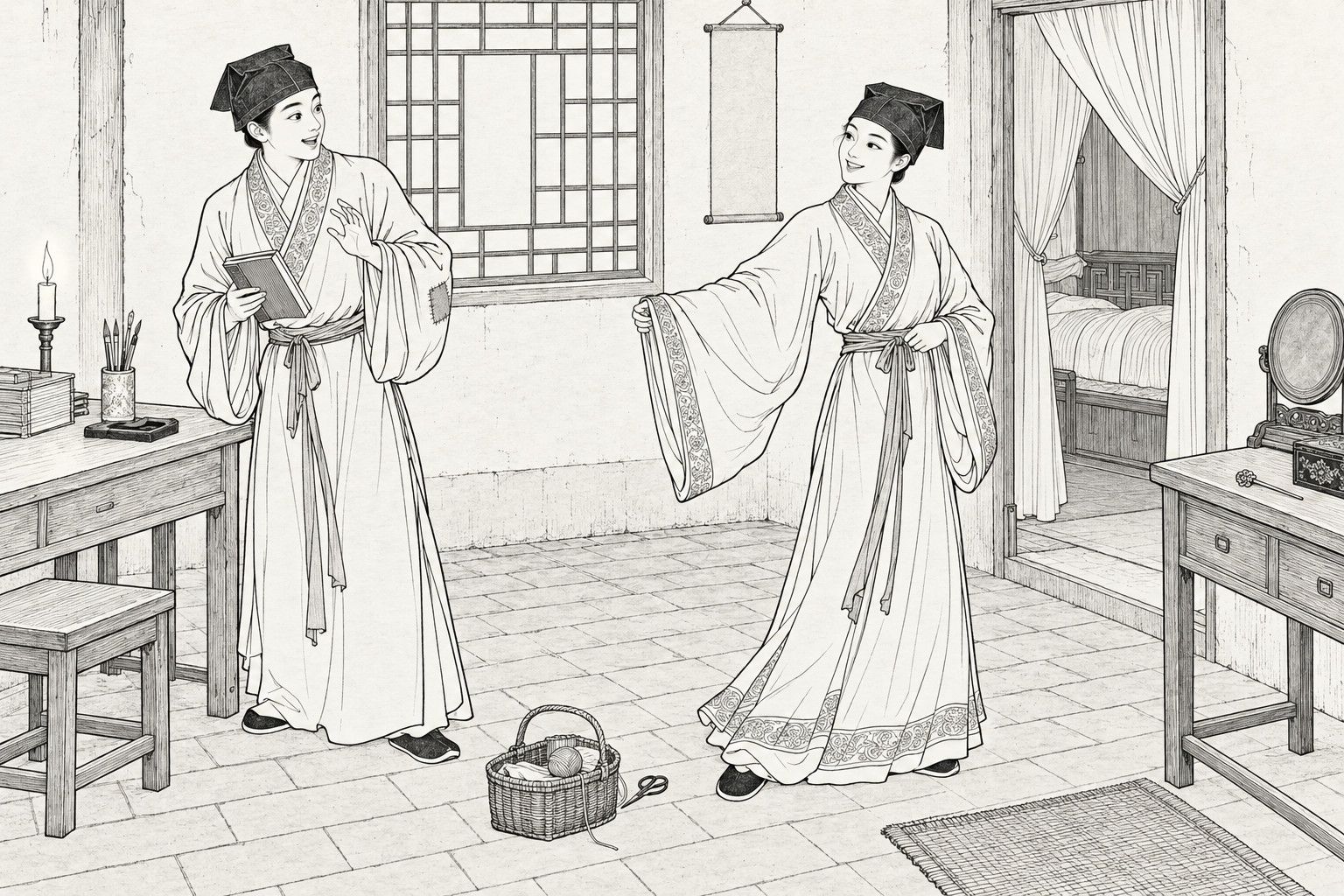
順天某生,家貧,值歲饑,從父之洛。性鈍,年十七,裁能成幅。而丰儀秀美,能雅謔,善尺牘。見者不知其中之無有也。無何,父母繼歿,孑然一身,授童蒙於洛汭。時村中顏氏有孤女,名士裔也。少慧。父在時,嘗教之讀,一過輒記不忘。十數歲,學父吟詠。父曰:「吾家有女學士,惜不弁耳。」鐘愛之,期擇貴婿。父卒,母執此志,三年不遂,而母又卒。或勸適佳士,女然之而未就也。適鄰婦踰垣來,就與攀談。以字紙裹繡線,女啟視,則某手翰,寄鄰生者。反復之而好焉。鄰婦窺其意,私語曰:「此翩翩一美少年,孤與卿等,年相若也。倘能垂意,妾囑渠儂胹合之。」女脈脈不語。婦歸,以意授夫。鄰生故與生善,告之,大悅。有母遺金鴉鐶,託委致焉。刻日成禮,魚水甚懽。及睹生文,笑曰:「文與卿似是兩人,如此,何日可成?」朝夕勸生研讀,嚴如師友。斂昏,先挑燭據案自哦,為丈夫率,聽漏三下,乃已。如是年餘,生制藝頗通;而再試再黜,身名蹇落,饔飧不給,撫情寂漠,嗷嗷悲泣。女訶之曰:「君非丈夫,負此弁耳!使我易髻而冠,青紫直芥視之!」生方懊喪,聞妻言,睒䁑而怒曰:「閨中人,身不到場屋,便以功名富貴似汝廚下汲水炊白粥;若冠加於頂,恐亦猶人耳!」女笑曰:「君勿怒。俟試期,妾請易裝相代。倘落拓如君,當不敢復藐天下士矣。」生亦笑曰:「卿自不知蘗苦,真宜使請嘗試之。但恐綻露,為鄉鄰笑耳。」女曰:「妾非戲語。君嘗言燕有故廬,請男裝從君歸,偽為弟。君以襁褓出,誰得辨其非?」生從之。女入房,巾服而出,曰:「視妾可作男兒否?」生視之,儼然一顧影少年也。生喜,遍辭里社。交好者薄有餽遺,買一羸蹇,御妻而歸。生叔兄尚在,見兩弟如冠玉,甚喜,晨夕卹顧之。又見宵旰攻苦,倍益愛敬。僱一翦髮雛奴,為供給使。暮後,輒遣去之。鄉中弔慶,兄自出周旋;弟惟下帷讀。居半年,罕有睹其面者。客或請見,兄輒代辭。讀其文,瞲然駭異。或排闥而迫之,一揖便亡去。客睹丰采,又共傾慕。由此名大譟,世家爭願贅焉。叔兄商之,惟囅然笑。再強之,則言:「矢志青雲,不及第,不婚也。」會學使案臨,兩人並出。兄又落。弟以冠軍應試,中順天第四;明年成進士;授桐城令,有吏治;尋遷河南道掌印御史,富埒王侯。因託疾乞骸骨,賜歸田里。賓客填門,迄謝不納。又自諸生以及顯貴,並不言娶,人無不怪之者。歸後,漸置婢。或疑其私;嫂察之,殊無苟且。無何,明鼎革,天下大亂。乃謂嫂曰:「實相告:我小郎婦也。以男子闒茸,不能自立,負氣自為之。深恐播揚,致天子召問,貽笑海內耳。」嫂不信。脫靴而示之足,始愕;視靴中,則敗絮滿焉。於是使生承其銜,仍閉門而雌伏矣。而生平不孕,遂出貲購妾。謂生曰:「凡人置身通顯,則買姬媵以自奉;我宦跡十年,猶一身耳。君何福澤,坐享佳麗?」生曰:「面首三十人,請卿自置耳。」相傳為笑。是時生父母,屢受覃恩矣。搢紳拜往,尊生以侍御禮。生羞襲閨銜,惟以諸生自安,終身未嘗輿蓋云。
顺天某生,家贫,值岁饥,从父之洛。性钝,年十七,裁能成幅。而丰仪秀美,能雅谑,善尺牍。见者不知其中之无有也。无何,父母继殁,孑然一身,授童蒙于洛汭。时村中颜氏有孤女,名士裔也。少慧。父在时,尝教之读,一过辄记不忘。十数岁,学父吟咏。父曰:「吾家有女学士,惜不弁耳。」钟爱之,期择贵婿。父卒,母执此志,三年不遂,而母又卒。或劝适佳士,女然之而未就也。适邻妇逾垣来,就与攀谈。以字纸裹绣线,女启视,则某手翰,寄邻生者。反复之而好焉。邻妇窥其意,私语曰:「此翩翩一美少年,孤与卿等,年相若也。倘能垂意,妾嘱渠侬胹合之。」女脉脉不语。妇归,以意授夫。邻生故与生善,告之,大悦。有母遗金鸦镮,托委致焉。刻日成礼,鱼水甚懽。及睹生文,笑曰:「文与卿似是两人,如此,何日可成?」朝夕劝生研读,严如师友。敛昏,先挑烛据案自哦,为丈夫率,听漏三下,乃已。如是年余,生制艺颇通;而再试再黜,身名蹇落,饔飧不给,抚情寂漠,嗷嗷悲泣。女诃之曰:「君非丈夫,负此弁耳!使我易髻而冠,青紫直芥视之!」生方懊丧,闻妻言,睒䁑而怒曰:「闺中人,身不到场屋,便以功名富贵似汝厨下汲水炊白粥;若冠加于顶,恐亦犹人耳!」女笑曰:「君勿怒。俟试期,妾请易装相代。倘落拓如君,当不敢复藐天下士矣。」生亦笑曰:「卿自不知蘗苦,真宜使请尝试之。但恐绽露,为乡邻笑耳。」女曰:「妾非戏语。君尝言燕有故庐,请男装从君归,伪为弟。君以襁褓出,谁得辨其非?」生从之。女入房,巾服而出,曰:「视妾可作男儿否?」生视之,俨然一顾影少年也。生喜,遍辞里社。交好者薄有餽遗,买一羸蹇,御妻而归。生叔兄尚在,见两弟如冠玉,甚喜,晨夕恤顾之。又见宵旰攻苦,倍益爱敬。雇一翦发雏奴,为供给使。暮后,辄遣去之。乡中吊庆,兄自出周旋;弟惟下帷读。居半年,罕有睹其面者。客或请见,兄辄代辞。读其文,瞲然骇异。或排闼而迫之,一揖便亡去。客睹丰采,又共倾慕。由此名大噪,世家争愿赘焉。叔兄商之,惟冁然笑。再强之,则言:「矢志青云,不及第,不婚也。」会学使案临,两人并出。兄又落。弟以冠军应试,中顺天第四;明年成进士;授桐城令,有吏治;寻迁河南道掌印御史,富埒王侯。因托疾乞骸骨,赐归田里。宾客填门,迄谢不纳。又自诸生以及显贵,并不言娶,人无不怪之者。归后,渐置婢。或疑其私;嫂察之,殊无苟且。无何,明鼎革,天下大乱。乃谓嫂曰:「实相告:我小郎妇也。以男子阘茸,不能自立,负气自为之。深恐播扬,致天子召问,贻笑海内耳。」嫂不信。脱靴而示之足,始愕;视靴中,则败絮满焉。于是使生承其衔,仍闭门而雌伏矣。而生平不孕,遂出赀购妾。谓生曰:「凡人置身通显,则买姬媵以自奉;我宦迹十年,犹一身耳。君何福泽,坐享佳丽?」生曰:「面首三十人,请卿自置耳。」相传为笑。是时生父母,屡受覃恩矣。搢绅拜往,尊生以侍御礼。生羞袭闺衔,惟以诸生自安,终身未尝舆盖云。
A scholar of Shuntian came from a poor family. In a year of famine he went with his father to Luoyang. He was slow-witted: at seventeen he could barely put an essay together. But he was handsome and graceful, could jest with wit, and wrote an excellent letter, so people who met him never guessed there was nothing inside. Before long his father and mother died one after the other, leaving him all alone, and he made his living teaching small children by the Luo River. In the village at that time there was an orphaned girl of the Yan family, descended from a scholar of note. She had been clever from childhood. While her father lived he had taught her to read, and whatever she went through once she remembered. At ten or so she learned from him to write verse. “We have a lady scholar in the family,” he said. “A pity she can’t wear the cap.” He doted on her and meant to choose her a husband of rank. When he died her mother held to the same aim, but three years passed without a match, and then her mother died too. Someone urged her to marry a good scholar; she agreed, but nothing had come of it yet. Just then a neighbour’s wife came over the wall to chat with her. The woman had some embroidery thread wrapped in a piece of written paper. The girl opened it and saw it was a letter in the scholar’s hand, sent to the neighbour’s husband. She read it over and over and liked it. The neighbour’s wife saw what she was thinking and whispered, “He’s a handsome, graceful young man, an orphan just like you, and about your age. If you take a fancy to him, I’ll have my man bring the two of you together.” The girl gazed at her and said nothing. The woman went home and told her husband what she had in mind. He had long been friends with the scholar, and when he told him, the scholar was delighted. He had a gold crow ring left him by his mother, and asked his friend to take it to her. A day was set, the wedding performed, and they were as happy together as fish in water. But when she saw his essays she laughed. “You and your writing seem like two different people. At this rate, when will you ever pass?” Morning and evening she urged him to study, as strict as a teacher. At dusk she would be first to trim the candle and sit at the desk chanting her texts, to set her husband an example, and she did not stop until the water clock marked the third watch. After a year and more of this he had a fair command of examination essays; but he sat the examinations twice and failed twice. His hopes and his name were ruined, there was not enough to eat, and in his desolation he wept and wailed. She scolded him. “You are no man — that cap is wasted on you! If I could trade my hair-knot for a cap, I’d pick up the blue and the purple like a blade of grass!” He was already downcast, and at his wife’s words his eyes flashed with anger. “You women in your chambers, who never set foot in the examination hall, think rank and riches are like drawing water and boiling rice gruel in your kitchen! Put a cap on your head and I dare say you’d be no better than anyone else!” She laughed. “Don’t be angry. When the examinations come, let me change my clothes and go in your place. If I fail as you have, I’ll never dare look down on the scholars of the world again.” He laughed too. “You’ve never tasted the bitter bark yourself; you really ought to try it. Only I’m afraid you’d be found out, and the neighbours would laugh at us.” “I’m not joking,” she said. “You’ve told me you have an old family house in Yan. Let me dress as a man and go back with you, passing as your younger brother. You left there in swaddling clothes — who could tell I’m not?” He agreed. She went into the bedroom and came out in a man’s cap and gown. “Look at me. Will I pass for a man?” He looked: she was every inch a handsome youth, the kind who admires his own shadow. Delighted, he took leave of everyone in the village. His friends gave him small parting gifts; he bought a lean, lame donkey and brought his wife home on it. His cousin, the son of his father’s younger brother, was still living. Seeing his two young cousins, both as handsome as jade, he was overjoyed and looked after them morning and night. And when he saw them working hard from before dawn till late at night, he loved and respected them all the more. A little page with cropped hair was hired to wait on them; after dark they always sent him away. For funerals and celebrations in the village, the elder brother went out and did the honours; the younger stayed behind lowered curtains with his books. In half a year hardly anyone had seen his face. When visitors asked to meet him, the elder brother always made excuses for him. They read his essays and stared in amazement. Some pushed open the door to corner him; he would give a single bow and slip away. Those who glimpsed his looks and bearing were all smitten. So his name was soon on everyone’s lips, and great families vied to take him as a son-in-law. When the cousin raised the matter, he only smiled. Pressed again, he said, “I have vowed to climb the blue clouds. Until I pass the examinations I will not marry.” When the education commissioner came on his tour, the two went in together. The elder brother failed again. The younger came out first, went on to the provincial examination and placed fourth at Shuntian; the next year he became a jinshi. He was appointed magistrate of Tongcheng, where he governed well, and before long was promoted to seal-holding censor of the Henan circuit, as rich as a prince. Then, pleading illness, he begged leave to take his old bones home, and was allowed to retire to his village. Visitors crowded the gate, but he turned them all away. From licentiate to high office he had never spoken of marrying, and there was no one who did not think it strange. After he came home he gradually took on maids. Some suspected him of carrying on with them, but the cousin’s wife watched and found nothing improper. Before long the Ming dynasty fell and the empire was thrown into chaos. Then the younger brother said to the cousin’s wife, “I’ll tell you the truth: I am your young brother-in-law’s wife. My husband was a good-for-nothing who couldn’t make his own way, so in a fit of pique I did it myself. I was terrified of its getting out — of the Son of Heaven summoning me to explain, and the whole land laughing.” The cousin’s wife did not believe it. Off came a boot, and the foot was shown to her; only then was she astonished. She looked into the boot and found it stuffed with old cotton wadding. So Mrs. Yan had the scholar take over her title, and shut her door and lay low, a hen once more. But she had never borne a child, so she paid out of her own money to buy him a concubine. She said to him, “When a man rises to high place, he buys concubines to wait on him. I held office for ten years and was still alone. What blessing have you, that you sit back and enjoy beauties?” The scholar said, “Thirty handsome young men — please buy them for yourself.” The story was passed around as a joke. By then the scholar’s parents had been granted titles by imperial favour several times over. The gentry came to call and treated him with the courtesies due a censor. But he was ashamed to bear a title won in the women’s quarters and was content to remain a licentiate; all his life, it is said, he never rode in an official’s sedan chair under a canopy.