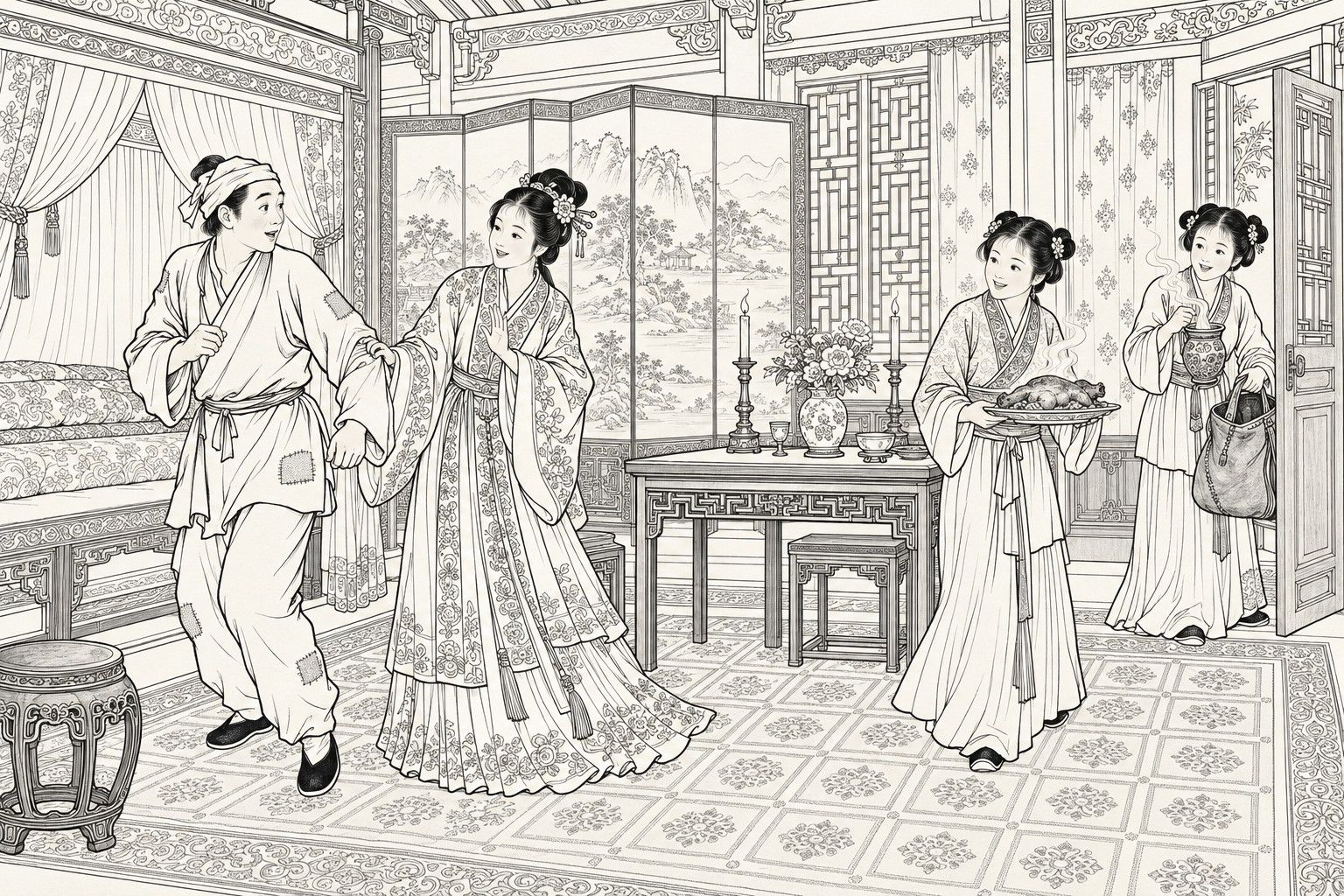
馬二混,居青州東門內,以貨麵為業。家貧,無婦,與母共作苦。一日,媼獨居,忽有美人來,年可十六七,椎布甚樸,而光華照人。媼驚顧窮詰。女笑曰:「我以賢郎誠篤,願委身母家。」媼益驚曰:「娘子天人,有此一言,則折我母子數年壽!」女固請之。意必為侯門亡人,拒益力。女乃去。越三日,復來,留連不去。問其姓氏,曰:「母肯納我,我乃言;不然,固無庸問。」媼曰:「貧賤傭保骨,得婦如此,不稱亦不祥。」女笑坐床頭,戀戀殊殷。媼辭之,言:「娘子宜速去,勿相禍。」女乃出門,媼視之西去。又數日,西巷中呂媼來,謂母曰:「鄰女董蕙芳,孤而無依,自願為賢郎婦,胡弗納?」母以所疑慮具白之。呂曰:「烏有此耶?如有乖謬,咎在老身。」母大喜,諾之。呂既去,媼掃室布席,將待子歸往娶之。日將暮,女飄然自至。入室參母,起拜盡禮。告媼曰:「妾有兩婢,未得母命,不敢進也。」媼曰:「我母子守窮廬,不解役婢僕。日得蠅頭利,僅足自給。今增新婦一人,嬌嫩坐食,尚恐不充飽;益之二婢,豈吸風所能活耶?」女笑曰:「婢來,亦不費母度支,皆能自得食。」問:「婢何在?」女乃呼:「秋月、秋松!」聲未及已,忽如飛鳥墮,二婢已立於前。即令伏地叩母。既而馬歸,母迎告之。馬喜。入室,見翠棟雕梁,侔於宮殿;中之几屏簾幙,光耀奪視。驚極,不敢入。女下床迎笑,睹之若仙。益駭,卻退。女挽之,坐與溫語。馬喜出非分,形神若不相屬。即起,欲出行沽。女止曰:勿須。」因命二婢治具。秋月出一革袋,執向扉後,格格撼擺之。已而以手探入,壺盛酒,柈盛炙,觸類熏騰。飲已而寢,則花罽錦裀,溫膩非常。天明出門,則茅廬依舊。母子共奇之。媼詣呂所,將跡所由。入門,先謝其媒合之德。呂訝云:「久不拜訪,何鄰女之曾託乎?」媼益疑,具言端委。呂大駭,即同媼來視新婦。女笑逆之,極道作合之義。呂見其惠麗,愕眙良久,即亦不辨,唯唯而已。女贈白木搔具一事,曰:「無以報德,姑奉此為姥姥爬背耳。」呂受以歸,審視則化為白金。馬自得婦,頓更舊業,門戶一新。笥中貂錦無數,任馬取著;而出室門,則為布素,但輕煖耳。女所自衣亦然。積四五年,忽曰:「我謫降人間十餘載,因與子有緣,遂暫留止。今別矣。」馬苦留之。女曰:「請別擇良偶,以承廬墓。我歲月當一至焉。」忽不見。馬乃娶秦氏。後三年,七夕,夫妻方共語,女忽入,笑曰:「新偶良懽,不念故人耶?」馬驚起,愴然曳坐,便道衷曲。女曰:「我適送織女渡河,乘間一相望耳。」兩相依依,語無休止。忽空際有人呼「蕙芳」,女急起作別。馬問其誰。曰:「余適同雙成姊來,彼不耐久伺矣。」馬送之。女曰:「子壽八旬,至期,我來收爾骨。」言已,遂逝。今馬六十餘矣。其人但樸訥,無他長。
马二混,居青州东门内,以货面为业。家贫,无妇,与母共作苦。一日,媪独居,忽有美人来,年可十六七,椎布甚朴,而光华照人。媪惊顾穷诘。女笑曰:「我以贤郎诚笃,愿委身母家。」媪益惊曰:「娘子天人,有此一言,则折我母子数年寿!」女固请之。意必为侯门亡人,拒益力。女乃去。越三日,复来,留连不去。问其姓氏,曰:「母肯纳我,我乃言;不然,固无庸问。」媪曰:「贫贱佣保骨,得妇如此,不称亦不祥。」女笑坐床头,恋恋殊殷。媪辞之,言:「娘子宜速去,勿相祸。」女乃出门,媪视之西去。又数日,西巷中吕媪来,谓母曰:「邻女董蕙芳,孤而无依,自愿为贤郎妇,胡弗纳?」母以所疑虑具白之。吕曰:「乌有此耶?如有乖谬,咎在老身。」母大喜,诺之。吕既去,媪扫室布席,将待子归往娶之。日将暮,女飘然自至。入室参母,起拜尽礼。告媪曰:「妾有两婢,未得母命,不敢进也。」媪曰:「我母子守穷庐,不解役婢仆。日得蝇头利,仅足自给。今增新妇一人,娇嫩坐食,尚恐不充饱;益之二婢,岂吸风所能活耶?」女笑曰:「婢来,亦不费母度支,皆能自得食。」问:「婢何在?」女乃呼:「秋月、秋松!」声未及已,忽如飞鸟堕,二婢已立于前。即令伏地叩母。既而马归,母迎告之。马喜。入室,见翠栋雕梁,侔于宫殿;中之几屏帘幙,光耀夺视。惊极,不敢入。女下床迎笑,睹之若仙。益骇,却退。女挽之,坐与温语。马喜出非分,形神若不相属。即起,欲出行沽。女止曰:勿须。」因命二婢治具。秋月出一革袋,执向扉后,格格撼摆之。已而以手探入,壶盛酒,柈盛炙,触类熏腾。饮已而寝,则花罽锦裀,温腻非常。天明出门,则茅庐依旧。母子共奇之。媪诣吕所,将迹所由。入门,先谢其媒合之德。吕讶云:「久不拜访,何邻女之曾托乎?」媪益疑,具言端委。吕大骇,即同媪来视新妇。女笑逆之,极道作合之义。吕见其惠丽,愕眙良久,即亦不辨,唯唯而已。女赠白木搔具一事,曰:「无以报德,姑奉此为姥姥爬背耳。」吕受以归,审视则化为白金。马自得妇,顿更旧业,门户一新。笥中貂锦无数,任马取着;而出室门,则为布素,但轻煖耳。女所自衣亦然。积四五年,忽曰:「我谪降人间十余载,因与子有缘,遂暂留止。今别矣。」马苦留之。女曰:「请别择良偶,以承庐墓。我岁月当一至焉。」忽不见。马乃娶秦氏。后三年,七夕,夫妻方共语,女忽入,笑曰:「新偶良懽,不念故人耶?」马惊起,怆然曳坐,便道衷曲。女曰:「我适送织女渡河,乘间一相望耳。」两相依依,语无休止。忽空际有人呼「蕙芳」,女急起作别。马问其谁。曰:「余适同双成姊来,彼不耐久伺矣。」马送之。女曰:「子寿八旬,至期,我来收尔骨。」言已,遂逝。今马六十余矣。其人但朴讷,无他长。
Ma Erhun lived just inside the east gate of Qingzhou and made his living selling flour. He was poor and had no wife, and he and his mother toiled hard together. One day, when the old woman was home alone, a beautiful girl suddenly appeared. She was about sixteen or seventeen, her hair in a plain knot and her clothes of coarse cloth, very simple, yet she was radiant. The old woman stared at her in alarm and questioned her closely. The girl smiled. “Your son is honest and true,” she said, “so I wish to give myself to your family.” The old woman was more alarmed than ever. “Miss, you are a lady out of heaven. Just to hear such words will cost my son and me years off our lives!” The girl pressed her. The old woman, sure she must be a runaway from some noble house, refused all the more firmly, and the girl went away. Three days later she came again and lingered on, unwilling to leave. Asked her name, she said, “If you will take me in, Mother, I will tell you. If not, there is no need to ask.” “We are poor folk with the bones of hired drudges,” said the old woman. “A wife like you would not fit us, and it would bring bad luck.” The girl only smiled and sat on the edge of the bed, clinging to them with the warmest affection. The old woman turned her away. “You had better leave at once, miss. Don’t bring trouble on us.” So the girl went out of the door, and the old woman watched her go off to the west. A few days later old Mrs. Lü from the west lane came and said to Ma’s mother, “There’s a neighbour girl of mine, Dong Huifang, an orphan with no one to turn to. She wants to marry your son of her own accord. Why won’t you take her?” The mother told her all her doubts. “There’s nothing of the kind!” said Mrs. Lü. “If anything goes amiss, the blame is mine.” The mother was overjoyed and agreed. When Mrs. Lü had gone, the old woman swept the room and spread the mats, meaning to wait for her son to come home and go to fetch the bride. Toward evening the girl came drifting in by herself. She went in to pay her respects to the mother, bowing with full ceremony. “I have two maids,” she told the old woman. “Without your word, Mother, they dare not come in.” “My son and I keep a poor hut,” said the old woman. “We know nothing about ordering maids and servants. Each day we make a profit the size of a fly’s head, just enough to keep ourselves. Now we have a new bride as well, a delicate thing who sits and eats, and I’m afraid even she won’t get her fill. Add two maids — can they live on the wind?” The girl laughed. “If they come, they won’t cost you anything, Mother. They can all find their own food.” “Where are they?” asked the old woman. The girl called, “Qiuyue! Qiusong!” Before her voice had died away, something dropped like birds out of the sky, and the two maids were standing before them. She had them go down on the ground and knock their heads to the mother. Presently Ma came home, and his mother met him with the news. Ma was delighted. He came to the room and saw green rafters and carved beams fit for a palace, and inside, tables, screens, curtains and hangings so bright they dazzled him. Astounded, he dared not go in. The girl got down from the bed and came to meet him, smiling; she looked like an immortal. More frightened than ever, he backed away. She took hold of him, sat him down and talked to him tenderly. Ma’s joy was more than he had any right to; his body and his wits seemed to have parted company. He got up at once to go out and buy wine. The girl stopped him. “There’s no need.” She told the two maids to set out a meal. Qiuyue brought out a leather bag, took it behind the door, and shook it with a rattle and clatter. Then she reached in: jugs of wine, plates of roast meat — whatever she touched came out steaming. When they had drunk they went to bed, on flowered rugs and brocade mattresses, warm and soft beyond anything. At dawn Ma went out of the door, and there stood the thatched hut just as before. Mother and son marvelled at it together. The old woman went to Mrs. Lü’s house, meaning to get to the bottom of it. As soon as she was through the door she thanked her for her kindness in making the match. Mrs. Lü was taken aback. “I haven’t called on you in a long while. What neighbour girl ever asked me anything?” The old woman, more puzzled still, told her the whole story from start to finish. Mrs. Lü was astounded and went back with her at once to see the bride. The girl met her smiling and thanked her warmly for bringing them together. Seeing how clever and lovely she was, Mrs. Lü stared, dumbfounded, for a long time; then she did not deny it either, and only said yes, yes. The girl gave her a back-scratcher of white wood. “I have nothing to repay your kindness,” she said. “Take this for now, granny, to scratch your back.” Mrs. Lü took it home, and when she looked at it closely it had turned to silver. Once Ma had a wife, he gave up his old trade at once, and the household took on a new look. Her chests held sables and brocades without number, and Ma took and wore whatever he pleased; but once he was out of the door of her room they were plain cotton, only light and warm. It was the same with the clothes she wore herself. After four or five years she said suddenly, “I was banished down to the world of men more than ten years ago. Because you and I were fated to meet, I stayed with you for a time. Now I must leave you.” Ma begged her to stay. “Choose another good wife,” she said, “to keep up your house and the family graves. I will come once in a while.” Then all at once she was gone. So Ma took a wife from the Qin family. Three years later, on the night of the Seventh of the Seventh Month, Ma and his wife were talking together when Huifang suddenly walked in. “So happy with your new mate,” she said, smiling, “that you never think of an old friend?” Ma started up and, sick at heart, pulled her down to sit beside him and poured out everything he felt. “I have just been seeing the Weaving Maid across the River,” she said, “and took the chance to look in on you.” They clung to each other and talked without end. Suddenly someone called “Huifang!” from the empty air, and she rose hurriedly to take her leave. Ma asked who it was. “I came with my sister Shuangcheng,” she said. “She can’t wait any longer.” Ma saw her out. “You will live to eighty,” she said. “When the time comes, I will come to gather your bones.” And with that she was gone. Ma is past sixty now. He is a simple man, slow of speech, with no other gifts.