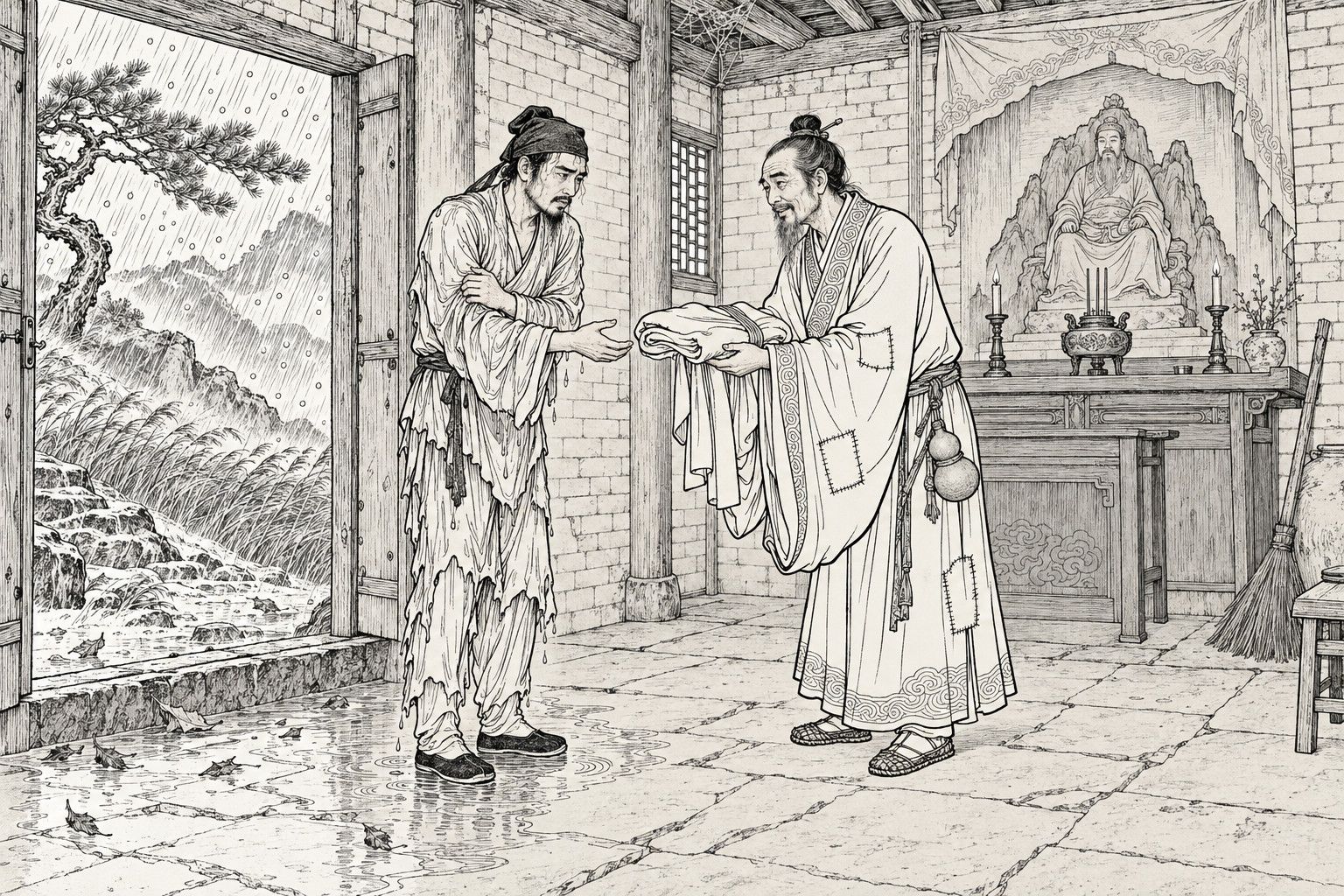
向杲字初旦,太原人。與庶兄晟,友于最敦。晟狎一妓,名波斯,有割臂之盟;以其母取直奢,所約不遂。適其母欲從良,願先遣波斯。有莊公子者,素善波斯,請贖為妾。波斯謂母曰:「既願同離水火,是欲出地獄而登天堂也。若妾媵之,相去幾何矣!肯從奴志,向生其可。」母諾之,以意達晟。時晟喪偶未婚,喜,竭貲聘波斯以歸。莊聞,怒奪所好,途中偶逢,大加詬罵。晟不服,遂嗾從人折箠笞之,垂斃,乃去。杲聞奔視,則兄已死。不勝哀憤。具造赴郡。莊廣行賄賂,使其理不得伸。杲隱忿中結,莫可控訴,惟思要路刺殺莊。日懷利刃,伏於山徑之莽。久之,機漸洩。莊知其謀,出則戒備甚嚴;聞汾州有焦桐者,勇而善射,以多金聘為衛。杲無計可施,然猶日伺之。一日,方伏,雨暴作,上下沾濡,寒戰頗苦。既而烈風四塞,冰雹繼至,身忽然痛癢不能復覺。嶺上舊有山神祠,強起奔赴。既入廟,則所識道士在內焉。先是,道士嘗行乞村中,杲輒飯之,道士以故識杲。見杲衣服濡溼,乃以布袍授之,曰:「姑易此。」杲易衣,忍凍蹲若犬,自視,則毛革頓生,身化為虎。道士已失所在。心中驚恨。轉念:得仇人而食其肉,計亦良得。下山伏舊處,見己尸臥叢莽中,始悟前身已死;猶恐葬於烏鳶,時時邏守之。越日,莊始經此,虎暴出,於馬上撲莊落,齕其首,咽之。焦桐返馬而射,中虎腹,蹷然遂斃。杲在錯楚中,恍若夢醒;又經宵,始能行步,厭厭以歸。家人以其連夕不返,方共駭疑,見之,喜相慰問。杲但臥,蹇澀不能語。少間,聞莊信,爭即床頭慶告之。杲乃自言:「虎即我也。」遂述其異。由此傳播。莊子痛父之死甚慘,聞而惡之,因訟杲。官以其事誕而無據,置不理焉。
向杲字初旦,太原人。与庶兄晟,友于最敦。晟狎一妓,名波斯,有割臂之盟;以其母取直奢,所约不遂。适其母欲从良,愿先遣波斯。有庄公子者,素善波斯,请赎为妾。波斯谓母曰:「既愿同离水火,是欲出地狱而登天堂也。若妾媵之,相去几何矣!肯从奴志,向生其可。」母诺之,以意达晟。时晟丧偶未婚,喜,竭赀聘波斯以归。庄闻,怒夺所好,途中偶逢,大加诟骂。晟不服,遂嗾从人折箠笞之,垂毙,乃去。杲闻奔视,则兄已死。不胜哀愤。具造赴郡。庄广行贿赂,使其理不得伸。杲隐忿中结,莫可控诉,惟思要路刺杀庄。日怀利刃,伏于山径之莽。久之,机渐泄。庄知其谋,出则戒备甚严;闻汾州有焦桐者,勇而善射,以多金聘为卫。杲无计可施,然犹日伺之。一日,方伏,雨暴作,上下沾濡,寒战颇苦。既而烈风四塞,冰雹继至,身忽然痛痒不能复觉。岭上旧有山神祠,强起奔赴。既入庙,则所识道士在内焉。先是,道士尝行乞村中,杲辄饭之,道士以故识杲。见杲衣服濡湿,乃以布袍授之,曰:「姑易此。」杲易衣,忍冻蹲若犬,自视,则毛革顿生,身化为虎。道士已失所在。心中惊恨。转念:得仇人而食其肉,计亦良得。下山伏旧处,见己尸卧丛莽中,始悟前身已死;犹恐葬于乌鸢,时时逻守之。越日,庄始经此,虎暴出,于马上扑庄落,龁其首,咽之。焦桐返马而射,中虎腹,蹷然遂毙。杲在错楚中,恍若梦醒;又经宵,始能行步,厌厌以归。家人以其连夕不返,方共骇疑,见之,喜相慰问。杲但卧,蹇涩不能语。少间,闻庄信,争即床头庆告之。杲乃自言:「虎即我也。」遂述其异。由此传播。庄子痛父之死甚惨,闻而恶之,因讼杲。官以其事诞而无据,置不理焉。
Xiang Gao, courtesy name Chudan, was a man of Taiyuan. He and his elder half-brother Sheng, a concubine’s son, were as close as brothers can be. Sheng was intimate with a courtesan named Bosi, and the two had sworn an oath by cutting their arms; but her mother asked too high a price, and their pact came to nothing. It happened that the mother wanted to leave the trade and settle down respectably, and wished to find Bosi a place first. A young gentleman named Zhuang, long a friend of Bosi’s, asked to buy her out as his concubine. Bosi said to her mother, “Since we both want to get out of fire and flood, it should be a climb out of hell into heaven. If I become a concubine, how far is that from where I am now? If you will let me have my way, young Xiang is the one.” The mother agreed and let Sheng know her wishes. Sheng had lost his wife and not married again. He was delighted, spent everything he had on the betrothal gifts, and brought Bosi home. When Zhuang heard, he was furious that the woman he wanted had been taken from him. Meeting Sheng on the road by chance, he cursed him roundly. Sheng would not take it, so Zhuang set his servants on him; they broke off rods and beat him until he was near death, and only then left. Gao heard and ran to see him, but his brother was already dead. Beside himself with grief and rage, he drew up a complaint and took it to the prefecture. Zhuang spread bribes far and wide, and Gao could get no justice. His hidden rage knotted inside him. With nowhere to appeal, he thought only of waylaying Zhuang and stabbing him. Every day he carried a sharp knife and lay in wait in the brush beside a mountain path. In time his plan began to leak out. Zhuang learned of it and went out only under heavy guard. Hearing that a man of Fenzhou named Jiao Tong was brave and a fine archer, he hired him at great cost as his bodyguard. Gao had no way to get at him, but still watched for him every day. One day, as he lay in wait, a sudden storm broke. He was soaked from head to foot and shook miserably with cold. Then a fierce wind closed in on every side, hail followed, and all at once he could no longer feel pain or itch in his body. There was an old shrine to the mountain god up on the ridge; he forced himself up and ran to it. Inside the temple was a Daoist he knew. The Daoist had once gone begging in the village, and Gao had always given him a meal; that was how the Daoist knew him. Seeing Gao’s clothes soaked through, he handed him a cloth robe. “Change into this for now,” he said. Gao changed, and crouched like a dog, bearing the cold. Looking down at himself, he saw that fur and hide had sprung up all over him: he had turned into a tiger. The Daoist was nowhere to be seen. Gao was shocked and bitter. Then he thought again: to catch his enemy and eat his flesh — that would be a fine plan after all. He went down the mountain and lay in wait in his old spot. There he saw his own corpse lying in the brush, and only then understood that his former body was dead. Still afraid it would find its grave in crows and kites, he kept watch over it constantly. The next day Zhuang at last came by. The tiger burst out, knocked Zhuang off his horse, bit off his head and swallowed it. Jiao Tong wheeled his horse and shot, hitting the tiger in the belly. It toppled over and died. Gao, lying in the thorny tangle, came to as if waking from a dream. It was another night before he could walk, and he dragged himself home, spent. His family had been alarmed and full of fears, since he had not come back for several nights. When they saw him they were glad and gathered round with comfort and questions. Gao only lay down, too numb and slow to speak. Before long the news about Zhuang came, and they crowded to his bedside to give him the happy tidings. Then Gao said, “The tiger was me,” and told them the whole strange story. From there it spread. Zhuang’s son, grieving at the dreadful way his father had died, heard it and hated Gao for it, and brought a suit against him. The official found the matter absurd and without evidence, and set it aside.