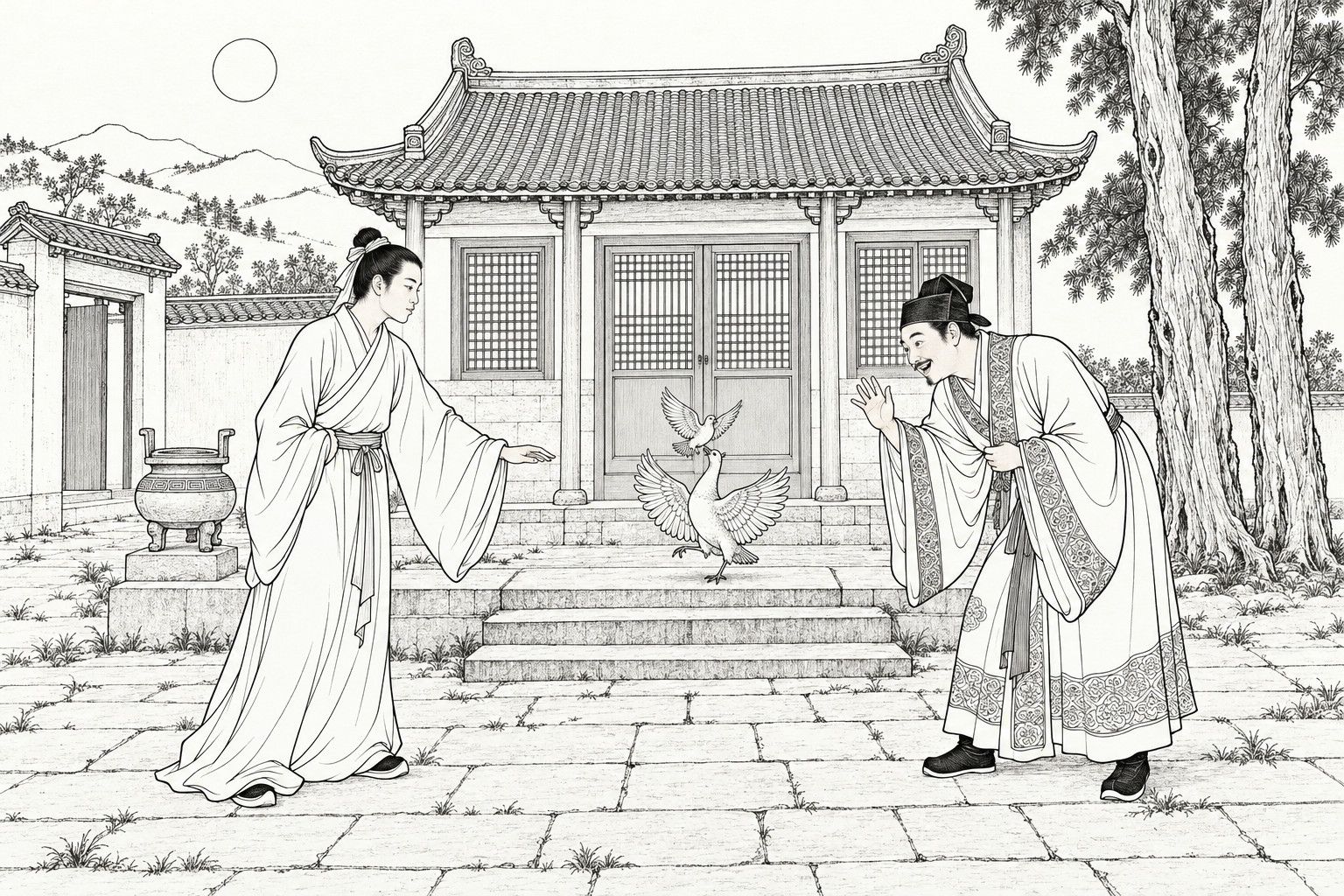
鴿類甚繁,晉有坤星,魯有鶴秀,黔有腋蜨,梁有翻跳,越有諸尖:皆異種也。又有靴頭、點子、大白、黑石、夫婦雀、花狗眼之類,名不可屈以指,惟好事者能辨之也。鄒平張公子幼量,癖好之,按經而求,務盡其種。其養之也,如保嬰兒:冷則療以粉草,熱則投以鹽顆。鴿善睡,睡太甚,有病麻痹而死者。張在廣陵,以十金購一鴿,體最小,善走,置地上,盤旋無已時,不至於死不休也,故常須人把握之;夜置群中,使驚諸鴿,可以免痹股之病:是名「夜遊」。齊魯養鴿家,無如公子最;公子亦以鴿自詡。一夜,坐齋中,忽一白衣少年叩扉入,殊不相識。問之。答曰:「漂泊之人,姓名何足道。遙聞畜鴿最盛,此亦生平所好,願得寓目。」張乃盡出所有,五色俱備,燦若雲錦。少年笑曰:「人言果不虛,公子可謂盡養鴿之能事矣。僕亦攜有一兩頭,頗願觀之否?」張喜,從少年去。月色冥漠,野壙蕭條,心竊疑懼。少年指曰:「請勉行,寓屋不遠矣。」又數武,見一道院,僅兩楹。少年握手入,昧無燈火。少年立庭中,口中作鴿鳴。忽有兩鴿出:狀類常鴿,而毛純白;飛與簷齊,且鳴且鬥,每一撲,必作觔斗。少年揮之以肱,連翼而去。復撮口作異聲,又有兩鴿出:大者如鶩,小者裁如拳;集階上,學鶴舞。大者延頸立,張翼作屏,宛轉鳴跳,若引之;小者上下飛鳴,時集其頂,翼翩翩如燕子落蒲葉上,聲細碎,類鼗鼓;大者伸頸不敢動。鳴愈急,聲變如磬,兩兩相和,間雜中節。既而小者飛起,大者又顛倒引呼之。張嘉歎不已,自覺望洋可愧。遂揖少年,乞求分愛;少年不許。又固求之。少年乃叱鴿去,仍作前聲,招二白鴿來,以手把之,曰:「如不嫌憎,以此塞責。」接而玩之:睛映月作琥珀色,兩目通透,若無隔閡,中黑珠圓於椒粒;啟其翼,脅肉晶瑩,臟腑可數。張甚奇之,而意猶未足,詭求不已。少年曰:「尚有兩種未獻,今不敢復請觀矣。」方競論間,家人燎麻炬入尋主人。回視少年,化白鴿,大如雞,沖霄而去。又目前院宇都渺,蓋一小墓,樹二柏焉。與家人抱鴿,駭歎而歸。試使飛,馴異如初。雖非其尤,人世亦絕少矣。於是愛惜臻至。積二年,育雌雄各三。雖戚好求之,不得也。有父執某公,為貴官。一日,見公子,問:「畜鴿幾許?」公子唯唯以退。疑某意愛好之也,思所以報而割愛良難。又念:長者之求,不可重拂。且不敢以常鴿應,選二白鴿,籠送之,自以千金之贈不啻也。他日,見某公,頗有德色;而其殊無一申謝語。心不能忍,問:「前禽佳否?」答云:「亦肥美。」張驚曰:「烹之乎?」曰:「然。」張大驚曰:「此非常鴿,乃俗所言『靼韃』者也!」某回思曰:「味亦殊無異處。」張歎恨而返。至夜,夢白衣少年至,責之曰:「我以君能愛之,故遂託以子孫。何乃以明珠暗投,致殘鼎鑊!今率兒輩去矣。」言已,化為鴿,所養白鴿皆從之,飛鳴逕去。天明視之,果俱亡矣。心甚恨之,遂以所畜,分贈知交,數日而盡。
鸽类甚繁,晋有坤星,鲁有鹤秀,黔有腋蜨,梁有翻跳,越有诸尖:皆异种也。又有靴头、点子、大白、黑石、夫妇雀、花狗眼之类,名不可屈以指,惟好事者能辨之也。邹平张公子幼量,癖好之,按经而求,务尽其种。其养之也,如保婴儿:冷则疗以粉草,热则投以盐颗。鸽善睡,睡太甚,有病麻痹而死者。张在广陵,以十金购一鸽,体最小,善走,置地上,盘旋无已时,不至于死不休也,故常须人把握之;夜置群中,使惊诸鸽,可以免痹股之病:是名「夜游」。齐鲁养鸽家,无如公子最;公子亦以鸽自诩。一夜,坐斋中,忽一白衣少年叩扉入,殊不相识。问之。答曰:「漂泊之人,姓名何足道。遥闻畜鸽最盛,此亦生平所好,愿得寓目。」张乃尽出所有,五色俱备,灿若云锦。少年笑曰:「人言果不虚,公子可谓尽养鸽之能事矣。仆亦携有一两头,颇愿观之否?」张喜,从少年去。月色冥漠,野圹萧条,心窃疑惧。少年指曰:「请勉行,寓屋不远矣。」又数武,见一道院,仅两楹。少年握手入,昧无灯火。少年立庭中,口中作鸽鸣。忽有两鸽出:状类常鸽,而毛纯白;飞与檐齐,且鸣且斗,每一扑,必作觔斗。少年挥之以肱,连翼而去。复撮口作异声,又有两鸽出:大者如鹜,小者裁如拳;集阶上,学鹤舞。大者延颈立,张翼作屏,宛转鸣跳,若引之;小者上下飞鸣,时集其顶,翼翩翩如燕子落蒲叶上,声细碎,类鼗鼓;大者伸颈不敢动。鸣愈急,声变如磬,两两相和,间杂中节。既而小者飞起,大者又颠倒引呼之。张嘉叹不已,自觉望洋可愧。遂揖少年,乞求分爱;少年不许。又固求之。少年乃叱鸽去,仍作前声,招二白鸽来,以手把之,曰:「如不嫌憎,以此塞责。」接而玩之:睛映月作琥珀色,两目通透,若无隔阂,中黑珠圆于椒粒;启其翼,胁肉晶莹,脏腑可数。张甚奇之,而意犹未足,诡求不已。少年曰:「尚有两种未献,今不敢复请观矣。」方竞论间,家人燎麻炬入寻主人。回视少年,化白鸽,大如鸡,冲霄而去。又目前院宇都渺,盖一小墓,树二柏焉。与家人抱鸽,骇叹而归。试使飞,驯异如初。虽非其尤,人世亦绝少矣。于是爱惜臻至。积二年,育雌雄各三。虽戚好求之,不得也。有父执某公,为贵官。一日,见公子,问:「畜鸽几许?」公子唯唯以退。疑某意爱好之也,思所以报而割爱良难。又念:长者之求,不可重拂。且不敢以常鸽应,选二白鸽,笼送之,自以千金之赠不啻也。他日,见某公,颇有德色;而其殊无一申谢语。心不能忍,问:「前禽佳否?」答云:「亦肥美。」张惊曰:「烹之乎?」曰:「然。」张大惊曰:「此非常鸽,乃俗所言『靼鞑』者也!」某回思曰:「味亦殊无异处。」张叹恨而返。至夜,梦白衣少年至,责之曰:「我以君能爱之,故遂托以子孙。何乃以明珠暗投,致残鼎镬!今率儿辈去矣。」言已,化为鸽,所养白鸽皆从之,飞鸣径去。天明视之,果俱亡矣。心甚恨之,遂以所畜,分赠知交,数日而尽。
There are a great many kinds of pigeon. Jin has the Earth Star, Lu the Crane’s Grace, Qian the Underwing Butterfly, Liang the Tumbler and Yue the Many Points: all rare breeds. Then there are the Boot-Head, the Spot, the Big White, the Black Stone, the Husband-and-Wife Sparrow, the Spotted Dog-Eye and the like. There are more names than you could count on your fingers, and only enthusiasts can tell them apart. Young Master Zhang Youliang of Zouping was mad about pigeons. He sought them out by the book, determined to have every breed there was. He tended them as one tends a baby: when they took cold he dosed them with powdered licorice, and when they took a fever he gave them grains of salt. Pigeons love to sleep, and some sleep so much that they fall sick with a numbness and die. In Guangling Zhang paid ten taels of silver for a pigeon that was very small and a great walker. Set on the ground, it went round and round without end and would not stop until it dropped dead, so someone always had to hold it. Put among the flock at night, it kept the others from sleeping and saved them from the numb-leg sickness. It was called the Night Wanderer. Of all the pigeon fanciers in Shandong, none could match the young master, and he prided himself on his pigeons. One night, as he sat in his study, a young man dressed in white knocked at the door and came in. He was a complete stranger. Zhang asked who he was. “A wanderer,” he answered. “My name isn’t worth mentioning. I heard from afar that you keep the finest pigeons. They have been my love all my life too, and I would like to see them.” So Zhang brought out every bird he had, in all five colours, as bright as cloud-patterned brocade. The young man smiled. “What people say is true. You have done all that can be done in keeping pigeons, sir. I have one or two of my own with me. Would you care to see them?” Zhang was delighted and went with him. The moonlight was dim, the open country bleak and empty, and Zhang began secretly to doubt and fear. The young man pointed. “Please keep on a little. My lodging is not far.” A few steps more and they came to a Daoist chapel of only two rooms. The young man took him by the hand and led him in. It was dark, without lamp or fire. The young man stood in the courtyard and cooed like a pigeon. At once two pigeons came out. They looked like ordinary pigeons, but pure white. They flew up level with the eaves, cooing and fighting, and at every lunge they turned a somersault. The young man waved them off with his arm, and they flew away wing to wing. Then he pursed his lips and made a strange sound, and two more pigeons came out, a big one the size of a duck and a little one no bigger than a fist. They alighted on the steps and danced like cranes. The big one stood with its neck stretched up and its wings spread like a screen, turning, calling and hopping as if to lead the other on. The little one flew up and down, calling, now and then alighting on the big one’s head with its wings fluttering like a swallow landing on a rush leaf. Its voice was thin and broken, like a pellet drum. The big one kept its neck stretched up and did not dare to move. The calls grew quicker and changed to the ring of a chime stone. The two answered each other, the notes weaving in and out and keeping perfect time. Then the little one flew up, and the big one tumbled head over heels, calling it back. Zhang could not stop exclaiming in admiration, and felt as ashamed as one gazing at the ocean. He bowed to the young man and begged him to part with some of his treasures. The young man refused. Zhang pressed him. So the young man shooed the pigeons away, made his first call again and summoned the two white pigeons. He took them in his hands. “If you don’t find them too poor,” he said, “let these do.” Zhang took them and looked them over. In the moonlight their eyes were amber, and so clear that you could see right through from one eye to the other, as if nothing lay between. The black pupils were rounder than peppercorns. When he opened their wings, the flesh over the ribs was so translucent that you could count the organs inside. Zhang marvelled at them, but still he was not satisfied, and kept wheedling for more. “There are two more kinds I have not shown you,” said the young man, “but I would not dare ask you to look now.” While they were still arguing, Zhang’s servants came in with hemp torches, looking for their master. He looked round at the young man: he had become a white pigeon the size of a chicken, and it soared up into the sky and was gone. And the courtyard and buildings before his eyes had all vanished. There was only a small grave with two cypresses planted by it. Holding the pigeons, he went home with his servants, astonished and marvelling. When he tried them in flight, they were as tame and wonderful as before. They were not the best of the young man’s birds, but there were very few like them in the world of men. So he loved and cherished them beyond anything. In two years they had bred three hens and three cocks. Even kinsmen and friends who asked for them got none. There was a certain gentleman, an old friend of his father’s, who was a high official. One day, seeing the young master, he asked, “How many pigeons do you keep?” The young master murmured something and withdrew. He suspected the gentleman wanted some. He thought about how to oblige him, but it was very hard to part with them. Then again, when an elder asks, one cannot flatly refuse. Nor did he dare to make do with ordinary pigeons. He chose two of the white ones and sent them over in a cage, telling himself it was a gift worth no less than a thousand in gold. Some days later he saw the gentleman, and he wore rather the look of a benefactor; but the gentleman said not one word of thanks. Unable to bear it, Zhang asked, “Were the birds I sent any good?” “Quite plump and tasty,” he answered. “You cooked them?” said Zhang, startled. “I did.” Zhang was horrified. “Those were no ordinary pigeons! They were what people call Tartars!” The gentleman thought back. “They didn’t taste any different.” Zhang went home sighing in bitter regret. That night he dreamed that the young man in white came and rebuked him. “I thought you would love them, so I entrusted my offspring to you. How could you cast bright pearls into the dark and leave them to be butchered in a cauldron? Now I am taking my children away.” With that he turned into a pigeon, and all the white pigeons Zhang had raised followed him, crying as they flew straight off. At daybreak Zhang went to look. Sure enough, they were all gone. He was so bitter about it that he gave away all his birds among his friends, and in a few days there were none left.