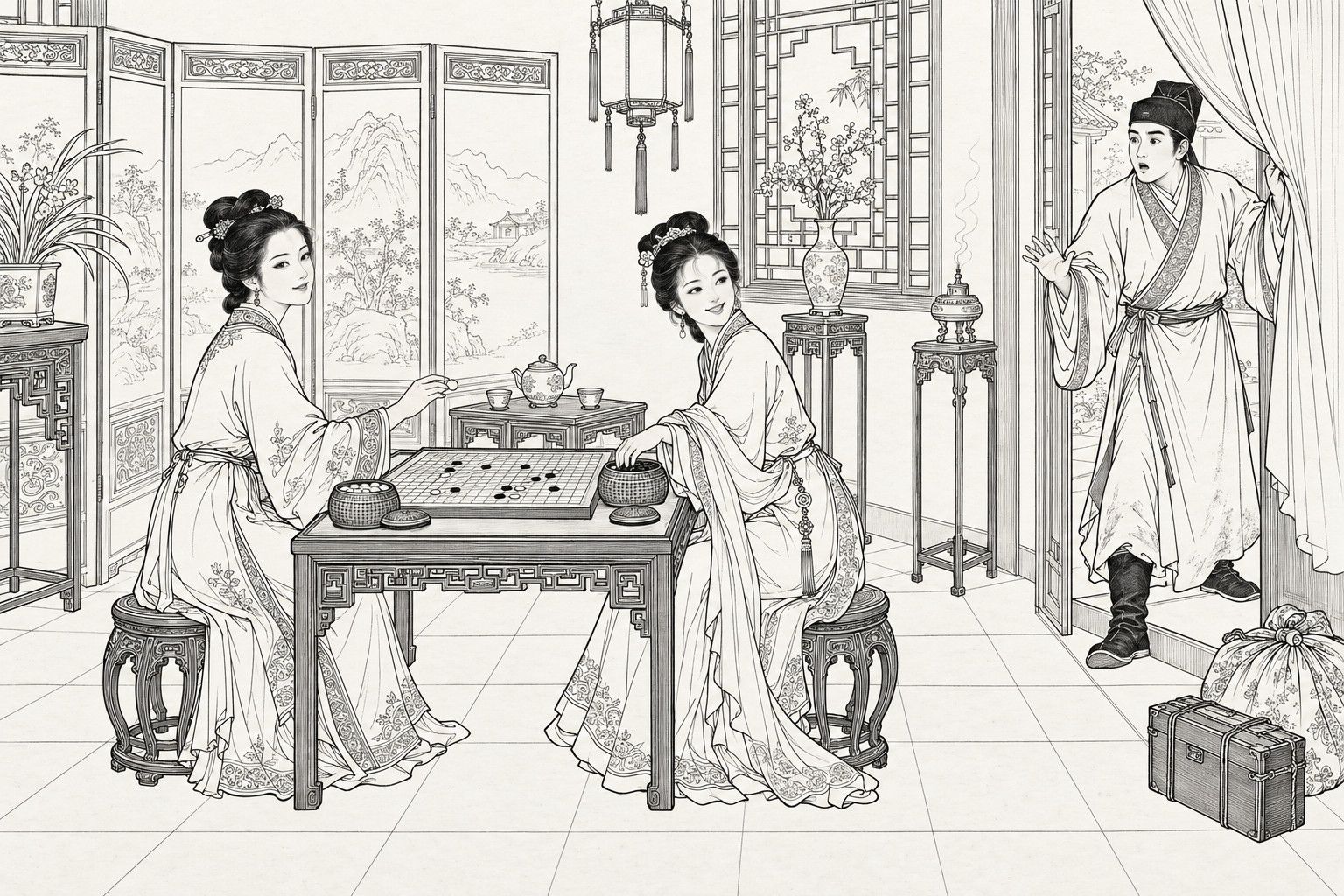
臨江高蕃,少慧,儀容秀美。十四歲入邑庠。富室爭女之;生選擇良苛,屢梗父命。父仲鴻,年六十,止此子,寵惜之,不忍少拂。初,東村有樊翁者,授童蒙於市肆,攜家僦生屋。翁有女,小字江城,與生同甲,時皆八九歲,兩小無猜,日共嬉戲。後翁徙去,積四五年,不復聞問。一日,生於隘巷中,見一女郎,豔美絕俗。從以小鬟,僅六七歲。不敢傾顧,但斜睨之。女停睇,若欲有言。細視之,江城也。頓大驚喜。各無所言,相視呆立,移時始別,兩情戀戀。生故以紅巾遺地而去。小鬟拾之,喜以授女。女入袖中,易以己巾,偽謂鬟曰:「高秀才非他人,勿得諱其遺物,可追還之。」小鬟果追付生。生得巾大喜。歸見母,請與論婚。母曰:「家無半間屋,南北流寓,何足匹偶?」生言:「我自欲之,固當無悔。」母不能決,以商仲鴻;鴻執不可。生聞之悶悶,嗌不容粒。母憂之,謂高曰:「樊氏雖貧,亦非狙儈無賴者比。我請過其家,倘其女可偶,當亦無害。」高曰:「諾。」母託燒香黑帝祠,詣之。見女明眸秀齒,居然娟好,心大愛悅。遂以金帛厚贈之,實告以意。樊媼謙抑而後受盟。歸述其情,生始解顏為笑。逾歲,擇吉迎女歸,夫妻相得甚懽。而女善怒,反眼若不相識;詞舌嘲啁,常聒於耳。生以愛故,悉含忍之。翁媼聞之,心弗善也,潛責其子。為女所聞,大恚,詬罵彌加。生稍稍反其惡聲,女益怒,撻逐出戶,闔其扉。生㗩㗩門外,不敢叩關,抱膝宿簷下。女從此視若仇。其初,長跪猶可以解;漸至屈膝無靈,而丈夫益苦矣。翁姑薄讓之,女牴牾不可言狀。翁姑忿怒,逼令大歸。樊慚懼,浼交好者請於仲鴻;仲鴻不許。年餘,生出遇岳,岳邀歸其家,謝罪不遑。妝女出見,夫婦相看,不覺惻楚。樊乃沽酒款婿,酬勸甚殷。日暮,堅止留宿,掃別榻,使夫婦並寢。既曙辭歸,不敢以情告父母,掩飾彌縫。自此三五日,暫一寄岳家宿,而父母不知也。樊一日自詣仲鴻。初不見,迫而後見之。樊膝行而請。高不承,諉諸其子。樊曰:「婿昨夜宿僕家,不聞有異言。」高驚問:「何時寄宿?」樊具以告。高赧謝曰:「我固不知。彼愛之,我獨何仇乎?」樊既去,高呼子而罵。生但俛首,不少出氣。言間,樊已送女至。高曰:「我不能為兒女任過,不如各立門戶,即煩主析爨之盟。」樊勸之,不聽。遂別院居之,遣一婢給役焉。月餘,頗相安,翁嫗竊慰。未幾,女漸肆,生面上時有指爪痕;父母明知之,亦忍不置問。
临江高蕃,少慧,仪容秀美。十四岁入邑庠。富室争女之;生选择良苛,屡梗父命。父仲鸿,年六十,止此子,宠惜之,不忍少拂。初,东村有樊翁者,授童蒙于市肆,携家僦生屋。翁有女,小字江城,与生同甲,时皆八九岁,两小无猜,日共嬉戏。后翁徙去,积四五年,不复闻问。一日,生于隘巷中,见一女郎,艳美绝俗。从以小鬟,仅六七岁。不敢倾顾,但斜睨之。女停睇,若欲有言。细视之,江城也。顿大惊喜。各无所言,相视呆立,移时始别,两情恋恋。生故以红巾遗地而去。小鬟拾之,喜以授女。女入袖中,易以己巾,伪谓鬟曰:「高秀才非他人,勿得讳其遗物,可追还之。」小鬟果追付生。生得巾大喜。归见母,请与论婚。母曰:「家无半间屋,南北流寓,何足匹偶?」生言:「我自欲之,固当无悔。」母不能决,以商仲鸿;鸿执不可。生闻之闷闷,嗌不容粒。母忧之,谓高曰:「樊氏虽贫,亦非狙侩无赖者比。我请过其家,倘其女可偶,当亦无害。」高曰:「诺。」母托烧香黑帝祠,诣之。见女明眸秀齿,居然娟好,心大爱悦。遂以金帛厚赠之,实告以意。樊媪谦抑而后受盟。归述其情,生始解颜为笑。逾岁,择吉迎女归,夫妻相得甚懽。而女善怒,反眼若不相识;词舌嘲啁,常聒于耳。生以爱故,悉含忍之。翁媪闻之,心弗善也,潜责其子。为女所闻,大恚,诟骂弥加。生稍稍反其恶声,女益怒,挞逐出户,阖其扉。生㗩㗩门外,不敢叩关,抱膝宿檐下。女从此视若仇。其初,长跪犹可以解;渐至屈膝无灵,而丈夫益苦矣。翁姑薄让之,女抵牾不可言状。翁姑忿怒,逼令大归。樊惭惧,浼交好者请于仲鸿;仲鸿不许。年余,生出遇岳,岳邀归其家,谢罪不遑。妆女出见,夫妇相看,不觉恻楚。樊乃沽酒款婿,酬劝甚殷。日暮,坚止留宿,扫别榻,使夫妇并寝。既曙辞归,不敢以情告父母,掩饰弥缝。自此三五日,暂一寄岳家宿,而父母不知也。樊一日自诣仲鸿。初不见,迫而后见之。樊膝行而请。高不承,诿诸其子。樊曰:「婿昨夜宿仆家,不闻有异言。」高惊问:「何时寄宿?」樊具以告。高赧谢曰:「我固不知。彼爱之,我独何仇乎?」樊既去,高呼子而骂。生但俛首,不少出气。言间,樊已送女至。高曰:「我不能为儿女任过,不如各立门户,即烦主析爨之盟。」樊劝之,不听。遂别院居之,遣一婢给役焉。月余,颇相安,翁妪窃慰。未几,女渐肆,生面上时有指爪痕;父母明知之,亦忍不置问。
Gao Fan of Linjiang was a clever boy, handsome and graceful. At fourteen he entered the county school. Rich families competed to make him their son-in-law, but he was very particular in his choice and kept defying his father’s wishes. His father, Zhonghong, was sixty, and this was his only son; he doted on him and could not bear to cross him in the least. Some years before, an old man named Fan from the East Village, who taught small children in a shop in the market, had brought his family and rented a house from the Gaos. Old Fan had a daughter whose pet name was Jiangcheng. She and Gao were born in the same year; they were both eight or nine then, two innocent children, and they played together every day. Later the old man moved away, and for four or five years nothing more was heard of them. One day, in a narrow lane, Gao saw a young woman of rare and dazzling beauty, followed by a little maid of only six or seven. He did not dare stare at her, only glanced at her sidelong. The girl stopped and gazed back, as if she wanted to say something. He looked closer: it was Jiangcheng. He was suddenly overjoyed. Neither of them said anything; they stood staring at each other in a daze, and only after a while did they part, each reluctant to go. Gao dropped his red handkerchief on the ground on purpose and walked on. The little maid picked it up and happily gave it to her mistress. The girl put it in her sleeve and swapped it for her own. “Scholar Gao is no stranger,” she said to the maid, pretending. “We mustn’t keep what he dropped. Run after him and give it back.” The little maid did run after him and gave it to Gao. When Gao got the handkerchief he was overjoyed. He went home to his mother and asked her to arrange a marriage. “They haven’t half a room to call their own,” said his mother. “They drift about from north to south. How can they be a match for us?” “I want her myself,” said Gao. “I will never regret it.” His mother could not decide, and talked it over with Zhonghong, who refused outright. When Gao heard this he sank into gloom and could not swallow a grain of rice. His mother was worried for him. “The Fans may be poor,” she said to Zhonghong, “but they are not like sly brokers and good-for-nothings. Let me call at their house. If the girl is a fit match, there can be no harm in it.” “Very well,” said Zhonghong. Gao’s mother went there on the pretext of burning incense at the shrine of the Black Emperor. She found the girl had bright eyes and fine teeth and was truly lovely, and she was greatly taken with her. So she gave them generous presents of money and silk, and told them plainly what she had in mind. Old Mrs. Fan modestly declined at first, then accepted the betrothal. Gao’s mother came home and told what had happened, and for the first time Gao’s face cleared and he smiled. A year later they chose a lucky day and fetched the bride home. Husband and wife got on wonderfully together. But the girl had a hot temper. She would turn her eyes on him as if he were a stranger, and her sharp tongue was always nagging in his ears. Because he loved her, Gao put up with all of it. When his parents heard of it they were not pleased, and they quietly scolded their son. Jiangcheng overheard and was furious, and her abuse grew worse than ever. When Gao answered back a little, she grew angrier still, beat him, drove him out of the house and shut the door. Gao stood whimpering outside, not daring to knock, and spent the night under the eaves hugging his knees. From then on she treated him like an enemy. At first, kneeling to her could still make peace; but in time even going down on his knees did no good, and the husband’s lot grew harder and harder. When his parents mildly reproached her, she defied them in ways past describing. His parents were outraged and insisted she be sent back to her family for good. Old Fan, ashamed and afraid, asked a friend to plead with Zhonghong, but Zhonghong would not hear of it. A year and more later, Gao went out and met his father-in-law, who invited him home and apologized over and over. He had his daughter dress up and come out to see him. Husband and wife looked at each other, and both felt a pang of sadness. Fan bought wine and entertained his son-in-law, pressing him to drink with great warmth. When it grew dark he insisted that Gao stay the night; he made up a separate bed and let husband and wife sleep together. At daybreak Gao said goodbye and went home. He dared not tell his parents, and covered it up and patched it over. After that, every three or five days he would spend a night at his father-in-law’s house, and his parents knew nothing of it. One day Fan went himself to see Zhonghong. At first Zhonghong would not see him, and only received him when Fan insisted. Fan went up to him on his knees and pleaded. Zhonghong would not agree, and put it off onto his son. “Your son spent last night at my house,” said Fan, “and I heard no word against it from him.” Zhonghong was startled. “When has he been staying there?” Fan told him everything. Zhonghong blushed and apologized. “I really did not know. If he loves her, why should I alone bear her a grudge?” When Fan had gone, Zhonghong called his son and cursed him. Gao only hung his head and hardly dared breathe. While they were still at it, Fan arrived with his daughter. “I cannot answer for my children’s doings,” said Zhonghong. “Better that we keep separate households. May I trouble you to witness the agreement?” Fan tried to talk him out of it, but he would not listen. So the couple were given a separate courtyard to live in, and a maid was sent to wait on them. For a month or so they lived in fair peace, and the old couple were secretly relieved. But before long the girl grew more and more unbridled. Gao often had the marks of her nails on his face. His parents knew perfectly well, but bore it and did not ask.
一日,生不堪撻楚,奔避父所,芒芒然如鳥雀之被鸇敺者。翁媼方怪問,女已橫梃追入,竟即翁側捉而箠之。翁姑涕噪,略不顧贍,撻至數十,始悻悻以去。高逐子曰:「我惟避囂,故析爾。爾固樂此,又焉逃乎?」生被逐,徙倚無所歸。母恐其折挫行死,今獨居而給之食。又召樊來,使教其女。樊入室,開諭萬端,女終不聽,反以惡言相苦。樊拂衣去,誓相絕。無何,樊翁憤生病,與嫗相繼死。女恨之,亦不臨弔,惟日隔壁噪罵,故使翁姑聞。高悉置不知。生自獨居,若離湯火,但覺淒寂。暗以金啗媒媼李氏,納妓齋中,往來皆以夜。久之,女微聞之,詣齋嫚罵。生力白其誣,矢以天日,女始歸。自此日伺生隙。李嫗自齋中出,適相遇,急呼之;嫗神色變異,女愈疑。謂嫗曰:「明告所作,或可宥免;若猶隱祕,撮毛盡矣!」媼戰而告曰:「半月來,惟勾欄李雲娘過此兩度耳。適公子言,曾於玉笥山見陶家婦,愛其雙翹,囑奴招致之。渠雖不貞,亦未便作夜度娘,成否故未必也。」女以其言誠,姑從寬恕。媼欲行,又強止之。日既昏,呵之曰:「可先往滅其燭,便言陶家至矣。」媼如其言。女即遽入。生喜極,挽臂促坐,具道飢渴。女默不語。生暗中索其足,曰:「山上一覲仙容,介介獨戀是耳。」女終不語。生曰:「夙昔之願,今始得遂,何可覿面而不識也?」躬自捉火一照,則江城也。大懼失色,墮燭於地,長跪觳觫,若兵在頸。女摘耳提歸,以針刺兩股殆遍,乃臥以下床,醒則罵之。生以此畏若虎狼;即偶假以顏色,枕席之上,亦震慴不能為人。女批頰而叱去之,益厭棄不以人齒。生日在蘭麝之鄉,如犴狴中人,仰獄吏之尊也。女有兩姊,俱適諸生。長姊平善,訥於口,常與女不相洽。二姊適葛氏。為人狡黠善辨,顧影弄姿,貌不及江城,而悍妒與埒。姊妹相逢無他語,惟各以閫威自鳴得意。以故二人最善。生適戚友,女輒嗔怒;惟適葛所,知而不禁。
一日,生不堪挞楚,奔避父所,芒芒然如鸟雀之被鹯敺者。翁媪方怪问,女已横梃追入,竟即翁侧捉而箠之。翁姑涕噪,略不顾赡,挞至数十,始悻悻以去。高逐子曰:「我惟避嚣,故析尔。尔固乐此,又焉逃乎?」生被逐,徙倚无所归。母恐其折挫行死,今独居而给之食。又召樊来,使教其女。樊入室,开谕万端,女终不听,反以恶言相苦。樊拂衣去,誓相绝。无何,樊翁愤生病,与妪相继死。女恨之,亦不临吊,惟日隔壁噪骂,故使翁姑闻。高悉置不知。生自独居,若离汤火,但觉凄寂。暗以金啗媒媪李氏,纳妓斋中,往来皆以夜。久之,女微闻之,诣斋嫚骂。生力白其诬,矢以天日,女始归。自此日伺生隙。李妪自斋中出,适相遇,急呼之;妪神色变异,女愈疑。谓妪曰:「明告所作,或可宥免;若犹隐秘,撮毛尽矣!」媪战而告曰:「半月来,惟勾栏李云娘过此两度耳。适公子言,曾于玉笥山见陶家妇,爱其双翘,嘱奴招致之。渠虽不贞,亦未便作夜度娘,成否故未必也。」女以其言诚,姑从宽恕。媪欲行,又强止之。日既昏,呵之曰:「可先往灭其烛,便言陶家至矣。」媪如其言。女即遽入。生喜极,挽臂促坐,具道饥渴。女默不语。生暗中索其足,曰:「山上一觐仙容,介介独恋是耳。」女终不语。生曰:「夙昔之愿,今始得遂,何可觌面而不识也?」躬自捉火一照,则江城也。大惧失色,堕烛于地,长跪觳觫,若兵在颈。女摘耳提归,以针刺两股殆遍,乃卧以下床,醒则骂之。生以此畏若虎狼;即偶假以颜色,枕席之上,亦震慴不能为人。女批颊而叱去之,益厌弃不以人齿。生日在兰麝之乡,如犴狴中人,仰狱吏之尊也。女有两姊,俱适诸生。长姊平善,讷于口,常与女不相洽。二姊适葛氏。为人狡黠善辨,顾影弄姿,貌不及江城,而悍妒与埒。姊妹相逢无他语,惟各以阃威自鸣得意。以故二人最善。生适戚友,女辄嗔怒;惟适葛所,知而不禁。
One day Gao could not bear the beating any longer and fled to his father’s rooms, wild and helpless as a sparrow chased by a hawk. The old couple were just asking in surprise what was the matter when Jiangcheng came storming in after him with a cudgel. Right there at his father’s side she seized him and thrashed him. His parents wept and shouted, but she paid them no heed at all, and only after some dozens of blows did she stalk off in a huff. Zhonghong drove his son out. “I set you up apart only to get away from the noise,” he said. “Since you enjoy this so much, why run away from it?” Driven out, Gao wandered about with nowhere to go. His mother, afraid that such ill-treatment would be the death of him, had him live on his own and sent him food. She also called Fan and had him talk to his daughter. Fan went into her room and reasoned with her every way he could, but the girl would not listen, and instead made his life a misery with her foul tongue. Fan shook out his sleeves and left, vowing to have nothing more to do with her. Before long Old Fan fell ill from rage, and he and his wife died one after the other. Jiangcheng, still resenting them, did not even go to mourn. Every day she only shouted abuse through the wall, so that her parents-in-law would hear. Zhonghong pretended to know nothing of it. Living on his own, Gao felt as though he had escaped from boiling water and fire, but he was lonely and forlorn. He secretly bribed an old matchmaker, Mrs. Li, to bring a singing girl to his study, coming and going only by night. After a while Jiangcheng got wind of it. She went to the study and swore at him. Gao protested that it was a lie, swearing by sun and sky, and at last she went home. From then on she watched every day for his slips. Once, as Mrs. Li was coming out of the study, she ran into her and called her over sharply. The old woman’s face changed, and Jiangcheng grew more suspicious. “Tell me plainly what you have been up to,” she said, “and I may let you off. If you go on hiding it, I’ll pull out every hair on your head!” Trembling, the old woman told her. “In the last fortnight only Li Yunniang from the singing houses has been here, twice, that’s all. Just now the young master told me that he once saw a Mrs. Tao on Mount Yusi and fell for her little feet, and he told me to bring her to him. She may not be virtuous, but she is no woman of the night either, so I can’t say whether it will come off.” Jiangcheng believed she was telling the truth and let her off for the time being. When the old woman wanted to go, she made her stay. When it was dark she ordered her: “Go ahead and put out his candle, and tell him the Tao woman has come.” The old woman did as she was told. Jiangcheng went straight in. Gao was overjoyed. He took her by the arm, drew her down beside him and poured out how he had hungered and thirsted for her. Jiangcheng said not a word. In the dark Gao felt for her feet. “Since I saw your heavenly face that once on the mountain,” he said, “I have thought of nothing else.” Still she said nothing. “Now at last the wish I have held so long is coming true,” said Gao. “How can we be face to face and I not see you?” He took the light himself and held it up: it was Jiangcheng. He went white with terror and dropped the candle on the floor. He knelt before her shaking all over, as if a blade were at his throat. She dragged him home by the ear and pricked his thighs all over with a needle. Then she made him sleep on the floor below the bed, and whenever she woke she cursed him. After this Gao feared her like a tiger or a wolf. Even when she now and then showed him a kind face, in bed he was too terrified to be a man. Then she slapped his face and drove him off, and despised him more than ever, and no longer counted him as human. Every day Gao lived among the orchid and musk of the women’s rooms like a man in jail, looking up in awe at his jailer. Jiangcheng had two elder sisters, both married to licentiates. The eldest was gentle and good and slow of speech, and never got on with Jiangcheng. The second sister was married to a man named Ge. She was sly and clever with her tongue, forever admiring her reflection and striking poses. She was not so pretty as Jiangcheng, but every bit as fierce and jealous. When the two of them met they talked of nothing else: each boasted of her own rule over her husband. So these two were the best of friends. Whenever Gao visited relatives or friends, Jiangcheng flew into a rage; only to the Ges’ house might he go, and she knew of it and did not forbid it.