霍桓,字匡九,晉人也。父官縣尉,早卒。遺生最幼,聰惠絕人。十一歲,以神童入泮。而母過於愛惜,禁不令出庭戶,年十三,尚不能辨叔伯甥舅焉。同里有武評事者,好道,入山不返。有女青娥,年十四,美異常倫。幼時竊讀父書,慕何仙姑之為人。父既隱,立志不嫁。母無奈之。一日,生於門外瞥見之。童子雖無知,祗覺愛之極,而不能言;直告母,使委禽焉。母知其不可,故難之。生鬱鬱不自得。母恐拂兒意,遂託往來者致意武,果不諧。生行思坐籌,無以為計。會有一道士在門,手握小鑱,長裁尺許。生借閱一過,問:「將何用?」答云:「此斸藥之具;物雖微,堅石可入。」生未深信。道士即以斫牆上石,應手落如腐。生大異之,把玩不釋於手。道士笑曰:「公子愛之,即以奉贈。」生大喜,酬之以錢,不受而去。持歸,歷試磚石,略無隔閡。頓念穴牆則美人可見,而不知其非法也。更定,踰垣而出,直至武第;凡穴兩重垣,始達中庭。見小廂中,尚有燈火,伏窺之,則青娥卸晚裝矣。少頃,燭滅,寂無聲。穿墉入,女已熟眠。輕解雙履,悄然登榻;又恐女郎驚覺,必遭訶逐,遂潛伏繡褶之側,略聞香息,心愿竊慰。而半夜經營,疲殆頗甚,少一合眸,不覺睡去。女醒,聞鼻氣休休;開目,見穴隙亮入。大駭,急起,暗中拔關輕出,敲窗喚家人婦,共爇火操杖以往。見一總角書生,酣眠繡榻,細審,識為霍生。推之始覺,遽起,目灼灼如流星,似亦不大畏懼,但靦然不作一語。眾指為賊,恐呵之。始出涕曰:「我非賊,實以愛娘子故,愿以近芳澤耳。」眾又疑穴數重垣,非童子所能者。生出鑱以言異。共試之,駭絕,訝為神授。將共告諸夫人。女俛首沉思,意似不以為可。眾窺知女意,因曰:「此子聲名門第,殊不辱玷。不如縱之使去,俾復求媒焉。詰旦,假盜以告夫人,如何也?」女不答。眾乃促生行。生索鑱。共笑曰:「騃兒童!猶不忘凶器耶?」生覷枕邊,有鳳釵一股,陰納袖中。已為婢子所窺,急白之。女不言亦不怒。一媼拍頸曰:「莫道他騃若,意念乖絕也。」乃曳之,仍自竇中出。既歸,不敢實告母,但囑母復媒致之。母不忍顯拒,惟遍託媒氏,急為別覓良姻。青娥知之,中情皇急,陰使腹心者風示媼。媼悅,託媒往。會小婢漏泄前事,武夫人辱之,不勝恚憤。媒至,益觸其怒,以杖畫地,罵生並及其母。媒懼竄歸,具述其狀。生母亦怒曰:「不肖兒所為,我都夢夢。何遂以無禮相加!當交股時,何不將蕩兒淫女一併殺卻?」由是見其親屬,輒便披訴。女聞,愧欲死。武夫人大悔,而不能禁之使勿言也。女陰使人婉致生母,且矢之以不他,其詞悲切。母感之,乃不復言;而論親之謀,亦遂輟矣。會秦中歐公宰是邑,見生文,深器之,時召入內署,極意優寵。一日,問生:「婚乎?」答言:「未。」細詰之,對曰:「夙與故武評事女小有盟約;後以微嫌,遂致中寢。」問:「猶願之否?」生靦然不言。公笑曰:「我當為子成之。」即委縣尉、教諭,納幣於武。夫人喜,婚乃定。踰歲,娶女歸。
霍桓,字匡九,晋人也。父官县尉,早卒。遗生最幼,聪惠绝人。十一岁,以神童入泮。而母过于爱惜,禁不令出庭户,年十三,尚不能辨叔伯甥舅焉。同里有武评事者,好道,入山不返。有女青娥,年十四,美异常伦。幼时窃读父书,慕何仙姑之为人。父既隐,立志不嫁。母无奈之。一日,生于门外瞥见之。童子虽无知,祗觉爱之极,而不能言;直告母,使委禽焉。母知其不可,故难之。生郁郁不自得。母恐拂儿意,遂托往来者致意武,果不谐。生行思坐筹,无以为计。会有一道士在门,手握小镵,长裁尺许。生借阅一过,问:「将何用?」答云:「此斸药之具;物虽微,坚石可入。」生未深信。道士即以斫墙上石,应手落如腐。生大异之,把玩不释于手。道士笑曰:「公子爱之,即以奉赠。」生大喜,酬之以钱,不受而去。持归,历试砖石,略无隔阂。顿念穴墙则美人可见,而不知其非法也。更定,逾垣而出,直至武第;凡穴两重垣,始达中庭。见小厢中,尚有灯火,伏窥之,则青娥卸晚装矣。少顷,烛灭,寂无声。穿墉入,女已熟眠。轻解双履,悄然登榻;又恐女郎惊觉,必遭诃逐,遂潜伏绣褶之侧,略闻香息,心愿窃慰。而半夜经营,疲殆颇甚,少一合眸,不觉睡去。女醒,闻鼻气休休;开目,见穴隙亮入。大骇,急起,暗中拔关轻出,敲窗唤家人妇,共爇火操杖以往。见一总角书生,酣眠绣榻,细审,识为霍生。推之始觉,遽起,目灼灼如流星,似亦不大畏惧,但腼然不作一语。众指为贼,恐呵之。始出涕曰:「我非贼,实以爱娘子故,愿以近芳泽耳。」众又疑穴数重垣,非童子所能者。生出镵以言异。共试之,骇绝,讶为神授。将共告诸夫人。女俛首沉思,意似不以为可。众窥知女意,因曰:「此子声名门第,殊不辱玷。不如纵之使去,俾复求媒焉。诘旦,假盗以告夫人,如何也?」女不答。众乃促生行。生索镵。共笑曰:「騃儿童!犹不忘凶器耶?」生觑枕边,有凤钗一股,阴纳袖中。已为婢子所窥,急白之。女不言亦不怒。一媪拍颈曰:「莫道他騃若,意念乖绝也。」乃曳之,仍自窦中出。既归,不敢实告母,但嘱母复媒致之。母不忍显拒,惟遍托媒氏,急为别觅良姻。青娥知之,中情皇急,阴使腹心者风示媪。媪悦,托媒往。会小婢漏泄前事,武夫人辱之,不胜恚愤。媒至,益触其怒,以杖画地,骂生并及其母。媒惧窜归,具述其状。生母亦怒曰:「不肖儿所为,我都梦梦。何遂以无礼相加!当交股时,何不将荡儿淫女一并杀却?」由是见其亲属,辄便披诉。女闻,愧欲死。武夫人大悔,而不能禁之使勿言也。女阴使人婉致生母,且矢之以不他,其词悲切。母感之,乃不复言;而论亲之谋,亦遂辍矣。会秦中欧公宰是邑,见生文,深器之,时召入内署,极意优宠。一日,问生:「婚乎?」答言:「未。」细诘之,对曰:「夙与故武评事女小有盟约;后以微嫌,遂致中寝。」问:「犹愿之否?」生腼然不言。公笑曰:「我当为子成之。」即委县尉、教谕,纳币于武。夫人喜,婚乃定。逾岁,娶女归。
Huo Huan, styled Kuangjiu, was a man of Jin. His father had served as a county sheriff and died young. Huo was the youngest of the children he left behind, and cleverer than anyone. At eleven he entered the county school as a child prodigy. But his mother doted on him too much and would not let him past the courtyard gate, so that at thirteen he still could not tell his uncles from his nephews. In the same village lived a man named Wu, once a judge in the Court of Judicial Review, who was devoted to the Way; he went into the mountains and never came back. He had a daughter, Qing’e, fourteen years old and beautiful beyond all others. As a child she had secretly read her father’s books and come to admire the Immortal Maiden He. Once her father had withdrawn from the world, she made up her mind never to marry, and her mother could do nothing with her. One day Huo caught sight of her outside his gate. He was only a boy and knew nothing of such things, but he felt that he loved her more than anything, though he had no words for it. He went straight to his mother and asked her to send the betrothal goose. His mother knew it could not be done, and so she made difficulties. Huo grew sullen and wretched. Afraid of crossing her son, she had someone who went back and forth between the houses put the proposal to the Wus, and, as she expected, nothing came of it. Walking or sitting, Huo racked his brains, but he could think of no plan. It happened that a Daoist came to the gate holding a little spade, barely a foot long. Huo borrowed it and looked it over. “What is it for?” he asked. “It is for digging herbs,” said the Daoist. “Small as it is, it will go into solid stone.” Huo did not quite believe him. The Daoist struck at a stone in the wall with it, and the stone fell away at the touch as if it were rotten. Huo was amazed, and turned it over and over in his hands, unable to put it down. The Daoist laughed. “If the young master likes it, it is yours.” Huo was overjoyed and offered him money, but the Daoist would not take it and went away. Huo took the spade home and tried it on brick after brick and stone after stone; nothing could stop it. All at once it came to him that if he dug through walls he could see the beauty. He did not know that this was against the law. When the night watch had been set, he climbed over his wall and went straight to the Wu house. He dug through two walls in all before he reached the inner courtyard. A lamp was still burning in a small side room. He crouched and peeped in: it was Qing’e, taking off her evening finery. Soon the candle went out and all was silent. He dug through the wall and went in. She was already fast asleep. He gently took off his shoes and crept onto the bed. But he was afraid that if she woke with a start she would scold him and drive him out, so he lay quietly beside the folds of her embroidered quilt, where he could just smell her fragrant breath; and his heart’s desire was secretly satisfied. Half a night of work, though, had worn him out. He closed his eyes for a moment and before he knew it he was asleep. Qing’e woke and heard someone breathing heavily through the nose. She opened her eyes and saw light coming in through a hole in the wall. In terror she got up at once, drew the bolt in the dark, slipped out, and knocked at a window to wake the serving-women. Together they lit a light, took up sticks, and went in. They found a schoolboy, his hair still in a child’s tufts, sound asleep on the embroidered bed. Looking closer, they saw it was young Huo. Only when they shook him did he wake. He sat up at once, his eyes flashing like shooting stars. He did not seem very frightened, only abashed, and he said not a word. They called him a thief and shouted threats at him. Then he began to cry. “I’m not a thief. It’s only that I love the young lady, and I wanted to be near her sweetness.” They doubted, too, that a child could have dug through so many walls. Huo brought out the spade and told them what it could do. They tried it and were astounded; it must be a gift from the gods, they said. They were about to go together and tell the lady of the house. Qing’e bowed her head and thought, and seemed not to think it a good idea. The women saw what was in her mind and said, “This boy’s name and family would be no disgrace to you. Better to let him go, so that he can send a go-between again. In the morning we’ll tell the lady it was a burglar. How would that be?” Qing’e made no answer. So they hurried Huo off. Huo asked for his spade. They all laughed. “Silly child! Still thinking of your burglar’s tool?” Huo spied a phoenix hairpin by the pillow and slipped it into his sleeve. A maid saw him do it and quickly told her mistress. Qing’e said nothing, and was not angry. An old woman slapped him on the neck. “Don’t call him silly. He’s as sharp as they come.” Then they dragged him out, back through the hole he had made. When he got home he did not dare tell his mother the truth; he only begged her to send a go-between again. His mother could not bear to refuse him outright, but she asked go-betweens far and wide to find him a good match elsewhere, and quickly. Qing’e learned of it and was frantic. She secretly sent someone she trusted to drop a hint to Huo’s mother. The old lady was pleased and sent a go-between. But just then a little maid let slip what had happened that night. Lady Wu felt disgraced and was beside herself with rage. When the go-between arrived it only fed her anger: she scored the ground with her stick and cursed Huo, and his mother too. The go-between fled home in fright and told her everything. Huo’s mother was angry in her turn. “Whatever my worthless son did, I knew nothing of it. How dare she insult me like this? When they were lying thigh to thigh, why didn’t she kill the rake and the slut together?” From then on, whenever she met any of the Wus’ relations, she poured out the whole story. When Qing’e heard, she was so ashamed she wanted to die. Lady Wu bitterly regretted what she had done, but she could not stop Huo’s mother talking. Qing’e secretly sent someone to speak gently to Huo’s mother and swear that she would marry no one else; her words were full of grief. Huo’s mother was moved and said no more about it; but all talk of a match was dropped too. Then a Mr. Ou from Qin came to be magistrate of the county. He read Huo’s writing and thought highly of him; he often called him into his private quarters and showed him every favour. One day he asked Huo, “Are you married?” “Not yet,” said Huo. Pressed further, he answered, “Some time ago there was a sort of understanding with the daughter of Wu, the former judicial reviewer. Later, over a small difference, it came to nothing.” “Do you still want her?” Huo blushed and said nothing. The magistrate laughed. “I will arrange it for you.” At once he sent the county sheriff and the director of studies to take the betrothal gifts to the Wus. Lady Wu was delighted, and the match was settled. A year later Huo brought his bride home.
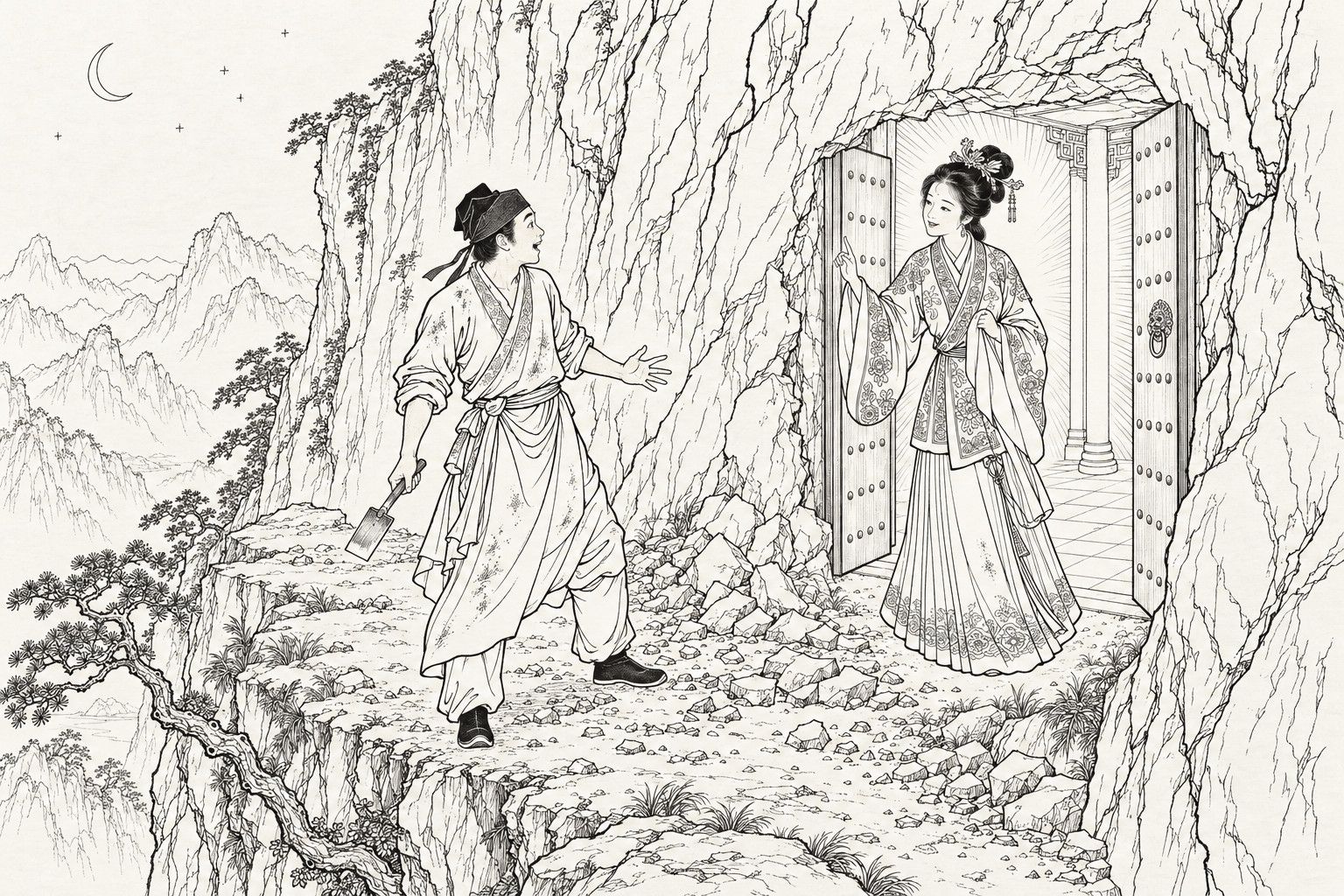
女入門,乃以鑱擲地曰:「此寇盜物,可將去!」生笑曰:「勿忘媒妁。」珍佩之恆不去身。女為人溫良寡默,一日三朝其母;餘惟閉門寂坐,不甚留心家務。母或以弔慶他往,則事事經紀,罔不井井。年餘,生一子孟仙。一切委之乳保,似亦不甚顧惜。又四五年,忽謂生曰:「懽愛之緣,於茲八載。今離長會短,可將奈何!」生驚問之,即已默默,盛妝拜母,返身入室。追而詰之,則仰眠榻上而氣絕矣。母子痛悼,購良材而葬之。母已衰邁,每每抱子思母,如摧肺肝,由是遘病,遂憊不起。逆害飲食,但思魚羹,而近地則無,百里外始可購致。時廝騎皆被差遣;生性純孝,急不可待,懷貲獨往,晝夜無停趾。返至山中,日已沉冥,兩足跛踦,步不能咫。後一叟至,問曰:「足得毋泡乎?」生唯唯。叟便曳坐路隅,敲石取火,以紙裹藥末,熏生兩足訖。試使行,不惟痛止,兼益矯健。感極申謝。叟問:「何事汲汲?」答以母病,因歷道所由。叟問:「何不另娶?」答云:「未得佳者。」叟遙指山村曰:「此處有一佳人,倘能從我去,僕當為君作伐。」生辭以母病待魚,姑不遑暇。叟乃拱手,約以異日入村,但問老王,乃別而去。生歸,烹魚獻母。母略進,數日尋瘳。乃命僕馬往尋叟。至舊處,迷村所在。周章踰時,夕暾漸墜;山谷甚雜,又不可以極望。乃與僕分上山頭,以瞻里落;而山徑崎嶇,苦不可復騎,跋履而上,昧色籠煙矣。蹀躞四望,更無村落。方將下山,而歸路已迷,心中燥火如燒。荒竄間,冥墮絕壁。幸數尺下有一線荒臺,墜臥其上,闊僅容身,下視黑不見底。懼極不敢少動。又幸崖邊皆生小樹,約體如欄。移時,見足傍有小洞口;心竊喜,以背著石,螬行而入。意稍穩,冀天明可以呼救。少頃,深處有光如星點。漸近之,約三四里許,忽睹廊舍,並無釭燭,而光明若晝。一麗人自房中出,視之,則青娥也。見生,驚曰:「郎何能來?」生不暇陳,抱祛嗚惻。女勸止之。問母及兒,生悉述苦況,女亦慘然。生曰:「卿死年餘,此得無冥間耶?」女曰:「非也,此乃仙府。曩時非死,所瘞,一竹杖耳。郎今來,仙緣有分也。」因導令朝父,則一修髯丈夫,坐堂上;生趨拜。女曰:「霍郎來。」翁驚起,握手略道平素。曰:「婿來大好,分當留此。」生辭以母望,不能久留。翁曰:「我亦知之。但遲三數日,即亦何傷。」乃餌以肴酒,即令婢設榻於西堂,施錦裀焉。生既退,約女同榻寢。女卻之曰:「此何處,可容狎褻?」生捉臂不捨。窗外婢子笑聲嗤然,女益慚。方爭拒間,翁入,叱曰:「俗骨污吾洞府!宜即去!」生素負氣,愧不能忍,作色曰:「兒女之情,人所不免,長者何當伺我?無難即去,但令女須便將隨。」翁無辭,招女隨之,啟後戶送之;賺生離門,父子闔扉去。回首峭壁巉巖,無少隙縫,隻影煢煢,罔所歸適。視天上斜月高揭,星斗已稀。悵悵良久,悲已而恨,面壁叫號,迄無應者。憤極,腰中出鑱,鑿石攻進,且攻且罵。瞬息洞入三四尺許。隱隱聞人語曰:「孽障哉!」生奮力鑿益急。忽洞底豁開二扉,推娥出曰:「可去,可去!」壁即復合。女怨曰:「既愛我為婦,豈有待丈人如此者?是何處老道士,授汝凶器,將人纏混欲死!」生得女,意願已慰,不復置辯;但憂路險難歸。女折兩枝,各跨其一,即化為馬,行且駛,俄頃至家。時失生已七日矣。
女入门,乃以镵掷地曰:「此寇盗物,可将去!」生笑曰:「勿忘媒妁。」珍佩之恒不去身。女为人温良寡默,一日三朝其母;余惟闭门寂坐,不甚留心家务。母或以吊庆他往,则事事经纪,罔不井井。年余,生一子孟仙。一切委之乳保,似亦不甚顾惜。又四五年,忽谓生曰:「懽爱之缘,于兹八载。今离长会短,可将奈何!」生惊问之,即已默默,盛妆拜母,返身入室。追而诘之,则仰眠榻上而气绝矣。母子痛悼,购良材而葬之。母已衰迈,每每抱子思母,如摧肺肝,由是遘病,遂惫不起。逆害饮食,但思鱼羹,而近地则无,百里外始可购致。时厮骑皆被差遣;生性纯孝,急不可待,怀赀独往,昼夜无停趾。返至山中,日已沉冥,两足跛踦,步不能咫。后一叟至,问曰:「足得毋泡乎?」生唯唯。叟便曳坐路隅,敲石取火,以纸裹药末,熏生两足讫。试使行,不惟痛止,兼益矫健。感极申谢。叟问:「何事汲汲?」答以母病,因历道所由。叟问:「何不另娶?」答云:「未得佳者。」叟遥指山村曰:「此处有一佳人,倘能从我去,仆当为君作伐。」生辞以母病待鱼,姑不遑暇。叟乃拱手,约以异日入村,但问老王,乃别而去。生归,烹鱼献母。母略进,数日寻瘳。乃命仆马往寻叟。至旧处,迷村所在。周章逾时,夕暾渐坠;山谷甚杂,又不可以极望。乃与仆分上山头,以瞻里落;而山径崎岖,苦不可复骑,跋履而上,昧色笼烟矣。蹀躞四望,更无村落。方将下山,而归路已迷,心中燥火如烧。荒窜间,冥堕绝壁。幸数尺下有一线荒台,坠卧其上,阔仅容身,下视黑不见底。惧极不敢少动。又幸崖边皆生小树,约体如栏。移时,见足傍有小洞口;心窃喜,以背着石,螬行而入。意稍稳,冀天明可以呼救。少顷,深处有光如星点。渐近之,约三四里许,忽睹廊舍,并无釭烛,而光明若昼。一丽人自房中出,视之,则青娥也。见生,惊曰:「郎何能来?」生不暇陈,抱祛呜恻。女劝止之。问母及儿,生悉述苦况,女亦惨然。生曰:「卿死年余,此得无冥间耶?」女曰:「非也,此乃仙府。曩时非死,所瘗,一竹杖耳。郎今来,仙缘有分也。」因导令朝父,则一修髯丈夫,坐堂上;生趋拜。女曰:「霍郎来。」翁惊起,握手略道平素。曰:「婿来大好,分当留此。」生辞以母望,不能久留。翁曰:「我亦知之。但迟三数日,即亦何伤。」乃饵以肴酒,即令婢设榻于西堂,施锦裀焉。生既退,约女同榻寝。女却之曰:「此何处,可容狎亵?」生捉臂不舍。窗外婢子笑声嗤然,女益惭。方争拒间,翁入,叱曰:「俗骨污吾洞府!宜即去!」生素负气,愧不能忍,作色曰:「儿女之情,人所不免,长者何当伺我?无难即去,但令女须便将随。」翁无辞,招女随之,启后户送之;赚生离门,父子阖扉去。回首峭壁巉岩,无少隙缝,只影茕茕,罔所归适。视天上斜月高揭,星斗已稀。怅怅良久,悲已而恨,面壁叫号,迄无应者。愤极,腰中出镵,凿石攻进,且攻且骂。瞬息洞入三四尺许。隐隐闻人语曰:「孽障哉!」生奋力凿益急。忽洞底豁开二扉,推娥出曰:「可去,可去!」壁即复合。女怨曰:「既爱我为妇,岂有待丈人如此者?是何处老道士,授汝凶器,将人缠混欲死!」生得女,意愿已慰,不复置辩;但忧路险难归。女折两枝,各跨其一,即化为马,行且驶,俄顷至家。时失生已七日矣。
As soon as she came through the door, Qing’e threw the spade on the ground. “This is a burglar’s tool. Take it away!” Huo laughed. “Don’t forget our go-between.” He treasured it, and always carried it at his belt. Qing’e was gentle, kind and quiet. Three times a day she went to wait on his mother; the rest of the time she sat silent behind a closed door, and paid little attention to the household. But whenever his mother went out to a funeral or a celebration, Qing’e managed everything, and all was in perfect order. After a year or so she bore a son, Mengxian. She left everything to the wet nurse, and seemed not to care for him much. Four or five years later she said to Huo out of nowhere, “Our bond of love has lasted eight years now. From here the parting is long and the meeting short. What can be done?” Huo asked her in alarm what she meant, but she had already fallen silent. She dressed in all her finery, bowed to his mother, and went back into her room. He went after her to ask, and found her lying on her back on the bed, no longer breathing. Mother and son mourned her bitterly; they bought a fine coffin and buried her. Huo’s mother was old and frail. Again and again she would hold the child and think of his mother, as if her very lungs and liver were being torn; she fell ill of it, and took to her bed and could not rise. She could not keep food down and craved only fish broth, but there was none to be had nearby; it could be bought only a hundred li away. At the time all the servants and horses were out on errands. Huo was a truly devoted son and could not wait. He took money and went alone, walking day and night without rest. On his way back, when he reached the mountains, the sun had already set, and he was so lame in both feet that he could not take another step. An old man came up behind him and asked, “Blisters on your feet?” Huo said yes. The old man drew him to sit at the roadside, struck a light from a flint, wrapped some powdered medicine in paper, and smoked both of Huo’s feet with it. When he told Huo to try walking, not only was the pain gone, Huo felt stronger and nimbler than before. Huo thanked him with deep feeling. “What is your hurry?” asked the old man. Huo told him his mother was ill and went through the whole story. “Why not marry again?” “I have not found anyone good.” The old man pointed far off to a mountain village. “There is a beauty there. If you will come with me, I will be your go-between.” Huo excused himself: his mother was ill and waiting for the fish, and he had no time just now. The old man raised his joined hands and told him to come to the village another day and just ask for Old Wang. Then he took his leave. Huo got home and cooked the fish for his mother. She ate a little, and within a few days she was well. Then he took a servant and horses and set off to find the old man. When he reached the spot, he could not tell where the village was. He wandered about for a long time while the evening sun sank lower. The hills and valleys were a tangle, and there was no seeing far. So he and the servant split up and climbed different peaks to look out for houses. But the mountain paths were so rough that they could ride no further. By the time Huo had scrambled up on foot, the dusk had closed in like smoke. He paced about looking every way, but there was no village anywhere. He was about to go down when he found he had lost the way back, and his heart burned with worry. Blundering about in the dark, he fell over a cliff. Luckily, a few feet down there was a narrow ledge, and he landed on it. It was barely wide enough to hold him, and below it was black and without bottom. He was too terrified to move an inch. Luckily again, little trees grew all along the cliff edge and hemmed him in like a railing. After a while he saw the mouth of a small cave beside his feet. Secretly glad, he pressed his back to the rock and wriggled in like a grub. Feeling a little safer, he hoped that when day came he could call for help. Before long he saw a light deep inside, like a point of starlight. He made his way toward it, three or four li perhaps, and suddenly came upon corridors and halls. There were no lamps or candles, yet it was as bright as day. A beautiful woman came out of one of the rooms. He looked: it was Qing’e. She saw him and cried in surprise, “How did you get here, my love?” Huo had no time for explanations; he clutched her sleeve and sobbed. She calmed him, and asked after his mother and her son. He told her all their troubles, and she was saddened too. “You have been dead more than a year,” said Huo. “Is this the underworld?” “No,” she said. “This is the home of immortals. I did not die then: what you buried was only a bamboo staff. That you have come here now means you have some share in the immortals’ destiny.” She led him in to pay his respects to her father, a man with a long beard sitting in the hall. Huo hurried forward and bowed. “Huo has come,” said Qing’e. The old man rose in surprise, took his hand, and talked a little of this and that. “It is very good that my son-in-law has come,” he said. “It is only right that you should stay here.” Huo excused himself: his mother was waiting for him, and he could not stay long. “I know that,” said the old man. “But what harm is there in staying three or four days?” He gave him food and wine, and had a maid make up a bed for him in the west hall, spread with brocade. When Huo had retired, he asked Qing’e to share his bed. She refused him. “What place do you think this is? Is this somewhere for such lewdness?” Huo caught her arm and would not let go. The maids outside the window tittered, and she was more ashamed than ever. While they were struggling, the old man came in. “Common bones defiling my grotto!” he shouted. “Get out at once!” Huo had always been proud and quick to take offence, and in his shame he could not bear it. His face darkened. “Love between man and woman is something no one escapes. What business has an elder spying on me? I will go at once, gladly — but your daughter must come with me.” The old man did not argue. He beckoned to his daughter to follow Huo, and opened the back door to see them out. But once he had tricked Huo out of the door, father and daughter shut it and were gone. Huo turned around: there was nothing but sheer, jagged cliff, without the smallest crack. He was alone with his shadow, and had nowhere to go. He looked up: the slanting moon hung high, and the stars were already few. He stood there in despair for a long time. Grief turned to rage. He faced the cliff and shouted and wailed, but no one answered. In a fury he took the spade from his belt and began to hack into the rock, cursing as he dug. In no time he had dug three or four feet in. Faintly he heard a voice say, “What a pest!” Huo dug harder and faster. Suddenly a pair of doors swung open at the end of the hole, and someone pushed Qing’e out. “Go, go!” And the rock closed up again. “If you love me enough to make me your wife,” Qing’e said reproachfully, “is this any way to treat your father-in-law? Where did that old Daoist come from, giving you a burglar’s tool to pester people half to death?” Now that he had her, Huo had all he wanted and did not argue; his only worry was that the way was dangerous and home hard to reach. Qing’e broke off two branches, and they each sat astride one. The branches turned into horses that went at a gallop, and in a moment they were home. Huo had been missing for seven days.