太原宗子美,從父游學,流寓廣陵。父與紅橋下林嫗有素。一日,父子過紅橋,遇之,固請過諸其家,瀹茗共話。有女在旁,殊色也。翁亟贊之。嫗顧宗曰:「大郎溫婉如處子,福相也。若不鄙棄,便奉箕帚,如何?」翁笑促子離席,使拜媼曰:「一言千金矣!」先是,嫗獨居,女忽自至,告訴孤苦。問其小字,則名嫦娥。嫗愛而留之,實將奇貨居之也。時宗年十四,睨女竊喜,意翁必媒定之;而翁歸若忘。心灼熱,隱以白母。翁聞而笑曰:「曩與貪婆子戲耳。彼不知將賣黃金幾何矣,此何可易言!」踰年,翁媼並卒。子美不能忘情嫦娥,服將闋,託人示意林嫗。嫗初不承。宗忿曰:「我生平不輕折腰,何媼視之不值一錢?若負前盟,須見還也!」嫗乃云:「曩或與而翁戲約,容有之。但無成言,遂都忘卻。今既云云,我豈留嫁天王耶?要日日裝束,實望易千金;今請半焉,可乎?」宗自度難辦,亦遂置之。適有寡媼,僦居西鄰,有女及笄,小名顛當。偶窺之,雅麗不減嫦娥。向慕之,每以饋遺階進;久而漸熟,往往送情以目,而欲語無間。一夕,踰垣乞火。宗喜挽之,遂相燕好。約為嫁娶,辭以兄負販未歸。由此蹈隙往來,形跡周密。一日,偶經紅橋,見嫦娥適在門內,疾趨過之。嫦娥望見,招之以手,宗駐足;女又招之,遂入。女以背約讓宗。宗述其故。便入室,取黃金一鋌付之。宗不受,辭曰:「自分永與卿絕,遂他有所約。受金而為卿謀,是負人也;受金而不為卿謀,是負卿也:誠不敢有所負。」女良久曰:「君所約,妾頗知之。其事必無成;即成之,妾不怨君之負心也。其速行,媼將至矣。」宗倉卒無以自主,受之而歸。隔夜,告之顛當。顛當深然其言,但勸宗專心嫦娥。宗不語;顛當願下之,宗乃悅。即遣媒納金林嫗,嫗無辭,以嫦娥歸宗。入門後,悉述顛當言。嫦娥微笑,陽慫恿之。宗喜,急欲一白顛當,而顛當跡久絕。嫦娥知其為己,因暫歸寧,故予之間,囑宗竊其佩囊。已而顛當果至,與商所謀,但言勿急。及解衿狎笑,脅下有紫荷囊,將便摘取。顛當變色起,曰:「君與人一心,而與妾二!負心郎!請從此絕。」宗屈意挽解,不聽,徑去。一日,過其門探察之,已另有吳客僦居其中,顛當子母遷去已久,影滅跡絕,莫可問訊。宗自娶嫦娥,家暴富,連閣長廊,彌亙街路。嫦娥善諧謔,適見美人畫卷,宗曰:「吾自謂,如卿天下無兩,但不曾見飛燕、楊妃耳。」女笑曰:「若欲見之,此亦何難。」乃執卷細審一過,便趨入室,對鏡修妝,傚飛燕舞風,又學楊妃帶醉。長短肥瘦,隨時變更;風情態度,對卷逼真。方作態時,有婢自外至,不復能識,驚問其僚;既而審注,恍然始笑。宗喜曰:「吾得一美人,而千古之美人,皆在床闥矣!」一夜,方熟寢,數人撬扉而入,火光射壁。女急起,驚言:「盜入!」宗初醒,即欲鳴呼。一人以白刃加頸,懼不敢喘。又一人掠嫦娥負背上,鬨然而去。宗始號,家役畢集,室中珍玩,無少亡者。宗大悲,恇然失圖,無復情地。告官追捕,殊無音息。荏苒三四年,鬱鬱無聊,因假赴試入都。居半載,占驗詢察,無計不施。偶過姚巷,值一女子,垢面敝衣,㑌儴如丐。停趾相之,乃顛當也。駭曰:「卿何憔悴至此?」答云:「別後南遷,老母即世,為惡人掠賣旗下,撻辱凍餒,所不忍言。」宗泣下,問:「可贖否?」曰:「難矣。耗費煩多,不能為力。」宗曰:「實告卿:年來頗稱小有;惜客中資斧有限,傾裝貨馬,所不敢辭。如所需過奢,當歸家營辦之。」女約明日出西城,相會叢柳下;囑獨往,勿以人從。宗曰:「諾。」次日,早往,則女先在,衣鮮明,大非前狀。驚問之,笑曰:「曩試君心耳,幸綈袍之意猶存。請至敝廬,宜必得當以報。」北行數武,即至其家,遂出肴酒,相與談讌。宗約與俱歸。女曰:「妾多俗累,不能從。嫦娥消息,固頗聞之。」宗急詢其何所。女曰:「其行蹤縹緲,妾亦不能深悉。西山有老尼,一目眇,問之,當自知。」遂止宿其家。天明示以徑。宗至其處,有古寺,周垣盡頹;叢竹內有茅屋半間,老尼綴衲其中。見客至,漫不為禮。宗揖之,尼始舉頭致問。因告姓氏,即白所求。尼曰:「八十老瞽,與世睽絕,何處知佳人消息?」宗固求之。乃曰:「我實不知。有二三戚屬,來夕相過,或小女子輩識之,未可知。汝明夕可來。」宗乃出。次日再至,則尼他出,敗扉扃焉。伺之既久,更漏已催,明月高揭,徘徊無計,遙見二三女郎自外入,則嫦娥在焉。宗喜極,突起,急攬其祛。嫦娥曰:「莽郎君!嚇煞妾矣!可恨顛當饒舌,乃教情欲纏人。」宗曳坐,執手款曲,歷訴艱難,不覺惻楚。女曰:「實相告:妾實姮娥被謫,浮沉俗間,其限已滿;託為寇劫,所以絕君望耳。尼亦王母守府者,妾初譴時,蒙其收卹,故暇時常一臨存。君如釋妾,當為代致顛當。」宗不聽,垂首隕涕。女遙顧曰:「姊妹輩來矣。」宗方四顧,而嫦娥已杳。宗大哭失聲,不欲復活,因解帶自縊。恍惚覺魂已出舍,悵悵靡適。俄見嫦娥來,捉而提之,足離於地;入寺,取樹上尸推擠之,喚曰:「癡郎,癡郎!嫦娥在此。」忽若夢醒。少定,女恚曰:「顛當賤婢!害妾而殺郎君,我不能恕之也!」下山賃輿而歸。既命家人治裝,乃返身而出西城,詣謝顛當;至則舍宇全非,愕歎而返。竊幸嫦娥不知,入門,嫦娥迎笑曰:「君見顛當耶?」宗愕然不能答。女曰:「君背嫦娥,烏得顛當?請坐待之,當自至。」未幾,顛當果至,倉皇伏榻下。嫦娥疊指彈之,曰:「小鬼頭陷人不淺!」顛當叩頭,但求賒死。嫦娥曰:「推人坑中,而欲脫身天外耶?廣寒十一姑不日下嫁,須繡枕百幅、履百雙,可從我去,相共操作。」顛當恭白:「但求分工,按時齎送。」女不許,謂宗曰:「君若緩頰,即便放卻。」顛當目宗,宗笑不語,顛當目怒之。乃乞還告家人,許之,遂去。宗問其生平,乃知其西山狐也。買輿待之。次日,果來,遂俱歸。然嫦娥重來,恆持重不輕諧笑。宗強使狎戲,惟密教顛當為之。顛當慧絕,工媚。嫦娥樂獨宿,每辭不當夕。一夜,漏三下,猶聞顛當房中,吃吃不絕。使婢竊聽之。婢還,不以告,但請夫人自往。伏窗窺之,則見顛當凝妝作己狀,宗擁抱,呼以嫦娥。女哂而退。未幾,顛當心暴痛,急披衣,曳宗詣嫦娥所,入門便伏。嫦娥曰:「我豈醫巫厭勝者?汝欲自捧心傚西子耳。」顛當頓首,但言知罪。女曰:「愈矣。」遂起,失笑而去。顛當私謂宗:「吾能使娘子學觀音。」宗不信,因戲相賭。嫦娥每趺坐,眸含若瞑。顛當悄以玉瓶插柳,置几上;自乃垂髮合掌,侍立其側,櫻唇半啟,瓠犀微露,睛不少瞬。宗笑之。嫦娥開目問之。顛當曰:「我學龍女侍觀音耳。」嫦娥笑罵之,罰使學童子拜。顛當束髮,遂四面朝參之,伏地翻轉,逞諸變態,左右側折,襪能磨乎其耳。嫦娥解頤,坐而蹴之。顛當仰首,口啣鳳鉤,微觸以齒。嫦娥方嬉笑間,忽覺媚情一縷,自足趾而上,直達心舍,意蕩思淫,若不自主。乃急斂神,呵曰:「狐奴當死!不擇人而惑之耶?」顛當懼,釋口投地。嫦娥又厲責之,眾不解。嫦娥謂宗曰:「顛當狐性不改,適間幾為所愚。若非夙根深者,墮落何難!」自是見顛當,每嚴御之。顛當慚懼,告宗曰:「妾於娘子一肢一體,無不親愛;愛之極,不覺媚之甚。謂妾有異心,不惟不敢,亦不忍。」宗因以告嫦娥,嫦娥遇之如初。然以狎戲無節,數戒宗,不聽;因而大小婢婦,競相狎戲。一日,二人扶一婢,效作楊妃。二人以目會意,賺婢懈骨作酣態,兩手遽釋;婢暴顛墀下,聲如傾堵。眾方大譁;近撫之,而妃子已作馬嵬薨矣。大眾懼,急白主人。嫦娥驚曰:「禍作矣!我言如何哉!」往驗之,不可救。使人告其父。父某甲,素無行,號奔而至,負尸入廳事,叫罵萬端。宗閉戶惴恐,莫知所措。嫦娥自出責之,曰:「主即虐婢至死,律無償法;且邂逅暴殂,焉知其不再甦?」甲譟言:「四支已冰,焉有生理!」嫦娥曰:「勿譁。縱不活,自有官在。」乃入廳事撫尸,而婢已蘇,隨手而起。嫦娥返身怒曰:「婢幸不死,賊奴何得無狀!可以草索縶送官府!」甲無詞,長跪哀免。嫦娥曰:「汝既知罪,姑免究處。但小人無賴,反復何常,留汝女終為禍胎,宜即將去。原價如干數,當速措置來。」遣人押出,俾浼二三村老,券証署尾。已,乃喚婢至前,使甲自問之:「無恙乎?」答曰:「無恙。」乃付之去。已,遂召諸婢,數責遍扑。又呼顛當,為之厲禁。謂宗曰:「今而知為人上者,一笑嚬亦不可輕。謔端開之自妾,而流弊遂不可止。凡哀者屬陰,樂者屬陽;陽極陰生,此循環之定數。婢子之禍,是鬼神告之以漸也。荒迷不悟,則傾覆及之矣。」宗敬聽之。顛當泣求拔脫。嫦娥乃掐其耳;逾刻釋手,顛當憮然為間,忽若夢醒,據地自投,歡喜欲舞。由此閨閣清肅,無敢譁者。婢至其家,無疾暴死。甲以贖金莫償,浼村老代求憐恕,許之。又以服役之情,施以材木而去。宗常患無子。嫦娥腹中忽聞兒啼,遂以刃破左脅出之,果男;無何,復有身,又破右脅而出一女。男酷類父,女酷類母,皆論昏於世家。
太原宗子美,从父游学,流寓广陵。父与红桥下林妪有素。一日,父子过红桥,遇之,固请过诸其家,瀹茗共话。有女在旁,殊色也。翁亟赞之。妪顾宗曰:「大郎温婉如处子,福相也。若不鄙弃,便奉箕帚,如何?」翁笑促子离席,使拜媪曰:「一言千金矣!」先是,妪独居,女忽自至,告诉孤苦。问其小字,则名嫦娥。妪爱而留之,实将奇货居之也。时宗年十四,睨女窃喜,意翁必媒定之;而翁归若忘。心灼热,隐以白母。翁闻而笑曰:「曩与贪婆子戏耳。彼不知将卖黄金几何矣,此何可易言!」逾年,翁媪并卒。子美不能忘情嫦娥,服将阕,托人示意林妪。妪初不承。宗忿曰:「我生平不轻折腰,何媪视之不值一钱?若负前盟,须见还也!」妪乃云:「曩或与而翁戏约,容有之。但无成言,遂都忘却。今既云云,我岂留嫁天王耶?要日日装束,实望易千金;今请半焉,可乎?」宗自度难办,亦遂置之。适有寡媪,僦居西邻,有女及笄,小名颠当。偶窥之,雅丽不减嫦娥。向慕之,每以馈遗阶进;久而渐熟,往往送情以目,而欲语无间。一夕,逾垣乞火。宗喜挽之,遂相燕好。约为嫁娶,辞以兄负贩未归。由此蹈隙往来,形迹周密。一日,偶经红桥,见嫦娥适在门内,疾趋过之。嫦娥望见,招之以手,宗驻足;女又招之,遂入。女以背约让宗。宗述其故。便入室,取黄金一铤付之。宗不受,辞曰:「自分永与卿绝,遂他有所约。受金而为卿谋,是负人也;受金而不为卿谋,是负卿也:诚不敢有所负。」女良久曰:「君所约,妾颇知之。其事必无成;即成之,妾不怨君之负心也。其速行,媪将至矣。」宗仓卒无以自主,受之而归。隔夜,告之颠当。颠当深然其言,但劝宗专心嫦娥。宗不语;颠当愿下之,宗乃悦。即遣媒纳金林妪,妪无辞,以嫦娥归宗。入门后,悉述颠当言。嫦娥微笑,阳怂恿之。宗喜,急欲一白颠当,而颠当迹久绝。嫦娥知其为己,因暂归宁,故予之间,嘱宗窃其佩囊。已而颠当果至,与商所谋,但言勿急。及解衿狎笑,胁下有紫荷囊,将便摘取。颠当变色起,曰:「君与人一心,而与妾二!负心郎!请从此绝。」宗屈意挽解,不听,径去。一日,过其门探察之,已另有吴客僦居其中,颠当子母迁去已久,影灭迹绝,莫可问讯。宗自娶嫦娥,家暴富,连阁长廊,弥亘街路。嫦娥善谐谑,适见美人画卷,宗曰:「吾自谓,如卿天下无两,但不曾见飞燕、杨妃耳。」女笑曰:「若欲见之,此亦何难。」乃执卷细审一过,便趋入室,对镜修妆,傚飞燕舞风,又学杨妃带醉。长短肥瘦,随时变更;风情态度,对卷逼真。方作态时,有婢自外至,不复能识,惊问其僚;既而审注,恍然始笑。宗喜曰:「吾得一美人,而千古之美人,皆在床闼矣!」一夜,方熟寝,数人撬扉而入,火光射壁。女急起,惊言:「盗入!」宗初醒,即欲鸣呼。一人以白刃加颈,惧不敢喘。又一人掠嫦娥负背上,哄然而去。宗始号,家役毕集,室中珍玩,无少亡者。宗大悲,恇然失图,无复情地。告官追捕,殊无音息。荏苒三四年,郁郁无聊,因假赴试入都。居半载,占验询察,无计不施。偶过姚巷,值一女子,垢面敝衣,㑌儴如丐。停趾相之,乃颠当也。骇曰:「卿何憔悴至此?」答云:「别后南迁,老母即世,为恶人掠卖旗下,挞辱冻馁,所不忍言。」宗泣下,问:「可赎否?」曰:「难矣。耗费烦多,不能为力。」宗曰:「实告卿:年来颇称小有;惜客中资斧有限,倾装货马,所不敢辞。如所需过奢,当归家营办之。」女约明日出西城,相会丛柳下;嘱独往,勿以人从。宗曰:「诺。」次日,早往,则女先在,衣鲜明,大非前状。惊问之,笑曰:「曩试君心耳,幸绨袍之意犹存。请至敝庐,宜必得当以报。」北行数武,即至其家,遂出肴酒,相与谈䜩。宗约与俱归。女曰:「妾多俗累,不能从。嫦娥消息,固颇闻之。」宗急询其何所。女曰:「其行踪缥缈,妾亦不能深悉。西山有老尼,一目眇,问之,当自知。」遂止宿其家。天明示以径。宗至其处,有古寺,周垣尽颓;丛竹内有茅屋半间,老尼缀衲其中。见客至,漫不为礼。宗揖之,尼始举头致问。因告姓氏,即白所求。尼曰:「八十老瞽,与世睽绝,何处知佳人消息?」宗固求之。乃曰:「我实不知。有二三戚属,来夕相过,或小女子辈识之,未可知。汝明夕可来。」宗乃出。次日再至,则尼他出,败扉扃焉。伺之既久,更漏已催,明月高揭,徘徊无计,遥见二三女郎自外入,则嫦娥在焉。宗喜极,突起,急揽其祛。嫦娥曰:「莽郎君!吓煞妾矣!可恨颠当饶舌,乃教情欲缠人。」宗曳坐,执手款曲,历诉艰难,不觉恻楚。女曰:「实相告:妾实姮娥被谪,浮沉俗间,其限已满;托为寇劫,所以绝君望耳。尼亦王母守府者,妾初谴时,蒙其收恤,故暇时常一临存。君如释妾,当为代致颠当。」宗不听,垂首陨涕。女遥顾曰:「姊妹辈来矣。」宗方四顾,而嫦娥已杳。宗大哭失声,不欲复活,因解带自缢。恍惚觉魂已出舍,怅怅靡适。俄见嫦娥来,捉而提之,足离于地;入寺,取树上尸推挤之,唤曰:「痴郎,痴郎!嫦娥在此。」忽若梦醒。少定,女恚曰:「颠当贱婢!害妾而杀郎君,我不能恕之也!」下山赁舆而归。既命家人治装,乃返身而出西城,诣谢颠当;至则舍宇全非,愕叹而返。窃幸嫦娥不知,入门,嫦娥迎笑曰:「君见颠当耶?」宗愕然不能答。女曰:「君背嫦娥,乌得颠当?请坐待之,当自至。」未几,颠当果至,仓皇伏榻下。嫦娥叠指弹之,曰:「小鬼头陷人不浅!」颠当叩头,但求赊死。嫦娥曰:「推人坑中,而欲脱身天外耶?广寒十一姑不日下嫁,须绣枕百幅、履百双,可从我去,相共操作。」颠当恭白:「但求分工,按时赍送。」女不许,谓宗曰:「君若缓颊,即便放却。」颠当目宗,宗笑不语,颠当目怒之。乃乞还告家人,许之,遂去。宗问其生平,乃知其西山狐也。买舆待之。次日,果来,遂俱归。然嫦娥重来,恒持重不轻谐笑。宗强使狎戏,惟密教颠当为之。颠当慧绝,工媚。嫦娥乐独宿,每辞不当夕。一夜,漏三下,犹闻颠当房中,吃吃不绝。使婢窃听之。婢还,不以告,但请夫人自往。伏窗窥之,则见颠当凝妆作己状,宗拥抱,呼以嫦娥。女哂而退。未几,颠当心暴痛,急披衣,曳宗诣嫦娥所,入门便伏。嫦娥曰:「我岂医巫厌胜者?汝欲自捧心傚西子耳。」颠当顿首,但言知罪。女曰:「愈矣。」遂起,失笑而去。颠当私谓宗:「吾能使娘子学观音。」宗不信,因戏相赌。嫦娥每趺坐,眸含若瞑。颠当悄以玉瓶插柳,置几上;自乃垂发合掌,侍立其侧,樱唇半启,瓠犀微露,睛不少瞬。宗笑之。嫦娥开目问之。颠当曰:「我学龙女侍观音耳。」嫦娥笑骂之,罚使学童子拜。颠当束发,遂四面朝参之,伏地翻转,逞诸变态,左右侧折,袜能磨乎其耳。嫦娥解颐,坐而蹴之。颠当仰首,口啣凤钩,微触以齿。嫦娥方嬉笑间,忽觉媚情一缕,自足趾而上,直达心舍,意荡思淫,若不自主。乃急敛神,呵曰:「狐奴当死!不择人而惑之耶?」颠当惧,释口投地。嫦娥又厉责之,众不解。嫦娥谓宗曰:「颠当狐性不改,适间几为所愚。若非夙根深者,堕落何难!」自是见颠当,每严御之。颠当惭惧,告宗曰:「妾于娘子一肢一体,无不亲爱;爱之极,不觉媚之甚。谓妾有异心,不惟不敢,亦不忍。」宗因以告嫦娥,嫦娥遇之如初。然以狎戏无节,数戒宗,不听;因而大小婢妇,竞相狎戏。一日,二人扶一婢,效作杨妃。二人以目会意,赚婢懈骨作酣态,两手遽释;婢暴颠墀下,声如倾堵。众方大哗;近抚之,而妃子已作马嵬薨矣。大众惧,急白主人。嫦娥惊曰:「祸作矣!我言如何哉!」往验之,不可救。使人告其父。父某甲,素无行,号奔而至,负尸入厅事,叫骂万端。宗闭户惴恐,莫知所措。嫦娥自出责之,曰:「主即虐婢至死,律无偿法;且邂逅暴殂,焉知其不再甦?」甲噪言:「四支已冰,焉有生理!」嫦娥曰:「勿哗。纵不活,自有官在。」乃入厅事抚尸,而婢已苏,随手而起。嫦娥返身怒曰:「婢幸不死,贼奴何得无状!可以草索絷送官府!」甲无词,长跪哀免。嫦娥曰:「汝既知罪,姑免究处。但小人无赖,反复何常,留汝女终为祸胎,宜即将去。原价如干数,当速措置来。」遣人押出,俾浼二三村老,券证署尾。已,乃唤婢至前,使甲自问之:「无恙乎?」答曰:「无恙。」乃付之去。已,遂召诸婢,数责遍扑。又呼颠当,为之厉禁。谓宗曰:「今而知为人上者,一笑嚬亦不可轻。谑端开之自妾,而流弊遂不可止。凡哀者属阴,乐者属阳;阳极阴生,此循环之定数。婢子之祸,是鬼神告之以渐也。荒迷不悟,则倾覆及之矣。」宗敬听之。颠当泣求拔脱。嫦娥乃掐其耳;逾刻释手,颠当怃然为间,忽若梦醒,据地自投,欢喜欲舞。由此闺阁清肃,无敢哗者。婢至其家,无疾暴死。甲以赎金莫偿,浼村老代求怜恕,许之。又以服役之情,施以材木而去。宗常患无子。嫦娥腹中忽闻儿啼,遂以刃破左胁出之,果男;无何,复有身,又破右胁而出一女。男酷类父,女酷类母,皆论昏于世家。
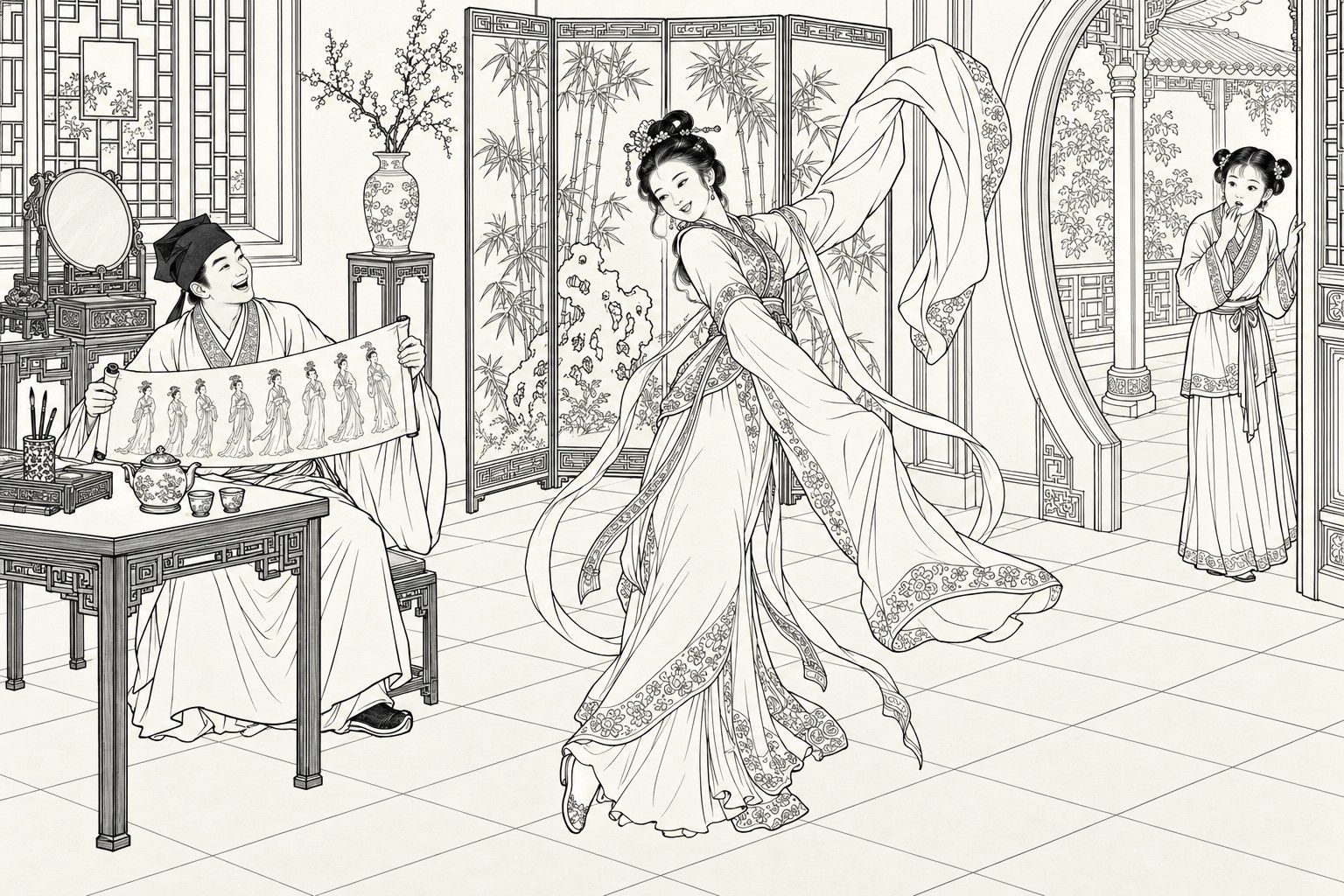
Zong Zimei of Taiyuan travelled with his father in pursuit of learning, and they settled for a time in Guangling. His father was an old acquaintance of a Mrs. Lin who lived by the Red Bridge. One day father and son were crossing the Red Bridge when they met her, and she insisted they come to her house, where she brewed tea and they talked. A girl stood at her side, a rare beauty. The old man praised her warmly. Mrs. Lin looked at Zong and said, “Your eldest is as gentle and mild as a maiden. He has a lucky face. If you do not scorn us, I will give her to him to keep his house. What do you say?” The old man laughed and urged his son to get up from his seat and bow to the old woman. “That one word of yours is worth a thousand in gold!” he said. Some time before, when Mrs. Lin was living alone, the girl had suddenly come to her of her own accord and told her she was alone and destitute. Asked her pet name, she said it was Chang’e. Mrs. Lin had grown fond of her and kept her — in truth, holding on to her as a rare piece of goods. Zong was fourteen then. He stole glances at the girl and was secretly delighted, sure that his father would send a go-between to settle it. But once they were home his father seemed to have forgotten. Burning with impatience, Zong hinted to his mother. When his father heard, he laughed. “I was only joking with that greedy old woman. Who knows how much gold she means to sell the girl for? It’s not something to talk of lightly!” A year later both his parents died. Zimei could not forget Chang’e. As his mourning was coming to an end, he sent someone to drop a hint to Mrs. Lin. At first she would not admit to any promise. Zong was indignant. “I have never in my life bowed lightly,” he said. “How can the old woman treat my bow as not worth a single coin? If she goes back on her promise, she must give it back!” So Mrs. Lin said, “Perhaps I did make some jesting promise with your father once. But nothing was settled, and I forgot all about it. Now that you mention it — am I keeping her to marry the Heavenly King? I have been dressing her up day after day because I really hope she will fetch a thousand in gold. I’ll ask half that now. Will that do?” Zong reckoned he could not raise it, and let the matter drop. Then a widow came to rent the house to the west of his. She had a daughter just come of age, whose pet name was Diandang. Zong happened to catch sight of her: elegant and lovely, no less so than Chang’e. He was drawn to her, and made his way in by sending them presents. As time went on they grew familiar, and often their eyes spoke their feelings, but there was never a chance to talk. One evening she climbed over the wall to ask for a light. Zong, delighted, held her back, and they became lovers. They promised to marry, but she put it off, saying her brother was away trading and had not come back. After that they met whenever they had a chance, and kept their tracks well covered. One day Zong happened to pass the Red Bridge and saw Chang’e standing just inside her door. He hurried past. Chang’e saw him and beckoned. Zong stopped. She beckoned again, and he went in. She reproached him for breaking his promise. Zong explained why. Then she went into the inner room, took out an ingot of gold and gave it to him. Zong would not take it. “I thought I had lost you forever,” he said, “so I have promised myself to someone else. If I take the gold and use it to win you, I betray her. If I take it and don’t use it to win you, I betray you. I truly dare not betray anyone.” After a long silence she said, “I know a good deal about the promise you made. It is bound to come to nothing. And even if it does come off, I will not blame you for being faithless. Go quickly now — the old woman will be back.” Flustered, not knowing what to do, Zong took the gold and went home. The next night he told Diandang. Diandang agreed entirely with what Chang’e had said, and urged Zong to set his heart on Chang’e alone. Zong said nothing. When she said she was willing to take second place, Zong was happy. At once he sent a go-between with the gold to Mrs. Lin, and Mrs. Lin could find no excuse and gave Chang’e to Zong. Once she was in his house, he told her everything Diandang had said. Chang’e smiled faintly and pretended to encourage him. Zong was glad, and eager to tell Diandang, but Diandang had long stopped coming. Chang’e knew it was on her account, so she went home to visit for a while to give them their chance, and told Zong to steal Diandang’s purse. Before long Diandang did come. Zong talked the plan over with her, but she only said, “Don’t be in a hurry.” As she loosened her dress and they laughed and played, he saw a purple pouch under her arm and was about to snatch it. Diandang’s face changed and she rose. “You are of one heart with her, and two hearts with me! Faithless man! From now on we are through.” Zong humbled himself and tried to hold her back and explain, but she would not listen and went straight out. One day he went past her door to see what he could find out. A traveller from Wu was already renting the house. Diandang and her mother had moved away long before, without leaving a trace or a shadow, and there was no one to ask. Ever since he married Chang’e, Zong’s family had grown suddenly rich; the halls and long galleries of his house stretched along the whole street. Chang’e loved to joke and tease. Once they happened to be looking at a scroll of beautiful women. “I think there is no one in the world like you,” said Zong. “But then I have never seen Flying Swallow or Consort Yang.” Chang’e laughed. “If you want to see them, what could be easier?” She took the scroll and studied it closely, then hurried into her room and made herself up before the mirror. She copied Flying Swallow dancing in the wind, and then Consort Yang tipsy with wine. Tall or short, plump or slim, she changed as she pleased; in grace and bearing she was the very image of the pictures. As she was posing, a maid came in from outside and did not recognize her at all. In alarm she asked the other maids who it was; then she looked again, and suddenly understood and laughed. “I have won one beauty,” said Zong in delight, “and all the beauties of all the ages are in my bedroom!” One night, as they lay fast asleep, several men prised open the door and broke in, their torches lighting up the walls. Chang’e jumped up. “Robbers!” she cried. Zong had just woken and was about to shout when one of the men put a naked blade to his throat; terrified, he dared not breathe. Another seized Chang’e, threw her over his back, and with a great hubbub they were gone. Only then did Zong cry out. All the household servants gathered. Of the treasures in the room, nothing at all was missing. Zong grieved terribly, so distraught that he could not think what to do and had no heart left for anything. He reported it to the authorities, who sent men in pursuit, but there was no news at all. Three or four years slipped by. Gloomy and listless, he went to the capital on the pretext of sitting the examinations. He stayed half a year, consulting diviners and making inquiries; there was no scheme he did not try. One day as he passed through Yao Lane he came upon a woman with a dirty face and ragged clothes, as wretched as a beggar. He stopped to look at her: it was Diandang. “How did you come to this?” he asked in shock. “After we parted I moved south,” she said. “My old mother died, and wicked men kidnapped me and sold me into a bannerman’s household. The beatings, the shame, the cold and hunger — I cannot bear to speak of it.” Zong’s tears fell. “Can you be bought out?” he asked. “It would be hard,” she said. “It would cost a great deal. You could not manage it.” “To tell you the truth,” said Zong, “I have done quite well these years. Unfortunately, away from home I have only so much money with me, but I would not hesitate to empty my bags and sell my horse. If it costs too much, I will go home and raise it.” She arranged to meet him the next day outside the west gate of the city, under a clump of willows, and told him to come alone and bring no one. “I will,” said Zong. The next day he went early. She was there before him, in bright fresh clothes, nothing like before. He asked her in astonishment. She laughed. “I was only testing your heart. I am glad the kindness of the old silk gown is still there. Please come to my humble house. I must find some fitting way to repay you.” A few steps to the north they came to her house. She brought out food and wine, and they talked and feasted together. Zong asked her to come home with him. “I have too many worldly ties,” she said. “I can’t go with you. But I have heard a good deal of news of Chang’e.” Zong asked eagerly where she was. “She comes and goes like mist,” said Diandang. “I don’t know much myself. In the Western Hills there is an old nun, blind in one eye. Ask her and you will find out.” So he stayed the night at her house. At dawn she showed him the way. Zong went to the place. There was an old temple, its surrounding walls all in ruins. In a clump of bamboo stood half a thatched hut, and in it an old nun was patching her robe. When she saw a visitor she paid him no attention. Zong bowed to her, and only then did the nun raise her head and ask what he wanted. He told her his name and then what he was looking for. “I am eighty and blind,” said the nun, “and cut off from the world. How would I have news of a beauty?” Zong begged her. So she said, “I truly do not know. But two or three relatives of mine are coming to visit tomorrow evening. Perhaps the young girls will know of her — who can say? Come back tomorrow evening.” So Zong left. The next day he came again, but the nun had gone out and the broken door was locked. He waited a long time. The water clock was hurrying on through the watches, a bright moon hung high, and still he paced about with no idea what to do. Then he saw in the distance two or three young women come in from outside, and Chang’e was among them. Overjoyed, Zong leapt up and caught her by the sleeve. “Rash man!” said Chang’e. “You frightened me to death! Curse Diandang and her wagging tongue — she has let desire tangle you up.” Zong drew her down to sit, held her hand and spoke tenderly, telling her all his hardships, and could not help grieving. “I will tell you the truth,” she said. “I am indeed Chang’e of the moon, banished to drift about in the human world. My term is over. I made it look like a kidnapping by robbers to put an end to your hopes. The nun too is one of those who keep the Queen Mother’s palace. When I was first banished she took me in and was kind to me, so when I have time I often come to see her. If you will let me go, I will get Diandang for you in my place.” Zong would not hear of it; he hung his head and wept. Chang’e looked off into the distance. “My sisters are coming.” As Zong looked all around, Chang’e vanished. Zong burst into loud sobs. He did not want to live any longer, so he took off his sash and hanged himself. In a haze he felt that his soul had left its house and was wandering forlorn with nowhere to go. Soon he saw Chang’e come; she caught hold of him and lifted him, so that his feet left the ground. She went into the temple, took his body down from the tree and pushed and pressed it, calling, “Silly man, silly man! Chang’e is here.” Suddenly it was as if he woke from a dream. When he had calmed a little, she said angrily, “That wretched wench Diandang! She has wronged me and killed you, and I can’t forgive her!” They went down the mountain, hired a carriage and went back to his lodgings. When he had ordered the household to pack for the journey, Zong turned round and went out of the west gate to thank Diandang; but when he got there the house was not there at all, and he came back amazed and sighing. Privately he was glad Chang’e did not know. But when he came in at the door, she met him laughing. “Have you seen Diandang?” Zong was dumbfounded and could not answer. “You turned your back on Chang’e,” she said. “How could you find Diandang? Sit down and wait. She will come of herself.” Before long Diandang did come, and threw herself in a panic at the foot of the couch. Chang’e flicked her with her fingers again and again. “Little devil! What a hole you’ve landed people in!” Diandang knocked her head on the floor, begging only to be spared. “You push someone into a pit,” said Chang’e, “and think you can slip away beyond the sky? The Eleventh Maiden of the Palace of Vast Cold is soon to be married, and she needs a hundred embroidered pillows and a hundred pairs of shoes. Come with me and help with the work.” Diandang said humbly, “I only ask to be given my share, and I will deliver it on time.” Chang’e would not allow it. She said to Zong, “If you put in a word for her, I will let her go.” Diandang looked at Zong. Zong smiled and said nothing, and Diandang glared at him. Then she begged to go home and tell her family. Chang’e allowed it, and she went. Zong asked about her past, and learned that she was a fox from the Western Hills. He bought a carriage and waited for her. The next day she did come, and they all went home together. But since her return Chang’e was always grave and composed, and seldom joked or laughed. When Zong tried to make her frolic with him, she would only secretly teach Diandang to do it. Diandang was exceedingly clever and skilled at charming. Chang’e liked to sleep alone and often declined her turn for the night. One night, in the third watch of the night, she could still hear giggling from Diandang’s room, on and on. She sent a maid to listen. The maid came back but would not tell her, only asked her mistress to go herself. She crouched by the window and peeped in, and saw Diandang made up to look like herself, and Zong holding her in his arms and calling her Chang’e. Chang’e smiled scornfully and went away. Not long after, Diandang was seized with a sudden pain in her heart. She hurriedly threw on her clothes and dragged Zong to Chang’e’s room, and threw herself down as soon as she was through the door. “Am I a doctor or a witch who lifts curses?” said Chang’e. “You wanted to clutch your heart like Xi Shi, didn’t you?” Diandang knocked her head on the ground, saying only that she knew her fault. “You are better,” said Chang’e. Diandang got up, laughed despite herself and went off. Diandang said to Zong privately, “I can make the mistress play Guanyin.” Zong did not believe it, and for fun they made a bet. Chang’e often sat cross-legged in meditation, her eyes lowered as if closed. Diandang quietly set a willow sprig in a jade vase and put it on the table; then she let her hair down, pressed her palms together and stood beside her, her cherry lips half open, her pearly teeth just showing, her eyes never blinking. Zong laughed at her. Chang’e opened her eyes and asked what was going on. “I’m playing the Dragon Girl attending Guanyin,” said Diandang. Chang’e laughed and scolded her, and as a punishment made her play the Boy bowing to Guanyin. Diandang bound up her hair and bowed to her from all four directions, then threw herself down and rolled over, showing off every kind of contortion, twisting and bending to left and right until her stockinged feet could brush her ears. Chang’e burst out laughing and kicked at her from where she sat. Diandang raised her head, caught Chang’e’s little phoenix-hook of a foot in her mouth and nibbled it lightly with her teeth. Just as Chang’e was laughing at the game, she suddenly felt a thread of seductive feeling run up from her toes straight to her heart; her mind was stirred and filled with lust, as if she could not control herself. At once she gathered her spirit and shouted, “The fox slave deserves to die! Will you bewitch anyone at all, without choosing?” Diandang took fright, let go of the foot and threw herself on the floor. Chang’e scolded her harshly again, and the others could not understand why. Chang’e said to Zong, “Diandang’s fox nature has not changed. Just now I was nearly taken in by her. If my roots from former lives had not been deep, how easily I might have fallen!” After that, whenever she saw Diandang, she kept her strictly in hand. Diandang, ashamed and frightened, told Zong, “There is not a limb or a part of the mistress that I don’t love. I love her so much that without knowing it I charm her too much. If she thinks I have some other intent — I would not dare, and I could not bear to.” Zong told Chang’e this, and Chang’e treated her as before. But because their frolics knew no bounds, she warned Zong again and again; he would not listen, and so the maids and serving women, big and small, all joined in the play. One day two of them were holding up a maid to make her play Consort Yang. The two exchanged looks, coaxed the maid to go limp as if dead drunk, and then both let go at once. The maid fell headlong onto the steps with a crash like a falling wall. Everyone set up a clamour. They went to feel her, and the Consort had already died at Mawei. They were all terrified and hurried to tell their master and mistress. “Disaster has come!” said Chang’e in alarm. “What did I tell you?” She went to look, but the girl was past saving. She sent someone to tell the maid’s father. The father, The father, a man who had never been any good,, came running and howling, carried the body into the hall and cursed and swore without end. Zong shut his door, trembling with fear, not knowing what to do. Chang’e went out herself and rebuked the man. “Even if a master beats a maid to death, the law does not make him pay with his life. Besides, she died suddenly and by accident — who knows whether she may not come round again?” “Her limbs are already cold as ice,” shouted the man. “How can she live?” “Stop your noise,” said Chang’e. “Even if she does not come back to life, there are the authorities.” She went into the hall and stroked the body, and the maid revived and got up at her touch. Chang’e turned round in anger. “Luckily the girl is not dead. How dare you behave so outrageously, you villain? Tie him up with a straw rope and take him to the yamen!” The man had nothing to say. He knelt and begged to be let off. “Since you know your fault,” said Chang’e, “I will not pursue it for now. But a low good-for-nothing like you will go back on his word at any time. If I keep your daughter here she will only breed trouble. Take her away at once. Whatever the price was, bring it back quickly.” She sent men to take him out, and had him get two or three village elders to sign at the foot of the contract as witnesses. When that was done, she called the maid before them and had the man ask her himself: “Are you all right?” “I’m all right,” she answered. Then she handed her over and let them go. After that she called in all the maids and scolded and beat every one of them. She also called Diandang and laid strict rules on her. She said to Zong, “Now I know that those set over others must not take lightly so much as a smile or a frown. The joking began with me, and once it had begun there was no stopping where it led. All sorrow belongs to yin and all joy to yang; when yang reaches its height, yin is born. That is the fixed law of the cycle. The maid’s disaster was the gods warning us step by step. If we went on in our folly and never woke up, ruin would overtake us.” Zong listened respectfully. Diandang wept and begged to be delivered. So Chang’e pinched her ear; after a moment she let go. Diandang stood dazed for a while, then suddenly seemed to wake from a dream. She threw herself on the ground, so happy she could have danced. From then on the women’s quarters were pure and orderly, and no one dared make a noise. When the maid reached home she died suddenly, without any illness. Since her father could not repay the price, he got the village elders to plead for mercy on his behalf, and Chang’e granted it. And for the service the girl had done, she gave him timber for a coffin before he went. Zong had always worried that he had no son. One day a baby’s crying was suddenly heard inside Chang’e’s belly, so she cut open her left side with a knife and brought it out: it was a boy. Before long she was with child again, and she cut open her right side and brought out a girl. The boy was the image of his father and the girl the image of her mother, and both married into great families.