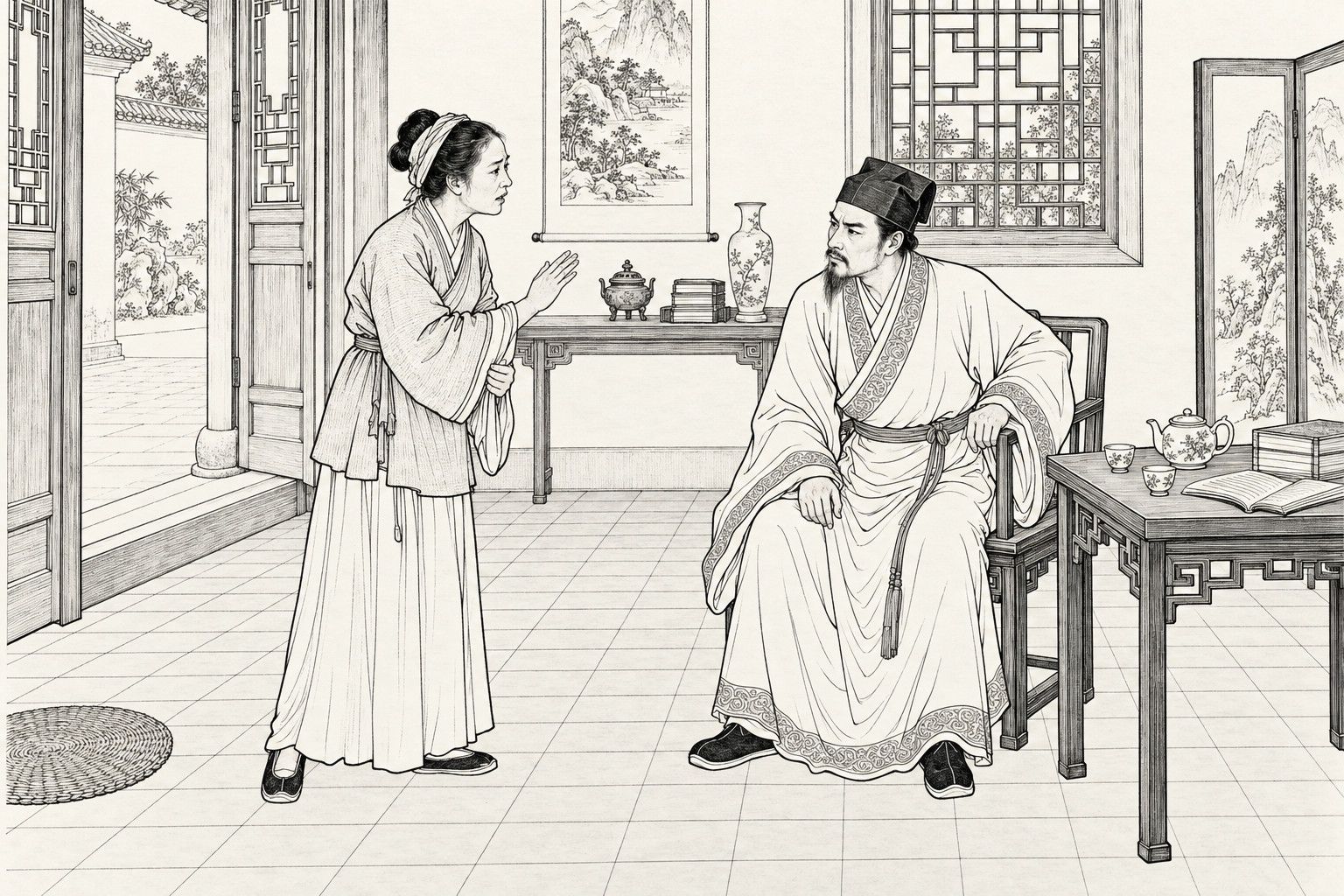
平原喬生,有女黑醜:壑一鼻,跛一足。年二十五六,無問名者。邑有穆生,四十餘,妻死,貧不能續,因聘焉。三年,生一子。未幾,穆生卒,家益索,大困,則乞憐其母。母頗不耐之。女亦憤不復返,惟以紡織自給。有孟生喪偶,遺一子烏頭,裁周歲,以乳哺乏人,急於求配,然媒數言,輒不當意。忽見女,大悅之,陰使人風示女。女辭焉,曰:「飢凍若此,從官人得溫飽,夫寧不願?然殘醜不如人,所可自信者,德耳;又事二夫,官人何取焉!」孟益賢之,向慕尤殷,使媒者函金加幣,而說其母。母悅,自詣女所,固要之;女志終不奪。母慚,願以少女字孟;家人皆喜,而孟殊不願。居無何,孟暴疾卒,女往臨哭盡哀。孟故無戚黨,死後,村中無賴,悉憑陵之,家具攜取一空。方謀瓜分其田產。家人亦各草竊以去,惟一嫗抱兒哭帷中。女問得故,大不平。聞林生與孟善,乃踵門而告曰:「夫婦、朋友,人之大倫也。妾以奇醜,為世不齒,獨孟生能知我;前雖固拒之,然固已心許之矣。今身死子幼,自當有以報知己。然存孤易,禦侮難,若無兄弟父母,遂坐視其子死家滅而不一救,則五倫中可以無朋友矣。妾無所多須於君,但以片紙告邑宰;撫孤,則妾不敢辭。」林曰:「諾!」女別而歸。林將如其所教;無賴輩怒,咸欲以白刃相仇。林大懼,閉戶不敢復行。女聽之數日寂無音;及問之,則孟氏田產已盡矣。女忿甚,銳身自詣官。官詰女屬孟何人。女曰:「公宰一邑,所憑者理耳。如其言妄,即至戚無所逃罪;如非妄,即道路之人可聽也。」官怒其言戇,訶逐而出。女冤憤無以自伸,哭訴於搢紳之門。某先生聞而義之,代剖於宰。宰按之,果真,窮治諸無賴,盡返所取。或議留女居孟第,撫其孤;女不肯。扃其戶,使媼抱烏頭,從與俱歸,另舍之。凡烏頭日用所需,輒同嫗啟戶出粟,為之營辨;己錙銖無所沾染,抱子食貧,一如曩日。積數年,烏頭漸長,為延師教讀;己子則使學操作。嫗勸使並讀。女曰:「烏頭之費,其所自有;我耗人之財以教己子,此心何以自明?」又數年,為烏頭積粟數百石,乃聘於名族,治其第宅,析令歸。烏頭泣要同居,女乃從之;然紡績如故。烏頭夫婦奪其具。女曰:「我母子坐食,心何安矣?」遂早暮為之紀理,使其子巡行阡陌,若為傭然。烏頭夫妻有小過,輒斥譴不少貸;稍不悛,則怫然欲去。夫妻跪道悔詞,始止。未幾,烏頭入泮,又辭欲歸。烏頭不可,捐聘幣,為穆子完婚。女乃析子令歸。烏頭留之不得,陰使人於近村為市恆產百畝而後遺之。後女疾求歸。烏頭不聽。病益篤,囑曰:「必以我歸葬!」烏頭諾。既卒,陰以金啗穆子,俾合葬於孟。及期,棺重,三十人不能舉。穆子忽仆,七竅血出,自言曰:「不肖兒,何得遂賣汝母!」烏頭懼,拜祝之,始愈。乃復停數日,修治穆墓已,始合厝之。
平原乔生,有女黑丑:壑一鼻,跛一足。年二十五六,无问名者。邑有穆生,四十余,妻死,贫不能续,因聘焉。三年,生一子。未几,穆生卒,家益索,大困,则乞怜其母。母颇不耐之。女亦愤不复返,惟以纺织自给。有孟生丧偶,遗一子乌头,裁周岁,以乳哺乏人,急于求配,然媒数言,辄不当意。忽见女,大悦之,阴使人风示女。女辞焉,曰:「饥冻若此,从官人得温饱,夫宁不愿?然残丑不如人,所可自信者,德耳;又事二夫,官人何取焉!」孟益贤之,向慕尤殷,使媒者函金加币,而说其母。母悦,自诣女所,固要之;女志终不夺。母惭,愿以少女字孟;家人皆喜,而孟殊不愿。居无何,孟暴疾卒,女往临哭尽哀。孟故无戚党,死后,村中无赖,悉凭陵之,家具携取一空。方谋瓜分其田产。家人亦各草窃以去,惟一妪抱儿哭帷中。女问得故,大不平。闻林生与孟善,乃踵门而告曰:「夫妇、朋友,人之大伦也。妾以奇丑,为世不齿,独孟生能知我;前虽固拒之,然固已心许之矣。今身死子幼,自当有以报知己。然存孤易,御侮难,若无兄弟父母,遂坐视其子死家灭而不一救,则五伦中可以无朋友矣。妾无所多须于君,但以片纸告邑宰;抚孤,则妾不敢辞。」林曰:「诺!」女别而归。林将如其所教;无赖辈怒,咸欲以白刃相仇。林大惧,闭户不敢复行。女听之数日寂无音;及问之,则孟氏田产已尽矣。女忿甚,锐身自诣官。官诘女属孟何人。女曰:「公宰一邑,所凭者理耳。如其言妄,即至戚无所逃罪;如非妄,即道路之人可听也。」官怒其言戆,诃逐而出。女冤愤无以自伸,哭诉于搢绅之门。某先生闻而义之,代剖于宰。宰按之,果真,穷治诸无赖,尽返所取。或议留女居孟第,抚其孤;女不肯。扃其户,使媪抱乌头,从与俱归,另舍之。凡乌头日用所需,辄同妪启户出粟,为之营辨;己锱铢无所沾染,抱子食贫,一如曩日。积数年,乌头渐长,为延师教读;己子则使学操作。妪劝使并读。女曰:「乌头之费,其所自有;我耗人之财以教己子,此心何以自明?」又数年,为乌头积粟数百石,乃聘于名族,治其第宅,析令归。乌头泣要同居,女乃从之;然纺绩如故。乌头夫妇夺其具。女曰:「我母子坐食,心何安矣?」遂早暮为之纪理,使其子巡行阡陌,若为佣然。乌头夫妻有小过,辄斥谴不少贷;稍不悛,则怫然欲去。夫妻跪道悔词,始止。未几,乌头入泮,又辞欲归。乌头不可,捐聘币,为穆子完婚。女乃析子令归。乌头留之不得,阴使人于近村为市恒产百亩而后遗之。后女疾求归。乌头不听。病益笃,嘱曰:「必以我归葬!」乌头诺。既卒,阴以金啗穆子,俾合葬于孟。及期,棺重,三十人不能举。穆子忽仆,七窍血出,自言曰:「不肖儿,何得遂卖汝母!」乌头惧,拜祝之,始愈。乃复停数日,修治穆墓已,始合厝之。
A scholar named Qiao of Pingyuan had a daughter who was dark and ugly: her nose was caved in on one side, and she was lame in one leg. At twenty-five or six, no one had yet asked for her hand. In the same county lived a scholar named Mu, past forty, whose wife had died. He was too poor to find another, and so he asked for her. In three years she bore him a son. Before long Mu died. The household grew poorer still, and in her hardship she went to beg help from her mother. Her mother had little patience with her. In anger she never went back, and kept herself by spinning and weaving. A scholar named Meng had lost his wife, who left him a son, Wutou, barely a year old. With no one to nurse the child, Meng was eager to remarry, but every match the go-betweens proposed failed to please him. Then he happened to see her and was much taken with her. He quietly sent someone to sound her out. She declined. “Hungry and cold as I am, how could I not want to follow the gentleman and be warm and fed? But I am crippled and ugly, not the equal of other women. All I can trust in is my virtue. If I serve a second husband, what would the gentleman want me for?” Meng thought her all the more worthy and longed for her more eagerly still. He sent the go-between with money, and gifts on top of it, to persuade her mother. Her mother was delighted. She went to her daughter in person and pressed her hard, but the daughter would not be moved. Ashamed, the mother offered her younger daughter to Meng instead. The family were all for it, but Meng would not hear of it. Not long after, Meng fell suddenly ill and died. She went to mourn him and wept with all her heart. Meng had no kinsmen. After his death the village ruffians all bullied the household and carried off everything in it, and were planning to carve up his land among them. The servants, too, each stole what they could and left. Only an old nurse remained, weeping behind the curtains with the child in her arms. She asked, learned what had happened, and was outraged. Hearing that a scholar named Lin had been Meng’s friend, she went to his door and said, “Husband and wife, friend and friend: these are among the great bonds of human life. I am so ugly that the world will have nothing to do with me; only Mr. Meng understood me. I refused him firmly before, but in my heart I had already accepted him as the one who truly knew me. Now he is dead and his son is small, and I must do something to repay the one who understood me. But keeping an orphan alive is easy; keeping off those who prey on him is hard. If, because the boy has no brothers or parents, his father’s friends sit by and watch the son die and the house fall without lifting a hand to save them, then friendship may as well be struck from the Five Bonds. I don’t ask much of you, sir: only a note to the county magistrate. As for raising the orphan, that I would not dare refuse.” “I will,” said Lin. She took her leave and went home. Lin was about to do as she had told him, but the ruffians were furious and all threatened to settle with him by the knife. Lin was terrified. He shut his door and did not dare go ahead. She waited several days and heard nothing. When she asked, the Meng family’s land was already all gone. Furious, she went boldly to the magistrate herself. The magistrate demanded to know what she was to the Mengs. She said, “Your Honour governs a county, and what you go by is the right of the matter. If what I say is false, even the closest kin could not escape punishment. If it is not false, even a passer-by in the road deserves a hearing.” The magistrate, angered by her bluntness, shouted at her and had her thrown out. Wronged and indignant, with no way to set things right, she went weeping to the gates of the gentry. A certain gentleman heard her story, thought her in the right, and laid the case before the magistrate for her. The magistrate looked into it and found it true. He punished the ruffians to the full and made them return everything they had taken. Someone suggested she stay on in the Meng house to raise the orphan; she would not. She locked the doors and had the old nurse carry Wutou and come home with her, where she lodged them in rooms of their own. Whatever Wutou needed day to day, she would go with the nurse, unlock the house, and take out grain to provide it. She herself touched not a penny of it, but lived poor with her own child just as before. Some years passed. As Wutou grew, she hired a tutor to teach him to read; her own son she set to learning manual work. The nurse urged her to let him study too. She said, “Wutou’s expenses come out of what is his own. If I spent another’s money to educate my own son, how could I ever show my heart was clean?” Some years more, and she had stored up several hundred measures of grain for Wutou. Then she arranged a match for him with a family of good name, put his house in order, and sent him to set up his own household. Wutou wept and begged her to live with them, and she gave in; but she went on spinning as before. Wutou and his wife took her spinning things away. She said, “If my son and I sit here eating and doing nothing, how can my heart be easy?” So from morning to night she managed the household for them, and sent her son out to walk the fields and oversee them, as though they were hired hands. If Wutou and his wife committed the smallest fault, she scolded them without the least leniency; if they did not mend at once, she would angrily make to leave. Only when the two of them knelt and said they were sorry would she stay. Before long Wutou entered the county school, and again she asked to go home. Wutou would not allow it. He paid the betrothal gifts himself and saw Mu’s son married. Then she set her son up in his own household and sent him home. Wutou could not keep him, but secretly had someone buy a hundred mu of land in a nearby village and then gave it to him. Later she fell ill and asked to go home. Wutou would not hear of it. As her illness grew worse, she charged him: “You must take me home to be buried!” Wutou promised. When she died, he secretly bribed Mu’s son to let her be buried with Meng. On the day, the coffin was so heavy that thirty men could not lift it. Mu’s son suddenly fell down, blood streaming from all seven openings of his head, and cried out in his mother’s voice: “Unworthy son! How could you sell your own mother like this!” Wutou was frightened and bowed down and prayed, and only then did the son recover. So they waited several more days, and when Mu’s grave had been put in repair, they laid her in it beside him.