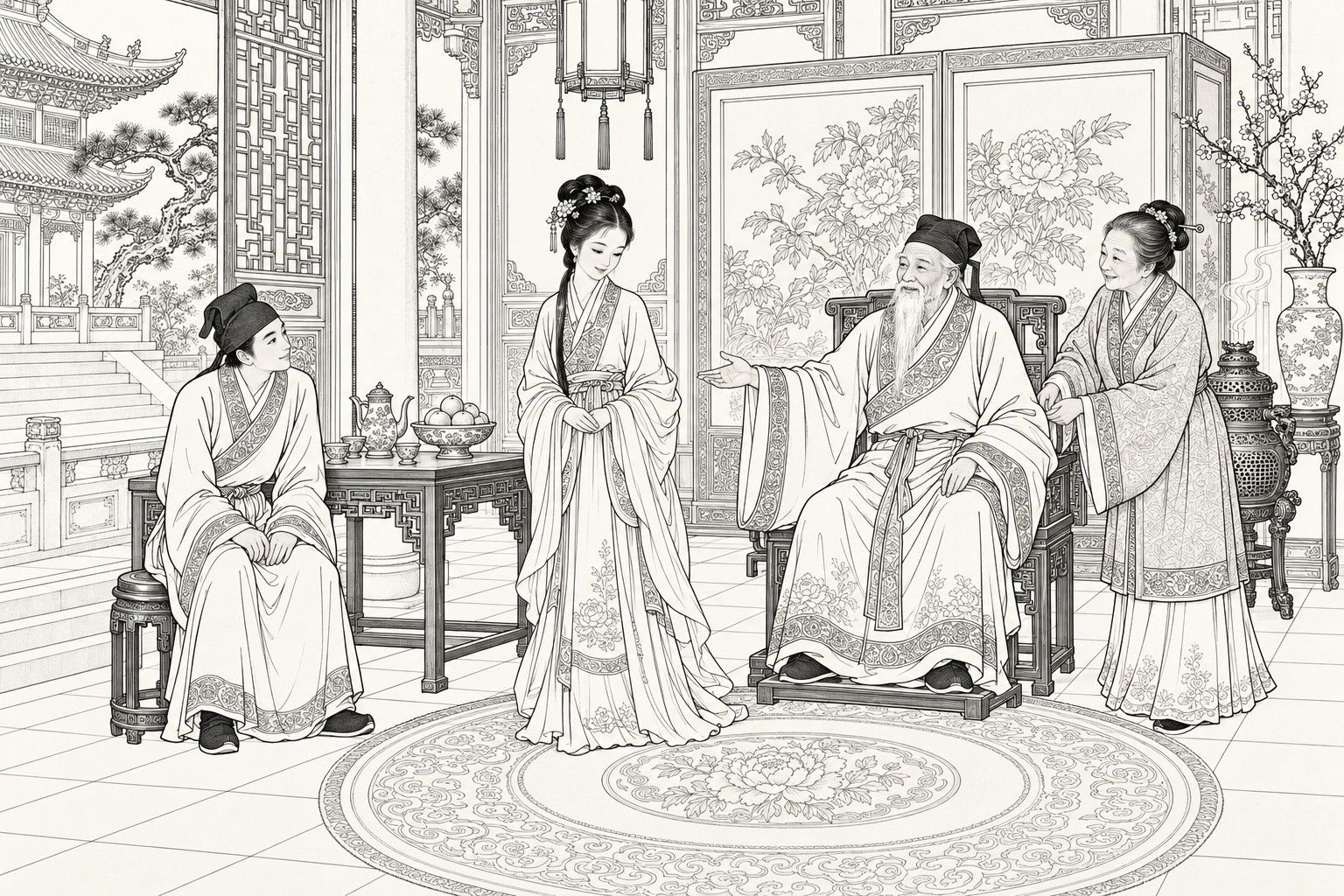
江漢之間,俗事蛙神最虔。祠中蛙不知幾百千萬,有大如籠者。或犯神怒,家中輒有異兆:蛙游几榻,甚或攀緣滑壁不得墮,其狀不一,此家當凶。人則大恐,斬牲禳禱之,神喜則已。楚有薛昆生者,幼惠,美姿容。六七歲時,有青衣媼至其家,自稱神使,坐致神意,願以女下嫁崑生。薛翁性朴拙,雅不欲,辭以兒幼。雖故卻之,而亦未敢議婚他姓。遲數年,崑生漸長,委禽於姜氏。神告姜曰:「薛崑生,吾婿也,何得近禁臠!」姜懼,反其儀。薛翁憂之,潔牲往禱,自言:「不敢與神相匹偶。」祝已,見肴酒中皆有巨蛆浮出,蠢然擾動;傾棄,謝罪而歸。心益懼,亦姑聽之。一日,崑生在途,有使者迎宣神命,苦邀移趾。不得已,從與俱往。入一朱門,樓閣華好。有叟坐堂上,類七八十歲人。崑生伏謁,叟命曳起之,賜坐案旁。少間,婢媼集視,紛紜滿側。叟顧曰:「入言薛郎至矣。」數婢奔去。移時,一媼率女郎出,年十六七,麗絕無儔。叟指曰:「此小女十娘,自謂與君可稱佳偶;君家尊乃以異類見拒。此自百年事,父母止主其半,是在君耳。」崑生目注十娘,心愛好之,默然不言。媼曰:「我固知郎意良佳。請先歸,當即送十娘往也。」崑生曰:「諾。」趨歸告翁。翁倉遽無所為計,乃授之詞,使返謝之,崑生不肯行。方誚讓間,輿已在門,青衣成群,而十娘入矣。上堂朝拜,翁姑見之皆喜。即夕合巹,琴瑟甚諧。由此神翁神媼,時降其家。視其衣,赤為喜,白為財,必見,以故家日興。自婚於神,門堂藩溷皆蛙,人無敢詬蹴之。惟崑生少年任性,喜則忌,怒則踐斃,不甚愛惜。十娘雖謙馴,但善怒,頗不善崑生所為;而崑生不以十娘故斂抑之。十娘語侵崑生。崑生怒曰:「豈以汝家翁媼能禍人耶?丈夫何畏蛙也!」十娘甚諱言「蛙」,聞之恚甚,曰:「自妾入門,為汝家田增粟、賈益價,亦復不少。今老幼皆已溫飽,遂如鴞鳥生翼,欲啄母睛耶!」崑生益憤曰:「吾正嫌所增污穢,不堪貽子孫。請不如早別。」遂逐十娘。翁媼既聞之,十娘已去。呵崑生,使急往追復之。崑生盛氣不屈。至夜,母子俱病,鬱冒不食。翁懼,負荊於祠,詞義殷切。過三日,病尋愈。十娘亦自至,夫妻懽好如初。十娘日輒凝妝坐,不操女紅,崑生衣履,一委諸母。母一日忿曰:「兒既娶,仍累媼!人家婦事姑,吾家姑事婦!」十娘適聞之,負氣登堂曰:「兒婦朝侍食,暮問寢,事姑者,其道如何?所短者,不能吝傭錢,自作苦耳。」母無言,慚沮自哭。崑生入,見母涕痕,詰得故,怒責十娘。十娘執辨不相屈。崑生曰:「娶妻不能承歡,不如勿有!便觸老蛙怒,不過橫災死耳!」復出十娘。十娘亦怒,出門逕去。次日,居舍災,延燒數屋,几案床榻,悉為煨燼。崑生怒,詣祠責數曰:「養女不能奉翁姑,略無庭訓,而曲護其短!神者至公,有教人畏婦者耶!且盎盂相敲,皆臣所為,無所涉於父母。刀鋸斧鉞,即加臣身;如其不然,我亦焚汝居室,聊以相報。」言已,負薪殿下,爇火欲舉。居人集而哀之,始憤而歸。父母聞之,大懼失色。至夜,神示夢於近村,使為婿家營宅。及明,齎材鳩工,共為崑生建造,辭之不止;日數百人相屬於道,不數日,第舍一新,床幕器具悉備焉。修除甫竟,十娘已至,登堂謝過,言詞溫婉。轉身向崑生展笑,舉家變怨為喜。自此十娘性益和,居二年,無間言。十娘最惡蛇,崑生戲函小蛇,紿使啟之。十娘變色,詬崑生。崑生亦轉笑生嗔,惡相抵。十娘曰:「今番不待相迫逐,請從此絕!」遂出門去。薛翁大恐,杖崑生,請罪於神。幸不禍之,亦寂無音。積有年餘,崑生懷念十娘,頗自悔,竊詣神所哀十娘,迄無聲應。未幾,聞神以十娘字袁氏,中心失望,因亦求婚他族;而歷相數家,並無如十娘者,於是益思十娘。往探袁氏,則已堊壁滌庭,候魚軒矣。心愧憤不能自已,廢食成疾。父母憂皇,不知所處。忽昏憒中有人撫之曰:「大丈夫頻欲斷絕,又作此態!」開目,則十娘也。喜極,躍起曰:「卿何來?」十娘曰:「以輕薄人相待之禮,止宜從父命,另醮而去。固久受袁家采幣,妾千思萬思而不忍也。卜吉已在今夕,父又無顏反璧,妾親攜而置之矣。適出門,父走送曰:『癡婢!不聽吾言,後受薛家凌虐,縱死亦勿歸也!』」崑生感其義,為之流涕。家人皆喜,奔告翁媼。媼聞之,不待往朝,奔入子舍,執手嗚泣。由此崑生亦老成,不作惡謔,於是情好益篤。十娘曰:「妾向以君儇薄,未必遂能相白首,故不敢留孽根於人世;今已靡他,妾將生子。」居無何,神翁神媼著朱袍,降臨其家。次日,十娘臨蓐,一舉兩男。由此往來無間。居民或犯神怒,輒先求崑生;乃使婦女輩盛妝入閨,朝拜十娘,十娘笑則解。薛氏苗裔甚繁,人名之「薛蛙子家」。近人不敢呼,遠人呼之。
江汉之间,俗事蛙神最虔。祠中蛙不知几百千万,有大如笼者。或犯神怒,家中辄有异兆:蛙游几榻,甚或攀缘滑壁不得堕,其状不一,此家当凶。人则大恐,斩牲禳祷之,神喜则已。楚有薛昆生者,幼惠,美姿容。六七岁时,有青衣媪至其家,自称神使,坐致神意,愿以女下嫁昆生。薛翁性朴拙,雅不欲,辞以儿幼。虽故却之,而亦未敢议婚他姓。迟数年,昆生渐长,委禽于姜氏。神告姜曰:「薛昆生,吾婿也,何得近禁脔!」姜惧,反其仪。薛翁忧之,洁牲往祷,自言:「不敢与神相匹偶。」祝已,见肴酒中皆有巨蛆浮出,蠢然扰动;倾弃,谢罪而归。心益惧,亦姑听之。一日,昆生在途,有使者迎宣神命,苦邀移趾。不得已,从与俱往。入一朱门,楼阁华好。有叟坐堂上,类七八十岁人。昆生伏谒,叟命曳起之,赐坐案旁。少间,婢媪集视,纷纭满侧。叟顾曰:「入言薛郎至矣。」数婢奔去。移时,一媪率女郎出,年十六七,丽绝无俦。叟指曰:「此小女十娘,自谓与君可称佳偶;君家尊乃以异类见拒。此自百年事,父母止主其半,是在君耳。」昆生目注十娘,心爱好之,默然不言。媪曰:「我固知郎意良佳。请先归,当即送十娘往也。」昆生曰:「诺。」趋归告翁。翁仓遽无所为计,乃授之词,使返谢之,昆生不肯行。方诮让间,舆已在门,青衣成群,而十娘入矣。上堂朝拜,翁姑见之皆喜。即夕合卺,琴瑟甚谐。由此神翁神媪,时降其家。视其衣,赤为喜,白为财,必见,以故家日兴。自婚于神,门堂藩溷皆蛙,人无敢诟蹴之。惟昆生少年任性,喜则忌,怒则践毙,不甚爱惜。十娘虽谦驯,但善怒,颇不善昆生所为;而昆生不以十娘故敛抑之。十娘语侵昆生。昆生怒曰:「岂以汝家翁媪能祸人耶?丈夫何畏蛙也!」十娘甚讳言「蛙」,闻之恚甚,曰:「自妾入门,为汝家田增粟、贾益价,亦复不少。今老幼皆已温饱,遂如鸮鸟生翼,欲啄母睛耶!」昆生益愤曰:「吾正嫌所增污秽,不堪贻子孙。请不如早别。」遂逐十娘。翁媪既闻之,十娘已去。呵昆生,使急往追复之。昆生盛气不屈。至夜,母子俱病,郁冒不食。翁惧,负荆于祠,词义殷切。过三日,病寻愈。十娘亦自至,夫妻懽好如初。十娘日辄凝妆坐,不操女红,昆生衣履,一委诸母。母一日忿曰:「儿既娶,仍累媪!人家妇事姑,吾家姑事妇!」十娘适闻之,负气登堂曰:「儿妇朝侍食,暮问寝,事姑者,其道如何?所短者,不能吝佣钱,自作苦耳。」母无言,惭沮自哭。昆生入,见母涕痕,诘得故,怒责十娘。十娘执辨不相屈。昆生曰:「娶妻不能承欢,不如勿有!便触老蛙怒,不过横灾死耳!」复出十娘。十娘亦怒,出门径去。次日,居舍灾,延烧数屋,几案床榻,悉为煨烬。昆生怒,诣祠责数曰:「养女不能奉翁姑,略无庭训,而曲护其短!神者至公,有教人畏妇者耶!且盎盂相敲,皆臣所为,无所涉于父母。刀锯斧钺,即加臣身;如其不然,我亦焚汝居室,聊以相报。」言已,负薪殿下,爇火欲举。居人集而哀之,始愤而归。父母闻之,大惧失色。至夜,神示梦于近村,使为婿家营宅。及明,赍材鸠工,共为昆生建造,辞之不止;日数百人相属于道,不数日,第舍一新,床幕器具悉备焉。修除甫竟,十娘已至,登堂谢过,言词温婉。转身向昆生展笑,举家变怨为喜。自此十娘性益和,居二年,无间言。十娘最恶蛇,昆生戏函小蛇,绐使启之。十娘变色,诟昆生。昆生亦转笑生嗔,恶相抵。十娘曰:「今番不待相迫逐,请从此绝!」遂出门去。薛翁大恐,杖昆生,请罪于神。幸不祸之,亦寂无音。积有年余,昆生怀念十娘,颇自悔,窃诣神所哀十娘,迄无声应。未几,闻神以十娘字袁氏,中心失望,因亦求婚他族;而历相数家,并无如十娘者,于是益思十娘。往探袁氏,则已垩壁涤庭,候鱼轩矣。心愧愤不能自已,废食成疾。父母忧皇,不知所处。忽昏愦中有人抚之曰:「大丈夫频欲断绝,又作此态!」开目,则十娘也。喜极,跃起曰:「卿何来?」十娘曰:「以轻薄人相待之礼,止宜从父命,另醮而去。固久受袁家采币,妾千思万思而不忍也。卜吉已在今夕,父又无颜反璧,妾亲携而置之矣。适出门,父走送曰:『痴婢!不听吾言,后受薛家凌虐,纵死亦勿归也!』」昆生感其义,为之流涕。家人皆喜,奔告翁媪。媪闻之,不待往朝,奔入子舍,执手呜泣。由此昆生亦老成,不作恶谑,于是情好益笃。十娘曰:「妾向以君儇薄,未必遂能相白首,故不敢留孽根于人世;今已靡他,妾将生子。」居无何,神翁神媪着朱袍,降临其家。次日,十娘临蓐,一举两男。由此往来无间。居民或犯神怒,辄先求昆生;乃使妇女辈盛妆入闺,朝拜十娘,十娘笑则解。薛氏苗裔甚繁,人名之「薛蛙子家」。近人不敢呼,远人呼之。
Between the Yangtze and the Han rivers, people worship the Frog God with the greatest devotion. There is no counting the frogs in his shrine — hundreds, thousands, tens of thousands — and some are as big as a steamer basket. If anyone offends the god, strange signs appear in his house at once: frogs crawl over the tables and beds, or even climb up smooth walls without falling. The signs take many forms, and they mean that misfortune is coming to the house. Then people are terrified, and kill animals in sacrifice and pray to avert it; if the god is pleased, that is the end of it. In Chu there was a man named Xue Kunsheng, who was clever as a child and handsome. When he was six or seven, an old woman in a black gown came to his house. She said she was the god’s messenger, sat down and conveyed the god’s wish: he wanted to give his daughter to Kunsheng in marriage. Old Xue was a plain, simple man and did not want it at all; he declined, saying the boy was too young. But though he had refused, he did not dare discuss a match with any other family either. Some years later, when Kunsheng was growing up, Xue sent betrothal gifts to the Jiang family. The god told Jiang, “Xue Kunsheng is my son-in-law. How dare you touch a morsel reserved for me!” Jiang was afraid and sent back the gifts. Old Xue was worried. He took clean sacrificial animals to the shrine and prayed, saying, “I do not dare to be joined in marriage with a god.” When he had finished the prayer, he saw huge maggots floating up out of the meat and wine, squirming. He poured it all away, apologized and went home. He was more frightened than ever, and for the time being let things be. One day Kunsheng was on the road when a messenger came to meet him, proclaimed the god’s command and pressed him to come along. He had no choice but to go with him. He went in through a red gate, among fine towers and halls. An old man sat in the hall, who looked seventy or eighty. Kunsheng prostrated himself; the old man had him pulled to his feet and gave him a seat by the table. In a little while maids and old women gathered to look at him, crowding round on every side. The old man turned and said, “Tell them Master Xue has come.” Several maids ran off. After a while an old woman came out leading a young lady of sixteen or seventeen, beautiful beyond compare. The old man pointed to her. “This is my little daughter, Shiniang. She thinks she would make you a good match, but your honoured father has refused us because we are not of your kind. This is a matter for a whole lifetime, and parents decide only half of it. The rest is up to you.” Kunsheng gazed at Shiniang. His heart went out to her, but he said nothing. The old woman said, “I knew you liked her well enough. Go home first, and we will send Shiniang to you directly.” “Yes,” said Kunsheng, and hurried home to tell his father. Old Xue was flustered and could think of no plan. He gave Kunsheng a speech to make and told him to go back and decline, but Kunsheng would not go. While his father was still scolding him, the bridal chair was at the gate, with crowds of maids in black, and Shiniang came in. She came up into the hall and paid her respects, and Kunsheng’s parents were both delighted when they saw her. That very night the couple drank the wedding cup, and they were in perfect harmony. From then on the god and his old wife often came down to the house. You could tell by their clothes: red meant a happy event, white meant money, and it always came true. So the family grew more prosperous by the day. Since the marriage to the god there were frogs everywhere — gate and hall, fences and privy — and no one dared curse them or kick them. Only Kunsheng, young and headstrong, left them alone when he was in a good mood but stamped them to death when he was angry, and showed them little care. Shiniang, though modest and gentle, had a quick temper, and she greatly disliked what Kunsheng did; but Kunsheng did not hold himself back for her sake. Shiniang said something cutting to him. Kunsheng said angrily, “Do you think your old folks can do people harm? A man is not afraid of frogs!” Shiniang hated nothing more than the word ‘frog’. Hearing it, she was furious. “Since I came into your house I have added grain to your fields and raised the prices of your goods, and not a little either. Now that old and young are all warm and fed, you are like the owl chick that grows its wings and wants to peck out its mother’s eyes!” Kunsheng grew angrier still. “It’s just what you’ve added that I find filthy. It isn’t fit to leave to my children and grandchildren. Better we part now!” And he drove Shiniang out. By the time his parents heard of it, Shiniang was already gone. They scolded Kunsheng and told him to go after her at once and bring her back. Kunsheng was in a towering rage and would not give way. That night mother and son both fell ill, dazed and stifled, unable to eat. Old Xue was afraid and went to the shrine bearing thorns on his back, pleading earnestly. Three days later they soon recovered. Shiniang came back of her own accord, and husband and wife were as loving as ever. Every day Shiniang sat with her face carefully made up and did no needlework; Kunsheng’s clothes and shoes were all left to his mother. One day his mother said angrily, “My son’s married, and still he’s a burden on his old mother! In other families the wife serves her mother-in-law; in ours the mother-in-law serves the wife!” Shiniang happened to hear and came into the hall in a huff. “Your daughter-in-law serves your food in the morning and sees you settled for the night in the evening. What more is there to serving a mother-in-law? All I lack is that I can’t bring myself to grudge the servants’ wages and do the hard work myself.” His mother had nothing to say; ashamed and crushed, she wept by herself. Kunsheng came in, saw the traces of tears on his mother’s face and questioned her until he learned why. He angrily reproached Shiniang. Shiniang argued back and would not give an inch. “A wife who can’t please my parents is worse than none!” said Kunsheng. “Even if it angers the old frog, the worst that can happen is that I meet a violent death!” And again he sent Shiniang away. Shiniang was angry too, and walked straight out of the gate. The next day the house caught fire. The fire spread to several rooms, and tables, chairs and beds were all burned to ashes. Kunsheng was furious. He went to the shrine and denounced the god. “You raise a daughter who cannot serve her husband’s parents, give her no teaching at home, and then shield her faults! A god should be perfectly just — do you teach men to fear their wives? Besides, when the bowls and basins knocked together, it was all my doing. It has nothing to do with my parents. Let the knife and saw, the axe and battle-axe, fall on me. If not, I will burn your house down too, to pay you back.” With that he piled firewood below the shrine hall and struck a light, about to set it ablaze. The people who lived nearby gathered and pleaded with him, and only then did he go home, still fuming. When his parents heard, they turned pale with terror. That night the god appeared in dreams to the people of the nearby villages and told them to build a house for his son-in-law. At daybreak they brought timber and gathered workmen and built for Kunsheng together; when he tried to refuse, they would not stop. Every day hundreds of people streamed along the road, and in a few days the house was new, with beds, curtains and furnishings all complete. The building and cleaning were barely done when Shiniang arrived. She came into the hall and apologized, gently and sweetly. Then she turned to Kunsheng with a smile, and the whole household turned from resentment to joy. From then on Shiniang’s temper was milder, and for two years there was not a cross word between them. Shiniang hated snakes more than anything. As a joke Kunsheng put a little snake in a box and tricked her into opening it. Shiniang turned pale and cursed him. Kunsheng’s laughter turned to anger as well, and they traded harsh words. “This time you needn’t drive me out,” said Shiniang. “Let us be done with each other from now on!” And she walked out of the gate. Old Xue was terrified. He beat Kunsheng with a stick and went to the god to beg forgiveness. Luckily no disaster followed; but there was no word either. After more than a year Kunsheng was missing Shiniang and full of remorse. He went secretly to the god’s shrine and pleaded for Shiniang, but there was never any answer. Before long he heard that the god had promised Shiniang to the Yuan family. Bitterly disappointed, he too sought a match with other families; but of all the girls he looked at, none was a match for Shiniang, and he longed for her all the more. He went to look at the Yuan house: the walls had been whitewashed and the courtyard swept, ready for the bridal carriage. Ashamed and furious beyond bearing, he stopped eating and fell ill. His parents were frantic with worry and did not know what to do. Suddenly, in his stupor, someone stroked him and said, “A grown man who keeps wanting to break things off, and now look at you!” He opened his eyes: it was Shiniang. Overjoyed, he leapt up. “Where did you come from?” “The way to treat a frivolous man,” said Shiniang, “would have been to obey my father and marry someone else. The Yuan family’s betrothal silks had long since been accepted. But I thought it over a thousand times, ten thousand times, and could not bear to. The lucky day was fixed for tonight, and my father had no face to send back the gifts, so I took them back myself. As I was going out of the door, my father ran after me and said, ‘Silly girl! You won’t listen to me. If the Xues mistreat you after this, don’t come home, even if you die!’” Kunsheng was moved by her devotion and wept. The household was overjoyed and ran to tell his parents. When his mother heard, she did not wait for Shiniang to come and pay her respects, but ran into her son’s room, took her hands and wept. From then on Kunsheng grew steadier too and played no more cruel jokes, and so their love grew deeper still. “Before this,” said Shiniang, “I thought that, fickle as you were, we might not grow old together, so I didn’t dare leave a root of trouble in the world. Now that you have no thought for anyone else, I will bear you a son.” Before long the god and his wife came down to the house in red robes. The next day Shiniang went into labour and gave birth to two boys at once. From then on the two families came and went freely. If anyone in the district offended the god, he went first to Kunsheng for help; then the women of the family put on their best and went into the inner rooms to pay their respects to Shiniang, and if Shiniang laughed, the trouble passed. The Xues had very many descendants, and people called them ‘the Xue Frog-Children’. Those who lived nearby did not dare call them that; people from far away did.