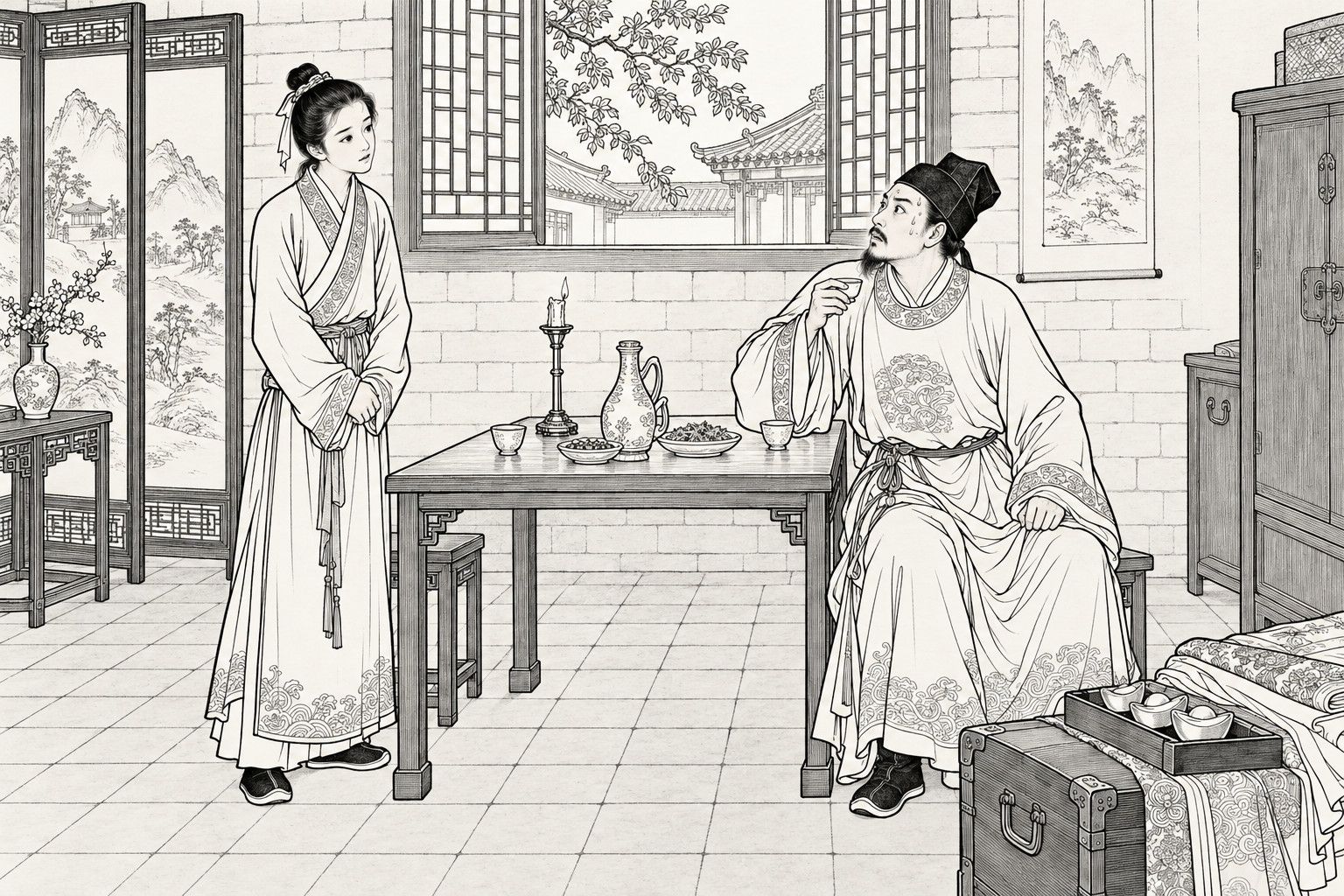
韋公子,咸陽世家。放縱好淫,婢婦有色,無不私者。嘗載金數千,欲盡覽天下名妓,凡繁麗之區,無不至。其不甚佳者,信宿即去;當意,則作百日留。叔亦名宦,休致歸,怒其行,延明師置別業,使與諸公子鍵戶讀。公子夜伺師寢,踰垣歸,遲明而返。以為常。一夜,失足折肱,師始知之。告公,公益施夏楚,俾不能起而始藥之。及愈,公與之約:能讀倍諸弟,文字佳,出勿禁;若私逸,撻如前。然公子最慧,讀常過程。數年,中鄉榜。欲自敗約,公箝制之。赴都,以老僕從,授日記籍,使誌其言動。故數年無過行。後成進士,公乃稍弛其禁。公子或將有作,惟恐公聞,入曲巷中,輒託姓魏。一日,過西安,見優僮羅惠卿,年十六七,秀麗如好女,悅之。夜留繾綣,贈貽豐隆。聞其新娶婦尤韻妙,私示意惠卿。惠卿無難色,夜果攜婦至,三人共一榻。留數日,眷愛臻至。謀與俱歸。問其家口,答云:『母早喪,父存。某原非羅姓。母少服役於咸陽韋氏,賣至羅家,四月即生余。倘得從公子去,亦可察其音耗。」公子驚問母姓。曰:「姓呂。」生駭極,汗下浹體,蓋其母即生家婢也。生無言。時天已明,厚贈之,勸令改業。偽託他適,約歸時召致之,遂別去。後令蘇州,有樂妓沈韋娘,雅麗絕倫,愛留與狎。戲曰:「卿小字取『春風一曲杜韋娘』耶?」答曰:「非也。妾母十七為名妓,有咸陽公子,與公同姓,留三月,訂盟婚娶。公子去,八月生妾,因名韋,實妾姓也。公子臨別時,贈黃金鴛鴦,今尚在。一去竟無音耗,妾母以是憤悒死。妾三歲,受撫於沈媼,故從其姓。」公子聞言,愧恨無以自容。默移時,頓生一策。忽起挑燈,喚韋娘飲,暗置鴆毒盃中。韋娘纔下咽,潰亂呻嘶。眾集視,則已斃矣。呼優人至,付以尸,重賂之。而韋娘所與交好者盡勢家,聞之,皆不平,賄激優人,訟於上官。生懼,瀉橐彌縫,卒以浮躁免官。歸家年才三十八,頗悔前行。而妻妾五六人,皆無子。欲繼公孫;公以門無內行,恐兒染習氣,雖許過嗣,但待其老而後歸之。公子憤欲招惠卿,家人皆以為不可,乃止。又數年,忽病,輒撾心曰:「淫婢宿妓者,非人也!」公聞而嘆曰:「是殆將死矣!」乃以次子之子,送詣其家,使定省之。月餘果死。
韦公子,咸阳世家。放纵好淫,婢妇有色,无不私者。尝载金数千,欲尽览天下名妓,凡繁丽之区,无不至。其不甚佳者,信宿即去;当意,则作百日留。叔亦名宦,休致归,怒其行,延明师置别业,使与诸公子键户读。公子夜伺师寝,逾垣归,迟明而返。以为常。一夜,失足折肱,师始知之。告公,公益施夏楚,俾不能起而始药之。及愈,公与之约:能读倍诸弟,文字佳,出勿禁;若私逸,挞如前。然公子最慧,读常过程。数年,中乡榜。欲自败约,公箝制之。赴都,以老仆从,授日记籍,使志其言动。故数年无过行。后成进士,公乃稍弛其禁。公子或将有作,惟恐公闻,入曲巷中,辄托姓魏。一日,过西安,见优僮罗惠卿,年十六七,秀丽如好女,悦之。夜留缱绻,赠贻丰隆。闻其新娶妇尤韵妙,私示意惠卿。惠卿无难色,夜果携妇至,三人共一榻。留数日,眷爱臻至。谋与俱归。问其家口,答云:『母早丧,父存。某原非罗姓。母少服役于咸阳韦氏,卖至罗家,四月即生余。倘得从公子去,亦可察其音耗。」公子惊问母姓。曰:「姓吕。」生骇极,汗下浃体,盖其母即生家婢也。生无言。时天已明,厚赠之,劝令改业。伪托他适,约归时召致之,遂别去。后令苏州,有乐妓沈韦娘,雅丽绝伦,爱留与狎。戏曰:「卿小字取『春风一曲杜韦娘』耶?」答曰:「非也。妾母十七为名妓,有咸阳公子,与公同姓,留三月,订盟婚娶。公子去,八月生妾,因名韦,实妾姓也。公子临别时,赠黄金鸳鸯,今尚在。一去竟无音耗,妾母以是愤悒死。妾三岁,受抚于沈媪,故从其姓。」公子闻言,愧恨无以自容。默移时,顿生一策。忽起挑灯,唤韦娘饮,暗置鸩毒杯中。韦娘才下咽,溃乱呻嘶。众集视,则已毙矣。呼优人至,付以尸,重赂之。而韦娘所与交好者尽势家,闻之,皆不平,贿激优人,讼于上官。生惧,泻橐弥缝,卒以浮躁免官。归家年才三十八,颇悔前行。而妻妾五六人,皆无子。欲继公孙;公以门无内行,恐儿染习气,虽许过嗣,但待其老而后归之。公子愤欲招惠卿,家人皆以为不可,乃止。又数年,忽病,辄挝心曰:「淫婢宿妓者,非人也!」公闻而叹曰:「是殆将死矣!」乃以次子之子,送诣其家,使定省之。月余果死。
Young Master Wei came of an old official family of Xianyang. He was dissolute and lecherous: there was no maid or servant’s wife with any looks whom he had not had. Once he set out with several thousand in gold, meaning to see every famous courtesan in the empire, and there was no rich and glittering city he did not visit. If a woman was not much to his taste, he left after two nights; if she suited him, he stayed a hundred days. His uncle, also a well-known official, retired and came home. Angered by the young man’s conduct, he engaged a good tutor, set up a separate villa, and had him study there behind locked doors with his cousins. At night the young master waited until the tutor was asleep, climbed over the wall and went home, and came back toward dawn. This became a habit. One night he slipped and broke his arm, and only then did the tutor find out. The tutor told the uncle, who caned him on top of it, beating him until he could not get up, and only then had him treated. When he had recovered, his uncle made a pact with him: if he read twice as much as his cousins and wrote good essays, he would not be kept from going out; if he slipped off on the sly, he would be beaten as before. Now the young master was very bright, and always read beyond his set task. After some years he passed the provincial examination. He wanted to break the pact himself, but his uncle kept a tight hold on him. When he went to the capital, his uncle sent an old servant with him and gave the man a daybook in which to record everything he said and did. So for some years he did nothing wrong. Later he became a jinshi, and only then did his uncle relax the restrictions a little. Whenever the young master was up to something, he was afraid his uncle would hear of it, so when he went into the back lanes he always gave a false surname, Wei. One day, passing through Xi’an, he saw a boy actor named Luo Huiqing, sixteen or seventeen years old, as fine-featured as a pretty girl, and took a fancy to him. He kept him for the night in tender dalliance and gave him lavish gifts. Hearing that the boy’s new bride was still more charming, he dropped a private hint to Huiqing. Huiqing showed no reluctance, and that night he did bring his wife, and the three of them shared one bed. The young master stayed several days, utterly besotted, and planned to take the two of them home with him. He asked about the boy’s family. “My mother died young. My father is living. Luo was not my name to begin with. When my mother was young she was in service with the Wei family of Xianyang. She was sold into the Luo family, and four months later she gave birth to me. If I can go with you, sir, I might also get some news of them.” Startled, the young master asked his mother’s surname. “Lü,” said the boy. The young master was horrified; sweat poured down and soaked him through. The boy’s mother had been a maid in his own house. He said nothing. By then it was light. He gave the boy rich gifts and urged him to change his trade. Pretending he had to go elsewhere, he promised to send for him on his way back, and took his leave. Later he was appointed a magistrate in Suzhou. There was a singing girl there, Shen Weiniang, elegant and lovely beyond compare. He took a liking to her and kept her as his lover. “Did you take your pet name from the line ‘A tune in the spring wind: Du Weiniang’?” he teased. “No,” she said. “At seventeen my mother was a famous courtesan. A young gentleman of Xianyang, with the same surname as you, sir, stayed with her three months and swore to marry her. Eight months after he left, I was born, so I was named Wei. It is really my surname. When he went away, he gave her a pair of golden mandarin ducks; I have them still. Once gone, he never sent a word, and my mother died of grief and bitterness. At three I was taken in by old Mrs. Shen, so I took her name.” Hearing this, the young master was so ashamed and vexed that he did not know where to put himself. He sat silent for a while. Then a plan came to him. He got up suddenly, trimmed the lamp, called Weiniang to drink, and secretly dropped poison into her cup. No sooner had she swallowed it than she was writhing, moaning and shrieking. When people gathered to look, she was already dead. He called in the players, handed over the body, and bribed them heavily. But the men Weiniang had been close to were all from powerful families. When they heard of it they were all indignant; they bribed the players and egged them on to bring a suit before his superiors. Frightened, he emptied his purse to patch the matter up, and in the end he was only dismissed from office for “rashness.” He came home just thirty-eight years old, and much regretted his past conduct. But of his wife and concubines, five or six in all, not one had borne him a son. He wanted to adopt one of his uncle’s grandsons as his heir. His uncle, because there was no decent conduct within the young master’s walls, feared the boy would pick up bad habits: though he agreed to the adoption, he would hand the boy over only when the young master was old. In anger the young master wanted to send for Huiqing, but his whole household said it would not do, so he gave it up. Some years later he suddenly fell ill, and kept beating his breast and crying, “A man who debauches maids and sleeps with harlots is not human!” His uncle heard of it and sighed. “He must be about to die.” So he sent his second son’s son to the young master’s house, to wait on him morning and evening. A month or so later he did die.