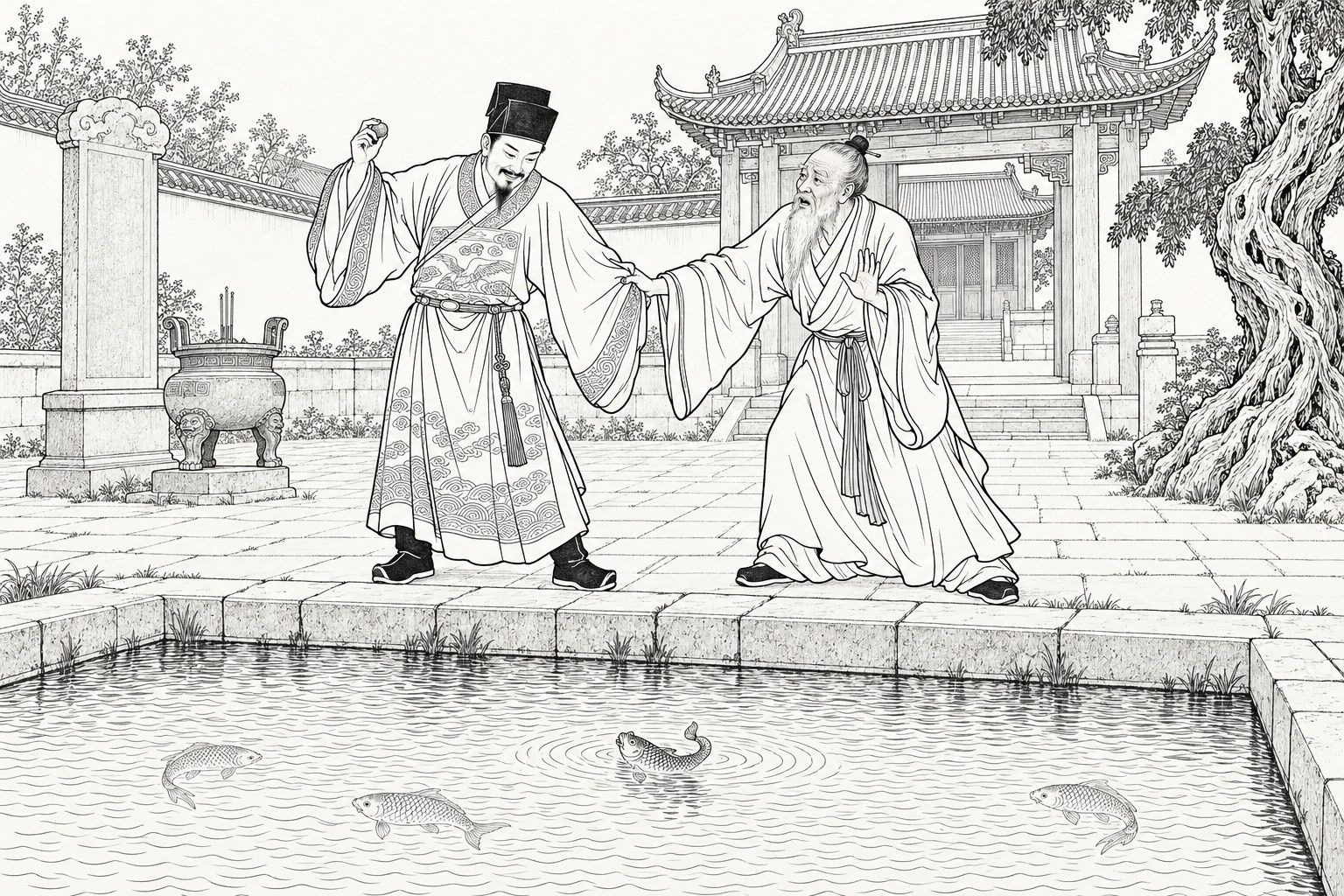
唐太史濟武,適日照會安氏葬。道經雹神李左車祠,入游眺。祠前有池,池水清澈,有朱魚數尾游泳其中。內一斜尾魚唼呷水面,見人不驚。太史拾小石將戲擊之。道士急止勿擊。問其故,言:「池鱗皆龍族,觸之必致風雹。」太史笑其附會之誣,竟擲之。既而升車東行,則有黑雲如蓋,隨之以行。簌簌雹落,大如綿子。又行里餘,始霽。太史弟涼武在後,追及與語,則竟不知有雹也。問之前行者亦云。太史笑曰:「此豈廣武君作怪耶!」猶未深異。安村外有關聖祠,適有稗販客,釋肩門外,忽棄雙簏,趨祠中,拔架上大刀旋舞。曰:「我李左車也。明日將陪從淄川唐太史一助執紼,敬先告主人。」數語而醒,不自知其所言,亦不識唐為何人。安氏聞之,大懼。村去祠四十餘里,敬修楮帛祭具,詣祠哀禱,但求憐憫,不敢枉駕。太史怪其敬信之深,問諸主人。主人曰:「雹神靈蹟最著,常託生人以為言,應驗無虛語。若不虔祝以尼其行,則明日風雹立至矣。」
唐太史济武,适日照会安氏葬。道经雹神李左车祠,入游眺。祠前有池,池水清澈,有朱鱼数尾游泳其中。内一斜尾鱼唼呷水面,见人不惊。太史拾小石将戏击之。道士急止勿击。问其故,言:「池鳞皆龙族,触之必致风雹。」太史笑其附会之诬,竟掷之。既而升车东行,则有黑云如盖,随之以行。簌簌雹落,大如绵子。又行里余,始霁。太史弟凉武在后,追及与语,则竟不知有雹也。问之前行者亦云。太史笑曰:「此岂广武君作怪耶!」犹未深异。安村外有关圣祠,适有稗贩客,释肩门外,忽弃双簏,趋祠中,拔架上大刀旋舞。曰:「我李左车也。明日将陪从淄川唐太史一助执绋,敬先告主人。」数语而醒,不自知其所言,亦不识唐为何人。安氏闻之,大惧。村去祠四十余里,敬修楮帛祭具,诣祠哀祷,但求怜悯,不敢枉驾。太史怪其敬信之深,问诸主人。主人曰:「雹神灵迹最着,常托生人以为言,应验无虚语。若不虔祝以尼其行,则明日风雹立至矣。」
Tang Jiwu, the Hanlin academician, was on his way to Rizhao for a funeral in the An family. His road passed the shrine of Li Zuoche, the Hail God, and he went in to look around. In front of the shrine was a pool of clear water, with a few red fish swimming in it. One of them, a fish with a crooked tail, was nibbling at the surface and did not take fright at people. Tang picked up a pebble to throw at it for fun. The Daoist hurried to stop him. Asked why, he said, “The fish in this pool are all of the dragon’s kin. Touch one and it will surely bring wind and hail.” Tang laughed at such far-fetched nonsense and threw the stone anyway. Then he got back into his carriage and went on east. A black cloud like a canopy came after him and followed him along. Hail came pattering down, the size of cotton seeds. Only after another li or so did it clear. Tang’s younger brother Liangwu, who was travelling behind, caught up and talked with him: he had known nothing of any hail. Those who had gone on ahead said the same when asked. Tang laughed. “Can this be the Lord of Guangwu up to mischief?” Still he thought little of it. Outside the An village stood a shrine to Lord Guan. A peddler happened to set down his load outside its gate. All at once he left his two baskets, rushed into the shrine, snatched the great blade from its rack and whirled it about. “I am Li Zuoche,” he said. “Tomorrow I shall accompany Academician Tang of Zichuan and help hold the ropes of the bier. I give our host due notice beforehand.” After these few words he came to himself. He did not know what he had said, nor who Tang was. When the Ans heard of it they were terrified. The Hail God’s shrine was more than forty li from the village, but they reverently prepared paper money and offerings, went there and prayed piteously, begging only for mercy: they dared not put him to the trouble of coming. Tang wondered at how deeply they revered and believed, and asked his host about it. “The Hail God’s miracles are the most famous of all,” said the host. “He often speaks through the living, and what he says always comes true. If we did not pray devoutly to stop him coming, wind and hail would be on us tomorrow.”