新城耿十八,病危篤,自知不起。謂妻曰:「永訣在旦晚耳。我死後,嫁守由汝,請言所志。」妻默不語。耿固問之,且云:「守固佳,嫁亦恆情,明言之,庸何傷!行與子訣,子守,我心慰;子嫁,我意斷也。」妻乃慘然曰:「家無儋石,君在猶不給,何以能守?」耿聞之,遽握妻臂,作恨聲曰:「忍哉!」言已而沒。手握不可開。妻號。家人至,兩人攀指,力掰之,始開。
新城耿十八,病危笃,自知不起。谓妻曰:「永诀在旦晚耳。我死后,嫁守由汝,请言所志。」妻默不语。耿固问之,且云:「守固佳,嫁亦恒情,明言之,庸何伤!行与子诀,子守,我心慰;子嫁,我意断也。」妻乃惨然曰:「家无儋石,君在犹不给,何以能守?」耿闻之,遽握妻臂,作恨声曰:「忍哉!」言已而没。手握不可开。妻号。家人至,两人攀指,力掰之,始开。
Geng Shiba of Xincheng fell gravely ill and knew he would not get up again. He said to his wife, “We will be parted for ever any day now. After I die, whether you stay a widow or remarry is up to you. Tell me what you mean to do.” His wife said nothing. Geng pressed her. “Staying a widow is good, of course,” he said, “but remarrying is only natural too. Say it plainly — what harm can it do? I am about to leave you. If you stay, my heart will be at ease; if you remarry, my thoughts of you end there.” At last his wife said miserably, “We haven’t so much as a sack of grain in the house. Even with you alive we haven’t enough. How could I stay a widow?” When Geng heard this he seized her arm and said bitterly, “How heartless!” With that he died. His hand gripped and would not open. His wife wailed. The household came running, and two of them had to pry at his fingers with all their strength before the hand came open.
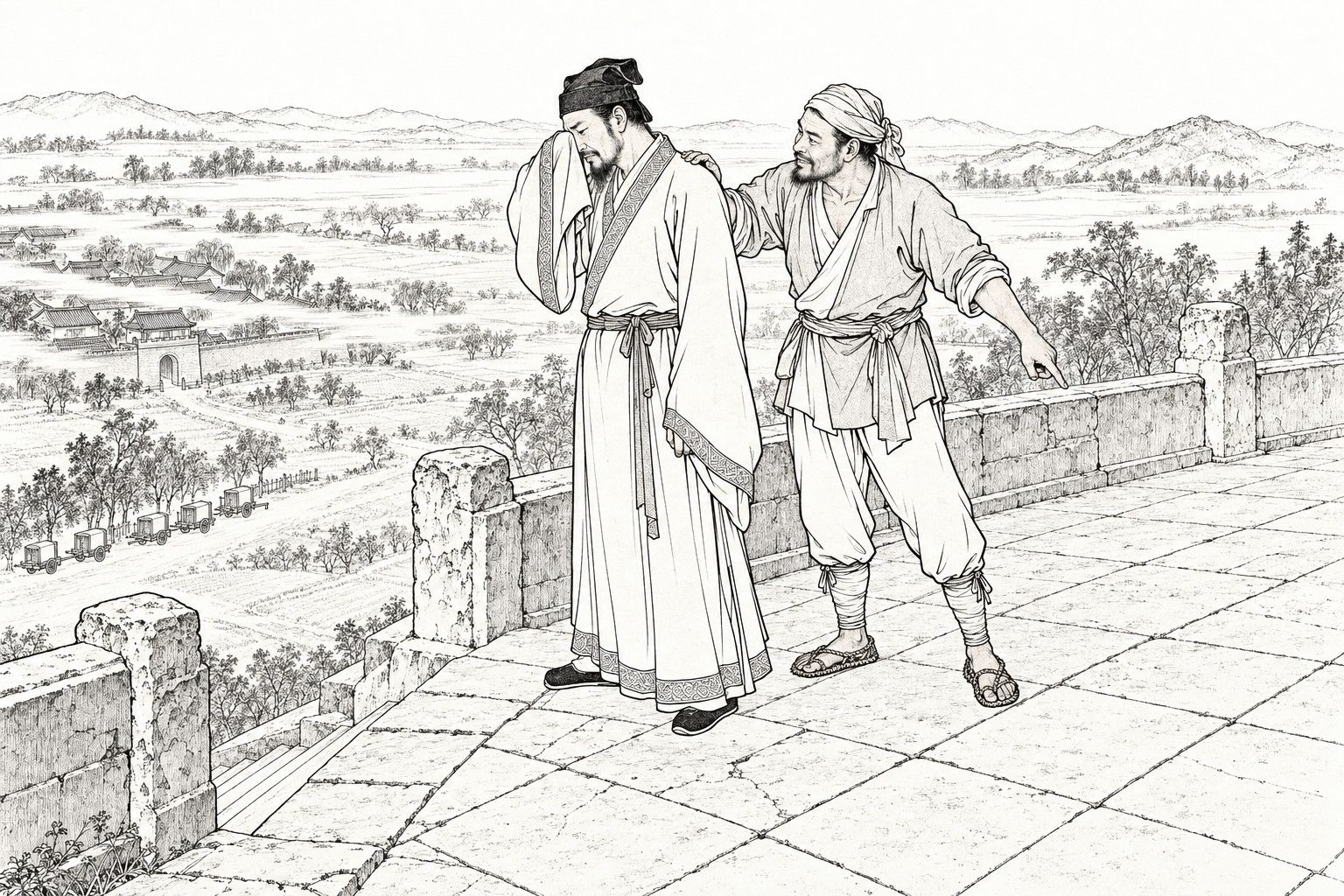
耿不自知其死,出門,見小車十餘兩,兩各十人,即以方幅書名字,粘車上。御人見耿,促登車。耿視車中已有九人,並己而十。又視粘單上,己名最後。車行咋咋,響震耳際,亦不自知何往。俄至一處,聞人言曰:「此思鄉地也。」聞其名,疑之。又聞御人偶語云:「今日㔍三人。」耿又駭。及細聽其言,悉陰間事。乃自悟曰:「我豈不作鬼物耶?」頓念家中,無復可懸念,惟老母臘高,妻嫁後,缺于奉養;念之,不覺涕漣。又移時,見有臺,高數仞,遊人甚夥;囊頭械足之輩,嗚咽而下上,聞人言為「望鄉臺」。諸人至此,俱踏轅下,紛然競登。御人或撻之,或止之,獨至耿,則促令登。登數十級,始至顛頂。翹首一望,則門閭庭院,宛在目中。但內室隱隱,如籠煙霧。淒惻不自勝。回顧,一短衣人立肩下,即以姓氏問耿。耿具以告。其人亦自言為東海匠人。見耿零涕,問:「何事不了于心?」耿又告之。匠人謀與越臺而遁。耿懼冥追,匠人固言無妨。耿又慮臺高傾跌,匠人但令從己。遂先躍,耿果從之。及地,竟無恙。喜無覺者。視所乘車,猶在臺下。二人急奔,數武,忽自念名字粘車上,恐不免執名之追;遂反身近車,以手指染唾,塗去己名,始復奔,哆口坌息,不敢少停。少間,入里門,匠人送諸其室。驀睹己尸,醒然而蘇。
耿不自知其死,出门,见小车十余两,两各十人,即以方幅书名字,粘车上。御人见耿,促登车。耿视车中已有九人,并己而十。又视粘单上,己名最后。车行咋咋,响震耳际,亦不自知何往。俄至一处,闻人言曰:「此思乡地也。」闻其名,疑之。又闻御人偶语云:「今日㔍三人。」耿又骇。及细听其言,悉阴间事。乃自悟曰:「我岂不作鬼物耶?」顿念家中,无复可悬念,惟老母腊高,妻嫁后,缺于奉养;念之,不觉涕涟。又移时,见有台,高数仞,游人甚伙;囊头械足之辈,呜咽而下上,闻人言为「望乡台」。诸人至此,俱踏辕下,纷然竞登。御人或挞之,或止之,独至耿,则促令登。登数十级,始至颠顶。翘首一望,则门闾庭院,宛在目中。但内室隐隐,如笼烟雾。凄恻不自胜。回顾,一短衣人立肩下,即以姓氏问耿。耿具以告。其人亦自言为东海匠人。见耿零涕,问:「何事不了于心?」耿又告之。匠人谋与越台而遁。耿惧冥追,匠人固言无妨。耿又虑台高倾跌,匠人但令从己。遂先跃,耿果从之。及地,竟无恙。喜无觉者。视所乘车,犹在台下。二人急奔,数武,忽自念名字粘车上,恐不免执名之追;遂反身近车,以手指染唾,涂去己名,始复奔,哆口坌息,不敢少停。少间,入里门,匠人送诸其室。蓦睹己尸,醒然而苏。
Geng did not know he was dead. He went out of the gate and saw a dozen or so small carts, ten people to a cart, with names written on square sheets of paper pasted to them. The driver saw Geng and hurried him aboard. Geng saw there were already nine people in the cart; with him it made ten. He looked at the sheet pasted on it: his own name came last. The carts went creaking along with a din that shook his ears, and he had no idea where they were going. Before long they came to a place, and he heard someone say, “This is the Land of Homesickness.” The name made him uneasy. Then he heard the drivers talking among themselves: “Three to be cut down today.” Geng took fright again. Listening closely, he found that everything they said was about the world of the dead. Then he understood. “Have I not become a ghost?” he said to himself. At once his thoughts turned to home. There was nothing left there to worry over, except that his mother was very old, and once his wife remarried there would be no one to look after her. At the thought, his tears ran before he knew it. After a while he saw a terrace several fathoms high, crowded with people. Men with sacks over their heads and fetters on their feet were going up and coming down, sobbing. He heard someone call it the Terrace for Gazing Homeward. When the carts reached it, everyone stepped down over the shafts and scrambled to climb up. The drivers whipped some and held others back; only Geng they urged to climb. He went up several dozen steps before he reached the top. He lifted his head and looked: there were his own gate and courtyard, as plain as if they were before his eyes. But the inner rooms were dim, as though wrapped in smoke and mist. He was overcome with grief. He looked round. A man in a short jacket was standing at his shoulder, and asked his name. Geng told him. The man said he was a craftsman from the Eastern Sea. Seeing Geng in tears, he asked, “What is it that weighs on your heart?” Geng told him that too. The craftsman proposed that they jump off the terrace together and escape. Geng was afraid the underworld would come after them, but the craftsman insisted it would do no harm. Geng worried too that the terrace was high and he would fall; the craftsman only told him to follow. He leapt first, and Geng did follow. They reached the ground quite unhurt. To their joy, no one had noticed. The cart Geng had ridden in was still at the foot of the terrace. The two of them ran hard. After a few paces Geng suddenly remembered that his name was pasted on the cart, and feared they would hunt him down by it. So he turned back to the cart, wet his finger with spit and rubbed out his name, and only then ran on again, mouth gaping, panting, not daring to stop for a moment. Soon he passed through the gate of his village, and the craftsman saw him to his room. Suddenly he saw his own corpse — and woke, and came back to life.
覺乏疲躁渴,驟呼水。家人大駭,與之水,飲至石餘,乃驟起,作揖拜狀;既而出門拱謝,方歸。歸則僵臥不轉。家人以其行異,疑非真活;然漸覘之,殊無他異。稍稍近問,始歷歷言其本末。問:「出門何故?」曰:「別匠人也。」「飲水何多?」曰:「初為我飲,後乃匠人飲也。」投之湯羹,數日而瘥。由此厭薄其妻,不復共枕蓆云。
觉乏疲躁渴,骤呼水。家人大骇,与之水,饮至石余,乃骤起,作揖拜状;既而出门拱谢,方归。归则僵卧不转。家人以其行异,疑非真活;然渐觇之,殊无他异。稍稍近问,始历历言其本末。问:「出门何故?」曰:「别匠人也。」「饮水何多?」曰:「初为我饮,后乃匠人饮也。」投之汤羹,数日而瘥。由此厌薄其妻,不复共枕席云。
He felt drained and parched, and shouted for water at once. The household was terrified. They gave him water, and he drank more than ten pecks of it. Then he sat bolt upright and went through the motions of bowing; after that he went out of the gate, saluted with clasped hands as if thanking someone, and only then came back. Back inside, he lay stiff and did not stir. Because he had acted so strangely, the household suspected he was not truly alive; but as they watched him, little by little, they saw nothing else odd. Bit by bit they came near and questioned him, and then he told them the whole thing clearly from start to finish. “Why did you go out of the gate?” “To say goodbye to the craftsman.” “Why did you drink so much water?” “At first I was drinking for myself. After that it was the craftsman drinking.” They fed him broth, and in a few days he was well. From then on he despised his wife and never shared her pillow again, so it is said.