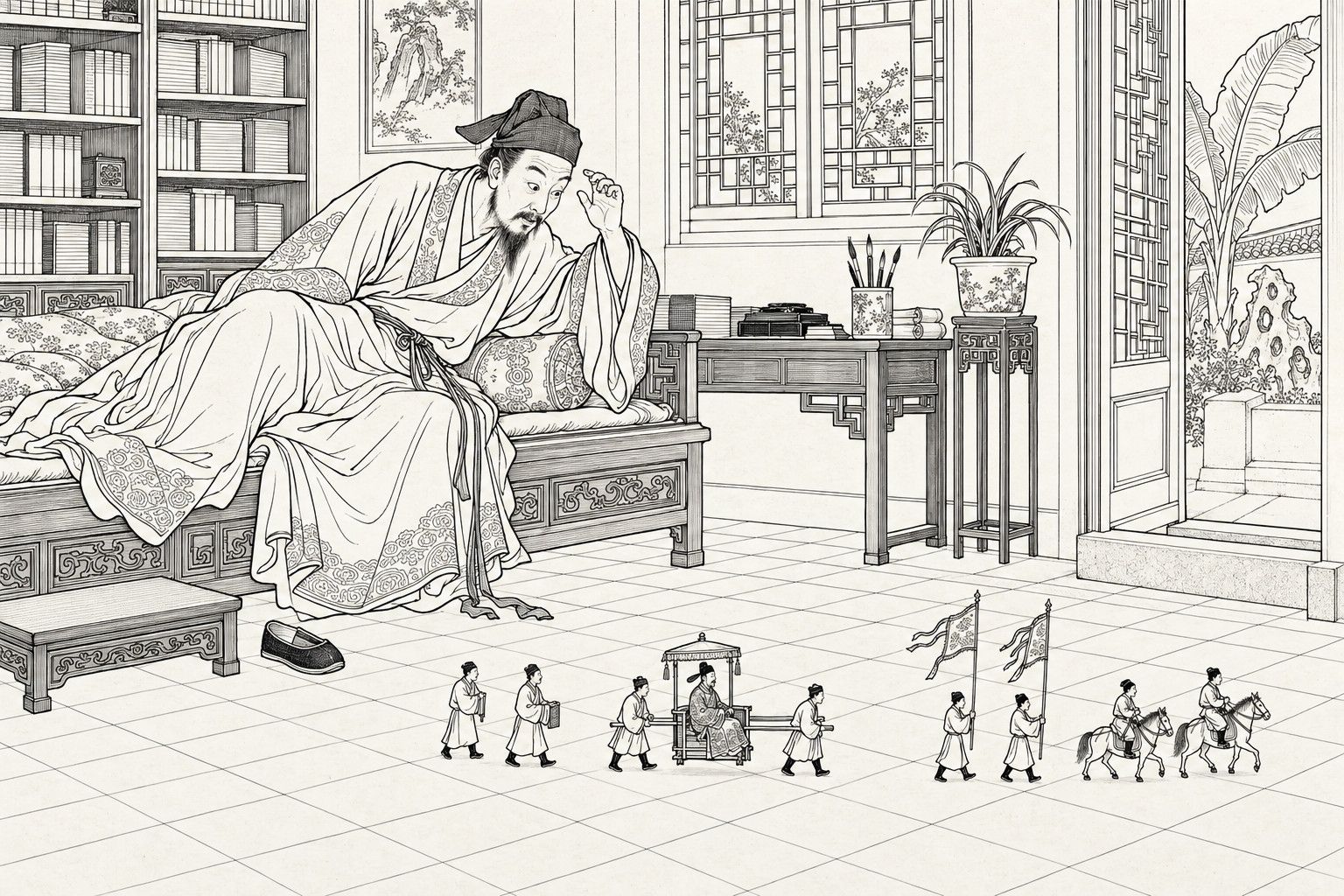
太史某公,忘其姓氏。晝臥齋中,忽有小鹵簿,出自堂陬。馬大如蛙,人細于指。小儀仗以數十隊;一官冠皂紗,著繡幞,乘肩輿,紛紛出門而去。公心異之,竊疑睡眼之訛。頓見一小人,返入舍,攜一氈包,大如拳,竟造床下。白言:「家主人有不腆之儀,敬獻太史。」言已,對立,即又不陳其物。少間,又自笑曰:「戔戔微物,想太史亦無所用,不如即賜小人。」太史頷之。欣然攜之而去。後不復見。惜太史中餒,不曾詰所自來。
太史某公,忘其姓氏。昼卧斋中,忽有小卤簿,出自堂陬。马大如蛙,人细于指。小仪仗以数十队;一官冠皂纱,着绣幞,乘肩舆,纷纷出门而去。公心异之,窃疑睡眼之讹。顿见一小人,返入舍,携一毡包,大如拳,竟造床下。白言:「家主人有不腆之仪,敬献太史。」言已,对立,即又不陈其物。少间,又自笑曰:「戋戋微物,想太史亦无所用,不如即赐小人。」太史颔之。欣然携之而去。后不复见。惜太史中馁,不曾诘所自来。
There was once an Academician, whose name I have forgotten. He was lying down in his study in the daytime when a tiny official procession suddenly came out of a corner of the hall. The horses were the size of frogs, and the men were slighter than a finger. There were dozens of files of little banners and regalia, and an official in a black gauze cap and an embroidered robe, riding in a sedan chair. In a bustling throng they went out of the door and were gone. The Academician thought it strange, and privately wondered whether his sleepy eyes had tricked him. Then he saw one of the little men come back into the room carrying a felt bundle as big as a fist, and walk straight up to the foot of the bed. “My master has a humble gift,” he announced, “which he respectfully presents to the Academician.” Having said this, he stood there facing him, but did not set out the gift. After a moment he laughed to himself and said, “Such a paltry trifle — I don’t suppose the Academician has any use for it. Better to give it to me.” The Academician nodded. The little man happily carried it off, and was never seen again. It is a pity the Academician lost his nerve and never asked where they had come from.