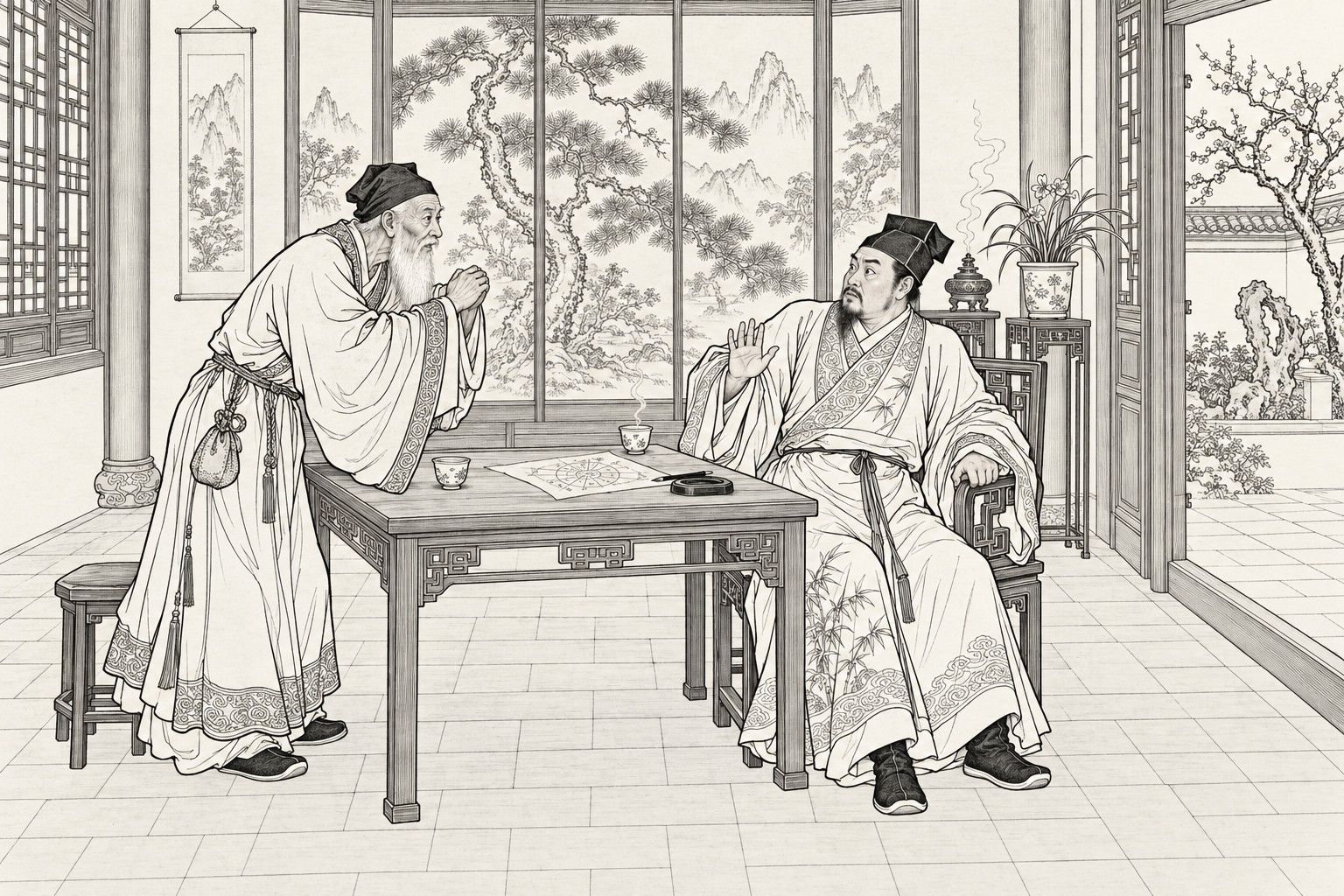
曹州李姓者,邑諸生。家素饒。而居宅故不甚廣;舍後有園數畝,荒置之。一日,有叟來稅屋,出直百金。李以無屋為辭。叟曰:「請受之,但無煩慮。」李不喻其意,姑受之,以覘其異。
曹州李姓者,邑诸生。家素饶。而居宅故不甚广;舍后有园数亩,荒置之。一日,有叟来税屋,出直百金。李以无屋为辞。叟曰:「请受之,但无烦虑。」李不喻其意,姑受之,以觇其异。
In Caozhou there was a man named Li, a licentiate of his county. His family had always been well off, though the house itself was not very large; behind it lay a garden of several mu, left to run wild. One day an old man came to rent the place and offered a hundred taels of silver for it. Li declined, saying he had no rooms to let. “Please take the money,” said the old man, “and don’t trouble yourself about it.” Li did not understand what he meant, but he took it for the time being, to see what strange thing would follow.
越日,村人見輿馬眷口入李家,紛紛甚夥,共疑李第無安頓所,問之。李殊不自知;歸而察之,並無跡響。過數日,叟忽來謁。且云:「庇宇下已數晨夕。事事都草創,起爐作灶,未暇一修客子禮。今遣小女輩作黍,幸一垂顧。」李從之。則入園中,歘見舍宇華好,嶄然一新。入室,陳設芳麗。酒鼎沸于廊下,茶煙裊于廚中。俄而行酒荐饌,備極甘旨。時見庭下少年人,往來甚眾。又聞兒女喁喁,幕中作笑語聲。家人婢僕,似有數十百口。李心知其狐,席終而歸,陰懷殺心。每入市,市硝硫,積數百斤,暗布園中殆滿。驟火之,焰亙霄漢,如黑靈芝,燔臭灰瞇不可近;但聞鳴啼嗥動之聲,嘈雜聒耳。既熄入視,則死狐滿地,焦頭爛額者,不可勝計。方閱視間,叟自外來,顏色慘慟,責李曰:「夙無嫌怨;荒園報歲百金,非少;何忍遂相族滅?此奇慘之仇,無不報者!」忿然而去。疑其擲礫為殃,而年余無少怪異。
越日,村人见舆马眷口入李家,纷纷甚伙,共疑李第无安顿所,问之。李殊不自知;归而察之,并无迹响。过数日,叟忽来谒。且云:「庇宇下已数晨夕。事事都草创,起炉作灶,未暇一修客子礼。今遣小女辈作黍,幸一垂顾。」李从之。则入园中,歘见舍宇华好,崭然一新。入室,陈设芳丽。酒鼎沸于廊下,茶烟袅于厨中。俄而行酒荐馔,备极甘旨。时见庭下少年人,往来甚众。又闻儿女喁喁,幕中作笑语声。家人婢仆,似有数十百口。李心知其狐,席终而归,阴怀杀心。每入市,市硝硫,积数百斤,暗布园中殆满。骤火之,焰亘霄汉,如黑灵芝,燔臭灰瞇不可近;但闻鸣啼嗥动之声,嘈杂聒耳。既熄入视,则死狐满地,焦头烂额者,不可胜计。方阅视间,叟自外来,颜色惨恸,责李曰:「夙无嫌怨;荒园报岁百金,非少;何忍遂相族灭?此奇惨之仇,无不报者!」忿然而去。疑其掷砾为殃,而年余无少怪异。
The next day the villagers saw sedan chairs, horses and whole families going into Li’s place, a great crowd of them. They all wondered where Li could possibly put them, and asked him. Li knew nothing of it. He went home and looked, but there was neither trace nor sound of anyone. A few days later the old man suddenly came to call. “We have been sheltering under your roof for some days now,” he said. “Everything has been makeshift, setting up stoves and building hearths, and I have had no leisure to pay you the courtesies a tenant owes. Today I have had my girls cook a little millet, and I hope you will honour us with a visit.” Li went with him. They entered the garden, and all at once he saw handsome buildings there, brand new. Inside, the furnishings were fragrant and lovely. Wine bubbled in cauldrons along the veranda; tea smoke curled up from the kitchen. Soon the wine went round and the dishes were brought, every one of them delicious. Now and then he saw young men in the courtyard, a great many of them coming and going. He heard young women murmuring, too, and talk and laughter behind the curtains. Counting family, maids and menservants, there seemed to be scores of them, perhaps a hundred. Li knew in his heart that they were foxes. When the feast was over he went home, secretly bent on killing them. Every time he went to market he bought saltpetre and sulphur, until he had stored up several hundred pounds of it, and in secret he spread it over nearly the whole garden. Then all at once he set it alight. The flames reached up to the heavens, like a giant black lingzhi; the stench of burning and the blinding ash kept anyone from going near. All that could be heard was crying and wailing and howling, a din that deafened the ears. When the fire had burnt out he went in to look: the ground was covered with dead foxes, their heads scorched and their faces burnt, more than could be counted. While he was looking them over, the old man came in from outside, his face stricken with grief, and reproached him: “There was never any quarrel or grudge between us. A hundred taels a year for a wild garden is no small rent. How could you bear to wipe out my whole clan? A wrong as monstrous as this will not go unavenged!” He went off in a rage. Li expected him to make trouble by throwing stones, but for more than a year nothing strange happened at all.
時順治初年,山中群盜竊發,嘯聚萬余人,官莫能捕,生以家口多,日懮離亂。適村中來一星者,自號「南山翁」,言人休咎,了若目睹,名大噪。李召至家,求推甲子。翁愕然起敬,曰:「此真主也!」李聞大駭,以為妄。翁正容固言之。李疑信半焉,乃曰:「豈有白手受命而帝者乎?」翁謂:「不然。自古帝王,類多起于匹夫,誰是生而天子者?」生惑之,前席而請,翁毅然以「臥龍」自任。請先備甲胄數千具﹑弓弩數千事。李慮人莫之歸,翁曰:「臣請為大王連諸山,深相結。使嘩言者謂大王真天子,山中士卒,宜必響應。」李喜,遣翁行。發藏鏹,造甲胄。翁數日始還,曰:「借大王威福,加臣三寸舌,諸山莫不願執鞭靮,從戲下。」浹旬之間,果歸命者數千人。於是拜翁為軍師,建大纛,設彩幟若林;據山立柵,聲勢震動。邑令率兵來討,翁指揮群寇,大破之。令懼,告急于兗。兗兵遠涉而至,翁又伏寇進擊,兵大潰,將士殺傷者甚眾。勢益震,黨以萬計,因自立為「九山王」。翁患馬少,會都中解馬赴江南,遣一旅要路篡取之。由是「九山王」之名大噪。加翁為「護國大將軍」。高臥山巢,公然自負,以為黃袍之加,指日可俟矣。東撫以奪馬故,方將進剿;又得兗報,乃發精兵數千,與六道合圍而進。軍旅旌旗,彌滿山谷。「九山王」大懼,召翁謀之,則不知所往。「九山王」窘急無術,登山而望曰:「今而知朝廷之勢大矣!」山破,被擒,妻孥戮之。始悟翁即老狐,蓋以族滅報李也。
时顺治初年,山中群盗窃发,啸聚万余人,官莫能捕,生以家口多,日懮离乱。适村中来一星者,自号「南山翁」,言人休咎,了若目睹,名大噪。李召至家,求推甲子。翁愕然起敬,曰:「此真主也!」李闻大骇,以为妄。翁正容固言之。李疑信半焉,乃曰:「岂有白手受命而帝者乎?」翁谓:「不然。自古帝王,类多起于匹夫,谁是生而天子者?」生惑之,前席而请,翁毅然以「卧龙」自任。请先备甲胄数千具﹑弓弩数千事。李虑人莫之归,翁曰:「臣请为大王连诸山,深相结。使哗言者谓大王真天子,山中士卒,宜必响应。」李喜,遣翁行。发藏镪,造甲胄。翁数日始还,曰:「借大王威福,加臣三寸舌,诸山莫不愿执鞭靮,从戏下。」浃旬之间,果归命者数千人。于是拜翁为军师,建大纛,设彩帜若林;据山立栅,声势震动。邑令率兵来讨,翁指挥群寇,大破之。令惧,告急于兖。兖兵远涉而至,翁又伏寇进击,兵大溃,将士杀伤者甚众。势益震,党以万计,因自立为「九山王」。翁患马少,会都中解马赴江南,遣一旅要路篡取之。由是「九山王」之名大噪。加翁为「护国大将军」。高卧山巢,公然自负,以为黄袍之加,指日可俟矣。东抚以夺马故,方将进剿;又得兖报,乃发精兵数千,与六道合围而进。军旅旌旗,弥满山谷。「九山王」大惧,召翁谋之,则不知所往。「九山王」窘急无术,登山而望曰:「今而知朝廷之势大矣!」山破,被擒,妻孥戮之。始悟翁即老狐,盖以族灭报李也。
It was in the early years of the Shunzhi reign. Bandits had risen in the hills, rallying more than ten thousand men, and the officials could not catch them. With so large a household, Li worried day after day about the disorder. Just then an astrologer came to the village who called himself the Old Man of the Southern Mountain (Nanshan Weng). He told people’s fortunes, good and bad, as clearly as if he had seen them with his own eyes, and he became famous. Li called him to the house and asked him to cast his horoscope. The old man started up in awe. “Here is a true sovereign!” he said. Li was greatly alarmed and thought it nonsense, but the old man, his face grave, insisted. Li half doubted and half believed. “Was there ever a man who started with empty hands,” he said, “and received the Mandate and became emperor?” “Not so,” said the old man. “Since ancient times most emperors and kings have risen from common men. Who was ever born the Son of Heaven?” Li was taken in. He drew his seat closer and asked for his counsel, and the old man boldly cast himself as the Sleeping Dragon. First, he said, several thousand suits of armour and several thousand bows and crossbows must be made ready. Li worried that no one would come over to him. “Let me, your servant, link up the mountain bands for you, Great King,” said the old man, “and bind them close. If I have talkers spread the word that the Great King is truly the Son of Heaven, the soldiers in the hills are bound to rally to you.” Li was delighted and sent the old man off. He dug out his hoarded silver and had the armour made. It was several days before the old man came back. “By the Great King’s majesty and good fortune,” he said, “and with my three-inch tongue, every band in the hills is willing to hold the whip and bridle and follow beneath your banner.” Within ten days, sure enough, several thousand men had come to submit. So Li made the old man his chief strategist. He raised a great standard and set up coloured banners thick as a forest; he took a mountain and built a stockade on it, and his power shook the region. The county magistrate led troops against them; the old man commanded the outlaws and routed him. The magistrate took fright and sent to Yanzhou Prefecture for help. The Yanzhou troops came a long way, and the old man laid the outlaws in ambush and fell on them. The troops were utterly routed, with a great many officers and men killed or wounded. Li’s power grew more fearsome still, his followers were counted in tens of thousands, and so he set himself up as the King of the Nine Mountains. The old man worried that they were short of horses. It happened that horses were being sent from the capital to Jiangnan, south of the Yangzi, and he sent a detachment to waylay them on the road and seize them. After that the name of the King of the Nine Mountains was known everywhere. He gave the old man the title Great General Protector of the Realm. He lay at his ease in his mountain lair, openly full of himself, thinking the day the yellow robe would be put on him could not be far off. Because of the stolen horses, the Governor of Shandong was already about to send troops to wipe them out; then the report came from Yanzhou too, and he sent several thousand picked troops, who joined with forces on six roads and closed in from all sides. Troops and banners filled the hills and valleys. The King of the Nine Mountains was terrified. He sent for the old man to make a plan, but no one knew where he had gone. At his wits’ end, the King of the Nine Mountains climbed the mountain and looked out. “Now I know how great the power of the court is!” he said. The mountain fell. He was taken, and his wife and children were put to death. Only then was it understood that the old man was the old fox, who had repaid Li by having his family wiped out.
異史氏曰:「夫人擁妻子,閉門科頭,何處得殺?即殺,亦何由族哉?狐之謀亦巧矣。而壤無其種者,雖溉不生;彼其殺狐之殘,方寸已有盜根,故狐得長其萌而施之報。今試執途人而告之曰:「汝為天子!」未有不駭而走者。明明導以族滅之為,而猶樂聽之,妻子為戮,又何足云?然人聽匪言也,始聞之而怒,繼而疑,又既而信;迨至身名俱殞,而始悟其誤也,大率類此矣。」
异史氏曰:「夫人拥妻子,闭门科头,何处得杀?即杀,亦何由族哉?狐之谋亦巧矣。而壤无其种者,虽溉不生;彼其杀狐之残,方寸已有盗根,故狐得长其萌而施之报。今试执途人而告之曰:「汝为天子!」未有不骇而走者。明明导以族灭之为,而犹乐听之,妻子为戮,又何足云?然人听匪言也,始闻之而怒,继而疑,又既而信;迨至身名俱殒,而始悟其误也,大率类此矣。」
The Historian of the Strange says: A man who keeps to his wife and children and stays bareheaded behind his own gate — where could anyone get at him to kill him? And even if he were killed, how could his whole family be wiped out? The fox’s scheme was clever indeed. But where there is no seed in the soil, nothing grows however you water it. In the cruelty with which he killed the foxes, the root of a bandit was already in his heart, so the fox could nurse the sprout and turn it to revenge. Now try stopping a man on the road and telling him, “You are to be the Son of Heaven!” Every one of them will take fright and run. Here he was plainly being led into a course that would wipe out his family, and still he was happy to listen. That his wife and children were put to death — what more is there to say? Yet when people listen to wrongful talk, at first they are angry to hear it, then they doubt, and then they believe; only when they and their good name are both destroyed do they see their mistake. That is how it nearly always goes.