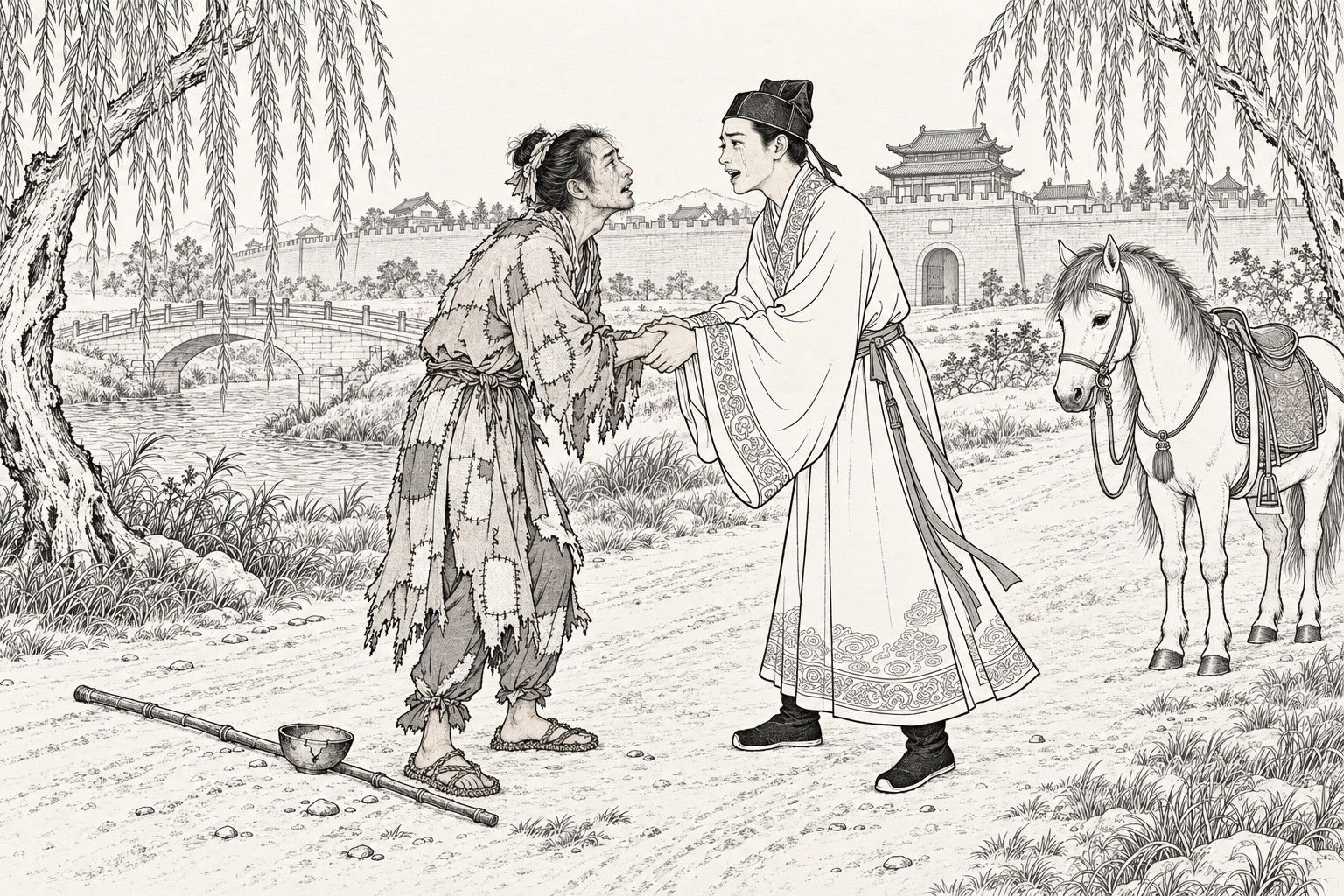
豫人張氏者,其先齊人。明末齊大亂,妻為北兵掠去。張常客豫,遂家焉。娶于豫,生子訥。無何,妻卒,又娶繼室,生子誠。繼室牛氏悍,每嫉訥,奴畜之,啖以惡草具,使樵,日責柴一肩。無則撻楚詬詛,不可堪。隱畜以甘脆餌誠,使從塾師讀。誠漸長,性孝友,不忍兄劬,陰勸母,母弗聽。一日,訥入山樵,未終,值大風雨,避身岩下,雨止而日已暮。腹中大餒,遂負薪歸。母驗之少,怒不與食;飢火燒心,入室僵臥。誠自塾中來,見兄嗒然,問:「病乎?」曰:「餓耳。」問其故,以情告。誠愀然便去。移時,懷餅來餌兄。兄問其所自來。曰:「余竊面倩鄰婦為之,但食勿言也。」訥食之。囑弟曰:「後勿復然,事泄累弟。且日一啖,飢當不死。」誠曰:「兄故弱,烏能多樵!」次日,食後,竊赴山,至兄樵處。兄見之,驚問:「將何作?」答曰:「將助樵採。」問:「誰之遣?」曰:「我自來耳。」兄曰:「無論弟不能樵,縱或能之,且猶不可。」於是速之歸。誠不聽,以手足斷柴助兄。且云:「明日當以斧來。」兄近止之,見其指已破,履已穿,悲曰:「汝不速歸,我即以斧自剄死。」誠乃歸,兄送之半途,方復回樵。既歸,詣塾,囑其師曰:「吾弟年幼,宜閉之。山中虎狼多。」師曰:「午前不知何往,業夏楚之。」歸謂誠曰:「不聽吾言,遭笞責矣。」誠笑曰:「無之。」明日,懷斧又去。兄駭曰:「我固謂子勿來,何復爾?」誠不應,刈薪且急,汗交頤不少休。約足一束,不辭而返。師又責之,乃實告之。師嘆其賢,遂不之禁。兄屢止之,終不聽。
豫人张氏者,其先齐人。明末齐大乱,妻为北兵掠去。张常客豫,遂家焉。娶于豫,生子讷。无何,妻卒,又娶继室,生子诚。继室牛氏悍,每嫉讷,奴畜之,啖以恶草具,使樵,日责柴一肩。无则挞楚诟诅,不可堪。隐畜以甘脆饵诚,使从塾师读。诚渐长,性孝友,不忍兄劬,阴劝母,母弗听。一日,讷入山樵,未终,值大风雨,避身岩下,雨止而日已暮。腹中大馁,遂负薪归。母验之少,怒不与食;饥火烧心,入室僵卧。诚自塾中来,见兄嗒然,问:「病乎?」曰:「饿耳。」问其故,以情告。诚愀然便去。移时,怀饼来饵兄。兄问其所自来。曰:「余窃面倩邻妇为之,但食勿言也。」讷食之。嘱弟曰:「后勿复然,事泄累弟。且日一啖,饥当不死。」诚曰:「兄故弱,乌能多樵!」次日,食后,窃赴山,至兄樵处。兄见之,惊问:「将何作?」答曰:「将助樵采。」问:「谁之遣?」曰:「我自来耳。」兄曰:「无论弟不能樵,纵或能之,且犹不可。」于是速之归。诚不听,以手足断柴助兄。且云:「明日当以斧来。」兄近止之,见其指已破,履已穿,悲曰:「汝不速归,我即以斧自刭死。」诚乃归,兄送之半途,方复回樵。既归,诣塾,嘱其师曰:「吾弟年幼,宜闭之。山中虎狼多。」师曰:「午前不知何往,业夏楚之。」归谓诚曰:「不听吾言,遭笞责矣。」诚笑曰:「无之。」明日,怀斧又去。兄骇曰:「我固谓子勿来,何复尔?」诚不应,刈薪且急,汗交颐不少休。约足一束,不辞而返。师又责之,乃实告之。师叹其贤,遂不之禁。兄屡止之,终不听。
There was a man named Zhang, of Henan, whose forebears came from Shandong. When Shandong fell into chaos at the end of the Ming, his wife was carried off by troops from the north. Zhang had often travelled to Henan on business, so he settled there. He married a Henan woman, who bore him a son, Ne. Before long she died, and he took a second wife, who bore him a son, Cheng. The second wife, Mrs. Niu, was a shrew. She hated Ne and kept him like a slave. She fed him coarse scraps and sent him out to cut firewood, demanding a full shoulder-load every day. If he came back without it, she beat him and cursed him until he could not bear it. Meanwhile she secretly fed Cheng on dainties and sent him to study with a teacher. As Cheng grew up, he proved dutiful and loving to his brother. He could not bear to see Ne worked so hard, and spoke to his mother about it in private, but she would not listen. One day Ne went into the hills for wood, and before he had finished, a great storm of wind and rain came on. He took shelter under a cliff. By the time the rain stopped, the sun had set. He was faint with hunger, so he shouldered his wood and went home. His stepmother looked at the load, found it short, and in her anger gave him nothing to eat. Burning with hunger, he went to his room and lay there stiff. Cheng came home from school and saw his brother lying there listless. “Are you sick?” he asked. “Only hungry.” Cheng asked why, and Ne told him. Cheng looked stricken and went off. After a while he came back with cakes inside his shirt and gave them to his brother. Ne asked where they had come from. “I stole some flour and got a neighbour woman to make them. Just eat, and don’t say anything.” Ne ate them. “Don’t do this again,” he told his brother. “If it comes out, you’ll be in trouble. One meal a day — I won’t starve.” “You were never strong,” said Cheng. “How can you cut so much wood?” The next day, after the meal, Cheng slipped off to the hills, to the place where his brother was cutting wood. Ne was startled to see him. “What are you doing here?” “I’ve come to help you cut wood.” “Who sent you?” “I came on my own.” “You can’t cut wood,” said Ne, “and even if you could, you still mustn’t.” And he hurried him off home. Cheng would not listen. He broke sticks with his hands and feet to help his brother. “Tomorrow I’ll bring an axe,” he said. Ne went over to stop him and saw that his fingers were cut and his shoes worn through. “If you don’t go home this minute,” he said sadly, “I’ll cut my own throat with this axe.” So Cheng went home. Ne walked him halfway, then went back to his wood. When he came home, he went to the school and said to the teacher, “My brother is young. Keep him shut in. There are many tigers and wolves in the hills.” “He went off somewhere this morning,” said the teacher. “I’ve already caned him for it.” At home Ne said to Cheng, “You wouldn’t listen to me, and now you’ve been caned.” “No, I haven’t,” said Cheng, laughing. The next day he went again, with an axe in his shirt. “I told you not to come,” said Ne in alarm. “Why are you here again?” Cheng did not answer. He cut wood hard and fast, sweat streaming down his cheeks, and never stopped to rest. When he had cut about a bundle, he went home without a word. The teacher caned him again, and he told him the truth. The teacher sighed at his goodness and stopped forbidding him. Ne tried again and again to stop him, but he never listened.
一日,與數人樵山中,欻有虎至。眾懼而伏。虎竟銜誠去。虎負人行緩,為訥追及。訥力斧之,中胯。虎痛狂奔,莫可尋逐,痛哭而返。眾慰解之,哭益悲。曰:「吾弟,非猶夫人之弟,況為我死,我何生焉!」遂以斧自刎其項。眾急救之,入肉者已寸許,血溢如涌,眩瞀殞絕。眾駭,裂之衣而約之,群扶而歸。母哭罵曰:「汝殺吾兒,欲劙頸以塞責耶!」訥呻云:「母勿煩惱,弟死,我定不生!」置榻上,創痛不能眠,惟晝夜依壁坐哭。父恐其亦死,時就榻少哺之,牛輒詬責。訥遂不食,三日而斃。村中有巫走無常者,訥途遇之,緬訴曩苦。因詢弟所,巫言不聞。遂反身導訥去。至一都會,見一皂衫人,自城中出。巫要遮代問之。皂衫人于佩囊中檢牒審顧,男婦百余,並無犯而張者。巫疑在他牒。皂衫人曰:「此路屬我,何得差逮。」訥不信,強巫入內城。城中新鬼﹑故鬼往來憧憧,亦有故識,就問,迄無知者。忽共嘩言:「菩薩至!」仰見雲中,有偉人,毫光徹上下,頓覺世界通明。巫賀曰:「大郎有福哉!菩薩幾十年一入冥司,拔諸苦惱,今適值之。」便捽訥跪。眾鬼囚紛紛籍籍,合掌齊誦慈悲救苦之聲,哄騰震地。菩薩以楊柳枝遍灑甘露,其細如塵。俄而霧收光斂,遂失所在。訥覺頸上沾露,斧處不復作痛。巫仍導與俱歸。望見裡門,始別而去。訥死二日,豁然竟蘇,悉述所遇,謂誠不死。母以為撰造之誣,反詬罵之。訥負屈無以自伸,而摸創痕良瘥。自力起,拜父曰:「行將穿雲入海往尋弟,如不可見,終此身勿望返也。願父猶以兒為死。」翁引空處與泣,無敢留之。訥乃去。每于沖衢訪弟耗,途中資斧斷絕,丐而行。逾年,達金陵,懸鶉百結,傴僂道上。偶見十餘騎過,走避道側。內一人如官長,年四十已來,健卒怒馬,騰踔前後。一少年乘小駟,屢視訥。訥以其貴公子,未敢仰視。少年停鞭少駐,忽下馬,呼曰:「非吾兄耶!」訥舉首審視,誠也。握手大痛,失聲,誠亦哭曰:「兄何漂落以至於此?」訥言其情,誠益悲。騎者並下問故,以白官長。官命脫騎載訥,連轡歸諸其家,始詳詰之。初,虎銜誠去,不知何時置路側,臥途中經宿。適張別駕自都中來,過之,見其貌文,憐而撫之,漸蘇。言其裡居,則相去已遠。因載與俱歸。又藥敷傷處,數日始痊。別駕無長君,子之。蓋適從游矚也。誠具為兄告。言次,別駕入,訥拜謝不已。誠入內,捧帛衣出,進兄,乃置酒燕敘。別駕問:「貴族在豫,幾何丁壯?」訥曰:「無有。父少齊人,流寓于豫。」別駕曰:「仆亦齊人。貴裡何屬?」答曰:「曾聞父言,屬東昌轄。」驚曰:「我同鄉也!何故遷豫?」訥曰:「明季清兵入境,掠前母去。父遭兵燹,蕩無家室。先賈于西道,往來頗稔,故止焉。」又驚問:「君家尊何名?」訥告之。別駕瞠而視,俯首若疑,疾趨入內。無何,太夫人出。共羅拜,已,問訥曰:「汝是張炳之之孫耶?」曰:「然。」太夫人大哭,謂別駕曰:「此汝弟也。」訥兄弟莫能解。太夫人曰:「我適汝父三年,流離北去,身屬黑固山半年,生汝兄。又半年,固山死,汝兄補秩旗下遷此官。今解任矣。每刻刻念鄉井,遂出籍,復故譜。屢遣人至齊,殊無所覓耗,何知汝父西徙哉!」乃謂別駕曰:「汝以弟為子,折福死矣!」別駕曰:「曩問誠,誠未嘗言齊人,想幼稚不憶耳。」乃以齒序:別駕四十有一,為長;誠十六,最少;訥二十二,則伯而仲矣。別駕得兩弟,甚歡,與同臥處,盡悉離散端由,將作歸計。太夫人恐不見容。別駕曰:「能容則共之,否則析之。天下豈有無父之國?」於是鬻宅辦裝,刻日西發。
一日,与数人樵山中,欻有虎至。众惧而伏。虎竟衔诚去。虎负人行缓,为讷追及。讷力斧之,中胯。虎痛狂奔,莫可寻逐,痛哭而返。众慰解之,哭益悲。曰:「吾弟,非犹夫人之弟,况为我死,我何生焉!」遂以斧自刎其项。众急救之,入肉者已寸许,血溢如涌,眩瞀殒绝。众骇,裂之衣而约之,群扶而归。母哭骂曰:「汝杀吾儿,欲劙颈以塞责耶!」讷呻云:「母勿烦恼,弟死,我定不生!」置榻上,创痛不能眠,惟昼夜依壁坐哭。父恐其亦死,时就榻少哺之,牛辄诟责。讷遂不食,三日而毙。村中有巫走无常者,讷途遇之,缅诉曩苦。因询弟所,巫言不闻。遂反身导讷去。至一都会,见一皂衫人,自城中出。巫要遮代问之。皂衫人于佩囊中检牒审顾,男妇百余,并无犯而张者。巫疑在他牒。皂衫人曰:「此路属我,何得差逮。」讷不信,强巫入内城。城中新鬼﹑故鬼往来憧憧,亦有故识,就问,迄无知者。忽共哗言:「菩萨至!」仰见云中,有伟人,毫光彻上下,顿觉世界通明。巫贺曰:「大郎有福哉!菩萨几十年一入冥司,拔诸苦恼,今适值之。」便捽讷跪。众鬼囚纷纷籍籍,合掌齐诵慈悲救苦之声,哄腾震地。菩萨以杨柳枝遍洒甘露,其细如尘。俄而雾收光敛,遂失所在。讷觉颈上沾露,斧处不复作痛。巫仍导与俱归。望见里门,始别而去。讷死二日,豁然竟苏,悉述所遇,谓诚不死。母以为撰造之诬,反诟骂之。讷负屈无以自伸,而摸创痕良瘥。自力起,拜父曰:「行将穿云入海往寻弟,如不可见,终此身勿望返也。愿父犹以儿为死。」翁引空处与泣,无敢留之。讷乃去。每于冲衢访弟耗,途中资斧断绝,丐而行。逾年,达金陵,悬鹑百结,伛偻道上。偶见十余骑过,走避道侧。内一人如官长,年四十已来,健卒怒马,腾踔前后。一少年乘小驷,屡视讷。讷以其贵公子,未敢仰视。少年停鞭少驻,忽下马,呼曰:「非吾兄耶!」讷举首审视,诚也。握手大痛,失声,诚亦哭曰:「兄何漂落以至于此?」讷言其情,诚益悲。骑者并下问故,以白官长。官命脱骑载讷,连辔归诸其家,始详诘之。初,虎衔诚去,不知何时置路侧,卧途中经宿。适张别驾自都中来,过之,见其貌文,怜而抚之,渐苏。言其里居,则相去已远。因载与俱归。又药敷伤处,数日始痊。别驾无长君,子之。盖适从游瞩也。诚具为兄告。言次,别驾入,讷拜谢不已。诚入内,捧帛衣出,进兄,乃置酒燕叙。别驾问:「贵族在豫,几何丁壮?」讷曰:「无有。父少齐人,流寓于豫。」别驾曰:「仆亦齐人。贵里何属?」答曰:「曾闻父言,属东昌辖。」惊曰:「我同乡也!何故迁豫?」讷曰:「明季清兵入境,掠前母去。父遭兵燹,荡无家室。先贾于西道,往来颇稔,故止焉。」又惊问:「君家尊何名?」讷告之。别驾瞠而视,俯首若疑,疾趋入内。无何,太夫人出。共罗拜,已,问讷曰:「汝是张炳之之孙耶?」曰:「然。」太夫人大哭,谓别驾曰:「此汝弟也。」讷兄弟莫能解。太夫人曰:「我适汝父三年,流离北去,身属黑固山半年,生汝兄。又半年,固山死,汝兄补秩旗下迁此官。今解任矣。每刻刻念乡井,遂出籍,复故谱。屡遣人至齐,殊无所觅耗,何知汝父西徙哉!」乃谓别驾曰:「汝以弟为子,折福死矣!」别驾曰:「曩问诚,诚未尝言齐人,想幼稚不忆耳。」乃以齿序:别驾四十有一,为长;诚十六,最少;讷二十二,则伯而仲矣。别驾得两弟,甚欢,与同卧处,尽悉离散端由,将作归计。太夫人恐不见容。别驾曰:「能容则共之,否则析之。天下岂有无父之国?」于是鬻宅办装,刻日西发。
One day, as Cheng was cutting wood in the hills with several others, a tiger suddenly appeared. They all hid in terror, and the tiger carried Cheng off in its jaws. Burdened with the boy, the tiger moved slowly, and Ne caught up with it. He struck at it with his axe with all his strength and hit it in the haunch. Mad with pain, the tiger bolted, and there was no tracking it. Ne went back weeping bitterly. The others tried to console him, but he only wept the harder. “My brother was not like other men’s brothers,” he said. “And he died for me. How can I go on living?” And he hacked at his own neck with the axe. The others rushed to stop him, but the blade had already gone in more than an inch. Blood gushed out, and he blacked out and fell senseless. Horrified, they tore up his clothes to bind the wound and carried him home between them. His stepmother wept and cursed: “You killed my son, and now you think a cut on the neck will settle it?” Ne groaned, “Don’t fret, mother. If my brother is dead, I certainly won’t live.” They laid him on his bed. The pain of the wound kept him from sleeping; day and night he only sat against the wall and wept. His father, afraid he would die too, came to the bed now and then to feed him a little, but Mrs. Niu always cursed him for it. So Ne stopped eating, and in three days he died. In the village there was a witch who ran errands for the underworld. Ne met the witch on the road and poured out all his past sufferings, then asked where his brother was. The witch had heard nothing, and turned back to lead Ne there. They came to a great city and saw a man in a black gown coming out of it. The witch stopped him and asked on Ne’s behalf. The man in black took the warrants from the pouch at his belt and looked them over: there were more than a hundred men and women, but no criminal named Zhang. The witch thought the name might be on another list. “This road is in my charge,” said the man in black. “How could anyone be arrested on it by mistake?” Ne did not believe him, and made the witch take him into the inner city. There new ghosts and old ghosts came and went in throngs. Some were people he had known, and he asked them, but none of them knew anything. Suddenly they all cried out together, “The Bodhisattva is coming!” Looking up, he saw a great figure among the clouds, shedding a radiance that pierced everything above and below; at once the whole world seemed full of light. “Dalang, you are blessed!” said the witch. “The Bodhisattva comes into the underworld only once in decades, to deliver souls from their torments, and you have arrived just in time.” And the witch seized Ne and made him kneel. The crowds of ghosts and prisoners, jostling together, put their palms together and chanted with one voice for mercy and deliverance; the roar shook the ground. With a willow sprig the Bodhisattva sprinkled sweet dew over them all, fine as dust. In a moment the mist drew in, the light faded, and the Bodhisattva was gone. Ne felt dew on his neck, and the axe wound no longer hurt. The witch led him back again, and only took leave when they came in sight of his village gate. Two days after he died, Ne suddenly came back to life. He told everything he had seen, and said that Cheng was not dead. His stepmother took it for a lie he had made up, and cursed him. Ne was wronged and had no way to clear himself; but when he felt his wound, it was well healed. He forced himself up and bowed to his father. “I am going to find my brother, though I must go through the clouds and into the sea. If I cannot find him, do not look for me back as long as I live. Think of me as dead, father.” The old man took him somewhere they would not be seen and wept with him, but dared not keep him. So Ne set out. At every crossroads he asked for news of his brother. His money ran out on the way, and he begged as he went. More than a year later he reached Jinling, his clothes hanging in knotted rags like a quail’s tail, bent double on the road. One day he saw a dozen riders coming and stepped to the side of the road out of their way. One of them looked like an official, about forty, with sturdy soldiers on spirited horses prancing before and behind him. A young man on a pony kept looking at Ne. Taking him for some noble’s son, Ne dared not look up. The young man reined in and stopped, then suddenly jumped down and cried, “Aren’t you my brother?” Ne lifted his head and looked hard: it was Cheng. He seized his hands and burst into sobs. Cheng wept too. “Brother, how did you come to drift so low?” Ne told him, and Cheng grieved the more. The other riders dismounted, asked what had happened, and reported it to the official. He ordered a horse given up for Ne, and they rode to his house side by side. Only then did he question them in detail. When the tiger carried Cheng off, it had dropped him at some point by the roadside, and he lay there all night. Just then Assistant Prefect Zhang came by on his way from the capital. Seeing that the boy had a refined face, he took pity on him and tended him, and little by little Cheng came round. When he said where he lived, it proved to be far away, so the assistant prefect took him along home. He also put medicine on the wounds, and after several days they healed. The assistant prefect had no son, and adopted Cheng as his own. Cheng had been out riding with him that day. Cheng told his brother all this. As he was speaking, the assistant prefect came in, and Ne bowed and thanked him over and over. Cheng went inside and brought out silk clothes for his brother. Then wine was set out, and they feasted and talked. “How many grown men are there in your family in Henan?” asked the assistant prefect. “None,” said Ne. “My father came from Shandong as a young man and settled in Henan as a stranger.” “I am from Shandong too,” said the assistant prefect. “Where was your home?” “I have heard my father say it was under Dongchang.” “Then we are from the same place!” said the assistant prefect, startled. “Why did he move to Henan?” “At the end of the Ming, the Qing troops came in and carried off my father’s first wife. My father lost house and family in the fighting. He had traded along the roads to the west before and knew them well, so he settled there.” Startled again, the assistant prefect asked, “What is your honoured father’s name?” Ne told him. The assistant prefect stared at him, then lowered his head as if in doubt, and hurried inside. Before long the old lady, his mother, came out. They all bowed to her. When they had done, she asked Ne, “Are you Zhang Bingzhi’s grandson?” “Yes.” The old lady wept aloud and said to the assistant prefect, “This is your brother.” Ne and Cheng could not make sense of it. “I had been married to your father three years,” the old lady said, “when I was carried off north and became the property of a banner commander named Hei. Half a year later I gave birth to your elder brother. Half a year after that the commander died, and your brother was given a post in the banner and rose to this office. Now he has left it. I was always longing for home, so we had our names taken off the banner rolls and went back to our old family register. I sent people to Shandong many times, but they never found any news. How could I know your father had moved west?” Then she said to the assistant prefect, “You made your own brother your son! That’s enough to use up all your luck and kill you!” “I asked Cheng before,” said the assistant prefect, “and he never said he was from Shandong. I suppose he was too young to remember.” Then they ranked themselves by age. The assistant prefect was forty-one, and the eldest; Cheng was sixteen, the youngest; Ne, twenty-two, had been the eldest and was now the second. The assistant prefect was delighted to have gained two brothers. He shared their room and their bed, learned the whole story of how the family had been scattered, and began planning to go home. The old lady was afraid they would not be welcome. “If they will have us, we will live together,” said the assistant prefect. “If not, we will live apart. Is there any land under heaven without fathers?” So he sold the house, got their baggage ready, and set out west on a day fixed in advance.
既抵裡,訥及誠先馳報父。父自訥去,妻亦尋卒;塊然一老鰥,形影自吊。忽見訥入,暴喜,恍恍以驚;又睹誠,喜極,不復作言,潸潸以涕。又告以別駕母子至,翁輟泣愕然,不能喜,亦不能悲,蚩蚩以立。未幾,別駕入,拜已,太夫人把翁相嚮哭。既見媼婢廝卒,內外盈塞,坐立不知所為。誠不見母,問之,方知已死,號嘶氣絕,食頃始蘇。別駕出資,建樓閣;延師教兩弟;馬騰于槽,人喧于室,居然大家矣。
既抵里,讷及诚先驰报父。父自讷去,妻亦寻卒;块然一老鳏,形影自吊。忽见讷入,暴喜,恍恍以惊;又睹诚,喜极,不复作言,潸潸以涕。又告以别驾母子至,翁辍泣愕然,不能喜,亦不能悲,蚩蚩以立。未几,别驾入,拜已,太夫人把翁相向哭。既见媪婢厮卒,内外盈塞,坐立不知所为。诚不见母,问之,方知已死,号嘶气绝,食顷始苏。别驾出资,建楼阁;延师教两弟;马腾于槽,人喧于室,居然大家矣。
When they reached the village, Ne and Cheng rode ahead to tell their father. Soon after Ne left, the old man’s wife had died too, and he had lived on alone, an old widower with only his shadow to share his grief. When he suddenly saw Ne come in, he was overjoyed and dazed with shock. When he saw Cheng too, his joy was so great he could not speak, and only wept and wept. Then they told him the assistant prefect and his mother had come. The old man stopped weeping and stared. He could feel neither joy nor grief, and stood there stupefied. Soon the assistant prefect came in and bowed to him, and the old lady took the old man’s hands, and they wept face to face. Then, seeing the house filled inside and out with old women, maids, servants and soldiers, he did not know whether to sit or stand. Cheng did not see his mother and asked about her. When he learned she was dead, he howled until his breath gave out, and only came round after the time it takes to eat a meal. The assistant prefect paid to build a house of several storeys and engaged a tutor for his two brothers. Horses pranced at the trough, people bustled in the rooms: they had become a great family after all.
異史氏曰:「余聽此事至終,涕凡數墮:十餘歲童子,斧薪助兄,慨然曰:「王覽固再見乎!」於是一墮。至虎銜誠去,不禁狂呼曰:「天道憒憒如此!」於是一墮。及兄弟猝遇,則喜而亦墮;轉增一兄,又益一悲,則為別駕墮。一門團圞,驚出不意,喜出不意,無從之涕,則為翁墮也。不知後世,亦有善涕如某者乎?」
异史氏曰:「余听此事至终,涕凡数堕:十余岁童子,斧薪助兄,慨然曰:「王览固再见乎!」于是一堕。至虎衔诚去,不禁狂呼曰:「天道愦愦如此!」于是一堕。及兄弟猝遇,则喜而亦堕;转增一兄,又益一悲,则为别驾堕。一门团圞,惊出不意,喜出不意,无从之涕,则为翁堕也。不知后世,亦有善涕如某者乎?」
The Historian of the Strange says: Listening to this story to the end, I wept several times. A boy of ten or so cutting wood with an axe to help his brother — I cried out, deeply moved, ‘Here is Wang Lan come again!’ and wept once. When the tiger carried Cheng off, I could not help shouting, ‘Is the way of Heaven so blind?’ and wept again. When the brothers met by chance, I wept for joy. Then another brother turned up, and that added a sorrow, and I wept for the assistant prefect. When the whole family was together again, the surprise beyond all hope, the joy beyond all hope, I wept tears that came from nowhere, and those were for the old man. I wonder whether in later ages there will be anyone as given to weeping as I am?