廣東有搢紳傅氏,年六十餘,生一子,名廉。甚慧,而天閹,十七歲,陰裁如蠶。遐邇聞知,無以女女者。自分宗緒已絕,晝夜懮怛,而無如何。廉從師讀。師偶他出,適門外有猴戲者,廉視之,廢學焉。度師將至而懼,遂亡去。離家數里,見一素衣女郎,偕小婢出其前。女一回首,妖麗無比。蓮步蹇緩,廉趨過之。女回顧婢曰:「試問郎君,得無欲如瓊乎?」婢果呼問。廉詰其何為。女曰:「倘之瓊也,有尺一書,煩便道寄里門。老母在家,亦可為東道主。」廉出本無定向,念浮海亦得,因諾之。女出書付婢,婢轉付生。問其姓名居里,云:「華姓,居秦女村,去北郭三四里。」生附舟便去。
广东有搢绅傅氏,年六十余,生一子,名廉。甚慧,而天阉,十七岁,阴裁如蚕。遐迩闻知,无以女女者。自分宗绪已绝,昼夜懮怛,而无如何。廉从师读。师偶他出,适门外有猴戏者,廉视之,废学焉。度师将至而惧,遂亡去。离家数里,见一素衣女郎,偕小婢出其前。女一回首,妖丽无比。莲步蹇缓,廉趋过之。女回顾婢曰:「试问郎君,得无欲如琼乎?」婢果呼问。廉诘其何为。女曰:「倘之琼也,有尺一书,烦便道寄里门。老母在家,亦可为东道主。」廉出本无定向,念浮海亦得,因诺之。女出书付婢,婢转付生。问其姓名居里,云:「华姓,居秦女村,去北郭三四里。」生附舟便去。
In Guangdong there was a gentleman of the official class named Fu. He was past sixty and had one son, named Lian. The boy was very bright, but he had been born a eunuch: at seventeen his member was no bigger than a silkworm. Word of it spread far and near, and no one would give him a daughter to marry. Fu reckoned that his family line was finished. Day and night he grieved over it, but there was nothing to be done. Lian studied with a tutor. One day the tutor happened to go out, and just then a man with performing monkeys came by the gate. Lian went to watch and forgot his lessons. Reckoning that the tutor would soon be back, he grew frightened and ran away. A few li from home he saw a young woman dressed in white walking ahead of him with a little maid. She turned her head once: she was bewitchingly lovely beyond compare. Her small bound feet made slow, halting progress, and Lian hurried past her. She turned to the maid and said, “Ask the young gentleman whether he might be going to Qiong.” The maid called out and asked him. Lian asked why she wanted to know. The young woman said, “If you are going to Qiong, I have a letter I would trouble you to leave at my village on your way. My old mother is at home; she can play host to you.” Lian had set out with nowhere in mind, and thought he might as well cross the sea, so he agreed. She took out the letter and gave it to the maid, and the maid passed it to him. He asked her name and where she lived. “My name is Hua,” she said. “We live at Qin Girl Village, three or four li outside the north wall.” Lian took passage on a boat and went.
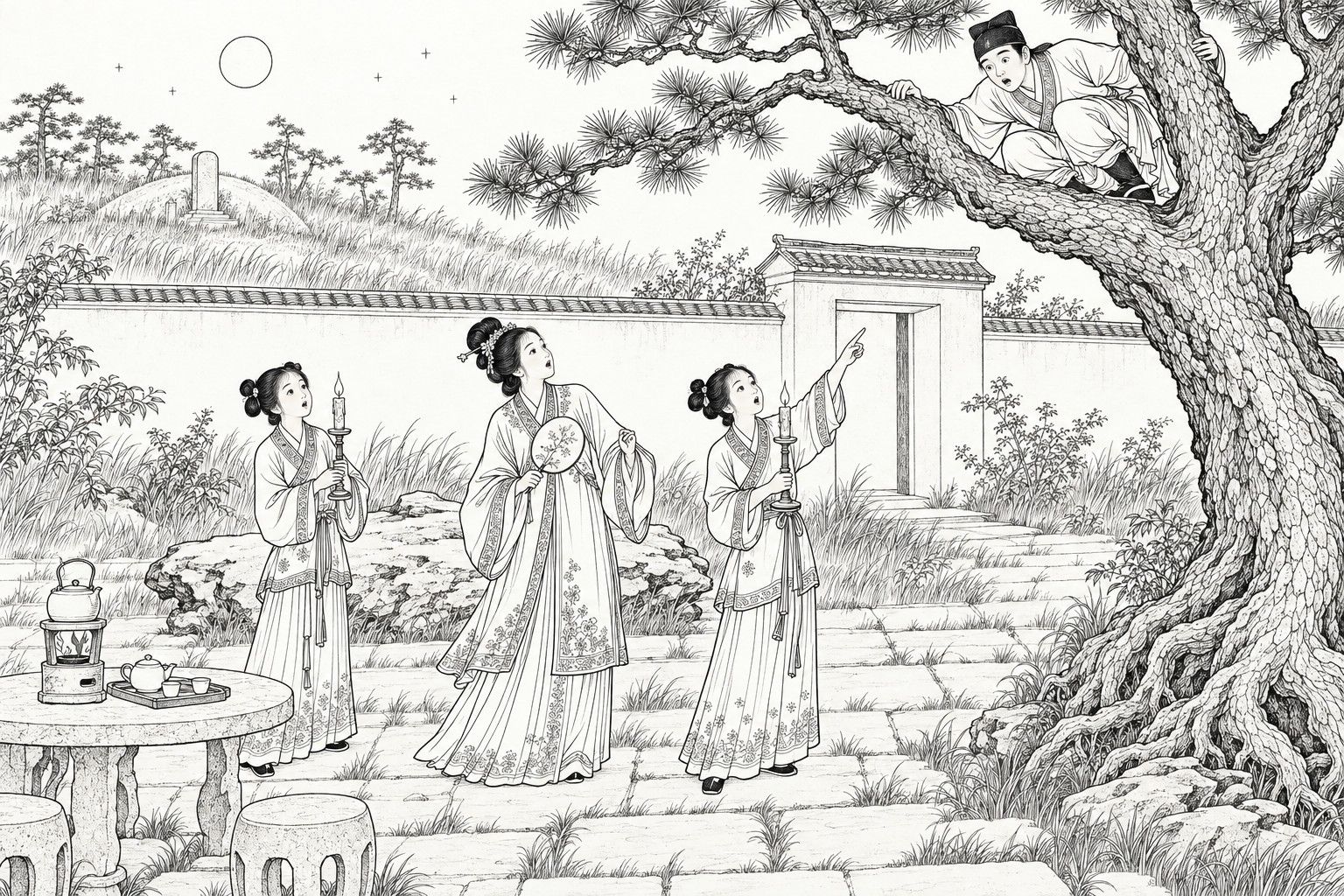
至瓊州北郭,日已曛暮。問秦女村,迄無知者。望北行四五里,星月已燦,芳草迷目,曠無逆旅,窘甚。見道側一墓,思欲傍墳棲止,大懼虎狼。因攀樹猱升,蹲踞其上。聽松聲謖謖,宵蟲哀奏,中心忐忑,悔至如燒。忽聞人聲在下,俯瞰之,庭院宛然;一麗人坐石上,雙鬟挑畫燭,分侍左右。麗人左顧曰:「今夜月白星疏,華姑所贈團茶,可烹一盞,賞此良夜。」生意其鬼魅,毛髮森豎。不敢少息。忽婢子仰視曰:「樹上有人!」女驚起曰:「何處大膽兒,暗來窺人!」生大懼,無所逃隱,遂盤旋下,伏地乞宥。女近臨一睇,反恚為喜,曳與並坐。睨之,年可十七八,姿態艷絕。聽其言,亦非土音。問:「郎何之?」答云:「為人作寄書郵。」女曰:「野多暴客,露宿可虞。不嫌蓬蓽,願就稅駕。」邀生入。室惟一榻,命婢展兩被其上。生自慚形穢,願在下床。女笑曰:「佳客相逢,女元龍何敢高臥?」生不得已,遂與共榻,而惶恐不敢自舒。未幾,女暗中以纖手探入,輕捻脛股。生偽寐,若不覺知。又未幾,啟衾入,搖生,迄不動。女便下探隱處。乃停手悵然,悄悄出衾去。俄聞哭聲。生惶愧無以自容,恨天公之缺陷而已。女呼婢篝燈。婢見啼痕,驚問所苦。女搖首曰:「我自嘆吾命耳。」婢立榻前,耽望顏色。女曰:「可喚郎醒,遣放去。」生聞之,倍益慚怍;且懼宵半,茫茫無所復之。
至琼州北郭,日已曛暮。问秦女村,迄无知者。望北行四五里,星月已灿,芳草迷目,旷无逆旅,窘甚。见道侧一墓,思欲傍坟栖止,大惧虎狼。因攀树猱升,蹲踞其上。听松声谡谡,宵虫哀奏,中心忐忑,悔至如烧。忽闻人声在下,俯瞰之,庭院宛然;一丽人坐石上,双鬟挑画烛,分侍左右。丽人左顾曰:「今夜月白星疏,华姑所赠团茶,可烹一盏,赏此良夜。」生意其鬼魅,毛发森竖。不敢少息。忽婢子仰视曰:「树上有人!」女惊起曰:「何处大胆儿,暗来窥人!」生大惧,无所逃隐,遂盘旋下,伏地乞宥。女近临一睇,反恚为喜,曳与并坐。睨之,年可十七八,姿态艳绝。听其言,亦非土音。问:「郎何之?」答云:「为人作寄书邮。」女曰:「野多暴客,露宿可虞。不嫌蓬荜,愿就税驾。」邀生入。室惟一榻,命婢展两被其上。生自惭形秽,愿在下床。女笑曰:「佳客相逢,女元龙何敢高卧?」生不得已,遂与共榻,而惶恐不敢自舒。未几,女暗中以纤手探入,轻捻胫股。生伪寐,若不觉知。又未几,启衾入,摇生,迄不动。女便下探隐处。乃停手怅然,悄悄出衾去。俄闻哭声。生惶愧无以自容,恨天公之缺陷而已。女呼婢篝灯。婢见啼痕,惊问所苦。女摇首曰:「我自叹吾命耳。」婢立榻前,耽望颜色。女曰:「可唤郎醒,遣放去。」生闻之,倍益惭怍;且惧宵半,茫茫无所复之。
By the time he reached the north wall of Qiongzhou, dusk had fallen. He asked for Qin Girl Village, but no one had heard of it. He walked north four or five li. The moon and stars were bright by now, the tall grass blurred before his eyes, and there was no inn anywhere in the wilderness. He was in a sorry plight. Seeing a grave by the road, he thought of resting against the mound, but he was terrified of tigers and wolves. So he climbed a tree like a monkey and crouched in its branches. The wind soughed in the pines and the night insects shrilled mournfully; his heart pounded, and his regret burned like fire. Suddenly he heard voices below. He looked down, and there was a courtyard, plain as day. A beautiful woman sat on a stone, and two maids with their hair in double knots held painted candles on either side of her. The lady turned to her left and said, “The moon is white tonight and the stars are few. Brew a cup of the tea cake Aunt Hua gave us, and we will enjoy this fine night.” Lian took them for ghosts or goblins, and his hair stood on end. He dared not breathe. Suddenly a maid looked up and said, “There is someone in the tree!” The woman started up. “What bold rascal is this, spying on people in the dark?” Lian was terrified. There was nowhere to run or hide, so he slid down the trunk and lay on the ground begging pardon. She came close and gave him one look, and her anger turned to pleasure. She pulled him up to sit beside her. He stole a glance: she was about seventeen or eighteen, and dazzling in looks and bearing. From her speech, she was not from these parts either. “Where are you going, sir?” she asked. “I am carrying a letter for someone,” he said. “There are many violent men in the wilds,” she said. “It is dangerous to sleep in the open. If you do not mind a humble hut, I hope you will rest here.” She invited him in. There was only one bed in the room, and she had the maid spread two quilts on it. Lian, ashamed of what he was, asked to sleep on the low couch. She laughed. “When I meet so fine a guest, how could I play the lady Yuanlong and keep the high bed to myself?” He had no choice but to share the bed with her, but he was too frightened to stretch out. Before long, in the dark, she slipped a slender hand under his quilt and lightly pinched his leg and thigh. He pretended to be asleep, as though he felt nothing. Before long again she opened his quilt, got in and shook him, but he never moved. Then she reached down to his private parts. Her hand stopped. Disappointed, she quietly left his quilt. In a moment he heard her weeping. Lian was so ashamed and frightened he wished he could vanish, and could only curse Heaven for the flaw it had made in him. The woman called the maid to light a lamp. The maid saw the traces of tears and asked in alarm what was wrong. The woman shook her head. “I am only sighing over my own fate.” The maid stood by the bed, watching her face. The woman said, “Wake the gentleman and send him away.” Hearing this, Lian was more ashamed than ever; and he was afraid too, in the middle of the night, with nowhere in the darkness to go.
籌念間,一婦人排闥入。婢白:「華姑來。」微窺之,年約五十餘,猶風格。見女未睡,便致詰問。女未答。又視榻上有臥者,遂問:「共榻何人?」婢代答:「夜一少年郎寄此宿。」婦笑曰:「不知巧娘諧花燭。」見女啼淚未乾,驚曰:「合巹之夕,悲啼不倫;將勿郎君粗暴也。」女不言,益悲。婦欲捋衣視生,一振衣,書落榻上。婦取視,駭曰:「我女筆意也!」拆讀嘆吒。女問之。婦云:「是三姐家報,言吳郎已死,煢無所依,且為奈何?」女曰:「彼固云為人寄書,幸未遣之去。」婦呼生起,究詢書所自來。生備述之。婦曰:「遠煩寄書,當何以報?」又熟視生,笑問:「何迕巧娘?」生言:「不自知罪。」又詰女。女嘆曰:「自憐生適閹寺,沒奔啄,以木代口,閹人人,是以悲耳。婦顧生曰:「慧黠兒,固雄而雌者耶?是我之客,不可久溷他人。」遂導生入東廂,探手于褲誇而驗之。笑曰:「無怪巧娘零涕。然幸有根蒂,猶可為力。」挑燈遍翻箱簏,得黑丸,授生,令即吞下,秘囑勿嘩,乃出。生獨臥籌思,不知藥醫何症。將比五更,初醒,覺臍下熱氣一縷,直沖隱處,蠕蠕然似有物垂股際;自探之,身已偉男。心驚喜,如乍膺九錫。櫺色才分,婦即入,以炊餅納生室,叮囑耐坐,反關其戶。出語巧娘曰:「郎有寄書勞,將留招三娘來,與訂姊妹交。且復閉置,免人厭煩。」乃出門去。生迴旋無聊,時近門隙,如鳥窺籠。望見巧娘,輒欲招呼自呈,慚訥而止。延及夜分,婦始攜女歸。發扉曰:「悶煞郎君矣!三娘可來拜謝。」途中人逡巡入,向生斂衽。婦命相呼以兄妹。巧娘笑曰:「姊妹亦可。」並出堂中,團坐置飲。飲次,巧娘戲問:「寺人亦動心佳麗否?」生曰:「跛者不忘履,盲者不忘視。」相與粲然。
筹念间,一妇人排闼入。婢白:「华姑来。」微窥之,年约五十余,犹风格。见女未睡,便致诘问。女未答。又视榻上有卧者,遂问:「共榻何人?」婢代答:「夜一少年郎寄此宿。」妇笑曰:「不知巧娘谐花烛。」见女啼泪未干,惊曰:「合卺之夕,悲啼不伦;将勿郎君粗暴也。」女不言,益悲。妇欲捋衣视生,一振衣,书落榻上。妇取视,骇曰:「我女笔意也!」拆读叹咤。女问之。妇云:「是三姐家报,言吴郎已死,茕无所依,且为奈何?」女曰:「彼固云为人寄书,幸未遣之去。」妇呼生起,究询书所自来。生备述之。妇曰:「远烦寄书,当何以报?」又熟视生,笑问:「何迕巧娘?」生言:「不自知罪。」又诘女。女叹曰:「自怜生适阉寺,没奔啄,以木代口,阉人人,是以悲耳。妇顾生曰:「慧黠儿,固雄而雌者耶?是我之客,不可久溷他人。」遂导生入东厢,探手于裤夸而验之。笑曰:「无怪巧娘零涕。然幸有根蒂,犹可为力。」挑灯遍翻箱簏,得黑丸,授生,令即吞下,秘嘱勿哗,乃出。生独卧筹思,不知药医何症。将比五更,初醒,觉脐下热气一缕,直冲隐处,蠕蠕然似有物垂股际;自探之,身已伟男。心惊喜,如乍膺九锡。櫺色才分,妇即入,以炊饼纳生室,叮嘱耐坐,反关其户。出语巧娘曰:「郎有寄书劳,将留招三娘来,与订姊妹交。且复闭置,免人厌烦。」乃出门去。生回旋无聊,时近门隙,如鸟窥笼。望见巧娘,辄欲招呼自呈,惭讷而止。延及夜分,妇始携女归。发扉曰:「闷煞郎君矣!三娘可来拜谢。」途中人逡巡入,向生敛衽。妇命相呼以兄妹。巧娘笑曰:「姊妹亦可。」并出堂中,团坐置饮。饮次,巧娘戏问:「寺人亦动心佳丽否?」生曰:「跛者不忘履,盲者不忘视。」相与粲然。
While he was turning this over, a woman pushed the door open and came in. “Aunt Hua is here,” said the maid. Lian stole a look at her: she was about fifty, but still had some style. Seeing that the young woman had not gone to sleep, she asked what was the matter. The young woman did not answer. Then the older woman saw someone lying on the bed and asked, “Who is sharing your bed?” The maid answered for her: “A young gentleman came tonight and asked to stay.” The woman laughed. “I did not know Qiaoniang had lit the wedding candles.” Seeing the tears still wet on the girl’s face, she said in surprise, “Weeping on your wedding night is hardly fitting. Was the young man rough with you?” The young woman said nothing, and wept the harder. The older woman went to pull back Lian’s clothes and look at him; at one shake of the clothes, the letter fell onto the bed. She picked it up and looked at it in astonishment. “This is my daughter’s hand!” She broke it open, read it, and sighed. The young woman asked what was wrong. “It is a letter home from Sanniang,” said the woman. “She says young Wu is dead and she is left alone with no one to rely on. What is to be done?” “He did say he was carrying a letter for someone,” said the young woman. “Luckily we had not sent him away.” The woman called Lian to get up and asked him exactly where the letter had come from. He told her everything. “You have come a long way to bring this letter,” she said. “How shall I repay you?” She looked him over again and asked, smiling, “How did you offend Qiaoniang?” “I do not know what I did wrong,” said Lian. She asked the young woman. Qiaoniang sighed. “I pity myself. In life I was married to a eunuch, and in death I have given myself to a gelded man. That is why I weep.” The older woman turned to Lian. “So, my clever lad, you are a male who is really a female? You are my guest; you must not trouble someone else any longer.” She led him into the east wing, put her hand into the crotch of his trousers and felt him. She laughed. “No wonder Qiaoniang was in tears. But luckily there is a root there, so something can still be done.” She lit a lamp and rummaged through every chest and basket, found a black pill and gave it to him, telling him to swallow it at once. She told him in secret to make no noise, and went out. Lian lay alone thinking, wondering what the medicine could cure. Toward the fifth watch he woke for the first time and felt a thread of heat run from below his navel straight down to his private parts; something stirred and seemed to hang between his thighs. He felt for himself: he was a man now, and a big one. He was astonished and overjoyed, as if he had just received the Nine Bestowals. As soon as light showed at the window lattice, the woman came in, put some steamed buns in his room, told him to sit patiently, and locked the door behind her. Outside, she said to Qiaoniang, “The young man has had the trouble of bringing our letter. I am going to keep him here till I fetch Sanniang, and the two can swear to be sisters. Meanwhile I have shut him in again, so he will not be a nuisance to anyone.” Then she went out of the gate. Lian paced about with nothing to do, going now and then to the crack of the door like a bird peering out of its cage. When he caught sight of Qiaoniang he longed to call out and show her what he now was, but shame tied his tongue. Not until midnight did the woman come back with her daughter. She opened the door. “You must be bored to death, sir! Sanniang, come and thank him.” The young woman he had met on the road came in hesitantly and curtsied to him. Her mother told them to call each other brother and sister. Qiaoniang laughed. “Sisters would do as well.” They all went out to the hall, sat in a circle and set out wine. As they drank, Qiaoniang asked teasingly, “Can a palace eunuch be stirred by a beauty too?” Lian said, “The lame never forget walking, nor the blind seeing.” They all burst out laughing.
巧娘以三娘勞頓,迫令安置。婦顧三娘,俾與生俱。三娘羞暈不行。婦曰:「此丈夫而巾幗者,何畏之?」敦促偕去。私囑生曰:「陰為吾婿,陽為吾子,可也。」生喜,捉臂登床,發硎新試,其快可知。既于枕上問女:「巧娘何人?」曰:「鬼也。才色無匹,而時命蹇落。適毛家小郎子,病閹,十八歲而不能人,因邑邑不暢,齎恨如冥。」生驚,疑三娘亦鬼。女曰:「實告君,妾非鬼,狐耳。巧娘獨居無耦,我母子無家,借廬棲止。」生大愕。女云:「無懼,雖故鬼狐,非相禍者。」由此日共談宴。雖知巧娘非人,而心愛其娟好,獨恨自獻無隙。生蘊藉,善諛噱,頗得巧娘憐。一日,華氏母子將他往,復閉生室中。生悶氣,繞室隔扉呼巧娘。巧娘命婢歷試數鑰,乃得啟。生附耳請間。巧娘遣婢去。生挽就寢榻,偎向之。女戲掬臍下,曰:「惜可兒此處闕然。」語未竟,觸手盈握。驚曰:「何前之渺渺,而遽累然!」生笑曰:「前羞見客,故縮,今以誚謗難堪,聊作蛙怒耳。」遂相綢繆。已而恚曰:「今乃知閉戶有因。昔母子流蕩棲無所,假廬居之。三娘從學刺繡,妾曾不少秘惜。乃妒忌如此!」生勸慰之,且以情告。巧娘終銜之。生曰:「密之,華姑囑我嚴。」語未及已,華姑掩入。二人皇遽方起。華姑嗔目,問:「誰啟扉?」巧娘笑逆自承。華姑益怒,聒絮不已。巧娘故哂曰:「阿姥亦大笑人!是丈夫而巾幗者,何能為?」三娘見母與巧娘苦相抵,意不自安,以一身調停兩間,始各拗怒為喜。巧娘言雖憤烈,然自是屈意事三娘。但華姑晝夜閑防,兩情不得自展,眉目含情而已。
巧娘以三娘劳顿,迫令安置。妇顾三娘,俾与生俱。三娘羞晕不行。妇曰:「此丈夫而巾帼者,何畏之?」敦促偕去。私嘱生曰:「阴为吾婿,阳为吾子,可也。」生喜,捉臂登床,发硎新试,其快可知。既于枕上问女:「巧娘何人?」曰:「鬼也。才色无匹,而时命蹇落。适毛家小郎子,病阉,十八岁而不能人,因邑邑不畅,赍恨如冥。」生惊,疑三娘亦鬼。女曰:「实告君,妾非鬼,狐耳。巧娘独居无耦,我母子无家,借庐栖止。」生大愕。女云:「无惧,虽故鬼狐,非相祸者。」由此日共谈宴。虽知巧娘非人,而心爱其娟好,独恨自献无隙。生蕴藉,善谀噱,颇得巧娘怜。一日,华氏母子将他往,复闭生室中。生闷气,绕室隔扉呼巧娘。巧娘命婢历试数钥,乃得启。生附耳请间。巧娘遣婢去。生挽就寝榻,偎向之。女戏掬脐下,曰:「惜可儿此处阙然。」语未竟,触手盈握。惊曰:「何前之渺渺,而遽累然!」生笑曰:「前羞见客,故缩,今以诮谤难堪,聊作蛙怒耳。」遂相绸缪。已而恚曰:「今乃知闭户有因。昔母子流荡栖无所,假庐居之。三娘从学刺绣,妾曾不少秘惜。乃妒忌如此!」生劝慰之,且以情告。巧娘终衔之。生曰:「密之,华姑嘱我严。」语未及已,华姑掩入。二人皇遽方起。华姑嗔目,问:「谁启扉?」巧娘笑逆自承。华姑益怒,聒絮不已。巧娘故哂曰:「阿姥亦大笑人!是丈夫而巾帼者,何能为?」三娘见母与巧娘苦相抵,意不自安,以一身调停两间,始各拗怒为喜。巧娘言虽愤烈,然自是屈意事三娘。但华姑昼夜闲防,两情不得自展,眉目含情而已。
Since Sanniang was tired from the journey, Qiaoniang made her go to bed. Her mother looked at Sanniang and told her to sleep with Lian. Sanniang blushed and would not go. “He is a man in a woman’s headdress,” said her mother. “What is there to fear?” She pressed them to go together, and whispered to Lian, “Be my son-in-law in secret and my son in public; that will do.” Lian was delighted. He took her by the arm and led her to bed: a blade fresh from the whetstone, tried for the first time; you can imagine the pleasure. Afterward, on the pillow, he asked her, “Who is Qiaoniang?” “A ghost,” she said. “Her talent and beauty have no equal, but fate was against her. She was married to a young man of the Mao family who was impotent from illness; at eighteen he still could not be a husband. She pined, joyless, and carried her grievance down into the dark.” Lian was startled, and suspected that Sanniang was a ghost too. “To tell you the truth,” she said, “I am not a ghost. I am a fox. Qiaoniang lives alone with no mate, and my mother and I have no home, so we borrowed her house to stay in.” Lian was astounded. “Do not be afraid,” she said. “Ghosts and foxes we may be, but we mean you no harm.” From then on they talked and feasted together every day. Though Lian knew Qiaoniang was not human, he loved her delicate beauty, and only regretted that he found no chance to offer himself. He was refined, and good at flattery and jokes, and Qiaoniang grew fond of him. One day Aunt Hua and her daughter were going off somewhere, and again shut him in his room. Lian, sulking, went round the room calling to Qiaoniang through the door. Qiaoniang had her maid try one key after another until the door opened. Lian whispered in her ear, asking to see her alone. Qiaoniang sent the maid away. Lian drew her to the bed and nestled against her. She teasingly cupped him below the navel and said, “A pity, my darling, that you have nothing here.” Before she had finished speaking, her hand was full. “How was it so tiny before,” she said in surprise, “and now so suddenly heavy?” Lian laughed. “Before, it was shy of meeting a guest, so it shrank. Now it cannot bear your mockery, so it has puffed itself up like an angry frog.” Then they made love. Afterward she said resentfully, “Now I know why the door was locked. Mother and daughter were drifting about with nowhere to live, and I lent them my house. Sanniang learned embroidery from me, and I never kept back the least secret. And she is this jealous!” Lian soothed her, and told her what had really happened. But Qiaoniang went on bearing a grudge. “Keep this secret,” said Lian. “Aunt Hua was strict with me.” Before he had finished, Aunt Hua slipped in. The two scrambled up in a fluster. Aunt Hua glared. “Who opened the door?” Qiaoniang laughed, went to meet her and owned up. Aunt Hua grew angrier and scolded on and on. Qiaoniang said with a mocking smile, “Old mother, you are too absurd! He is a man in a woman’s headdress. What could he do?” Sanniang, seeing her mother and Qiaoniang so bitterly at odds, was uneasy, and put herself between them to make peace, until each at last turned her anger to a smile. Fierce as Qiaoniang’s words had been, from then on she bent herself to please Sanniang. But Aunt Hua watched them day and night, and the lovers could never be alone; they could only speak with their eyes.
一日,華姑謂生曰:「吾兒姊妹皆已奉事君。念居此非計,君宜歸告父母,早訂永約。」即治裝促生行。二女相嚮,容顏悲惻。而巧娘尤不可堪,淚滾滾如斷貫珠,殊無已時。華姑排止之,便曳生出。至門外,則院宇無存,但見荒塚。華姑送至舟上,曰:「君行後,老身攜兩女僦屋于貴邑。倘不忘夙好,李氏廢園中,可待親迎。」生乃歸。
一日,华姑谓生曰:「吾儿姊妹皆已奉事君。念居此非计,君宜归告父母,早订永约。」即治装促生行。二女相向,容颜悲恻。而巧娘尤不可堪,泪滚滚如断贯珠,殊无已时。华姑排止之,便曳生出。至门外,则院宇无存,但见荒冢。华姑送至舟上,曰:「君行后,老身携两女僦屋于贵邑。倘不忘夙好,李氏废园中,可待亲迎。」生乃归。
One day Aunt Hua said to Lian, “My daughter and her sister have both served you now. Staying on here is no plan for the future. You should go home and tell your parents, and settle the marriage soon.” She packed his things at once and hurried him off. The two young women looked at each other, their faces full of grief, and Qiaoniang most of all could not bear it: her tears rolled down like pearls from a broken string and would not stop. Aunt Hua pushed her aside and pulled Lian out. Outside the gate, the courtyard and buildings were gone; there was only a desolate grave. Aunt Hua saw him onto the boat and said, “After you have gone, I will bring both girls and rent a house in your county. If you do not forget our old affection, we will be waiting in the derelict garden of the Li family for you to come and fetch your bride.” So Lian went home.
時傅父覓子不得,正切焦慮,見子歸,喜出非望。生略述崖末,兼至華氏之訂。父曰:「妖言何足聽信?汝尚能生還者,徒以閹廢故;不然,死矣!」生曰:「彼雖異物,情亦猶人;況又慧麗,娶之亦不為戚黨笑。」父不言,但嗤之。生乃退。而技癢不安其分,輒私婢;漸至白晝宣淫,意欲駭聞翁媼。一日,為小婢所窺,奔告母,母不信,薄觀之,始駭。呼婢研究,盡得其狀。喜極,逢人宣暴,以示子不閹,將論婚于世族。生私白母:「非華氏不娶。」母曰:「世不乏美婦人,何必鬼物?」生曰:「兒非華姑,無以知人道,背之不祥。」傅父從之,遣一僕一嫗往覘之。出東郭四五里,尋李氏園,見敗垣竹樹中,縷縷有炊煙。嫗下乘,直造其闥,則母子拭幾濯溉,似有所伺。嫗拜致主命。見三娘,驚曰:「此即吾家小主婦耶?我見猶憐,何怪公子魂思而夢繞之。」便問阿姊。華姑嘆曰:「是我假女,三日前,忽殂謝去。」因以酒食餉嫗及僕。嫗歸,備道三娘容止,父母皆喜。末陳巧娘死耗,生惻惻欲涕。至親迎之夜,見華姑親問之,答云:「已投生北地矣。」生欷歔久之。迎三娘歸,而終不能忘情巧娘,凡有自瓊來者,必召見問之。或言秦女墓夜聞鬼哭。生詫其異,入告三娘。三娘沉吟良久,泣下曰:「妾負姊矣!」詰之,答云:「妾母子來時,實未使聞。茲之怨啼,將無是姊?向欲相告,恐彰母過。」生聞之,悲已而喜,即命輿,宵晝兼程,馳詣其墓。叩墓木而呼曰:「巧娘,巧娘!某在斯。」俄見女郎捧嬰兒,自穴中出,舉首酸嘶,怨望無已。生亦涕下。探懷問誰氏子,巧娘曰:「是君之遺孽也。誕三月矣。」生嘆曰:「誤聽華姑言,使母子埋懮地下,罪將安辭!」乃與同輿,航海而歸。抱子告母,母視之,體貌豐偉,不類鬼物,益喜。二女諧和,事姑孝。後傅父病,延醫來。巧娘曰:「疾不可為,魂已離舍。」督治冥具,既竣而卒。兒長,絕肖父;尤慧,十四游泮。高郵翁紫霞,客于廣而聞之。地名遺脫,亦未知所終矣。
时傅父觅子不得,正切焦虑,见子归,喜出非望。生略述崖末,兼至华氏之订。父曰:「妖言何足听信?汝尚能生还者,徒以阉废故;不然,死矣!」生曰:「彼虽异物,情亦犹人;况又慧丽,娶之亦不为戚党笑。」父不言,但嗤之。生乃退。而技痒不安其分,辄私婢;渐至白昼宣淫,意欲骇闻翁媪。一日,为小婢所窥,奔告母,母不信,薄观之,始骇。呼婢研究,尽得其状。喜极,逢人宣暴,以示子不阉,将论婚于世族。生私白母:「非华氏不娶。」母曰:「世不乏美妇人,何必鬼物?」生曰:「儿非华姑,无以知人道,背之不祥。」傅父从之,遣一仆一妪往觇之。出东郭四五里,寻李氏园,见败垣竹树中,缕缕有炊烟。妪下乘,直造其闼,则母子拭几濯溉,似有所伺。妪拜致主命。见三娘,惊曰:「此即吾家小主妇耶?我见犹怜,何怪公子魂思而梦绕之。」便问阿姊。华姑叹曰:「是我假女,三日前,忽殂谢去。」因以酒食饷妪及仆。妪归,备道三娘容止,父母皆喜。末陈巧娘死耗,生恻恻欲涕。至亲迎之夜,见华姑亲问之,答云:「已投生北地矣。」生欷歔久之。迎三娘归,而终不能忘情巧娘,凡有自琼来者,必召见问之。或言秦女墓夜闻鬼哭。生诧其异,入告三娘。三娘沉吟良久,泣下曰:「妾负姊矣!」诘之,答云:「妾母子来时,实未使闻。兹之怨啼,将无是姊?向欲相告,恐彰母过。」生闻之,悲已而喜,即命舆,宵昼兼程,驰诣其墓。叩墓木而呼曰:「巧娘,巧娘!某在斯。」俄见女郎捧婴儿,自穴中出,举首酸嘶,怨望无已。生亦涕下。探怀问谁氏子,巧娘曰:「是君之遗孽也。诞三月矣。」生叹曰:「误听华姑言,使母子埋懮地下,罪将安辞!」乃与同舆,航海而归。抱子告母,母视之,体貌丰伟,不类鬼物,益喜。二女谐和,事姑孝。后傅父病,延医来。巧娘曰:「疾不可为,魂已离舍。」督治冥具,既竣而卒。儿长,绝肖父;尤慧,十四游泮。高邮翁紫霞,客于广而闻之。地名遗脱,亦未知所终矣。
Meanwhile Lian’s father had searched for his son without finding him, and was sick with worry. When his son came home he was overjoyed beyond all hope. Lian told him roughly what had happened, and of his betrothal to the Hua family. His father said, “Why listen to a demon’s talk? The only reason you came back alive is that you were useless as a eunuch. Otherwise you would be dead!” “They may be strange creatures,” said Lian, “but they have feelings like people. And she is clever and lovely besides; marrying her would not make us a laughingstock among our kin.” His father said nothing, only snorted. Lian withdrew. But his new skill itched to be used and he could not keep to his place: he took to sleeping with the maids in secret, and by degrees grew bold enough to do it in broad daylight, hoping word would reach the old couple and startle them. One day a little maid saw him and ran to tell his mother. His mother did not believe it until she went close and looked, and then she was astonished. She called the maid in and questioned her, and got the whole story. She was overjoyed and told everyone she met, to show that her son was no eunuch, and set about arranging a match with a great family. Lian told his mother privately, “I will marry no one but the Hua girl.” “There is no shortage of beautiful women in the world,” said his mother. “Why must it be a ghost?” Lian said, “If not for Aunt Hua, I would never have known how to be a man. To turn my back on her would bring bad luck.” His father gave in, and sent a manservant and an old woman to look into it. Four or five li outside the east wall they searched for the Li garden, and among broken walls and bamboo they saw a thread of cooking smoke. The old woman got down from her carriage and went straight to the door. Inside, mother and daughter were wiping the tables and washing the vessels, as if expecting someone. The old woman bowed and delivered her master’s message. When she saw Sanniang she exclaimed, “Is this our young mistress-to-be? Even I adore her at first sight; no wonder the young master’s soul longs for her and his dreams circle round her.” Then she asked about the elder sister. Aunt Hua sighed. “She was my adopted daughter. Three days ago she suddenly passed away.” She gave the old woman and the servant food and wine. When the old woman came home she described Sanniang’s looks and manners in full, and both parents were pleased. Last of all she gave the news of Qiaoniang’s death, and Lian was so grieved he nearly wept. On the night he went to fetch his bride, he saw Aunt Hua and asked her about it himself. “She has already been reborn somewhere in the north,” she answered. Lian sighed and sobbed for a long time. He brought Sanniang home, but he could never forget Qiaoniang, and whenever anyone came from Qiong he always sent for them and asked. Someone said that at the Qin Girl’s grave a ghost could be heard weeping at night. Lian was struck by it, and went in and told Sanniang. Sanniang was silent a long while; then she wept and said, “I have wronged my sister!” He pressed her, and she answered, “When my mother and I came here, we never told her. This weeping and complaining—could it be her? I meant to tell you before, but I was afraid of exposing my mother’s fault.” At this Lian’s grief turned to joy. He called for a carriage at once and hurried to the grave, travelling day and night. He knocked on the tree by the grave and called, “Qiaoniang! Qiaoniang! I am here.” A moment later a young woman came out of the grave holding a baby. She raised her head and sobbed bitterly, reproaching him without end. Lian wept too. He reached for the child in her arms and asked whose it was. “This is the seed you left behind,” said Qiaoniang. “He was born three months ago.” Lian sighed. “I listened to Aunt Hua and left mother and child buried in sorrow underground. How can I escape the blame?” He took them in the carriage with him, crossed the sea and went home. He carried the boy in to his mother; she looked him over, saw that he was plump and sturdy and nothing like a ghost, and was all the happier. The two wives lived in harmony and served their mother-in-law dutifully. Later Lian’s father fell ill and a doctor was sent for. Qiaoniang said, “The illness cannot be cured. His soul has already left its house.” She had the funeral things made ready, and as soon as they were finished he died. The boy grew up the very image of his father, and especially clever: at fourteen he entered the county school. Weng Zixia of Gaoyou heard this story while staying in Guangdong. The place names had dropped out of it, and no one knows how it all ended.