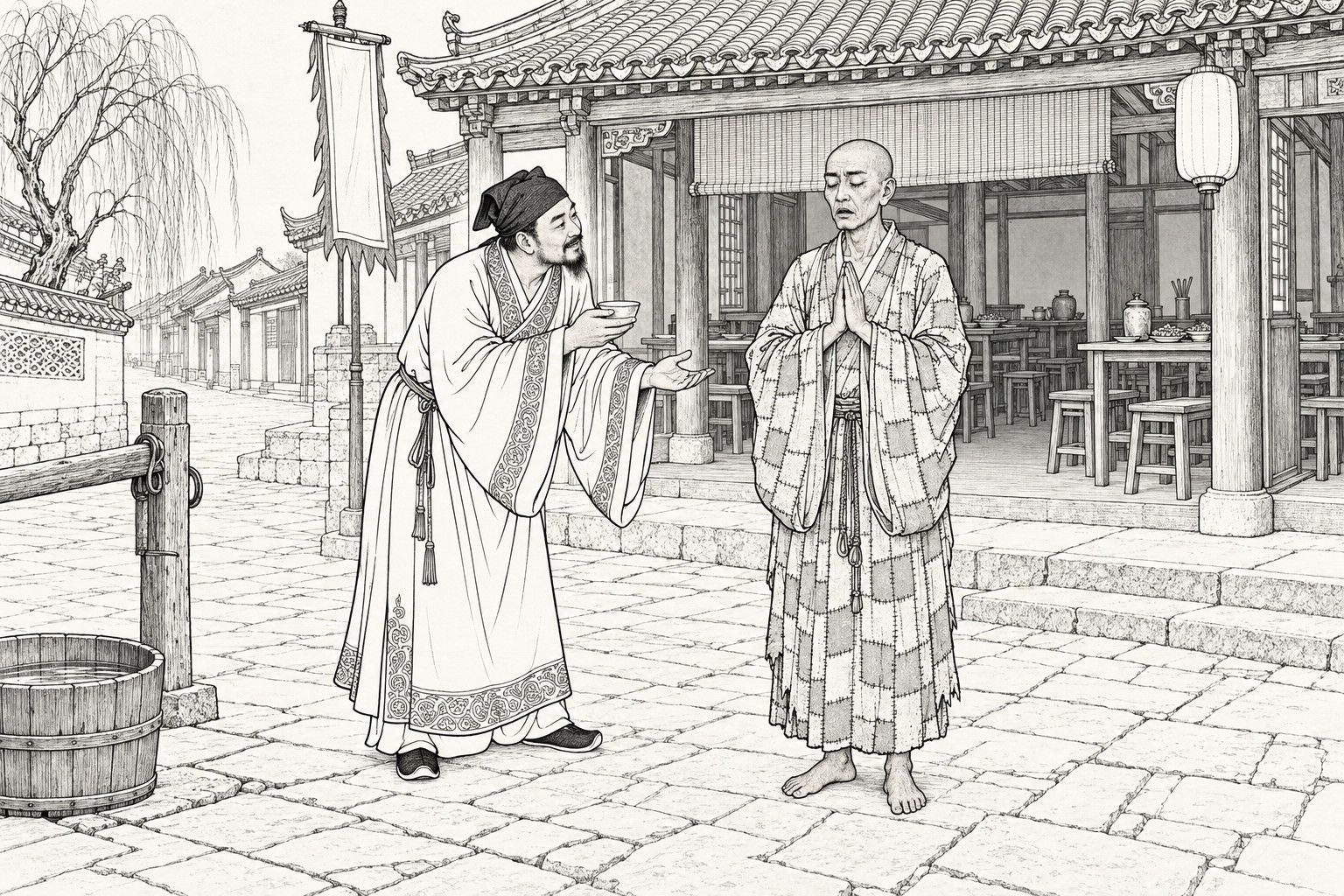
濟南一僧,不知何許人。赤足衣百衲,日于芙蓉﹑明湖諸館,誦經抄募。與以酒食錢粟,皆弗受;叩所需,又不答。終日未嘗見其餐飯。或勸之曰:「師既不茹葷酒,當募山村僻巷中,何日日往來于膻鬧之場?」僧合眸諷誦,睫毛長指許,若不聞。少旋,又語之。僧遽張目厲聲曰:「要如此化!」又誦不已。久之,自出而去。或從其後,固詰其必如此之故,走不應。叩之數四,又厲聲曰:「非汝所知!老僧要如此化!」
济南一僧,不知何许人。赤足衣百衲,日于芙蓉﹑明湖诸馆,诵经抄募。与以酒食钱粟,皆弗受;叩所需,又不答。终日未尝见其餐饭。或劝之曰:「师既不茹荤酒,当募山村僻巷中,何日日往来于膻闹之场?」僧合眸讽诵,睫毛长指许,若不闻。少旋,又语之。僧遽张目厉声曰:「要如此化!」又诵不已。久之,自出而去。或从其后,固诘其必如此之故,走不应。叩之数四,又厉声曰:「非汝所知!老僧要如此化!」
There was a monk in Jinan; no one knew where he came from. Barefoot, in a robe of a hundred patches, he went every day to the Furong, the Minghu and the other eating houses, chanting sutras and begging alms. Offered wine, food, money or grain, he refused it all; asked what he wanted, he gave no answer. No one ever saw him eat a meal. Someone advised him: “Master, since you take neither meat nor wine, you ought to beg in the mountain villages and quiet back lanes. Why come day after day to these places that reek of meat and noise?” The monk closed his eyes and went on chanting, his eyelashes nearly an inch long, as if he had not heard. After a little the man said it again. The monk’s eyes flew open and he said harshly, “This is how I mean to beg!” Then he went on chanting without a pause. After a long while he got up of his own accord and left. Someone followed him and pressed him to say why it had to be this way. He walked on without answering. Asked again and again, he said harshly once more, “It is not for you to know! This old monk means to beg this way!”
積數日,忽出南城,臥道側如僵,三日不動。居民恐其餓死,貽累近郭,因集勸他徙,欲飯飯之,欲錢錢之。僧瞑然不動。群搖而語之。僧怒,于衲中出短刀,自剖其腹,以手入內,理腸于道,而氣隨絕。眾駭告郡,藁葬之。異日為犬所穴,席見。踏之似空;發視之,席封如故,猶空繭然。
积数日,忽出南城,卧道侧如僵,三日不动。居民恐其饿死,贻累近郭,因集劝他徙,欲饭饭之,欲钱钱之。僧瞑然不动。群摇而语之。僧怒,于衲中出短刀,自剖其腹,以手入内,理肠于道,而气随绝。众骇告郡,藁葬之。异日为犬所穴,席见。踏之似空;发视之,席封如故,犹空茧然。
Some days later he suddenly went out past the south wall of the city and lay down by the roadside as stiff as a corpse, and for three days he did not move. The people living there were afraid that if he starved to death, the trouble would fall on everyone near the wall. So they gathered and urged him to move elsewhere: if he wanted food, they would feed him; if he wanted money, they would give him money. The monk lay with his eyes shut and did not stir. They all shook him and talked at him. The monk grew angry. He took a short knife from inside his patched robe, cut open his own belly, put his hand in, and laid out his entrails on the road; and with that his breath stopped. Horrified, the people reported it to the prefecture, and he was buried wrapped in a straw mat. Some days afterwards dogs dug into the grave and the mat showed through. Someone trod on it, and it seemed hollow. They uncovered it to look: the mat was still bound as before, like an empty cocoon.