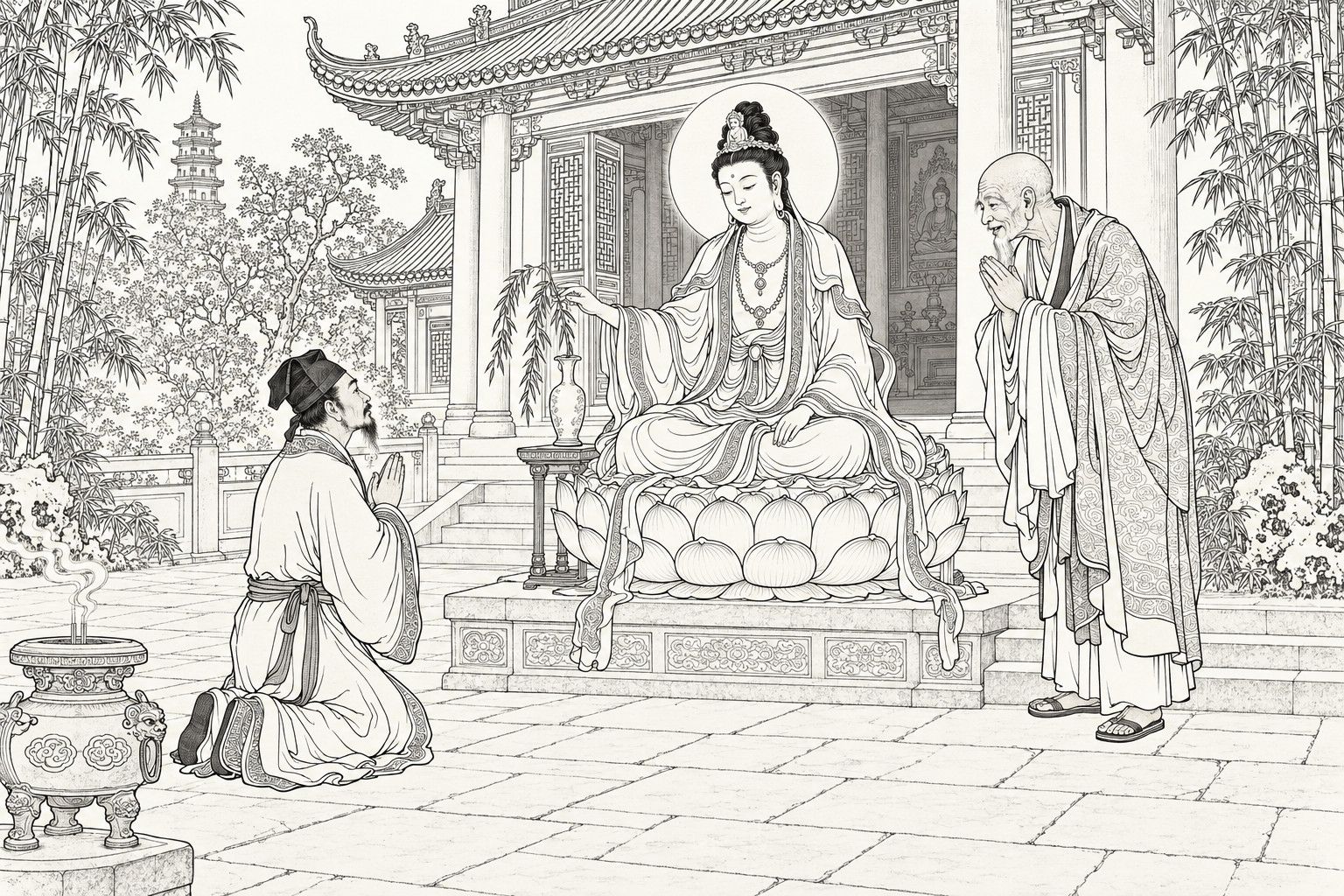
湯公名聘,辛丑進士。抱病彌留。忽覺下部熱氣,漸升而上:至股,則足死;至腹,則股又死;至心,心之死最難。凡自童稚以及瑣屑久忘之事,都隨心血來,一一潮過。如一善,則心中清淨寧貼;一惡,則懊憹煩燥,似油沸鼎中,其難堪之狀,口不能肖似之。猶憶七八歲時,曾探雀雛而斃之,只此一事,心頭熱血潮涌,食頃方過。直待平生所為,一一潮盡,乃覺熱氣縷縷然,穿喉入腦,自頂顛出,騰上如炊,逾數十刻期,魂乃離竅,忘軀殼矣。
汤公名聘,辛丑进士。抱病弥留。忽觉下部热气,渐升而上:至股,则足死;至腹,则股又死;至心,心之死最难。凡自童稚以及琐屑久忘之事,都随心血来,一一潮过。如一善,则心中清净宁贴;一恶,则懊憹烦燥,似油沸鼎中,其难堪之状,口不能肖似之。犹忆七八岁时,曾探雀雏而毙之,只此一事,心头热血潮涌,食顷方过。直待平生所为,一一潮尽,乃觉热气缕缕然,穿喉入脑,自顶颠出,腾上如炊,逾数十刻期,魂乃离窍,忘躯壳矣。
Lord Tang, whose name was Pin, passed the jinshi examination in a xinchou year. He fell ill and lay at the point of death. Suddenly he felt a heat in the lower part of his body, rising little by little. When it reached his thighs, his feet died; when it reached his belly, his thighs died in turn; when it reached his heart — the heart is the hardest of all to die. Everything from his earliest childhood, down to trifles long forgotten, came back with the heart’s blood, surging past one by one like a tide. At each good deed his heart was clear and calm and at peace; at each bad one he was tormented and fretful, as if oil were boiling in a cauldron, a misery no words could describe. He still remembered that at seven or eight he had taken some young sparrows from a nest and killed them: for that one thing alone the hot blood surged through his heart for as long as it takes to eat a meal before it passed. Only when everything he had done in his life had surged past and ebbed away did he feel the heat, thread by thread, pass through his throat into his brain and out at the crown of his head, rising like steam from a cooking pot. After more than several dozen quarter-hours his soul at last left its lodging, and he forgot his body altogether.
而渺渺無歸,漂泊郊路間。一巨人來,高幾盈尋,掇拾之,納諸袖中。入袖,則疊肩壓股,其人甚伙,薅惱悶氣,殆不可過。公頓思惟佛能解厄,因宣佛號,才三四聲,飄墮袖外。巨人復納之。三納三墮,巨人乃去之。公獨立彷徨,未知何往之善。憶佛在西土,乃遂西。無何,見路側一僧趺坐,趨拜問途。僧曰:「凡士子生死錄,文昌及孔聖司之,必兩處銷名,乃可他適。」公問其居,僧示以途,奔赴。
而渺渺无归,漂泊郊路间。一巨人来,高几盈寻,掇拾之,纳诸袖中。入袖,则叠肩压股,其人甚伙,薅恼闷气,殆不可过。公顿思惟佛能解厄,因宣佛号,才三四声,飘堕袖外。巨人复纳之。三纳三堕,巨人乃去之。公独立彷徨,未知何往之善。忆佛在西土,乃遂西。无何,见路侧一僧趺坐,趋拜问途。僧曰:「凡士子生死录,文昌及孔圣司之,必两处销名,乃可他适。」公问其居,僧示以途,奔赴。
But his soul drifted, far and vague, with nowhere to go, and wandered among the roads beyond the town. A giant came by, nearly eight feet tall, picked him up and tucked him into a sleeve. Inside the sleeve, shoulders were piled on shoulders and thighs pressed on thighs; there were a great many people in there, and it was so stifling and wretched that it could hardly be borne. Lord Tang suddenly thought that only the Buddha could deliver him from trouble, so he called on the Buddha’s name. He had called only three or four times when he floated down out of the sleeve. The giant put him back in. Three times he was put in and three times he fell out, and then the giant left him. Lord Tang stood alone, at a loss, not knowing which way it would be best to go. Remembering that the Buddha dwells in the Western Land, he went west. Before long he saw a monk sitting cross-legged by the roadside, hurried over, bowed and asked the way. “The registers of life and death for all scholars,” said the monk, “are kept by Wenchang and by the Sage Confucius. Your name must be struck off in both places before you can go anywhere else.” Lord Tang asked where they lived. The monk showed him the road, and he hurried off.
無幾,至聖廟,見宣聖南面坐。拜禱如前。宣聖言:「名籍之落,仍得帝君。」因指以路。公又趨之。見一殿閣,如王者居。俯身入,果有神人,如世所傳帝君像。伏祝之。帝君檢名曰:「汝心誠正,宜復有生理。但皮囊腐矣,非菩薩莫能為力。」因指示令急往。公從其教。俄見茂林修竹,殿宇華好。入,見螺髻莊嚴,金容滿月;瓶浸楊柳,翠碧垂煙。公肅然稽首,拜述帝君言。菩薩難之。公哀禱不已。旁有尊者白言:「菩薩施大法力,撮土可以為肉,折柳可以為骨。」菩薩即如所請,手斷柳枝,傾瓶中水,合淨土為泥,拍附公體。使童子攜送靈所,推而合之。棺中呻動,霍然病已。家人駭然集,扶而出之,計氣絕已斷七矣。
无几,至圣庙,见宣圣南面坐。拜祷如前。宣圣言:「名籍之落,仍得帝君。」因指以路。公又趋之。见一殿阁,如王者居。俯身入,果有神人,如世所传帝君像。伏祝之。帝君检名曰:「汝心诚正,宜复有生理。但皮囊腐矣,非菩萨莫能为力。」因指示令急往。公从其教。俄见茂林修竹,殿宇华好。入,见螺髻庄严,金容满月;瓶浸杨柳,翠碧垂烟。公肃然稽首,拜述帝君言。菩萨难之。公哀祷不已。旁有尊者白言:「菩萨施大法力,撮土可以为肉,折柳可以为骨。」菩萨即如所请,手断柳枝,倾瓶中水,合净土为泥,拍附公体。使童子携送灵所,推而合之。棺中呻动,霍然病已。家人骇然集,扶而出之,计气绝已断七矣。
Before long he came to the temple of the Sage Proclaimer and saw him seated facing south. He bowed and prayed as before. “To have a name taken off the rolls,” said the Sage, “you must still go to the Divine Lord,” and pointed out the way. Lord Tang hurried on. He saw a hall with pavilions like a king’s dwelling. Bending low, he went in, and there indeed was a god, just like the images of the Divine Lord that people know. He prostrated himself and prayed. The Divine Lord looked up his name and said, “Your heart is sincere and upright; you ought to have a way back to life. But your skin bag has rotted, and no one but the Bodhisattva can help you.” He pointed out the way and told him to hurry. Lord Tang did as he was told. In a moment he saw a lush wood and tall bamboo, and halls of great beauty. He went in and saw a figure with hair coiled like snail shells, grave and majestic, with a golden face round as the full moon; willow sprigs stood steeping in a vase, their jade green hanging like mist. Lord Tang bowed his head to the ground in awe and told what the Divine Lord had said. The Bodhisattva was reluctant. Lord Tang went on pleading and praying. A venerable arhat at the side spoke up: “If the Bodhisattva uses great power, a pinch of earth can become flesh and a broken willow twig can become bone.” The Bodhisattva did as asked: broke off a willow branch by hand, poured out the water in the vase, mixed it with pure earth into mud, and patted it onto Lord Tang’s body. Then an acolyte was sent to carry him back to where his coffin lay and push him in to join his body. A groan came from the coffin, and something stirred; all at once his illness was gone. His household gathered in alarm and helped him out. By their reckoning, his breath had stopped a full seven sevens before.