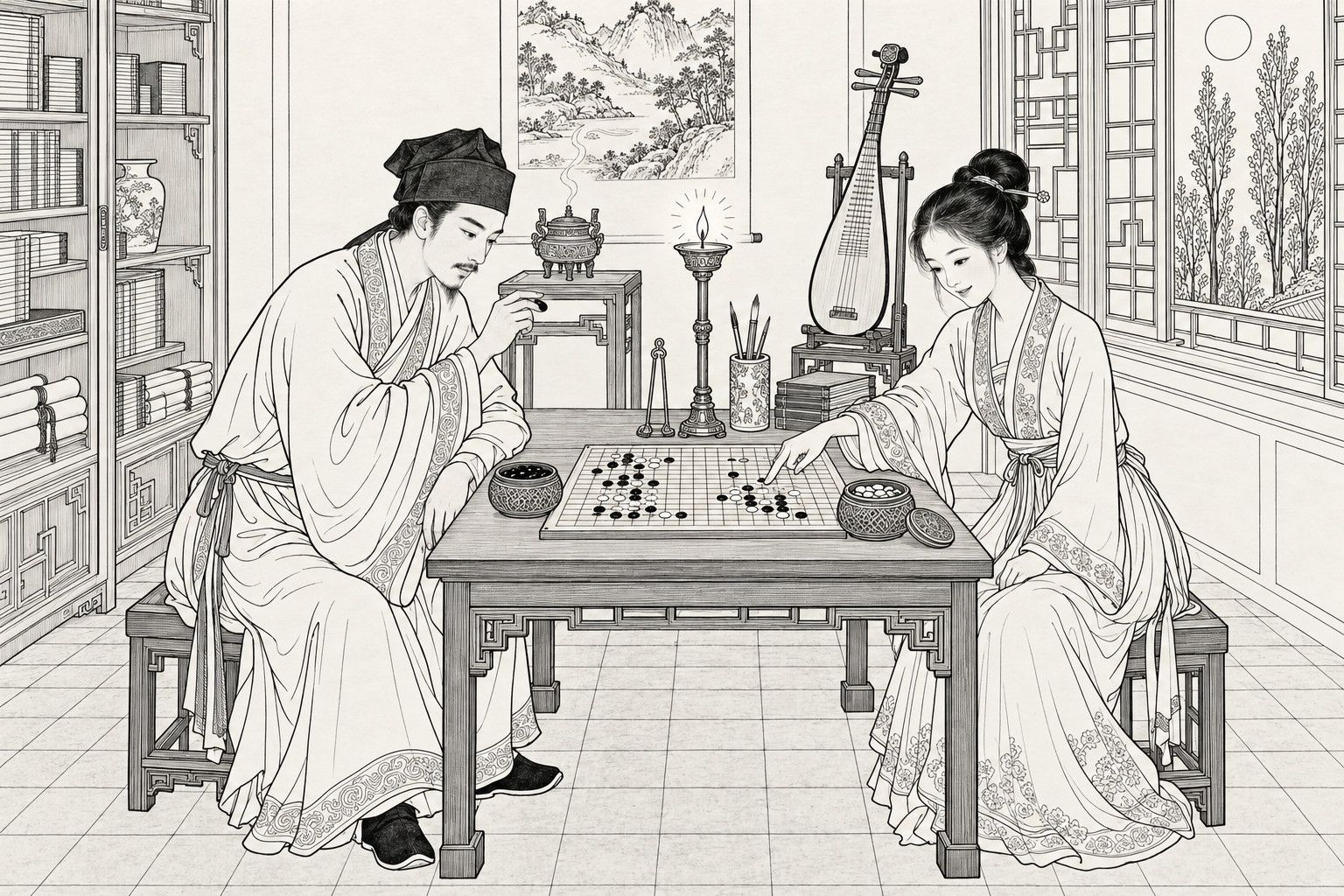
楊于畏,移居泗水之濱。齋臨曠野,牆外多古墓,夜聞白楊蕭蕭,聲如濤涌。夜闌秉燭,方復淒斷。忽牆外有人吟曰:「玄夜淒風卻倒吹,流螢惹草復沾幃。」反復吟誦,其聲哀楚。聽之,細婉似女子。疑之。明日,視牆外,並無人跡。惟有紫帶一條,遺荊棘中;拾歸,置諸窗上。向夜二更許,又吟如昨。楊移杌登望,吟頓輟。悟其為鬼,然心向慕之。
杨于畏,移居泗水之滨。斋临旷野,墙外多古墓,夜闻白杨萧萧,声如涛涌。夜阑秉烛,方复凄断。忽墙外有人吟曰:「玄夜凄风却倒吹,流萤惹草复沾帏。」反复吟诵,其声哀楚。听之,细婉似女子。疑之。明日,视墙外,并无人迹。惟有紫带一条,遗荆棘中;拾归,置诸窗上。向夜二更许,又吟如昨。杨移杌登望,吟顿辍。悟其为鬼,然心向慕之。
Yang Yuwei moved house to the banks of the Si River. His study looked out on open wilderness, and beyond its wall were many old graves. At night he heard the white poplars sighing, a sound like surging waves. One night, late, as he sat by his candle and the bleakness of it all was just coming over him again, someone outside the wall suddenly began to chant: “Black night, a bitter wind that blows back on itself; drifting fireflies brush the grass, then cling to the curtains.” Over and over the voice chanted the lines, sad and plaintive. Listening, he found it soft and delicate, like a woman’s. He wondered about it. The next day he looked outside the wall: there was no trace of anyone, only a purple sash left lying among the brambles. He picked it up, took it home and laid it on the windowsill. That night, at about the second watch, the chanting came again, just as before. Yang moved a stool over and climbed up to look, and at once the chanting stopped. He understood that it was a ghost; yet his heart went out to her.
次夜,伏伺牆頭。一更向盡,有女子珊珊自草中出,手扶小樹,低首哀吟。楊微嗽,女忽入荒草而沒。楊由是伺諸牆下,聽其吟畢,乃隔壁而續之曰:
「幽情苦緒何人見?翠袖單寒月上時。」
久之,寂然。楊乃入室。方坐,忽見麗者自外來,斂衽曰:「君子固風雅士,妾乃多所畏避。」楊喜,拉坐。瘦怯凝寒,若不勝衣。問:「何居里,久寄此間?」答曰:「妾隴西人,隨父流寓。十七暴疾殂謝,今二十餘年矣。九泉荒野,孤寂如鶩。所吟,乃妾自作,以寄幽恨者。思久不屬;蒙君代續,歡生泉壤。」楊欲與歡。蹙然曰:「夜臺朽骨,不比生人,如有幽歡,促人壽數。妾不忍禍君子也。」楊乃止。戲以手探胸,則雞頭之肉,依然處子。又欲視其裙下雙鉤。女俯首笑曰:「狂生太囉唣矣!」楊把玩之,則見月色錦襪,約彩線一縷。更視其一,則紫帶系之。問:「何不俱帶?」曰:「昨宵畏君而避,不知遺落何所。」楊曰:「為卿易之。」遂即窗上取以授女。女驚問何來,因以實告。女乃去線束帶。既翻案上書,忽見《連昌宮詞》,慨然曰:「妾生時最愛讀此,今視之,殆如夢寐!」與談詩文,慧黠可愛。剪燭西窗,如得良友。自此每夜但聞微吟,少頃即至。輒囑曰:「君秘勿宣。妾少膽怯,恐有惡客見侵。」楊諾之。兩人歡同魚水,雖不至亂,而閨閣之中,誠有甚于畫眉者。女每于燈下為楊寫書,字態端媚。又自選宮詞百首,錄誦之。使楊治棋枰,購琵琶。每夜教楊手談,不則挑弄弦索。作「蕉窗零雨」之曲,酸人胸臆;楊不忍卒聽,則為「曉苑鶯聲」之調,頓覺心懷暢適。挑燈作劇,樂輒忘曉。視窗上有曙色,則張皇遁去。
次夜,伏伺墙头。一更向尽,有女子珊珊自草中出,手扶小树,低首哀吟。杨微嗽,女忽入荒草而没。杨由是伺诸墙下,听其吟毕,乃隔壁而续之曰:
「幽情苦绪何人见?翠袖单寒月上时。」
久之,寂然。杨乃入室。方坐,忽见丽者自外来,敛衽曰:「君子固风雅士,妾乃多所畏避。」杨喜,拉坐。瘦怯凝寒,若不胜衣。问:「何居里,久寄此间?」答曰:「妾陇西人,随父流寓。十七暴疾殂谢,今二十余年矣。九泉荒野,孤寂如鹜。所吟,乃妾自作,以寄幽恨者。思久不属;蒙君代续,欢生泉壤。」杨欲与欢。蹙然曰:「夜台朽骨,不比生人,如有幽欢,促人寿数。妾不忍祸君子也。」杨乃止。戏以手探胸,则鸡头之肉,依然处子。又欲视其裙下双钩。女俯首笑曰:「狂生太啰唣矣!」杨把玩之,则见月色锦袜,约彩线一缕。更视其一,则紫带系之。问:「何不俱带?」曰:「昨宵畏君而避,不知遗落何所。」杨曰:「为卿易之。」遂即窗上取以授女。女惊问何来,因以实告。女乃去线束带。既翻案上书,忽见《连昌宫词》,慨然曰:「妾生时最爱读此,今视之,殆如梦寐!」与谈诗文,慧黠可爱。剪烛西窗,如得良友。自此每夜但闻微吟,少顷即至。辄嘱曰:「君秘勿宣。妾少胆怯,恐有恶客见侵。」杨诺之。两人欢同鱼水,虽不至乱,而闺阁之中,诚有甚于画眉者。女每于灯下为杨写书,字态端媚。又自选宫词百首,录诵之。使杨治棋枰,购琵琶。每夜教杨手谈,不则挑弄弦索。作「蕉窗零雨」之曲,酸人胸臆;杨不忍卒听,则为「晓苑莺声」之调,顿觉心怀畅适。挑灯作剧,乐辄忘晓。视窗上有曙色,则张皇遁去。
The next night he lay in wait at the top of the wall. As the first watch was ending, a girl came out of the grass with light, graceful steps, rested one hand on a small tree, bowed her head and chanted mournfully. Yang gave a little cough, and she slipped into the wild grass and was gone. After that Yang waited at the foot of the wall, and when she had finished her chant, he went on with it from the other side:
“Who sees this hidden longing, these bitter thoughts? Thin green sleeves in the cold, as the moon comes up.”
For a long while there was silence. Yang went back indoors. He had only just sat down when a lovely girl came in from outside, drew her sleeves together in greeting and said, “So you are a man of taste after all, sir. And I have been hiding from you all this time.” Yang was delighted and pulled her down to sit beside him. She was thin and timid and seemed chilled through, as if even her clothes were too much for her. “Where are you from,” he asked, “and why have you stayed here so long?” “I am from Longxi,” she said. “I came here with my father, who had settled far from home. At seventeen I fell suddenly ill and died. That was more than twenty years ago. Down below in the wilds of the Nine Springs I have been as lonely as a stray wild duck. The lines I chanted are my own, written to voice my secret grief. For a long time I could not think how to go on with them. Now you have finished them for me, and brought joy to the world under the earth.” Yang wanted to make love to her. She frowned. “I am rotting bones from the grave, not a living woman. Such secret pleasures would shorten your life. I cannot bear to do you harm, sir.” So Yang stopped. Playfully he slipped a hand inside her bodice: her breasts were soft as fresh-shelled water-lily seeds, still a virgin’s. Then he wanted to see the two lotus feet beneath her skirt. She bowed her head and laughed. “What a wild young man! You go too far!” Yang took one in his hand to look at it. It wore a moon-white silk stocking, tied with a single coloured thread. He looked at the other: it was tied with a purple sash. “Why aren’t they both tied with sashes?” he asked. “Last night I was frightened of you and ran away, and I don’t know where I dropped it.” “Let me change it for you,” said Yang. He took the sash from the windowsill and gave it to her. Startled, she asked where it had come from, and he told her the truth. So she took off the thread and tied on the sash. Then, leafing through the books on the table, she suddenly came upon “The Lianchang Palace.” “When I was alive I loved this poem best of all,” she sighed. “Looking at it now, it is all like a dream!” He talked with her about poetry and prose, and found her clever and quick and lovable. Trimming the candle with her by the west window, he felt he had found a dear friend. From then on, every night he would hear a faint chanting, and a moment later she would be there. She always warned him: “Keep this secret, and tell no one. I have always been timid, and I am afraid some rough visitor may come and bully me.” Yang promised. The two of them were as happy together as fish in water. They never went so far as to make love, but in the privacy of their room there were pleasures greater than painting a wife’s eyebrows. Often, under the lamp, she wrote out books for Yang in a hand that was upright and graceful. She also chose a hundred palace poems herself, copied them out and recited them. She had Yang get a go board and buy a pipa. Every night she taught him to play go, or else she plucked the strings. When she played the tune “Rain on the Plantain Window,” it wrung his heart, and when Yang could not bear to hear it through, she played “Orioles in the Dawn Garden,” and at once his heart opened and eased. They trimmed the lamp and played their games, so happy that they often forgot the dawn. When she saw daylight in the window she would flee in a panic.
一日,薛生造訪,值楊晝寢。視其室,琵琶﹑棋枰俱在,知非所善。又翻書得宮詞,見字跡端好,益疑之。楊醒,薛問:「戲具何來?」答:「欲學之。」又問詩卷,托以假諸友人。薛反復檢玩,見最後一葉細字一行云:「某月日連瑣書。」笑曰:「此是女郎小字,何相欺之甚?」楊大窘,不能置詞。薛詰之益苦,楊不以告。薛卷挾,楊益窘,遂告之。薛求一見。楊因述所囑。薛仰慕慇切;楊不得已,諾之。夜分,女至,為致意焉。女怒曰:「所言伊何?乃已喋喋向人!」楊以實情自白。女曰:「與君緣盡矣!」楊百詞慰解,終不歡,起而別去,曰:「妾暫避之。」明日,薛來,楊代致其不可。薛疑支托,暮與窗友二人來,淹留不去,故撓之;恆終夜嘩,大為楊生白眼,而無如何。眾見數夜杳然,浸有去志,喧囂漸息。忽聞吟聲,共聽之,淒婉欲絕。薛方傾耳神注,內一武生王某,掇巨石投之,大呼曰:「作態不見客,那得好句?嗚嗚惻惻,使人悶損!」吟頓止。眾甚怨之。楊恚憤見于詞色。次日,始共引去。楊獨宿空齋,冀女復來,而殊無影跡。逾二日,女忽至,泣曰:「君致惡賓,幾嚇煞妾!」楊謝過不遑。女遽出,曰:「妾固謂緣份盡也,從此別矣。」挽之已渺。由是月餘,更不復至。楊思之,形銷骨立,莫可追挽。
一日,薛生造访,值杨昼寝。视其室,琵琶﹑棋枰俱在,知非所善。又翻书得宫词,见字迹端好,益疑之。杨醒,薛问:「戏具何来?」答:「欲学之。」又问诗卷,托以假诸友人。薛反复检玩,见最后一叶细字一行云:「某月日连琐书。」笑曰:「此是女郎小字,何相欺之甚?」杨大窘,不能置词。薛诘之益苦,杨不以告。薛卷挟,杨益窘,遂告之。薛求一见。杨因述所嘱。薛仰慕慇切;杨不得已,诺之。夜分,女至,为致意焉。女怒曰:「所言伊何?乃已喋喋向人!」杨以实情自白。女曰:「与君缘尽矣!」杨百词慰解,终不欢,起而别去,曰:「妾暂避之。」明日,薛来,杨代致其不可。薛疑支托,暮与窗友二人来,淹留不去,故挠之;恒终夜哗,大为杨生白眼,而无如何。众见数夜杳然,浸有去志,喧嚣渐息。忽闻吟声,共听之,凄婉欲绝。薛方倾耳神注,内一武生王某,掇巨石投之,大呼曰:「作态不见客,那得好句?呜呜恻恻,使人闷损!」吟顿止。众甚怨之。杨恚愤见于词色。次日,始共引去。杨独宿空斋,冀女复来,而殊无影迹。逾二日,女忽至,泣曰:「君致恶宾,几吓煞妾!」杨谢过不遑。女遽出,曰:「妾固谓缘份尽也,从此别矣。」挽之已渺。由是月余,更不复至。杨思之,形销骨立,莫可追挽。
One day a scholar named Xue came to call and found Yang taking an afternoon nap. Looking round the room, he saw the pipa and the go board, and knew that these were not things Yang went in for. Leafing through the books, he found the palace poems, and seeing how fine the handwriting was, he grew more suspicious still. When Yang woke, Xue asked, “Where did these toys come from?” “I want to learn,” Yang answered. Xue asked about the book of poems, and Yang made the excuse that he had borrowed it from a friend. Xue turned it over and over, and on the last leaf he found a line in small characters: “Written by Liansuo, on such-and-such a day of such-and-such a month.” He laughed. “This is a girl’s pet name. Why lie to me like this?” Yang was badly flustered and could find nothing to say. Xue pressed him harder and harder, but Yang would not tell. Then Xue rolled up the book and tucked it under his arm, and Yang, more flustered than ever, told him. Xue begged to see her. Yang told him what she had made him promise. But Xue’s admiration was so eager that Yang had no choice but to agree. At midnight the girl came, and Yang passed on Xue’s request. She was angry. “What did I tell you? And you have already gone babbling to someone!” Yang explained exactly how it had happened. “It is over between you and me!” she said. Yang tried a hundred ways to soothe her, but she would not be cheered. She got up to leave, saying, “I shall keep away for a while.” The next day, when Xue came, Yang told him she would not see him. Xue suspected he was being put off. That evening he came with two of his schoolfellows, and they stayed on and would not leave, to make trouble on purpose, keeping up a din all night long. Yang glared at them, but there was nothing he could do. After several nights with no sign of her, they began to think of leaving, and the noise died down. Suddenly they heard chanting. They all listened: it was mournful and sad beyond bearing. Xue was straining his ears, rapt, when one of them, a military licentiate named Wang, picked up a big rock and hurled it, shouting, “Putting on airs and won’t see visitors! What good lines can you have? All that sobbing and sighing — it’s enough to make a man sick!” The chanting stopped at once. The others were very annoyed with him. Yang’s anger showed in his words and in his face. The next day they finally all went away. Yang slept alone in his empty study, hoping she would come back, but there was no sign of her at all. Two days later she suddenly appeared, weeping. “You brought those brutes here, and they nearly frightened me to death!” Yang could not apologize enough. She left at once, saying, “I told you it was over between us. This is goodbye.” He reached out to hold her back, but she had vanished. For more than a month after that she did not come again. Yang pined for her until he was nothing but skin and bone, but there was no way to call her back.
一夕,方獨酌,忽女子搴幃入。楊喜極,曰:「卿見宥耶?」女涕垂膺,默不一言。亟問之,欲言復忍,曰:「負氣去,又急而求人,難免愧恧。」楊再三研詰,乃曰:「不知何處來一齷齪隸,逼充媵妾。顧念清白裔,豈屈身輿臺之鬼?然一線弱質,烏能抗拒?君如齒妾在琴瑟之數,必不聽自為生活。」楊大怒,憤將致死;但慮人鬼殊途,不能為力。女曰:「來夜早眠,妾邀君夢中耳。」於是復共傾談,坐以達曙。女臨去,囑勿晝眠,留待夜約。楊諾之。因于午後薄飲,乘醺登榻,蒙衣偃臥。忽見女來,授以佩刀,引手去。至一院宇,方闔門語,聞有人掿石撾門。女驚曰:「仇人至矣!」楊啟戶驟出,見一人赤帽青衣,猬毛繞喙。怒咄之。隸橫目相仇,言詞凶謾。楊大怒,奔之。隸捉石以投,驟如急雨,中楊腕,不能握刃。方危急間,遙見一人,腰矢野射。審視之,王生也。大號乞救。王生張弓急至,射之中股;再射之,殪。楊喜感謝。王問故,具告之。王自喜前罪可贖,遂與共入女室。女戰惕羞縮,遙立不作一語。案上有小刀,長僅尺餘,而裝以金玉;出諸匣,光芒鑒影。王嘆讚不釋手。與楊略話,見女慚懼可憐,乃出,分手去。楊亦自歸,越牆而仆,於是驚寤,聽村雞已亂鳴矣。覺腕中痛甚;曉而視之,則皮肉赤腫。
一夕,方独酌,忽女子搴帏入。杨喜极,曰:「卿见宥耶?」女涕垂膺,默不一言。亟问之,欲言复忍,曰:「负气去,又急而求人,难免愧恧。」杨再三研诘,乃曰:「不知何处来一龌龊隶,逼充媵妾。顾念清白裔,岂屈身舆台之鬼?然一线弱质,乌能抗拒?君如齿妾在琴瑟之数,必不听自为生活。」杨大怒,愤将致死;但虑人鬼殊途,不能为力。女曰:「来夜早眠,妾邀君梦中耳。」于是复共倾谈,坐以达曙。女临去,嘱勿昼眠,留待夜约。杨诺之。因于午后薄饮,乘醺登榻,蒙衣偃卧。忽见女来,授以佩刀,引手去。至一院宇,方阖门语,闻有人掿石挝门。女惊曰:「仇人至矣!」杨启户骤出,见一人赤帽青衣,猬毛绕喙。怒咄之。隶横目相仇,言词凶谩。杨大怒,奔之。隶捉石以投,骤如急雨,中杨腕,不能握刃。方危急间,遥见一人,腰矢野射。审视之,王生也。大号乞救。王生张弓急至,射之中股;再射之,殪。杨喜感谢。王问故,具告之。王自喜前罪可赎,遂与共入女室。女战惕羞缩,遥立不作一语。案上有小刀,长仅尺余,而装以金玉;出诸匣,光芒鉴影。王叹赞不释手。与杨略话,见女惭惧可怜,乃出,分手去。杨亦自归,越墙而仆,于是惊寤,听村鸡已乱鸣矣。觉腕中痛甚;晓而视之,则皮肉赤肿。
One evening, as he sat drinking alone, the girl suddenly lifted the door curtain and came in. Yang was overjoyed. “You’ve forgiven me?” She said not a word, her tears running down onto her breast. He pressed her to tell him what was wrong. She started to speak, then held back. “I left in a temper, and now I come begging for help the moment I am in trouble. I cannot help feeling ashamed.” Yang questioned her again and again, and at last she said, “Some filthy runner, I don’t know where from, is forcing me to be his concubine. I come of a decent family. How could I lower myself to a ghost of the meanest servant kind? But I am as frail as a thread. How can I fight him off? If you count me as your wife at all, you will not leave me to fend for myself.” Yang was furious, ready to fight the man to the death, but he worried that the living and the dead walk different roads and he could do nothing. “Go to bed early tomorrow night,” she said, “and I will bring you to me in a dream.” Then they talked their hearts out together again, and sat up until dawn. As she was leaving, she told him not to sleep during the day, but to keep his sleep for their meeting at night. Yang promised. In the afternoon he drank a little, and when he was tipsy he got onto his bed and lay down with his clothes pulled over him. Suddenly he saw the girl come in. She handed him a dagger and led him away by the hand. They came to a courtyard, and had just shut the gate and begun to talk when they heard someone pounding on it with a rock. “My enemy is here!” she cried in alarm. Yang flung the gate open and rushed out. He saw a man in a red hat and black clothes, his snout ringed with bristling whiskers. Yang shouted at him angrily. The runner glared back with hatred, his words savage and insolent. Yang flew into a rage and charged at him. The runner snatched up rocks and threw them, thick and fast as a rainstorm. One struck Yang on the wrist, and he could no longer hold the knife. Just when he was in the worst danger, he saw in the distance a man with arrows at his waist, out hunting in the fields. He looked closely: it was Wang. Yang shouted to him for help. Wang drew his bow and came running, shot the runner in the thigh, shot him again, and killed him. Yang thanked him gratefully. Wang asked what had happened, and Yang told him everything. Wang was glad to think he could make up for his earlier offence, and went with Yang into the girl’s room. The girl stood far off, trembling and shrinking, without a word. On the table lay a small knife, little more than a foot long, but mounted in gold and jade. Drawn from its case, it gleamed bright enough to show a reflection. Wang admired it and could not put it down. He talked with Yang for a little, and then, seeing how ashamed and frightened the girl was, how pitiful, he went out, and they parted. Yang too went home on his own. He climbed over the wall, fell — and woke with a start, to hear the village cocks already crowing on all sides. His wrist hurt badly. When it was light he looked at it: the skin was red and swollen.
亭午,王生來,便言夜夢之奇。楊曰:「未夢射否?」王怪其先知。楊出手示之,且告以故。王憶夢中顏色,恨不真見;自幸有功于女,復請先容。夜間,女來稱謝。楊歸功王生,遂達誠懇。女曰:「將伯之助,義不敢忘。然彼赳赳,妾實畏之。」既而曰:「彼愛妾佩刀。刀實妾父出使粵中,百金購之。妾愛而有之,纏以金絲,瓣以明珠。大人憐妾夭亡,用以殉葬。今願割愛相贈,見刀如見妾也。」次日,楊致此意。王大悅。至夜,女果攜刀來,曰:「囑伊珍重,此非中華物也。」由是往來如初。
亭午,王生来,便言夜梦之奇。杨曰:「未梦射否?」王怪其先知。杨出手示之,且告以故。王忆梦中颜色,恨不真见;自幸有功于女,复请先容。夜间,女来称谢。杨归功王生,遂达诚恳。女曰:「将伯之助,义不敢忘。然彼赳赳,妾实畏之。」既而曰:「彼爱妾佩刀。刀实妾父出使粤中,百金购之。妾爱而有之,缠以金丝,瓣以明珠。大人怜妾夭亡,用以殉葬。今愿割爱相赠,见刀如见妾也。」次日,杨致此意。王大悦。至夜,女果携刀来,曰:「嘱伊珍重,此非中华物也。」由是往来如初。
At noon Wang came, and at once began to talk about the strange dream he had had in the night. “Didn’t you dream of shooting someone?” said Yang. Wang was amazed that he knew. Yang held out his wrist to show him and told him the whole story. Wang remembered the girl’s face in the dream and was sorry he had not seen her for real. Pleased that he had done her a service, he asked again to be introduced. That night the girl came to thank Yang. Yang gave the credit to Wang and passed on his earnest request. “I would never forget such help in my need,” she said. “But he is so fierce. Truly, I am afraid of him.” Then she said, “He liked my dagger. My father bought it for a hundred in gold when he was sent as an envoy to Yue in the south. I loved it and made it mine. I wound the hilt with gold thread and set it with pearls like petals. My father grieved that I died so young, and buried it with me. Now I will give up what I love and make him a present of it. When he sees the dagger, let it be as if he saw me.” The next day Yang told Wang, and Wang was delighted. That night the girl brought the dagger as she had promised. “Tell him to treasure it,” she said. “It is not a thing of China.” And from then on she came and went just as before.
積數月,忽于燈下笑而向楊,似有所語,面紅而止者三。生抱問之。答曰:「久蒙眷愛,妾受生人氣,日食煙火,白骨頓有生意。但鬚生人精血,可以復活。」楊笑曰:「卿自不肯,豈我故惜之?」女云:「交接後,君必有念余日大病,然藥之可愈。」遂與為歡。既而著衣起,又曰:「尚鬚生血一點,能拼痛以相愛乎?」楊取利刃刺臂出血;女臥榻上,便滴臍中。乃起曰:「妾不來矣。君記取百日之期,視妾墳前,有青鳥鳴于樹頭,即速發塚。」楊謹受教。出門又囑曰:「慎記勿忘,遲速皆不可!」乃去。越十餘日,楊果病,腹脹欲死。醫師投藥,下惡物如泥,浹辰而愈。計至百日,使家人荷鍤以待。日既夕,果見青鳥雙鳴。楊喜曰:「可矣。」乃斬荊發壙。見棺木已朽,而女貌如生。摩之微溫。蒙衣舁歸,置暖處,氣咻咻然,細于屬絲。漸進湯酏,半夜而蘇。每謂楊曰:「二十餘年,如一夢耳。」
积数月,忽于灯下笑而向杨,似有所语,面红而止者三。生抱问之。答曰:「久蒙眷爱,妾受生人气,日食烟火,白骨顿有生意。但须生人精血,可以复活。」杨笑曰:「卿自不肯,岂我故惜之?」女云:「交接后,君必有念余日大病,然药之可愈。」遂与为欢。既而着衣起,又曰:「尚须生血一点,能拼痛以相爱乎?」杨取利刃刺臂出血;女卧榻上,便滴脐中。乃起曰:「妾不来矣。君记取百日之期,视妾坟前,有青鸟鸣于树头,即速发冢。」杨谨受教。出门又嘱曰:「慎记勿忘,迟速皆不可!」乃去。越十余日,杨果病,腹胀欲死。医师投药,下恶物如泥,浃辰而愈。计至百日,使家人荷锸以待。日既夕,果见青鸟双鸣。杨喜曰:「可矣。」乃斩荆发圹。见棺木已朽,而女貌如生。摩之微温。蒙衣舁归,置暖处,气咻咻然,细于属丝。渐进汤酏,半夜而苏。每谓杨曰:「二十余年,如一梦耳。」
Several months went by. Then one evening under the lamp she smiled at Yang as if she had something to say, and three times she blushed and stopped. Yang took her in his arms and asked what it was. “All this time you have loved me,” she said, “and I have taken in the breath of a living man and eaten cooked food every day, and suddenly there is life in my white bones. Now all I need is a living man’s seed and blood, and I can live again.” Yang laughed. “It was you who would not. Was I ever the one holding back?” “After we make love,” she said, “you are sure to fall very ill for twenty days or more. But medicine will cure it.” And so they made love. Afterwards she dressed and got up, and said, “I still need one drop of living blood. Do you love me enough to bear the pain?” Yang took a sharp knife and pricked his arm until it bled. She lay down on the bed, and he let it drip into her navel. Then she got up and said, “I shall not come again. Remember: a hundred days from now, watch at my grave. When you see blue birds singing at the top of the tree, dig the grave open at once.” Yang solemnly promised. As she went out of the door she told him again, “Remember it carefully, and don’t forget. Neither too late nor too soon!” And she was gone. Ten days or so later Yang fell ill, just as she had said, his belly so bloated that he thought he would die. A doctor gave him medicine, he passed something foul like mud, and in twelve days he was well. When he had counted out the hundred days, he had his servants wait with spades. As the sun was setting, he saw two blue birds singing together. “Now!” said Yang, overjoyed. They cut away the brambles and opened the grave. The coffin had already rotted, but the girl looked as if she were alive. When he stroked her, she was faintly warm. They covered her with clothes, carried her home and laid her somewhere warm. She was breathing, a breath finer than a thread of silk. Little by little they fed her broth and thin gruel, and at midnight she came back to life. She often said to Yang, “Those twenty years and more were like a single dream.”