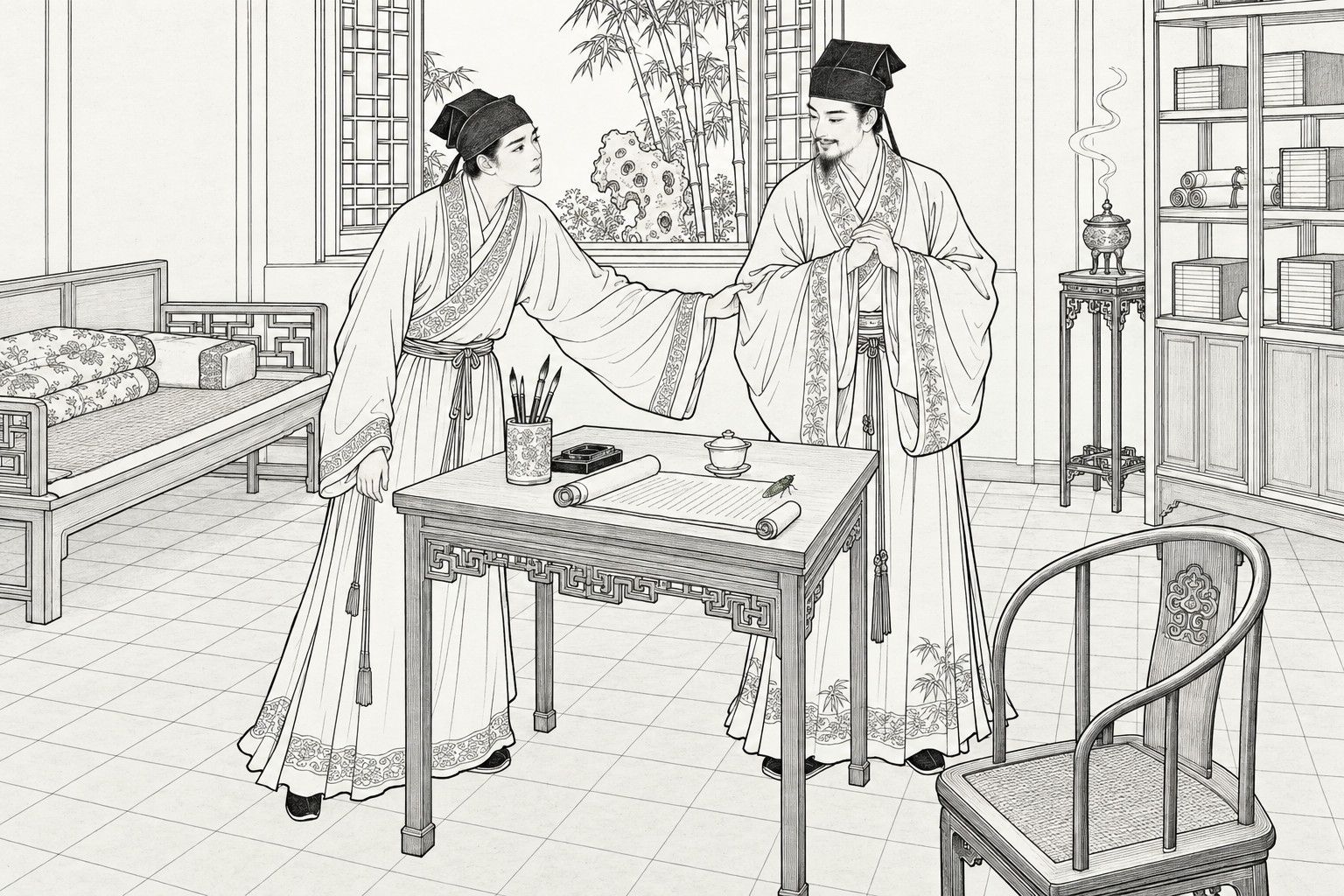
吳青庵筠,少知名。葛太史見其文,每嘉嘆之。托相善者邀至其家,領其言論風采。曰:「焉有才如吳生,而長貧賤者乎?」因俾鄰好致之曰:「使青庵奮志雲霄,當以息女奉巾櫛。」時太史有女絕美。生聞大喜,確自信。既而秋闈被黜,使人謂太史:「富貴所固有,不可知者遲早耳。請待我三年,不成而後嫁。」於是刻志益苦。
吴青庵筠,少知名。葛太史见其文,每嘉叹之。托相善者邀至其家,领其言论风采。曰:「焉有才如吴生,而长贫贱者乎?」因俾邻好致之曰:「使青庵奋志云霄,当以息女奉巾栉。」时太史有女绝美。生闻大喜,确自信。既而秋闱被黜,使人谓太史:「富贵所固有,不可知者迟早耳。请待我三年,不成而后嫁。」于是刻志益苦。
Wu Jun, styled Qing’an, made a name for himself while still young. The academician Ge read his essays and praised them every time. Through a friend they had in common he had Wu invited to his house, to hear his talk and see his bearing. “How could a talent like young Wu stay poor and lowly for long?” he said. Then he had a neighbour and friend carry a message: “If Qing’an sets his sights on the clouds, I will give him my daughter to bring him towel and comb.” The academician had a daughter of rare beauty at the time. Wu was overjoyed when he heard, and was sure of himself. Then he failed the autumn provincial examination. He sent word to the academician: “Wealth and rank are mine by right. All that cannot be known is whether they come early or late. I ask you to wait three years for me. If I have not succeeded by then, marry her to someone else.” After that he set himself to study harder than ever.
一夜,月明之下,有秀才造謁,白皙短鬚,細腰長爪。詰所來,自言:「白氏,字于玉。」略與傾談,豁人心胸。悅之,留同止宿。遲明欲去,生囑便道頻過。白感其情殷,願即假館,約期而別。至日,先一蒼頭送炊具來。少間,白至,乘駿馬如龍。生另舍舍之。白命奴牽馬去。遂共晨夕,忻然相得。生視所讀書,並非常所見聞,亦絕無時藝。訝而問之。白笑曰:「士各有志,僕非功名中人也。」夜每招生飲,出一卷授生,皆吐納之術,多所不解,因以迂緩置之。他日謂生曰:「曩所授,乃黃庭之要道,仙人之梯航。」生笑曰:「僕所急不在此。且求仙者必斷絕情緣,使萬念俱寂,僕病未能也。」白問:「何故?」生以宗嗣為慮。白曰:「胡久不娶?」笑曰:「『寡人有疾,寡人好色。』」白亦笑曰:「『王請無好小色。』所好何如?」生具以情告。白疑未必真美。生曰:「此遐邇所共聞,非小生之目賤也。」白微哂而罷。次日,忽促裝言別。生淒然與語,刺刺不能休。白乃命童子先負裝行。兩相依戀。俄見一青蟬鳴落案間,白辭曰:「輿已駕矣,請自此別。如相憶,拂我榻而臥之。」方欲再問,轉瞬間,白小如指,翩然跨蟬背上,嘲哳而飛,杳入雲中。生乃知其非常人,錯愕良久,悵悵自失。
一夜,月明之下,有秀才造谒,白皙短须,细腰长爪。诘所来,自言:「白氏,字于玉。」略与倾谈,豁人心胸。悦之,留同止宿。迟明欲去,生嘱便道频过。白感其情殷,愿即假馆,约期而别。至日,先一苍头送炊具来。少间,白至,乘骏马如龙。生另舍舍之。白命奴牵马去。遂共晨夕,忻然相得。生视所读书,并非常所见闻,亦绝无时艺。讶而问之。白笑曰:「士各有志,仆非功名中人也。」夜每招生饮,出一卷授生,皆吐纳之术,多所不解,因以迂缓置之。他日谓生曰:「曩所授,乃黄庭之要道,仙人之梯航。」生笑曰:「仆所急不在此。且求仙者必断绝情缘,使万念俱寂,仆病未能也。」白问:「何故?」生以宗嗣为虑。白曰:「胡久不娶?」笑曰:「『寡人有疾,寡人好色。』」白亦笑曰:「『王请无好小色。』所好何如?」生具以情告。白疑未必真美。生曰:「此遐迩所共闻,非小生之目贱也。」白微哂而罢。次日,忽促装言别。生凄然与语,刺刺不能休。白乃命童子先负装行。两相依恋。俄见一青蝉鸣落案间,白辞曰:「舆已驾矣,请自此别。如相忆,拂我榻而卧之。」方欲再问,转瞬间,白小如指,翩然跨蝉背上,嘲哳而飞,杳入云中。生乃知其非常人,错愕良久,怅怅自失。
One night, under a bright moon, a licentiate came to call: fair-skinned, with a short beard, a slender waist and long nails. Asked where he came from, he said, “My surname is Bai, my courtesy name Yuyu.” They talked a little, and his talk opened the heart. Wu liked him and kept him for the night. At dawn Bai wanted to leave; Wu begged him to drop in often whenever he passed. Moved by such warmth, Bai offered to come and lodge with him, fixed a day, and left. On the day, an old servant came first with cooking things. Soon Bai arrived, riding a fine horse like a dragon. Wu put him up in separate quarters. Bai had his servant lead the horse away. From then on they were together morning and evening, delighted with each other. The books Bai read were nothing Wu had ever seen or heard of, and there was not one examination essay among them. Surprised, Wu asked him about it. Bai laughed. “Every man has his own aim. I am not one for rank and honours.” Each night he invited Wu to drink. Once he brought out a scroll and gave it to him. It was all arts of breathing; much of it Wu could not understand, and thinking it impractical, he put it aside. Some days later Bai said to him, “What I gave you the other day was the essence of the Yellow Court, the ladder and the boat to immortality.” Wu laughed. “That is not what I am in a hurry for. Besides, one who seeks immortality must cut every tie of love and still every thought. That is beyond me.” “Why?” asked Bai. Wu said he worried about carrying on his family line. “Then why have you gone so long without marrying?” Wu laughed: “‘I have a weakness: I am fond of women.’” Bai laughed too: “‘I beg Your Majesty not to be fond of petty beauty.’ What is she like, the one you are fond of?” Wu told him the whole story. Bai doubted she was really so beautiful. “Everyone far and near has heard of it,” said Wu. “It is not just my poor eyes.” Bai smiled faintly and let it drop. The next day he suddenly packed up and said goodbye. Wu, full of sadness, talked on and on and could not stop. Bai had his page go ahead with the baggage. The two could not bear to part. Then a green cicada, chirring, dropped onto the table. Bai took his leave. “My carriage is ready. Let us part here. If you think of me, sweep my bed and sleep in it.” Wu was about to ask more when, in the blink of an eye, Bai shrank to the size of a finger, sprang lightly onto the cicada’s back, and flew off with a shrill buzz, vanishing into the clouds. Only then did Wu know he was no ordinary man. He stood dumbfounded a long while, forlorn and lost.
逾數日,細雨忽集,思白綦切。視所臥榻,鼠跡碎瑣;慨然掃除,設席即寢。無何,見白家童來相招,忻然從之。俄有桐鳳翔集,童捉謂生曰:「黑徑難行,可乘此代步。」生慮細小不能勝任。童曰:「試乘之。」生如所請,寬然殊有餘地,童亦附其尾上;戛然一聲,凌升空際。未幾,見一朱門。童先下,扶生亦下。問:「此何所?」曰:「此天門也。」門邊有巨虎蹲伏。生駭懼,童一身障之。見處處風景,與世殊異。童導入廣寒宮,內以水晶為階,行人如在鏡中。桂樹兩章,參空合抱;花氣隨風,香無斷際。亭宇皆紅窗,時有美人出入,冶容秀骨,曠世並無其儔。童言:「王母宮佳麗尤勝。」然恐主人伺久,不暇留連,導與趨出。移時,見白生候于門。握手入,見檐外清水白沙,涓涓流溢;玉砌雕闌,殆疑桂闕。甫坐,即有二八妖鬟,來荐香茗。少間,命酌。有四麗人,斂衽鳴璫,給事左右。才覺背上微癢,麗人即纖指長甲,探衣代搔。生覺心神搖曳,罔所安頓。既而微醺,漸不自持,笑顧麗人,兜搭與語。美人輒笑避。白令度曲侑觴。一衣絳綃者,引爵向客,便即筵前宛轉清歌。諸麗者笙管敖曹,嗚嗚雜和。既闋,一衣翠裳者亦酌亦歌。尚有一紫衣人,與一淡白軟綃者,吃吃笑暗中,互讓不肯前。白令一酌一唱。紫衣人便來把盞。生托接杯,戲撓纖腕。女笑失手,酒杯傾墮。白譙訶之。女拾杯含笑,俯首細語雲:「冷如鬼手馨,強來捉人臂。」白大笑,罰令自歌且舞。舞已,衣淡白者又飛一觥。生辭不能酹。女捧酒有愧色,乃強飲之。細視四女,風致翩翩,無一非絕世者。遽謂主人曰:「人間尤物,僕求一而難之;君集群芳,能令我真個銷魂否?」白笑曰:「足下意中自有佳人,此何足當巨眼之顧?」生曰:「吾今乃知所見之不廣也。」白乃盡招諸女,俾自擇。生顛倒不能自決。白以紫衣人有把臂之好,遂使襆被奉客。既而衾枕之愛,極盡綢繆。生索贈,女脫金腕釧付之。忽童入曰:「仙凡路殊,君宜即去。」虎哮驟起,生驚竄而去。望之無底,而足已奔墮。一驚而寤,則朝暾已紅。方將振衣,有物膩然附褥間,視之,釧也。心益異之。由是前念灰冷,每欲尋赤松游,而尚以胤續為懮。過十餘月,晝寢方酣,夢紫衣姬自外至,懷中繃嬰兒曰:「此君骨肉。天上難留此物,敬持送君。」乃寢諸床,牽衣覆之,匆匆欲去。生強與為歡。乃曰:「前一度為合巹,今一度為永訣,百年夫婦,盡于此矣。君倘有志,或有見期。」生醒,見嬰兒臥褥間,繃以告母。母喜,佣媼哺之,取名夢仙。生於是使人告太史,身已將隱,令別擇良匹。太史不肯。生固以為辭。太史告女,女曰:「遠近無不知兒身許吳郎矣。今改之,是二天也。」因以此意告生。生曰:「我不但無志于功名,兼絕情于燕好。所以不即入山者,徒以有老母在。」太史又以商。女曰:「吳郎貧,我甘其藜藿;吳郎去,我事其姑嫜:定不他適。」使人三四返,迄無成謀,遂諏日備車馬妝奩,嬪于生家。生感其賢,敬愛臻至。女事姑孝,曲意承順,過貧家女。逾二年,母亡,女質奩作具,罔不盡禮。生曰:「得卿如此,吾何懮!顧念一人得道,拔宅飛升。余將遠逝,一切付于卿。」女坦然,殊不挽留。生遂去。
逾数日,细雨忽集,思白綦切。视所卧榻,鼠迹碎琐;慨然扫除,设席即寝。无何,见白家童来相招,忻然从之。俄有桐凤翔集,童捉谓生曰:「黑径难行,可乘此代步。」生虑细小不能胜任。童曰:「试乘之。」生如所请,宽然殊有余地,童亦附其尾上;戛然一声,凌升空际。未几,见一朱门。童先下,扶生亦下。问:「此何所?」曰:「此天门也。」门边有巨虎蹲伏。生骇惧,童一身障之。见处处风景,与世殊异。童导入广寒宫,内以水晶为阶,行人如在镜中。桂树两章,参空合抱;花气随风,香无断际。亭宇皆红窗,时有美人出入,冶容秀骨,旷世并无其俦。童言:「王母宫佳丽尤胜。」然恐主人伺久,不暇留连,导与趋出。移时,见白生候于门。握手入,见檐外清水白沙,涓涓流溢;玉砌雕阑,殆疑桂阙。甫坐,即有二八妖鬟,来荐香茗。少间,命酌。有四丽人,敛衽鸣珰,给事左右。才觉背上微痒,丽人即纤指长甲,探衣代搔。生觉心神摇曳,罔所安顿。既而微醺,渐不自持,笑顾丽人,兜搭与语。美人辄笑避。白令度曲侑觞。一衣绛绡者,引爵向客,便即筵前宛转清歌。诸丽者笙管敖曹,呜呜杂和。既阕,一衣翠裳者亦酌亦歌。尚有一紫衣人,与一淡白软绡者,吃吃笑暗中,互让不肯前。白令一酌一唱。紫衣人便来把盏。生托接杯,戏挠纤腕。女笑失手,酒杯倾堕。白谯诃之。女拾杯含笑,俯首细语云:「冷如鬼手馨,强来捉人臂。」白大笑,罚令自歌且舞。舞已,衣淡白者又飞一觥。生辞不能酹。女捧酒有愧色,乃强饮之。细视四女,风致翩翩,无一非绝世者。遽谓主人曰:「人间尤物,仆求一而难之;君集群芳,能令我真个销魂否?」白笑曰:「足下意中自有佳人,此何足当巨眼之顾?」生曰:「吾今乃知所见之不广也。」白乃尽招诸女,俾自择。生颠倒不能自决。白以紫衣人有把臂之好,遂使襆被奉客。既而衾枕之爱,极尽绸缪。生索赠,女脱金腕钏付之。忽童入曰:「仙凡路殊,君宜即去。」虎哮骤起,生惊窜而去。望之无底,而足已奔堕。一惊而寤,则朝暾已红。方将振衣,有物腻然附褥间,视之,钏也。心益异之。由是前念灰冷,每欲寻赤松游,而尚以胤续为懮。过十余月,昼寝方酣,梦紫衣姬自外至,怀中绷婴儿曰:「此君骨肉。天上难留此物,敬持送君。」乃寝诸床,牵衣覆之,匆匆欲去。生强与为欢。乃曰:「前一度为合卺,今一度为永诀,百年夫妇,尽于此矣。君倘有志,或有见期。」生醒,见婴儿卧褥间,绷以告母。母喜,佣媪哺之,取名梦仙。生于是使人告太史,身已将隐,令别择良匹。太史不肯。生固以为辞。太史告女,女曰:「远近无不知儿身许吴郎矣。今改之,是二天也。」因以此意告生。生曰:「我不但无志于功名,兼绝情于燕好。所以不即入山者,徒以有老母在。」太史又以商。女曰:「吴郎贫,我甘其藜藿;吴郎去,我事其姑嫜:定不他适。」使人三四返,迄无成谋,遂诹日备车马妆奁,嫔于生家。生感其贤,敬爱臻至。女事姑孝,曲意承顺,过贫家女。逾二年,母亡,女质奁作具,罔不尽礼。生曰:「得卿如此,吾何懮!顾念一人得道,拔宅飞升。余将远逝,一切付于卿。」女坦然,殊不挽留。生遂去。
A few days later a fine rain set in, and he missed Bai keenly. He looked at the bed Bai had slept in: it was littered with mouse tracks. With a sigh he swept it clean, laid out a mat and lay down to sleep. Before long he saw Bai’s page come to fetch him, and gladly went along. Presently a tung phoenix came flying down. The page caught it and said to Wu, “The dark road is hard going. You can ride this instead of walking.” Wu worried that so small a bird could not bear him. “Try it,” said the page. Wu did as he said, and found room and to spare; the page perched on its tail. With a cry it soared up into the sky. Before long they came to a vermilion gate. The page got down first and helped Wu down. “What place is this?” Wu asked. “This is the Gate of Heaven.” A huge tiger crouched beside the gate. Wu was terrified, and the page shielded him with his body. Everywhere the scenery was unlike anything in the world. The page led him into the Palace of Vast Cold. Inside, the steps were of crystal, and people walking there seemed to be inside a mirror. Two cassia trees, each a full armspan round, rose into the sky; the scent of their flowers came on the wind without end. The pavilions all had red windows, and beautiful women came and went, with alluring faces and delicate bones such as the world had never seen. “The beauties in the Queen Mother’s palace are finer still,” said the page. But fearing his master had waited long, he had no time to linger, and hurried Wu out. After a while they saw Bai waiting at his gate. Hand in hand they went in. Beyond the eaves clear water trickled over white sand; with its jade steps and carved railings, Wu half suspected it was the cassia palace of the moon. They had barely sat down when a lovely maid of sixteen came offering fragrant tea. Soon Bai called for wine. Four beauties, their ear pendants tinkling, gathered their skirts and waited on them. No sooner did Wu feel a slight itch on his back than one of them reached under his clothes with slender fingers and long nails to scratch it. His heart and spirit swayed; he did not know where to put himself. Soon, a little tipsy, he began to lose his hold on himself, turned laughing to the beauties and tried to chat with them. They only laughed and drew away. Bai told them to sing to go with the wine. One in crimson gauze raised a cup to the guest and sang there before the table, clear and sweet, her voice winding. The other beauties played pipes, loud and lively, humming along. When she finished, one in a kingfisher-green skirt both poured and sang. There remained one in purple and one in soft pale-white gauze, giggling in the shadows, each urging the other forward and neither willing to go. Bai ordered that one pour and the other sing. The girl in purple came to fill his cup. As he took it, Wu playfully tickled her slender wrist. She laughed and lost her grip, and the cup fell and spilled. Bai scolded her. She picked it up, smiling, bent her head and murmured, “Cold as a ghost’s hand, and it must come grabbing at people’s arms!” Bai roared with laughter and fined her by making her sing and dance on her own. When she had danced, the one in pale white sent over another horn of wine. Wu declined, saying he could not drain it. The girl, holding the wine, looked abashed, so he forced it down. Looking closely at the four, all graceful and charming, he saw not one who was not peerless. He said abruptly to his host, “Of the beauties among men I have sought only one, and found even that hard. You have gathered all the flowers here. Could you truly make my soul melt?” Bai laughed. “You already have a beauty in mind. How could these be worth your great eyes?” “Now I know how little I have seen,” said Wu. Bai called all the girls and had him choose for himself. Wu was so dazzled that he could not decide. Since he had already taken the girl in purple by the arm, Bai had her bring her bedding and attend the guest. Then, under the quilts, their love was as tender as it could be. Wu asked her for a keepsake, and she slipped a gold bracelet from her wrist and gave it to him. Suddenly the page came in. “The road of immortals and the road of mortals are different. You must go at once.” A tiger’s roar burst out, and Wu fled in fright. He looked down: there was no bottom, and his feet were already falling. He woke with a start; the morning sun was already red. He was about to shake out his clothes when he felt something smooth against the bedding. He looked: it was the bracelet. He marvelled all the more. From then on his old desires turned to cold ash. He often wanted to go off and wander with Master Red Pine, but he still worried about an heir. Over ten months later, while he was sound asleep in the daytime, he dreamed the woman in purple came in from outside with a baby swaddled at her breast. “This is your own flesh and blood. Such a thing cannot be kept in heaven, so I have brought him to you.” She laid him on the bed, pulled a robe over him, and made to hurry away. Wu pressed her to make love. Then she said, “The first time was our wedding cup; this time is our parting forever. A hundred years of marriage end here. If you have the will, perhaps we will meet again.” Wu woke and found the baby lying on the bedding. He swaddled him and told his mother. She was delighted and hired a nurse to feed him. They named him Mengxian. Wu then sent word to the academician that he was about to withdraw from the world, and that he should choose another good match. The academician would not hear of it. Wu insisted on declining. The academician told his daughter. She said, “Everyone far and near knows that I am promised to young Wu. To change now would be to have two heavens.” He sent her answer to Wu. Wu said, “Not only have I no wish for rank and honours, I have cut myself off from the love of women. The only reason I do not go into the mountains at once is that my old mother is still alive.” The academician consulted his daughter again. She said, “If young Wu is poor, I am content to eat his coarse greens. If young Wu goes away, I will serve his mother. I will never marry anyone else.” Messengers went back and forth three or four times and nothing was settled, so the academician chose a day, prepared carriages, horses and a trousseau, and sent her to marry into Wu’s house. Wu was moved by her goodness and treated her with the utmost respect and love. She served her mother-in-law with filial devotion, bending to her every wish, more than any poor man’s daughter would have done. Two years later his mother died. His wife pawned her trousseau to pay for the funeral and left no rite undone. Wu said, “With a wife like you, what have I to worry about? Remember: when one man attains the Way, his whole house rises to heaven. I am going far away, and I leave everything to you.” She took it calmly and did not try to keep him. And so Wu went.
女外理生計,內訓孤兒,井井有法。夢仙漸長,聰慧絕倫。十四歲,以神童領鄉荐;十五入翰林。每褒封,不知母姓氏,封葛母一人而已。值霜露之辰,輒問父所,母具告之。遂欲棄官往尋。母曰:「汝父出家,今已十有餘年,想已仙去,何處可尋?」後奉旨祭南岳,中途遇寇。窘急中,一道人仗劍入,寇盡披靡,圍始解。德之,餽以金,不受。出書一函,付囑曰:「余有故人,與大人同裡,煩一致寒暄。」問:「何姓名?」答曰:「王林。」因憶村中無此名。道士曰:「草野微賤,貴官自不識耳。」臨行,出一金釧曰:「此閨閣物,道人拾此,無所用處,即以奉報。」視之,嵌鏤精絕。懷歸以授夫人。夫人愛之,命良工依式配造,終不及其精巧。遍問村中,並無王林其人者。私發其函,上雲:「三年鸞鳳,分拆各天;葬母教子,端賴卿賢。無以報德,奉藥一丸;剖而食之,可以成仙。」後書「琳娘夫人妝次」。讀畢,不解何人,持以告母。母持書以泣,曰:「此汝父家報也。琳,我小字。」始恍然悟「王林」為拆白謎也。悔恨不已。又以釧示母。母曰:「此汝母遺物。而翁在家時,嘗以相示。」又視丸,如豆大。喜曰:「我父仙人,啖此必能長生。」母不遽吞,受而藏之。會葛太史來視甥,女誦吳生書,便進丹藥為壽。太史剖而分食之。頃刻,精神煥發。太史時年七旬,龍鐘頗甚;忽覺筋力溢于膚革,遂棄輿而步,其行健速,家人坌息始能及焉。逾年,都城有回祿之災,火終日不熄。夜不敢寐,畢集庭中。見火勢拉雜,浸及鄰舍。一家徊徨,不知所計。忽夫人臂上金釧,戛然有聲,脫臂飛去。望之,大可數畝;團覆宅上,形如月闌;釧口降東南隅,歷歷可見。眾大愕。俄頃,火自西來,近闌則斜越而東。迨火勢既遠,竊意釧亡不可復得;忽見紅光乍斂,釧錚然墮足下。都中延燒民舍數萬間,左右前後,並為灰燼,獨吳第無恙,惟東南一小閣,化為烏有,即釧口漏覆處也。葛母年五十餘,或見之,猶似二十許人。
女外理生计,内训孤儿,井井有法。梦仙渐长,聪慧绝伦。十四岁,以神童领乡荐;十五入翰林。每褒封,不知母姓氏,封葛母一人而已。值霜露之辰,辄问父所,母具告之。遂欲弃官往寻。母曰:「汝父出家,今已十有余年,想已仙去,何处可寻?」后奉旨祭南岳,中途遇寇。窘急中,一道人仗剑入,寇尽披靡,围始解。德之,餽以金,不受。出书一函,付嘱曰:「余有故人,与大人同里,烦一致寒暄。」问:「何姓名?」答曰:「王林。」因忆村中无此名。道士曰:「草野微贱,贵官自不识耳。」临行,出一金钏曰:「此闺阁物,道人拾此,无所用处,即以奉报。」视之,嵌镂精绝。怀归以授夫人。夫人爱之,命良工依式配造,终不及其精巧。遍问村中,并无王林其人者。私发其函,上云:「三年鸾凤,分拆各天;葬母教子,端赖卿贤。无以报德,奉药一丸;剖而食之,可以成仙。」后书「琳娘夫人妆次」。读毕,不解何人,持以告母。母持书以泣,曰:「此汝父家报也。琳,我小字。」始恍然悟「王林」为拆白谜也。悔恨不已。又以钏示母。母曰:「此汝母遗物。而翁在家时,尝以相示。」又视丸,如豆大。喜曰:「我父仙人,啖此必能长生。」母不遽吞,受而藏之。会葛太史来视甥,女诵吴生书,便进丹药为寿。太史剖而分食之。顷刻,精神焕发。太史时年七旬,龙钟颇甚;忽觉筋力溢于肤革,遂弃舆而步,其行健速,家人坌息始能及焉。逾年,都城有回禄之灾,火终日不熄。夜不敢寐,毕集庭中。见火势拉杂,浸及邻舍。一家徊徨,不知所计。忽夫人臂上金钏,戛然有声,脱臂飞去。望之,大可数亩;团覆宅上,形如月阑;钏口降东南隅,历历可见。众大愕。俄顷,火自西来,近阑则斜越而东。迨火势既远,窃意钏亡不可复得;忽见红光乍敛,钏铮然堕足下。都中延烧民舍数万间,左右前后,并为灰烬,独吴第无恙,惟东南一小阁,化为乌有,即钏口漏覆处也。葛母年五十余,或见之,犹似二十许人。
Outside, she managed the family’s living; inside, she taught the fatherless boy; and everything was in good order. Mengxian grew up brilliant beyond compare. At fourteen, as a child prodigy, he passed the provincial examination; at fifteen he entered the Hanlin Academy. Each time the court conferred honours on his parents, he did not know his mother’s surname, and so only Lady Ge received a title. At the seasons of frost and dew he would ask where his father was, and his mother told him everything. He wanted to give up his post and go looking for him. “Your father left home to follow the Way more than ten years ago,” his mother said. “He must have become an immortal and gone. Where could you look for him?” Later he was sent by imperial command to sacrifice at the Southern Peak, and on the way he was set upon by bandits. In his desperate plight a Daoist rushed in with a sword, and the bandits all scattered before him; the ring around Mengxian was broken. Grateful, Mengxian offered him gold, which he would not take. Instead the Daoist brought out a letter and entrusted it to him. “I have an old friend from your honour’s own village. Would you trouble to pass on my greetings?” “What is his name?” “Wang Lin.” Mengxian thought back and could recall no one of that name in the village. “A poor humble man of the fields,” said the Daoist. “Naturally a great official would not know him.” As he was leaving, he brought out a gold bracelet. “This is a lady’s thing. I am a Daoist; I picked it up and have no use for it. Take it as my thanks.” Mengxian looked at it: the inlay and carving were exquisite. He carried it home in his breast and gave it to his wife. She loved it, and had a fine craftsman make another to match, but it never came near the original’s delicacy. He asked all over the village, and there was no such person as Wang Lin. He opened the letter in private. It read: “Three years as phoenix mates, then parted, each beneath his own sky. You buried my mother and raised my son, all by your goodness. I have no way to repay you; I send you one pill. Split it and eat it, and you can become immortal.” At the end was written: “To Lady Linniang, at her dressing table.” When he had read it, he could not make out who was meant, and took it to his mother. She held the letter and wept. “This is a letter home from your father. Lin is my girlhood name.” Only then did he see that “Wang Lin” was a split-character riddle. He was filled with regret. He showed his mother the bracelet too. “This belonged to your mother,” she said. “When your father was at home, he once showed it to me.” He looked at the pill: it was the size of a bean. “My father is an immortal,” he said joyfully. “If you take this, you are sure to live forever.” His mother did not swallow it at once, but took it and put it away. Then Academician Ge came to see his grandson. His daughter recited Wu’s letter and offered him the pill to wish him long life. The academician split it, and they ate it between them. In a moment they were full of vigour. The academician was seventy that year and badly doddering; suddenly he felt strength swelling in his sinews under the skin. He gave up his sedan chair and walked, so briskly and quickly that his household had to pant to keep up. The next year a great fire broke out in the capital and burned all day without going out. No one dared to sleep at night; the whole household gathered in the courtyard. The flames sprawled every which way and spread to the neighbours’ houses. The family was frantic and did not know what to do. Suddenly the gold bracelet on his wife’s arm gave a ringing sound, slipped off and flew away. They looked: it had grown to cover some several mu, spread over the house like the halo round the moon, its open end coming down at the southeast corner, plain to see. Everyone was astounded. In a moment the fire came from the west; as it neared the ring it veered and leapt across to the east. When the fire had moved off, they thought to themselves that the bracelet was gone for good. Then the red glow suddenly drew in, and the bracelet dropped with a clang at their feet. Tens of thousands of houses in the capital burned; on every side all was ash. Only the Wu house was unharmed, except for a small tower at the southeast corner, which burned to nothing — just where the open end of the ring had left a gap. Lady Ge was past fifty, but those who saw her took her for a woman of about twenty.