話說濟公來到書房。老員外說:「大師父寶剎在哪裡?」和尚說:「西湖靈隱寺。上一字道,下一字濟,訛言傳說濟顛僧,就是我。老員外怎麼稱呼?」老員外說:「我姓趙,名叫德芳。方才聽家人說,聖僧有妙藥,能治催生即下。聖僧要能給催生下來,我必當重謝。」和尚說:「我這裡有一塊藥,你拿進去,用陰陽水化開,給產婦吃下去,包管立見功效。」趙德芳把藥交給家人拿進去,告訴明白,這裡陪著和尚說話。少時,僕婦出來說:「老員外大喜,藥吃下去,立刻生產,你得了孫子。」趙德芳一聽甚為喜悅,說:「聖僧真是神仙也。」立刻吩咐擺酒。和尚說:「我外面還帶著兩個跟班的,在門口站著。」老員外一聽,趕緊叫家人把柴、杜二位班頭讓到裡面。家人把酒擺上,眾人入座吃酒。趙德芳說:「我有一事不明,要在聖僧跟前請教。」和尚說:「什麼事?」趙德芳說:「我實不瞞聖僧,當初我是指身為業,耍人出身。瞞心昧己,白手成家,我掙了個家業。去年我六十壽做生日,我有三個兒女、三房兒媳婦,我就把我兒叫到跟前。我說,兒呀,老夫成立家業,就是一根空心秤,買人家的,能買十二兩算一斤,賣給人家十四兩算一斤,秤桿裡面有水銀。前者我買了幾千斤棉花,有一斤多得四兩,那賣棉花的客人賠了本錢,加氣傷寒死了,我就心中抱愧。現在我兒女滿堂,從此不做虧心事了。當時把這秤桿砸了,我打算改惡向善。焉想到上天無眼,把秤砸了,沒有一個月,我大兒子死了,大兒媳婦改嫁他人。事情剛辦完,我二兒也死了,二兒媳也往前走了。過了沒兩個月,我三兒子也死了。我三媳婦懷有孕,尚未改嫁。聖僧你看,這不是修橋補路雙瞎眼,殺人放火子孫多,怎麼行善倒遭惡報呢?」和尚哈哈一笑說:「你不必亂想。我告訴你說,你大兒子原是當初一個賣藥材的客人,你算計他死了,他投生你大兒子,來找你要帳,你二子是給你敗家來的,你三兒子要給你闖下塌天大禍,你到年老該得餓死。皆因你改惡向善,上天有眼,把你三個敗家子收了去。你這是算第一善人,比如寡婦失節,不如老妓從良。」趙德芳一聽,如夢方醒,說:「多蒙聖僧指教。現在我得了一個孫男,可能成立否?」和尚說:「你這個孫子,將來能給你光宗耀祖,改換門庭。」趙德芳說:「這就是了,聖僧喝酒罷。」喝完了酒,天色已晚。和尚同柴、杜就住在這裡。次日天光一亮,和尚起來說:「出恭。」由趙宅來到了常山縣城內十字街。見路北裡有一座門樓,門口站著二十多人,吵吵嚷嚷。和尚說:「眾位都在這裡做什麼呢?」大眾說:「我們等瞧病的。這裡許先生是名醫,一天就瞧二十個門診,多了不瞧。來早了,才趕得上呢,我們都早來等著上號,先生還沒起來。」和尚說:「是了,我去叫他去。」說著話,邁步來到門洞裡,和尚就嚷:「瞧病的掌柜的沒起來!」
话说济公来到书房。老员外说:「大师父宝刹在哪里?」和尚说:「西湖灵隐寺。上一字道,下一字济,讹言传说济颠僧,就是我。老员外怎么称呼?」老员外说:「我姓赵,名叫德芳。方才听家人说,圣僧有妙药,能治催生即下。圣僧要能给催生下来,我必当重谢。」和尚说:「我这里有一块药,你拿进去,用阴阳水化开,给产妇吃下去,包管立见功效。」赵德芳把药交给家人拿进去,告诉明白,这里陪着和尚说话。少时,仆妇出来说:「老员外大喜,药吃下去,立刻生产,你得了孙子。」赵德芳一听甚为喜悦,说:「圣僧真是神仙也。」立刻吩咐摆酒。和尚说:「我外面还带着两个跟班的,在门口站着。」老员外一听,赶紧叫家人把柴、杜二位班头让到里面。家人把酒摆上,众人入座吃酒。赵德芳说:「我有一事不明,要在圣僧跟前请教。」和尚说:「什么事?」赵德芳说:「我实不瞒圣僧,当初我是指身为业,耍人出身。瞒心昧己,白手成家,我挣了个家业。去年我六十寿做生日,我有三个儿女、三房儿媳妇,我就把我儿叫到跟前。我说,儿呀,老夫成立家业,就是一根空心秤,买人家的,能买十二两算一斤,卖给人家十四两算一斤,秤杆里面有水银。前者我买了几千斤棉花,有一斤多得四两,那卖棉花的客人赔了本钱,加气伤寒死了,我就心中抱愧。现在我儿女满堂,从此不做亏心事了。当时把这秤杆砸了,我打算改恶向善。焉想到上天无眼,把秤砸了,没有一个月,我大儿子死了,大儿媳妇改嫁他人。事情刚办完,我二儿也死了,二儿媳也往前走了。过了没两个月,我三儿子也死了。我三媳妇怀有孕,尚未改嫁。圣僧你看,这不是修桥补路双瞎眼,杀人放火子孙多,怎么行善倒遭恶报呢?」和尚哈哈一笑说:「你不必乱想。我告诉你说,你大儿子原是当初一个卖药材的客人,你算计他死了,他投生你大儿子,来找你要帐,你二子是给你败家来的,你三儿子要给你闯下塌天大祸,你到年老该得饿死。皆因你改恶向善,上天有眼,把你三个败家子收了去。你这是算第一善人,比如寡妇失节,不如老妓从良。」赵德芳一听,如梦方醒,说:「多蒙圣僧指教。现在我得了一个孙男,可能成立否?」和尚说:「你这个孙子,将来能给你光宗耀祖,改换门庭。」赵德芳说:「这就是了,圣僧喝酒罢。」喝完了酒,天色已晚。和尚同柴、杜就住在这里。次日天光一亮,和尚起来说:「出恭。」由赵宅来到了常山县城内十字街。见路北里有一座门楼,门口站着二十多人,吵吵嚷嚷。和尚说:「众位都在这里做什么呢?」大众说:「我们等瞧病的。这里许先生是名医,一天就瞧二十个门诊,多了不瞧。来早了,才赶得上呢,我们都早来等着上号,先生还没起来。」和尚说:「是了,我去叫他去。」说着话,迈步来到门洞里,和尚就嚷:「瞧病的掌柜的没起来!」
Now, Ji Gong came to the study. “Reverend,” said the old squire, “where is your honoured temple?” “Lingyin Temple on West Lake,” said the monk. “The first character of my name is Dao and the second is Ji, and people have garbled it into Crazy Ji. That’s me. And how should I address you, Old Squire?” “My surname is Zhao,” said the old squire, “and my name is Defang. My servant tells me just now that the holy monk has a wonderful medicine for hurrying births that brings the child at once. If the holy monk can hurry this birth along, I will thank you handsomely.” “I have a pill here,” said the monk. “Take it inside, dissolve it in yin-yang water and give it to the mother to swallow. I guarantee you’ll see it work on the spot.” Zhao Defang gave the medicine to a servant to take inside, explaining clearly what to do, and stayed where he was to keep the monk company in talk. A little later a maidservant came out. “Great joy, Old Squire! She took the medicine and gave birth at once. You have a grandson!” Zhao Defang was overjoyed to hear it. “The holy monk is truly an immortal,” he said, and at once ordered wine laid out. “I have two attendants with me outside,” said the monk. “They’re standing at the gate.” At this the old squire hurriedly had servants invite the two head constables, Chai and Du, inside. The servants set out the wine, and everyone took their seats and drank. “There is one thing I don’t understand,” said Zhao Defang, “and I would like to ask the holy monk about it.” “What’s that?” said the monk. “I won’t hide it from the holy monk,” said Zhao Defang. “When I started out I had nothing to live on but myself, and I made my way by playing people for fools. Going against my conscience, I built up a fortune from nothing and came by a family estate. Last year, when I celebrated my sixtieth birthday, I had three children and three daughters-in-law, and I called my sons to me. I said, ‘My sons, the way this old man built up the family fortune was with a hollow steelyard. When I bought from people I could take twenty ounces as a pound, and when I sold to them, fourteen ounces passed for a pound. There’s mercury inside the beam. Some time ago I bought several thousand pounds of cotton and gained four ounces on every pound, and the merchant who sold me the cotton lost his capital. What with his anger on top of it, he caught a fever and died, and I’ve been ashamed of it ever since. Now I have a houseful of children, and from now on I’ll do nothing more against my conscience.’ Then and there I smashed the beam of that steelyard. I meant to turn from evil to good. Who would have thought that Heaven has no eyes? Not a month after I smashed the steelyard, my eldest son died, and his wife married someone else. We had only just finished with all that when my second son died too, and his wife also went on to another man. Before two more months were out, my third son died as well. My third daughter-in-law was with child, so she hasn’t remarried yet. Holy monk, look at it. Isn’t this just what they say: ‘Build bridges and mend roads, and you go blind in both eyes; kill and burn, and you have sons and grandsons aplenty’? How is it that doing good brings an evil reward?” The monk laughed aloud. “Don’t let your thoughts run wild. I’ll tell you. Your eldest son was once a merchant who dealt in medicinal herbs. You schemed him to his death, and he was reborn as your eldest son to collect his debt from you. Your second son came to squander your fortune. Your third son was going to bring a disaster as big as the sky down on you, and in your old age you were bound to starve to death. It is all because you turned from evil to good that Heaven had eyes and took those three wastrels away from you. This makes you the foremost good man there is. It’s like the saying: a widow who loses her virtue can’t compare with an old courtesan who goes straight.” Zhao Defang heard this as if waking from a dream. “I am deeply grateful for the holy monk’s teaching. Now I have a grandson. Will he grow up to amount to something?” “This grandson of yours,” said the monk, “will one day bring glory to your ancestors and raise your family’s standing.” “Then all is well,” said Zhao Defang. “Holy monk, drink up.” By the time they had finished drinking it was late, and the monk stayed the night there with Chai and Du. The next day, as soon as it was light, the monk got up and said, “I need to relieve myself.” He left the Zhao house and came to Shizi Street inside the city of Changshan County. On the north side of the street he saw a gatehouse, and more than twenty people were standing at the gate, all talking at once. “Everybody, what are you all doing here?” said the monk. “We’re waiting to see the doctor,” they said. “Mr. Xu here is a famous physician. He sees just twenty patients a day at his door, and not one more. You have to come early to get in. We all came early to wait and get our numbers, and the doctor isn’t even up yet.” “Right,” said the monk. “I’ll go and get him up.” As he spoke he strode into the gateway and shouted, “The shopkeeper of the doctoring shop isn’t up yet!”
管家由門房出來說:「和尚你別胡說。瞧病的哪有掌柜的?」和尚說:「有夥計?」管家說:「也沒夥計,這裡有先生。」和尚說:「把先生叫出來,我要瞧病。」正說著話,先生由裡面出來。和尚一瞧,這位先生頭戴翠藍色文生巾,身穿翠藍色文生氅,腰系絲絛,厚底竹履鞋。這位先生乃是本地的醫生,名叫許景魁。今天才起來,聽外面喊叫瞧病的掌柜的,故此趕出來。一瞧是個窮和尚。許景魁說:「和尚什麼事?」和尚說:「要瞧病。」許先生一想:「給他瞧瞧就完了。」這才走到門房來瞧。來到門房,和尚說:「我渾身酸懶,大腿膀硬。」許先生說:「給你診診脈。」和尚一伸大腿。許先生說:「伸過手來。」和尚說:「我只打算著脈在腿上呢。」這才一伸手。先生說:「診手腕。」和尚說:「不診手腦袋?你診罷。」許先生診了半天,說:「和尚你沒有病呀。」和尚說:「有病。」許先生說:「我看你六脈平和,沒有病。」和尚說:「我有病。不但我有病,你也有病。你這病,非我治不行。」許先生說:「我有什麼病?」和尚說:「你一肚子陰陽鬼胎。」許先生說:「和尚你滿口胡說。」和尚說:「胡說?咱們兩個人是一場官司。」
管家由门房出来说:「和尚你别胡说。瞧病的哪有掌柜的?」和尚说:「有伙计?」管家说:「也没伙计,这里有先生。」和尚说:「把先生叫出来,我要瞧病。」正说着话,先生由里面出来。和尚一瞧,这位先生头戴翠蓝色文生巾,身穿翠蓝色文生氅,腰系丝绦,厚底竹履鞋。这位先生乃是本地的医生,名叫许景魁。今天才起来,听外面喊叫瞧病的掌柜的,故此赶出来。一瞧是个穷和尚。许景魁说:「和尚什么事?」和尚说:「要瞧病。」许先生一想:「给他瞧瞧就完了。」这才走到门房来瞧。来到门房,和尚说:「我浑身酸懒,大腿膀硬。」许先生说:「给你诊诊脉。」和尚一伸大腿。许先生说:「伸过手来。」和尚说:「我只打算着脉在腿上呢。」这才一伸手。先生说:「诊手腕。」和尚说:「不诊手脑袋?你诊罢。」许先生诊了半天,说:「和尚你没有病呀。」和尚说:「有病。」许先生说:「我看你六脉平和,没有病。」和尚说:「我有病。不但我有病,你也有病。你这病,非我治不行。」许先生说:「我有什么病?」和尚说:「你一肚子阴阳鬼胎。」许先生说:「和尚你满口胡说。」和尚说:「胡说?咱们两个人是一场官司。」
A steward came out of the gatekeeper’s room. “Monk, don’t talk nonsense. Since when does seeing patients have a shopkeeper?” “A shop-hand, then?” said the monk. “No shop-hand either,” said the steward. “There’s a doctor here.” “Then call the doctor out,” said the monk. “I want to be seen.” Just as they were talking, the doctor came out from inside. The monk took a look. The gentleman wore a scholar’s cap of kingfisher blue and a scholar’s gown of kingfisher blue, with a silk cord tied at his waist and thick-soled shoes of woven bamboo. He was a physician of the town, named Xu Jingkui. He had only just got up, and hearing someone outside shouting for the shopkeeper of the doctoring shop, he had hurried out. He saw that it was a poor monk. “Monk, what is it?” said Xu Jingkui. “I want to be seen,” said the monk. Mr. Xu thought, “I’ll take a look at him and be done with it,” and went into the gatekeeper’s room to examine him. In the gatekeeper’s room the monk said, “I ache all over and have no strength, and my thighs are stiff.” “Let me take your pulse,” said Mr. Xu. The monk stuck out his leg. “Hold out your hand,” said Mr. Xu. “I thought the pulse was in the leg,” said the monk, and only then held out his hand. “At the wrist,” said the doctor. “Not at the hand’s head?” said the monk. “Go ahead, then.” Mr. Xu felt the pulse for a long while. “Monk, there’s nothing wrong with you.” “There is,” said the monk. “I find your six pulses calm and even,” said Mr. Xu. “You’re not ill.” “I am ill,” said the monk. “And not only am I ill, you’re ill too. Your illness is one nobody but me can cure.” “What illness have I got?” said Mr. Xu. “You’ve got a bellyful of wicked schemes, yin and yang,” said the monk. “Monk, you’re talking utter nonsense,” said Mr. Xu. “Nonsense?” said the monk. “You and I have a lawsuit between us.”
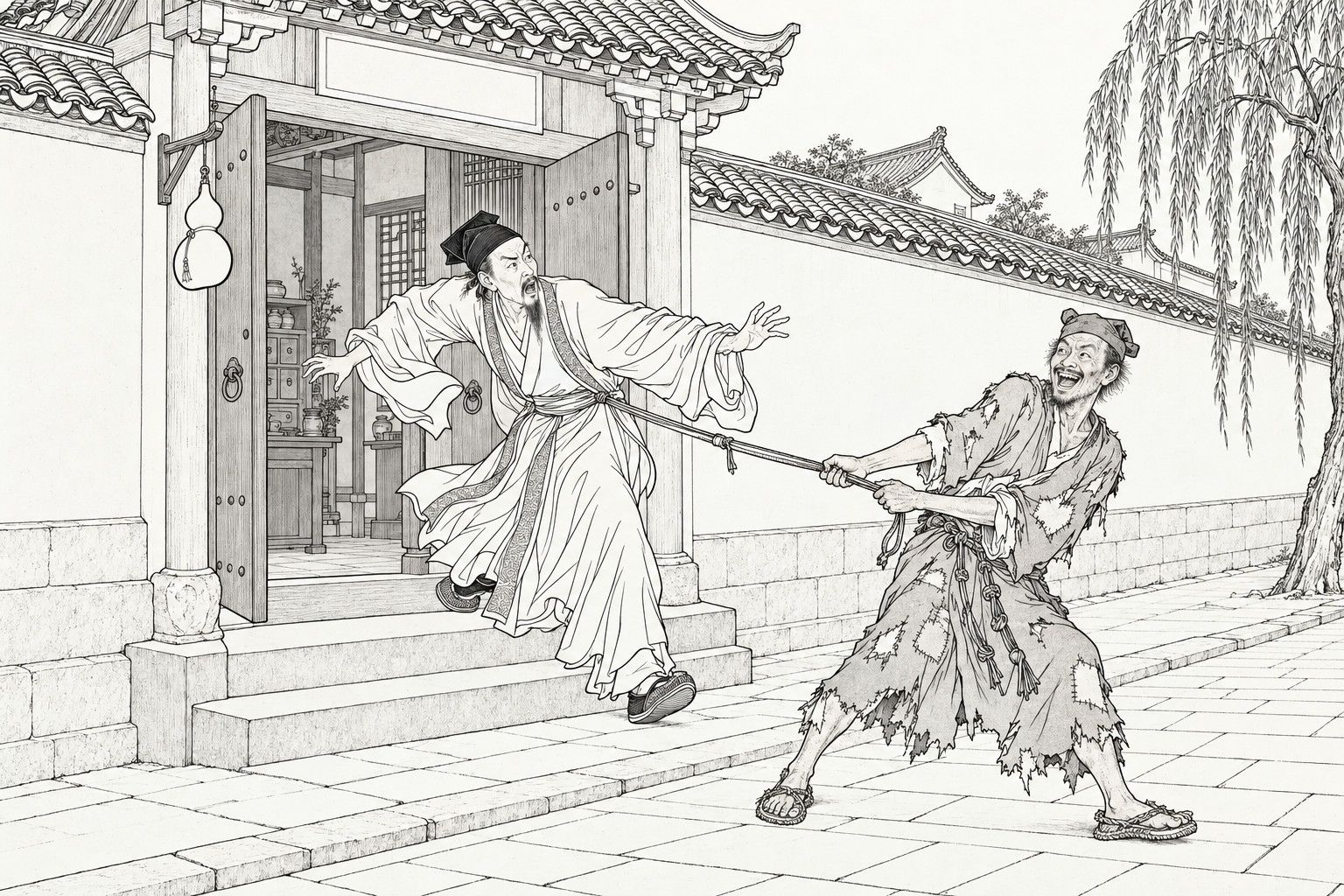
說著話,和尚一把把許先生絲絛揪住,就往外拉。大眾攔著說:「什麼事打官司?」和尚:「你們別管。」拉了就走,誰也拉不住。和尚力氣大,一直拉到常山縣。和尚就嚷:「陰天大老爺,晴天大老爺,冤苦了我。」官人正要攔阻,老爺一看是濟公,趕緊吩咐把孫康氏等帶下去。說:「聖僧請坐。」知縣也認識許景魁,他到衙門看過病。知縣說:「聖僧跟許先生什麼事?」和尚說:「老爺要問,昨天我住在趙德芳家,我病了,趙員外見我病了,提說請名醫許景魁給我瞧。就是他的馬錢太貴,一出門要六吊,一到關鄉就是二十吊,一過五里地就要二十四吊。我說:我瞧不起,我自己去罷。今天早晨,趙員外給了我五十兩銀子。我由趙家莊自己走了二十里路,才進城到許先生家裡去瞧門診。他就問我有錢沒有?我說有銀子,我把五十兩銀子掏出來放在桌上。他把銀子揣在懷裡,他說我是有銀子折受的,把銀子給他就沒病了。他叫我走。我要銀子,他不給我。因此我揪他來打官司。」知縣一聽,這也太奇了,說:「許景魁你為何瞞昧聖僧的銀子?」許景魁說:「回稟老爺,醫生也不致這樣無禮。我原本因家務纏綿,起得晚些。剛起來,聽外面有人喊。我出來一瞧,是這個和尚。他叫我瞧病,我瞧他沒有病。他說我有病,有一肚子陰胎鬼胎。他就說我來跟他打官司。我並沒見他的銀子。」和尚說:「你可別虧心。你在懷裡揣著呢。老爺不信,聽他解下絲絛抖抖。」老爺說:「許景魁你懷裡有銀子。」許景魁說:「沒有。」老爺說:「既沒有,你抖抖。」許景魁果然把絲絛解下,一抖,掉在地下一個紙團。許景魁正要拈,和尚一伸手拈起來說:「老爺看。」老爺把這紙團打開一看,是個草底子,勾點塗抹,上寫是:
说着话,和尚一把把许先生丝绦揪住,就往外拉。大众拦着说:「什么事打官司?」和尚:「你们别管。」拉了就走,谁也拉不住。和尚力气大,一直拉到常山县。和尚就嚷:「阴天大老爷,晴天大老爷,冤苦了我。」官人正要拦阻,老爷一看是济公,赶紧吩咐把孙康氏等带下去。说:「圣僧请坐。」知县也认识许景魁,他到衙门看过病。知县说:「圣僧跟许先生什么事?」和尚说:「老爷要问,昨天我住在赵德芳家,我病了,赵员外见我病了,提说请名医许景魁给我瞧。就是他的马钱太贵,一出门要六吊,一到关乡就是二十吊,一过五里地就要二十四吊。我说:我瞧不起,我自己去罢。今天早晨,赵员外给了我五十两银子。我由赵家庄自己走了二十里路,才进城到许先生家里去瞧门诊。他就问我有钱没有?我说有银子,我把五十两银子掏出来放在桌上。他把银子揣在怀里,他说我是有银子折受的,把银子给他就没病了。他叫我走。我要银子,他不给我。因此我揪他来打官司。」知县一听,这也太奇了,说:「许景魁你为何瞒昧圣僧的银子?」许景魁说:「回禀老爷,医生也不致这样无礼。我原本因家务缠绵,起得晚些。刚起来,听外面有人喊。我出来一瞧,是这个和尚。他叫我瞧病,我瞧他没有病。他说我有病,有一肚子阴胎鬼胎。他就说我来跟他打官司。我并没见他的银子。」和尚说:「你可别亏心。你在怀里揣着呢。老爷不信,听他解下丝绦抖抖。」老爷说:「许景魁你怀里有银子。」许景魁说:「没有。」老爷说:「既没有,你抖抖。」许景魁果然把丝绦解下,一抖,掉在地下一个纸团。许景魁正要拈,和尚一伸手拈起来说:「老爷看。」老爷把这纸团打开一看,是个草底子,勾点涂抹,上写是:
As he spoke, the monk grabbed Mr. Xu by his silk cord and started hauling him outside. The crowd tried to stop him. “What’s this lawsuit about?” “Never you mind,” said the monk. He hauled him off, and nobody could hold him back. The monk was strong, and he hauled him all the way to Changshan County, shouting, “Your Honour of cloudy skies, Your Honour of clear skies, I’ve been wronged most bitterly!” The runners were about to stop him when His Honour saw it was Ji Gong and quickly ordered Madam Sun and the others taken down. “Please be seated, holy monk,” he said. The magistrate knew Xu Jingkui as well; he had come to the yamen to treat the sick. “Holy monk,” said the magistrate, “what is this between you and Mr. Xu?” “Since Your Honour asks,” said the monk, “yesterday I stayed at Zhao Defang’s house, and I fell ill. Squire Zhao saw I was ill and talked of sending for the famous physician Xu Jingkui to see me. Only his horse money is too dear: six strings just to step out of his door, twenty strings once he gets out to the gate suburbs, and twenty-four strings the moment it’s more than five li. I said, ‘I can’t afford him; I’ll go to him myself.’ This morning Squire Zhao gave me fifty taels of silver, and I walked twenty li on my own from Zhao Family Village into the city to Mr. Xu’s house to be seen at his door. He asked me if I had any money. I said I had silver, and I took out the fifty taels and laid them on the table. He tucked the silver into the front of his robe and said the silver was wearing down my luck, and once I gave it to him I’d have nothing wrong with me. Then he told me to go. I asked for my silver, and he wouldn’t give it back. So I grabbed him and brought him here to go to law.” The magistrate thought this very strange indeed. “Xu Jingkui, why did you cheat the holy monk of his silver?” “If it please Your Honour,” said Xu Jingkui, “this physician would never be so improper. I had household matters to see to and got up rather late. I had only just got up when I heard somebody shouting outside. I came out to look, and it was this monk. He asked me to see him, and when I did, there was nothing wrong with him. Then he said I was ill, that I had a bellyful of yin babies and ghost babies, and he said I was to come and go to law with him. I never saw any silver of his.” “Don’t go against your conscience,” said the monk. “You’ve got it tucked in your robe. If Your Honour doesn’t believe me, have him untie his silk cord and shake his robe out.” “Xu Jingkui, you have silver in your robe,” said His Honour. “I have not,” said Xu Jingkui. “If you haven’t,” said His Honour, “then shake it out.” Xu Jingkui did untie his silk cord, and when he shook his robe a wad of paper fell to the ground. Xu Jingkui was about to pick it up, but the monk reached out and picked it up first. “Your Honour, look.” His Honour unfolded the wad of paper and looked. It was a rough draft, ticked and dotted and smeared with corrections, and on it was written: