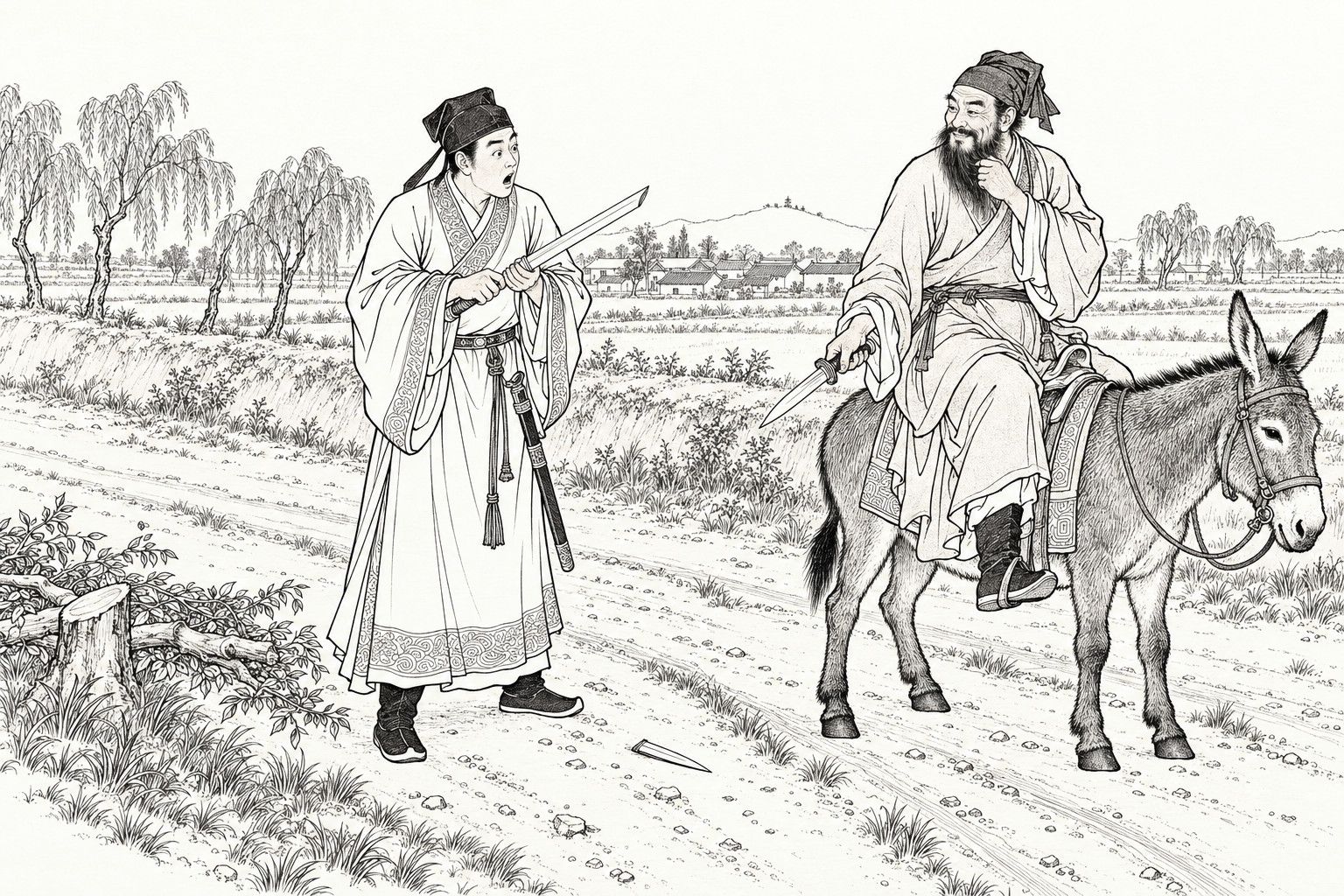
董生,徐州人。好擊劍,每慷慨自負。偶於途中遇一客,跨蹇同行。與之語,談吐豪邁。詰其姓字,云:「遼陽佟姓。」問:「何往?」曰:「余出門二十年,適自海外歸耳。」董曰:「君遨遊四海,閱人綦多,曾見異人否?佟曰:「異人何等?」董乃自述所好,恨不得異人之傳。佟曰:「異人何地無之,要必忠臣孝子,始得傳其術也。」董又毅然自許;即出佩劍,彈之而歌;又斬路側小樹,以矜其利。佟掀髯微笑,因便借觀。董授之。展玩一過,曰:「此甲鐵所鑄,為汗臭所蒸,最為下品。僕雖未聞劍術,然有一劍,頗可用。」遂於衣底出短刃尺許,以削董劍,脆如瓜瓠,應手斜斷,如馬蹄。董駭極,亦請過手,再三拂拭而後返之。邀佟至家,堅留信宿。叩以劍法,謝不知。董按膝雄談,惟敬聽而已。更既深,忽聞隔院紛拏。隔院為生父居,心驚疑。近壁凝聽,但聞人作怒聲曰:「教汝子速出即刑,便赦汝!」少頃,似加搒掠,呻吟不絕者,真其父也。生捉戈欲往。佟止之曰:「此去恐無生理,宜審萬全。」生皇然請教。佟曰:「盜坐名相索,必將甘心焉。君無他骨肉,宜囑後事於妻子;我啟戶,為君警廝僕。」生諾,入告其妻。妻牽衣泣。生壯念頓消,遂共登樓上,尋弓覓矢,以備盜攻。倉皇未已,聞佟在樓簷上笑曰:「賊幸去矣。」燭之已杳。逡巡出,則見翁赴鄰飲,籠燭方歸;惟庭前多編菅遺灰焉。乃知佟異人也。
董生是徐州人,喜好劍術,常常意氣激昂,對自己十分自負。一次,他在路上遇見一個騎驢的客人,兩人同行。與他交談,發現他談吐豪邁。董生問他姓名,他說:「遼陽人,姓佟。」問他:「去哪裡?」他說:「我離家二十年,剛從海外回來。」董生說:「您遊遍四海,見過的人極多,可曾見過奇人?」佟客說:「什麼樣的奇人?」董生便說起自己喜好劍術,遺憾不能得到奇人的傳授。佟客說:「哪裡沒有奇人?但一定要是忠臣孝子,才能得到他們的傳授。」董生又堅定地說自己正是這樣的人,隨即拔出佩劍,彈著劍放聲歌唱,又砍斷路邊的小樹,炫耀劍的鋒利。佟客捋起鬍鬚微微一笑,順勢借劍來看。董生把劍遞給他。他拿著看了一遍,說:「這是用鎧甲的鐵料鑄成的,又受汗臭燻蒸,是最下等的。我雖然不懂劍術,卻有一把劍,還算能用。」便從衣服底下取出一把一尺多長的短劍,朝董生的劍削去。董生的劍像瓜瓠一樣脆,一削就斜著斷了,斷口像馬蹄。董生驚駭萬分,也請求拿來看看,反覆擦拭後才還給他。他邀佟客到家裡,執意留他住了兩夜。問起劍法,佟客推辭說不懂。董生雙手按著膝蓋,高談闊論,佟客只是恭敬地聽著。夜深後,忽然聽見隔壁院裡一片紛亂。那院子是董生父親的住處,他心裡驚疑,靠近牆壁仔細聽,只聽見有人怒喝:「叫你兒子趕快出來受死,就饒了你!」過了一會兒,彷彿動起了拷打,那不停呻吟的,分明就是他的父親。董生抓起戈要過去,佟客攔住他說:「這一去,恐怕不能活著回來,應該先作萬全的安排。」董生驚慌地請他指教。佟客說:「強盜指名要找你,一定要殺了你才肯罷休。你沒有別的兄弟親人,應該先把身後之事交代給妻子兒女。我打開門,替你叫僕人起來戒備。」董生答應了,進去告訴妻子。妻子拉著他的衣服哭泣,他那股奮勇前去的念頭頓時消散,便與妻子一同上樓,找弓箭,準備抵擋強盜。他還在慌亂忙碌,就聽佟客在樓簷上笑著說:「幸好賊已經走了。」拿燭火一照,佟客早已不見蹤影。董生遲疑著走出去,見父親剛在鄰家喝完酒,提著燈籠回來。只是院前留著不少編過的菅草燒成的灰。這才知道佟客是個奇人。
董生,徐州人。好击剑,每慷慨自负。偶于途中遇一客,跨蹇同行。与之语,谈吐豪迈。诘其姓字,云:「辽阳佟姓。」问:「何往?」曰:「余出门二十年,适自海外归耳。」董曰:「君遨游四海,阅人綦多,曾见异人否?佟曰:「异人何等?」董乃自述所好,恨不得异人之传。佟曰:「异人何地无之,要必忠臣孝子,始得传其术也。」董又毅然自许;即出佩剑,弹之而歌;又斩路侧小树,以矜其利。佟掀髯微笑,因便借观。董授之。展玩一过,曰:「此甲铁所铸,为汗臭所蒸,最为下品。仆虽未闻剑术,然有一剑,颇可用。」遂于衣底出短刃尺许,以削董剑,脆如瓜瓠,应手斜断,如马蹄。董骇极,亦请过手,再三拂拭而后返之。邀佟至家,坚留信宿。叩以剑法,谢不知。董按膝雄谈,惟敬听而已。更既深,忽闻隔院纷拏。隔院为生父居,心惊疑。近壁凝听,但闻人作怒声曰:「教汝子速出即刑,便赦汝!」少顷,似加搒掠,呻吟不绝者,真其父也。生捉戈欲往。佟止之曰:「此去恐无生理,宜审万全。」生皇然请教。佟曰:「盗坐名相索,必将甘心焉。君无他骨肉,宜嘱后事于妻子;我启户,为君警厮仆。」生诺,入告其妻。妻牵衣泣。生壮念顿消,遂共登楼上,寻弓觅矢,以备盗攻。仓皇未已,闻佟在楼檐上笑曰:「贼幸去矣。」烛之已杳。逡巡出,则见翁赴邻饮,笼烛方归;惟庭前多编菅遗灰焉。乃知佟异人也。
董生是徐州人,喜好剑术,常常意气激昂,对自己十分自负。一次,他在路上遇见一个骑驴的客人,两人同行。与他交谈,发现他谈吐豪迈。董生问他姓名,他说:“辽阳人,姓佟。”问他:“去哪里?”他说:“我离家二十年,刚从海外回来。”董生说:“您游遍四海,见过的人极多,可曾见过奇人?”佟客说:“什么样的奇人?”董生便说起自己喜好剑术,遗憾不能得到奇人的传授。佟客说:“哪里没有奇人?但一定要是忠臣孝子,才能得到他们的传授。”董生又坚定地说自己正是这样的人,随即拔出佩剑,弹着剑放声歌唱,又砍断路边的小树,炫耀剑的锋利。佟客捋起胡须微微一笑,顺势借剑来看。董生把剑递给他。他拿着看了一遍,说:“这是用铠甲的铁料铸成的,又受汗臭熏蒸,是最下等的。我虽然不懂剑术,却有一把剑,还算能用。”便从衣服底下取出一把一尺多长的短剑,朝董生的剑削去。董生的剑像瓜瓠一样脆,一削就斜着断了,断口像马蹄。董生惊骇万分,也请求拿来看看,反复擦拭后才还给他。他邀佟客到家里,执意留他住了两夜。问起剑法,佟客推辞说不懂。董生双手按着膝盖,高谈阔论,佟客只是恭敬地听着。夜深后,忽然听见隔壁院里一片纷乱。那院子是董生父亲的住处,他心里惊疑,靠近墙壁仔细听,只听见有人怒喝:“叫你儿子赶快出来受死,就饶了你!”过了一会儿,仿佛动起了拷打,那不停呻吟的,分明就是他的父亲。董生抓起戈要过去,佟客拦住他说:“这一去,恐怕不能活着回来,应该先作万全的安排。”董生惊慌地请他指教。佟客说:“强盗指名要找你,一定要杀了你才肯罢休。你没有别的兄弟亲人,应该先把身后之事交代给妻子儿女。我打开门,替你叫仆人起来戒备。”董生答应了,进去告诉妻子。妻子拉着他的衣服哭泣,他那股奋勇前去的念头顿时消散,便与妻子一同上楼,找弓箭,准备抵挡强盗。他还在慌乱忙碌,就听佟客在楼檐上笑着说:“幸好贼已经走了。”拿烛火一照,佟客早已不见踪影。董生迟疑着走出去,见父亲刚在邻家喝完酒,提着灯笼回来。只是院前留着不少编过的菅草烧成的灰。这才知道佟客是个奇人。
Dong was a scholar of Xuzhou. He loved swordplay, and was forever holding forth with fiery pride in himself. One day on the road he fell in with a stranger riding a donkey, and they went on together. When Dong talked with him, his speech was bold and large. Dong asked his name. “Tong,” he said, “of Liaoyang.” “Where are you going?” “I have been away from home twenty years. I have only just come back from beyond the seas.” “You have roamed the four seas,” said Dong, “and seen a great many men. Have you ever met an extraordinary man?” “What sort of extraordinary man?” said Tong. Dong told him of his passion, and how he longed to have the art of some extraordinary master handed down to him. “Where are there not extraordinary men?” said Tong. “But only a loyal subject or a filial son can be taught their art.” Dong declared firmly that he was such a man. At once he drew the sword at his belt, flicked it with his finger, and sang; then he cut down a small tree by the roadside to show off its edge. Tong lifted his beard and smiled faintly, and asked to look at it. Dong handed it over. Tong turned it over once and said, “This is cast from armour iron and steeped in sweat and stink. It is the lowest grade there is. I know nothing of swordsmanship, but I do have a sword that is of some use.” From under his clothes he brought out a short blade about a foot long and pared at Dong’s sword. It was as brittle as a melon or a gourd: it parted at a slant under his hand, like a horse’s hoof. Dong was astounded. He asked to handle the blade too, and wiped it again and again before handing it back. He invited Tong home and insisted he stay two nights. When he asked about the art of the sword, Tong declined, saying he knew nothing of it. Dong sat with his hands on his knees and talked grandly; Tong only listened respectfully. Late in the night there was suddenly an uproar in the next courtyard. The next courtyard was where Dong’s father lived. Alarmed, Dong put his ear to the wall and listened hard. He heard someone say angrily, “Tell your son to come out at once and take his punishment, and we’ll spare you!” A moment later they seemed to be beating him, and the one moaning without end was truly his father. Dong seized a halberd and was about to go. Tong stopped him. “If you go now, I fear you won’t come out alive. You should make sure of everything first.” Dong, in a panic, asked what to do. “The robbers are asking for you by name,” said Tong. “They will not rest until they have you. You have no other kin. You should leave your last wishes with your wife and children. I will open the door and rouse your servants for you.” Dong agreed, and went in to tell his wife. His wife clung to his clothes and wept. His bold resolve melted away at once. Together they climbed to the upper storey and hunted for bows and arrows, to hold off the robbers when they attacked. They were still scrambling when they heard Tong laughing up on the eaves: “Luckily, the thieves have gone.” They held up a candle, but he had vanished. Dong ventured out warily, and found his father just coming home with his lantern from drinking at a neighbour’s. All that was left in front of the courtyard was a scatter of ash from plaited rushes. Then Dong knew that Tong was an extraordinary man.