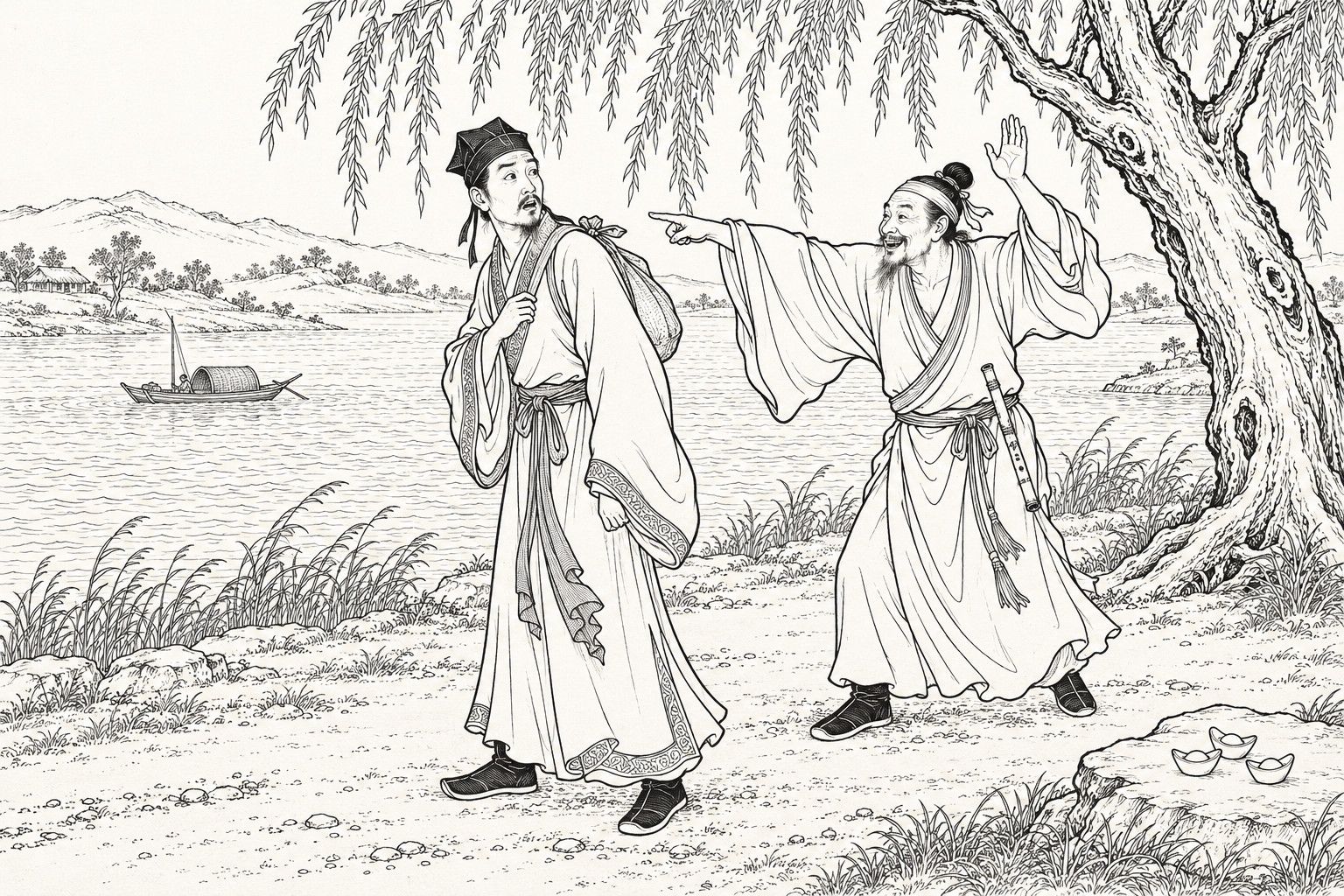
大洪楊先生漣,微時為楚名儒,自命不凡。科試後,聞報優等者,時方食,含哺出問:「有楊某否?」答云:「無。」不覺嗒然自喪,嚥食入鬲,遂成病塊,噎阻甚苦。眾勸令錄遺才;公患無貲,眾醵十金送之行,乃強就道。夜夢人告之云:「前途有人能愈君疾,宜苦求之。」臨去,贈以詩,有「江邊柳下三弄笛,拋向江心莫歎息」之句。明日途次,果見道士坐柳下,因便叩請。道士笑曰:「子悞矣,我何能療病?請為三弄可也。」因出笛吹之。公觸所夢,拜求益切,且傾囊獻之。道士接金,擲諸江流。公以所來不易,啞然驚惜。道士曰:「君未能恝然耶?金在江邊,請自取之。」公詣視果然。又益奇之,呼為仙。道士漫指曰:「我非仙,彼處仙人來矣。」賺公回顧,力拍其項曰:「俗哉!」公受拍,張吻作聲,喉中嘔出一物,墮地堛然,俯而破之,赤絲中裹飯猶存,病若失。回視道士已杳。
號大洪的楊漣先生,在尚未顯達時,就是楚地有名的儒生,自認為不同凡響。科試以後,他聽見有人來報考取優等者的名字。當時正在吃飯,他嘴裡含著飯就出來問:「有我楊某嗎?」那人回答:「沒有。」他不由得灰心喪氣,嚥下的飯堵在胸腹之間,結成了一個硬塊,噎塞不通,十分痛苦。大家勸他去參加補錄遺漏人才的考試;他發愁沒有盤纏,眾人便湊了十兩銀子送他動身,他這才勉強上路。夜裡,他夢見有人告訴他說:「前面的路上,有人能治好你的病,你要苦苦求他。」那人臨走時,贈給他一首詩,其中有兩句:「在江邊柳樹下,吹三支笛曲; 拋到江心去,不要嘆息。」第二天,他走在路上,果然看見一個道士坐在柳樹下,便上前求他治病。道士笑著說:「你弄錯了,我哪能治病?讓我給你吹三支曲子倒是可以。」說著拿出笛子吹了起來。楊公想起夢中的情形,越發懇切地行禮求治,並把袋裡的銀子全拿出來獻給道士。道士接過銀子,扔進江裡。楊公想到這些錢來之不易,驚得說不出話,又十分心疼。道士說:「你還是放不下嗎?銀子就在江邊,你自己去拿吧。」楊公走過去看,果然在那裡。他越發覺得道士神奇,稱他為仙人。道士隨手一指,說:「我不是仙人,那邊有仙人來了。」騙得楊公回頭去看,便用力拍了一下他的後頸,說:「真俗氣!」楊公捱了這一拍,張嘴叫了一聲,喉嚨裡嘔出一個東西,撲通落在地上。他俯身把它弄破,只見裡面裹在紅絲中的飯粒還在,病卻像從來沒有過一樣,全好了。回頭再看,道士已經不見了。
大洪杨先生涟,微时为楚名儒,自命不凡。科试后,闻报优等者,时方食,含哺出问:「有杨某否?」答云:「无。」不觉嗒然自丧,咽食入鬲,遂成病块,噎阻甚苦。众劝令录遗才;公患无赀,众醵十金送之行,乃强就道。夜梦人告之云:「前途有人能愈君疾,宜苦求之。」临去,赠以诗,有「江边柳下三弄笛,抛向江心莫叹息」之句。明日途次,果见道士坐柳下,因便叩请。道士笑曰:「子悮矣,我何能疗病?请为三弄可也。」因出笛吹之。公触所梦,拜求益切,且倾囊献之。道士接金,掷诸江流。公以所来不易,哑然惊惜。道士曰:「君未能恝然耶?金在江边,请自取之。」公诣视果然。又益奇之,呼为仙。道士漫指曰:「我非仙,彼处仙人来矣。」赚公回顾,力拍其项曰:「俗哉!」公受拍,张吻作声,喉中呕出一物,堕地堛然,俯而破之,赤丝中裹饭犹存,病若失。回视道士已杳。
号大洪的杨涟先生,在尚未显达时,就是楚地有名的儒生,自认为不同凡响。科试以后,他听见有人来报考取优等者的名字。当时正在吃饭,他嘴里含着饭就出来问:“有我杨某吗?”那人回答:“没有。”他不由得灰心丧气,咽下的饭堵在胸腹之间,结成了一个硬块,噎塞不通,十分痛苦。大家劝他去参加补录遗漏人才的考试;他发愁没有盘缠,众人便凑了十两银子送他动身,他这才勉强上路。夜里,他梦见有人告诉他说:“前面的路上,有人能治好你的病,你要苦苦求他。”那人临走时,赠给他一首诗,其中有两句:“在江边柳树下,吹三支笛曲; 抛到江心去,不要叹息。”第二天,他走在路上,果然看见一个道士坐在柳树下,便上前求他治病。道士笑着说:“你弄错了,我哪能治病?让我给你吹三支曲子倒是可以。”说着拿出笛子吹了起来。杨公想起梦中的情形,越发恳切地行礼求治,并把袋里的银子全拿出来献给道士。道士接过银子,扔进江里。杨公想到这些钱来之不易,惊得说不出话,又十分心疼。道士说:“你还是放不下吗?银子就在江边,你自己去拿吧。”杨公走过去看,果然在那里。他越发觉得道士神奇,称他为仙人。道士随手一指,说:“我不是仙人,那边有仙人来了。”骗得杨公回头去看,便用力拍了一下他的后颈,说:“真俗气!”杨公挨了这一拍,张嘴叫了一声,喉咙里呕出一个东西,扑通落在地上。他俯身把它弄破,只见里面裹在红丝中的饭粒还在,病却像从来没有过一样,全好了。回头再看,道士已经不见了。
Mr. Yang Lian, known as Dahong, was a famous scholar in Chu before he rose in the world, and he thought himself no ordinary man. After the qualifying examination, he heard the names of those placed in the top grade being announced. He was in the middle of a meal. He came out with his mouth still full and asked, “Is there a Yang on the list?” “No,” came the answer. Before he knew it he was crushed, as if he had lost himself. The food he swallowed went down to his diaphragm and set into a lump, and it choked and blocked him most painfully. Everyone urged him to sit the make-up examination for those passed over. He worried that he had no money, so they pooled ten taels of silver and saw him off, and he forced himself onto the road. That night he dreamed that someone told him, “Ahead on your road is a man who can cure your illness. Beg him hard.” As the figure left, it gave him a poem with the lines: “By the river, under the willow, three airs on the flute; / tossed into midstream — do not sigh.” Next day on the road, sure enough, he saw a Daoist sitting under a willow, and he knelt and begged him. The Daoist laughed. “You are mistaken. How could I cure illness? But I can play you three airs.” He took out a flute and played. This brought the dream home to Yang. He bowed and begged all the more earnestly, and emptied his purse to offer it. The Daoist took the silver and threw it into the river. The money had not come easily, and Yang was struck dumb with alarm and regret. “You cannot shrug it off?” said the Daoist. “The silver is on the riverbank. Go and get it yourself.” Yang went to look, and so it was. He marvelled at the man all the more and called him an immortal. The Daoist pointed off carelessly. “I am no immortal. Look over there — an immortal is coming!” He tricked Yang into turning to look, then slapped him hard on the back of the neck. “How worldly!” At the blow Yang opened his mouth with a sound and threw up something from his throat. It hit the ground with a thud. He bent down and broke it open: inside, wrapped in red threads, the rice was still there. His illness was gone as if it had never been. He looked round. The Daoist had vanished.