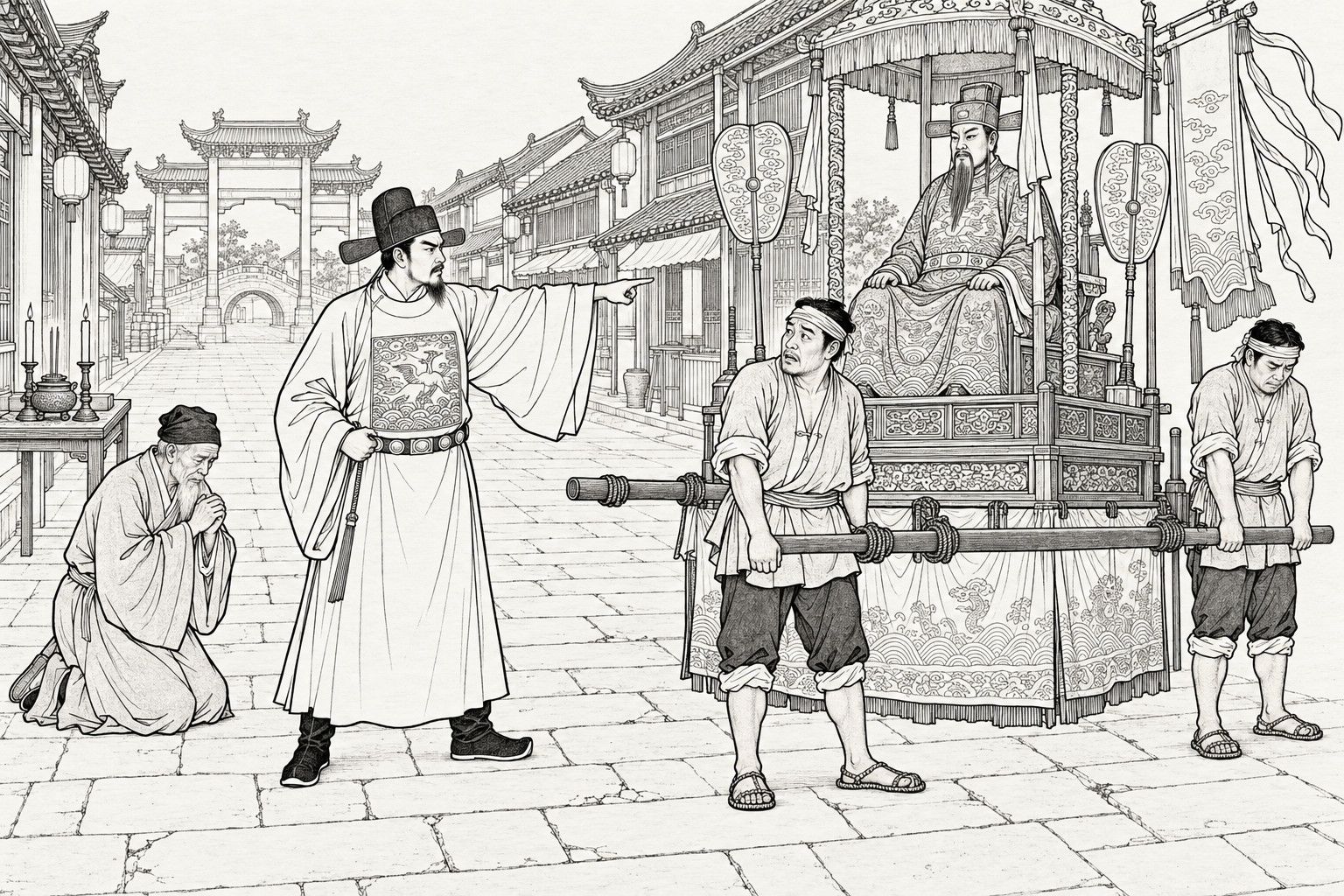
吳令某公,忘其姓字。剛介有聲。吳俗最重城隍之神,木肖之,衣以錦,藏機如生。值神壽節,則居民斂資為會,輦游通衢,建諸旗幢,雜鹵簿,森森部列,鼓吹行且作,闐闐咽咽然,一道相屬也。習以為俗。歲無敢懈。公出,適相值,止而問之。居民以告。又詰知所費頗奢。公怒,指神而責之曰:「城隍實主一邑,如冥頑無靈,則淫昏之鬼,無足奉事;其有靈,則物力宜惜,何得以無益之費,耗民脂膏?」言已,曳神于地,笞之二十。從此習俗頓革。公清正無私,惟少年好戲。居年餘,偶于廨中梯檐探雀鷇,失足而墮,折股,尋卒。人聞城隍祠中,公大聲喧怒,似與神爭,數日不止。吳人不忘公德,集群祝而解之,別建一祠祠公,聲乃息。祠亦以城隍名,春秋祀之,較故神尤著。吳至今有二城隍云。
吳縣有位縣令,姓和名字已經記不清了,以剛直耿介聞名。吳縣的風俗,最尊崇城隍神。他們用木頭雕成神像,給神像穿上錦衣,裡面藏著機關,使它像活的一樣。每逢城隍的生日,居民就集資舉辦廟會,用車載著神像遊過大街,豎起各種旗幟,夾雜著儀仗,隊伍排列得密密整整,鼓樂邊走邊奏,聲音轟鳴,整條路上隊伍連綿不斷。這已經成了風俗,每年都不敢懈怠。縣令一次出門,正巧遇上,便叫隊伍停下,詢問緣由。居民把事情告訴他。他又追問,得知花費十分奢侈,便憤怒地指著神像責備道:「城隍掌管著一縣,如果愚昧遲鈍,沒有靈驗,不過是個邪惡昏亂的鬼,不值得供奉;如果有靈驗,就該愛惜財物,怎麼能讓這些無益的花費耗盡百姓的血汗?」說完,把神像拖到地上,打了二十下。從此,這個習俗立刻廢除了。縣令清正無私,只是年輕,喜歡玩耍。任職一年多後,他偶然在官舍裡架梯子到屋簷下掏小麻雀,失足跌落,摔斷了大腿,不久便死了。人們聽見城隍祠裡傳出縣令大聲發怒的聲音,像是在和城隍爭吵,接連幾天不停。吳縣人沒有忘記他的恩德,召集廟祝來為他們調解,又另建一座祠供奉縣令,聲音才停下來。那座祠也叫城隍祠,每年春秋祭祀,比原來的城隍還要有名。據說吳縣直到如今還有兩個城隍。
吴令某公,忘其姓字。刚介有声。吴俗最重城隍之神,木肖之,衣以锦,藏机如生。值神寿节,则居民敛资为会,辇游通衢,建诸旗幢,杂卤簿,森森部列,鼓吹行且作,阗阗咽咽然,一道相属也。习以为俗。岁无敢懈。公出,适相值,止而问之。居民以告。又诘知所费颇奢。公怒,指神而责之曰:「城隍实主一邑,如冥顽无灵,则淫昏之鬼,无足奉事;其有灵,则物力宜惜,何得以无益之费,耗民脂膏?」言已,曳神于地,笞之二十。从此习俗顿革。公清正无私,惟少年好戏。居年余,偶于廨中梯檐探雀鷇,失足而堕,折股,寻卒。人闻城隍祠中,公大声喧怒,似与神争,数日不止。吴人不忘公德,集群祝而解之,别建一祠祠公,声乃息。祠亦以城隍名,春秋祀之,较故神尤着。吴至今有二城隍云。
吴县有位县令,姓和名字已经记不清了,以刚直耿介闻名。吴县的风俗,最尊崇城隍神。他们用木头雕成神像,给神像穿上锦衣,里面藏着机关,使它像活的一样。每逢城隍的生日,居民就集资举办庙会,用车载着神像游过大街,竖起各种旗帜,夹杂着仪仗,队伍排列得密密整整,鼓乐边走边奏,声音轰鸣,整条路上队伍连绵不断。这已经成了风俗,每年都不敢懈怠。县令一次出门,正巧遇上,便叫队伍停下,询问缘由。居民把事情告诉他。他又追问,得知花费十分奢侈,便愤怒地指着神像责备道:“城隍掌管着一县,如果愚昧迟钝,没有灵验,不过是个邪恶昏乱的鬼,不值得供奉;如果有灵验,就该爱惜财物,怎么能让这些无益的花费耗尽百姓的血汗?”说完,把神像拖到地上,打了二十下。从此,这个习俗立刻废除了。县令清正无私,只是年轻,喜欢玩耍。任职一年多后,他偶然在官舍里架梯子到屋檐下掏小麻雀,失足跌落,摔断了大腿,不久便死了。人们听见城隍祠里传出县令大声发怒的声音,像是在和城隍争吵,接连几天不停。吴县人没有忘记他的恩德,召集庙祝来为他们调解,又另建一座祠供奉县令,声音才停下来。那座祠也叫城隍祠,每年春秋祭祀,比原来的城隍还要有名。据说吴县直到如今还有两个城隍。
There was once a magistrate of Wu whose name has been forgotten. He was known as a hard, upright man. The people of Wu revered the City God above all other gods. His image was carved of wood and dressed in brocade, with hidden works inside that made him move as if alive. On the god’s birthday the townspeople pooled their money and held a festival. They carried him through the main streets in a carriage, with banners and streamers raised all about and an honour guard in the procession, rank upon rank in close array. Drums and pipes played as they marched, booming and wailing, one unbroken line from end to end of the road. It had become the custom, and no year dared to pass without it. The magistrate went out one day and happened upon the procession. He stopped and asked what it was, and the townspeople told him. He questioned them further and learned how much it all cost. He was angry, and pointing at the god he rebuked it: “A City God rules over a county. If you are dull and senseless, with no power at all, then you are a dissolute, benighted ghost and not worth serving. If you do have power, you ought to spare the people’s goods. How can you drain their fat and grease on such useless expense?” With that he dragged the god to the ground and gave it twenty strokes of the bamboo. From then on the custom ended at once. The magistrate was honest and selfless; only, being young, he loved to play. When he had been in office a little over a year, he set a ladder against the eaves at his official residence to reach for the baby sparrows in a nest, lost his footing, fell and broke his thigh. He died soon after. People heard the magistrate’s voice in the City God’s temple, loud and angry, as if he were quarrelling with the god, and it went on for days. The people of Wu had not forgotten his goodness. They gathered the temple priests to make peace between the two, and built a separate temple for the magistrate; then the voices fell silent. That temple too is called a City God temple, and sacrifices are offered there in spring and autumn; it is more famous than the old god’s. And so, they say, Wu has two City Gods to this day.