詩曰:
忠臣孝子死無辜,只為殷商有怪狐。淫亂不羞先薦恥,貞誠豈畏後來誅。
诗曰:
忠臣孝子死无辜,只为殷商有怪狐。淫乱不羞先荐耻,贞诚岂畏后来诛。
A poem says:
Loyal ministers and dutiful sons die guiltless,all because the Shang harboured an uncanny fox.The wanton one, unashamed, was the first to offer up her shame;the chaste and true — how could he fear the death that came after?
寧甘萬刃留青白,不受千嬌學獨夫。史冊不污千載恨,令人屈指淚如珠。
宁甘万刃留青白,不受千娇学独夫。史册不污千载恨,令人屈指泪如珠。
He would sooner suffer ten thousand blades and keep himself clean and unstainedthan take her thousand charms and follow the lone tyrant’s way.The annals stay unsullied, though the grief lasts a thousand years;all who count it over shed tears like pearls.
話說伯邑考要往朝歌為父贖罪。時有上大夫散宜生阻諫,公子立意不允,隨進宮辭母太姬,要往朝歌贖罪。太姬曰:「汝父被羈羑里,西岐內外事付托何人?」邑考曰:「內事托與兄弟姬發,外事托付散宜生,軍務托付南宮适;孩兒要親往朝歌面君,以進貢為名,請贖父罪。」母親見伯邑考堅執要去,只得依允,分付曰:「孩兒此去,須要小心!」邑考辭去,竟到殿前與弟姬發言曰:「兄弟好生與眾兄弟和美,不可改西岐規矩,我此去朝歌,多則三月,少則二月,即便回程。」邑考分付畢,收拾寶物進貢,擇日起行。姬發同文武官九十八弟,在十里長亭餞別。邑考與眾人飲酒作辭,一路前行,揚鞭縱馬,過了些紅杏芳林,行無限柳陰古道。伯邑考與從人一日行至汜水關。關上軍兵見兩杆進貢旛幢,上書西伯侯旗號。軍官來報主帥。守關總兵韓榮命開關。邑考進關,一路無辭。行過五關,來到澠池縣,渡黃河至孟津,進了朝歌城,皇華館驛安下。次日,問驛丞:「丞相府住在那裏?」驛丞答曰:「在太平街。」次日,邑考來至午門,並不見一員官走動,又不敢擅入午門。已往返五日,邑考素縞抱本立于午門外。少時,只見一位大臣騎馬而至,乃亞相比干也。伯邑考向前跪下。比干問曰:「階下跪者何人?」邑考答曰:「吾乃犯臣姬昌子伯邑考。」比干聞言,滾鞍下馬,以手相扶,口稱:「賢公子請起!」二人立在午門外。比干問曰:「公子為何事至此?」邑考答曰:「父親得罪于天子,蒙丞相保護,得全性命,此恩天高地厚;愚父子兄弟銘刻難忘!只因七載光陰,父親久羈羑里,人子何以得安。想天子必思念循良,豈肯甘為魚肉。邑考與散宜生議,將祖遺鎮國異寶,進納王廷,代父贖罪。萬望丞相開天地仁慈之心,憐姬昌久羈羑里之苦,倘蒙賜骸骨,得歸故土,真恩如太山,德如淵海。西岐萬姓,無不感念丞相之大恩也。」比干答曰:「公子納貢,乃是何寶?」伯邑考曰:「自是始祖父亶所遺七香車,醒酒氈,白面猿猴,美女十名,代父贖罪。」比干曰:「七香車有何貴乎?」邑考答曰:「七香車;乃軒轅皇帝破蚩尤于北海,遺下此車,若人坐上面,不用推引,欲東則東,欲西則西──乃世傳之寶也。醒酒氈;倘人醉酩酊,臥此氈上,不消時刻即醒。白面猿猴;雖是畜類,善知三千小曲,八百大曲,能謳筵前之歌,善為掌上之舞,真如嚦嚦鶯簧,翩翩弱柳。」比干聽罷,「此寶雖妙,今天子失德,又以游戲之物進貢,正是助桀為虐,熒惑聖聰,反加朝廷之亂;無奈公子為父羈囚,行其仁孝,一點真心,此本我替公子轉達天聽,不負公子來意耳。」比干往摘星樓候旨。
话说伯邑考要往朝歌为父赎罪。时有上大夫散宜生阻谏,公子立意不允,随进宫辞母太姬,要往朝歌赎罪。太姬曰:「汝父被羁羑里,西岐内外事付托何人?」邑考曰:「内事托与兄弟姬发,外事托付散宜生,军务托付南宫适;孩儿要亲往朝歌面君,以进贡为名,请赎父罪。」母亲见伯邑考坚执要去,只得依允,分付曰:「孩儿此去,须要小心!」邑考辞去,竟到殿前与弟姬发言曰:「兄弟好生与众兄弟和美,不可改西岐规矩,我此去朝歌,多则三月,少则二月,即便回程。」邑考分付毕,收拾宝物进贡,择日起行。姬发同文武官九十八弟,在十里长亭饯别。邑考与众人饮酒作辞,一路前行,扬鞭纵马,过了些红杏芳林,行无限柳阴古道。伯邑考与从人一日行至汜水关。关上军兵见两杆进贡旛幢,上书西伯侯旗号。军官来报主帅。守关总兵韩荣命开关。邑考进关,一路无辞。行过五关,来到渑池县,渡黄河至孟津,进了朝歌城,皇华馆驿安下。次日,问驿丞:「丞相府住在那里?」驿丞答曰:「在太平街。」次日,邑考来至午门,并不见一员官走动,又不敢擅入午门。已往返五日,邑考素缟抱本立于午门外。少时,只见一位大臣骑马而至,乃亚相比干也。伯邑考向前跪下。比干问曰:「阶下跪者何人?」邑考答曰:「吾乃犯臣姬昌子伯邑考。」比干闻言,滚鞍下马,以手相扶,口称:「贤公子请起!」二人立在午门外。比干问曰:「公子为何事至此?」邑考答曰:「父亲得罪于天子,蒙丞相保护,得全性命,此恩天高地厚;愚父子兄弟铭刻难忘!只因七载光阴,父亲久羁羑里,人子何以得安。想天子必思念循良,岂肯甘为鱼肉。邑考与散宜生议,将祖遗镇国异宝,进纳王廷,代父赎罪。万望丞相开天地仁慈之心,怜姬昌久羁羑里之苦,倘蒙赐骸骨,得归故土,真恩如太山,德如渊海。西岐万姓,无不感念丞相之大恩也。」比干答曰:「公子纳贡,乃是何宝?」伯邑考曰:「自是始祖父亶所遗七香车,醒酒毡,白面猿猴,美女十名,代父赎罪。」比干曰:「七香车有何贵乎?」邑考答曰:「七香车;乃轩辕皇帝破蚩尤于北海,遗下此车,若人坐上面,不用推引,欲东则东,欲西则西──乃世传之宝也。醒酒毡;倘人醉酩酊,卧此毡上,不消时刻即醒。白面猿猴;虽是畜类,善知三千小曲,八百大曲,能讴筵前之歌,善为掌上之舞,真如呖呖莺簧,翩翩弱柳。」比干听罢,「此宝虽妙,今天子失德,又以游戏之物进贡,正是助桀为虐,荧惑圣聪,反加朝廷之乱;无奈公子为父羁囚,行其仁孝,一点真心,此本我替公子转达天听,不负公子来意耳。」比干往摘星楼候旨。
Now, Bo Yikao meant to go to Zhaoge to redeem his father’s crime. The Senior Counsellor San Yisheng tried to dissuade him, but the young lord’s mind was made up and he would not agree. He went into the palace to take leave of his mother, Tai Ji, for he meant to go to Zhaoge and redeem the crime. Tai Ji said, “Your father is held at Youli. To whom will you entrust the affairs of Xiqi, within and without?” Yikao said, “The inner affairs I shall leave to my brother Ji Fa, the outer affairs to San Yisheng, and military matters to Nangong Kuo. Your child means to go to Zhaoge himself and see the king, and with tribute as my reason, ask to redeem Father’s crime.” Seeing that Bo Yikao was set on going, his mother could only consent. “My child,” she charged him, “take great care on this journey!” Yikao took his leave and went straight to the front hall, where he said to his brother Ji Fa, “Brother, live in harmony with all our brothers, and make no changes to the ways of Xiqi. I go to Zhaoge now; in three months at most, or two at least, I shall be on my way home.” His instructions given, Yikao packed up the treasures for the tribute and chose a day to set out. Ji Fa, with the officials civil and military and all ninety-eight younger brothers, gave him a farewell feast at the Long Pavilion, ten li out of the city. Yikao drank with them and said his farewells, and then he was on his way, cracking his whip and giving his horse its head, past fragrant groves of red apricot and along endless old roads shaded by willows. One day Bo Yikao and his followers reached Sishui Pass. The soldiers on the pass saw two tribute banners bearing the name of the Lord of the West, and an officer went to report to the commander. Han Rong, the Commander of the pass, ordered the gates opened. Yikao went through, and the road brought nothing worth the telling. He passed the Five Passes and came to Mianchi County, crossed the Yellow River to Mengjin, entered the city of Zhaoge and took lodgings at the guesthouse for royal envoys. The next day he asked the keeper of the guesthouse, “Where is the Chancellor’s residence?” “On Taiping Street,” the keeper answered. The next day Yikao came to the Meridian Gate, but not a single official was to be seen coming or going, and he did not dare go in through the Meridian Gate unbidden. Five days he went back and forth like this. Then Yikao, dressed in plain white and holding his memorial in his arms, stood waiting outside the Meridian Gate. Before long a great minister came riding up: it was the Second Chancellor, Bi Gan. Bo Yikao went forward and knelt. “Who is that kneeling at the foot of the steps?” asked Bi Gan. Yikao answered, “I am Bo Yikao, son of the criminal subject Ji Chang.” At these words Bi Gan sprang from the saddle and raised him with his own hands. “Please rise, worthy young lord!” The two of them stood outside the Meridian Gate, and Bi Gan asked, “What brings you here, young lord?” Yikao answered, “My father offended the Son of Heaven, and it was thanks to your protection, Chancellor, that his life was spared. That kindness is as high as heaven and as deep as the earth; my father and all of us, his sons, have it carved on our hearts and can never forget it! But now seven years have gone by with Father held at Youli all this while — how can a son have any peace? I believe the Son of Heaven must surely care for his good and law-abiding subjects. How could we be content to lie like fish on the chopping block? I, Yikao, have agreed with San Yisheng to present to the royal court the rare treasures our ancestors handed down to guard our state, and so redeem my father’s crime in his place. I beg you with all my heart, Chancellor: open your heart, kind and merciful as heaven and earth, and pity Ji Chang his long suffering at Youli. If his old bones may be granted leave to go home to their native soil, your kindness will truly be as great as Mount Tai and your goodness as deep as the sea. There is not a soul in Xiqi who will not remember your great kindness with gratitude, Chancellor.” Bi Gan said, “And what treasures are you bringing as tribute, young lord?” Bo Yikao said, “The Seven-Fragrance Carriage that our first ancestor Danfu handed down, the Sobering Rug, a white-faced ape and ten beautiful women, to redeem my father’s crime.” “What is so precious about the Seven-Fragrance Carriage?” asked Bi Gan. Yikao answered, “The Seven-Fragrance Carriage: when the Emperor Xuanyuan defeated Chiyou at the North Sea, he left this carriage behind. If someone sits in it, it needs no one to push or pull it; if he wishes to go east, it goes east, and if he wishes to go west, it goes west — a treasure handed down for generations. The Sobering Rug: if a man is dead drunk, let him lie on this rug, and in no time at all he will be sober. The white-faced ape: though only a beast, it knows three thousand short songs and eight hundred long ones. It can sing for a banquet and dance as lightly as if on the palm of a hand — truly like the trilling of an oriole, like a slender willow swaying.” When Bi Gan had heard him out, he said, “These treasures are wonderful indeed. But the Son of Heaven has lost his virtue, and to offer him playthings as tribute is the very way to help Jie in his cruelty: they will dazzle and bewilder His Majesty and only add to the disorder at court. Still, since you, young lord, act out of kindness and filial love because your father is a prisoner, and your heart is true, I will carry this memorial to His Majesty’s hearing for you, so that your coming here shall not be in vain.” Bi Gan went to the Star-Plucking Tower to await the royal command.
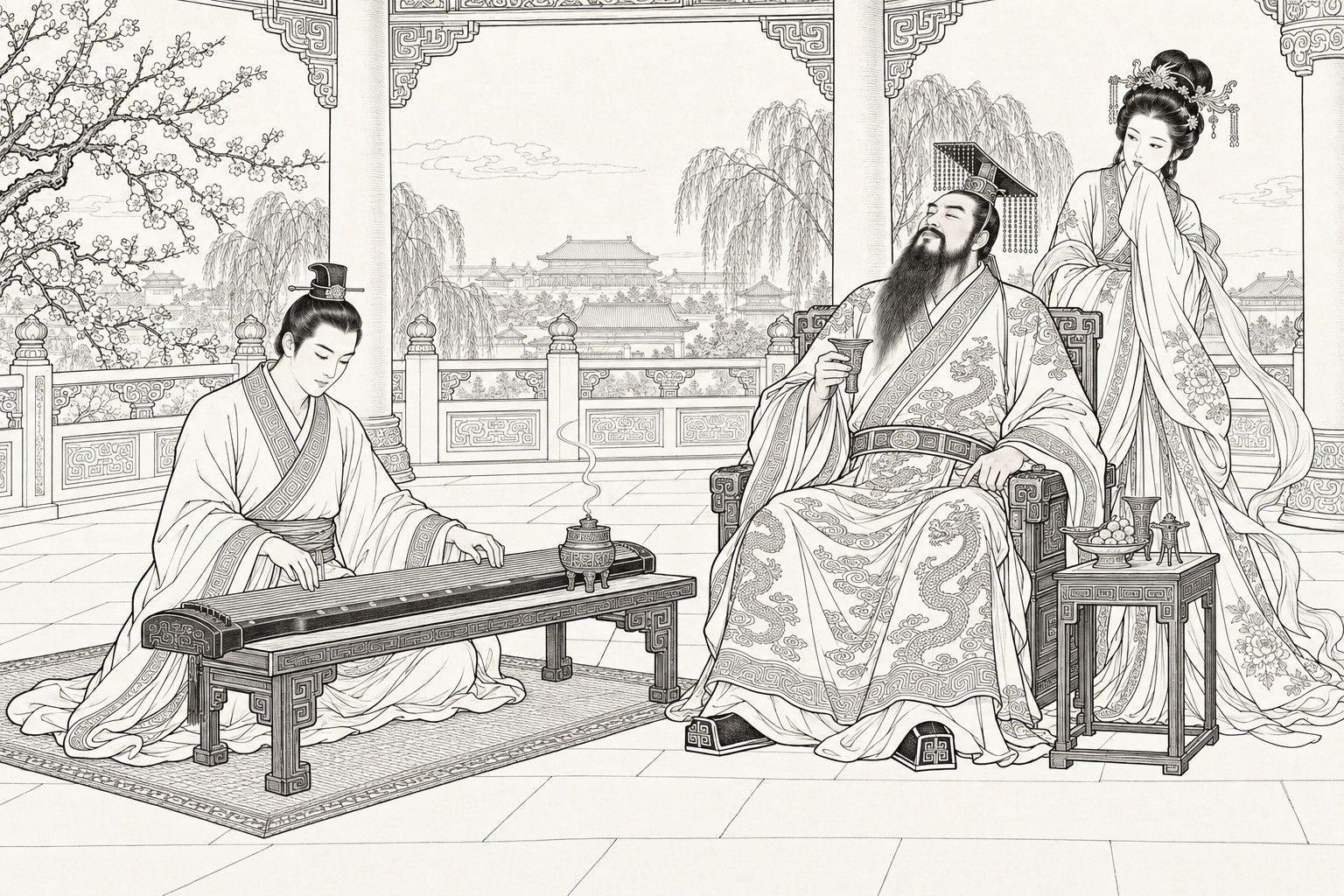
奉御官啟奏:「亞相比干見駕。」紂王曰:「宣比干上樓。」比干上樓朝見。紂王曰:「朕無旨宣召,卿有何表章?」比干奏曰:「臣啟奏陛下!西伯侯姬昌子伯邑,考納貢代父贖罪。」王曰:「伯邑考納進何物?」比干將進貢本呈上。帝覽畢,向比干曰:「七香車,醒酒氈,白面猿猴,美女十名代西伯侯贖罪。」紂王命宣邑考上樓。那邑考肘膝而行,俯伏奏曰:「犯臣子伯邑考朝見。」紂王曰:「姬昌罪大忤君,今子納貢為父贖罪,亦可為孝矣。」伯邑考奏曰:「犯臣姬昌罪犯忤君,赦宥免死,暫居羑里。臣等舉室感陛下天高海闊之洪恩,仰地厚山高之大德。今臣等不揣愚陋,昧死上陳,請代父罪。倘荷仁慈,賜以再生,得赦歸國,使臣母子等骨肉重完;臣等萬載瞻仰陛下好生之德出于意外也。」紂王見邑考悲慘,為父陳冤,極其懇至,知是忠臣孝子之言,不勝感動,乃賜邑考平身。邑考謝恩,立于欄杆之外。妲己在內簾見邑考丰姿都雅,目秀眉清,唇紅齒白,言語溫柔。妲己傳旨:「捲去珠簾。」左右宮人將珠高捲,搭上金鉤。紂王見妲己出來,口稱:「御妻,今有西伯侯之子伯邑考納貢代父贖罪,情實可矜。」妲己奏曰:「妾聞西岐伯邑考善能鼓琴,真世上無雙,人間絕少。」紂王曰:「御妻何以知之?」妲己曰:「妾雖女流,幼在深閨聞父母傳說,邑考博通音律,鼓琴更精,深知大雅遺音,妾所以得知。陛下可著邑考撫彈一曲,便知深淺。」紂王乃酒色之徒,久被妖氛所惑,一聽其言,便命伯邑考叩見妲己。邑考朝拜畢。妲己曰:「伯邑考,聞你善能撫琴,你今試撫一曲何如?」邑考奏曰:「娘娘在上,臣聞父母有疾,為人子者,不敢舒衣安食。今犯臣父七載羈囚,苦楚萬狀,臣何忍蔑視其父,自為喜悅而鼓琴哉!況臣心碎如麻,安能宮商節奏,有辱聖聰。」紂王曰:「邑考,你當此景,撫操一曲,如果希奇,赦你父子歸國。」邑考聽見此言,大喜謝恩。紂王傳旨,取琴一張。邑考盤膝坐在地上,將琴放在膝上,十指尖尖,撥動琴弦,撫弄一曲,名曰「風入松」:
奉御官启奏:「亚相比干见驾。」纣王曰:「宣比干上楼。」比干上楼朝见。纣王曰:「朕无旨宣召,卿有何表章?」比干奏曰:「臣启奏陛下!西伯侯姬昌子伯邑,考纳贡代父赎罪。」王曰:「伯邑考纳进何物?」比干将进贡本呈上。帝览毕,向比干曰:「七香车,醒酒毡,白面猿猴,美女十名代西伯侯赎罪。」纣王命宣邑考上楼。那邑考肘膝而行,俯伏奏曰:「犯臣子伯邑考朝见。」纣王曰:「姬昌罪大忤君,今子纳贡为父赎罪,亦可为孝矣。」伯邑考奏曰:「犯臣姬昌罪犯忤君,赦宥免死,暂居羑里。臣等举室感陛下天高海阔之洪恩,仰地厚山高之大德。今臣等不揣愚陋,昧死上陈,请代父罪。倘荷仁慈,赐以再生,得赦归国,使臣母子等骨肉重完;臣等万载瞻仰陛下好生之德出于意外也。」纣王见邑考悲惨,为父陈冤,极其恳至,知是忠臣孝子之言,不胜感动,乃赐邑考平身。邑考谢恩,立于栏杆之外。妲己在内帘见邑考丰姿都雅,目秀眉清,唇红齿白,言语温柔。妲己传旨:「卷去珠帘。」左右宫人将珠高卷,搭上金钩。纣王见妲己出来,口称:「御妻,今有西伯侯之子伯邑考纳贡代父赎罪,情实可矜。」妲己奏曰:「妾闻西岐伯邑考善能鼓琴,真世上无双,人间绝少。」纣王曰:「御妻何以知之?」妲己曰:「妾虽女流,幼在深闺闻父母传说,邑考博通音律,鼓琴更精,深知大雅遗音,妾所以得知。陛下可着邑考抚弹一曲,便知深浅。」纣王乃酒色之徒,久被妖氛所惑,一听其言,便命伯邑考叩见妲己。邑考朝拜毕。妲己曰:「伯邑考,闻你善能抚琴,你今试抚一曲何如?」邑考奏曰:「娘娘在上,臣闻父母有疾,为人子者,不敢舒衣安食。今犯臣父七载羁囚,苦楚万状,臣何忍蔑视其父,自为喜悦而鼓琴哉!况臣心碎如麻,安能宫商节奏,有辱圣聪。」纣王曰:「邑考,你当此景,抚操一曲,如果希奇,赦你父子归国。」邑考听见此言,大喜谢恩。纣王传旨,取琴一张。邑考盘膝坐在地上,将琴放在膝上,十指尖尖,拨动琴弦,抚弄一曲,名曰「风入松」:
A chamberlain announced, “The Second Chancellor, Bi Gan, asks to see Your Majesty.” “Summon Bi Gan up into the tower,” said King Zhou. Bi Gan came up into the tower and paid his respects. King Zhou said, “We sent no summons, minister. What memorial do you bring?” Bi Gan said, “Your servant begs to tell Your Majesty: Bo Yikao, son of Ji Chang, Lord of the West, has brought tribute to redeem his father’s crime.” “What has Bo Yikao brought?” said the king. Bi Gan presented the memorial listing the tribute. When the king had read it, he said to Bi Gan, “The Seven-Fragrance Carriage, the Sobering Rug, a white-faced ape and ten beautiful women, to redeem the crime of the Lord of the West.” King Zhou ordered Yikao summoned up into the tower. Yikao came forward on his knees and elbows, lay prostrate and said, “Bo Yikao, son of a criminal subject, comes to pay his respects.” King Zhou said, “Ji Chang’s crime was great: he defied his sovereign. Now his son brings tribute to redeem his father’s crime — that may be called filial indeed.” Bo Yikao said, “The criminal subject Ji Chang committed the crime of defying his sovereign, yet he was pardoned and spared death, and lives for the present at Youli. Our whole household is grateful for Your Majesty’s vast grace, high as heaven and wide as the sea, and looks up to your great virtue, deep as the earth and high as the mountains. Now, heedless of our folly and meanness, we risk death to lay this before you and beg to bear our father’s crime in his place. If in your benevolence you would grant him new life and pardon him to go home, so that my mother and we her sons may be made whole again, flesh and blood together, then for ten thousand years we shall look up to Your Majesty for showing us, beyond all our hopes, Heaven’s love of life.” King Zhou saw how grief-stricken Yikao was and how earnestly he pleaded his father’s wrong. He knew these were the words of a loyal subject and a dutiful son, and he was deeply moved. He bade Yikao rise, and Yikao thanked him and stood outside the balustrade. From behind the inner curtain Daji saw that Yikao was handsome and refined, with fine eyes and clear brows, red lips and white teeth, and a gentle way of speaking. Daji sent out a command: “Roll up the pearl curtain.” The palace women on either side rolled it high and hung it on its golden hooks. When King Zhou saw Daji come out, he said, “My royal wife, here is Bo Yikao, son of the Lord of the West, bringing tribute to redeem his father’s crime. His case truly deserves pity.” Daji said, “Your handmaid has heard that Bo Yikao of Xiqi plays the zither beautifully — truly without equal in the world, a rare thing among men.” “How do you know that, my royal wife?” said King Zhou. “Though your handmaid is only a woman,” said Daji, “when I was a girl in my secluded chambers I heard my parents tell how Yikao was learned in all music and finer still at the zither, with a deep knowledge of the lofty music handed down from the ancients. That is how I know. Let Your Majesty have Yikao play a piece, and you will see how deep his art goes.” King Zhou was a slave to wine and women and had long been bewitched by the demon’s aura. The moment he heard this, he ordered Bo Yikao to kowtow to Daji. When Yikao had made his obeisance, Daji said, “Bo Yikao, I hear you play the zither beautifully. Will you try a piece for us now?” Yikao said, “Your Majesty, your servant has heard that when a man’s parents are ill, their son dares not loosen his clothes or eat at his ease. Now my father, a criminal subject, has been a prisoner for seven years and has suffered every kind of torment. How could your servant bear to slight his father and play the zither for his own pleasure? Besides, your servant’s heart is broken and tangled like hemp — how could I keep to the notes and the beat? I would only offend the royal ears.” King Zhou said, “Yikao, play a piece here and now. If it is truly rare, We will pardon you and your father and let you go home.” At these words Yikao was overjoyed and gave thanks. King Zhou sent for a zither. Yikao sat cross-legged on the floor and laid the zither across his knees. His ten slender fingers plucked the strings, and he played a piece called “Wind in the Pines”:
楊柳依依弄曉風,桃花半吐映日紅。芳草綿綿鋪錦繡,任他車馬各西東。
杨柳依依弄晓风,桃花半吐映日红。芳草绵绵铺锦绣,任他车马各西东。
Willows sway, soft and slender, playing with the morning breeze;peach blossoms, half open, glow red in the sun.Fragrant grasses stretch on and on, spread out like brocade;let carts and horses go their ways, east and west.
邑考彈至曲終,只見音韻幽揚,真如戛玉鳴珠,萬壑松濤,清婉欲絕,令人塵襟頓爽,恍如身在瑤池鳳闕;而笙簧簫管,檀板謳歌,覺俗氣逼人耳。誠所謂「此曲祗應天上有,人間能得幾回聞。」紂王聽罷,心中大悅,對妲己曰:「真不負御妻所聞。邑考此曲可稱盡善盡美。」妲己奏曰:「伯邑考之琴,天下共聞,今親覿其人,所聞未盡所見。」紂王大喜,傳旨摘星樓排宴。妲己偷睛看邑考,面如滿月,丰姿俊雅,一表非俗,其風嬝嬝情動人。妲己又看紂王容貌,大是暗昧,不甚動人!──看官:紂王雖是帝王之相,怎經色慾相虧,形容枯槁。自古佳人愛少年,何況妲己乃一妖魅乎。妲己暗想:且將邑考留在此處,假說傳琴,乘機挑逗,庶幾成就鸞鳳,共效于飛之樂。況他少年,其為補益更多,而拘拘于此老哉。」妲己設計欲留邑考,隨即奏曰:「陛下當赦西伯父子歸國,固是陛下浩蕩之恩,但邑考琴為天下絕調,今赦之歸國,朝歌竟然絕響,深為可惜。」紂王曰:「如之奈何?」妲己奏曰:「妾有一法,可全二事。」紂王曰:「卿有何妙策可以兩全?」妲己曰:「陛下可留邑考在此傳妾之琴,俟妾學精熟,早晚侍陛下左右,以助皇上清暇之樂。一則西伯感陛下赦宥之恩;二則朝歌不致絕瑤琴之樂,庶幾可以兩全。」紂王聞言,以手拍妲己之背曰:「賢哉愛卿!真是聰慧賢明,深得一舉兩全之道。」隨傳旨:「留邑考在此樓傳琴。」妲己不覺暗喜:「我如今且將紂王灌醉了,扶去濃睡,我自好與彼行事,何愁此事不成。」忙傳旨排宴。紂王以為妲己好意,豈知內藏傷風敗俗之情,大壞綱常禮義之防。妲己手捧金盃,對紂王曰:「陛下進此壽酒!」紂王以為美愛,只顧歡娛,不覺一時酩酊。妲己命左右侍御宮人,扶皇上龍榻安寢,方著邑考傳琴。兩邊宮人取琴二張,上一張是妲己,下一張是伯邑考傳琴。邑考奏曰:「犯臣子啟娘娘;此琴有內外五形,六律五音。吟、操、勾、剔。左手龍睛,右手鳳目,按宮、商、角、徵、羽。又有八法,乃抹、挑、勾、剔、撇、托、摘、打。有六忌,七不彈。」妲己問曰:「何為六忌?」邑考曰:「聞哀,慟泣,專心事,忿怒情懷,戒慾、驚。」妲己又問:「何為七不彈?」邑考曰:「疾風驟雨,大悲大哀,衣冠不正,酒醉性狂,無香近褻,不知音近俗,不潔近穢。遇此皆不彈。此琴乃太古遺音,樂而近雅,與諸樂大不相同,其中有八十一大調,五十一小調,三十六等音。」有詩為證:
邑考弹至曲终,只见音韵幽扬,真如戛玉鸣珠,万壑松涛,清婉欲绝,令人尘襟顿爽,恍如身在瑶池凤阙;而笙簧箫管,檀板讴歌,觉俗气逼人耳。诚所谓「此曲祗应天上有,人间能得几回闻。」纣王听罢,心中大悦,对妲己曰:「真不负御妻所闻。邑考此曲可称尽善尽美。」妲己奏曰:「伯邑考之琴,天下共闻,今亲觌其人,所闻未尽所见。」纣王大喜,传旨摘星楼排宴。妲己偷睛看邑考,面如满月,丰姿俊雅,一表非俗,其风嬝嬝情动人。妲己又看纣王容貌,大是暗昧,不甚动人!──看官:纣王虽是帝王之相,怎经色欲相亏,形容枯槁。自古佳人爱少年,何况妲己乃一妖魅乎。妲己暗想:且将邑考留在此处,假说传琴,乘机挑逗,庶几成就鸾凤,共效于飞之乐。况他少年,其为补益更多,而拘拘于此老哉。」妲己设计欲留邑考,随即奏曰:「陛下当赦西伯父子归国,固是陛下浩荡之恩,但邑考琴为天下绝调,今赦之归国,朝歌竟然绝响,深为可惜。」纣王曰:「如之奈何?」妲己奏曰:「妾有一法,可全二事。」纣王曰:「卿有何妙策可以两全?」妲己曰:「陛下可留邑考在此传妾之琴,俟妾学精熟,早晚侍陛下左右,以助皇上清暇之乐。一则西伯感陛下赦宥之恩;二则朝歌不致绝瑶琴之乐,庶几可以两全。」纣王闻言,以手拍妲己之背曰:「贤哉爱卿!真是聪慧贤明,深得一举两全之道。」随传旨:「留邑考在此楼传琴。」妲己不觉暗喜:「我如今且将纣王灌醉了,扶去浓睡,我自好与彼行事,何愁此事不成。」忙传旨排宴。纣王以为妲己好意,岂知内藏伤风败俗之情,大坏纲常礼义之防。妲己手捧金杯,对纣王曰:「陛下进此寿酒!」纣王以为美爱,只顾欢娱,不觉一时酩酊。妲己命左右侍御宫人,扶皇上龙榻安寝,方着邑考传琴。两边宫人取琴二张,上一张是妲己,下一张是伯邑考传琴。邑考奏曰:「犯臣子启娘娘;此琴有内外五形,六律五音。吟、操、勾、剔。左手龙睛,右手凤目,按宫、商、角、征、羽。又有八法,乃抹、挑、勾、剔、撇、托、摘、打。有六忌,七不弹。」妲己问曰:「何为六忌?」邑考曰:「闻哀,恸泣,专心事,忿怒情怀,戒欲、惊。」妲己又问:「何为七不弹?」邑考曰:「疾风骤雨,大悲大哀,衣冠不正,酒醉性狂,无香近亵,不知音近俗,不洁近秽。遇此皆不弹。此琴乃太古遗音,乐而近雅,与诸乐大不相同,其中有八十一大调,五十一小调,三十六等音。」有诗为证:
Yikao played the piece to its end. Its notes rose and fell, deep and lingering, truly like the chime of struck jade and ringing pearls, like the pine wind surging through ten thousand valleys, pure and tender almost past bearing. It swept the dust of the world from the heart at a stroke, and one seemed to stand by the Jasper Pool among the phoenix towers of heaven; beside it, reed pipes and flutes, clappers and songs seemed coarse enough to stifle one. It was truly as the saying goes: “Such music belongs in heaven alone; how often can it be heard among men?” When King Zhou had heard it, he was delighted, and said to Daji, “He truly lives up to what you heard, my royal wife. This piece of Yikao’s may be called perfect in beauty and perfect in goodness.” Daji said, “All the world has heard of Bo Yikao’s zither. Now that I see the man himself, what I heard falls short of what I see.” King Zhou, overjoyed, sent down a command to lay a banquet in the Star-Plucking Tower. Daji stole a look at Yikao: a face like the full moon, a handsome and refined bearing, a figure far from common, and a grace about him that stirred the heart. Then Daji looked at King Zhou: his face was dull and murky, with little to stir anyone! (Mark this, reader: King Zhou had the looks of a king, but how could they stand up to the ravages of lust? He had grown haggard and wasted. Since ancient times beautiful women have loved young men — and how much more so Daji, who was a demon!) Daji thought to herself, “I’ll keep Yikao here on the pretext of having him teach me the zither, and tempt him when the chance comes. Then perhaps the two of us can become a pair of phoenixes and share the joy of birds that fly wing to wing. Besides, he is young; he will do me far more good. Why should I cling to this old man?” Having laid her plan to keep Yikao, Daji at once said, “If Your Majesty pardons the Lord of the West and his son and sends them home, that is indeed Your Majesty’s boundless grace. But Yikao’s zither is the finest music in the realm. If he is pardoned and sent home now, Zhaoge will never hear its like again — a great pity.” “Then what is to be done?” said King Zhou. “Your handmaid has a way to have both,” said Daji. “What clever plan have you, to have it both ways?” said King Zhou. Daji said, “Your Majesty might keep Yikao here to teach your handmaid the zither. When I have learned it thoroughly, I can wait on Your Majesty morning and evening and add to the pleasures of your leisure hours. On the one hand, the Lord of the West will be grateful for Your Majesty’s pardon; on the other, Zhaoge will not lose the music of the jasper zither. So perhaps both may be had.” At this King Zhou patted Daji on the back. “How wise you are, my love! Truly clever and wise — you have found the very way to gain two ends with one move.” And he sent down the command at once: “Yikao is to stay in this tower and teach the zither.” Daji was secretly delighted. “Now I’ll get King Zhou drunk and have him helped off to a deep sleep, and then I’ll be free to have my way with that one. How can it fail?” She hurriedly sent word to lay the banquet. King Zhou took it that Daji meant well — how could he know that within lay a passion that would harm the morals of the age and corrupt its customs, and break down the barriers that the bonds and the constants, ritual and righteousness had set? Holding up a golden cup in both hands, Daji said to King Zhou, “Drink this cup to your long life, Your Majesty!” King Zhou took it for loving devotion and thought only of his pleasure, and before he knew it he was dead drunk. Daji ordered the waiting women at her side to help His Majesty to his dragon couch to sleep, and only then did she have Yikao teach the zither. The palace women on either side brought two zithers: the upper one for Daji, the lower one for Bo Yikao to teach on. Yikao said, “The son of a criminal subject begs to tell Your Majesty: the zither has the five forms, inner and outer, the six pitch-pipes and the five notes; it has trilling and playing, hooking and flicking. The left hand makes the dragon’s eye and the right hand the phoenix’s eye, pressing out gong, shang, jue, zhi and yu. Then there are the eight strokes: stroke and pick, hook and flick, sweep and push, pluck and strike. And there are the six taboos and the seven times not to play.” “What are the six taboos?” asked Daji. Yikao said, “Hearing of a death; weeping in grief; a mind full of other business; an angry temper; desire, which must be curbed; and fright.” Daji asked again, “And what are the seven times not to play?” Yikao said, “In sudden wind and driving rain; in great sorrow and grief; with cap and clothes awry; when drunk and wild; without incense, for that is close to irreverence; before one who does not know music, for that is close to vulgarity; and when unclean, for that is close to defilement. At any of these times one does not play. This zither carries the music left from remotest antiquity; its joy comes close to the refined, and it is quite unlike all other music. It has eighty-one major modes, fifty-one minor modes and thirty-six grades of tone.” There is a poem to prove it:
音和平兮清心目,世上琴聲天上曲。盡將千古聖人心,付與三尺梧桐木。
音和平兮清心目,世上琴声天上曲。尽将千古圣人心,付与三尺梧桐木。
Its notes are calm and even, clearing heart and eyes:a zither’s voice on earth, a melody from heaven.All the hearts of the sages through a thousand agesare entrusted to three feet of wutong wood.
邑考言畢,將琴撥動,其音嘹亮,妙不可言。且說妲己原非為傳琴之故,實為貪邑考之姿容;挑逗邑考,欲效于飛,縱淫敗度,何嘗留心于琴。只是左右勾引,故將臉上桃花現嬌豔夭姿,風流國色。轉秋波,送嬌滴滴情懷;啟朱唇,吐軟溫溫悄語。無非欲動邑考,以惑亂其心。邑考乃聖人之子,因為父受羈囚之厄,欲行孝道,故不辭跋涉之勞,往朝歌進貢,代贖父罪,指望父子同還故都,那有此意。雖是傳琴,心如鐵石,意若鋼堅,眼不旁觀,一心只顧傳琴。妲己兩番三次勾邑考不動。妲己曰:「此琴一時難明。」分付左右:「且排上宴來。」兩邊隨辦上宴來。妲己命席傍設坐,令邑考侍宴。邑考魂不附體,跪而奏曰:「邑考乃犯臣之子,荷蒙娘娘不殺之恩,賜以再生之路,感聖德真如山海。娘娘乃萬乘之尊,人間國母,邑考怎敢側坐。臣當萬死!」邑考俯伏,不敢抬頭。妲己曰:「邑考之言差矣!若論臣子,果然坐不得;若論傳琴,乃是師徒之道,坐亦何妨。」邑考聞妲己之言,暗暗切齒:「這賤人把我當做不忠、不孝、不德、不仁、非禮、非義、不智、不良之類。想吾始祖亶父在堯為臣,官居司農之職,相傳數十世,累代忠良。今日邑考為父朝商,誤入陷穽。豈知妲己以邪淫壞主上之綱常,有傷于風化,深辱天子,其惡不小。我邑考寧受萬刃之誅,豈可壞姬門之節也。死九泉之下,何顏相見始祖哉!」且說妲己見邑考俯伏不言,又見邑考不動心情,並無一計可施。妲己邪念不絕:「我到有愛戀之心,他全無顧盻之意。也罷,我再將一法引逗他,不怕此人心情不動耳!」妲己只得命宮人將酒收了,令邑考平身,曰:「卿既堅執不飲,可還依舊用心傳琴。」邑考領旨,依舊撫琴,照前勾撥多時。妲己猛曰,「我居于上,你在于下,所隔疏遠,按絃多有錯亂,甚是不便,焉能一時得熟。我有一法,可以兩便又相近,可以按納,有何不可。」邑考曰:「久撫自精,娘娘不必性急。」妲己曰:「不是這等說。今夜不熟,明日主上問我,我將何言相對?深為不便。可將你移于上坐,我坐你懷內,你拿著我雙手撥此絃,不用一刻即熟,何勞多延日月哉。」把伯邑考嚇得魂遊萬里,魄走三千。邑考思量:「此是大數已定,料難脫此羅網,畢竟做個青白之鬼,不負父親教子之方,只得把忠言直諫,就死甘心。」邑考正色奏曰:「娘娘之言,使臣萬載竟為狗彘之人!史官載在典章,以娘娘為何如后!娘娘乃萬姓之國母,受天下諸侯之貢賀,享椒房至尊之實,掌六宮金闕之權;今為傳琴一事,褻尊一至于此,深屬兒戲,成何體統!使此事一聞于外,雖娘娘冰清玉潔,而天下萬世又何信哉。娘娘請無性急,使傍觀若有辱于至尊也。」就把妲己羞得徹耳通紅,無言可對。隨傳旨命伯邑考暫退。邑考下樓,回館驛,不題。
邑考言毕,将琴拨动,其音嘹亮,妙不可言。且说妲己原非为传琴之故,实为贪邑考之姿容;挑逗邑考,欲效于飞,纵淫败度,何尝留心于琴。只是左右勾引,故将脸上桃花现娇艳夭姿,风流国色。转秋波,送娇滴滴情怀;启朱唇,吐软温温悄语。无非欲动邑考,以惑乱其心。邑考乃圣人之子,因为父受羁囚之厄,欲行孝道,故不辞跋涉之劳,往朝歌进贡,代赎父罪,指望父子同还故都,那有此意。虽是传琴,心如铁石,意若钢坚,眼不旁观,一心只顾传琴。妲己两番三次勾邑考不动。妲己曰:「此琴一时难明。」分付左右:「且排上宴来。」两边随办上宴来。妲己命席傍设坐,令邑考侍宴。邑考魂不附体,跪而奏曰:「邑考乃犯臣之子,荷蒙娘娘不杀之恩,赐以再生之路,感圣德真如山海。娘娘乃万乘之尊,人间国母,邑考怎敢侧坐。臣当万死!」邑考俯伏,不敢抬头。妲己曰:「邑考之言差矣!若论臣子,果然坐不得;若论传琴,乃是师徒之道,坐亦何妨。」邑考闻妲己之言,暗暗切齿:「这贱人把我当做不忠、不孝、不德、不仁、非礼、非义、不智、不良之类。想吾始祖亶父在尧为臣,官居司农之职,相传数十世,累代忠良。今日邑考为父朝商,误入陷穽。岂知妲己以邪淫坏主上之纲常,有伤于风化,深辱天子,其恶不小。我邑考宁受万刃之诛,岂可坏姬门之节也。死九泉之下,何颜相见始祖哉!」且说妲己见邑考俯伏不言,又见邑考不动心情,并无一计可施。妲己邪念不绝:「我到有爱恋之心,他全无顾盻之意。也罢,我再将一法引逗他,不怕此人心情不动耳!」妲己只得命宫人将酒收了,令邑考平身,曰:「卿既坚执不饮,可还依旧用心传琴。」邑考领旨,依旧抚琴,照前勾拨多时。妲己猛曰,「我居于上,你在于下,所隔疏远,按弦多有错乱,甚是不便,焉能一时得熟。我有一法,可以两便又相近,可以按纳,有何不可。」邑考曰:「久抚自精,娘娘不必性急。」妲己曰:「不是这等说。今夜不熟,明日主上问我,我将何言相对?深为不便。可将你移于上坐,我坐你怀内,你拿着我双手拨此弦,不用一刻即熟,何劳多延日月哉。」把伯邑考吓得魂游万里,魄走三千。邑考思量:「此是大数已定,料难脱此罗网,毕竟做个青白之鬼,不负父亲教子之方,只得把忠言直谏,就死甘心。」邑考正色奏曰:「娘娘之言,使臣万载竟为狗彘之人!史官载在典章,以娘娘为何如后!娘娘乃万姓之国母,受天下诸侯之贡贺,享椒房至尊之实,掌六宫金阙之权;今为传琴一事,亵尊一至于此,深属儿戏,成何体统!使此事一闻于外,虽娘娘冰清玉洁,而天下万世又何信哉。娘娘请无性急,使傍观若有辱于至尊也。」就把妲己羞得彻耳通红,无言可对。随传旨命伯邑考暂退。邑考下楼,回馆驿,不题。
When Yikao had finished speaking, he plucked the strings. The sound rang out clear, wonderful beyond words. But Daji had never really wanted to learn the zither; what she craved was Yikao’s looks. She meant to tempt him, wanting the two of them to fly wing to wing, to give rein to her lust and throw off all restraint — when had she given the zither a thought? She did nothing but lure him this way and that. She let the peach blossom bloom in her cheeks, showing off all her seductive young beauty, the charm of a beauty to dazzle a kingdom. She turned on him eyes clear as autumn ripples, sending him sweet, melting looks of love; she parted her red lips and breathed soft, warm whispers. All of it was meant to stir Yikao and throw his mind into confusion. But Yikao was the son of a sage. His father had met with the misfortune of captivity, and he wished to do his duty as a son; so, shrinking from no hardship on the long road, he had come to Zhaoge with tribute to redeem his father’s crime, hoping only that father and son would go home together. How could he have any such thought? Though he was teaching her the zither, his heart was like iron and stone and his will as hard as steel; his eyes never strayed, and his whole mind was on the teaching. Two or three times Daji tried to lure him, but Yikao would not be moved. Daji said, “This zither is hard to understand all at once.” And she told her attendants, “Bring in the banquet now.” The attendants on either side set out the banquet at once. Daji had a seat set beside the table and told Yikao to keep her company at the feast. Yikao was frightened out of his wits. He knelt and said, “Yikao is the son of a criminal subject. Your Majesty has been gracious enough not to kill me and has granted me a way to new life; I feel your sacred virtue to be as great as the mountains and the sea. Your Majesty holds the dignity of ten thousand chariots and is mother of the realm among men. How would Yikao dare sit at your side? Your servant deserves ten thousand deaths!” Yikao lay prostrate and did not dare raise his head. Daji said, “You are wrong, Yikao! If we went by subject and sovereign, you certainly could not sit. But in teaching the zither we are master and pupil — what harm is there in sitting?” Hearing Daji say this, Yikao gnashed his teeth in silence. “This bitch takes me for the disloyal and unfilial kind, without virtue or kindness, without propriety or righteousness, without wisdom or goodness! My first ancestor Danfu served under Yao as a minister and held the office of Minister of Agriculture; our line has come down for dozens of generations, loyal and good in every one. Today I, Yikao, came to the Shang court for my father’s sake and have blundered into a pit. Who would have thought that Daji, with her wicked lust, would wreck the bonds and the constants of our sovereign, harm the morals of the age and bring deep shame on the Son of Heaven? Her wickedness is no small thing. I, Yikao, would sooner suffer death by ten thousand blades — how could I disgrace the honour of the house of Ji? When I am dead and down among the Nine Springs, how could I face my first ancestor?” Now, Daji saw Yikao lying prostrate and saying nothing, and saw that his feelings were not stirred; she had no plan left to try. But her wicked desire would not let go. “Here am I, full of love and longing, and he hasn’t so much as a glance for me. Very well — I’ll try another way to lead him on. Then I needn’t fear this man’s feelings won’t stir!” Daji had no choice but to have the palace women clear away the wine. She bade Yikao rise and said, “Since you are so set on not drinking, go back to teaching the zither as before, and put your heart into it.” Yikao received the command and played the zither as before, hooking and plucking the strings for a long while as he had done earlier. Suddenly Daji said, “I am up here and you are down there; we are too far apart. I keep pressing the strings wrong, and it is most awkward — how can I master it quickly? I have a way that suits us both and brings us close, so that you can guide my fingers on the strings. What could be wrong with that?” Yikao said, “Play long enough, and the skill comes of itself. Your Majesty need not be impatient.” “That’s not the point,” said Daji. “If I haven’t mastered it tonight and His Majesty asks me tomorrow, what am I to say to him? That would be most awkward. Move up to the upper seat, and I’ll sit in your lap. You take both my hands and pluck the strings with them, and I’ll have it in no time. Why drag it out for days and months?” Bo Yikao was so terrified that his soul fled ten thousand li and his spirit three thousand. He thought, “My fate is already sealed. I can hardly escape this net. Let me at least die a ghost clean and unstained, true to the way my father taught his sons. There is nothing for it but to speak loyal words and remonstrate plainly, and go gladly to my death.” With a stern face Yikao said, “Your Majesty’s words would make your servant a cur and a swine for ten thousand years! When the court historians set this down in the records, what kind of queen will they say you were? Your Majesty is mother of the realm to all its people. You receive the tribute and homage of all the lords of the realm; you enjoy in the pepper chamber the substance of supreme honour; you hold power over the six palaces within the golden gates. Yet now, over a matter of teaching the zither, you would demean your high station like this — it is mere child’s play. Where is the decorum in it? If word of this should once get out, then though Your Majesty were pure as ice and spotless as jade, how would the world ever believe it, for ten thousand generations to come? I beg Your Majesty not to be impatient, lest to those standing by it should look like an insult to the supreme dignity.” Daji was so ashamed that she flushed red to the tips of her ears and could find nothing to say. She sent down a command for Bo Yikao to withdraw for the time being. Yikao went down from the tower and back to the guesthouse. But no more of that.
且說妲己深恨:「這等匹夫,輕人如此!我本將心托明月,誰知明月滿溝渠?反被他羞辱一場。管教你粉身碎骨,方消吾恨!」妲己只得陪紂王安寢。次日天明,紂王問妲己:「夜來伯邑考傳琴,可曾精熟?」妲己枕邊挑剔,乘機奏曰:「妾身啟陛下;夜來伯邑考無心傳琴,反起不良之念,將言調戲;甚無人臣禮。妾身不得不奏。」紂王聞言大怒曰:「這匹夫焉敢如此!」隨即起來,整飭用膳,傳旨:宣伯邑考。邑考在館驛,聞命即至摘星樓下候旨。王命:「宣上樓來。」邑考上樓,叩拜在地,王曰:「昨日傳琴,為何不盡心傳琴,反遷延時刻,這有何說?」邑考奏曰:「學琴之事,要在心堅意誠,方能精熟。」妲己在傍言曰:「琴中之法無他,若仔細分明,講的斟酌,豈有不精熟之理。只你傳習不明,講論糊塗,如何得臻其音律之妙。」紂王聽妲己之言,夜來之事,不好明言,隨命邑考:「再撫一曲與朕親聽,看是如何。」邑考受命,膝地而坐,撫弄瑤琴,自思:「不若于琴中寓以諷諫之意。」乃歎紂王一詞曰:
且说妲己深恨:「这等匹夫,轻人如此!我本将心托明月,谁知明月满沟渠?反被他羞辱一场。管教你粉身碎骨,方消吾恨!」妲己只得陪纣王安寝。次日天明,纣王问妲己:「夜来伯邑考传琴,可曾精熟?」妲己枕边挑剔,乘机奏曰:「妾身启陛下;夜来伯邑考无心传琴,反起不良之念,将言调戏;甚无人臣礼。妾身不得不奏。」纣王闻言大怒曰:「这匹夫焉敢如此!」随即起来,整饬用膳,传旨:宣伯邑考。邑考在馆驿,闻命即至摘星楼下候旨。王命:「宣上楼来。」邑考上楼,叩拜在地,王曰:「昨日传琴,为何不尽心传琴,反迁延时刻,这有何说?」邑考奏曰:「学琴之事,要在心坚意诚,方能精熟。」妲己在傍言曰:「琴中之法无他,若仔细分明,讲的斟酌,岂有不精熟之理。只你传习不明,讲论糊涂,如何得臻其音律之妙。」纣王听妲己之言,夜来之事,不好明言,随命邑考:「再抚一曲与朕亲听,看是如何。」邑考受命,膝地而坐,抚弄瑶琴,自思:「不若于琴中寓以讽谏之意。」乃叹纣王一词曰:
Now, Daji burned with hatred. “What a churl, to slight me so!” she said to herself. “I gave my heart to the bright moon — who would have thought the bright moon would only fill the ditches? Instead he has put me to shame. I’ll see you ground to powder and your bones smashed; nothing less will ease my hatred!” Daji had no choice but to go to bed beside King Zhou. At daybreak the next morning King Zhou asked her, “Last night, when Bo Yikao taught you the zither, did you master it?” Whispering on the pillow to stir him up, Daji seized her chance: “Your handmaid must tell Your Majesty: last night Bo Yikao had no mind to teach the zither. Instead he conceived wicked designs and made advances to me with his words — he showed none of the courtesy a subject owes. Your handmaid cannot but report it.” At this King Zhou flew into a rage. “How dare the churl!” He rose at once, dressed, took his meal and sent down a command to summon Bo Yikao. Yikao, at the guesthouse, received the command and came at once to the foot of the Star-Plucking Tower to await the royal pleasure. The king commanded, “Summon him up.” Yikao came up into the tower and kowtowed on the floor. The king said, “Yesterday, when you taught the zither, why did you not put your heart into it, but dragged out the time instead? What have you to say?” Yikao said, “In learning the zither, what matters is a steady heart and a sincere mind; only so can it be mastered.” Daji, at the king’s side, said, “There is nothing hard about the zither’s rules. If they are explained carefully and clearly, with proper thought, how could anyone fail to master them? It’s only that your teaching was unclear and your explanations muddled — how could anyone reach the wonders of its music that way?” King Zhou heard what Daji said. What had happened in the night was not a thing he could speak of openly, so he commanded Yikao, “Play another piece for Us to hear in person, and We shall see how it goes.” Yikao received the command and sat down on the floor with his legs folded beneath him. As he played the jasper zither he thought to himself, “Better to slip a veiled admonition into the music.” And he sang a song in praise of King Zhou:
一點忠心達上蒼,祝君壽算永無疆。風和雨順當今福,一統山河國祚長。
一点忠心达上苍,祝君寿算永无疆。风和雨顺当今福,一统山河国祚长。
A single loyal heart reaches up to blue Heaven,wishing my lord a span of years without end.Gentle winds and timely rains are the blessings of this reign;the land is one, and the dynasty’s fortune long.
紂王靜聽琴內之音,俱是忠愛國之意,並無半點欺謗之言,將何罪于邑考。妲己見紂王無有加罪之心,以言挑之曰:「伯邑考前進白面猿猴,善能歌唱。陛下可曾聽其歌唱否?」紂王曰:「夜來聽琴有誤,未曾演習;今日命邑考進上樓來,以試一曲,何如?」邑考領旨到館驛,將猿猴進上摘星樓,開了紅籠,放出猿猴。邑考將檀板遞與白猿。白猿輕敲檀板,婉轉歌喉,音若笙簧,滿樓嘹亮。高一聲如鳳鳴之音,低一聲似鸞啼之美,愁人聽而舒眉,歡人聽而撫掌,泣人聽而止淚,明人聽而如痴。紂王聽之,顛倒情懷。妲己聽之,芳心如醉。宮人聽之,為世上之罕有。那猿猴只唱得神仙著意,嫦娥側耳,就把妲己唱得神蕩意迷,情飛心逸,如醉如痴,不能檢束自己形體,將原形都唱出來了。這白猿乃千年得道之猿,修的十二重樓橫骨俱無,故此善能歌唱;又修成火眼金睛,善看人間妖魅。妲己原形現出,白猿看見上面有個狐狸──不知狐狸乃妲己本相──白猿雖是得道之物,終是個畜類。此猿將檀板擲于地下,隔九龍侍席上,一攛劈面來抓妲己。往後一閃,早被紂王一拳將白猿打跌在地,死于地下。命宮人扶起。妲己曰:「伯邑考明請猿猴,暗為行刺,若非陛下之恩相救,妾命休矣。」紂王大怒,喝左右,「將伯邑考拿下,送入蠆盆!」兩邊侍御官將邑考拿下。邑考厲聲大叫「冤枉」不絕。紂王聽邑考口稱冤枉,命且放回。紂王問曰:「你這匹夫!白猿行刺,眾目所視,為何強辯,口稱『冤枉』何也?」邑考泣奏曰:「猿猴乃山中之畜,雖修人語,野性未退;況猴子性喜果品,不用煙火之物,今見陛下九龍侍席之上,百般果品,心中急欲取果物,便棄檀板而攛酒席;且猿猴手無寸刃,焉能行刺?臣伯邑考世受陛下洪恩,焉敢造次。願陛下究察其情,臣雖寸磔,死亦瞑目矣。」紂王聽邑考之言,暗思多時,轉怒為喜,曰:「御妻,邑考之言是也。猿猴乃山中之物,終是野性,況無刃豈能行刺?」隨赦邑考。邑考謝恩。妲己曰:「既赦邑考無罪,你再將瑤琴撫弄一奇詞異調,琴內果有忠良之心,便罷,若無傾葵之語,決不赦饒。」紂王曰:「御妻之言甚善。」邑考聽妲己之奏,暗想:「這一番諒不能脫其圈套。就將此殘軀以為直諫,就死萬刃之下,留之史冊,見我姬姓累世不失忠良。」邑考領旨坐地,就于膝上撫琴一曲,詞曰:「
纣王静听琴内之音,俱是忠爱国之意,并无半点欺谤之言,将何罪于邑考。妲己见纣王无有加罪之心,以言挑之曰:「伯邑考前进白面猿猴,善能歌唱。陛下可曾听其歌唱否?」纣王曰:「夜来听琴有误,未曾演习;今日命邑考进上楼来,以试一曲,何如?」邑考领旨到馆驿,将猿猴进上摘星楼,开了红笼,放出猿猴。邑考将檀板递与白猿。白猿轻敲檀板,婉转歌喉,音若笙簧,满楼嘹亮。高一声如凤鸣之音,低一声似鸾啼之美,愁人听而舒眉,欢人听而抚掌,泣人听而止泪,明人听而如痴。纣王听之,颠倒情怀。妲己听之,芳心如醉。宫人听之,为世上之罕有。那猿猴只唱得神仙着意,嫦娥侧耳,就把妲己唱得神荡意迷,情飞心逸,如醉如痴,不能检束自己形体,将原形都唱出来了。这白猿乃千年得道之猿,修的十二重楼横骨俱无,故此善能歌唱;又修成火眼金睛,善看人间妖魅。妲己原形现出,白猿看见上面有个狐狸──不知狐狸乃妲己本相──白猿虽是得道之物,终是个畜类。此猿将檀板掷于地下,隔九龙侍席上,一撺劈面来抓妲己。往后一闪,早被纣王一拳将白猿打跌在地,死于地下。命宫人扶起。妲己曰:「伯邑考明请猿猴,暗为行刺,若非陛下之恩相救,妾命休矣。」纣王大怒,喝左右,「将伯邑考拿下,送入虿盆!」两边侍御官将邑考拿下。邑考厉声大叫「冤枉」不绝。纣王听邑考口称冤枉,命且放回。纣王问曰:「你这匹夫!白猿行刺,众目所视,为何强辩,口称『冤枉』何也?」邑考泣奏曰:「猿猴乃山中之畜,虽修人语,野性未退;况猴子性喜果品,不用烟火之物,今见陛下九龙侍席之上,百般果品,心中急欲取果物,便弃檀板而撺酒席;且猿猴手无寸刃,焉能行刺?臣伯邑考世受陛下洪恩,焉敢造次。愿陛下究察其情,臣虽寸磔,死亦瞑目矣。」纣王听邑考之言,暗思多时,转怒为喜,曰:「御妻,邑考之言是也。猿猴乃山中之物,终是野性,况无刃岂能行刺?」随赦邑考。邑考谢恩。妲己曰:「既赦邑考无罪,你再将瑶琴抚弄一奇词异调,琴内果有忠良之心,便罢,若无倾葵之语,决不赦饶。」纣王曰:「御妻之言甚善。」邑考听妲己之奏,暗想:「这一番谅不能脱其圈套。就将此残躯以为直谏,就死万刃之下,留之史册,见我姬姓累世不失忠良。」邑考领旨坐地,就于膝上抚琴一曲,词曰:「
King Zhou listened quietly to the music. It was all loyalty and love for the realm, without a hint of deceit or slander — what could he charge Yikao with? Seeing that King Zhou had no mind to punish him, Daji goaded him with a suggestion: “Bo Yikao presented a white-faced ape that sings beautifully. Has Your Majesty heard it sing?” King Zhou said, “Last night things went amiss with the zither, so the ape never got to perform. Let Us have Yikao bring it up into the tower today to try a song. What do you say?” Yikao received the command, went to the guesthouse and brought the ape up into the Star-Plucking Tower. He opened its red cage and let it out, and handed the white ape a pair of sandalwood clappers. The white ape tapped the clappers lightly and began to sing, its voice winding and turning, sweet as reed pipes, ringing through the whole tower. Its high notes were like the cry of a phoenix, its low notes as lovely as a phoenix’s song. The sorrowful heard it and smoothed their brows; the glad heard it and clapped their hands; those in tears heard it and stopped weeping; the clear-headed heard it and fell into a trance. King Zhou listened, and his heart was turned upside down. Daji listened, and her fair heart grew drunk. The palace women listened and thought it the rarest thing in the world. The ape sang until the immortals were rapt and Chang’e in the moon inclined her ear — and it sang Daji into such a daze, her spirit swaying and her mind lost, her feelings soaring and her heart running wild, drunk and entranced, that she could no longer keep her body in check, and her true form was sung right out of her. This white ape had cultivated the Way for a thousand years. Its cultivation had cleared every crossbone from its twelve-storey tower, which is why it could sing so well; and through cultivation it had also gained its fiery eyes with their golden pupils, which could see through the demons of the world of men. When Daji’s true form appeared, the white ape saw a fox up there — not knowing that the fox was Daji’s own true shape. For though the white ape had attained the Way, it was a beast after all. It flung its clappers to the floor, and with one bound across the nine-dragon banquet it sprang at Daji to claw her face. She swayed back out of its reach, and King Zhou struck the white ape such a blow with his fist that it fell to the floor and lay there dead. He ordered the palace women to help her up. Daji said, “Bo Yikao brought in the ape openly, but in secret it was meant to murder me. If Your Majesty had not been so good as to save me, your handmaid would be dead!” King Zhou flew into a rage and shouted to his attendants, “Seize Bo Yikao and throw him into the scorpion pit!” The palace attendants on either side seized Yikao, and Yikao cried out at the top of his voice, “Injustice!” again and again. Hearing Yikao cry injustice, King Zhou ordered him brought back for the moment. “You churl!” said King Zhou. “The white ape tried to murder her before all our eyes. Why do you argue, crying ‘Injustice’?” Weeping, Yikao said, “An ape is a beast of the mountains. Though it has learned the speech of men, its wild nature has not left it. Besides, monkeys love fruit by nature and do not eat cooked food. When it saw all kinds of fruit on Your Majesty’s nine-dragon banquet, it was wild to get at the fruit, and so it threw down its clappers and sprang at the table. What is more, the ape had not an inch of blade in its hands — how could it murder anyone? Your servant Bo Yikao’s family has received Your Majesty’s great favour for generations; how would I dare do anything so rash? I beg Your Majesty to look into the truth of the matter. Then, though your servant were cut to pieces inch by inch, he would die with his eyes closed.” King Zhou listened to Yikao and thought it over a long while; then his anger turned to good humour. “My royal wife,” he said, “Yikao is right. An ape is a creature of the mountains and wild by nature after all. Besides, how could it murder anyone without a blade?” So he pardoned Yikao, and Yikao thanked him. Daji said, “Since Yikao is pardoned and guiltless, play us one more rare song in a strange mode on your jasper zither. If the music truly shows a loyal and good heart, well and good. But if there are no words of sunflower loyalty in it, there will be no pardon for you.” “Well said, my royal wife,” said King Zhou. Hearing what Daji said, Yikao thought, “This time I surely cannot escape her snare. I will give this wretched body to plain-spoken remonstrance and die beneath ten thousand blades, leaving my name in the annals to show that the house of Ji has been loyal and good for generations and has never failed.” Yikao received the command and sat down on the floor, and with the zither across his knees he played a song. The words went:
明君作兮布德行仁,未聞忍心兮重斂煩刑。炮烙熾兮筋骨粉,蠆盆慘兮肺腑驚,萬姓精血竟入酒海,四方膏盡懸肉林。機杼抽空兮,鹿臺才滿,犁鋤折兮鉅橋粟盈。我愿明君兮,去讒逐淫;振刷綱紀兮天下太平!」
明君作兮布德行仁,未闻忍心兮重敛烦刑。炮烙炽兮筋骨粉,虿盆惨兮肺腑惊,万姓精血竟入酒海,四方膏尽悬肉林。机杼抽空兮,鹿台才满,犁锄折兮巨桥粟盈。我愿明君兮,去谗逐淫;振刷纲纪兮天下太平!」
When an enlightened ruler rises, he spreads virtue and practises benevolence;never was it heard that he hardened his heart to heavy levies and endless punishments.The burning pillar blazes, and sinew and bone are ground to dust; the scorpion pit is cruel, and the very heart and lungs shudder; the lifeblood of all the people pours into the sea of wine, and the fat of the four quarters is drained to hang in the forest of meat.The looms and shuttles are stripped bare so that the Deer Terrace may be full; ploughs and hoes are broken, while the grain of Juqiao brims over.I pray you, enlightened ruler,put away slanderers and drive out lewdness;renew the laws and bonds of the realm, and all under heaven will be at peace!
邑考撫罷,紂王不明其音。妲己妖魅,聽得琴中之音有謗毀君上之言。妲己以手指邑考罵曰:「大膽匹夫!敢于琴中暗寓謗毀之言,辱君罵主,情殊可恨!真是刁惡之徒,罪不容誅!」紂王問妲己曰:「琴中謗毀,朕尚不明。」妲己將琴中之意,細說一番。紂王大怒,喝左右來拿。邑考奏曰:「臣還有結句一段,試撫于陛下聽完。」詞曰:「
邑考抚罢,纣王不明其音。妲己妖魅,听得琴中之音有谤毁君上之言。妲己以手指邑考骂曰:「大胆匹夫!敢于琴中暗寓谤毁之言,辱君骂主,情殊可恨!真是刁恶之徒,罪不容诛!」纣王问妲己曰:「琴中谤毁,朕尚不明。」妲己将琴中之意,细说一番。纣王大怒,喝左右来拿。邑考奏曰:「臣还有结句一段,试抚于陛下听完。」词曰:「
When Yikao had finished playing, King Zhou did not grasp what the music meant. But Daji, being a demon, heard words in it that slandered the sovereign. Pointing at Yikao, Daji cursed him: “You insolent churl! How dare you hide slander in your music, insulting your sovereign and reviling your lord! This is hateful beyond words! You are a vicious scoundrel, and death is too good for you!” King Zhou asked Daji, “What slander is there in the music? We still don’t see it.” Daji explained to him in detail what the music meant. King Zhou flew into a rage and shouted to his attendants to seize him. Yikao said, “Your servant still has a closing verse. Let me play it, so that Your Majesty may hear it to the end.” The words went:
願王遠色兮再正綱常,天下太平兮速廢娘娘。妖氣滅兮諸侯悅服,卻淫邪兮社稷寧康。陷邑考兮不怕萬死,絕妲己兮史氏傳揚!」
愿王远色兮再正纲常,天下太平兮速废娘娘。妖气灭兮诸侯悦服,却淫邪兮社稷宁康。陷邑考兮不怕万死,绝妲己兮史氏传扬!」
I pray the king will keep from beauty and set the bonds and the constants right again;for peace under heaven, depose the queen without delay.When the demon’s aura is gone, the lords will gladly submit;drive out lewdness and wickedness, and the altars of the state will be safe and sound.Ensnared, Yikao fears not ten thousand deaths;cut off Daji, and the historians will proclaim it far and wide!
邑考作歌已畢,回首將琴隔侍席打來,只打得盤碟紛飛。妲己將身一閃,跌倒在地。紂王大怒曰:「好匹夫!猿猴行刺,被你巧言說過;你將琴擊皇后,分明弒逆,罪不容誅!」喝左右侍駕曰:「將邑考拿下摘星樓,送入蠆盆!」眾宮人扶起,妲己奏曰:「陛下且將邑考拿下樓去,妾身自有處治。」紂王聽妲己之言,把邑考拿下樓。妲己命左右取釘四根,將邑考手足釘了,用刀碎剁。可憐一身拿下,釘了手足。邑考大叫,罵不絕口:「賤人!你將成湯錦繡江山化為烏有。我死不足惜,忠名常在,孝節永存。賤人!我生不能啖汝之肉,死後定為厲鬼食汝之魂!」可憐孝子為父朝商,竟遭萬刃剁屍!不一時,將邑考剁成肉醬。紂王命付于蠆盆,喂了蛇蝎。妲己曰:「不可。妾常聞姬昌號為聖人,說他能明禍福,善識陰陽。妾聞聖人不食子肉,今將邑考之肉著廚役用作料,做成肉餅,賜與姬昌。若昌竟食此肉,乃是妄誕虛名,禍福陰陽,俱是謬說。竟可赦宥,以表皇上不殺之仁;如果不食,當速斬姬昌,恐遺後患。」紂王曰:「御妻之言正合朕意。速命廚役,將邑考肉作餅,差官送往羑里,賜與姬昌。」不知西伯性命如何,且聽下回分解。
邑考作歌已毕,回首将琴隔侍席打来,只打得盘碟纷飞。妲己将身一闪,跌倒在地。纣王大怒曰:「好匹夫!猿猴行刺,被你巧言说过;你将琴击皇后,分明弑逆,罪不容诛!」喝左右侍驾曰:「将邑考拿下摘星楼,送入虿盆!」众宫人扶起,妲己奏曰:「陛下且将邑考拿下楼去,妾身自有处治。」纣王听妲己之言,把邑考拿下楼。妲己命左右取钉四根,将邑考手足钉了,用刀碎剁。可怜一身拿下,钉了手足。邑考大叫,骂不绝口:「贱人!你将成汤锦绣江山化为乌有。我死不足惜,忠名常在,孝节永存。贱人!我生不能啖汝之肉,死后定为厉鬼食汝之魂!」可怜孝子为父朝商,竟遭万刃剁尸!不一时,将邑考剁成肉酱。纣王命付于虿盆,喂了蛇蝎。妲己曰:「不可。妾常闻姬昌号为圣人,说他能明祸福,善识阴阳。妾闻圣人不食子肉,今将邑考之肉着厨役用作料,做成肉饼,赐与姬昌。若昌竟食此肉,乃是妄诞虚名,祸福阴阳,俱是谬说。竟可赦宥,以表皇上不杀之仁;如果不食,当速斩姬昌,恐遗后患。」纣王曰:「御妻之言正合朕意。速命厨役,将邑考肉作饼,差官送往羑里,赐与姬昌。」不知西伯性命如何,且听下回分解。
When Yikao had finished his song, he turned and swung the zither at her across the banquet table, sending plates and dishes flying. Daji twisted aside and fell to the floor. King Zhou flew into a rage. “Churl!” he said. “When the ape attacked her, you talked your way out of it with clever words. But you struck at the queen with your zither — that is plain, murderous treason, and death is too good for you!” He shouted to the attending officers, “Take Yikao down from the Star-Plucking Tower and throw him into the scorpion pit!” The palace women helped Daji up, and she said, “Let Your Majesty have Yikao taken down from the tower. Your handmaid has her own way of dealing with him.” King Zhou did as Daji said and had Yikao taken down from the tower. Daji ordered her attendants to fetch four nails, nail down Yikao’s hands and feet, and hack him to pieces with knives. Poor Yikao! He was seized, and his hands and feet were nailed down. Yikao shouted and cursed her without stopping: “Bitch! You will bring Cheng Tang’s splendid realm to nothing. My death is no great loss: my name for loyalty will last, and my filial devotion will live for ever. Bitch! Alive, I cannot eat your flesh, but when I am dead I will surely become a vengeful ghost and devour your soul!” Alas, that a dutiful son who came to the Shang court for his father’s sake should have his body hacked apart by ten thousand blades! In no time they had chopped Yikao into mince. King Zhou ordered it thrown into the scorpion pit to feed the snakes and scorpions. “No,” said Daji. “Your handmaid has often heard that Ji Chang is called a sage — that he can foresee good and ill fortune and reads yin and yang with skill. And your handmaid has heard that a sage will not eat his own son’s flesh. Let the cooks season Yikao’s flesh and make it into meat cakes, and send them to Ji Chang as a royal gift. If Ji Chang does eat this meat, then his fame is empty, wild nonsense, and all his talk of good and ill fortune, of yin and yang, is so much falsehood; then he may be pardoned, to show Your Majesty’s mercy in sparing life. If he does not eat it, Ji Chang must be beheaded at once, or he will leave us trouble later.” King Zhou said, “What you say, my royal wife, is just what We had in mind. Order the cooks at once to make Yikao’s flesh into cakes, and send an officer to take them to Youli as Our gift to Ji Chang.” Would the Lord of the West live or die? To learn what happened next, read the next chapter.