詩曰:
別卻朝歌隱此間,喜觀綠水遶青山。黃庭兩卷消長晝,金鯉三條了笑顏。
诗曰:
别却朝歌隐此间,喜观绿水绕青山。黄庭两卷消长昼,金鲤三条了笑颜。
A poem says:
He left Zhaoge behind and hid himself away here,glad to watch green waters winding round blue hills.Two scrolls of the Yellow Court while away the long days;three golden carp, and his face breaks into a smile.
柳內鶯聲來嚦嚦,岸傍溜響聽潺潺。滿天華露開祥瑞,贏得文王仙駕扳。
柳内莺声来呖呖,岸傍溜响听潺潺。满天华露开祥瑞,赢得文王仙驾扳。
From the willows comes the trilling of orioles;along the bank he hears the rippling of the stream.Bright dew fills the sky and good omens unfold,till they draw King Wen’s exalted carriage to his side.
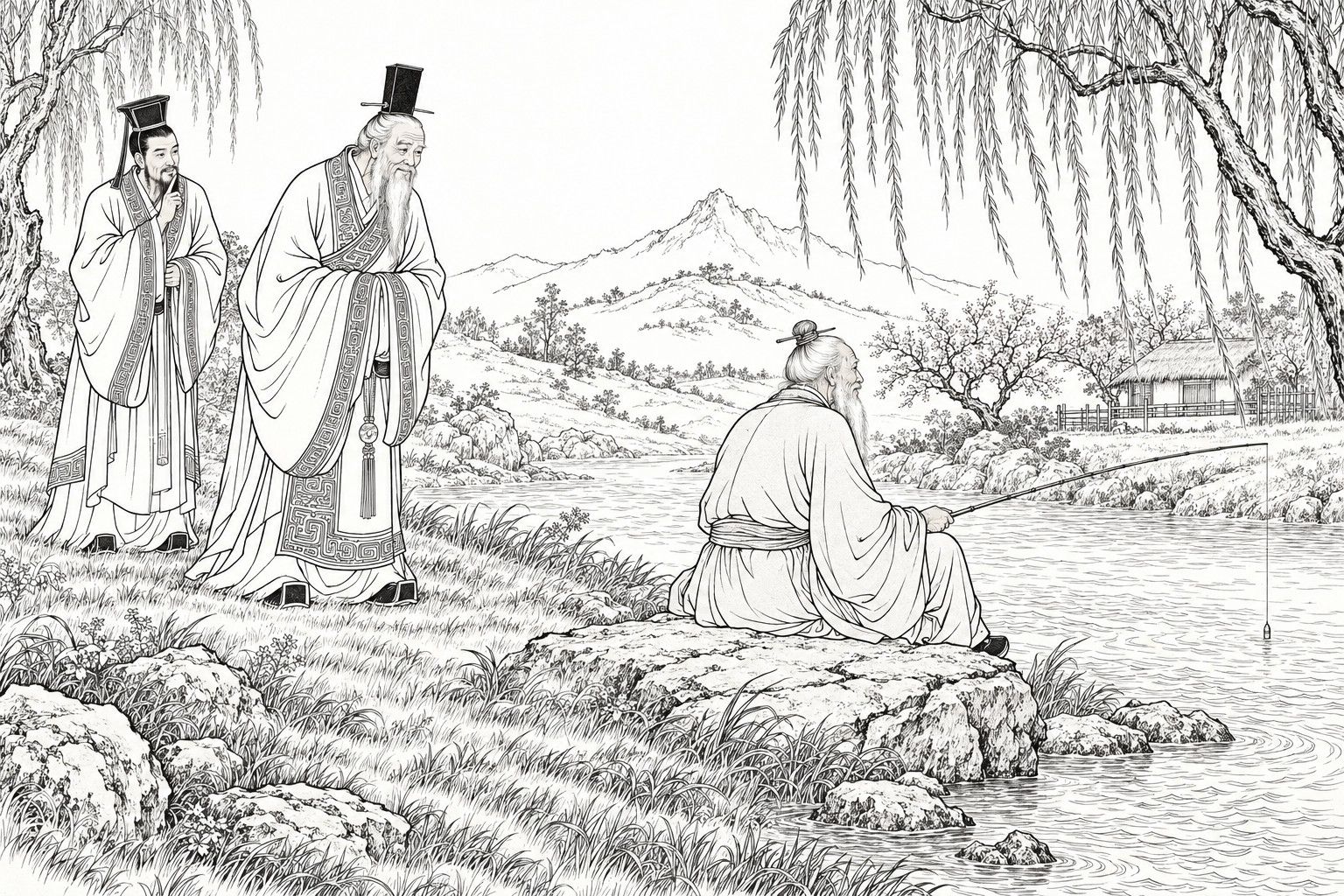
話說武吉來到溪邊,見子牙獨坐垂楊之下,將漁竿飄浮綠波之上,自己作歌取樂。武吉走至子牙之後,款款叫曰:「姜老爺!」子牙回首,看見武吉,子牙曰:「你是那一日在此的樵夫。」武吉答曰:「正是。」子牙道:「你那一日可曾打死人麼?」武吉慌忙跪泣告曰:「小人乃山中蠢子,執斧愚夫,那知深奧。肉眼凡胎,不識老爺高明隱達之士。前日一語,冒犯尊顏。老爺乃大人之輩,不是我等小人,望姜老爺切勿記懷,大開仁慈,廣施惻隱,只當普濟群生!那日別了老爺,行至南門,正遇文王駕至,挑柴閃躲,不知塌了尖擔,果然打死門軍王相。此時文王定罪,理合抵命。小人因思老母無依,終久必成溝壑之鬼,蒙上大夫散宜生老爺為小人啟奏文王,權放歸家,置辦母事完備,不日去抵王相之命。以此思之,母子之命依舊不保。今日特來叩見姜老爺,萬望憐救毫末餘生,得全母子之命。小人結草啣環,犬馬相報,決不敢有負大德!」子牙曰:「『數定難移』。你打死了人,宜當償命。我怎麼救得你?」武吉哀哭拜求曰:「老爺恩施,昆蟲草木,無處不發慈悲,倘救得母子之命,沒齒難忘!」子牙見武吉來意虔誠,亦且此人後必有貴,子牙曰:「你要我救你,你拜吾為師,我方救你。」武吉聽言,隨即下拜。子牙曰:「你既為吾弟子,我不得不救你。如今你速回到家,在你床前,隨你多長,挖一坑塹,深四尺。你至黃昏時候,睡在坑內;叫你母親于你頭前點一盞燈,腳後點一盞燈。或米也可,或飯也可,抓兩把撒在你身上,放上些亂草。睡過一夜起來,只管去做生意,再無事了。」武吉聽了,領師之命,回到家中,挖坑行事。有詩為證,詩曰:
话说武吉来到溪边,见子牙独坐垂杨之下,将渔竿飘浮绿波之上,自己作歌取乐。武吉走至子牙之后,款款叫曰:「姜老爷!」子牙回首,看见武吉,子牙曰:「你是那一日在此的樵夫。」武吉答曰:「正是。」子牙道:「你那一日可曾打死人么?」武吉慌忙跪泣告曰:「小人乃山中蠢子,执斧愚夫,那知深奥。肉眼凡胎,不识老爷高明隐达之士。前日一语,冒犯尊颜。老爷乃大人之辈,不是我等小人,望姜老爷切勿记怀,大开仁慈,广施恻隐,只当普济群生!那日别了老爷,行至南门,正遇文王驾至,挑柴闪躲,不知塌了尖担,果然打死门军王相。此时文王定罪,理合抵命。小人因思老母无依,终久必成沟壑之鬼,蒙上大夫散宜生老爷为小人启奏文王,权放归家,置办母事完备,不日去抵王相之命。以此思之,母子之命依旧不保。今日特来叩见姜老爷,万望怜救毫末余生,得全母子之命。小人结草啣环,犬马相报,决不敢有负大德!」子牙曰:「『数定难移』。你打死了人,宜当偿命。我怎么救得你?」武吉哀哭拜求曰:「老爷恩施,昆虫草木,无处不发慈悲,倘救得母子之命,没齿难忘!」子牙见武吉来意虔诚,亦且此人后必有贵,子牙曰:「你要我救你,你拜吾为师,我方救你。」武吉听言,随即下拜。子牙曰:「你既为吾弟子,我不得不救你。如今你速回到家,在你床前,随你多长,挖一坑堑,深四尺。你至黄昏时候,睡在坑内;叫你母亲于你头前点一盏灯,脚后点一盏灯。或米也可,或饭也可,抓两把撒在你身上,放上些乱草。睡过一夜起来,只管去做生意,再无事了。」武吉听了,领师之命,回到家中,挖坑行事。有诗为证,诗曰:
Now, Wu Ji came to the stream and found Ziya sitting alone beneath the weeping willows, his fishing rod floating out over the green ripples, singing to himself for his own amusement. Wu Ji went up behind him and called softly, “Master Jiang!” Ziya turned his head and saw Wu Ji. “You’re the woodcutter who was here the other day,” said Ziya. “I am,” answered Wu Ji. “Well,” said Ziya, “did you kill a man that day?” Wu Ji hurriedly knelt and said, weeping, “I’m just a blockhead from the hills, a dolt who swings an axe — what would I know of deep things? With my mortal eyes and common flesh I didn’t see you, sir, for the lofty, enlightened recluse you are, and the other day my words gave offence to your honoured face. You, sir, are one of the great, not a little man like us. I beg you, Master Jiang, don’t hold it against me. Open wide your kindness, spread your pity far, and think of it as part of your mercy to all living things! That day, after I left you, I came to the south gate just as King Wen’s procession arrived. I shifted my firewood to get out of the way, and before I knew it my pointed carrying pole slipped and, just as you said, killed the gate guard Wang Xiang. King Wen passed judgement on the spot: by rights I must pay with my life. But I thought of my old mother with no one to depend on — in the end she would surely become a ghost in a ditch. The Senior Counsellor, Lord San Yisheng, kindly spoke to King Wen for me, and I was let go home for the time being to see to my mother’s needs. When everything is settled, I’m to go back any day now and give my life for Wang Xiang’s. When I think about it, my mother’s life and mine are lost all the same. So today I’ve come especially to kowtow to you, Master Jiang. I beg you with all my heart, take pity and save the little life I have left, so that mother and son may both be spared. I will knot the grass and bring you rings in my beak, and serve you like a dog or a horse to repay you. Never would I dare forget so great a kindness!” Ziya said, “‘What fate has fixed is hard to change.’ You killed a man, and you ought to pay with your life. How can I save you?” Wu Ji wept bitterly, bowed and begged him: “Your kindness, sir, reaches the very insects and the grass and trees; there’s nowhere your mercy doesn’t go. If you can save my mother’s life and mine, I won’t forget it to my dying day!” Ziya saw that Wu Ji had come in all sincerity — and besides, the man was bound to rise to honour later on. He said, “If you want me to save you, bow to me as your master. Then I’ll save you.” At these words Wu Ji bowed down at once. “Now that you’re my disciple,” said Ziya, “I can’t refuse to save you. Go home quickly, and in front of your bed dig a pit as long as you are and four feet deep. At dusk lie down in the pit, and have your mother light a lamp at your head and another at your feet. Raw rice or cooked, either will do: two handfuls of it scattered over you, and some loose straw laid on top. Sleep there for one night, then get up and go about your trade as usual, and nothing more will come of it.” Wu Ji listened, took his master’s orders, went home, dug the pit and did as he was told. There is a poem to prove it. It says: