話說南宋自南渡以來,遷都臨安,高宗皇帝建炎天子四年,改為紹興元年。在朝有一位京營節度使,姓李名茂春,原籍浙江台州府天台縣人,娶妻王氏,夫妻好善。李大人為人最慈,帶兵軍令不嚴,因此罷官回籍。在家中樂善好施,修橋補路,扶危濟困,冬施棉衣,夏施湯藥。這李大人在街市閑遊,人都呼之為李善人。內中就有人說:「李善人不是真善人,要是真善人,怎麼會沒兒子?」這話李大人正聽見,自己回至家中,悶悶不樂。夫人王氏見大人回來,悶悶不樂。可就問大人因何不樂?大人說:「我在街市閑遊,人都稱我為李善人,內中就有人暗中說,被我聽見。他說我懲惡揚善,又說善人不是真心,要是真心為善,不能沒兒子。我想上天有眼,神佛有靈,當教你我有兒子纔是。」夫人勸大人納寵,買兩侍妾,也可以生兒養女。大人說:「夫人此言差矣,吾豈肯作那不才之事?夫人年近四旬,尚可以生養兒女。你我齋戒沐浴三天,同到永寧村北天台山國清寺拜佛求子。倘使上天有眼,你我夫妻也可生子。」王氏夫人說:「甚好。」
话说南宋自南渡以来,迁都临安,高宗皇帝建炎天子四年,改为绍兴元年。在朝有一位京营节度使,姓李名茂春,原籍浙江台州府天台县人,娶妻王氏,夫妻好善。李大人为人最慈,带兵军令不严,因此罢官回籍。在家中乐善好施,修桥补路,扶危济困,冬施棉衣,夏施汤药。这李大人在街市闲游,人都呼之为李善人。内中就有人说:「李善人不是真善人,要是真善人,怎么会没儿子?」这话李大人正听见,自己回至家中,闷闷不乐。夫人王氏见大人回来,闷闷不乐。可就问大人因何不乐?大人说:「我在街市闲游,人都称我为李善人,内中就有人暗中说,被我听见。他说我惩恶扬善,又说善人不是真心,要是真心为善,不能没儿子。我想上天有眼,神佛有灵,当教你我有儿子才是。」夫人劝大人纳宠,买两侍妾,也可以生儿养女。大人说:「夫人此言差矣,吾岂肯作那不才之事?夫人年近四旬,尚可以生养儿女。你我斋戒沐浴三天,同到永宁村北天台山国清寺拜佛求子。倘使上天有眼,你我夫妻也可生子。」王氏夫人说:「甚好。」
Now, after the Southern Song crossed the Yangtze to the south, the capital was moved to Lin’an, and in the fourth year of the Jianyan reign of the Son of Heaven, Emperor Gaozong, the era was renamed the first year of the Shaoxing reign. At court there was a military governor of the capital garrison named Li Maochun, a native of Tiantai County in Taizhou Prefecture, Zhejiang. He had married a wife, Madam Wang, and husband and wife both loved to do good. His Lordship was the kindest of men, so kind that he kept his troops under slack discipline, and for that he was dismissed from office and sent home. At home he delighted in doing good and giving to the needy: he repaired bridges and mended roads, helped those in danger and relieved those in want, gave out padded clothes in winter and herbal medicine in summer. When Lord Li strolled about the streets and markets, everyone called him Li the Good (Li Shanren). But someone among them said, “Li the Good isn’t truly good. If he were truly good, how come he has no son?” Lord Li happened to hear this. He went home and sat there gloomy and out of sorts. When Madam Wang saw His Lordship come home gloomy and out of sorts, she asked him why he was unhappy. “I was strolling about the streets and markets,” His Lordship said, “and everyone called me Li the Good, but someone among them said something behind my back, and I heard it. He said I punish the wicked and praise the good, and then he said this good man’s goodness isn’t from the heart: if I really did good from the heart, I couldn’t be without a son. To my mind, if Heaven has eyes and the gods and Buddhas have power, they ought to grant you and me a son.” His wife urged him to take a concubine — to buy a couple of handmaids, who could also bear him sons and daughters. “My lady, you are wrong to say so,” said His Lordship. “Would I stoop to such an unworthy thing? You are not yet forty; you can still bear children. Let us fast and bathe for three days and then go together to Guoqing Temple on Mount Tiantai, north of Yongning Village, to pray to the Buddha for a son. If Heaven has eyes, we too may have one.” “Very good,” said Madam Wang.
李茂春擇了日期,帶著僮僕人等,夫人坐轎,員外乘馬,到了天台山下。祇見此山高聳天際,山峰直立,樹木森森,國清寺在半山之上。到了山門以外,祇見山門高大,裏面鐘鼓二樓,前至後五層大殿,後有齋堂客舍,經堂戒堂,二十五間藏經樓。員外下馬,裏面僧人出來迎接,到客堂奉茶。老方丈性空長老,知道是李員外降香,親身出來接見,帶著往各處拈香。夫妻先至大雄寶殿拈香,叩求神佛保佑:「千萬教我得子,接續香煙。如佛祖顯靈,我等重修古廟,再塑金身。」禱告已畢,又至各處拈香。到了羅漢堂拈香,方燒至四尊羅漢,忽見神像由蓮臺墜地。性空長老說:「善哉!善哉!員外定生貴子,過日我給員外道喜。」
李茂春择了日期,带着僮仆人等,夫人坐轿,员外乘马,到了天台山下。祇见此山高耸天际,山峰直立,树木森森,国清寺在半山之上。到了山门以外,祇见山门高大,里面钟鼓二楼,前至后五层大殿,后有斋堂客舍,经堂戒堂,二十五间藏经楼。员外下马,里面僧人出来迎接,到客堂奉茶。老方丈性空长老,知道是李员外降香,亲身出来接见,带着往各处拈香。夫妻先至大雄宝殿拈香,叩求神佛保佑:「千万教我得子,接续香烟。如佛祖显灵,我等重修古庙,再塑金身。」祷告已毕,又至各处拈香。到了罗汉堂拈香,方烧至四尊罗汉,忽见神像由莲台坠地。性空长老说:「善哉!善哉!员外定生贵子,过日我给员外道喜。」
Li Maochun chose a day and set out with his pages and servants, his wife in a sedan chair and the squire on horseback, and they came to the foot of Mount Tiantai. The mountain soared to the edge of the sky, its peaks standing straight up, its woods dense and dark, and Guoqing Temple stood halfway up the slope. When they reached the temple gate, they saw that it was tall and grand. Inside were the bell tower and the drum tower and five great halls from front to back; behind them were the refectory and the guest quarters, the sutra hall and the ordination hall, and the Sutra Library of twenty-five bays. The squire dismounted. Monks came out from inside to welcome them and served tea in the guest hall. The old abbot, Abbot Xingkong, learning that Squire Li had come to offer incense, came out in person to receive them and led them round to burn incense in every hall. Husband and wife went first to the Main Hall to burn incense, and knocked their heads on the ground, begging the gods and Buddhas for their protection: “We beg you, grant us a son to carry on our line and keep the ancestral incense burning. If the Buddha shows his power, we will rebuild this old temple and regild the holy images.” Their prayer done, they went on to burn incense in the other halls. When they came to the Arhat Hall and had burned incense only as far as the fourth arhat, the image suddenly fell from its lotus throne to the ground. “Excellent! Excellent!” said Abbot Xingkong. “Squire, you are sure to have a noble son. One of these days I’ll come to wish you joy.”
李員外回到家中,不知不覺夫人有喜。過了數個月,生了一個公子。臨生之時,紅光罩院,異香扑鼻,員外甚喜。這孩自生落之後,就哭聲不止,直至三朝。
李员外回到家中,不知不觉夫人有喜。过了数个月,生了一个公子。临生之时,红光罩院,异香扑鼻,员外甚喜。这孩自生落之后,就哭声不止,直至三朝。
Squire Li went home, and before they knew it his wife was with child. Some months later she gave birth to a son. At the moment of his birth a red glow covered the courtyard and a strange fragrance filled the air, and the squire was overjoyed. But from the moment the child was born, he cried without stopping, right through to the third morning.
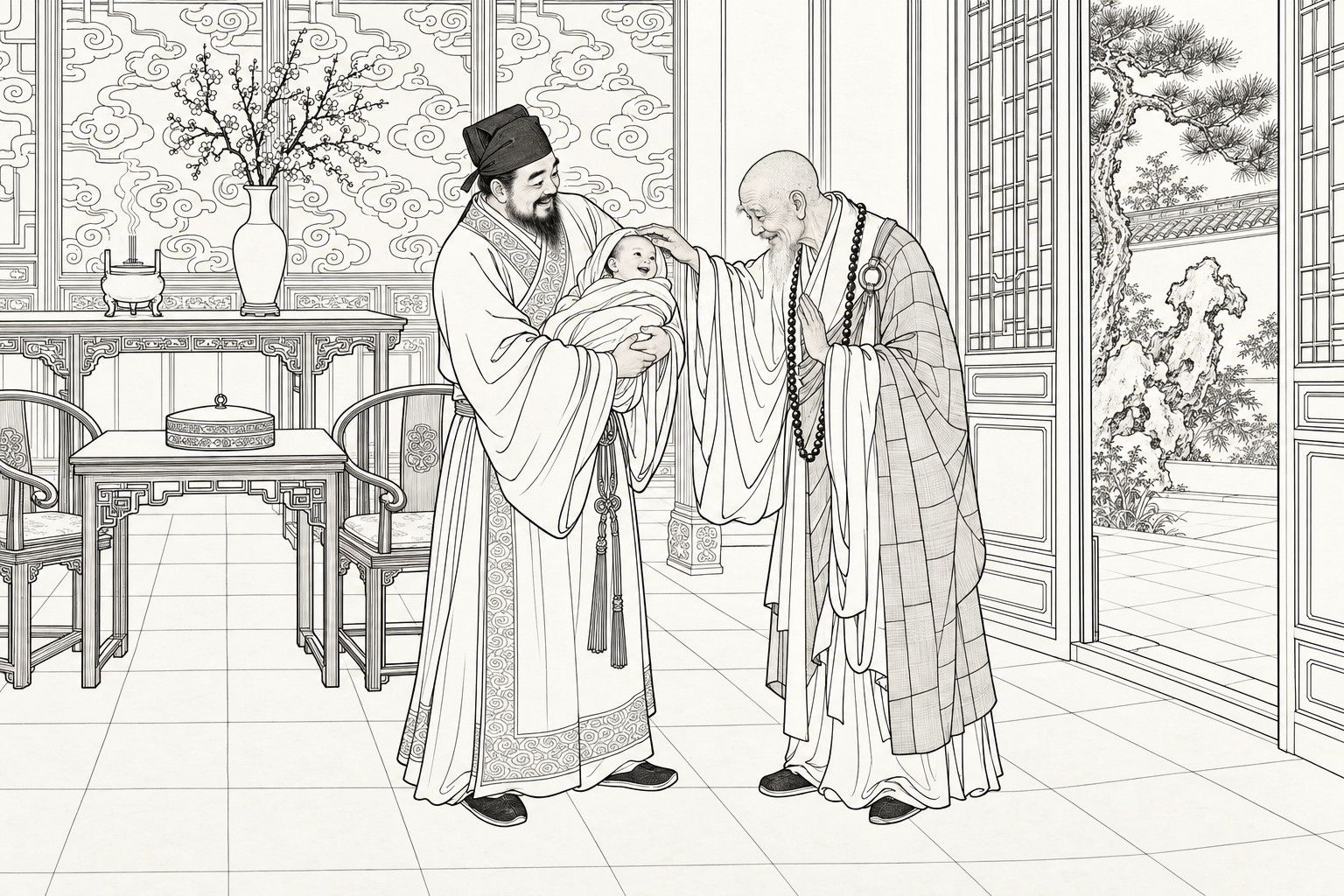
這日正有親友鄰里來慶賀,外面家人來回話,說有國清寺方丈性空,給員外送來一份厚禮,親來賀喜。員外迎接進來。性空說:「員外大喜。令郎公可平安?」員外說:「自從生落之後,直哭到今朝不止,吾正憂慮此事。老和尚有何妙法能治?」性空說:「好辦。員外先到裏面把令公子抱出我看看,就知道是何緣故了。」員外說:「此子未過滿月,就抱出來,恐有不便。」性空說:「無妨。員外可用袍袱蓋上,可以不沖三光。」員外一聽有理,連忙把孩兒從裏面抱出來,給大眾一看。孩兒生得五官清秀,品貌清奇,啼哭不止。性空和尚過來一看,那孩兒一見和尚,立止啼哭,一咧嘴笑了。老和尚就用手摸那孩兒頭頂說:
「莫要笑,莫要笑,你的來歷我知道。你來我去兩拋開,省的大家胡倚靠。」
这日正有亲友邻里来庆贺,外面家人来回话,说有国清寺方丈性空,给员外送来一份厚礼,亲来贺喜。员外迎接进来。性空说:「员外大喜。令郎公可平安?」员外说:「自从生落之后,直哭到今朝不止,吾正忧虑此事。老和尚有何妙法能治?」性空说:「好办。员外先到里面把令公子抱出我看看,就知道是何缘故了。」员外说:「此子未过满月,就抱出来,恐有不便。」性空说:「无妨。员外可用袍袱盖上,可以不冲三光。」员外一听有理,连忙把孩儿从里面抱出来,给大众一看。孩儿生得五官清秀,品貌清奇,啼哭不止。性空和尚过来一看,那孩儿一见和尚,立止啼哭,一咧嘴笑了。老和尚就用手摸那孩儿头顶说:
「莫要笑,莫要笑,你的来历我知道。你来我去两抛开,省的大家胡倚靠。」
That day relatives, friends and neighbours had come to offer their congratulations when a servant came in from outside to report that Xingkong, abbot of Guoqing Temple, had brought the squire a handsome gift and come in person to wish him joy. The squire welcomed him in. “Great joy to you, Squire,” said Xingkong. “Is your young son well?” “Ever since he was born,” said the squire, “he has cried right up to this morning without stopping, and that is just what is worrying me. Have you some wonderful remedy for it, venerable sir?” “That’s easily dealt with,” said Xingkong. “Squire, go inside and bring your son out for me to look at, and I’ll know what the matter is.” “The child is not yet a month old,” said the squire. “It may not be proper to bring him out.” “No harm in it,” said Xingkong. “Cover him with a robe or a wrapping cloth, Squire, and he won’t offend the three lights.” The squire saw the sense of this and hurried in to carry the child out, and showed him to everyone. The child had fine, clear features and an uncommon look about him, and he was crying without stopping. Xingkong went over to look at him. The moment the child saw the monk he stopped crying, opened his mouth wide and laughed. The old monk stroked the top of the child’s head and said,
“No laughing,no laughing —I know where you come from. You come, I go, let both be cast aside,and spare us all from leaning on each other blindly.”
那孩兒立時不哭了。性空說:「員外,我收一個記名徒弟,給他取個名字,叫李修緣罷。」員外應了,把孩兒抱進去,出來給和尚備齋。吃罷,眾親友都散去,性空長老也去了。員外另僱奶娘扶養孩兒。
那孩儿立时不哭了。性空说:「员外,我收一个记名徒弟,给他取个名字,叫李修缘罢。」员外应了,把孩儿抱进去,出来给和尚备斋。吃罢,众亲友都散去,性空长老也去了。员外另雇奶娘扶养孩儿。
At once the child stopped crying. “Squire,” said Xingkong, “I’ll take him as a disciple in name and give him a name: let him be called Li Xiuyuan.” The squire agreed, carried the child back inside and came out to have a vegetarian meal prepared for the monk. When they had eaten, the relatives and friends all went home, and Abbot Xingkong left too. The squire hired a wet nurse to raise the child.
光陰似箭,日月如梭,不知不覺過了幾年。李修緣長至七歲,懶說懶笑,永不與同村兒童聚耍。入學讀書,請了一位老秀才杜群英先生在家教他,還有兩個同伴,一個是永寧村武孝廉韓成之子韓文美,年九歲。還有李夫人內侄,永寧村住,姓王名全,乃是兵部司馬王安士之子,年八歲,三子共讀書,甚是和美。就是李修緣年幼,過目不忘,目讀十行,才學出眾。杜先生甚奇之,常與人言:「久後成大器者,李修緣也。」至十四歲,五經四書諸子百家,背誦極熟,合王、韓二人,在學房時常作詩,口氣遠大。
光阴似箭,日月如梭,不知不觉过了几年。李修缘长至七岁,懒说懒笑,永不与同村儿童聚耍。入学读书,请了一位老秀才杜群英先生在家教他,还有两个同伴,一个是永宁村武孝廉韩成之子韩文美,年九岁。还有李夫人内侄,永宁村住,姓王名全,乃是兵部司马王安士之子,年八岁,三子共读书,甚是和美。就是李修缘年幼,过目不忘,目读十行,才学出众。杜先生甚奇之,常与人言:「久后成大器者,李修缘也。」至十四岁,五经四书诸子百家,背诵极熟,合王、韩二人,在学房时常作诗,口气远大。
Time flew like an arrow, the days and months like a weaver’s shuttle, and before anyone knew it several years had passed. Li Xiuyuan grew to the age of seven. He seldom spoke and seldom laughed, and never played with the other children of the village. When it was time for his schooling, an old licentiate named Du Qunying was engaged to teach him at home, and he had two schoolmates. One was Han Wenmei, nine years old, son of Han Cheng, a military provincial graduate of Yongning Village. The other was a nephew of Madam Wang’s, who also lived in Yongning Village: Wang Quan, eight years old, son of Wang Anshi, military secretary of the Ministry of War. The three boys studied together and got on very well. Young as he was, Li Xiuyuan never forgot anything he had once seen; he could take in ten lines at a glance, and his talent and learning stood out from the rest. Du Qunying marvelled at him and often said to others, “The one who will grow into a great man is Li Xiuyuan.” By the age of fourteen he could recite the Five Classics, the Four Books and the Hundred Schools fluently by heart. With Wang and Han he often wrote poems in the schoolroom, and his poems had a lofty, far-reaching tone.
這年想要入縣考取文童,李茂春臥床不起,人事不知,病勢垂危。派人把內弟王安士請來,到床前。李員外說:「賢弟,我不久於人世。你外甥與你姐姐,全要你照應。修緣不可縱性廢讀,吾已給他定下親了,是劉家莊劉千戶之女。家中內外無人,全仗賢弟分心。」王安士說:「姐丈放心養病,不必多囑,弟自當照應。」員外又對王氏夫人說:「賢妻,我今五十五歲,也不算夭壽。我死之後,千萬要扶養孩兒,教訓他成名,我雖在九泉之下也甘心。」又囑了修緣幾句話,自己心中一亂,口眼一閉,嗚呼哀哉。李員外一死,合家慟哭,王員外幫辦喪事已畢,修緣守孝不能入場,是年王全、韓文美都中了秀才,兩家賀喜。
这年想要入县考取文童,李茂春卧床不起,人事不知,病势垂危。派人把内弟王安士请来,到床前。李员外说:「贤弟,我不久于人世。你外甥与你姐姐,全要你照应。修缘不可纵性废读,吾已给他定下亲了,是刘家庄刘千户之女。家中内外无人,全仗贤弟分心。」王安士说:「姐丈放心养病,不必多嘱,弟自当照应。」员外又对王氏夫人说:「贤妻,我今五十五岁,也不算夭寿。我死之后,千万要扶养孩儿,教训他成名,我虽在九泉之下也甘心。」又嘱了修缘几句话,自己心中一乱,口眼一闭,呜呼哀哉。李员外一死,合家恸哭,王员外帮办丧事已毕,修缘守孝不能入场,是年王全、韩文美都中了秀才,两家贺喜。
That year Xiuyuan was to sit the county examination as a candidate, but Li Maochun took to his bed and could not rise. He fell senseless, and his illness grew grave. He sent for his wife’s younger brother, Wang Anshi, to come to his bedside. “My worthy brother,” said Squire Li, “I haven’t long in this world. Your nephew and your sister — I leave them entirely in your care. Xiuyuan mustn’t be allowed to follow his whims and neglect his studies. I have already betrothed him to the daughter of Commander Liu of Liu Family Village. There is no one at home to manage things, inside or out; I am relying on you entirely to see to them.” “Brother-in-law,” said Wang Anshi, “set your mind at rest and look after your health. There’s no need to say more. Of course I will look after them.” Then the squire said to Madam Wang, “My good wife, I am fifty-five this year; it can’t be called dying young. When I am dead, you must raise our boy and teach him to make a name for himself. Then even in the Nine Springs I will rest content.” He said a few more words to Xiuyuan; then his mind clouded over, his mouth and eyes closed, and — alas, alack — he was gone. With Squire Li dead, the whole household wept bitterly. Squire Wang helped see to the funeral. Xiuyuan, in mourning, could not enter the examination hall. That year Wang Quan and Han Wenmei both passed as licentiates, and both families celebrated.
王氏夫人家中有一座問心樓,一年所做之事,寫在帳上。每到歲底,寫好表章,連同帳一並交天,一年並無一件事隱瞞的。
王氏夫人家中有一座问心楼,一年所做之事,写在帐上。每到岁底,写好表章,连同帐一并交天,一年并无一件事隐瞒的。
In Madam Wang’s home there was a building called the Wenxin Tower. Everything done in the course of a year was written down in a ledger. At the end of each year a memorial was written out and sent up to Heaven together with the ledger; in a whole year not a single thing was kept hidden.
李修緣好道學,每見經卷必喜愛,讀之不捨。過了二年,王氏夫人一病而亡,李修緣自己慟哭一場,王員外幫辦喪事完畢。李修緣喜看道書,到了十八歲,這年孝滿脫服。他立志出家,看破紅塵,所有家中之事,都是王員外辦理。李修緣自己到了墳上,燒了些紙錢,給王員外留下一紙書字,竟自去了。
李修缘好道学,每见经卷必喜爱,读之不舍。过了二年,王氏夫人一病而亡,李修缘自己恸哭一场,王员外帮办丧事完毕。李修缘喜看道书,到了十八岁,这年孝满脱服。他立志出家,看破红尘,所有家中之事,都是王员外办理。李修缘自己到了坟上,烧了些纸钱,给王员外留下一纸书字,竟自去了。
Li Xiuyuan loved the study of the Way. Whenever he came across a scripture he delighted in it and could not put it down. Two years later Madam Wang fell ill and died. Li Xiuyuan wept bitterly, and Squire Wang helped see to the funeral. Li Xiuyuan loved to read Daoist books. In his eighteenth year his mourning came to an end and he put off his mourning clothes. He had made up his mind to leave home and become a monk, for he had seen through the red dust of the world. All the family’s affairs were handled by Squire Wang. Li Xiuyuan went to the graves and burned some paper money, left a letter for Squire Wang, and simply went away.
王員外兩日不見外甥,派人各處尋找,不見外甥。自己拆開字來一看。上寫的是:
王员外两日不见外甥,派人各处寻找,不见外甥。自己拆开字来一看。上写的是:
When two days had passed without a sight of his nephew, Squire Wang sent people searching everywhere, but his nephew was nowhere to be found. He opened the letter himself and read it. It said:
修緣去了,不必尋找。他年相見,便知分曉。
修缘去了,不必寻找。他年相见,便知分晓。
Xiuyuan has gone;there is no need to search.When we meet in years to come,all will be made plain.
王員外知道外甥素近釋道,在臨近庵觀寺院,各處派人尋找,並不見下落。派家人貼白帖,在各處尋找:「如有人把李修緣送來,謝白銀百兩。如有人知道實信,人在何處,送信來,謝銀五十兩。」一連三個月並無下落。
王员外知道外甥素近释道,在临近庵观寺院,各处派人寻找,并不见下落。派家人贴白帖,在各处寻找:「如有人把李修缘送来,谢白银百两。如有人知道实信,人在何处,送信来,谢银五十两。」一连三个月并无下落。
Squire Wang knew that his nephew had always been drawn to Buddhists and Daoists, so he sent people to search all the shrines, Daoist temples and monasteries round about, but no trace of him was found. He had servants put up notices everywhere as they searched: “Whoever brings Li Xiuyuan back will be rewarded with a hundred taels of silver. Whoever knows for certain where he is and sends word will be rewarded with fifty taels.” Three months went by, and still there was no trace of him.
書中交代,且說李修緣自從家中分手之後,信步遊行,到了杭城,把銀錢用盡,到了廟中要出家,人家也不敢留他。他自己到西湖飛來峰上靈隱寺廟中,見老方丈,要出家。當家和尚方丈乃是九世比丘僧,名元空長老,號遠瞎堂。一見李修緣,知道他是西天金身降龍羅漢降世,奉佛法旨,為度世而來。因他執迷不醒,用手擊了他三掌,把天門打開。他纔知道自己根本源流,拜元空長老為師,起名道濟。
书中交代,且说李修缘自从家中分手之后,信步游行,到了杭城,把银钱用尽,到了庙中要出家,人家也不敢留他。他自己到西湖飞来峰上灵隐寺庙中,见老方丈,要出家。当家和尚方丈乃是九世比丘僧,名元空长老,号远瞎堂。一见李修缘,知道他是西天金身降龙罗汉降世,奉佛法旨,为度世而来。因他执迷不醒,用手击了他三掌,把天门打开。他才知道自己根本源流,拜元空长老为师,起名道济。
A word of explanation: after parting from his family, Li Xiuyuan wandered wherever his feet took him until he came to Hangzhou, where he spent all his money. He went to temples asking to become a monk, but no one dared take him in. So he went on his own to Lingyin Temple on Feilai Peak by West Lake, saw the old abbot and asked to become a monk. The abbot in charge of the temple was a monk who had been a bhikshu through nine lifetimes, Abbot Yuankong, who went by the name Distant Blind Hall. The moment he saw Li Xiuyuan, he knew that he was the golden-bodied Dragon-Taming Arhat of the Western Heaven, come down into the world by the Buddha’s holy command to save the world. Because Li Xiuyuan was lost in delusion and would not wake, the abbot struck him three times with his palm and opened his heavenly gate. Only then did he know where he had come from and what he truly was. He took Abbot Yuankong as his master and was given the name Daoji.
他坐禪坐顛,還有些瘋。廟裏獨叫他顛和尚,外面又叫他瘋和尚,訛言傳說濟顛僧。他本是奉佛法旨,所為度世而來,自己在外面濟困扶危,勸化眾生,在廟內不論哪個和尚有錢就偷,有衣服偷出去就當了吃酒,最愛吃肉。常有人說和尚例應吃齋,為甚麼吃酒?濟顛說:「佛
祖留下詩一首,我人修心他修口,他人修口不修心,為我修心不修口。」
自己就是與廟中的監寺僧廣亮不對,廟中除去了方丈,就屬監寺僧為尊。廣亮新作了一件僧衣,值錢四十吊。他偷了去當在當舖中,把當票貼在山門上,監寺廣亮一見僧袍沒有了,派人各處一找,把當票找著。和尚掛失票不行,把山門摘下來,四人抬著去贖。廣亮回稟老方丈說:「廟中瘋和尚不守清規,常偷眾僧的銀錢衣物等物,理應按清規治罪於他。」元空長老說道:「道濟無贓,不能治他。你等去暗中訪察,如要有贓證,把他帶來見我就是。」廣亮派兩個徒弟在暗中訪拿濟顛。濟顛在大雄寶殿供桌頭睡覺。兩個小和尚志清、志明,每日留神。這天見濟顛在大殿裏探頭出來,往各處偷瞧了多時,後又進去一看,躡足潛蹤出來,懷中鼓棚棚的。方至甬道當中,祇見志清、志明由屋中出來,說:「好濟顛,你又偷甚麼物件?休想逃走!」過去一伸手,把那濟顛和尚抓住,一直竟到方丈房中回話。監寺的先見長老說:「稟方丈知道,咱們廟中濟顛不守清規,偷盜廟中物件,按清規戒律之例治罪。」元空長老一聽,心中說:「道濟,你偷廟中物件,不該叫他等拿住。我雖然護庇你,也無話可說。」吩咐人:「把他帶上來就是。」濟公來至方丈前屋內,說:「老和尚你在哪裏?我在這裏問心。」見了方丈永遠是這樣,元空也不教他磕頭,說道:「道濟不守清規,偷盜廟中物件,應得何罪?」廣亮說:「砸毀衣缽戒牒,逐出廟外,不准為僧。」老方丈說:「我重責他就是。」就問道:「道濟,把偷之物獻出。」濟公說:「師父,他們真欺負我。我在大雄寶殿睡覺,因掃地沒有盛土之物,我放在懷中。你等來看罷。」說著,把絲絛一解,「嘩啦」落下土片。老方丈大怒,說:「廣亮誤害好人為盜,應得重責!」吩咐看響板要打監寺。眾僧都來瞧熱鬧。濟公自己出來,到了西湖,見樹林內有人上吊。濟公連忙過去要救此人。
他坐禅坐颠,还有些疯。庙里独叫他颠和尚,外面又叫他疯和尚,讹言传说济颠僧。他本是奉佛法旨,所为度世而来,自己在外面济困扶危,劝化众生,在庙内不论哪个和尚有钱就偷,有衣服偷出去就当了吃酒,最爱吃肉。常有人说和尚例应吃斋,为甚么吃酒?济颠说:「佛
祖留下诗一首,我人修心他修口,他人修口不修心,为我修心不修口。」
自己就是与庙中的监寺僧广亮不对,庙中除去了方丈,就属监寺僧为尊。广亮新作了一件僧衣,值钱四十吊。他偷了去当在当铺中,把当票贴在山门上,监寺广亮一见僧袍没有了,派人各处一找,把当票找着。和尚挂失票不行,把山门摘下来,四人抬着去赎。广亮回禀老方丈说:「庙中疯和尚不守清规,常偷众僧的银钱衣物等物,理应按清规治罪于他。」元空长老说道:「道济无赃,不能治他。你等去暗中访察,如要有赃证,把他带来见我就是。」广亮派两个徒弟在暗中访拿济颠。济颠在大雄宝殿供桌头睡觉。两个小和尚志清、志明,每日留神。这天见济颠在大殿里探头出来,往各处偷瞧了多时,后又进去一看,蹑足潜踪出来,怀中鼓棚棚的。方至甬道当中,祇见志清、志明由屋中出来,说:「好济颠,你又偷甚么物件?休想逃走!」过去一伸手,把那济颠和尚抓住,一直竟到方丈房中回话。监寺的先见长老说:「禀方丈知道,咱们庙中济颠不守清规,偷盗庙中物件,按清规戒律之例治罪。」元空长老一听,心中说:「道济,你偷庙中物件,不该叫他等拿住。我虽然护庇你,也无话可说。」吩咐人:「把他带上来就是。」济公来至方丈前屋内,说:「老和尚你在哪里?我在这里问心。」见了方丈永远是这样,元空也不教他磕头,说道:「道济不守清规,偷盗庙中物件,应得何罪?」广亮说:「砸毁衣钵戒牒,逐出庙外,不准为僧。」老方丈说:「我重责他就是。」就问道:「道济,把偷之物献出。」济公说:「师父,他们真欺负我。我在大雄宝殿睡觉,因扫地没有盛土之物,我放在怀中。你等来看罢。」说着,把丝绦一解,「哗啦」落下土片。老方丈大怒,说:「广亮误害好人为盗,应得重责!」吩咐看响板要打监寺。众僧都来瞧热闹。济公自己出来,到了西湖,见树林内有人上吊。济公连忙过去要救此人。
Sitting in meditation, he had sat himself crazy, and he was a little mad besides. In the temple they called him nothing but the crazy monk; outside they called him the mad monk; and as talk garbled it, he became Crazy Ji (Jidian). He had come into the world by the Buddha’s holy command to save it. Outside the temple he helped those in want and danger and urged all beings toward goodness; inside the temple, whichever monk had money, he stole it, and whoever had clothes, he stole them and pawned them to buy wine. Above all he loved to eat meat. People often said, “Monks are supposed to keep to a vegetarian diet. Why do you drink wine?” Crazy Ji said, “The Buddha
left behind a poem:I mind the heart while they mind the mouth;they mind the mouth but not the heart;and so I mind the heart and never mind the mouth.”
The one man he did not get on with was Guangliang, the prior of the temple; after the abbot, the prior held the highest rank there. Guangliang had a new monk’s robe made, worth forty strings of cash. Crazy Ji stole it and pawned it at a pawnshop, then pasted the pawn ticket on the temple gate. When the prior, Guangliang, found his robe gone, he sent men searching everywhere, and they found the pawn ticket. The monks could not get the ticket replaced as lost, so they took the gate off its hinges, and four men carried it off to redeem the robe. Guangliang went to report to the old abbot: “The mad monk in our temple doesn’t keep the monastic rules. He’s always stealing the monks’ money and clothes and such. By rights he should be punished according to the monastic rules.” “Daoji has not been caught with stolen goods,” said Abbot Yuankong, “so we cannot punish him. Keep watch on him in secret. If you find the stolen goods on him, bring him to me, and that will be that.” Guangliang sent two of his disciples to keep a secret watch and catch Crazy Ji. Crazy Ji slept at the head of the altar table in the Main Hall. The two young monks, Zhiqing and Zhiming, watched him closely day after day. One day they saw Crazy Ji poke his head out of the Main Hall and peep about in every direction for a long while. Then he went back in to look, and came creeping out on tiptoe, the front of his robe bulging. He had just reached the middle of the paved walk when Zhiqing and Zhiming came out of their room. “So, Crazy Ji! What have you stolen this time? Don’t think you’re getting away!” They went over, reached out and grabbed Crazy Ji, and marched him straight to the abbot’s quarters to report. The prior got to the abbot first: “Abbot, I beg to report that Crazy Ji of our temple doesn’t keep the monastic rules. He has stolen things belonging to the temple. He should be punished under the monastic rules and precepts.” When Abbot Yuankong heard this, he said to himself, “Daoji, you steal the temple’s things — you shouldn’t have let them catch you. I may shield you, but now there’s nothing I can say.” He gave the order: “Bring him in, then.” Ji Gong came into the front room of the abbot’s quarters. “Old monk, where are you? Here I am, giving you my greeting.” He was always like this when he saw the abbot, and Yuankong never made him kowtow. “Daoji does not keep the monastic rules and has stolen things belonging to the temple,” Yuankong said. “What punishment does he deserve?” “Destroy his robe and bowl and his ordination certificate,” said Guangliang, “drive him out of the temple, and forbid him ever to be a monk again.” “I shall punish him severely myself,” said the old abbot. Then he asked, “Daoji, hand over what you stole.” “Master,” said Ji Gong, “they really are bullying me. I sleep in the Main Hall, and I was sweeping the floor and had nothing to put the dirt in, so I put it in my robe. Come and look, all of you.” As he spoke he undid his silk cord, and — clatter! — down fell clods of dirt. The old abbot was furious. “Guangliang has wrongly accused a good man of theft! He deserves a heavy beating!” He ordered the discipline board brought out to beat the prior. The monks all came crowding round to watch the fun. Ji Gong slipped out by himself and went to West Lake, where he saw someone in a grove of trees hanging himself. Ji Gong hurried over to save him.
正是:
行善之人得聖僧救,落難女子父女相會。
正是:
行善之人得圣僧救,落难女子父女相会。
Truly:
The doer of good is saved by the holy monk;the girl in distress and her father meet again.
要知後事如何,且看下回分解。
要知后事如何,且看下回分解。
To learn what happened next, read the next chapter.