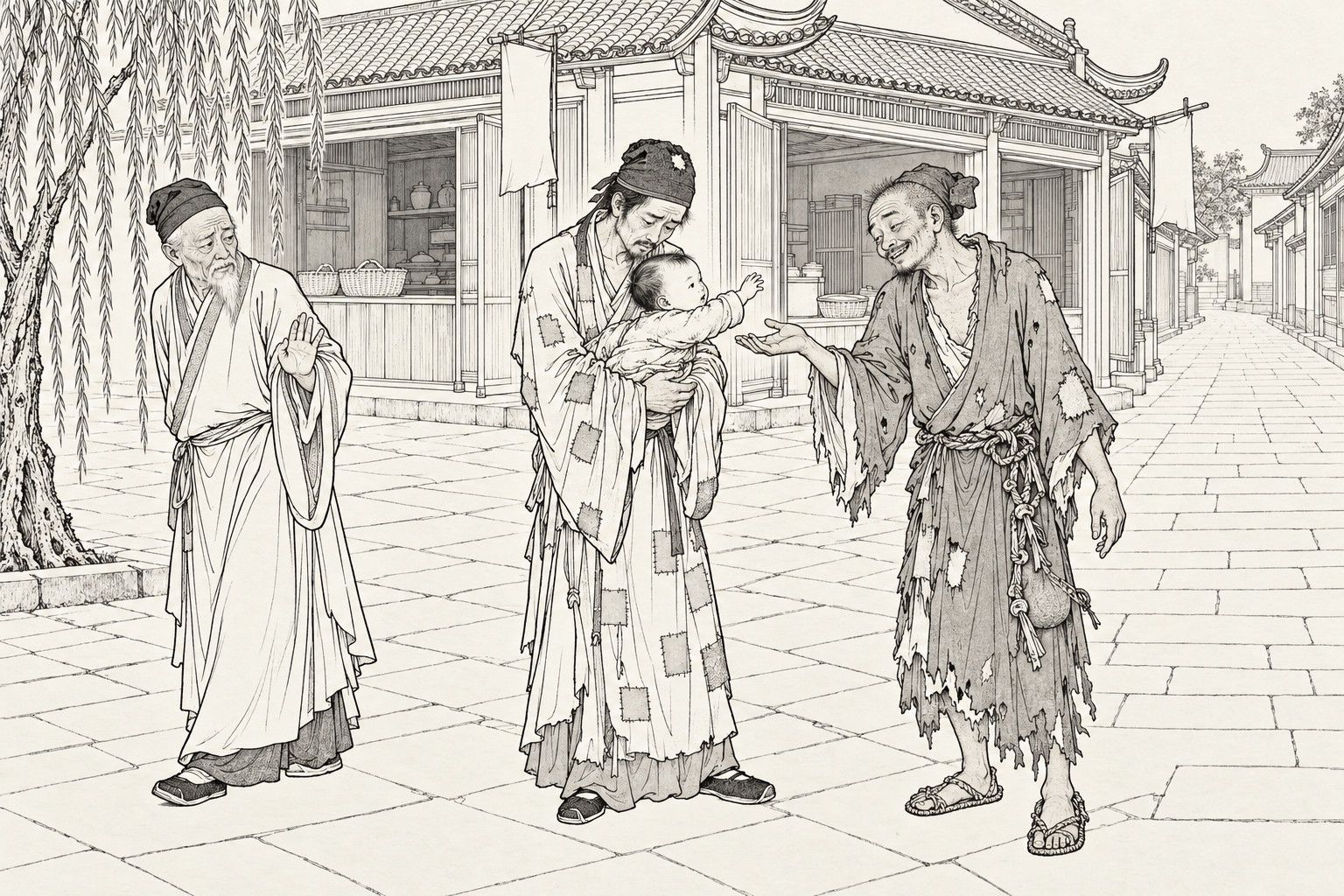
話說和尚分開眾人擠入一瞧,祇見裏面站著一位窮儒,頭戴舊文生巾,燒了窟窿一個,穿一件舊文生氅,上下補釘七條,懷內抱一小孩。此人有三十多歲,一臉枯槁,站在那裏說:「眾位,我抱的這小孩,生一年零二個月。他娘死了三天,我又雇不起奶娘,豈不要餓死。哪位願意要就抱去。」
话说和尚分开众人挤入一瞧,祇见里面站着一位穷儒,头戴旧文生巾,烧了窟窿一个,穿一件旧文生氅,上下补钉七条,怀内抱一小孩。此人有三十多岁,一脸枯槁,站在那里说:「众位,我抱的这小孩,生一年零二个月。他娘死了三天,我又雇不起奶娘,岂不要饿死。哪位愿意要就抱去。」
Now, the monk pushed the crowd apart, squeezed his way in and looked. Standing in the middle was a poor scholar. On his head was an old scholar’s cap with a hole burned in it, and he wore an old scholar’s cloak with seven patches from top to bottom. In his arms he held a small child. The man was in his thirties, his face withered and haggard. Standing there, he said, “Good people, this child I’m holding is a year and two months old. His mother died three days ago, and I can’t afford to hire a wet nurse. He’s bound to starve. If anyone will have him, take him.”
書中交代:此人叫馬沛然,原籍常州府常熟縣人,自幼在家讀書,娶妻周氏,把一分家業坐吃山空全完了,祇懂的唸書,不知營運,直過的上無片瓦,下無尺地,跟前就有個小孩,帶了妻子逃難,來至臨安,住在錢塘關外吳伯舟家中。這位吳伯舟,他就在西湖使船,是有遊西湖的,多雇他的船。手下有百餘條船,同馬沛然原係故交,知道馬沛然是位文士,就留他在船上管帳,每天掙個二三百錢,也夠他夫妻糊口,不想大運不通,西湖出了四家惡霸,時常在西湖搶人,鬧的沒人敢遊湖了,船也沒人賃了。馬沛然沒法,祇好歇工罷。這西湖頭一個惡霸,就是秦丞相之弟花花太歲王勝仙。那時高宗皇帝手下丞相是秦檜。他本姓王,過繼給秦家。王勝仙是秦相親兄弟,他倚仗哥哥勢利,時常帶了打手遊湖,瞧見美貌的婦女,就叫打手搶,沒人敢惹他,因此皆不敢遊湖,故吳伯舟的船也賃不出去,馬沛然也沒了事。他妻周氏是位賢德人,說:「你我夫妻莫非餓著麼?你在家中看看孩子,我出去做點針線活,你我也好度日。」連說了好幾句,馬沛然一語不發,周氏便把孩子留在家裏,竟自走了。馬沛然坐在屋中,自己一想:「男子漢大丈夫,不能養妻育子,等著媳婦給人家做生活吃飯,算怎麼回事?」自己越想越煩,實在無路,抱了孩子打算跳西湖一死。又一想:「這孩子投爹娘來了一年,又要死了,怪可惜的,不如把他給了人,我再一死。」這纔來至十字街一站,說:「眾位誰要這小孩誰抱去。」連喊了幾聲,旁邊有個老者一瞧,這孩子生的不錯,自己一想:「我也沒兒,我倒可以留下。」剛過去抱,旁邊有人說:「老者別要,你要一抱孩子,他就要跟你去。這兩天他娘也來了,同你借銀,過兩天他爹也來了,你可別上當。」那老丈一聽也不要了。濟公說:「你把小孩給我罷。」馬沛然說:「和尚,你要小孩作甚麼?你是出家人。」和尚說:「我收他作個徒弟。」馬沛然說:「和尚,這孩也不會吃飯,還不能離乳,那如何能行?」和尚說:「不行我不要。你說實話,這孩是他娘真死了嗎?我的廟在你住家隔壁﹔你住吳伯舟的房對不對?」馬沛然說:「他娘雖沒死,我可不是生意,指著孩子訛人。」和尚說:「我知道。你跟我走罷,我帶你找你妻,叫你夫妻孩子見面,給你找點事。」馬沛然一聽,問:「和尚寶剎在哪裏?上下怎麼稱呼?」和尚一一說明,帶著馬沛然往前走。濟公信口作歌:
书中交代:此人叫马沛然,原籍常州府常熟县人,自幼在家读书,娶妻周氏,把一分家业坐吃山空全完了,祇懂的念书,不知营运,直过的上无片瓦,下无尺地,跟前就有个小孩,带了妻子逃难,来至临安,住在钱塘关外吴伯舟家中。这位吴伯舟,他就在西湖使船,是有游西湖的,多雇他的船。手下有百余条船,同马沛然原系故交,知道马沛然是位文士,就留他在船上管帐,每天挣个二三百钱,也够他夫妻糊口,不想大运不通,西湖出了四家恶霸,时常在西湖抢人,闹的没人敢游湖了,船也没人赁了。马沛然没法,祇好歇工罢。这西湖头一个恶霸,就是秦丞相之弟花花太岁王胜仙。那时高宗皇帝手下丞相是秦桧。他本姓王,过继给秦家。王胜仙是秦相亲兄弟,他倚仗哥哥势利,时常带了打手游湖,瞧见美貌的妇女,就叫打手抢,没人敢惹他,因此皆不敢游湖,故吴伯舟的船也赁不出去,马沛然也没了事。他妻周氏是位贤德人,说:「你我夫妻莫非饿着么?你在家中看看孩子,我出去做点针线活,你我也好度日。」连说了好几句,马沛然一语不发,周氏便把孩子留在家里,竟自走了。马沛然坐在屋中,自己一想:「男子汉大丈夫,不能养妻育子,等着媳妇给人家做生活吃饭,算怎么回事?」自己越想越烦,实在无路,抱了孩子打算跳西湖一死。又一想:「这孩子投爹娘来了一年,又要死了,怪可惜的,不如把他给了人,我再一死。」这才来至十字街一站,说:「众位谁要这小孩谁抱去。」连喊了几声,旁边有个老者一瞧,这孩子生的不错,自己一想:「我也没儿,我倒可以留下。」刚过去抱,旁边有人说:「老者别要,你要一抱孩子,他就要跟你去。这两天他娘也来了,同你借银,过两天他爹也来了,你可别上当。」那老丈一听也不要了。济公说:「你把小孩给我罢。」马沛然说:「和尚,你要小孩作甚么?你是出家人。」和尚说:「我收他作个徒弟。」马沛然说:「和尚,这孩也不会吃饭,还不能离乳,那如何能行?」和尚说:「不行我不要。你说实话,这孩是他娘真死了吗?我的庙在你住家隔壁﹔你住吴伯舟的房对不对?」马沛然说:「他娘虽没死,我可不是生意,指着孩子讹人。」和尚说:「我知道。你跟我走罢,我带你找你妻,叫你夫妻孩子见面,给你找点事。」马沛然一听,问:「和尚宝刹在哪里?上下怎么称呼?」和尚一一说明,带着马沛然往前走。济公信口作歌:
A word of explanation: this man was called Ma Peiran, a native of Changshu County in Changzhou Prefecture. He had studied at home since boyhood and married a wife, Madam Zhou. Living off what he had and earning nothing, he ate his way through the whole family estate; he knew only how to read books and had no idea how to make a living. In the end he had not a tile over his head nor a foot of ground under his feet. He had just the one small child, and he took his wife and child and fled hard times to Lin’an, where they lodged outside the Qiantang Gate in the house of Wu Bozhou. This Wu Bozhou ran boats on West Lake; anyone who went out on West Lake mostly hired his boats. He had over a hundred boats under him. He and Ma Peiran were old friends, and knowing Ma Peiran was a man of letters, he kept him on the boats to keep the accounts. Every day Ma earned two or three hundred coppers, enough to keep husband and wife fed. But as luck would have it, his fortunes ran out. Four bullies had sprung up on West Lake who were forever carrying people off there, until nobody dared go out on the lake and nobody hired the boats. Ma Peiran had no choice but to stop work. The worst of the bullies on West Lake was Chancellor Qin’s younger brother, Wang Shengxian, the Flashy Libertine (Huahua Taisui). At that time the chancellor under Emperor Gaozong was Qin Hui. He had been born a Wang and adopted into the Qin family. Wang Shengxian was Chancellor Qin’s own brother. Leaning on his brother’s power, he often went out on the lake with his bruisers, and whenever he saw a pretty woman he had them snatch her. Nobody dared cross him, so nobody dared go out on the lake, Wu Bozhou could not hire out his boats, and Ma Peiran was left with no work. His wife, Madam Zhou, was a good and virtuous woman. “Are you and I to sit here and starve?” she said. “You stay home and look after the child. I’ll go out and take in some sewing, and that way we can get by.” She said it several times over, but Ma Peiran did not say a word, so Madam Zhou left the child at home and simply went off. Ma Peiran sat in the room and thought to himself, “A grown man who can’t keep his wife and raise his son, waiting for his wife to work for other people so he can eat — what kind of thing is that?” The more he thought, the more wretched he felt. He truly saw no way out, and he picked up the child, meaning to throw himself into West Lake and die. Then he thought again: “This child came to his father and mother only a year ago, and now he’s to die as well. It’s a real pity. Better to give him to someone, and then I’ll die.” That was why he had come to Shizi Street and stood there, saying, “Good people, whoever wants this child, take him.” He called out several times. An old man standing nearby looked: the child was a fine-looking boy. “I have no son myself,” he thought. “I might as well keep him.” He was just going over to take the child when someone beside him said, “Don’t take him, old fellow. Take that child once, and he’ll follow you home. In a couple of days his mother will turn up too, wanting to borrow silver off you, and a couple of days after that his father will come along. Don’t fall for it.” Hearing this, the old gentleman did not want him either. “Give the child to me,” said Ji Gong. “Monk,” said Ma Peiran, “what would you want a child for? You’ve left the household life.” “I’ll take him as my disciple,” said the monk. “Monk,” said Ma Peiran, “the child can’t eat yet, he isn’t weaned. How could that work?” “If it won’t work, I won’t take him,” said the monk. “Tell me the truth: is the child’s mother really dead? My temple is right next door to where you live. You live in Wu Bozhou’s house, don’t you?” “His mother isn’t dead,” said Ma Peiran, “but I’m not running a racket, using the child to swindle people.” “I know,” said the monk. “Come along with me. I’ll take you to find your wife, bring the three of you together again and find you some work.” When Ma Peiran heard this, he asked, “Where is your honoured temple, Reverend? And how should I address you?” The monk told him everything, and led Ma Peiran on. As he went, Ji Gong made up a song on the spot:
誰能誰不能,能者在五行,五行要不順,能者也不能,眾公不信細叮嚀。看那眾富翁,騎騾押馬身受榮,再看那貧軍寒民與百姓,無吃無穿受困窮,皆困前生造定。
谁能谁不能,能者在五行,五行要不顺,能者也不能,众公不信细叮咛。看那众富翁,骑骡押马身受荣,再看那贫军寒民与百姓,无吃无穿受困穷,皆困前生造定。
Who is able, and who is not? The able are ruled by the Five Elements; and if the Five Elements turn against them, the able are not able — gentlemen, if you doubt it, mark well what I say.Look at all those rich old men, riding mules and leading horses, basking in their glory; then look at the poor soldiers, the cold and hungry folk and the common people, nothing to eat and nothing to wear, ground down by want — all because it was settled in a former life.
濟公帶馬沛然往前走,來到醬園門首。和尚說:「掌櫃的,給我三文錢的大頭菜。」裏面答應,給拿出來。和尚說:「太少,我給兩個錢。」掌櫃的過來說:「和尚,咱們這作舖的買賣,並不二價,還價不賣。」和尚說:「倒不是我還價,我這兜子裏就剩二文錢。我化你一文。」掌櫃的說:「你是出家人,就是罷。」和尚伸手一摸兜子說:「喲!我這兜子漏,又丟了一文錢。先給你一個罷,明天我給你帶來罷。」
济公带马沛然往前走,来到酱园门首。和尚说:「掌柜的,给我三文钱的大头菜。」里面答应,给拿出来。和尚说:「太少,我给两个钱。」掌柜的过来说:「和尚,咱们这作铺的买卖,并不二价,还价不卖。」和尚说:「倒不是我还价,我这兜子里就剩二文钱。我化你一文。」掌柜的说:「你是出家人,就是罢。」和尚伸手一摸兜子说:「哟!我这兜子漏,又丢了一文钱。先给你一个罢,明天我给你带来罢。」
Ji Gong led Ma Peiran on until they came to the door of a pickle shop. “Shopkeeper,” said the monk, “give me three coppers’ worth of pickled turnip.” Someone inside answered and brought it out. “That’s too little,” said the monk. “I’ll give you two coppers.” The shopkeeper came over. “Monk, ours is a proper shop. We don’t do two prices, and if you haggle we don’t sell.” “It’s not that I’m haggling,” said the monk. “I’ve only got two coppers left in this pouch of mine. I’m begging one copper off you as alms.” “You’re a man who has left the household life,” said the shopkeeper. “All right, then.” The monk reached into his pouch and felt about. “Oh! This pouch of mine has a hole in it — I’ve lost another copper. Let me give you one for now, and I’ll bring you the other tomorrow.”
說罷往前走,對過就是青菜攤。和尚來至切近說:「掌櫃的,給我一個錢蒜。」掌櫃的說:「一文一頭。」拿了一頭蒜給和尚。和尚給了一文錢,接過蒜來一瞧說:「掌櫃的,一文錢一頭蒜,你還給我一頭爛的,你給換換罷。」掌櫃的又抽了一頭給和尚,和尚也沒把爛的交還,給人家一文錢買兩頭。和尚原本就帶了兩文錢,要買四樣禮去給人家上壽。馬沛然瞧了和尚太貧,跟和尚走了半里路,見路旁一個賣狗肉的。和尚過去說:「這肉真肥真香真爛,五花三層,要吃肉,肥中瘦。」
说罢往前走,对过就是青菜摊。和尚来至切近说:「掌柜的,给我一个钱蒜。」掌柜的说:「一文一头。」拿了一头蒜给和尚。和尚给了一文钱,接过蒜来一瞧说:「掌柜的,一文钱一头蒜,你还给我一头烂的,你给换换罢。」掌柜的又抽了一头给和尚,和尚也没把烂的交还,给人家一文钱买两头。和尚原本就带了两文钱,要买四样礼去给人家上寿。马沛然瞧了和尚太贫,跟和尚走了半里路,见路旁一个卖狗肉的。和尚过去说:「这肉真肥真香真烂,五花三层,要吃肉,肥中瘦。」
With that he walked on. Right across the way was a vegetable stall. The monk went up close. “Shopkeeper, give me a copper’s worth of garlic.” “One copper a head,” said the stallkeeper, and handed the monk a head of garlic. The monk gave him a copper, took the garlic and looked it over. “Shopkeeper, a copper for a head of garlic, and you give me a rotten one? Change it for me.” The stallkeeper picked out another head for the monk, and the monk never handed back the rotten one. One copper had bought him two heads. The monk had set out with just two coppers on him, meaning to buy four kinds of gifts and take them to someone for a birthday. Ma Peiran thought the monk a cheeky, penny-pinching sort. He had followed him about half a li when they came upon a man selling dog meat by the roadside. The monk went over. “This meat is really fat, really fragrant, really tender — streaky, three layers deep. If you’re going to eat meat, you want lean inside the fat.”
誇了半天,說:「掌櫃的,饒給我一塊吃。」賣肉的正沒開張,見個窮和尚誇讚了半天,要一塊吃。賣狗肉的一高興,拿刀給切一塊有二兩。和尚接過來一瞧,說:「你要多給吃點。」賣狗肉的說:「你沒夠。」和尚說:「不是我沒夠,和你要不給添,連這塊人情皆沒了,做情做到底。」賣狗肉的又切給吃一塊。和尚一文錢沒花,白得兩塊狗肉。和尚又往前走、聽那邊賣饅頭的,和尚叫賣饅頭的:「過來,我買。」那賣饅頭的過來,和尚說:「熱不熱?」賣饅頭的說:「纔出籠。」說著把挑子擱下,一掀蓋,熱氣騰騰。和尚伸手一拿,就是五個黑指頭印,和尚剛往嘴裏咬,趕忙扔下說:「我忘了,沒帶錢,我沒敢吃。」賣饅頭的瞧了有氣,這個饅頭賣不出去了,又是牙印唾沫,又是黑印。自己一想,「我有心嘔氣罷,剛出來,他又是個出家人。」愣了半天說:「得了,我這饅頭就算扔了。」認了晦氣。和尚說:「你既要扔,別扔,捨給我和尚罷。我明天碰見你,我要帶著錢還給你。」賣饅頭的說:「你拿了去罷。」和尚拿了饅頭,帶著馬沛然來到鳳山街,見路北大門懸燈結彩,車馬盈門。這家乃臨安城頭等富戶,姓鄭名雄,人稱鐵面天王,今天給老太太做壽,臨安的紳士財主都來給祝壽。和尚來至門首,告訴馬沛然,附耳如此如此,在這等候,自有機緣可遇。馬沛然點頭。和尚上了臺階說:「辛苦眾位。」由門房出來一個家人,見是個乞丐窮和尚,家人說:「和尚,你來得太早,還沒坐席。
夸了半天,说:「掌柜的,饶给我一块吃。」卖肉的正没开张,见个穷和尚夸赞了半天,要一块吃。卖狗肉的一高兴,拿刀给切一块有二两。和尚接过来一瞧,说:「你要多给吃点。」卖狗肉的说:「你没够。」和尚说:「不是我没够,和你要不给添,连这块人情皆没了,做情做到底。」卖狗肉的又切给吃一块。和尚一文钱没花,白得两块狗肉。和尚又往前走、听那边卖馒头的,和尚叫卖馒头的:「过来,我买。」那卖馒头的过来,和尚说:「热不热?」卖馒头的说:「才出笼。」说着把挑子搁下,一掀盖,热气腾腾。和尚伸手一拿,就是五个黑指头印,和尚刚往嘴里咬,赶忙扔下说:「我忘了,没带钱,我没敢吃。」卖馒头的瞧了有气,这个馒头卖不出去了,又是牙印唾沫,又是黑印。自己一想,「我有心呕气罢,刚出来,他又是个出家人。」愣了半天说:「得了,我这馒头就算扔了。」认了晦气。和尚说:「你既要扔,别扔,舍给我和尚罢。我明天碰见你,我要带着钱还给你。」卖馒头的说:「你拿了去罢。」和尚拿了馒头,带着马沛然来到凤山街,见路北大门悬灯结彩,车马盈门。这家乃临安城头等富户,姓郑名雄,人称铁面天王,今天给老太太做寿,临安的绅士财主都来给祝寿。和尚来至门首,告诉马沛然,附耳如此如此,在这等候,自有机缘可遇。马沛然点头。和尚上了台阶说:「辛苦众位。」由门房出来一个家人,见是个乞丐穷和尚,家人说:「和尚,你来得太早,还没坐席。
After praising it for a good long while, he said, “Shopkeeper, throw in a piece for me to eat.” The meat seller had not made a sale all day, and here was a poor monk who had praised his meat for ages and wanted a piece to eat. In his good humour the dog-meat seller took his knife and cut him a piece of about two ounces. The monk took it and looked at it. “You ought to give me a bit more.” “Not enough for you?” said the dog-meat seller. “It’s not that it isn’t enough for me,” said the monk. “But if I ask and you won’t add a bit, even the kindness of this piece is lost. If you’re doing someone a favour, do it all the way.” The dog-meat seller cut him another piece. Without spending a single copper, the monk had got two pieces of dog meat for nothing. The monk went on, and heard someone over there selling steamed buns. He called to the bun seller: “Come over here, I’ll buy.” The bun seller came over. “Are they hot?” said the monk. “Just out of the steamer,” said the bun seller. As he spoke he set down his carrying pole and lifted the lid, and the steam billowed up. The monk reached in and took one — and left five black fingerprints on it. He had just put it to his mouth and bitten when he hurriedly dropped it. “I forgot, I didn’t bring any money. I didn’t dare eat it.” The bun seller was furious at the sight. That bun would never sell now, with tooth marks and spit on it, and black fingerprints besides. He thought to himself, “I’d like to have it out with him, but I’ve only just set out for the day, and he’s a man of religion besides.” He stood there dumbfounded for a long while, then said, “Oh, never mind. I’ll count this bun as thrown away.” He put it down to bad luck. “If you’re going to throw it away,” said the monk, “don’t. Give it to this monk as alms. When I run into you tomorrow, I’ll bring money and pay you back.” “Take it and go,” said the bun seller. The monk took the bun and led Ma Peiran to Fengshan Street. There they saw a great gate on the north side of the street, hung with lanterns and festooned with silk, the gateway crowded with carriages and horses. This family was one of the richest in Lin’an. The master was surnamed Zheng, his given name Xiong, and people called him the Iron-Faced Heavenly King (Tiemian Tianwang). Today he was holding a birthday celebration for the old lady, his mother, and all the gentry and men of wealth of Lin’an had come to offer their congratulations. When the monk reached the gate, he whispered in Ma Peiran’s ear, thus and so, and told him to wait there: an opportunity would come his way. Ma Peiran nodded. The monk went up the steps. “Thanks for your trouble, gentlemen.” A servant came out of the gatehouse and saw it was a beggar of a poor monk. “Monk,” the servant said, “you’re too early. The guests haven’t sat down to the feast yet.
你要雜燴菜回頭來。」濟公說:「你胡說!我知道這裏老太太生日,買了四樣禮,特來拜壽。」家人一聽,暗想:「素來我們大官人最愛施捨,摔金如土,仗義疏財,遇見窮苦的人必要周濟。也許我們大官人待他有好處,他知道今天壽辰,要來報答報答,我倒不能小覷他。窮人也有一分盡心,或許知老太太愛吃甚麼,買點甚麼。也許送桃麵點心酒席票。」想罷說:「和尚,你在哪廟裏?」和尚說:「我在靈隱寺小廟出家。」管家說:「你的禮物是自己帶來,還是隨後有人挑了?」和尚說:「我隨身帶來。」家人說:「你把禮物拿來,我給你回稟帳房去。」和尚由袍袖裏拿出一個饅頭,兩頭大蒜,兩頭鹹菜,兩塊狗肉,遞給管家。和尚說:「給老太太吃狗肉就蒜瓣,吃饅頭就鹹菜。」家人一瞧,賭氣給扔在地下說:「你快走開罷,跑來攪我們。」剛扔到地,過來兩條狗就要吃,和尚趕緊轟開:「花脖四眼,你們兩個給吃了,老太太吃甚麼?」和尚撿起來說:「你不給回稟,我會嚷。」大聲喊嚷:「送禮來了!」拿手抓住往裏扔。眾家人瞧了,全都說:「這和尚是瘋子,不管他。」
你要杂烩菜回头来。」济公说:「你胡说!我知道这里老太太生日,买了四样礼,特来拜寿。」家人一听,暗想:「素来我们大官人最爱施舍,摔金如土,仗义疏财,遇见穷苦的人必要周济。也许我们大官人待他有好处,他知道今天寿辰,要来报答报答,我倒不能小觑他。穷人也有一分尽心,或许知老太太爱吃甚么,买点甚么。也许送桃面点心酒席票。」想罢说:「和尚,你在哪庙里?」和尚说:「我在灵隐寺小庙出家。」管家说:「你的礼物是自己带来,还是随后有人挑了?」和尚说:「我随身带来。」家人说:「你把礼物拿来,我给你回禀帐房去。」和尚由袍袖里拿出一个馒头,两头大蒜,两头咸菜,两块狗肉,递给管家。和尚说:「给老太太吃狗肉就蒜瓣,吃馒头就咸菜。」家人一瞧,赌气给扔在地下说:「你快走开罢,跑来搅我们。」刚扔到地,过来两条狗就要吃,和尚赶紧轰开:「花脖四眼,你们两个给吃了,老太太吃甚么?」和尚捡起来说:「你不给回禀,我会嚷。」大声喊嚷:「送礼来了!」拿手抓住往里扔。众家人瞧了,全都说:「这和尚是疯子,不管他。」
If you want the leftovers, come back later.” “Nonsense!” said Ji Gong. “I know it’s the old lady’s birthday here. I’ve bought four kinds of gifts and come specially to offer birthday greetings.” Hearing this, the servant thought to himself, “Our master has always loved giving alms. He throws money around like dirt and spends freely for a good cause, and whenever he meets someone poor and in trouble he always helps them out. Maybe our master did this man a kindness, and he knows today is the birthday and wants to repay him. I mustn’t look down on him. Even a poor man has a heart to show. Maybe he knows what the old lady likes to eat and has bought a little something. Maybe he’s bringing birthday peach buns and noodles, cakes, or a banquet voucher.” Having thought this through, he said, “Monk, which temple are you from?” “I took my vows at Lingyin Temple, a humble little place,” said the monk. “Did you bring your gifts yourself,” the steward said, “or is someone carrying them along after you?” “I brought them on me,” said the monk. “Give me your gifts,” said the servant, “and I’ll report you to the accounts office.” From his sleeve the monk brought out one steamed bun, two heads of garlic, two pickled turnips and two pieces of dog meat, and handed them to the steward. “Give the old lady the dog meat to eat with the garlic,” the monk said, “and the bun to eat with the pickles.” The servant took one look and flung them on the ground in a temper. “Clear off, quick! Coming here to make trouble for us.” No sooner had the things hit the ground than two dogs came over to eat them. The monk hurriedly shooed them away. “Spotty, Four-Eyes! If you two eat it, what’s the old lady going to eat?” The monk picked the things up. “If you won’t announce me, I can shout.” And he bawled at the top of his voice, “Gifts are here!” Clutching the things in his hand, he flung them inside. The servants all saw it and said, “This monk’s a lunatic. Leave him be.”
書中交代:這鄭雄原本是臨安頭一等紳士,又是武進士,為人最愛交友。他叔父在外省做總兵,今天給老太太做壽,臨安城上自公侯,下至庶民,都來送禮拜壽。今天有美髯公陳孝,病符神楊猛,趙文會、蘇北山、姜百萬、周半城,皆在客廳,真是高朋滿座。鄭雄的母親,今年七十整壽,可就是雙目失明,有二年多了,請了多少先生並未治好。今天鄭雄正在廳上應客,家人拿進一個禮單來,說:「三清廟的廣惠師父前來拜壽。」鄭雄一聽,一愣說:「我素日跟他並無來往。」接了禮單一瞧,上寫:
「銀燭一對,壽桃全堂,壽酒一罈,壽麵一盒,壽帳一軸,山羊四隻。」
鄭雄忙迎進。眾人一看,此僧有五十多歲,衣貌鮮明。
书中交代:这郑雄原本是临安头一等绅士,又是武进士,为人最爱交友。他叔父在外省做总兵,今天给老太太做寿,临安城上自公侯,下至庶民,都来送礼拜寿。今天有美髯公陈孝,病符神杨猛,赵文会、苏北山、姜百万、周半城,皆在客厅,真是高朋满座。郑雄的母亲,今年七十整寿,可就是双目失明,有二年多了,请了多少先生并未治好。今天郑雄正在厅上应客,家人拿进一个礼单来,说:「三清庙的广惠师父前来拜寿。」郑雄一听,一愣说:「我素日跟他并无来往。」接了礼单一瞧,上写:
「银烛一对,寿桃全堂,寿酒一坛,寿面一盒,寿帐一轴,山羊四只。」
郑雄忙迎进。众人一看,此僧有五十多岁,衣貌鲜明。
A word of explanation: this Zheng Xiong was one of the foremost gentlemen of Lin’an and a military metropolitan graduate besides, and there was nothing he loved better than making friends. His uncle was a regional commander in another province. Today was the old lady’s birthday, and everyone in Lin’an, from dukes and marquises at the top down to the common people at the bottom, had come with gifts to offer birthday greetings. Among the guests in the reception hall that day were Chen Xiao, the Lord of the Fine Beard; Yang Meng, the Sickness-Star God; Zhao Wenhui, Su Beishan, Millionaire Jiang and Half-the-City Zhou. It was truly a hall full of distinguished company. Zheng Xiong’s mother turned a full seventy this year, but she had been blind in both eyes for over two years now, and of all the doctors they had called in, not one had cured her. Today Zheng Xiong was in the hall seeing to his guests when a servant brought in a gift list. “Master Guanghui of Sanqing Shrine has come to offer birthday greetings.” Zheng Xiong was taken aback. “I’ve never had any dealings with him,” he said. He took the gift list and looked. On it was written:
“One pair of silver candles,one full set of birthday peaches,one jar of birthday wine,one box of birthday noodles,one birthday hanging,four goats.”
Zheng Xiong hurried out to welcome him in. Everyone looked: this monk was over fifty, his robes fine and his looks well kept.
書中交代:廣惠來給鄭雄送禮,他有貪心,知鄭府的花園鬧妖,他會捉妖淨宅,打算以送禮打進步,好給捉妖賺點銀子。今天來到這裏,眾人一讓,把廣惠讓至楊猛、陳孝這張桌坐下。楊猛愛說話,說:「大師父來了。」廣惠說:「來了。」楊猛說:「我同你打聽一位和尚,你可知道?」廣惠問:「誰?」楊猛說:「西湖靈隱寺濟公長老。」廣惠說:「濟顛和尚,瘋瘋癲癲算甚麼,我倒同他師父相好。論起來他是師侄,常要跟我學能為,我沒那麼大工夫教給他。」楊猛一聽就惱了,一想:「這東西,說話真可恨。他說我師父是他師侄,我成了他孫子了。我去找我師父去問問,如果是真便罷,如沒有這回事,我把這禿頭給砸碎了。」想罷站起來,纔要往外走,就聽外面喊嚷:「上壽送禮來了!」楊猛一聽是濟公的聲音,說:「我師父來了,好,我倒要問問。」忙往外跑。濟公這一來,要大鬧壽堂,法鬥廣惠。
书中交代:广惠来给郑雄送礼,他有贪心,知郑府的花园闹妖,他会捉妖净宅,打算以送礼打进步,好给捉妖赚点银子。今天来到这里,众人一让,把广惠让至杨猛、陈孝这张桌坐下。杨猛爱说话,说:「大师父来了。」广惠说:「来了。」杨猛说:「我同你打听一位和尚,你可知道?」广惠问:「谁?」杨猛说:「西湖灵隐寺济公长老。」广惠说:「济颠和尚,疯疯癫癫算甚么,我倒同他师父相好。论起来他是师侄,常要跟我学能为,我没那么大工夫教给他。」杨猛一听就恼了,一想:「这东西,说话真可恨。他说我师父是他师侄,我成了他孙子了。我去找我师父去问问,如果是真便罢,如没有这回事,我把这秃头给砸碎了。」想罢站起来,才要往外走,就听外面喊嚷:「上寿送礼来了!」杨猛一听是济公的声音,说:「我师父来了,好,我倒要问问。」忙往外跑。济公这一来,要大闹寿堂,法斗广惠。
A word of explanation: Guanghui had come to bring Zheng Xiong gifts out of greed. He knew the Zheng family’s garden was haunted by a demon, and he could catch demons and cleanse houses, so he meant to use the gifts to get a foot in the door and then make some silver catching the demon. When he arrived that day, everyone made way for him and showed him to a seat at the table where Yang Meng and Chen Xiao sat. Yang Meng liked to talk. “Reverend Master, you’ve come,” he said. “I have,” said Guanghui. “Let me ask you about a monk,” said Yang Meng. “Do you know him?” “Who?” asked Guanghui. “The Elder Ji Gong of Lingyin Temple on West Lake,” said Yang Meng. “Crazy Ji?” said Guanghui. “A raving lunatic — what does he amount to? As it happens, I’m good friends with his master. Strictly speaking he’s my nephew in the faith. He’s always wanting to learn my powers from me, but I haven’t got that kind of time to teach him.” This made Yang Meng angry. “The swine,” he thought, “the way he talks is downright hateful. He says my master is his nephew in the faith — that makes me his grandson! I’ll go and find my master and ask him. If it’s true, well and good. If there’s no such thing, I’ll smash this baldpate’s skull to pieces.” With that he stood up and was just about to go out when he heard shouting outside: “Birthday gifts are here!” Yang Meng knew it was Ji Gong’s voice. “My master’s come. Good — now I’ll ask him.” And he hurried out. With this visit Ji Gong was going to turn the birthday hall upside down and fight Guanghui with magic.
且看下回分解。
且看下回分解。
To learn what happened next, read the next chapter.