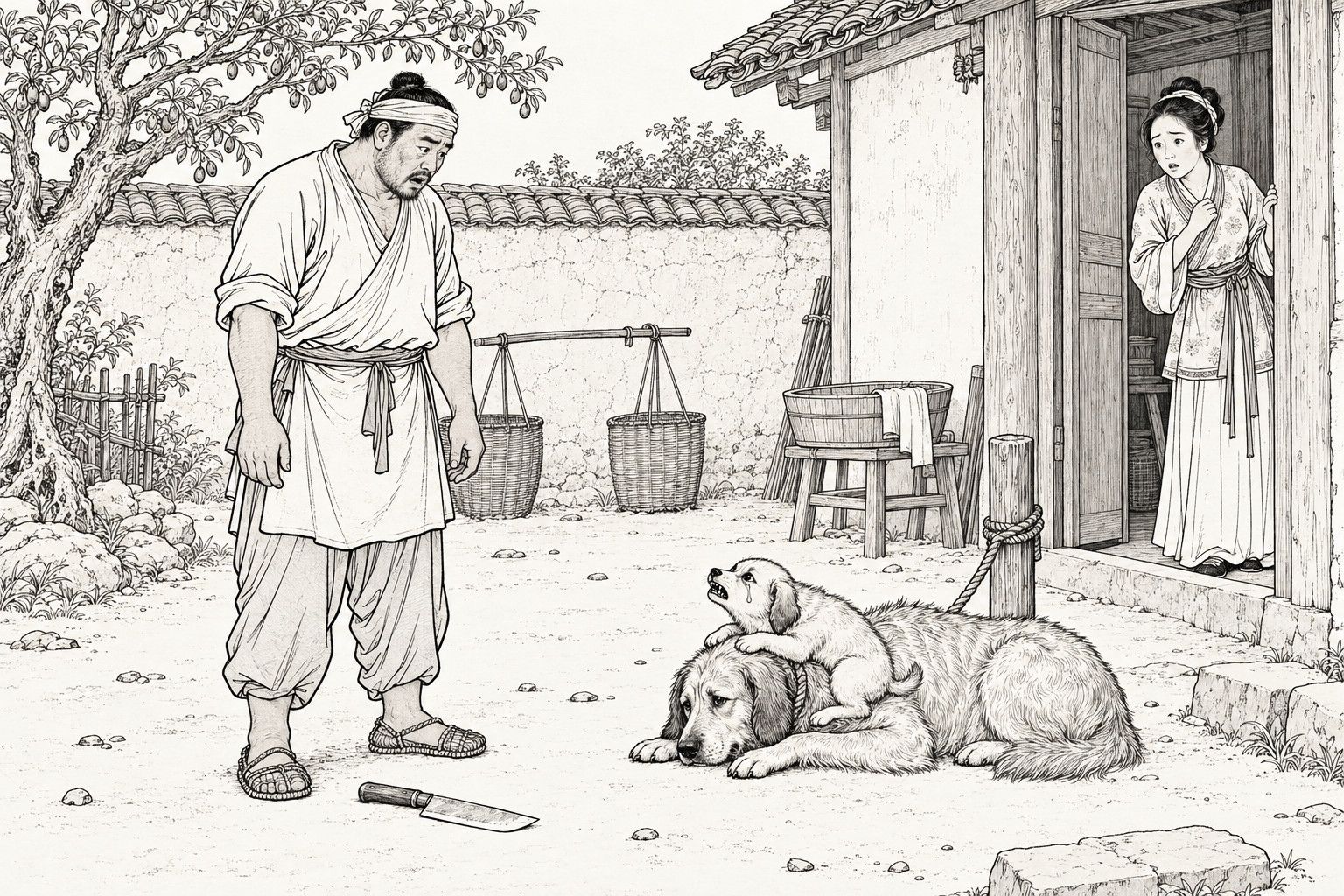
話說董平要殺狗,祇見小狗兒趴在大狗脖子上,祇落眼淚。董平愣了半天,自己想:「狗都知道身從何處來,何況我生個人來。」自己把大、小狗放開說:「我也不殺你了。你母子願意在我這裏,我有食水喂養﹔不願在我這裏,任你自去。」
话说董平要杀狗,祇见小狗儿趴在大狗脖子上,祇落眼泪。董平愣了半天,自己想:「狗都知道身从何处来,何况我生个人来。」自己把大、小狗放开说:「我也不杀你了。你母子愿意在我这里,我有食水喂养﹔不愿在我这里,任你自去。」
Now, Dong Ping was about to kill the dog when he saw the puppy lying across the big dog’s neck, its tears falling and falling. Dong Ping stood stunned for a long while. “Even a dog knows where its body came from,” he thought, “let alone me, born a human being.” He let the big dog and the puppy go. “I won’t kill you after all. If you two, mother and pup, want to stay here with me, I’ll have food and water to keep you. If you don’t, go wherever you like.”
他到屋中給他母親跪倒說:「孩兒我自己時常在你老人家面前無禮,罪該萬死。」韓氏說:「祇要你好好在老娘跟前盡孝,我們夫妻自有好處。」董平說:「我今日把這一鍋狗肉賣了,明天改行做個小本經營,這血盆子裏的買賣我不做了。」把狗肉挑前去,到了外面。每日挑出來一賣就完,今日走了十幾條衚衕也沒開張,走在錢塘江大街玉皇閣照壁前,覺得腹中疼痛,把肉擔兒放在道上,祇見從東邊來了窮和尚問:「這肉擔兒是誰的?」董平也不言語:「昨天在大街白要了我兩塊狗肉,今日又來問我,不答他,看他如何?」濟公見董平一臉黑氣,按靈光一察,知他乃是世界上第一「孝子」。「我若不救,雷必取他。」
他到屋中给他母亲跪倒说:「孩儿我自己时常在你老人家面前无礼,罪该万死。」韩氏说:「祇要你好好在老娘跟前尽孝,我们夫妻自有好处。」董平说:「我今日把这一锅狗肉卖了,明天改行做个小本经营,这血盆子里的买卖我不做了。」把狗肉挑前去,到了外面。每日挑出来一卖就完,今日走了十几条胡同也没开张,走在钱塘江大街玉皇阁照壁前,觉得腹中疼痛,把肉担儿放在道上,祇见从东边来了穷和尚问:「这肉担儿是谁的?」董平也不言语:「昨天在大街白要了我两块狗肉,今日又来问我,不答他,看他如何?」济公见董平一脸黑气,按灵光一察,知他乃是世界上第一「孝子」。「我若不救,雷必取他。」
He went into the house, knelt before his mother and said, “Your son has often been rude to you, Mother, and I deserve ten thousand deaths for it.” “As long as you do right by Mother and serve her as a son should,” said Madam Han, “the two of us, husband and wife, are sure to be blessed for it.” “Today I’ll sell off this pot of dog meat,” said Dong Ping, “and tomorrow I’ll change trades and set up some small business. I’m done with this trade out of a basin of blood.” He shouldered the dog meat and went out. Any other day he would carry it out and sell the lot in no time, but today he walked a dozen alleys and more without a single sale. When he reached the spirit screen in front of Yuhuang Pavilion on Qiantangjiang Street, his belly began to ache, and he set his load of meat down in the road. Just then a ragged monk came along from the east and asked, “Whose load of meat is this?” Dong Ping said nothing. “Yesterday on the main street he begged two pieces of dog meat off me for nothing,” he thought, “and today he’s back asking again. I won’t answer him. Let’s see what he does.” Ji Gong saw that Dong Ping’s whole face was dark with a black aura. He looked into it by his inner light and knew that this was the world’s foremost “filial son.” “If I don’t save him, the thunder will surely take him.”
書中交代:董平怎麼是第一孝子呢?按《善書》有云:比如這個人要做了半輩子的善事,他要做了一件惡事,那書上注寫他是第一之惡人,把從前半生的善事全沒了。比如那人做了半輩子的惡事,忽然自己知道不好:「我須當改,不然,我要遭報。」定能改過遷善,痛改前非,把從前惡事全勾了。書上注寫乃第一之善人。嫠婦失節,不如老妓從良。董平雖不孝母,自己忽然知道改悔,要在他母親跟前盡孝,乃一片至誠之心,並無半點虛浮,這就算第一之孝子。濟公問肉擔是哪位的,連問兩聲,無人回音,濟公挑起肉擔就跑。董平一瞧急了,趕緊站起來扣中衣邁步就追,剛往前一跑,祇聽後面山崩地裂一聲響,原來是那影壁牆塌下半截,董平嚇得目瞪口呆,心中說:「若非是和尚搶我的肉擔,早被土牆壓死了,真乃好險好險!」
书中交代:董平怎么是第一孝子呢?按《善书》有云:比如这个人要做了半辈子的善事,他要做了一件恶事,那书上注写他是第一之恶人,把从前半生的善事全没了。比如那人做了半辈子的恶事,忽然自己知道不好:「我须当改,不然,我要遭报。」定能改过迁善,痛改前非,把从前恶事全勾了。书上注写乃第一之善人。嫠妇失节,不如老妓从良。董平虽不孝母,自己忽然知道改悔,要在他母亲跟前尽孝,乃一片至诚之心,并无半点虚浮,这就算第一之孝子。济公问肉担是哪位的,连问两声,无人回音,济公挑起肉担就跑。董平一瞧急了,赶紧站起来扣中衣迈步就追,刚往前一跑,祇听后面山崩地裂一声响,原来是那影壁墙塌下半截,董平吓得目瞪口呆,心中说:「若非是和尚抢我的肉担,早被土墙压死了,真乃好险好险!」
A word of explanation: how could Dong Ping be the most filial son in the world? The morality books say: suppose a man has done good deeds for half his life, and then he does one wicked thing. The books record him as the foremost of wicked men, and all the good of his half a lifetime is wiped out. Suppose another man has done wicked deeds for half his life, and suddenly he sees for himself that it is wrong: “I must change, or I’ll suffer retribution.” If he truly turns from his faults to goodness and thoroughly mends his ways, all his past wickedness is struck off, and the books record him as the foremost of good men. A widow who loses her chastity is not the equal of an old prostitute who reforms and marries. Dong Ping had not been dutiful to his mother, but he had suddenly seen his error and repented, and meant to serve his mother as a son should. It came from a heart wholly sincere, without a speck of pretence, and that made him the foremost of filial sons. Ji Gong asked whose load of meat it was, asked twice, and no one answered, so Ji Gong picked up the load and ran. When Dong Ping saw that, he panicked. He jumped up, fastened his trousers and set off after him. He had barely started running when he heard a crash behind him, as if mountains were falling and the earth splitting open. Half of the spirit-screen wall had come down. Dong Ping stood frozen with fright. “If that monk hadn’t grabbed my load,” he said to himself, “I’d have been crushed to death under that wall long since. That was close, too close!”
書中交代:和尚說雷必取他,怎麼土牆壓死,是雷劫呢?諺語常說:天打雷劈五雷轟,莫非天上還打五個雷麼?原來是金木水火土謂之五雷,刀砍死謂之金雷,木棍打死謂之木雷,水淹死謂之水雷,火燒死謂之火雷,土牆壓死謂之土雷。要被天雷殛了,那必是罪大惡極的。話不多敘,董平一想:「我去找找和尚,跟他要擔子,還得謝謝他。」想畢向前走。哪想濟公他挑著這擔子,來到熱鬧街上,把擔子一放,拿刀就切狗肉。切完了,和尚用手一點指,這狗肉變的好像有一斤重一塊,濟公喊賣六文一塊。那走路的人走在這裏,遠遠就聞著這狗肉的香撲鼻。素來不吃狗肉的人,今天見肉塊又大又香,又甚便宜。這個三塊,那個五塊,那個十塊八塊,眨眼就賣了一堆錢。肉已快完了,剩了幾塊,和尚不賣了。
书中交代:和尚说雷必取他,怎么土墙压死,是雷劫呢?谚语常说:天打雷劈五雷轰,莫非天上还打五个雷么?原来是金木水火土谓之五雷,刀砍死谓之金雷,木棍打死谓之木雷,水淹死谓之水雷,火烧死谓之火雷,土墙压死谓之土雷。要被天雷殛了,那必是罪大恶极的。话不多叙,董平一想:「我去找找和尚,跟他要担子,还得谢谢他。」想毕向前走。哪想济公他挑着这担子,来到热闹街上,把担子一放,拿刀就切狗肉。切完了,和尚用手一点指,这狗肉变的好像有一斤重一块,济公喊卖六文一块。那走路的人走在这里,远远就闻着这狗肉的香扑鼻。素来不吃狗肉的人,今天见肉块又大又香,又甚便宜。这个三块,那个五块,那个十块八块,眨眼就卖了一堆钱。肉已快完了,剩了几块,和尚不卖了。
A word of explanation: the monk had said the thunder would take him, so how could being crushed by a wall count as a thunder doom? There’s a common saying, “Struck by heaven, split by lightning, blasted by the Five Thunders.” Does heaven really strike five thunderbolts? It turns out that metal, wood, water, fire and earth are what are called the Five Thunders. To be cut down with a blade is called metal thunder, to be beaten to death with a club is wood thunder, to drown is water thunder, to burn to death is fire thunder, and to be crushed under an earthen wall is earth thunder. To be struck down by real thunder from heaven, a man must be guilty of the very worst crimes. But enough of that. “I’ll go and find the monk,” Dong Ping thought, “and ask for my load back. And I ought to thank him too.” With that he set off. Ji Gong, meanwhile, had carried the load to a busy street. He set it down, took the knife and began cutting up the dog meat. When he had finished, the monk pointed at it, and each piece of dog meat seemed to grow to a full catty. Ji Gong cried his wares: six coppers a piece. People walking by caught the smell of the dog meat from far off, and it went straight up their noses. Even people who never ate dog meat saw how big and fragrant the pieces were today, and so cheap besides. One bought three pieces, another five, another eight or ten, and in the blink of an eye he had taken in a heap of cash. When the meat was nearly gone and only a few pieces were left, the monk stopped selling.
買不著狗肉的,也有懊悔說:「可惜這樣便宜的狗肉,我未趕上買著,實在懊悔。」有一位買了四塊肉,心中甚喜。心想:「這肉足夠一斤一塊。」走兩步,他聞一聞。俗話說的不錯:肉賤鼻子聞。心想到家給老娘們兩塊,剩兩塊找大哥約老弟可以喝點酒。聞了聞,走了兩步,打開瞧了一瞧,這肉剩了有半斤一塊。心想:「我莫非挑花眼了?我瞧著有一斤一塊。」自己納悶。又走了兩步再瞧,一塊剩有四兩﹔再走幾步瞧,四塊肉也無四兩。買肉的一想:「今天叫那和尚冤了我。」賭氣回家去了。濟公這裏賣一堆錢,狗肉也快完了。董平趕到說:「和尚,這肉擔是我的。我來把話與你說明白了。今天你要不搶我的擔子,我便被土牆壓死了。我倒要謝謝你。」濟公一翻眼睛說:「對,今天大早起來,你許是沒跟你媽媽辯嘴。」
买不着狗肉的,也有懊悔说:「可惜这样便宜的狗肉,我未赶上买着,实在懊悔。」有一位买了四块肉,心中甚喜。心想:「这肉足够一斤一块。」走两步,他闻一闻。俗话说的不错:肉贱鼻子闻。心想到家给老娘们两块,剩两块找大哥约老弟可以喝点酒。闻了闻,走了两步,打开瞧了一瞧,这肉剩了有半斤一块。心想:「我莫非挑花眼了?我瞧着有一斤一块。」自己纳闷。又走了两步再瞧,一块剩有四两﹔再走几步瞧,四块肉也无四两。买肉的一想:「今天叫那和尚冤了我。」赌气回家去了。济公这里卖一堆钱,狗肉也快完了。董平赶到说:「和尚,这肉担是我的。我来把话与你说明白了。今天你要不抢我的担子,我便被土墙压死了。我倒要谢谢你。」济公一翻眼睛说:「对,今天大早起来,你许是没跟你妈妈辩嘴。」
Those who had missed out were sorry. “What a shame! Dog meat that cheap, and I was too late to get any. I could kick myself.” One man had bought four pieces and was delighted. “These must be a full catty apiece,” he thought. Every couple of steps he sniffed them. As the saying goes, and it isn’t wrong: cheap meat gets a sniff. He thought he would give two pieces to the missus at home and use the other two to look up his big brother, ask his kid brother along and have a bit of a drink. He sniffed, walked a couple of steps, opened the wrapping and looked: each piece was down to about half a catty. “Were my eyes playing tricks when I picked them?” he thought. “They looked like a catty apiece to me.” He was puzzled. He walked a couple more steps and looked again: each piece was down to four ounces. A few steps more and he looked: the four pieces together didn’t come to four ounces. “That monk has cheated me today,” the buyer thought, and went home in a huff. Meanwhile Ji Gong had taken in a heap of cash, and the dog meat was nearly gone. Dong Ping caught up with him. “Monk, this load of meat is mine. I’ve come to make things clear with you. If you hadn’t grabbed my load today, I’d have been crushed to death under that wall. I really ought to thank you.” Ji Gong rolled his eyes up at him. “Right. This morning, first thing, I suppose you didn’t bicker with your mother.”
董平聽和尚一說此話,他倒一愣,連忙問:「和尚,你在哪廟裏?」濟公如此如此一說。叫董平:「你把賣的這錢拿了去作個小本經營。」董平說:「我明天改行,不做這殺生的買賣,我賣鮮果子去。」濟公說:「好,你把擔子錢都拿了去,我就要這幾塊狗肉就得了。」董平謝了和尚,濟公兜住狗肉。順著西湖蘇堤往前行走,信口唱起狂歌。歌曰:
董平听和尚一说此话,他倒一愣,连忙问:「和尚,你在哪庙里?」济公如此如此一说。叫董平:「你把卖的这钱拿了去作个小本经营。」董平说:「我明天改行,不做这杀生的买卖,我卖鲜果子去。」济公说:「好,你把担子钱都拿了去,我就要这几块狗肉就得了。」董平谢了和尚,济公兜住狗肉。顺着西湖苏堤往前行走,信口唱起狂歌。歌曰:
When Dong Ping heard the monk say this, he was taken aback. “Monk,” he asked quickly, “which temple are you from?” Ji Gong told him, this and that, and said to Dong Ping, “Take the money from this sale and set yourself up in some small business with it.” “Tomorrow I’m changing trades,” said Dong Ping. “No more of this business of taking life. I’ll sell fresh fruit.” “Good,” said Ji Gong. “Take the load and the money, all of it. These few pieces of dog meat are all I want.” Dong Ping thanked the monk. Ji Gong bundled the dog meat up in the front of his robe and set off along the Su Causeway by West Lake, singing a wild song that came to him as he went. The song went:
孤衾獨擁,睡熟轉濃,夢見登科第,聖恩優寵,官居極品,父母褒封,衣錦歸故里,拜友祭祖。一虛忙驚醒,依然敝帳枕樵童。祇聽窗外寒蟲叫,原來殘蟬唱古松。世人忙碌碌,都在一夢中。也夢為寒士,也夢做莊農,也夢陶朱富,也夢范丹窮,也夢文章顯達,也夢商賈經營,也夢登臺鼎,也夢執掌元戎。離合與悲歡,壽夭共窮通。仔細從頭看,都在一夢中。方知父母與妻子,兒孫和弟兄,俱是夢裏來相共。縱然衣紫腰金,出擁花驄,也是南柯一夢中。
孤衾独拥,睡熟转浓,梦见登科第,圣恩优宠,官居极品,父母褒封,衣锦归故里,拜友祭祖。一虚忙惊醒,依然敝帐枕樵童。祇听窗外寒虫叫,原来残蝉唱古松。世人忙碌碌,都在一梦中。也梦为寒士,也梦做庄农,也梦陶朱富,也梦范丹穷,也梦文章显达,也梦商贾经营,也梦登台鼎,也梦执掌元戎。离合与悲欢,寿夭共穷通。仔细从头看,都在一梦中。方知父母与妻子,儿孙和弟兄,俱是梦里来相共。纵然衣紫腰金,出拥花骢,也是南柯一梦中。
Alone I hug my single quilt, my sleep grows deep and sound; I dream I’ve passed the examinations, basking in the Emperor’s favour, in office of the highest rank, my parents honoured with titles; I come home dressed in brocade to call on friends and sacrifice to my forebears.Then, all for nothing, I start awake:still the tattered curtain, the pillow, the woodcutter’s boy.I hear only the cold insects crying outside the window —no, it’s a dying cicada singing in an old pine.The people of the world, bustling and busy,are all inside a single dream.Some dream they are poor scholars, some dream they are farmers, some dream of Tao Zhu’s riches, some of Fan Dan’s poverty, some dream their writings bring them fame and rank, some dream of trade and dealing, some dream they rise to be ministers of state, some that they command the armies.Parting and meeting, sorrow and joy,long life and early death, hardship and success —look closely from the very start:all inside a single dream.Now I know that father and mother, wife and children, sons and grandsons, brothers young and old, all come together only in a dream.Even dressed in purple, with gold at your waist, riding out on a dappled horse with a crowd around you, it is all still a dream of Nanke.
濟公順著西湖蘇堤口唱狂歌,過了冷泉亭,來至飛來峰靈隱寺山門外。看守山門的和尚靜明、靜安說:「濟師父,你拿著是甚麼東西?」濟公說:「我帶來是狗肉。你二位吃點?」靜安、靜明說:「不行,我二人吃素,你也不能往廟內帶。咱們這處廟是長素,葷酒莫入。提籠架鳥,都不準入廟,你白骨喧天往廟中帶不行,快扔了罷,你犯了戒啦!」濟公說:「我不知道。身上疼癢,疥又犯了。」說著,和尚低頭在身上找,靜明說:「不是身上長的疥,是犯了咱們和尚清規戒律。出家和尚講究三規五戒。」濟公說:「甚麼叫三規?哪叫五戒?你說說。」靜明說:「可惜你還是和尚,連三規五戒都不懂。咱們出家和尚,三規是佛規、法規、僧規。五戒是殺、盜、淫、妄、酒,你快把狗肉扔了罷。要到廟裏,連我二人都有失察之罪。監寺要看見,他也有罪。」濟公說:「你二人懂的甚麼,別阻我高興。我到廟給監寺狗肉吃。」兩個門頭僧也不敢阻止,由他去了。
济公顺着西湖苏堤口唱狂歌,过了冷泉亭,来至飞来峰灵隐寺山门外。看守山门的和尚静明、静安说:「济师父,你拿着是甚么东西?」济公说:「我带来是狗肉。你二位吃点?」静安、静明说:「不行,我二人吃素,你也不能往庙内带。咱们这处庙是长素,荤酒莫入。提笼架鸟,都不准入庙,你白骨喧天往庙中带不行,快扔了罢,你犯了戒啦!」济公说:「我不知道。身上疼痒,疥又犯了。」说着,和尚低头在身上找,静明说:「不是身上长的疥,是犯了咱们和尚清规戒律。出家和尚讲究三规五戒。」济公说:「甚么叫三规?哪叫五戒?你说说。」静明说:「可惜你还是和尚,连三规五戒都不懂。咱们出家和尚,三规是佛规、法规、僧规。五戒是杀、盗、淫、妄、酒,你快把狗肉扔了罢。要到庙里,连我二人都有失察之罪。监寺要看见,他也有罪。」济公说:「你二人懂的甚么,别阻我高兴。我到庙给监寺狗肉吃。」两个门头僧也不敢阻止,由他去了。
Singing his wild song along the Su Causeway by West Lake, Ji Gong passed Lengquan Pavilion and came to the main gate of Lingyin Temple on Feilai Peak. Jingming and Jing’an, the monks who kept the gate, said, “Master Ji, what’s that you’re carrying?” “It’s dog meat I’ve brought,” said Ji Gong. “Want some, you two?” “No,” said Jing’an and Jingming. “We two keep a vegetarian diet, and you can’t bring it into the temple either. This temple of ours is strictly vegetarian: no meat or wine may come in. Not even a birdcage or a bird on a perch is allowed inside, and you want to carry a load of bones in here, stinking to high heaven? It won’t do. Throw it away, quick. You’ve broken the precepts!” “I didn’t know,” said Ji Gong. “I’m sore and itchy all over. My scabies must have broken out again.” As he spoke, the monk bent his head and searched all over his body. “Not scabies breaking out on your body,” said Jingming. “You’ve broken the monastic rules and precepts that bind us monks. A monk who has left home must keep the Three Refuges and the Five Precepts.” “What are the Three Refuges?” said Ji Gong. “And what are the Five Precepts? Tell me.” “What a pity,” said Jingming. “You’re a monk, and you don’t even know the Three Refuges and the Five Precepts. For us monks who have left home, the Three Refuges are the rule of the Buddha, the rule of the Dharma and the rule of the Sangha. The Five Precepts are against killing, stealing, lust, lying and wine. Hurry up and throw that dog meat away. If it gets into the temple, even we two will be guilty of letting it past. And if the prior sees it, there’ll be blame on him too.” “What do you two know?” said Ji Gong. “Don’t spoil my fun. I’m taking it into the temple to give the prior some dog meat to eat.” The two gate monks did not dare stop him and let him go.
濟公到裏面,在大雄寶殿前面把狗肉放下,坐在旁邊,說:「有買肉的來買。」眾僧人來了十幾位,內中善心的和尚都道:「濟師父別賣了,要叫老和尚、監寺的知道,必要治你之罪。」濟公說:「你不要管。」旁邊就有恨濟公的和尚,說:「你賣了,誰敢管你?」濟公也不理論。祇見監寺廣亮從那邊過來說:「濟顛你賣狗肉,我也不管你。就是殺兩條狗,我也不管你。我竟問你,今日是到甚麼時候了?自從火燒大碑樓至今日,派你化緣,我要問你,這一萬銀兩工程,該當怎樣呢?」濟公說:「一萬我可沒有,我倒有個九千。」廣亮說:「我不同你胡鬧,我帶你見老和尚去。」濟公說:「別忙,火燒大碑樓之時,我與你說話是天交正午,此時還短一個時辰,少時沒有一萬兩銀子,我再和你見老方丈去。」廣亮一聽說:「好,你就多待一個時辰,我看你哪來的一萬兩白銀?」監寺廣亮方要走,祇見從那邊進來兩個門頭僧,一伸手把監寺僧拉住說:「廣師父,外面有一件新奇事,祇因我二人在山門坐著,見由西湖大路來了有二三百位,內中有官紳富戶,也有商賈人等。頭前有二位員外騎馬,衣帽鮮明。一位白面長髯,一位清奇古怪,都帶著有二三十個家人,到了山門外,把我二人喚過去,問:『此廟可是靈隱寺?』我等答應『是。』那二位問:『活佛可在廟內?』我等說:『我們這廟內沒有活佛。』那二位員外又問:『羅漢可在廟內?』我說:『廟內羅漢堂有五百零八尊金身羅漢,不知你二位給哪位燒香?』那二位員外說:『不是找泥像,是找活羅漢。』我們說『沒有。』那二位員外說:『善緣不巧,我等往別處施捨去罷。』我等說:『員外別走,這活佛倒是叫甚麼名字?』那二位說:『若說活佛的名字,得損陽壽十年。』我二人說:『員外你說活佛的名字,我二人替你損壽。』那二人先叩頭後說:『我二人損了三十年陽壽,你看如此如何?』」監寺說:「活佛是哪位呀?你二人說話不明白。」靜明說:「不行,我二人不能說了。算命排八字,都說我活五十三歲,今年我二十二歲了,方纔損了三十年,敢早敢晚,明年必死,再說了沒的往外找。」監寺的說:「不要緊,你二人說罷。我替你二人損陽壽十年。」那靜明和尚不慌不忙,說出活佛的名字。
济公到里面,在大雄宝殿前面把狗肉放下,坐在旁边,说:「有买肉的来买。」众僧人来了十几位,内中善心的和尚都道:「济师父别卖了,要叫老和尚、监寺的知道,必要治你之罪。」济公说:「你不要管。」旁边就有恨济公的和尚,说:「你卖了,谁敢管你?」济公也不理论。祇见监寺广亮从那边过来说:「济颠你卖狗肉,我也不管你。就是杀两条狗,我也不管你。我竟问你,今日是到甚么时候了?自从火烧大碑楼至今日,派你化缘,我要问你,这一万银两工程,该当怎样呢?」济公说:「一万我可没有,我倒有个九千。」广亮说:「我不同你胡闹,我带你见老和尚去。」济公说:「别忙,火烧大碑楼之时,我与你说话是天交正午,此时还短一个时辰,少时没有一万两银子,我再和你见老方丈去。」广亮一听说:「好,你就多待一个时辰,我看你哪来的一万两白银?」监寺广亮方要走,祇见从那边进来两个门头僧,一伸手把监寺僧拉住说:「广师父,外面有一件新奇事,祇因我二人在山门坐着,见由西湖大路来了有二三百位,内中有官绅富户,也有商贾人等。头前有二位员外骑马,衣帽鲜明。一位白面长髯,一位清奇古怪,都带着有二三十个家人,到了山门外,把我二人唤过去,问:『此庙可是灵隐寺?』我等答应『是。』那二位问:『活佛可在庙内?』我等说:『我们这庙内没有活佛。』那二位员外又问:『罗汉可在庙内?』我说:『庙内罗汉堂有五百零八尊金身罗汉,不知你二位给哪位烧香?』那二位员外说:『不是找泥像,是找活罗汉。』我们说『没有。』那二位员外说:『善缘不巧,我等往别处施舍去罢。』我等说:『员外别走,这活佛倒是叫甚么名字?』那二位说:『若说活佛的名字,得损阳寿十年。』我二人说:『员外你说活佛的名字,我二人替你损寿。』那二人先叩头后说:『我二人损了三十年阳寿,你看如此如何?』」监寺说:「活佛是哪位呀?你二人说话不明白。」静明说:「不行,我二人不能说了。算命排八字,都说我活五十三岁,今年我二十二岁了,方才损了三十年,敢早敢晚,明年必死,再说了没的往外找。」监寺的说:「不要紧,你二人说罢。我替你二人损阳寿十年。」那静明和尚不慌不忙,说出活佛的名字。
Inside, Ji Gong set the dog meat down in front of the Main Hall, sat beside it and called out, “Anyone who wants meat, come and buy!” A dozen or more monks gathered. The kind-hearted ones among them said, “Master Ji, stop selling. If the old abbot or the prior finds out, you’ll certainly be punished.” “Never you mind,” said Ji Gong. Standing by were monks who hated Ji Gong, and they said, “You sell away. Who’d dare stop you?” Ji Gong paid them no heed. Then the prior, Guangliang, came over from the other side. “Crazy Ji, if you want to sell dog meat, I won’t interfere. If you want to slaughter a couple of dogs, I won’t interfere either. I just want to ask you: what time do you think it’s got to today? Ever since the Great Stele Tower burned down, you’ve been sent out to beg for alms. So I’m asking you: what about the ten thousand taels of silver for the building work?” “Ten thousand I don’t have,” said Ji Gong, “but I do have nine thousand.” “I’m not going to fool around with you,” said Guangliang. “I’m taking you to see the old abbot.” “Not so fast,” said Ji Gong. “When the Great Stele Tower burned, the time I talked with you was right on noon. It’s still two hours short of that now. If in a little while I don’t have ten thousand taels of silver, then I’ll go with you to see the old abbot.” “Fine,” said Guangliang. “You can have two hours more. I’d like to see where you’ll get ten thousand taels of silver from.” The prior Guangliang was just about to go when two gate monks came in from the other side, and one of them reached out and caught hold of him. “Master Guang, there’s something strange going on outside. We two were sitting at the main gate when two or three hundred people came along the main road from West Lake: officials, gentry and rich householders among them, and merchants and traders too. At the head of them rode two squires on horseback, finely dressed. One had a pale face and a long beard; the other had a striking, unusual look. Each had twenty or thirty servants with him. When they reached the main gate, they called the two of us over and asked, ‘Is this Lingyin Temple?’ We said, ‘It is.’ The two of them asked, ‘Is the living Buddha in the temple?’ We said, ‘There’s no living Buddha in our temple.’ The two squires asked again, ‘Is the arhat in the temple?’ I said, ‘In the Arhat Hall we have five hundred and eight gilded arhats. Which one are you two gentlemen burning incense to?’ The two squires said, ‘We’re not looking for a clay statue. We’re looking for a living arhat.’ We said, ‘There isn’t one.’ The two squires said, ‘Our pious offerings have come at a bad time. We’ll go and give our alms somewhere else.’ We said, ‘Squires, don’t go. What is this living Buddha’s name, then?’ The two of them said, ‘Whoever speaks the living Buddha’s name loses ten years of life.’ We two said, ‘Tell us the living Buddha’s name, squires, and we’ll lose the years for you.’ The two of us first kowtowed and then said, ‘We two have lost thirty years of life. What do you think of that?’ ” “So who is the living Buddha?” said the prior. “You two aren’t making yourselves clear.” “No,” said Jingming, “we two can’t say any more. Every fortune-teller who’s cast my eight characters says I’ll live to fifty-three. I’m twenty-two this year, and just now I lost thirty years. Sooner or later, next year I’m sure to die. If I say it again, there are no years left to take it out of.” “Never mind,” said the prior. “Go on, tell me. I’ll lose ten years of life for the two of you.” Calm and unhurried, the monk Jingming spoke the name of the living Buddha.
要知後事畢竟如何,且看下回分解。
要知后事毕竟如何,且看下回分解。
To learn what happened next, read the next chapter.