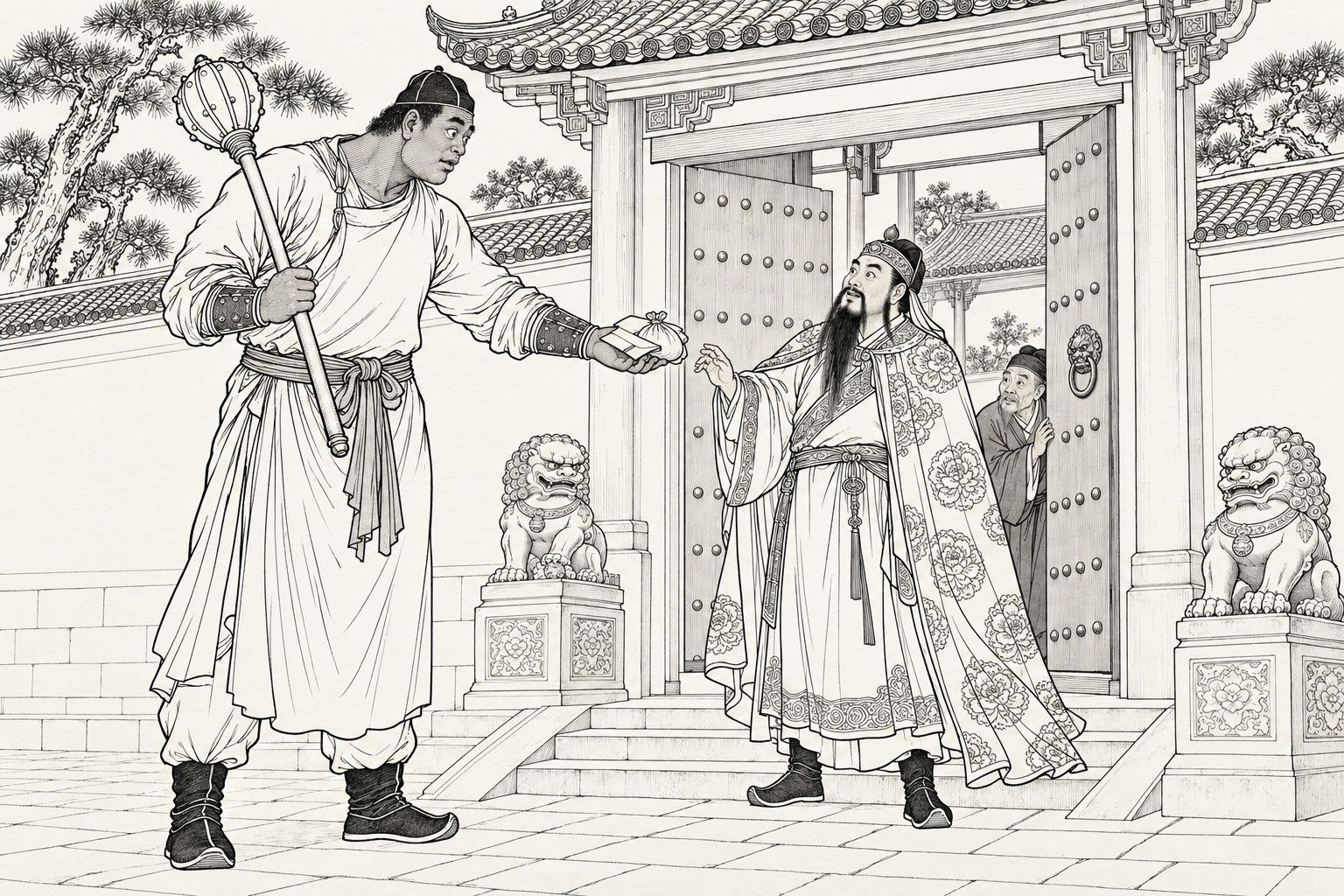
話說濟公叫楊明、雷鳴、陳亮跟著往北走了不遠。三位英雄一瞧,濟公沒有了。再一看,眼前樹林子,華雲龍同一個人在那裡站著。三英雄一瞧,這人身長一丈,頭如麥斗。頭戴皂緞色六瓣壯士巾,身穿皂緞色箭袖袍,腰系絲鸞帶。單襯襖,薄底靴子。面似黑鍋底,粗眉大眼,直鼻闊口。扛著一條四楞鑌鐵鐧。楊明細細一看,不是別人,就是絳豐縣的原籍、姓陸名通。
话说济公叫杨明、雷鸣、陈亮跟着往北走了不远。三位英雄一瞧,济公没有了。再一看,眼前树林子,华云龙同一个人在那里站着。三英雄一瞧,这人身长一丈,头如麦斗。头戴皂缎色六瓣壮士巾,身穿皂缎色箭袖袍,腰系丝鸾带。单衬袄,薄底靴子。面似黑锅底,粗眉大眼,直鼻阔口。扛着一条四楞镔铁锏。杨明细细一看,不是别人,就是绛丰县的原籍、姓陆名通。
Now, Ji Gong had Yang Ming, Lei Ming and Chen Liang follow him north, and they had not gone far when the three heroes looked round and Ji Gong was gone. They looked again: there in the grove ahead stood Hua Yunlong with another man. The three heroes took a look at him. The man was a full zhang tall, with a head as big as a grain measure. On his head was a six-panel warrior’s cap of black satin; he wore a black satin robe with archer’s sleeves, a silk sash with luan birds at his waist, an unlined jacket beneath, and thin-soled boots. His face was like the bottom of a black cooking pot, with thick brows and big eyes, a straight nose and a wide mouth. On his shoulder he carried a four-edged mace of fine steel. Yang Ming looked him over carefully. It was none other than a man from Jiangfeng County, surnamed Lu and named Tong.
這個人天生的一條大漢。父早喪,母王氏。家中也是寒苦,全仗王老太太做針黹度日。陸通長到一十六歲,人情世故一概不懂。這天王老太太說:「兒呀,你也這么大了,肩不能挑擔,手不能提籃。為娘的也老了,你有什麼能為找飯吃?」陸通說:「不要緊,我找去。」說著話就出去了。少時陸通拿回二斤餅來,說:「娘呀,吃罷。」老太太一瞧,說:「你哪裡拿來的?」陸通說:「我方才出去。見有一小子拿著餅。我過去打他一個嘴巴,把餅就搶來了。」老太太一聽,說:「你這孩子,怎么這樣渾!國有王法,律有明條。你在街上打搶,叫人家拿著,就了不得了!明天不準搶了。」陸通本是個渾人,出去搶慣了,不管是誰,瞧見了便搶。人都不敢惹他,因他天生來的力氣大,再也打他不過。這天本地有一位吳孝廉,家裡是財主,最好行善。開著許多的店鋪。見陸通在他鋪子門口搶東西,吳孝廉就問:「什麼人?好大膽!竟敢白晝打搶。把他揪住,拿片子送在衙門裡治罪!」旁有一位老者是好人,說:「吳大爺,你老人家不認得他。他叫陸通,是個渾人。他家中孤兒老母,沒有養活。這個人雖然太渾,最孝母,搶了東西給他母親吃。你老人家可以周濟他,也是德行。」吳孝廉本是個善人。一聽陸通是個孝子,人人可敬。叫陸通過來,說:「你姓什麼?」陸通說:「我姓陸叫通。」孝廉說:「你別搶了。每天到德裕糧店取一吊錢,給你母子度日,好不好?」陸通說:「你一天給一吊錢,好小子!」吳孝廉一聽,這倒不錯。施捨一吊錢,落一個好小子,倒不錯。知道陸通是個渾人,也不怪他。陸通就每天拿一吊錢,買了吃的,先給母親吃,剩下的他全吃了。這天他吃完了飯,把家裡一條鐵棍,拿出山里去遊玩。正趕上有二十一家獵戶打圍,趕下許多的獐貓野鹿。陸通瞧見,他過去拿棍全給打死,挑起來就走。眾獵戶趕到。大眾說:「我們撒下圍趕下來的野獸,黑漢你別給拿了走。」陸通說:「不許爺爺拿去,你們搶罷,誰搶了去是誰的。」獵戶過來跟他動手,不是他的對手。
这个人天生的一条大汉。父早丧,母王氏。家中也是寒苦,全仗王老太太做针黹度日。陆通长到一十六岁,人情世故一概不懂。这天王老太太说:「儿呀,你也这么大了,肩不能挑担,手不能提篮。为娘的也老了,你有什么能为找饭吃?」陆通说:「不要紧,我找去。」说着话就出去了。少时陆通拿回二斤饼来,说:「娘呀,吃罢。」老太太一瞧,说:「你哪里拿来的?」陆通说:「我方才出去。见有一小子拿着饼。我过去打他一个嘴巴,把饼就抢来了。」老太太一听,说:「你这孩子,怎么这样浑!国有王法,律有明条。你在街上打抢,叫人家拿着,就了不得了!明天不准抢了。」陆通本是个浑人,出去抢惯了,不管是谁,瞧见了便抢。人都不敢惹他,因他天生来的力气大,再也打他不过。这天本地有一位吴孝廉,家里是财主,最好行善。开着许多的店铺。见陆通在他铺子门口抢东西,吴孝廉就问:「什么人?好大胆!竟敢白昼打抢。把他揪住,拿片子送在衙门里治罪!」旁有一位老者是好人,说:「吴大爷,你老人家不认得他。他叫陆通,是个浑人。他家中孤儿老母,没有养活。这个人虽然太浑,最孝母,抢了东西给他母亲吃。你老人家可以周济他,也是德行。」吴孝廉本是个善人。一听陆通是个孝子,人人可敬。叫陆通过来,说:「你姓什么?」陆通说:「我姓陆叫通。」孝廉说:「你别抢了。每天到德裕粮店取一吊钱,给你母子度日,好不好?」陆通说:「你一天给一吊钱,好小子!」吴孝廉一听,这倒不错。施舍一吊钱,落一个好小子,倒不错。知道陆通是个浑人,也不怪他。陆通就每天拿一吊钱,买了吃的,先给母亲吃,剩下的他全吃了。这天他吃完了饭,把家里一条铁棍,拿出山里去游玩。正赶上有二十一家猎户打围,赶下许多的獐猫野鹿。陆通瞧见,他过去拿棍全给打死,挑起来就走。众猎户赶到。大众说:「我们撒下围赶下来的野兽,黑汉你别给拿了走。」陆通说:「不许爷爷拿去,你们抢罢,谁抢了去是谁的。」猎户过来跟他动手,不是他的对手。
This man had been born a great hulking fellow. His father died early; his mother was Madam Wang. The family was poor, and they lived entirely on the needlework old Mrs. Wang took in. By the time Lu Tong was sixteen, he understood nothing whatever of the ways of the world. One day old Mrs. Wang said, “Son, you’re a big boy now, and yet you can’t carry a load on your shoulder or a basket on your arm. Your mother’s getting old. What can you do to find us something to eat?” “That’s easy,” said Lu Tong. “I’ll go find some.” And out he went. Soon he came back with two jin of flatbread. “Here, Ma,” he said. “Eat.” The old lady looked at it. “Where did you get that?” she said. “I just went out,” said Lu Tong, “and saw a fellow holding some bread. I went over and slapped him across the face and grabbed the bread.” When the old lady heard this, she said, “You foolish boy, how can you be so thick! The realm has its laws, and the code is written plain. If you rob people in the street and they catch you, there’ll be the devil to pay! No more robbing from tomorrow.” But Lu Tong was a simpleton, and once he had got into the habit of going out to rob, he grabbed from anyone he saw. Nobody dared cross him, because he had been born with such strength that no one could beat him. Now, there was a provincial graduate in those parts named Wu, a wealthy man who loved nothing better than doing good, and who kept a great many shops. When he saw Lu Tong grabbing things at the door of one of his shops, Graduate Wu said, “Who is this? What nerve! Robbing in broad daylight! Seize him, and send him to the yamen with my card to be punished!” An old man standing by, a good-hearted sort, said, “Master Wu, you don’t know him, sir. He’s called Lu Tong, and he’s a simpleton. There’s just him and his old mother at home, with nothing to live on. Thick as he is, he’s the most dutiful son to his mother — he robs things to feed her. If you were to help him out, sir, it would be a good deed.” Graduate Wu was a kindly man at heart, and when he heard that Lu Tong was a dutiful son — and a dutiful son is someone everyone respects — he called Lu Tong over. “What’s your name?” he said. “My surname’s Lu and I’m called Tong,” said Lu Tong. “Stop robbing,” said the graduate. “Every day you can go to the Deyu Grain Shop and collect a string of cash to keep you and your mother. How’s that?” “You’ll give me a string a day?” said Lu Tong. “Good lad!” When Graduate Wu heard that, he thought it not bad at all: give away a string of cash and be called a good lad for it — not bad at all. He knew Lu Tong was a simpleton, so he didn’t hold it against him. From then on Lu Tong took his string of cash every day and bought food. He gave his mother hers first, and ate up all the rest himself. One day, after he had eaten, he took an iron staff from the house and went out into the hills to roam about. It so happened that twenty-one families of hunters were holding a ring hunt and had driven down a great many river deer, wildcats and wild deer. When Lu Tong saw them, he went over, beat every one of them to death with his staff, slung them on a pole and made off. The hunters came running up. “Those are beasts our ring drove down,” they all said. “Don’t you go carrying them off, you big black brute.” “You won’t let your granddad take ’em?” said Lu Tong. “Then grab ’em yourselves. Whoever grabs ’em keeps ’em.” The hunters came at him, but they were no match for him.
大眾無法,不要了。陸通把野獸挑著一賣。他不知值多少錢,給錢就賣。把錢拿回家去,就不上糧店要那一吊錢。天天到山裡去打野獸,眾獵人都不敢惹他。大眾一商量說:「陸通天天攪咱們。咱們跟他商量,每天給他一吊錢,叫他幫咱們打獵,省得他搶我們。」這天又碰見陸通,跟他商量。一天給他一吊錢,叫他幫著打野獸,給眾獵戶分。陸通也願意。一天拿一吊錢到家裡,給老母買吃的。這天他老娘死了,陸通回來,他也不懂。見老娘在炕上躺著,也不說話。陸通就叫:「娘呀,吃飯罷。」街坊上過來一瞧,說:「你老娘死了!」陸通說:「什麼叫死了?」街坊說:「死了,就不說話了,不吃東西啦。你買一口棺材埋了。不然,擱兩天就臭了。」陸通說:「這叫做死了?也不說話,也不吃東西。買一口棺材埋去,不然擱兩天就臭了。」街坊說:「對了。」陸通過去,把老娘背起來,往外就走。街坊說:「你上哪去?」陸通說:「上棺材鋪,瞧哪口棺材好,擱裡頭就得了。」街坊說:「你真是個渾子!沒有背著死屍滿街跑的。你擱下,你去找獵戶,叫他們買一口棺材埋了。」陸通答應,到獵戶家去。大眾問:「你做什麼來了?」陸通說:「老娘死了,也不說話,也不吃東西了。買一口棺材埋了。要不然,過兩天就臭了。我找你們給買棺材。」大眾一想:「這倒不錯,他是個孝子。」內中就有好人說:「這是好事,咱們大家湊著買一口棺材,把他老娘給埋了。」陸通剩自己一個人,仍然幫眾人打獵。一天要一吊錢,這二十一家獵戶,都不願意,又不敢不給他。這天內中有一個姓殷的,外號叫殷到底,說:「咱們每天給陸通一吊錢,冤不冤?」大眾說:「沒法子。」殷到底說:「你們眾位每人交給我一吊錢,我能把他發出去。」大眾說:「你能辦的了,我們二十家,交你二十吊錢。」殷到底允了。大眾給了他的錢。這天請陸通吃飯。
大众无法,不要了。陆通把野兽挑着一卖。他不知值多少钱,给钱就卖。把钱拿回家去,就不上粮店要那一吊钱。天天到山里去打野兽,众猎人都不敢惹他。大众一商量说:「陆通天天搅咱们。咱们跟他商量,每天给他一吊钱,叫他帮咱们打猎,省得他抢我们。」这天又碰见陆通,跟他商量。一天给他一吊钱,叫他帮着打野兽,给众猎户分。陆通也愿意。一天拿一吊钱到家里,给老母买吃的。这天他老娘死了,陆通回来,他也不懂。见老娘在炕上躺着,也不说话。陆通就叫:「娘呀,吃饭罢。」街坊上过来一瞧,说:「你老娘死了!」陆通说:「什么叫死了?」街坊说:「死了,就不说话了,不吃东西啦。你买一口棺材埋了。不然,搁两天就臭了。」陆通说:「这叫做死了?也不说话,也不吃东西。买一口棺材埋去,不然搁两天就臭了。」街坊说:「对了。」陆通过去,把老娘背起来,往外就走。街坊说:「你上哪去?」陆通说:「上棺材铺,瞧哪口棺材好,搁里头就得了。」街坊说:「你真是个浑子!没有背着死尸满街跑的。你搁下,你去找猎户,叫他们买一口棺材埋了。」陆通答应,到猎户家去。大众问:「你做什么来了?」陆通说:「老娘死了,也不说话,也不吃东西了。买一口棺材埋了。要不然,过两天就臭了。我找你们给买棺材。」大众一想:「这倒不错,他是个孝子。」内中就有好人说:「这是好事,咱们大家凑着买一口棺材,把他老娘给埋了。」陆通剩自己一个人,仍然帮众人打猎。一天要一吊钱,这二十一家猎户,都不愿意,又不敢不给他。这天内中有一个姓殷的,外号叫殷到底,说:「咱们每天给陆通一吊钱,冤不冤?」大众说:「没法子。」殷到底说:「你们众位每人交给我一吊钱,我能把他发出去。」大众说:「你能办的了,我们二十家,交你二十吊钱。」殷到底允了。大众给了他的钱。这天请陆通吃饭。
There was nothing they could do, and they let the beasts go. Lu Tong carried them off on his pole and sold them. He had no idea what they were worth, and sold them for whatever he was offered. He brought the money home and stopped going to the grain shop for his string of cash. Every day he went into the hills to kill game, and none of the hunters dared cross him. They talked it over among themselves. “Lu Tong makes trouble for us every day,” they said. “Let’s make a deal with him: we’ll give him a string of cash a day to help us hunt, and save ourselves from being robbed.” The next time they ran into Lu Tong, they put it to him: a string of cash a day, and he would help them kill game and share it out among the hunters. Lu Tong was willing. Every day he brought home a string of cash and bought food for his old mother. Then one day his old mother died. When Lu Tong came home he didn’t understand. He saw her lying on the kang, not saying a word. “Ma,” he called, “come and eat.” A neighbour came over and took a look. “Your mother’s dead!” he said. “What’s dead?” said Lu Tong. “When you’re dead you don’t talk any more and you don’t eat any more,” said the neighbour. “Buy a coffin and bury her. Otherwise, leave her a couple of days and she’ll stink.” “So this is called dead?” said Lu Tong. “Don’t talk any more, don’t eat any more. Buy a coffin and bury her, otherwise leave her a couple of days and she’ll stink.” “That’s right,” said the neighbour. Lu Tong went over, hoisted his old mother onto his back and headed out the door. “Where are you going?” said the neighbour. “To the coffin shop,” said Lu Tong. “I’ll see which coffin’s good and put her in it, and that’s that.” “You really are a dolt!” said the neighbour. “Nobody runs through the streets with a corpse on his back. Put her down. Go find the hunters and have them buy a coffin and bury her.” Lu Tong agreed and went to the hunters’ houses. “What have you come for?” they asked. “My old mother’s dead,” said Lu Tong. “Doesn’t talk any more and doesn’t eat any more. Buy a coffin and bury her, otherwise in a couple of days she’ll stink. I’ve come to get you to buy the coffin.” They all thought, “Well, that’s something — he’s a dutiful son.” And some of the good-hearted among them said, “This is a good deed. Let’s all chip in for a coffin and bury his old mother.” Now Lu Tong was left all alone, and he went on helping the hunters as before, taking a string of cash a day. None of the twenty-one hunting families liked it, but they didn’t dare not pay him. One day one of them, a man surnamed Yin who went by the nickname Yin All-the-Way (Yin Daodi), said, “A string of cash every day to Lu Tong — aren’t we being robbed?” “There’s nothing for it,” they all said. “If each of you hands me one string of cash,” said Yin All-the-Way, “I can send him packing.” “If you can pull it off,” they said, “the twenty of us will hand you twenty strings.” Yin All-the-Way agreed, and they gave him the money. So one day he invited Lu Tong to a meal.