滕邑趙旺,夫妻奉佛,不茹葷血,鄉中有「善人」之目。家稱小有。一女小二,絕慧美,趙珍愛之。年六歲,使與兄長春並從師讀,凡五年而熟五經焉。同窗丁生,字紫陌,長于女三歲,文采風流,頗相傾愛。私以意告母,求婚趙氏。趙期以女字大家,故弗許。未幾,趙惑于白蓮教;徐鴻儒即反,一家俱陷為賊。小二知書善解,凡紙兵豆馬之術,一見輒精。小女子師事徐者六人,惟二稱最,因得盡傳其術。趙以女故,大得委任。
滕邑有個趙旺,夫妻倆信奉佛教,不吃葷腥,鄉里人都稱他們為「善人」。家裡還算有些資產。他們有個女兒叫小二,聰明美麗,趙旺十分疼愛她。小二六歲時,趙旺讓她跟哥哥長春一起拜師讀書,五年下來,她已經熟讀五經。同窗有位丁生,字紫陌,比小二大三歲,才華出眾,風度瀟灑,兩人很是傾心相愛。丁生私下把心意告訴母親,請她向趙家提親。趙旺指望把女兒嫁入大戶人家,便沒有答應。不久,趙旺受到白蓮教的迷惑;徐鴻儒隨後起兵造反,趙家一家人也都捲入其中,成了叛軍。小二讀過書,領悟力又強,剪紙成兵、撒豆成馬這些法術,她一看就能精通。拜徐鴻儒為師的小姑娘共有六個,只有小二被認為最出色,因此得到了他的全部傳授。趙旺也因為女兒的緣故,很受信任,受到重用。
滕邑赵旺,夫妻奉佛,不茹荤血,乡中有「善人」之目。家称小有。一女小二,绝慧美,赵珍爱之。年六岁,使与兄长春并从师读,凡五年而熟五经焉。同窗丁生,字紫陌,长于女三岁,文采风流,颇相倾爱。私以意告母,求婚赵氏。赵期以女字大家,故弗许。未几,赵惑于白莲教;徐鸿儒即反,一家俱陷为贼。小二知书善解,凡纸兵豆马之术,一见辄精。小女子师事徐者六人,惟二称最,因得尽传其术。赵以女故,大得委任。
滕邑有个赵旺,夫妻俩信奉佛教,不吃荤腥,乡里人都称他们为“善人”。家里还算有些资产。他们有个女儿叫小二,聪明美丽,赵旺十分疼爱她。小二六岁时,赵旺让她跟哥哥长春一起拜师读书,五年下来,她已经熟读五经。同窗有位丁生,字紫陌,比小二大三岁,才华出众,风度潇洒,两人很是倾心相爱。丁生私下把心意告诉母亲,请她向赵家提亲。赵旺指望把女儿嫁入大户人家,便没有答应。不久,赵旺受到白莲教的迷惑;徐鸿儒随后起兵造反,赵家一家人也都卷入其中,成了叛军。小二读过书,领悟力又强,剪纸成兵、撒豆成马这些法术,她一看就能精通。拜徐鸿儒为师的小姑娘共有六个,只有小二被认为最出色,因此得到了他的全部传授。赵旺也因为女儿的缘故,很受信任,受到重用。
Zhao Wang of Teng county and his wife were devout Buddhists who ate no meat or fish, and in their village they were known as “the good people”. The family was fairly well off. They had one daughter, Xiao’er, who was exceptionally clever and beautiful, and Zhao doted on her. When she was six he sent her to study under a tutor with her elder brother Changchun, and in five years she knew the Five Classics thoroughly. A fellow pupil, a scholar named Ding, courtesy name Zimo, three years older than she, was gifted and dashing, and the two were much drawn to each other. Ding told his mother privately what he wished, and she asked the Zhaos for the girl’s hand. But Zhao hoped to betroth his daughter into a great family, and refused. Before long Zhao was taken in by the White Lotus sect, and when Xu Hongru rose in revolt, the whole family was drawn in among the rebels. Xiao’er was well read and quick to understand: the arts of paper soldiers and bean horses, and all the rest, she mastered at first sight. Six young girls served Xu as their master, and Xiao’er was counted the best of them, so he passed all his arts on to her. Because of his daughter, Zhao was given great trust.
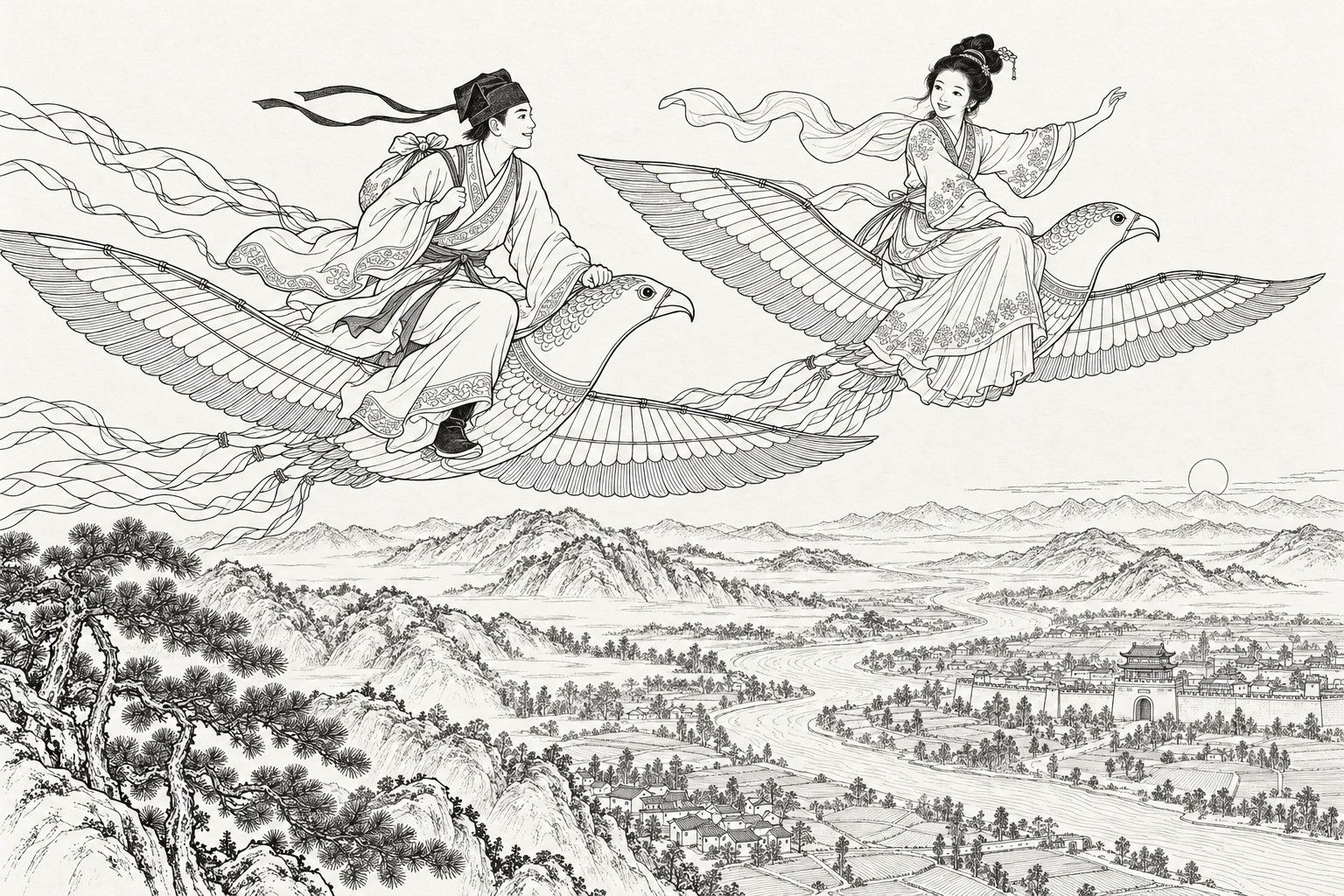
時丁年十八,游滕泮矣。而不肯論婚,意不忘小二也。潛亡去,投徐麾下。女見之喜,優禮逾于常格。女以徐高足,主軍務;晝夜出入,父母不得間。丁每宵見,嘗斥絕諸役,輒至三漏。丁私告曰:「小生此來,卿知區區之意否?」女雲:「不知。」丁曰:「我非妄意攀龍,所以故,實為卿耳。左道無濟,止取滅亡。卿慧人,不念此乎?能從我亡,則寸心誠不負矣。」女憮然為間,豁然夢覺,曰:「背親而行,不義,請告。」二人入陳利害。趙不悟,曰:「我師神人,豈有舛錯?」女知不可諫,乃易髫而髻,出二紙鳶,與丁各跨其一;鳶肅肅展翼,似鶼鶼之鳥,比翼而飛。質明,抵萊蕪界。女以指拈鳶項,忽即斂墮。遂收鳶。更以雙衛,馳至山陰裡,托為避亂者,僦屋而居。
這時丁生十八歲,已經考進滕邑縣學,成了秀才,卻始終不肯談婚事,心裡仍忘不了小二。他偷偷離家,投到徐鴻儒手下。小二見到他很高興,給他的禮遇超過了通常的規矩。小二是徐鴻儒的得意弟子,掌管軍務,日夜出入,父母也無法干預。丁生每晚都來見她,她常常把所有侍從打發出去,兩人一直相處到三更。丁生私下問她:「我這次來,你知道我的心意嗎?」小二說:「不知道。」丁生說:「我並不是妄想攀附什麼大人物,我來的緣故,實在只是為了你。這些邪門法術成不了事,只會招來滅亡。你這麼聰明,難道沒有想過嗎?你若肯跟我一起逃走,我這片真心也就沒有白費。」小二悵然沉思了一會兒,忽然像從夢中醒來,說:「揹著父母離開,是不義的事,請讓我先告訴他們。」兩人進去,把利害說給趙旺聽。趙旺仍不醒悟,說:「我們的師父是神人,怎麼會出差錯?」小二知道再勸也沒有用,便把少女的髮式改梳成婦人的髮髻,取出兩隻紙鳶,和丁生各騎上一隻。紙鳶展翅發出颯颯的聲音,像一對比翼鳥,並肩飛去。天亮時,他們到了萊蕪地界。小二用手指捏住紙鳶的頸部,紙鳶立刻收起翅膀,落了下來。她把紙鳶收好,兩人又換乘兩頭驢,趕到山陰裡,自稱是逃避戰亂的人,租了一間房住下。
时丁年十八,游滕泮矣。而不肯论婚,意不忘小二也。潜亡去,投徐麾下。女见之喜,优礼逾于常格。女以徐高足,主军务;昼夜出入,父母不得间。丁每宵见,尝斥绝诸役,辄至三漏。丁私告曰:「小生此来,卿知区区之意否?」女云:「不知。」丁曰:「我非妄意攀龙,所以故,实为卿耳。左道无济,止取灭亡。卿慧人,不念此乎?能从我亡,则寸心诚不负矣。」女怃然为间,豁然梦觉,曰:「背亲而行,不义,请告。」二人入陈利害。赵不悟,曰:「我师神人,岂有舛错?」女知不可谏,乃易髫而髻,出二纸鸢,与丁各跨其一;鸢肃肃展翼,似鹣鹣之鸟,比翼而飞。质明,抵莱芜界。女以指拈鸢项,忽即敛堕。遂收鸢。更以双卫,驰至山阴里,托为避乱者,僦屋而居。
这时丁生十八岁,已经考进滕邑县学,成了秀才,却始终不肯谈婚事,心里仍忘不了小二。他偷偷离家,投到徐鸿儒手下。小二见到他很高兴,给他的礼遇超过了通常的规矩。小二是徐鸿儒的得意弟子,掌管军务,日夜出入,父母也无法干预。丁生每晚都来见她,她常常把所有侍从打发出去,两人一直相处到三更。丁生私下问她:“我这次来,你知道我的心意吗?”小二说:“不知道。”丁生说:“我并不是妄想攀附什么大人物,我来的缘故,实在只是为了你。这些邪门法术成不了事,只会招来灭亡。你这么聪明,难道没有想过吗?你若肯跟我一起逃走,我这片真心也就没有白费。”小二怅然沉思了一会儿,忽然像从梦中醒来,说:“背着父母离开,是不义的事,请让我先告诉他们。”两人进去,把利害说给赵旺听。赵旺仍不醒悟,说:“我们的师父是神人,怎么会出差错?”小二知道再劝也没有用,便把少女的发式改梳成妇人的发髻,取出两只纸鸢,和丁生各骑上一只。纸鸢展翅发出飒飒的声音,像一对比翼鸟,并肩飞去。天亮时,他们到了莱芜地界。小二用手指捏住纸鸢的颈部,纸鸢立刻收起翅膀,落了下来。她把纸鸢收好,两人又换乘两头驴,赶到山阴里,自称是逃避战乱的人,租了一间房住下。
By now Ding was eighteen and had become a licentiate of the Teng county school. Yet he would not hear of marriage, for he could not forget Xiao’er. He slipped away from home and joined Xu’s forces. Xiao’er was glad to see him and treated him with honours beyond the usual rule. As Xu’s best disciple she was in charge of military affairs, going in and out day and night, and her parents had no chance to interfere. Ding saw her every night; she would send all the attendants away, and they often talked till the third watch. Ding said to her privately, “Do you know why I have come here?” “No,” she said. “It is not that I have some wild hope of climbing onto a dragon,” said Ding. “The reason I came — truly, it was for you. This crooked way will get nowhere; it leads only to destruction. You are a clever woman. Have you not thought of that? If you will run away with me, my heart will not have been given in vain.” She was lost in thought for a while; then she woke, as if from a dream. “To go behind my parents’ backs would be wrong,” she said. “Let me tell them.” The two went in and set out the gains and the dangers. Zhao would not see it. “Our master is a divine being,” he said. “How could he go wrong?” Xiao’er knew he could not be talked round. She changed her girl’s tufts for a married woman’s coil and took out two paper kites, and she and Ding each mounted one. With a whir the kites spread their wings, and like the jianjian birds they flew wing to wing. At first light they reached the border of Laiwu. Xiao’er pinched her kite by the neck, and at once it folded its wings and dropped. She put the kites away. They changed to a pair of donkeys and rode on to the village of Shanyin, where they passed themselves off as refugees from the fighting and rented a house.
二人草草出,嗇于裝,薪儲不給。丁甚懮之。假粟比舍,莫肯貸以升斗。女無愁容,但質簪珥。閉門靜對,猜燈謎,憶亡書,以是角低昂;負者,駢二指擊腕臂焉。西鄰翁姓,綠林之雄也。一日,獵歸。女曰:「『富以其鄰』,我何懮?暫假千金,其與我乎!」丁以為難。女曰:「我將使彼樂輸也。」乃剪紙作判官狀,置地下,覆以雞籠。然後握丁登榻,煮藏酒,檢《周禮》為觴政:任言是某冊第幾葉,第幾行,即共翻閱。其人得食旁﹑水旁﹑酉旁者飲,得酒部者倍之。既而女適得「酒人」,丁以巨觥引滿促釂。女乃祝曰:「若借得金來,君當得飲部。」丁翻卷,得「鱉人」,女大笑曰:「事已諧矣!」滴瀝授爵。丁不服。女曰:「君是水族,宜作鱉飲。」方喧競所,聞籠中戛戛。女起曰:「至矣。」啟籠驗視,則布囊中有巨金,纍纍充溢。丁不勝愕喜。後翁家媼抱兒來戲,竊言:「主人初歸,篝燈夜坐。地忽暴裂,深不可底,一判官自內出,言:『我地府司隸也。太山帝君會諸冥曹,造暴客惡籙,須銀燈千架,架計重十兩;施百架,則消滅罪愆。」主人駭懼,焚香叩禱,奉以千金。判官荏苒而入,地亦遂合。「夫妻聽其言,故嘖嘖詫異之。而從此漸購牛馬,蓄廝婢,自營宅第。
兩人走得倉促,帶的行李很少,柴火和糧食都不夠用。丁生十分憂愁,向鄰居借糧,卻沒有人肯借給他一升一斗。小二臉上並無愁容,只把髮簪和耳飾拿去典當。兩人關起門來,安靜地相對而坐,猜燈謎,背誦丟下沒帶來的書,用這些來較量高低;輸了的人,要讓對方並起兩根手指,敲打自己的手腕或手臂。西邊的鄰居姓翁,是個綠林豪強。一天,他打獵回來。小二說:「有富裕的鄰居,我還愁什麼?暫且向他借一千兩銀子,他會給我吧!」丁生覺得很難。小二說:「我要讓他心甘情願地拿出來。」她便剪了一個紙判官,放在地上,用雞籠罩住。隨後拉著丁生坐到榻上,熱好存著的酒,拿《周禮》來定行酒令的規矩:隨意說出某冊的第幾頁、第幾行,兩人一起翻找,翻到的官名帶食字旁、水字旁或酉字旁的,那人就喝酒,翻到掌酒的官職,加倍喝。不一會兒,小二恰好翻到「酒人」,丁生便把大酒杯斟滿,催她喝乾。小二於是祈願說:「要是借得到銀子,你就該翻到飲酒的字。」丁生翻開書,卻找到了「鱉人」。小二大笑道:「事情已經辦成了!」她斟了一杯酒,滿得滴滴答答地往外流,遞給丁生。丁生不服。小二說:「你翻到的是水族,就該像鱉那樣伸著脖子喝酒。」兩人正吵鬧爭辯,忽然聽見雞籠裡咯咯作響。小二起身說:「來了。」打開雞籠一看,只見一個布袋裝滿了大塊銀子,累累堆積,幾乎要溢位來。丁生又驚又喜。後來,翁家的老婦抱著孩子過來玩,悄悄說:「主人剛回來,夜裡正點著燈坐著,地面忽然裂開一個深不見底的大口子,一個判官從裡面走出來,說:『我是地府的司隸。太山帝君召集各處冥官,要編造兇徒的罪惡名冊,需要一千架銀燈,每架重十兩;捐出一百架,就能消除罪過。』主人嚇壞了,燒香磕頭祈求,奉上了一千兩銀子。判官慢慢走回地底,地面也隨即合上。」夫妻倆聽她說完,故意嘖嘖稱奇。從此,他們漸漸買了牛馬,僱了男女僕人,修建了自己的宅院。
二人草草出,啬于装,薪储不给。丁甚懮之。假粟比舍,莫肯贷以升斗。女无愁容,但质簪珥。闭门静对,猜灯谜,忆亡书,以是角低昂;负者,骈二指击腕臂焉。西邻翁姓,绿林之雄也。一日,猎归。女曰:「『富以其邻』,我何懮?暂假千金,其与我乎!」丁以为难。女曰:「我将使彼乐输也。」乃剪纸作判官状,置地下,覆以鸡笼。然后握丁登榻,煮藏酒,检《周礼》为觞政:任言是某册第几叶,第几行,即共翻阅。其人得食旁﹑水旁﹑酉旁者饮,得酒部者倍之。既而女适得「酒人」,丁以巨觥引满促釂。女乃祝曰:「若借得金来,君当得饮部。」丁翻卷,得「鳖人」,女大笑曰:「事已谐矣!」滴沥授爵。丁不服。女曰:「君是水族,宜作鳖饮。」方喧竞所,闻笼中戛戛。女起曰:「至矣。」启笼验视,则布囊中有巨金,累累充溢。丁不胜愕喜。后翁家媪抱儿来戏,窃言:「主人初归,篝灯夜坐。地忽暴裂,深不可底,一判官自内出,言:『我地府司隶也。太山帝君会诸冥曹,造暴客恶箓,须银灯千架,架计重十两;施百架,则消灭罪愆。」主人骇惧,焚香叩祷,奉以千金。判官荏苒而入,地亦遂合。「夫妻听其言,故啧啧诧异之。而从此渐购牛马,蓄厮婢,自营宅第。
两人走得仓促,带的行李很少,柴火和粮食都不够用。丁生十分忧愁,向邻居借粮,却没有人肯借给他一升一斗。小二脸上并无愁容,只把发簪和耳饰拿去典当。两人关起门来,安静地相对而坐,猜灯谜,背诵丢下没带来的书,用这些来较量高低;输了的人,要让对方并起两根手指,敲打自己的手腕或手臂。西边的邻居姓翁,是个绿林豪强。一天,他打猎回来。小二说:“有富裕的邻居,我还愁什么?暂且向他借一千两银子,他会给我吧!”丁生觉得很难。小二说:“我要让他心甘情愿地拿出来。”她便剪了一个纸判官,放在地上,用鸡笼罩住。随后拉着丁生坐到榻上,热好存着的酒,拿《周礼》来定行酒令的规矩:随意说出某册的第几页、第几行,两人一起翻找,翻到的官名带食字旁、水字旁或酉字旁的,那人就喝酒,翻到掌酒的官职,加倍喝。不一会儿,小二恰好翻到“酒人”,丁生便把大酒杯斟满,催她喝干。小二于是祈愿说:“要是借得到银子,你就该翻到饮酒的字。”丁生翻开书,却找到了“鳖人”。小二大笑道:“事情已经办成了!”她斟了一杯酒,满得滴滴答答地往外流,递给丁生。丁生不服。小二说:“你翻到的是水族,就该像鳖那样伸着脖子喝酒。”两人正吵闹争辩,忽然听见鸡笼里咯咯作响。小二起身说:“来了。”打开鸡笼一看,只见一个布袋装满了大块银子,累累堆积,几乎要溢出来。丁生又惊又喜。后来,翁家的老妇抱着孩子过来玩,悄悄说:“主人刚回来,夜里正点着灯坐着,地面忽然裂开一个深不见底的大口子,一个判官从里面走出来,说:‘我是地府的司隶。太山帝君召集各处冥官,要编造凶徒的罪恶名册,需要一千架银灯,每架重十两;捐出一百架,就能消除罪过。’主人吓坏了,烧香磕头祈求,奉上了一千两银子。判官慢慢走回地底,地面也随即合上。”夫妻俩听她说完,故意啧啧称奇。从此,他们渐渐买了牛马,雇了男女仆人,修建了自己的宅院。
The two had left in haste and brought little with them, and they had no firewood or stores to speak of. Ding was very worried. He tried to borrow grain next door, but no one would lend them so much as a pint or a peck. Xiao’er showed no sign of worry; she simply pawned her hairpins and earrings. With the door shut they sat quietly facing each other, guessing lantern riddles and reciting from memory the books they had left behind, competing to see who came out ahead; the loser was struck on the wrist with two fingers held together. Their neighbour to the west, a man named Weng, was a chief among the greenwood outlaws. One day he came back from hunting. “‘Wealthy through his neighbour,’” said Xiao’er. “Why should I worry? We will borrow a thousand taels from him for a while. Surely he will give them to us!” Ding thought that would be hard. “I will make him glad to hand it over,” she said. She cut the figure of a judge out of paper, set it on the floor, and covered it with a chicken coop. Then she took Ding by the hand up onto the couch, heated some wine they had stored away, and took down the Rites of Zhou to make the rules of a drinking game: either of them would name a volume, a page and a line, and they would look it up together. If the officer named there had the sign for food, water or wine in his title, the player drank; if he was one of the wine officers, the player drank double. Presently Xiao’er turned up the Wine-Maker, and Ding filled a great horn cup to the brim and pressed her to drain it. She made a wish over it: “If the money comes to us as a loan, you will turn up a drinking officer.” Ding turned the pages and found the Turtle-Catcher. Xiao’er laughed aloud. “It is done!” she said, and handed him a cup so full it dripped. Ding protested. “You are one of the water folk,” she said. “You must drink like a turtle.” While they were still noisily arguing, they heard a clattering in the coop. Xiao’er got up. “It has come,” she said. They opened the coop and looked: there was a cloth sack stuffed with big silver ingots, packed tight and bulging. Ding was astonished and delighted beyond words. Later an old woman from the Weng house came over with a child in her arms to visit, and told them on the quiet: “When the master got home, he was sitting up at night by the lamp when the floor suddenly split open, so deep you couldn’t see the bottom, and a judge came up out of it. ‘I am a constable of the underworld,’ he said. ‘The Lord of Mount Tai is holding a council of all the officers of the dead to draw up the black register of men of violence. A thousand silver lamp stands are needed, each weighing ten taels. Whoever gives a hundred stands will have his sins wiped away.’ The master was terrified. He burned incense, knocked his head on the floor and prayed, and offered up a thousand taels. The judge sank slowly back down, and the ground closed over him.” Husband and wife heard her out and made a show of clucking in wonder. From then on they gradually bought oxen and horses, kept servants, and built a house of their own.