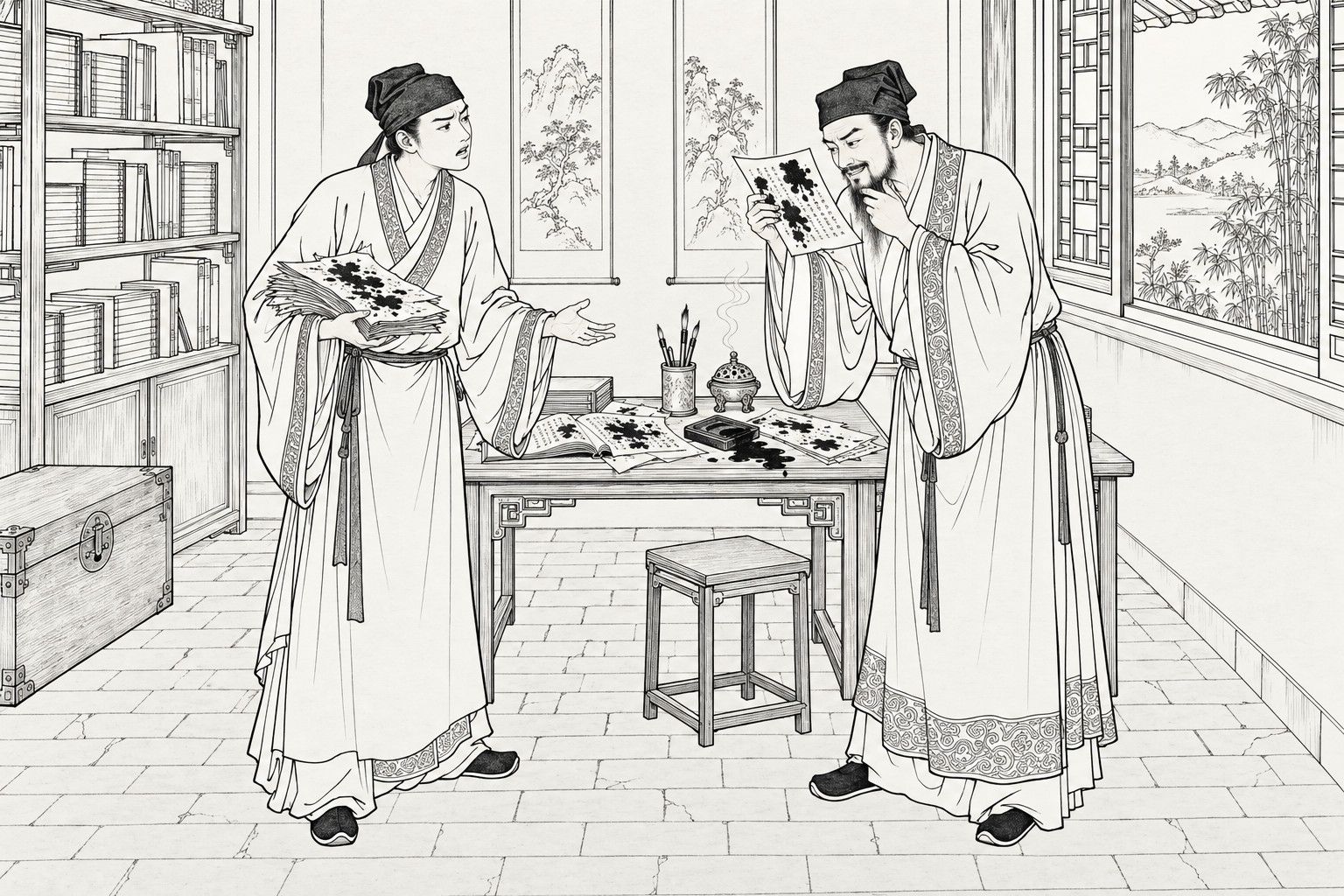
郭生,邑之東山人。少嗜讀,但山村無所就正,年二十餘,字畫多訛。先是,家中患狐,服食器用,輒多亡失,深患苦之。一夜讀,卷置案頭,被狐塗鴉;甚者,狼藉不辨行墨。因擇其稍潔者輯讀之,僅得六七十首。心甚恚憤,而無如何。又積窗課廿餘篇,待質名流。晨起,見翻攤案上,墨汁濃泚殆盡。恨甚。會王生者,以故至山,素與郭善,登門造訪。見污本,問之。郭具言所苦,且出殘課示王。王諦玩之,其所塗留,似有春秋;又覆視涴卷,類冗雜可刪。訝曰:「狐似有意。不惟勿患,當即以為師。」過數月,回視舊作,頓覺所塗良確。於是改作兩題,置案上,以覘其異。比曉,又塗之。積年餘,不復塗;但以濃墨灑作巨點,淋漓滿紙。郭異之,持以白王。王閱之曰:「狐真爾師也,佳幅可售矣。」是歲,果入邑庠。郭以是德狐,恆置雞黍,備狐啗飲。每市房書名稿,不自選擇,但決於狐。由是兩試俱列前名,入闈中副車。時葉、繆諸公稿,風雅豔麗,家傳而戶誦之。郭有抄本,愛惜臻至,忽被傾濃墨椀許於上,污蔭幾無餘字;又擬題構作,自覺快意,悉浪塗之:於是漸不信狐。無何,葉公以正文體被收,又稍稍服其先見。然每作一文,經營慘澹,輒被塗污。自以屢拔前茅,心氣頗高,以是益疑狐妄。乃錄向之灑點煩多者試之,狐又盡泚之。乃笑曰:「是真妄矣!何前是而今非也?」遂不為狐設饌,取讀本鎖箱簏中。旦見封錮儼然,啟視,則卷面塗四畫,粗於指;第一章畫五,二章亦畫五,後即無有矣。自是狐竟寂然。後郭一次四等,兩次五等,始知其兆已寓意於畫也。
郭生是本縣東山人,從小喜歡讀書,但山村裡沒有人能指點糾正,到了二十多歲,寫字還常常出錯。在這以前,他家裡就鬧狐狸,衣服、食物和日用器具常常丟失,一家人深受困擾。一天夜裡,他讀完書,把書卷放在桌上,被狐狸塗得亂七八糟;嚴重的地方,連字行都辨認不出來。他只好挑出比較乾淨的文章,收集起來閱讀,僅剩六七十篇。他心裡十分憤怒,卻又無可奈何。他還積攢了二十多篇習作,準備請有名望的人指正。一天早晨起來,發現這些文章被翻開攤在桌上,幾乎全被濃墨塗黑了,更加惱恨。恰好有個王生因事來到山裡,他一向和郭生交好,便登門拜訪。王生看見被弄髒的書,問是怎麼回事。郭生詳細說了自己的苦惱,又拿出殘存的習作給他看。王生仔細琢磨,覺得狐狸塗掉什麼、留下什麼,似乎都有褒貶的用意;再看那些弄髒的書卷,被塗掉的也大多是冗雜、可以刪去的文章。他驚訝地說:「狐狸似乎是有意這樣做的。你不但不該為此煩惱,還應當把它當作老師。」過了幾個月,郭生回頭再看舊作,頓時覺得狐狸塗掉的地方確實都不妥。於是重新寫了兩篇文章,放在桌上,想看看狐狸會有什麼舉動。到了天亮,文章又被塗了。這樣過了一年多,狐狸不再塗抹,只用濃墨灑下大大的墨點,弄得滿紙淋漓。郭生覺得奇怪,拿去告訴王生。王生看後說:「狐狸真是你的老師,這些好文章可以讓你考中了。」這一年,郭生果然考入邑庠。他因此感激狐狸,常常擺上雞肉和黍飯,供它吃喝。每次買來科舉文章選本和名家的文稿,他都不自己挑選,只聽憑狐狸取捨。因此,他在兩次考試中都名列前茅,參加鄉試又中了副榜。當時,葉、繆等人的文章文辭華美,家家傳閱,戶戶誦讀。郭生有一部抄本,愛惜到了極點,卻忽然被潑上將近一碗濃墨,墨汁浸透紙面,幾乎沒有留下一個字。他自己擬題作文,覺得寫得很痛快,也都被狐狸胡亂塗掉。於是,他漸漸不再相信狐狸。不久,葉公因朝廷整頓文風而被捕,郭生又有些佩服狐狸的先見之明。可是他每寫一篇文章,無論如何苦心構思,總會被塗汙。他自以為多次名列前茅,已經很有本領,因此更加懷疑狐狸是在胡鬧。於是,他把以前狐狸灑了許多墨點的文章重新抄出來試探,狐狸卻又全都塗黑了。他便笑道:「這真是在胡鬧!為什麼以前是好的,如今又不好了?」從此不再給狐狸擺飯,還把讀的書鎖進箱子。第二天早晨,箱子仍舊封鎖得好好的,打開一看,書卷封面被塗了四道,比手指還粗;第一篇文章上畫了五道,第二篇也畫了五道,後面就沒有了。從此,狐狸再也沒有動靜。後來,郭生一次考了四等,兩次考了五等,這才知道,那幾道墨畫早已預示了他的成績。
郭生,邑之东山人。少嗜读,但山村无所就正,年二十余,字画多讹。先是,家中患狐,服食器用,辄多亡失,深患苦之。一夜读,卷置案头,被狐涂鸦;甚者,狼藉不辨行墨。因择其稍洁者辑读之,仅得六七十首。心甚恚愤,而无如何。又积窗课廿余篇,待质名流。晨起,见翻摊案上,墨汁浓泚殆尽。恨甚。会王生者,以故至山,素与郭善,登门造访。见污本,问之。郭具言所苦,且出残课示王。王谛玩之,其所涂留,似有春秋;又覆视涴卷,类冗杂可删。讶曰:「狐似有意。不惟勿患,当即以为师。」过数月,回视旧作,顿觉所涂良确。于是改作两题,置案上,以觇其异。比晓,又涂之。积年余,不复涂;但以浓墨洒作巨点,淋漓满纸。郭异之,持以白王。王阅之曰:「狐真尔师也,佳幅可售矣。」是岁,果入邑庠。郭以是德狐,恒置鸡黍,备狐啗饮。每市房书名稿,不自选择,但决于狐。由是两试俱列前名,入闱中副车。时叶、缪诸公稿,风雅艳丽,家传而户诵之。郭有抄本,爱惜臻至,忽被倾浓墨椀许于上,污荫几无余字;又拟题构作,自觉快意,悉浪涂之:于是渐不信狐。无何,叶公以正文体被收,又稍稍服其先见。然每作一文,经营惨澹,辄被涂污。自以屡拔前茅,心气颇高,以是益疑狐妄。乃录向之洒点烦多者试之,狐又尽泚之。乃笑曰:「是真妄矣!何前是而今非也?」遂不为狐设馔,取读本锁箱簏中。旦见封锢俨然,启视,则卷面涂四画,粗于指;第一章画五,二章亦画五,后即无有矣。自是狐竟寂然。后郭一次四等,两次五等,始知其兆已寓意于画也。
郭生是本县东山人,从小喜欢读书,但山村里没有人能指点纠正,到了二十多岁,写字还常常出错。在这以前,他家里就闹狐狸,衣服、食物和日用器具常常丢失,一家人深受困扰。一天夜里,他读完书,把书卷放在桌上,被狐狸涂得乱七八糟;严重的地方,连字行都辨认不出来。他只好挑出比较干净的文章,收集起来阅读,仅剩六七十篇。他心里十分愤怒,却又无可奈何。他还积攒了二十多篇习作,准备请有名望的人指正。一天早晨起来,发现这些文章被翻开摊在桌上,几乎全被浓墨涂黑了,更加恼恨。恰好有个王生因事来到山里,他一向和郭生交好,便登门拜访。王生看见被弄脏的书,问是怎么回事。郭生详细说了自己的苦恼,又拿出残存的习作给他看。王生仔细琢磨,觉得狐狸涂掉什么、留下什么,似乎都有褒贬的用意;再看那些弄脏的书卷,被涂掉的也大多是冗杂、可以删去的文章。他惊讶地说:“狐狸似乎是有意这样做的。你不但不该为此烦恼,还应当把它当作老师。”过了几个月,郭生回头再看旧作,顿时觉得狐狸涂掉的地方确实都不妥。于是重新写了两篇文章,放在桌上,想看看狐狸会有什么举动。到了天亮,文章又被涂了。这样过了一年多,狐狸不再涂抹,只用浓墨洒下大大的墨点,弄得满纸淋漓。郭生觉得奇怪,拿去告诉王生。王生看后说:“狐狸真是你的老师,这些好文章可以让你考中了。”这一年,郭生果然考入邑庠。他因此感激狐狸,常常摆上鸡肉和黍饭,供它吃喝。每次买来科举文章选本和名家的文稿,他都不自己挑选,只听凭狐狸取舍。因此,他在两次考试中都名列前茅,参加乡试又中了副榜。当时,叶、缪等人的文章文辞华美,家家传阅,户户诵读。郭生有一部抄本,爱惜到了极点,却忽然被泼上将近一碗浓墨,墨汁浸透纸面,几乎没有留下一个字。他自己拟题作文,觉得写得很痛快,也都被狐狸胡乱涂掉。于是,他渐渐不再相信狐狸。不久,叶公因朝廷整顿文风而被捕,郭生又有些佩服狐狸的先见之明。可是他每写一篇文章,无论如何苦心构思,总会被涂污。他自以为多次名列前茅,已经很有本领,因此更加怀疑狐狸是在胡闹。于是,他把以前狐狸洒了许多墨点的文章重新抄出来试探,狐狸却又全都涂黑了。他便笑道:“这真是在胡闹!为什么以前是好的,如今又不好了?”从此不再给狐狸摆饭,还把读的书锁进箱子。第二天早晨,箱子仍旧封锁得好好的,打开一看,书卷封面被涂了四道,比手指还粗;第一篇文章上画了五道,第二篇也画了五道,后面就没有了。从此,狐狸再也没有动静。后来,郭生一次考了四等,两次考了五等,这才知道,那几道墨画早已预示了他的成绩。
Guo was a scholar from the Eastern Hills of my county. As a boy he loved to read, but in a mountain village there was no one to set him right, and in his twenties he still wrote many characters wrong. Some time before, the household had been plagued by a fox. Clothes, food and things in daily use kept going missing, and the family were sorely vexed by it. One night Guo had been reading and left the book on his desk, and the fox scribbled all over it; in the worst places the lines were such a mess they could not be made out. He picked out the pieces that were fairly clean and gathered them to read, and there were only sixty or seventy. He was furious, but there was nothing he could do. He had also piled up some twenty practice essays, which he was saving to show to men of name for their opinion. One morning he got up to find them spread open on the desk, splashed so thick with ink that almost nothing was left. He was bitterly angry. It happened that a scholar named Wang, an old friend of Guo’s, came to the hills on some business and called at the house. He saw the spoiled book and asked about it. Guo told him all his troubles and brought out what was left of the essays to show him. Wang studied them closely. In what the fox had smeared and what it had spared there seemed to be judgment, like the praise and blame of the Spring and Autumn Annals. He looked again at the spoiled book: the smeared parts mostly seemed padded and muddled, better cut. Surprised, he said, “The fox seems to mean something by it. Far from worrying about it, you should take it as your teacher.” A few months later Guo looked back at his old work and saw at once that what the fox had smeared deserved it. So he wrote two of the essays over again and set them on the desk, to see what the uncanny thing would do. By dawn it had smeared them again. After a year and more it smeared them no longer; it only spattered big dots of thick ink, dripping all over the page. Guo was puzzled and took them to show Wang. Wang read them and said, “The fox really is your teacher. These are fine pages. They’ll get you through.” That year, sure enough, Guo entered the county school. For this Guo was grateful to the fox, and always set out chicken and millet for it to eat and drink. Whenever he bought printed collections of examination essays or the papers of famous writers, he did not choose for himself but left it to the fox. After that he placed near the top in both qualifying examinations, and when he sat the provincial examination he was named on the supplementary list. At that time the essays of Ye, Miao and their like, elegant and ornate, were handed round in every family and recited in every house. Guo had a copy of them that he treasured above all things. Suddenly nearly a bowlful of thick ink was poured over it, soaking it until hardly a character was left. And when he set himself topics and wrote essays he was pleased with, the fox smeared them all wildly. So little by little he stopped believing in the fox. Before long Ye was arrested in a campaign to correct the style of writing, and Guo began, a little, to respect the fox’s foresight again. Yet every essay he wrote, however painfully he laboured over it, was smeared. Having placed near the top again and again, he thought a good deal of himself, and this made him doubt the fox all the more. So he copied out the old essays that the fox had spattered with the most dots, to test it. The fox splashed ink over every one of them. Guo laughed. “It really is talking nonsense! How can what was right before be wrong now?” He stopped setting out food for the fox and locked his books away in a chest. In the morning the lock was as fast as ever. He opened it and looked: across the cover of the book four strokes had been smeared, thicker than a finger. On the first essay there were five strokes, on the second five as well, and after that nothing. From then on the fox was silent for good. Later Guo was ranked in the fourth grade once and in the fifth grade twice, and only then did he understand that the omen had been hidden in the strokes.