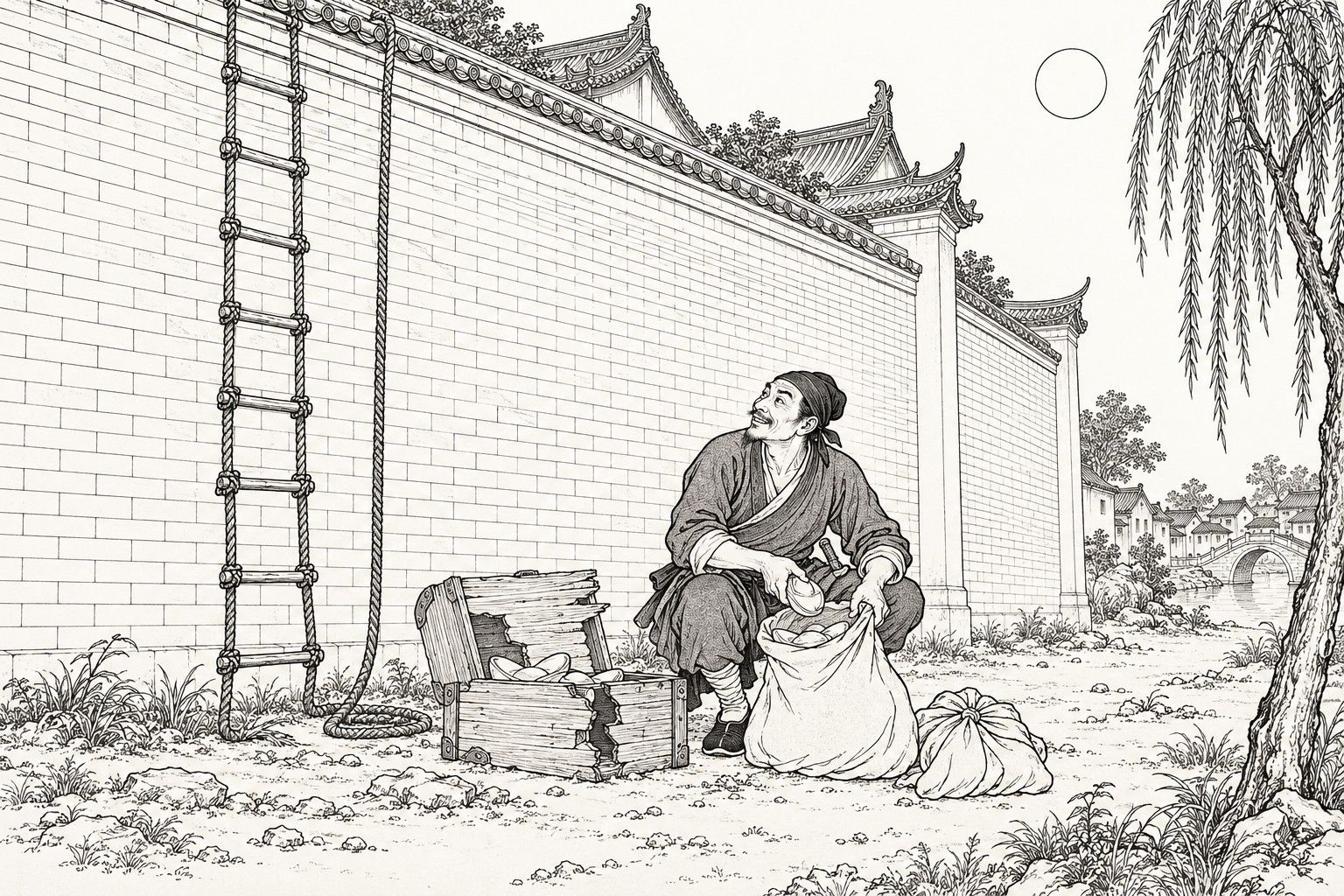
邑西某乙,故梁上君子也。其妻深以為懼,屢勸止之;乙遂翻然自改。居二三年,貧窶不能自堪,思欲一作馮婦而後已。乃託貿易,就善卜者問何往之善。術者占曰:「東南吉,利小人,不利君子。」兆隱與心合,竊喜。遂南行,抵蘇、松間,日游村郭,凡數月。偶入一寺,見牆隅堆石子二三枚,心知其異,亦以一石投之。徑趨龕後臥。日既暮,寺中聚語,似有十餘人。忽一人數石,訝其多,因共搜龕後,得乙,問:「投石者汝耶?」乙諾。詰里居、姓名,乙詭對之。乃授以兵,率與共去。至一巨第,出耎梯,爭踰垣入。以乙遠至,逕不熟,俾伏牆外,司傳遞、守囊橐焉。少頃,擲一裹下;又少頃,縋一篋下。乙舉篋知有物,乃破篋,以手揣取,凡沉重物,悉納一囊,負之疾走,竟取道歸。由此建樓閣、買良田,為子納粟。邑令扁其門曰「善士」。後大案發,群寇悉獲;惟乙無名籍,莫可查詰,得免。事寢既久,乙醉後時自述之。
縣城西邊有個某乙,原本是個竊賊。他的妻子對此十分害怕,多次勸他罷手,某乙便醒悟過來,改了行。過了兩三年,他窮得難以忍受,想再重操一次舊業,然後就收手。於是託詞說要做買賣,去找一位擅長占卜的人,問往哪個方向去好。術士占卜後說:「東南方向吉利,有利於作惡的人,不利於正派的人。」卦象暗合他的心意,他暗自高興,便向南走,來到蘇、松一帶,每天在村莊和城鎮間遊蕩,一連過了幾個月。偶然走進一座寺院,見牆角堆著兩三塊小石子,知道這些石子另有用意,也扔了一塊進去,隨後徑直到佛龕後面躺下。天黑以後,寺裡聚集了一群人,說著話,聽起來有十多個。忽然,有個人數了數石子,驚訝於石子多了,大家便一起搜尋,在佛龕後面找到某乙,問:「扔石子的是你嗎?」某乙承認了。他們問他的住處和姓名,某乙都用假話回答。於是,他們給他一件兵器,帶著他一起走。到了一座大宅院,眾人拿出軟梯,爭著翻牆進去。因為某乙從遠處來,不熟悉路徑,便讓他藏在牆外,負責傳遞東西、看守袋子。過了一會兒,牆裡扔下一個包袱;又過了一會兒,用繩子放下來一個箱子。某乙提了提箱子,知道里面有東西,便砸開箱子,伸手摸取,把所有沉重的東西都塞進一個袋子,背起來飛快地逃走,徑直取道回家。他靠這些財物建起樓閣,買了良田,又替兒子繳納糧食,取得了監生資格。縣令還在他家門上掛了一塊匾,寫著「善士」。後來,這起大案被揭發,那群盜賊全被抓住;只有某乙沒有留下真實姓名,無從追查,因而逃過了追究。這件事平息很久以後,某乙喝醉了酒,有時還會自己講起這番經歷。
邑西某乙,故梁上君子也。其妻深以为惧,屡劝止之;乙遂翻然自改。居二三年,贫窭不能自堪,思欲一作冯妇而后已。乃托贸易,就善卜者问何往之善。术者占曰:「东南吉,利小人,不利君子。」兆隐与心合,窃喜。遂南行,抵苏、松间,日游村郭,凡数月。偶入一寺,见墙隅堆石子二三枚,心知其异,亦以一石投之。径趋龛后卧。日既暮,寺中聚语,似有十余人。忽一人数石,讶其多,因共搜龛后,得乙,问:「投石者汝耶?」乙诺。诘里居、姓名,乙诡对之。乃授以兵,率与共去。至一巨第,出耎梯,争逾垣入。以乙远至,径不熟,俾伏墙外,司传递、守囊橐焉。少顷,掷一裹下;又少顷,缒一箧下。乙举箧知有物,乃破箧,以手揣取,凡沉重物,悉纳一囊,负之疾走,竟取道归。由此建楼阁、买良田,为子纳粟。邑令扁其门曰「善士」。后大案发,群寇悉获;惟乙无名籍,莫可查诘,得免。事寝既久,乙醉后时自述之。
县城西边有个某乙,原本是个窃贼。他的妻子对此十分害怕,多次劝他罢手,某乙便醒悟过来,改了行。过了两三年,他穷得难以忍受,想再重操一次旧业,然后就收手。于是托词说要做买卖,去找一位擅长占卜的人,问往哪个方向去好。术士占卜后说:“东南方向吉利,有利于作恶的人,不利于正派的人。”卦象暗合他的心意,他暗自高兴,便向南走,来到苏、松一带,每天在村庄和城镇间游荡,一连过了几个月。偶然走进一座寺院,见墙角堆着两三块小石子,知道这些石子另有用意,也扔了一块进去,随后径直到佛龛后面躺下。天黑以后,寺里聚集了一群人,说着话,听起来有十多个。忽然,有个人数了数石子,惊讶于石子多了,大家便一起搜寻,在佛龛后面找到某乙,问:“扔石子的是你吗?”某乙承认了。他们问他的住处和姓名,某乙都用假话回答。于是,他们给他一件兵器,带着他一起走。到了一座大宅院,众人拿出软梯,争着翻墙进去。因为某乙从远处来,不熟悉路径,便让他藏在墙外,负责传递东西、看守袋子。过了一会儿,墙里扔下一个包袱;又过了一会儿,用绳子放下来一个箱子。某乙提了提箱子,知道里面有东西,便砸开箱子,伸手摸取,把所有沉重的东西都塞进一个袋子,背起来飞快地逃走,径直取道回家。他靠这些财物建起楼阁,买了良田,又替儿子缴纳粮食,取得了监生资格。县令还在他家门上挂了一块匾,写着“善士”。后来,这起大案被揭发,那群盗贼全被抓住;只有某乙没有留下真实姓名,无从追查,因而逃过了追究。这件事平息很久以后,某乙喝醉了酒,有时还会自己讲起这番经历。
In the west of my county lived a certain Yi, who had once been a gentleman of the rafters. His wife lived in dread of it and begged him again and again to stop, and in the end Yi turned over a new leaf. Two or three years went by. He grew so poor he could not bear it, and thought he would play Feng Fu one last time and then be done. So, on the pretext of going into trade, he went to a skilled diviner to ask which way it would be best to go. The diviner cast the lots and said: “The south-east is lucky. It favours the small man and does not favour the gentleman.” The omen secretly matched what was in his heart, and he was quietly pleased. He set off south and came to the country between Suzhou and Songjiang, where he wandered the villages and towns day after day for several months. Once he happened to go into a temple and saw two or three pebbles heaped in a corner by the wall. He knew there was something odd about them, and he too threw a pebble on the heap. Then he went straight behind the shrine and lay down. When dusk fell, people gathered in the temple, talking; there seemed to be more than ten of them. Suddenly one of them counted the pebbles and was surprised there were so many. Together they searched behind the shrine and found Yi. “Was it you who threw the stone?” they asked. Yi said it was. They asked where he lived and what his name was, and Yi answered with lies. Then they handed him a weapon and took him along with them. They came to a great mansion, brought out a rope ladder, and scrambled over the wall one after another. Because Yi had come from far away and did not know the ways, they had him crouch outside the wall to pass things along and guard the bags. In a little while a bundle was thrown down; a little while later a chest was let down on a rope. Yi lifted the chest and could tell there was something in it, so he broke it open, felt about inside with his hand, and put everything heavy into one sack. He shouldered it, ran off fast, and took the road straight home. With it he built halls and towers, bought good fields, and paid grain to the state to buy his son a place at the Imperial Academy. The county magistrate hung a board over his gate that read “A Man of Virtue.” Later the great case broke and the whole band of robbers was caught; only Yi had no name on any record, so there was no way to trace him, and he got off. Long after the matter had died down, Yi would sometimes tell the story himself when he was drunk.