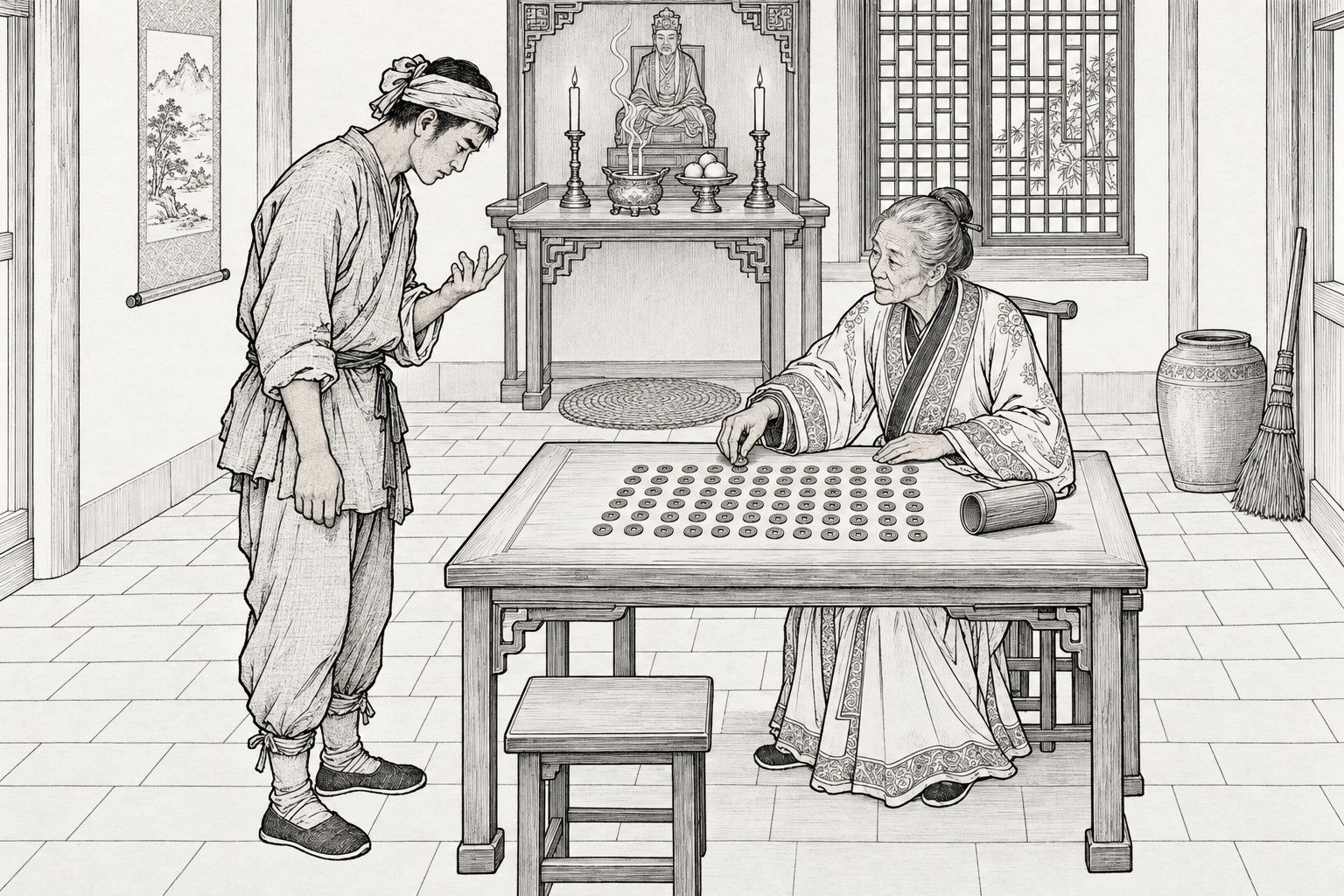
夏商,河間人。其父東陵,豪富侈汰,每食包子,輒棄其角,狼藉滿地。人以其肥重,呼之「丟角太尉」。暮年,家綦貧,日不給餐;兩肱瘦,垂革如囊,人又呼「募莊僧」,──謂其挂袋也。臨終謂商曰:「余生平暴殄天物,上干天怒,遂至凍餓以死。汝當惜福力行,以蓋父愆。」商恪遵治命,誠樸無二,躬耕自給。鄉人咸愛敬之。富人某翁哀其貧,假以貲,使學負販,輒虧其母。愧無以償,請為傭。翁不肯。商瞿然不自安,盡貨其田宅,往酬翁。翁詰得情,益憐之,強為贖還舊業;又益貸以重金,俾作賈。商辭曰:「十數金尚不能償,奈何結來生驢馬債耶?」翁乃招他賈與偕。數月而返,僅能不虧;翁不收其息,使復之。年餘,貸貲盈輦,歸至江,遭颶,舟幾覆,物半喪失。歸計所有,略可償主。遂語賈曰:「天之所貧,誰能救之?此皆我累君也!」乃稽簿付賈,奉身而退。翁再強之,必不可,躬耕如故。每自歎曰:「人生世上,皆有數年之享,何遂落魄如此?」會有外來巫,以錢卜,悉知人運數。敬詣之。巫,老嫗也。寓室精潔,中設神座,香氣常熏。商入朝拜訖,便索貲。商授百錢,巫盡內木筩中,執跪座下,搖響如祈籤狀。已而起,傾錢入手,而後於案上次第擺之。其法以字為否,幕為亨;數至五十八皆字,以後則盡幕矣。遂問:「庚甲幾何?」答:「二十八歲。」巫搖首曰:「早矣!官人現行者先人運,非本身運。五十八歲,方交本身運,始無盤錯也。」問:「何謂先人運?」曰:「先人有善,其福未盡,則後人享之;先人有不善,其禍未盡,則後人亦受之。」商屈指曰:「再三十年,齒已老耄,行就木矣。」巫曰:「五十八以前,便有五年回潤,略可營謀;然僅免寒餓耳。五十八之年,當有巨金自來,不須力求。官人生無過行,再世享之不盡也。」別巫而返,疑信半焉。然安貧自守,不敢妄求。後至五十三歲,留意驗之。時方東作,病痁不能耕。既痊,天大旱,早禾盡枯。近秋方雨,家無別種,田數畝悉以種穀。既而又旱,蕎菽半死,惟穀無恙;後得雨勃發,其豐倍焉。來春大饑,得以無餒。商以此信巫,從翁貸貲,小權子母,輒小獲;或勸作大賈,商不肯。迨五十七歲,偶葺牆垣,掘地得鐵釜;揭之,白氣如絮,懼不敢發。移時,氣盡,白鏹滿甕。夫妻共運之,稱計一千三百二十五兩。竊議巫術小舛。鄰人妻入商家,窺見之,歸告夫。夫忌焉,潛告邑宰。宰最貪,拘商索金。妻欲隱其半。商曰:「非所宜得,留之賈禍。」盡獻之。宰得金,恐其漏匿,又追貯器,以金實之,滿焉,乃釋商。居無何,宰遷南昌同知。踰歲,商以懋遷至南昌,則宰已死。妻子將歸,貨其粗重;有桐油如干簍,商以直賤,買之以歸。既抵家,器有滲漏,瀉注他器,則內有白金二鋌;遍探皆然。兌之,適得前掘鏹之數。商由此暴富,益贍貧窮,慷慨不吝。妻勸積遺子孫,商曰:「此即所以遺子孫也。」鄰人赤貧至為丐,欲有所求,而心自愧。商聞而告之曰:「昔日事,乃我時數未至,故鬼神假子手以敗之,於汝何尤?」遂周給之。鄰人感泣。後商壽八十,子孫承繼,數世不衰。
夏商是河間人。他的父親東陵,家裡十分富有,奢侈浪費,每次吃包子,總把邊角丟掉,弄得滿地狼藉。因為他長得肥胖笨重,人們叫他「丟角太尉」。到了晚年,家裡窮困至極,每天都吃不上飯。他的兩條胳膊瘦了,松垂的皮膚像袋子一樣,人們又叫他「募莊僧」,說的是他身上掛著袋子。臨終時,他對夏商說:「我一生糟蹋上天賜給的東西,觸怒了上天,才落到凍餓而死的地步。你應當珍惜福分,努力行善,彌補父親的罪過。」夏商嚴格遵從父親臨終的囑咐,誠實質樸,沒有二心,親自耕田養活自己。鄉里人都愛護敬重他。有位富有的老翁憐惜他貧窮,借錢給他,讓他學著販貨做生意,他卻總是虧掉本錢。他慚愧自己無力償還,請求給老翁當僱工,老翁不肯。夏商心裡惶恐不安,把自己的田地房屋全賣了,前去償還老翁。老翁追問清楚,更加憐惜他,執意替他贖回原來的產業,又借給他一大筆錢,讓他做買賣。夏商推辭說:「十幾兩銀子我都還不起,怎麼能再欠下要來世做牛做馬才能償還的債呢?」老翁便找來另一個商人,讓夏商跟他一道去。幾個月後回來,僅僅保住了本錢。老翁不收利息,讓他再去做生意。一年多後,買來的貨物裝滿了車,回程到了江上,遇見大風,船險些翻了,貨物損失了一半。回家算算剩下的東西,大致還能償還老翁的本錢。夏商便對同行的商人說:「上天要讓一個人窮,誰能救得了呢?這都是我連累了你!」於是核對賬目,把財物交給那商人,自己空手退出。老翁再三勸他,他堅決不肯,又像從前一樣親自耕田。他常常嘆息說:「人活在世上,總有幾年好日子,怎麼我就一直落魄到這個地步呢?」恰好有個外來的女巫,用銅錢占卜,能知道人的運數。夏商恭敬地去拜訪她。女巫是個老婦人,住的屋子整潔乾淨,中央設著神座,香氣始終瀰漫著。夏商進去拜完,老婦人便向他要錢。夏商給她一百枚銅錢,她全放進木筒裡,拿著木筒跪在神座前,搖得嘩嘩作響,像求籤一樣。隨後起身,把錢倒在手裡,再依次擺到桌上。她的占卜方法,是有字的一面朝上表示不順,背面朝上表示順利。數到第五十八枚,都是有字的一面朝上,此後卻全是背面朝上。她問:「你多大年紀?」夏商回答:「二十八歲。」女巫搖頭說:「還早呢!官人眼下走的是祖先的運,不是你自己的運。到了五十八歲,才轉入你自己的運,那時才能擺脫重重阻礙。」夏商問:「什麼叫祖先的運?」她說:「祖先做過善事,福分還沒有享盡,後人就能享受;祖先做過壞事,禍患還沒有結束,後人也要承受。」夏商掰著手指算了算,說:「再過三十年,我已經老得不成樣子,快要進棺材了。」女巫說:「五十八歲以前,會有五年的運氣好轉,可以稍微經營些生計,不過也只是免於挨餓受凍。到了五十八歲,自然會有一大筆銀子到手,不用費力追求。官人這一生沒有做過壞事,這份福氣,兩代人也享用不盡。」夏商告別女巫回家,心裡半信半疑。不過,他安於貧窮,守住本分,不敢胡亂追求。後來到了五十三歲,他留心驗證女巫的話。當時正是春耕季節,他患了瘧疾,不能耕田。病好後,又遇到大旱,早種的莊稼全枯死了。直到快入秋才下雨,家裡沒有別的種子,幾畝田便全種上穀子。不久又旱了,蕎麥和豆子死了一半,只有穀子沒有受損。後來得了雨水,穀子長得十分旺盛,收成比平常多了一倍。來年春天鬧大饑荒,他因此沒有捱餓。夏商從此相信了女巫的話,向老翁借錢,做些小本買賣,每次都能賺一點。有人勸他做大生意,他不肯。到了五十七歲,他偶然修整圍牆,挖出一口鐵鍋。揭開蓋子,白氣像棉絮一樣冒出來,他害怕,不敢繼續打開。過了一會兒,白氣散盡,裡面滿是銀子。夫妻兩人一同把銀子搬走,稱了稱,共有一千三百二十五兩。他們私下議論,覺得女巫算得稍有差錯。鄰居的妻子到夏商家裡來,偷看見了銀子,回去告訴丈夫。丈夫嫉妒,暗中報告了縣官。縣官十分貪婪,把夏商拘來索要銀子。夏商的妻子想藏下一半,夏商說:「不是我們該得的東西,留下來只會招禍。」便全數獻上。縣官得到銀子,還怕他有所隱瞞,又追要裝銀子的容器,把銀子放進去,見正好裝滿,才放了夏商。不久,縣官升任南昌同知。過了一年,夏商到南昌做買賣,那縣官已經死了。他的妻兒要回鄉,正在變賣笨重的東西。其中有幾簍桐油,夏商見價錢便宜,就買下來帶回家。到家後,有個簍子滲漏,他把油倒進別的容器,發現裡面有兩錠銀子。把所有簍子都摸查一遍,每簍都是如此。稱量銀子,恰好就是先前挖出的數目。夏商由此突然富裕起來,更加盡力接濟窮人,慷慨大方,毫不吝惜。妻子勸他積攢些財產留給子孫,他說:「這正是我給子孫留下財產的辦法。」那鄰居已經窮得做了乞丐,想向夏商求助,心裡卻很慚愧。夏商聽說後,對他說:「當年的事,是因為我的運數還沒到,所以鬼神借你的手讓我失掉那筆銀子,怎麼能怪你呢?」於是接濟了他。鄰居感動得流下眼淚。後來夏商活到八十歲,子孫繼承他的家業,幾代都沒有衰敗。
夏商,河间人。其父东陵,豪富侈汰,每食包子,辄弃其角,狼藉满地。人以其肥重,呼之「丢角太尉」。暮年,家綦贫,日不给餐;两肱瘦,垂革如囊,人又呼「募庄僧」,──谓其挂袋也。临终谓商曰:「余生平暴殄天物,上干天怒,遂至冻饿以死。汝当惜福力行,以盖父愆。」商恪遵治命,诚朴无二,躬耕自给。乡人咸爱敬之。富人某翁哀其贫,假以赀,使学负贩,辄亏其母。愧无以偿,请为佣。翁不肯。商瞿然不自安,尽货其田宅,往酬翁。翁诘得情,益怜之,强为赎还旧业;又益贷以重金,俾作贾。商辞曰:「十数金尚不能偿,奈何结来生驴马债耶?」翁乃招他贾与偕。数月而返,仅能不亏;翁不收其息,使复之。年余,贷赀盈辇,归至江,遭飓,舟几覆,物半丧失。归计所有,略可偿主。遂语贾曰:「天之所贫,谁能救之?此皆我累君也!」乃稽簿付贾,奉身而退。翁再强之,必不可,躬耕如故。每自叹曰:「人生世上,皆有数年之享,何遂落魄如此?」会有外来巫,以钱卜,悉知人运数。敬诣之。巫,老妪也。寓室精洁,中设神座,香气常熏。商入朝拜讫,便索赀。商授百钱,巫尽内木筩中,执跪座下,摇响如祈签状。已而起,倾钱入手,而后于案上次第摆之。其法以字为否,幕为亨;数至五十八皆字,以后则尽幕矣。遂问:「庚甲几何?」答:「二十八岁。」巫摇首曰:「早矣!官人现行者先人运,非本身运。五十八岁,方交本身运,始无盘错也。」问:「何谓先人运?」曰:「先人有善,其福未尽,则后人享之;先人有不善,其祸未尽,则后人亦受之。」商屈指曰:「再三十年,齿已老耄,行就木矣。」巫曰:「五十八以前,便有五年回润,略可营谋;然仅免寒饿耳。五十八之年,当有巨金自来,不须力求。官人生无过行,再世享之不尽也。」别巫而返,疑信半焉。然安贫自守,不敢妄求。后至五十三岁,留意验之。时方东作,病痁不能耕。既痊,天大旱,早禾尽枯。近秋方雨,家无别种,田数亩悉以种谷。既而又旱,荞菽半死,惟谷无恙;后得雨勃发,其丰倍焉。来春大饥,得以无馁。商以此信巫,从翁贷赀,小权子母,辄小获;或劝作大贾,商不肯。迨五十七岁,偶葺墙垣,掘地得铁釜;揭之,白气如絮,惧不敢发。移时,气尽,白镪满瓮。夫妻共运之,称计一千三百二十五两。窃议巫术小舛。邻人妻入商家,窥见之,归告夫。夫忌焉,潜告邑宰。宰最贪,拘商索金。妻欲隐其半。商曰:「非所宜得,留之贾祸。」尽献之。宰得金,恐其漏匿,又追贮器,以金实之,满焉,乃释商。居无何,宰迁南昌同知。逾岁,商以懋迁至南昌,则宰已死。妻子将归,货其粗重;有桐油如干篓,商以直贱,买之以归。既抵家,器有渗漏,泻注他器,则内有白金二铤;遍探皆然。兑之,适得前掘镪之数。商由此暴富,益赡贫穷,慷慨不吝。妻劝积遗子孙,商曰:「此即所以遗子孙也。」邻人赤贫至为丐,欲有所求,而心自愧。商闻而告之曰:「昔日事,乃我时数未至,故鬼神假子手以败之,于汝何尤?」遂周给之。邻人感泣。后商寿八十,子孙承继,数世不衰。
夏商是河间人。他的父亲东陵,家里十分富有,奢侈浪费,每次吃包子,总把边角丢掉,弄得满地狼藉。因为他长得肥胖笨重,人们叫他“丢角太尉”。到了晚年,家里穷困至极,每天都吃不上饭。他的两条胳膊瘦了,松垂的皮肤像袋子一样,人们又叫他“募庄僧”,说的是他身上挂着袋子。临终时,他对夏商说:“我一生糟蹋上天赐给的东西,触怒了上天,才落到冻饿而死的地步。你应当珍惜福分,努力行善,弥补父亲的罪过。”夏商严格遵从父亲临终的嘱咐,诚实质朴,没有二心,亲自耕田养活自己。乡里人都爱护敬重他。有位富有的老翁怜惜他贫穷,借钱给他,让他学着贩货做生意,他却总是亏掉本钱。他惭愧自己无力偿还,请求给老翁当雇工,老翁不肯。夏商心里惶恐不安,把自己的田地房屋全卖了,前去偿还老翁。老翁追问清楚,更加怜惜他,执意替他赎回原来的产业,又借给他一大笔钱,让他做买卖。夏商推辞说:“十几两银子我都还不起,怎么能再欠下要来世做牛做马才能偿还的债呢?”老翁便找来另一个商人,让夏商跟他一道去。几个月后回来,仅仅保住了本钱。老翁不收利息,让他再去做生意。一年多后,买来的货物装满了车,回程到了江上,遇见大风,船险些翻了,货物损失了一半。回家算算剩下的东西,大致还能偿还老翁的本钱。夏商便对同行的商人说:“上天要让一个人穷,谁能救得了呢?这都是我连累了你!”于是核对账目,把财物交给那商人,自己空手退出。老翁再三劝他,他坚决不肯,又像从前一样亲自耕田。他常常叹息说:“人活在世上,总有几年好日子,怎么我就一直落魄到这个地步呢?”恰好有个外来的女巫,用铜钱占卜,能知道人的运数。夏商恭敬地去拜访她。女巫是个老妇人,住的屋子整洁干净,中央设着神座,香气始终弥漫着。夏商进去拜完,老妇人便向他要钱。夏商给她一百枚铜钱,她全放进木筒里,拿着木筒跪在神座前,摇得哗哗作响,像求签一样。随后起身,把钱倒在手里,再依次摆到桌上。她的占卜方法,是有字的一面朝上表示不顺,背面朝上表示顺利。数到第五十八枚,都是有字的一面朝上,此后却全是背面朝上。她问:“你多大年纪?”夏商回答:“二十八岁。”女巫摇头说:“还早呢!官人眼下走的是祖先的运,不是你自己的运。到了五十八岁,才转入你自己的运,那时才能摆脱重重阻碍。”夏商问:“什么叫祖先的运?”她说:“祖先做过善事,福分还没有享尽,后人就能享受;祖先做过坏事,祸患还没有结束,后人也要承受。”夏商掰着手指算了算,说:“再过三十年,我已经老得不成样子,快要进棺材了。”女巫说:“五十八岁以前,会有五年的运气好转,可以稍微经营些生计,不过也只是免于挨饿受冻。到了五十八岁,自然会有一大笔银子到手,不用费力追求。官人这一生没有做过坏事,这份福气,两代人也享用不尽。”夏商告别女巫回家,心里半信半疑。不过,他安于贫穷,守住本分,不敢胡乱追求。后来到了五十三岁,他留心验证女巫的话。当时正是春耕季节,他患了疟疾,不能耕田。病好后,又遇到大旱,早种的庄稼全枯死了。直到快入秋才下雨,家里没有别的种子,几亩田便全种上谷子。不久又旱了,荞麦和豆子死了一半,只有谷子没有受损。后来得了雨水,谷子长得十分旺盛,收成比平常多了一倍。来年春天闹大饥荒,他因此没有挨饿。夏商从此相信了女巫的话,向老翁借钱,做些小本买卖,每次都能赚一点。有人劝他做大生意,他不肯。到了五十七岁,他偶然修整围墙,挖出一口铁锅。揭开盖子,白气像棉絮一样冒出来,他害怕,不敢继续打开。过了一会儿,白气散尽,里面满是银子。夫妻两人一同把银子搬走,称了称,共有一千三百二十五两。他们私下议论,觉得女巫算得稍有差错。邻居的妻子到夏商家里来,偷看见了银子,回去告诉丈夫。丈夫嫉妒,暗中报告了县官。县官十分贪婪,把夏商拘来索要银子。夏商的妻子想藏下一半,夏商说:“不是我们该得的东西,留下来只会招祸。”便全数献上。县官得到银子,还怕他有所隐瞒,又追要装银子的容器,把银子放进去,见正好装满,才放了夏商。不久,县官升任南昌同知。过了一年,夏商到南昌做买卖,那县官已经死了。他的妻儿要回乡,正在变卖笨重的东西。其中有几篓桐油,夏商见价钱便宜,就买下来带回家。到家后,有个篓子渗漏,他把油倒进别的容器,发现里面有两锭银子。把所有篓子都摸查一遍,每篓都是如此。称量银子,恰好就是先前挖出的数目。夏商由此突然富裕起来,更加尽力接济穷人,慷慨大方,毫不吝惜。妻子劝他积攒些财产留给子孙,他说:“这正是我给子孙留下财产的办法。”那邻居已经穷得做了乞丐,想向夏商求助,心里却很惭愧。夏商听说后,对他说:“当年的事,是因为我的运数还没到,所以鬼神借你的手让我失掉那笔银子,怎么能怪你呢?”于是接济了他。邻居感动得流下眼泪。后来夏商活到八十岁,子孙继承他的家业,几代都没有衰败。
Xia Shang was a man of Hejian. His father, Dongling, was rich and lavish beyond measure. Whenever he ate steamed buns he threw away the corners, and they lay scattered all over the floor. Because he was so fat and heavy, people called him the Corner-Tossing Grand Commandant (Diujiao Taiwei). In his old age the family became very poor, and some days he had nothing to eat. His arms grew thin, the skin hanging from them like sacks, and people then called him the Alms-Begging Monk (Muzhuang Seng), meaning that he went about with bags hanging from him. On his deathbed he said to Shang, “All my life I wasted the things Heaven gave, and I angered Heaven, so I have come to die of cold and hunger. You must cherish your blessings and work hard, to cover your father’s faults.” Shang kept his father’s dying words faithfully. Honest and simple, with no other thought, he tilled the land with his own hands to feed himself. The country people all loved and respected him. A rich old man pitied his poverty and lent him money so that he could learn to peddle goods; but he kept losing the capital. Ashamed that he had no way to repay, he asked to work as the old man’s hired hand. The old man would not hear of it. Shang was uneasy and could not rest; he sold all his land and his house and went to pay the old man back. The old man questioned him and learned the truth, and pitied him all the more. He insisted on buying back Shang’s old property for him, and lent him a large sum besides, so that he could set up as a merchant. Shang declined. “I can’t even repay ten-odd taels. Why should I run up a debt I’ll have to pay off as a donkey or horse in my next life?” So the old man found another merchant to go with him. They came back after several months having barely avoided a loss; the old man took no interest and sent him out again. After a year or more, the goods bought with the loan filled a cart. On the way home, at the river, they met a gale; the boat nearly capsized, and half the goods were lost. At home he reckoned up what was left: just about enough to repay the lender. So he said to the merchant, “When Heaven makes a man poor, who can save him? It’s I who have dragged you down!” He went over the accounts, handed everything over to the merchant, and left with nothing but himself. The old man pressed him again, but he would not, and went back to tilling his land as before. He would often sigh, “Every man born into this world has a few years of good fortune. How have I come down so low?” Then a witch came from elsewhere who divined with coins and could tell anyone’s fortune. Shang went to see her respectfully. The witch was an old woman. Her lodging was spotless; in the middle stood an altar to her god, and the scent of incense always hung in the air. Shang went in and bowed, and she at once asked for money. Shang gave her a hundred cash. She put them all into a wooden tube, held it, knelt before the altar and shook it till it rattled, as people do when drawing lots at a temple. Then she rose, poured the coins into her hand, and laid them out one by one on the table. In her method, the inscribed face meant bad fortune and the blank back meant good. Up to the fifty-eighth coin, every one lay face up; after that, all were backs. She asked, “How old are you?” “Twenty-eight.” The witch shook her head. “Too early! Sir, the fortune you are living now is your forebears’, not your own. Only at fifty-eight will you come into your own fortune; then your troubles will be over.” “What do you mean, my forebears’ fortune?” “When a forebear has done good and his blessings are not used up, his descendants enjoy them; when a forebear has done wrong and his punishment is not used up, his descendants suffer it too.” Shang counted on his fingers. “Thirty more years. By then I’ll be old and doddering, ready for the coffin.” “Before fifty-eight,” said the witch, “you will have five years of easing, when you can make a little headway; but only enough to keep off cold and hunger. In your fifty-eighth year a great sum of money will come to you of its own accord, without your striving for it. You have done no wrong in this life, sir; another lifetime will not use it up.” He took leave of the witch and went home, half doubting and half believing. Still, he lived content with his poverty, kept to himself, and did not dare reach for more. When he reached fifty-three, he watched to test her words. It was the season of spring ploughing, and he fell ill with ague and could not plough. When he was well again, there was a great drought, and the early crops all withered. The rain came only near autumn; he had no other seed, so he sowed all his few mu with millet. Then came another drought; the buckwheat and beans half died, but the millet was unharmed. Later the rain came and it shot up, and the harvest was double. The next spring there was a great famine, and he did not go hungry. From then on Shang believed the witch. He borrowed money from the old man and traded in a small way, and each time made a small profit. Someone urged him to trade in a big way, but Shang would not. When he was fifty-seven, he happened to be repairing a wall and dug up an iron pot. When he lifted the lid, a white vapour rose like cotton fluff, and he was afraid to open it further. After a while the vapour was gone, and the jar was full of silver. He and his wife carried it in together; weighed, it came to one thousand three hundred and twenty-five taels. They whispered to each other that the witch’s art had been a little off. A neighbour’s wife came into Shang’s house, caught sight of it, and went home and told her husband. The husband was envious and secretly reported it to the county magistrate. The magistrate was exceedingly greedy; he arrested Shang and demanded the silver. Shang’s wife wanted to hide half of it. “It isn’t ours to have,” said Shang. “Keeping it will only bring disaster.” He handed it all over. Having got the silver, the magistrate was afraid some had been held back, so he demanded the container as well and filled it with the silver. It was full. Only then did he let Shang go. Not long after, the magistrate was promoted to assistant prefect of Nanchang. A year later Shang went to Nanchang to trade, and found that the magistrate had died. His wife and sons were going home and selling off their heavy goods. There were a number of baskets of tung oil, and since the price was low, Shang bought them and took them home. When he got home, one of them was leaking; he poured the oil into another vessel, and inside were two ingots of silver. He felt through all the baskets: every one was the same. When the silver was weighed, it came to exactly the amount he had dug up. From then on Shang was suddenly rich. He gave all the more to the poor, generously and without stinting. His wife urged him to save it up for their children and grandchildren. “This is how I am saving it for them,” said Shang. The neighbour had become so poor that he was begging; he wanted to ask for help, but was ashamed. Shang heard of it and told him, “What happened back then was because my time had not yet come, so the ghosts and gods used your hand to undo it. How is it your fault?” And he helped him out. The neighbour wept with gratitude. Shang lived to eighty, and his children and grandchildren carried on after him; the family did not decline for several generations.