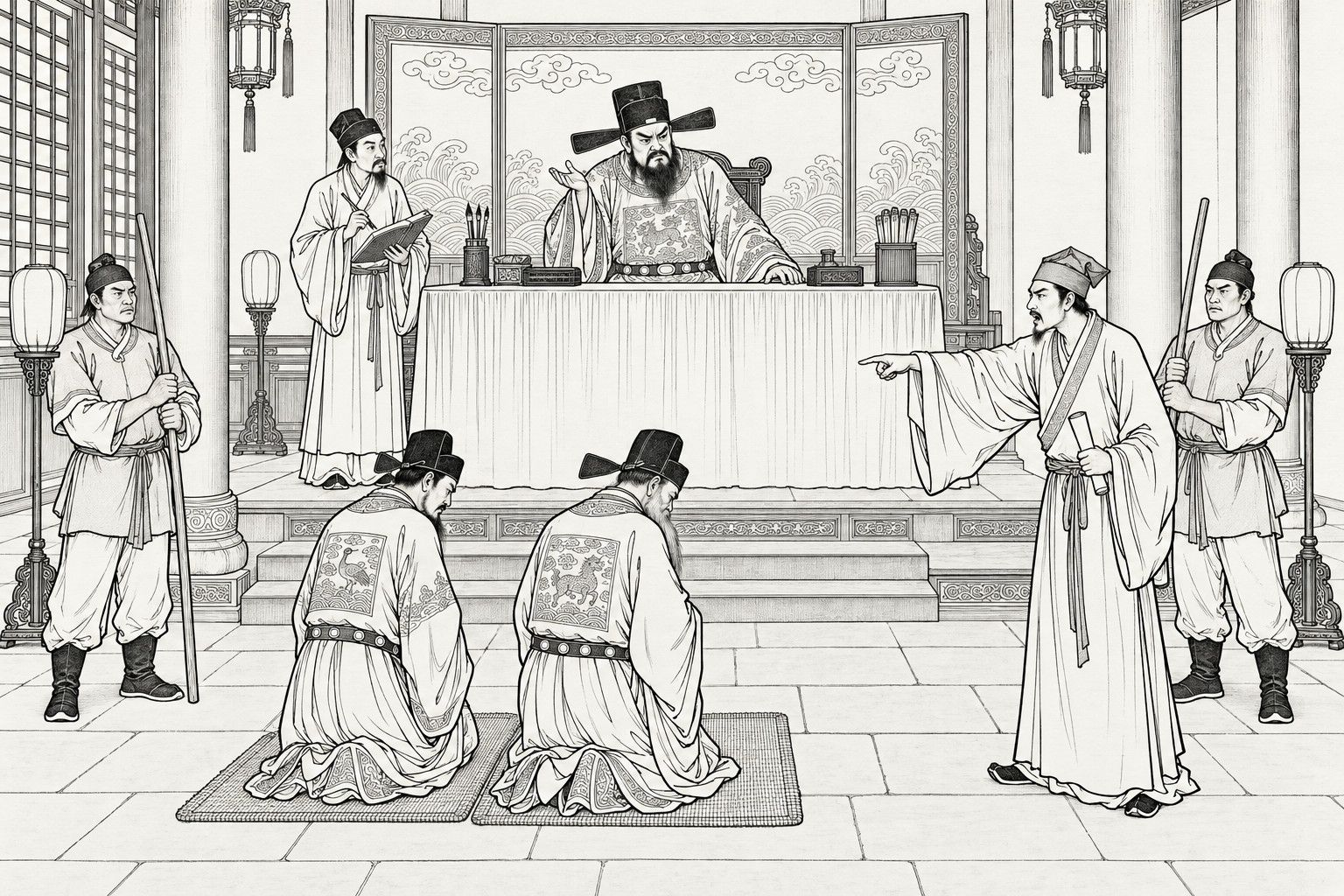
湖南某,能記前生三世。一世為令尹,闈場入簾。有名士興于唐被黜落,憤懣而卒,至陰司執卷訟之。此狀一投,其同病死者以千萬計,推興為首,聚散成群。某被攝去,相與對質。閻羅便問:「某既衡文,何得黜佳士而進凡庸?」某辨言:「上有總裁,某不過奉行之耳。」閻羅即發一簽,往拘主司。久之,勾至。閻羅即述某言。主司曰:「某不過總其大成;雖有佳章,而房官不薦,吾何由而見之也?」閻羅曰:「此不得相諉,其失職均也,例合笞。」方將施刑,興不滿志,戛然大號;兩墀諸鬼,萬聲鳴和。閻羅問故,興抗言曰:「笞罪太輕,是必掘其雙睛,以為不識文字之報。」閻羅不肯,眾呼益厲。閻羅曰:「彼非不欲得佳文,特其所見鄙耳。」眾又請剖其心。閻羅不得已,使人褫去袍服,以白刃劙胸,兩人瀝血鳴嘶。眾始大快,皆曰:「吾輩抑鬱泉下,未有能一伸此氣者;今得興先生,怨氣都消矣。」鬨然遂散。某受剖已,押投陝西為庶人子。年二十餘,值土寇大作,陷入賊中。有兵巡道往平賊,俘擄甚眾,某亦在中。心猶自揣非賊,冀可辯釋。及見堂上官,亦年二十餘,細視,則興生也。驚曰:「吾合盡矣!」既而俘者盡釋,惟某後至,不容置辨,竟斬之。某至陰司投狀訟興。閻羅不即拘,待其祿盡,遲之三十年,興始至,面質之。興以草菅人命,罰作畜。稽某所為,曾撻其父母,其罪維均。某恐來生再報,請為大畜。閻羅判為大犬,興為小犬。某生於北順天府市肆中。一日,臥街頭,有客自南中來,攜金毛犬,大如狸。某視之,興也。心易其小,齕之。小犬齩其喉下,繫綴如鈴。大犬擺撲嗥竄,市人解之不得。俄頃,俱斃。並至冥司,互有爭論。閻羅曰:「冤冤相報,何時可已。今為若解之。」乃判興來世為某婿。某生慶雲,二十八舉於鄉。生一女,嫻靜娟好,世族爭委禽焉。某皆弗許。偶過臨郡,值學使發落諸生,其第一卷李姓,實興也。遂挽至旅舍,優厚之。問其家,適無偶,遂訂姻好。人皆謂某憐才,而不知有夙因也。既而娶女去,相得甚歡。然婿恃才輒侮翁,恆隔歲不一至其門。翁亦耐之。後婿中歲偃蹇,苦不得售,翁百計為之營謀,始得志於名場。由此和好如父子焉。
湖南有個人,能記得自己前三世的經歷。其中一世,他做過令尹,曾進科舉考場擔任閱卷官。有個名士叫興於唐,落榜後憤恨而死,到了陰司,拿著自己的考卷告他。狀子一遞上去,那些同樣因落榜而憤恨致死的人,數以千千萬萬計,都推舉興於唐為首領,聚整合群。那人被拘到陰司,與興於唐當面對質。閻羅問:「你既然負責評判文章,怎麼能讓優秀計程車人落榜,卻錄取平庸的人?」那人辯解說:「上面有總裁,我不過照他的意思辦事。」閻羅立刻發出一道令籤,去拘主考官。過了很久,主考官被拘來,閻羅便把那人的話告訴了他。主考官說:「我不過負責最後彙總裁定,即使有好文章,房官不推薦,我怎麼能看見呢?」閻羅說:「這件事不能相互推諉,你們同樣失職,按例都該受鞭打。」正要用刑,興於唐不滿意,忽然放聲大叫,兩邊臺階下的鬼魂萬聲齊應。閻羅問是什麼緣故,興於唐大聲說:「鞭打的處罰太輕,必須挖掉他們的兩隻眼睛,報應他們不識好文章!」閻羅不肯答應,眾鬼叫喊得更加厲害。閻羅說:「他們並不是不想選出好文章,只是見識淺陋罷了。」眾鬼又要求剖開他們的心。閻羅不得已,命人脫掉兩人的袍服,用利刃剖開胸膛。兩人鮮血直流,慘叫不止。眾鬼這才大快,都說:「我們在地下鬱結著怨恨,從來沒有人能替我們出這口氣。如今有了興先生,怨氣全消了!」說完一陣喧鬧,便散去了。那人受了剖胸之刑後,被押去陝西,投生為平民的兒子。二十多歲時,遇上當地盜賊大舉作亂,他落到了賊人手裡。有個兵巡道前來平定盜賊,俘虜了很多人,他也在其中。他心想自己並不是盜賊,希望能辯明實情,獲准釋放。等看見堂上的官員,也是二十多歲,仔細一看,竟是興於唐。他驚叫道:「我該完了!」隨後被俘的人都獲准釋放,只有他最後被帶到,不容分辯,竟被斬首。他到了陰司,遞狀子控告興於唐。閻羅沒有立刻拘興於唐,而是等他的福祿耗盡。等了三十年,興於唐才到陰司,兩人當面對質。興於唐因為草率殺害人命,被罰轉生為畜生。再查那人的所作所為,發現他曾經鞭打過興於唐的父母,罪過同樣重。那人怕來世再遭報復,請求投生為體形大的畜生。閻羅判他做大狗,興於唐做小狗。那人投生在北方順天府的一家店鋪裡。一天,他躺在街頭,有個客人從南方來,帶著一隻金毛狗,大小像野貓。他一看,正是興於唐,心裡輕視它個頭小,就去咬它。小狗咬住他的喉嚨下面,像鈴鐺一樣掛著不放。大狗又甩又撲,嚎叫著亂跑,街上的人怎麼也拉不開。片刻後,兩隻狗都死了,一起到了陰司,又相互爭辯起來。閻羅說:「冤冤相報,什麼時候才能停止?現在我替你們化解。」便判興於唐來世做那人的女婿。那人投生在慶雲,二十八歲中了舉人。他生了一個女兒,嫻靜美麗,世家大族爭著送聘禮求親,他都不答應。一次,他經過鄰郡,正碰上學使公佈諸生的考試結果,排在第一的考卷出自一個姓李的人,此人其實就是興於唐。他便把李生請到旅店,十分優厚地款待,問起家裡的情況,得知李生還沒有妻子,就和他定下親事。人人都說他愛惜人才,卻不知道其中有前世的緣故。後來李生娶走他的女兒,夫妻倆相處得十分歡洽。但女婿仗著才華,常常輕慢岳父,往往隔了一年還不來登門一次,岳父也忍耐著。後來女婿到了中年,仕途困頓,苦於始終不能在科舉中得志。岳父想盡辦法替他謀劃,他才終於在科舉中得償所願。從此兩人和睦親近,如同父子。
湖南某,能记前生三世。一世为令尹,闱场入帘。有名士兴于唐被黜落,愤懑而卒,至阴司执卷讼之。此状一投,其同病死者以千万计,推兴为首,聚散成群。某被摄去,相与对质。阎罗便问:「某既衡文,何得黜佳士而进凡庸?」某辨言:「上有总裁,某不过奉行之耳。」阎罗即发一签,往拘主司。久之,勾至。阎罗即述某言。主司曰:「某不过总其大成;虽有佳章,而房官不荐,吾何由而见之也?」阎罗曰:「此不得相诿,其失职均也,例合笞。」方将施刑,兴不满志,戛然大号;两墀诸鬼,万声鸣和。阎罗问故,兴抗言曰:「笞罪太轻,是必掘其双睛,以为不识文字之报。」阎罗不肯,众呼益厉。阎罗曰:「彼非不欲得佳文,特其所见鄙耳。」众又请剖其心。阎罗不得已,使人褫去袍服,以白刃劙胸,两人沥血鸣嘶。众始大快,皆曰:「吾辈抑郁泉下,未有能一伸此气者;今得兴先生,怨气都消矣。」哄然遂散。某受剖已,押投陕西为庶人子。年二十余,值土寇大作,陷入贼中。有兵巡道往平贼,俘掳甚众,某亦在中。心犹自揣非贼,冀可辩释。及见堂上官,亦年二十余,细视,则兴生也。惊曰:「吾合尽矣!」既而俘者尽释,惟某后至,不容置辨,竟斩之。某至阴司投状讼兴。阎罗不即拘,待其禄尽,迟之三十年,兴始至,面质之。兴以草菅人命,罚作畜。稽某所为,曾挞其父母,其罪维均。某恐来生再报,请为大畜。阎罗判为大犬,兴为小犬。某生于北顺天府市肆中。一日,卧街头,有客自南中来,携金毛犬,大如狸。某视之,兴也。心易其小,龁之。小犬齩其喉下,系缀如铃。大犬摆扑嗥窜,市人解之不得。俄顷,俱毙。并至冥司,互有争论。阎罗曰:「冤冤相报,何时可已。今为若解之。」乃判兴来世为某婿。某生庆云,二十八举于乡。生一女,娴静娟好,世族争委禽焉。某皆弗许。偶过临郡,值学使发落诸生,其第一卷李姓,实兴也。遂挽至旅舍,优厚之。问其家,适无偶,遂订姻好。人皆谓某怜才,而不知有夙因也。既而娶女去,相得甚欢。然婿恃才辄侮翁,恒隔岁不一至其门。翁亦耐之。后婿中岁偃蹇,苦不得售,翁百计为之营谋,始得志于名场。由此和好如父子焉。
湖南有个人,能记得自己前三世的经历。其中一世,他做过令尹,曾进科举考场担任阅卷官。有个名士叫兴于唐,落榜后愤恨而死,到了阴司,拿着自己的考卷告他。状子一递上去,那些同样因落榜而愤恨致死的人,数以千千万万计,都推举兴于唐为首领,聚集成群。那人被拘到阴司,与兴于唐当面对质。阎罗问:“你既然负责评判文章,怎么能让优秀的士人落榜,却录取平庸的人?”那人辩解说:“上面有总裁,我不过照他的意思办事。”阎罗立刻发出一道令签,去拘主考官。过了很久,主考官被拘来,阎罗便把那人的话告诉了他。主考官说:“我不过负责最后汇总裁定,即使有好文章,房官不推荐,我怎么能看见呢?”阎罗说:“这件事不能相互推诿,你们同样失职,按例都该受鞭打。”正要用刑,兴于唐不满意,忽然放声大叫,两边台阶下的鬼魂万声齐应。阎罗问是什么缘故,兴于唐大声说:“鞭打的处罚太轻,必须挖掉他们的两只眼睛,报应他们不识好文章!”阎罗不肯答应,众鬼叫喊得更加厉害。阎罗说:“他们并不是不想选出好文章,只是见识浅陋罢了。”众鬼又要求剖开他们的心。阎罗不得已,命人脱掉两人的袍服,用利刃剖开胸膛。两人鲜血直流,惨叫不止。众鬼这才大快,都说:“我们在地下郁结着怨恨,从来没有人能替我们出这口气。如今有了兴先生,怨气全消了!”说完一阵喧闹,便散去了。那人受了剖胸之刑后,被押去陕西,投生为平民的儿子。二十多岁时,遇上当地盗贼大举作乱,他落到了贼人手里。有个兵巡道前来平定盗贼,俘虏了很多人,他也在其中。他心想自己并不是盗贼,希望能辩明实情,获准释放。等看见堂上的官员,也是二十多岁,仔细一看,竟是兴于唐。他惊叫道:“我该完了!”随后被俘的人都获准释放,只有他最后被带到,不容分辩,竟被斩首。他到了阴司,递状子控告兴于唐。阎罗没有立刻拘兴于唐,而是等他的福禄耗尽。等了三十年,兴于唐才到阴司,两人当面对质。兴于唐因为草率杀害人命,被罚转生为畜生。再查那人的所作所为,发现他曾经鞭打过兴于唐的父母,罪过同样重。那人怕来世再遭报复,请求投生为体形大的畜生。阎罗判他做大狗,兴于唐做小狗。那人投生在北方顺天府的一家店铺里。一天,他躺在街头,有个客人从南方来,带着一只金毛狗,大小像野猫。他一看,正是兴于唐,心里轻视它个头小,就去咬它。小狗咬住他的喉咙下面,像铃铛一样挂着不放。大狗又甩又扑,嚎叫着乱跑,街上的人怎么也拉不开。片刻后,两只狗都死了,一起到了阴司,又相互争辩起来。阎罗说:“冤冤相报,什么时候才能停止?现在我替你们化解。”便判兴于唐来世做那人的女婿。那人投生在庆云,二十八岁中了举人。他生了一个女儿,娴静美丽,世家大族争着送聘礼求亲,他都不答应。一次,他经过邻郡,正碰上学使公布诸生的考试结果,排在第一的考卷出自一个姓李的人,此人其实就是兴于唐。他便把李生请到旅店,十分优厚地款待,问起家里的情况,得知李生还没有妻子,就和他定下亲事。人人都说他爱惜人才,却不知道其中有前世的缘故。后来李生娶走他的女儿,夫妻俩相处得十分欢洽。但女婿仗着才华,常常轻慢岳父,往往隔了一年还不来登门一次,岳父也忍耐着。后来女婿到了中年,仕途困顿,苦于始终不能在科举中得志。岳父想尽办法替他谋划,他才终于在科举中得偿所愿。从此两人和睦亲近,如同父子。
A certain man of Hunan could remember three of his past lives. In the first he was a county magistrate, and once served as an examiner inside the curtain at the provincial examinations. A well-known scholar named Xing Yutang was failed, died of rage and resentment, and in the underworld brought a suit against him, papers in hand. Once this complaint went in, others who had died of the same grievance, thousands upon thousands of them, made Xing their leader, and the scattered ghosts gathered into a mob. The man was seized and carried off to face his accuser. Yama asked, “You were the one judging the essays. How could you fail a fine scholar and pass the mediocre?” The man protested, “Above me there was a chief examiner. I was only carrying out orders.” Yama at once sent out a warrant tally to arrest the chief examiner. After a long while he was brought in, and Yama told him what the man had said. The chief examiner said, “I only had the final say over the whole. However fine an essay, if the examiner in the room did not recommend it, how was I ever to see it?” Yama said, “You cannot shift the blame onto each other. You failed in your duties equally, and by the rules you are both to be flogged.” Just as the flogging was about to begin, Xing, not satisfied, let out a piercing howl, and the ghosts on both sides of the steps answered him with ten thousand voices. Yama asked what the matter was. Xing spoke up boldly: “Flogging is far too light. Their eyes must be gouged out, as payment for not knowing good writing when they saw it.” Yama would not agree, and the crowd shouted all the harder. Yama said, “It is not that they did not want good writing. It is only that their judgment was poor.” The crowd then demanded that their hearts be cut out. Yama had no choice. He had their robes stripped off and their chests slit open with bare blades, and the two of them shrieked as the blood streamed. Only then was the crowd satisfied. “We have been choking on our grievance down in the Yellow Springs,” they all said, “and no one has ever been able to vent it for us. Now that we have Master Xing, our resentment is all gone.” And with a roar they broke up. When his chest had been cut open, the man was sent under guard to be reborn in Shaanxi as the son of a commoner. When he was twenty-odd, local bandits rose in great numbers, and he fell into their hands. A military circuit intendant came to put down the bandits and took a great many prisoners; the man was among them. He told himself he was no bandit and hoped he could clear himself. Then he saw the official in the hall, also twenty-odd. He looked closely: it was Xing. “I’m done for!” he cried. Soon after, all the prisoners were released except the man; he had been brought in last, he was given no chance to explain, and in the end he was beheaded. The man went to the underworld and filed a complaint against Xing. Yama did not arrest Xing at once but waited until his allotted fortune ran out. Thirty years later Xing at last arrived, and the two faced each other. For treating human life as cheaply as grass, Xing was sentenced to be reborn as a beast. But when the man’s own deeds were checked, it was found he had once beaten his parents, and his guilt was the same. Afraid that Xing would take revenge on him again in the next life, the man asked to be a big beast. Yama made him a big dog and Xing a small dog. The man was born in a market shop in Shuntian Prefecture, in the north. One day, as he lay in the street, a traveller came up from the south leading a golden-haired dog no bigger than a wildcat. The man looked at it: it was Xing. Thinking little of its size, he bit it. The small dog sank its teeth into his throat and hung there like a bell. The big dog thrashed and howled and bolted; the people of the market could not pull them apart. In a moment both were dead. They came to the underworld together, each accusing the other. Yama said, “Wrong for wrong, revenge for revenge — when will it ever end? I will settle it for you now.” And he decreed that in his next life Xing would be the man’s son-in-law. The man was born in Qingyun. At twenty-eight he passed the provincial examination. He had a daughter, gentle, quiet and lovely, and old families vied to send betrothal gifts; he turned them all down. Once, passing through a neighbouring prefecture, he happened upon the education commissioner announcing his rankings of the licentiates. The one placed first was surnamed Li — and was in fact Xing. The man took him back to his inn and treated him most generously. He asked about his family: Li happened to be unmarried, so the match was settled. Everyone said the man had an eye for talent, not knowing there was a bond from former lives. Then Li married the girl and took her home, and the two got on very happily. But the son-in-law, proud of his talent, often slighted his father-in-law, and would go a whole year without once coming to his door. The father-in-law bore it patiently. Later, in middle age, the son-in-law fell on hard times and kept failing the examinations. The father-in-law tried every means on his behalf, and at last Li achieved his ambition in the examinations. From then on they were as close as father and son.