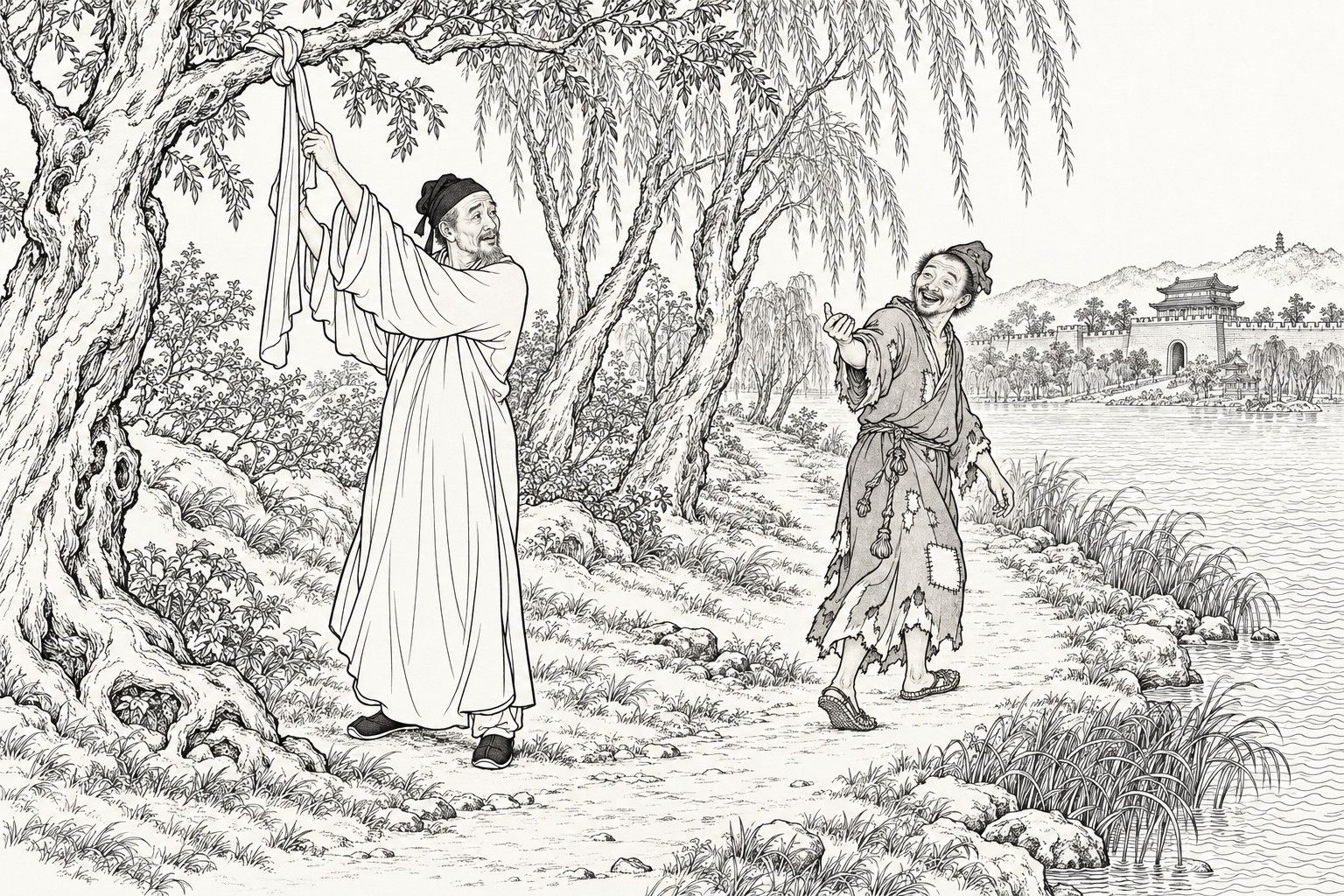
話說濟公長老在西湖見一個人方要上吊,自己按靈光一算,早已知道。書中交代,那人姓董名士宏,原籍浙江錢塘縣人,為人事母至孝。父早喪,母秦氏。娶妻杜氏早死,留下一女名玉姐,甚伶俐。董士宏錘金匠手藝,他女兒八歲時,秦氏老太太染病不起,董士宏小心進湯醫。家貧無力贍養老母,把女兒玉姐典在顧進士家作使女,十年回贖,典銀五十兩,給老太太養病。老母因看不見孫女,問:「我孫女哪裏去了?」董士宏說:「上他外祖那裏去了。」老太太病重,一連七日不起,竟自嗚呼哀哉。他就把家中些銀兩盡力葬母之後,自己到鎮江府那裏忍耐時光。十載光景,好容易積湊了六十兩紋銀,想把女兒贖出來,另找婆家。在路上無話。
话说济公长老在西湖见一个人方要上吊,自己按灵光一算,早已知道。书中交代,那人姓董名士宏,原籍浙江钱塘县人,为人事母至孝。父早丧,母秦氏。娶妻杜氏早死,留下一女名玉姐,甚伶俐。董士宏锤金匠手艺,他女儿八岁时,秦氏老太太染病不起,董士宏小心进汤医。家贫无力赡养老母,把女儿玉姐典在顾进士家作使女,十年回赎,典银五十两,给老太太养病。老母因看不见孙女,问:「我孙女哪里去了?」董士宏说:「上他外祖那里去了。」老太太病重,一连七日不起,竟自呜呼哀哉。他就把家中些银两尽力葬母之后,自己到镇江府那里忍耐时光。十载光景,好容易积凑了六十两纹银,想把女儿赎出来,另找婆家。在路上无话。
Now, by the West Lake Ji Gong saw a man about to hang himself, and working it out by his inner light, he already knew all about him. A word of explanation: the man was surnamed Dong, his given name Shihong, a native of Qiantang County in Zhejiang, and he served his mother with the utmost devotion. His father had died early; his mother was Madam Qin. His wife, Madam Du, had died young, leaving a daughter named Yujie, a very bright child. Dong Shihong was a goldsmith by trade. When his daughter was eight, old Madam Qin fell ill and could not leave her bed, and Dong Shihong tended her with care, bringing her broths and medicines. The family was poor and he had no means to keep his old mother, so he pledged his daughter Yujie to the household of Graduate Gu as a maid, to be redeemed after ten years, for fifty taels of silver, which went to pay for the old lady’s care. Because she no longer saw her granddaughter, the old lady asked, “Where has my granddaughter gone?” “She’s gone to stay with her mother’s father,” Dong Shihong said. The old lady grew worse; for seven days on end she could not rise, and then she breathed her last. He spent what silver there was in the house giving his mother the best burial he could, and afterwards went to Zhenjiang Prefecture to wait out the years. Ten years went by, and with great difficulty he scraped together sixty taels of fine silver, meaning to redeem his daughter and find her a husband. Of the journey there is nothing to tell.
這一日到了臨安,住在錢塘門外悅來客店中。帶了銀兩,明日到了百家巷。一問顧宅進士,左右鄰居都說:「顧老爺升了外任,不知在哪兒做官。」董士宏一聽,如站萬丈高樓失腳,揚子江斷纜崩舟,自己各處訪問,並不知顧大人住在哪裏,也不知女兒下落。到了錢塘門外,在天竺街酒店吃了幾盃悶酒,不知不覺,醉入夢鄉。出了酒店想要回寓,不覺自己走錯道路,把銀子也丟了。及至酒醒,身邊一摸,銀子丟了!這一驚非同小可,無奈走至樹林,越想越無滋味,想:「女兒也不能見面了,自己不如一死,以了此生之孽冤。」想罷,來至樹林,把腰中絲絛解下來,拴上一個套兒,想要自縊身死。忽然對面來了一個和尚,口中說:「死了死了,已死就了。死了倒比活的好!我要上吊。」解下絲絛,就要往樹上拴。董士宏一聽,猛吃一驚,抬頭一看,祇見那僧人長的甚為不堪。怎見得?有詩為證:
这一日到了临安,住在钱塘门外悦来客店中。带了银两,明日到了百家巷。一问顾宅进士,左右邻居都说:「顾老爷升了外任,不知在哪儿做官。」董士宏一听,如站万丈高楼失脚,扬子江断缆崩舟,自己各处访问,并不知顾大人住在哪里,也不知女儿下落。到了钱塘门外,在天竺街酒店吃了几杯闷酒,不知不觉,醉入梦乡。出了酒店想要回寓,不觉自己走错道路,把银子也丢了。及至酒醒,身边一摸,银子丢了!这一惊非同小可,无奈走至树林,越想越无滋味,想:「女儿也不能见面了,自己不如一死,以了此生之孽冤。」想罢,来至树林,把腰中丝绦解下来,拴上一个套儿,想要自缢身死。忽然对面来了一个和尚,口中说:「死了死了,已死就了。死了倒比活的好!我要上吊。」解下丝绦,就要往树上拴。董士宏一听,猛吃一惊,抬头一看,祇见那僧人长的甚为不堪。怎见得?有诗为证:
One day he reached Lin’an and put up at the Yuelai Inn outside the Qiantang Gate. Taking the silver with him, the next day he went to Baijia Lane and asked for the house of Graduate Gu. The neighbours on either side all said, “His Honour Gu was promoted to a post in the provinces. Nobody knows where he’s serving.” At this Dong Shihong felt like a man who loses his footing atop a tower ten thousand feet high, like a boat on the Yangzi River whose cable snaps and whose hull splits. He asked everywhere, but no one knew where Lord Gu lived, nor what had become of his daughter. Back outside the Qiantang Gate, he drank a few cups to drown his sorrows in a wineshop on Tianzhu Street, and before he knew it he had drunk himself into a stupor. He left the wineshop meaning to go back to his lodgings, took the wrong road without noticing, and lost his silver into the bargain. When he sobered up and felt about his person — the silver was gone! This was no small shock. With nothing else for it he walked into a wood, and the more he thought, the more bitter it all seemed. “I’ll never see my daughter again,” he thought. “I might as well die and settle the debts and grievances of this life.” With that he came into the wood, untied the silk cord from his waist, knotted a noose in it and was about to hang himself. Suddenly a monk came toward him, saying, “Dead and done, dead and done, once you’re dead it’s done. Better dead than alive! I’m going to hang myself.” He untied his own silk cord and was about to tie it to a tree. Dong Shihong was startled to hear this. He looked up and saw that the monk was a sorry sight. What did he look like? There is a poem to prove it:
臉不洗,頭不剃,醉眼乜斜睜又閉。若癡若傻若顛狂,到處詼諧好耍戲。破僧衣,不趁體,上下窟窿錢串記,絲絛七斷與八結,大小咯噠接又續。
脸不洗,头不剃,醉眼乜斜睁又闭。若痴若傻若颠狂,到处诙谐好耍戏。破僧衣,不趁体,上下窟窿钱串记,丝绦七断与八结,大小咯哒接又续。
Face unwashed, head unshaved, drunken eyes squinting, now open, now shut.Half idiot, half fool, half raving mad,he jokes wherever he goes and loves his pranks.A tattered robe that doesn’t fit, holes top to bottom like coins on a string; his silk cord broken in seven places, knotted in eight, lumps big and small, tied and tied again.
破僧鞋,祇剩底,精光兩腿雙脛赤,涉水登山如平地,乾坤四海任逍遙。經不談,禪不理,吃酒開葷好詼戲,警愚勸善度群迷,專管人間不平氣。
破僧鞋,祇剩底,精光两腿双胫赤,涉水登山如平地,乾坤四海任逍遥。经不谈,禅不理,吃酒开荤好诙戏,警愚劝善度群迷,专管人间不平气。
Broken monk’s shoes with only the soles left, bare legs and naked shins, he wades rivers and climbs hills as if on level ground, roaming free through heaven and earth and the four seas.No sutras he expounds, no Zen he heeds; he drinks his wine, eats his meat and loves his jokes, warns the foolish, urges the good, ferries the lost across, and makes all the wrongs of the world his business.
董士宏看罷,祇聽和尚說:「我要上吊了!」就要把繩子往頸裏套。董士宏連忙過去,說:「和尚,你為甚麼去尋短見?」濟公說:「我師父同我化了三年之久善緣,日積月累,好容易湊了五兩銀子。我奉了師父之命,派我買兩身僧衣僧帽,我最好喝酒,在酒館之中,因為多貪了兩盃酒,不知不覺,酩酊大醉,把五兩銀子丟了。我有心回廟見我師父,又怕老和尚生氣。我自己越思越氣,無路生活世上,故來此上吊。」董士宏一聽這話,說:「和尚,你為了五兩銀子,也不至於死。我囊內尚有散碎銀子五六兩,我亦是遇難之人,留了也無用。來罷,我周濟你五六兩銀子罷。」伸手掏出一包遞給和尚。和尚接在手中哈哈大笑,說:「你這銀子,可不如我銀子那樣好。又碎又有成色潮點。」董士宏一聽,心中不悅。暗想:「我白施捨給你銀子,你還嫌不好。」自己說:「和尚,你對付著使用去吧。」和尚答應一聲,說:「我走了。」董士宏說:「這個和尚真真不知人情世務。我白送給他銀子,他還說不好。臨走連我姓沒問,也不知謝我,真正是無知之輩。唉!反正是死。」正在氣惱,祇見和尚從那邊又回來,說:「我和尚一見了銀子全忘了,也沒問恩公貴姓?因何在此?」董士宏把自己丟銀子之故說了一遍,和尚說:「你也是丟了銀子啦,父女不能見面。你死罷,我走啦。」董士宏一聽,說:「這個和尚太不知世務,連話都不會說。」見和尚走了五六步又回來說:「董士宏,你是真死假死呢?」董士宏說:「我是真死,怎麼樣?」和尚說:「你要是真死,我想你作一個整人情吧。你身上穿了這身衣服,也值五六兩銀子。你死了,也是叫狼吃狗咬,白白的糟蹋。你脫下來送給我吧。落一個淨光來淨光去,豈不甚好?」董士宏一聽此言,氣得渾身發抖,說:「好個和尚,你真懂交情!我同你萍水之交,送你幾兩銀子,我反燒紙引了鬼來。」和尚拍手大笑說:「善哉!善哉!你不要著急。我且問你,你銀子丟失,你就尋死。五六十兩銀子也算不了甚麼。我代你去把女兒找著,叫你父女相會,骨肉團圓好不好?」董士宏說:「和尚,我把贖女兒的銀子已丟了,就是把女兒找著,無銀贖身,也不行。」和尚說:「好,我自有道理,你同我走吧。」董士宏說:「和尚,寶剎在哪裏參修?貴上下怎麼稱呼?」濟公說:「我西湖飛來峰靈隱寺。我名道濟,人皆叫我濟顛僧。」董士宏見和尚說話不俗,自己把絲絛解下,說:「師父你說上哪兒去?」濟公說:「走。」轉身帶了董士宏往前走。和尚口唱山歌:
董士宏看罢,祇听和尚说:「我要上吊了!」就要把绳子往颈里套。董士宏连忙过去,说:「和尚,你为甚么去寻短见?」济公说:「我师父同我化了三年之久善缘,日积月累,好容易凑了五两银子。我奉了师父之命,派我买两身僧衣僧帽,我最好喝酒,在酒馆之中,因为多贪了两杯酒,不知不觉,酩酊大醉,把五两银子丢了。我有心回庙见我师父,又怕老和尚生气。我自己越思越气,无路生活世上,故来此上吊。」董士宏一听这话,说:「和尚,你为了五两银子,也不至于死。我囊内尚有散碎银子五六两,我亦是遇难之人,留了也无用。来罢,我周济你五六两银子罢。」伸手掏出一包递给和尚。和尚接在手中哈哈大笑,说:「你这银子,可不如我银子那样好。又碎又有成色潮点。」董士宏一听,心中不悦。暗想:「我白施舍给你银子,你还嫌不好。」自己说:「和尚,你对付着使用去吧。」和尚答应一声,说:「我走了。」董士宏说:「这个和尚真真不知人情世务。我白送给他银子,他还说不好。临走连我姓没问,也不知谢我,真正是无知之辈。唉!反正是死。」正在气恼,祇见和尚从那边又回来,说:「我和尚一见了银子全忘了,也没问恩公贵姓?因何在此?」董士宏把自己丢银子之故说了一遍,和尚说:「你也是丢了银子啦,父女不能见面。你死罢,我走啦。」董士宏一听,说:「这个和尚太不知世务,连话都不会说。」见和尚走了五六步又回来说:「董士宏,你是真死假死呢?」董士宏说:「我是真死,怎么样?」和尚说:「你要是真死,我想你作一个整人情吧。你身上穿了这身衣服,也值五六两银子。你死了,也是叫狼吃狗咬,白白的糟蹋。你脱下来送给我吧。落一个净光来净光去,岂不甚好?」董士宏一听此言,气得浑身发抖,说:「好个和尚,你真懂交情!我同你萍水之交,送你几两银子,我反烧纸引了鬼来。」和尚拍手大笑说:「善哉!善哉!你不要着急。我且问你,你银子丢失,你就寻死。五六十两银子也算不了甚么。我代你去把女儿找着,叫你父女相会,骨肉团圆好不好?」董士宏说:「和尚,我把赎女儿的银子已丢了,就是把女儿找着,无银赎身,也不行。」和尚说:「好,我自有道理,你同我走吧。」董士宏说:「和尚,宝刹在哪里参修?贵上下怎么称呼?」济公说:「我西湖飞来峰灵隐寺。我名道济,人皆叫我济颠僧。」董士宏见和尚说话不俗,自己把丝绦解下,说:「师父你说上哪儿去?」济公说:「走。」转身带了董士宏往前走。和尚口唱山歌:
When Dong Shihong had looked him over, he heard the monk say, “I’m going to hang myself!” and he was about to slip the cord over his neck. Dong Shihong hurried over. “Monk, why are you taking your own life?” “My master and I went begging for pious offerings for three whole years,” said Ji Gong. “Bit by bit, day after day, we finally scraped together five taels of silver. My master sent me to buy two sets of monk’s robes and caps. But I love a drink more than anything, and in a wineshop I had a couple of cups too many, and before I knew it I was dead drunk and lost the five taels. I’d like to go back to the temple and see my master, but I’m afraid the old monk will be angry. The more I think about it the more upset I get. There’s no way left for me to live in this world, so I’ve come here to hang myself.” Hearing this, Dong Shihong said, “Monk, five taels of silver is nothing to die over. I’ve still got five or six taels in odd bits in my purse. I’m in trouble myself, and it’s no use to me now. Here, let me help you out with five or six taels.” He reached in, pulled out a packet and handed it to the monk. The monk took it in his hand and roared with laughter. “This silver of yours isn’t a patch on mine. It’s all in bits, and it’s on the low side for fineness, too.” Dong Shihong was put out. “I give you silver for nothing,” he thought, “and you still say it’s not good enough.” Aloud he said, “Monk, just make do with it.” The monk said, “All right,” and then, “I’m off.” “This monk really has no idea of manners or the ways of the world,” said Dong Shihong. “I give him silver for nothing, and he says it’s no good. And off he goes without even asking my name, without a word of thanks. A truly ignorant fellow. Oh well! I’m going to die anyway.” Just as he was fuming, he saw the monk coming back from over there. “This monk saw the silver and forgot everything else. I never even asked your honourable name, my benefactor. And what brings you here?” Dong Shihong told him the whole story of how he had lost his silver. “So you lost your silver too,” said the monk, “and now father and daughter can’t meet. Go on and die, then. I’m off.” “This monk has no idea how the world works,” said Dong Shihong. “He doesn’t even know how to talk.” The monk went five or six steps and came back again. “Dong Shihong, are you really going to die, or just pretending?” “I really am going to die,” said Dong Shihong. “What of it?” “If you really are going to die,” said the monk, “I think you might as well do me the whole favour. These clothes you’re wearing are worth five or six taels too. Once you’re dead, the wolves will eat you and the dogs will gnaw you, and they’ll just go to waste. Take them off and give them to me. Naked you came and naked you go — wouldn’t that be nice?” At this Dong Shihong was so angry he shook all over. “Some monk you are! You really know how to treat a friend! We meet by chance like duckweed on the water, I give you a few taels of silver, and it turns out I’ve burned paper money and drawn the ghosts.” The monk clapped his hands and laughed. “Good, good! Don’t get worked up. Let me ask you: you lose your silver, so you go looking for death. Fifty or sixty taels is nothing much. Suppose I go and find your daughter for you, so father and daughter meet and flesh and blood are together again — how about that?” “Monk,” said Dong Shihong, “I’ve lost the silver to redeem my daughter. Even if she’s found, without the money to buy her out it’s no use.” “Fine,” said the monk. “I have my own way. Come with me.” “Monk,” said Dong Shihong, “at what holy temple do you practise, and may I ask your name in religion?” “I’m from Lingyin Temple on Feilai Peak by the West Lake,” said Ji Gong. “My name is Daoji, and everyone calls me Crazy Ji.” Seeing that the monk did not talk like a common man, Dong Shihong took down his silk cord. “Master, where do you say we’re going?” “Off we go,” said Ji Gong, and turned and led Dong Shihong on. As he went, the monk sang a mountain song:
走走走,遊遊遊,無是無非度春秋。今日方知出家好,始悔當年作馬牛。想恩愛,俱是夢幻。說妻子,均是魔頭。怎如我赤手單瓢,怎如我過府穿州,怎如我瀟瀟灑灑,怎如我蕩蕩悠悠,終日快活無人管,也沒煩惱也沒憂,爛麻鞋,踏平川,破衲頭,賽緞綢。我也會唱也會歌,我也會剛也會柔。身外別有天合地,何妨世上要髑髏。天不管,地不休,快快活活做王侯。有朝困倦打一盹,醒來世事一筆勾。
走走走,游游游,无是无非度春秋。今日方知出家好,始悔当年作马牛。想恩爱,俱是梦幻。说妻子,均是魔头。怎如我赤手单瓢,怎如我过府穿州,怎如我潇潇洒洒,怎如我荡荡悠悠,终日快活无人管,也没烦恼也没忧,烂麻鞋,踏平川,破衲头,赛缎绸。我也会唱也会歌,我也会刚也会柔。身外别有天合地,何妨世上要髑髅。天不管,地不休,快快活活做王侯。有朝困倦打一盹,醒来世事一笔勾。
Off we go, off we go, roam and roam, no right, no wrong, the years go on.Only today I see a monk’s life is best,and rue the years I toiled like an ox or a horse.Love and affection —all dreams and illusions;wife and children —demons every one.How could they match me, bare hands and a single gourd, how could they match me, crossing prefectures and provinces, how could they match me, free and easy, how could they match me, carefree and at ease? Happy all day long with no one to rule me, no troubles and no cares. Rotten hemp sandals tread the level plain; a tattered patchwork robe outdoes silk and satin.I can chant and I can sing,I can be hard and I can be soft.Beyond this body there’s another heaven and earth —what matter if the world wants my skull?Heaven can’t rule me, earth can’t stop me; happy and merry, I live like a prince or a lord.And some day, when I’m weary, I’ll take a nap,and wake to strike out the world’s affairs with a single stroke.
話說和尚同了董士宏往前走。進了錢塘門。到了一條巷內。告訴董士宏說:「你在這裏站著。少時有人問你生辰年歲,你可就說。你可別走,我今日定叫你父女見面,骨肉相逢。」董士宏答應說:「聖僧慈悲慈悲。」和尚抬首一看,見路北有一座大門,門內站著幾十個家人,門上懸牌掛匾,知道是個仕宦人家。自己邁步上了臺階,說:「辛苦眾位。貴宅姓趙麼?」那些家人一瞧,是個窮和尚,說:「不錯,我們這主人姓趙。你作甚麼?」和尚說:「我聽人說,貴宅老太太病體沉重,恐怕要死。我特意前來見見你家主人,給老太太治病」那些家人一聽和尚之言,說:「和尚,你來得不巧。不錯,我家老太太因我家小主人病重,心疼孫子,急上病來,請了多少先生皆沒見好。我家主趙文會最孝母,見老太太病重,立時托人請精明醫家。有一蘇員外,字北山。他家也是老太太病了,請一位先生綽號賽叔和,姓李名懷春。此人精通歧黃之術,我家主人方纔上蘇宅請先生未回來。」
话说和尚同了董士宏往前走。进了钱塘门。到了一条巷内。告诉董士宏说:「你在这里站着。少时有人问你生辰年岁,你可就说。你可别走,我今日定叫你父女见面,骨肉相逢。」董士宏答应说:「圣僧慈悲慈悲。」和尚抬首一看,见路北有一座大门,门内站着几十个家人,门上悬牌挂匾,知道是个仕宦人家。自己迈步上了台阶,说:「辛苦众位。贵宅姓赵么?」那些家人一瞧,是个穷和尚,说:「不错,我们这主人姓赵。你作甚么?」和尚说:「我听人说,贵宅老太太病体沉重,恐怕要死。我特意前来见见你家主人,给老太太治病」那些家人一听和尚之言,说:「和尚,你来得不巧。不错,我家老太太因我家小主人病重,心疼孙子,急上病来,请了多少先生皆没见好。我家主赵文会最孝母,见老太太病重,立时托人请精明医家。有一苏员外,字北山。他家也是老太太病了,请一位先生绰号赛叔和,姓李名怀春。此人精通歧黄之术,我家主人方才上苏宅请先生未回来。」
Now, the monk went on with Dong Shihong. They went in through the Qiantang Gate and came to a lane. He said to Dong Shihong, “You stand here. In a little while someone will ask you your birthday and your age, and you just tell them. Don’t go away. Today I’ll see to it that father and daughter meet, and flesh and blood are reunited.” “Holy monk, have mercy, have mercy,” said Dong Shihong. The monk raised his head and looked. On the north side of the street stood a great gate, with dozens of servants standing inside it and boards and plaques hung above it, and he knew it was the house of an official family. He strode up the steps. “Good day to you all. Is this the house of the Zhaos?” The servants looked and saw a poor monk. “That’s right, our master’s name is Zhao. What do you want?” “I hear,” said the monk, “that the old lady of this house is gravely ill and may die. I’ve come specially to see your master and cure the old lady.” Hearing the monk, the servants said, “Monk, you’ve come at a bad time. It’s true our old lady is ill. Our young master is very sick, and she was so worried for her grandson that she fell ill herself. We’ve called in any number of doctors, and not one has done her any good. Our master, Zhao Wenhui, is the most devoted of sons. Seeing the old lady so ill, he straight away asked people to find a skilled physician. There’s a Squire Su, styled Beishan, whose old lady was ill too, and he called in a doctor nicknamed Shuhe’s Better (Sai Shuhe), surnamed Li, given name Huaichun. This man is a master of the arts of Qi and Huang. Our master went to the Su residence just now to fetch him and isn’t back yet.”
正說著,從那面來了一群騎馬之人。為首三個人,頭一匹白馬上人,五官清秀,年約三旬,頭戴四楞巾,上安片玉,繡帶雙飄,身披寶藍緞逍遙員外氅,上繡百幅百蝶,足登青緞官靴。面皮微白,海下無須。此人就是賽叔和李懷春。第二位是雙葉寶藍緞逍遙員外巾,三藍繡花,迎面嵌美玉、安明珠。身穿藍緞逍遙氅,足下青緞宮靴。面如古月,慈眉善目,三絡長髯,飄灑胸前。這就是蘇北山。第三位也是富翁員外打扮:白面長髯,五官清秀。和尚看完,過去阻住馬說:「三位慢走,我和尚守候多時了。」趙文會在後面,一見瘋和尚截住去路,說:「和尚,我等有急事,請先生給老母治病,化緣改日來,今日不行。」和尚說:「不行。我並非化緣,我今日聽說府上老太太病勢沉重,我是許下心願。哪裏有人害病,我就去給調治。今日我是特意來給治病」趙文會說:「我這裏請來先生,乃當代名醫。你去吧,不用你。」和尚一聽,回頭看了李懷春一眼,說:「先生,你既是名醫,我領教你一味藥材治甚麼病」李先生說:「和尚,你說甚麼藥?」濟公說:「新出籠熱饅首,治甚麼病呀?」李先生說:「《本草》上沒有,不知。」和尚哈哈大笑,說:「你連要緊的事均不知道,還敢自稱名醫。新出籠熱饅首治餓,對不對?你不行,我同你至趙宅幫個忙兒吧。」李懷春說:「好。和尚,你就跟我來。」趙文會、蘇北山也不好攔住,祇好同著和尚進了大門。至老太太住的上房之內落坐,家人獻上茶來。李先生先給老太太看看脈,道:「是痰瘀上行,非把這口痰治上來不能好。老太太上了年歲之人,氣血兩虧,不能用藥,趙員外另請高明罷。」趙文會說:「先生,我又不在醫道之內,我哪裏知道有高明之人?你可荐一人。」李先生說:「咱們這臨安,就是我和湯萬方二人。他治得了的病,我也能治﹔他治不了的病,我也不行。我二人都是一樣能為。」正說到這兒,濟公答說:「你等不要著急,我先給老太太看看如何?」趙文會本是孝子,一聽和尚之言,說:「好,你來看看。」李懷春也要看看和尚能力。濟公來至老太太近前,先用手向頭上拍了兩掌,說:「老太太死不了啦,腦袋還硬著呢!」李懷春說:「和尚,你說的甚麼話?」濟公說:「好,我把這口痰叫出來就好了。」說著,走到了老太太跟前,說:「痰啦痰啦,你快出來吧!老太太要堵死了。」李先生暗笑說:「這不是外行嗎?」祇見老太太咳出一口痰來。濟公伸手掏出一塊藥說:「拿一碗陰陽水。」家人把水取來。趙文會一看,說:「和尚,你那藥叫何名?可能治我母親之病嗎?」濟公大笑,手托那塊藥說:
「此藥隨身用不完,並非丸散與膏丹,人間雜症他全治,八寶伸腿瞪眼丸。」
濟公說罷,把藥放在碗內說:「老太太因急所得,一口瘀痰上涌,立刻昏迷不醒,你等給他好好扶養,吃了我這藥,立見功效。」趙文會一聽,知道和尚有些來歷,說的原因真對,忙忙說:「聖僧,你老人家慈悲吧!我母因疼孫子,急的這場病。我有一小兒方六歲,得了一宗冤孽之症,昏迷不醒。我母一急,把痰急上了。師父要治好我母親,再求給小兒治治。」和尚叫把藥灌下去,老太太立刻痊愈。趙文會過來給老太太請安,復給和尚磕頭,求和尚給他兒子治病。濟公說:「要給你兒子治病也不難,須依我一件事,方能治好。」趙文會問哪一件事。濟公不慌不忙,說出這件事來,叫董士宏父女相會,趙文會全家病好。
正说着,从那面来了一群骑马之人。为首三个人,头一匹白马上人,五官清秀,年约三旬,头戴四楞巾,上安片玉,绣带双飘,身披宝蓝缎逍遥员外氅,上绣百幅百蝶,足登青缎官靴。面皮微白,海下无须。此人就是赛叔和李怀春。第二位是双叶宝蓝缎逍遥员外巾,三蓝绣花,迎面嵌美玉、安明珠。身穿蓝缎逍遥氅,足下青缎宫靴。面如古月,慈眉善目,三络长髯,飘洒胸前。这就是苏北山。第三位也是富翁员外打扮:白面长髯,五官清秀。和尚看完,过去阻住马说:「三位慢走,我和尚守候多时了。」赵文会在后面,一见疯和尚截住去路,说:「和尚,我等有急事,请先生给老母治病,化缘改日来,今日不行。」和尚说:「不行。我并非化缘,我今日听说府上老太太病势沉重,我是许下心愿。哪里有人害病,我就去给调治。今日我是特意来给治病」赵文会说:「我这里请来先生,乃当代名医。你去吧,不用你。」和尚一听,回头看了李怀春一眼,说:「先生,你既是名医,我领教你一味药材治甚么病」李先生说:「和尚,你说甚么药?」济公说:「新出笼热馒首,治甚么病呀?」李先生说:「《本草》上没有,不知。」和尚哈哈大笑,说:「你连要紧的事均不知道,还敢自称名医。新出笼热馒首治饿,对不对?你不行,我同你至赵宅帮个忙儿吧。」李怀春说:「好。和尚,你就跟我来。」赵文会、苏北山也不好拦住,祇好同着和尚进了大门。至老太太住的上房之内落坐,家人献上茶来。李先生先给老太太看看脉,道:「是痰瘀上行,非把这口痰治上来不能好。老太太上了年岁之人,气血两亏,不能用药,赵员外另请高明罢。」赵文会说:「先生,我又不在医道之内,我哪里知道有高明之人?你可荐一人。」李先生说:「咱们这临安,就是我和汤万方二人。他治得了的病,我也能治﹔他治不了的病,我也不行。我二人都是一样能为。」正说到这儿,济公答说:「你等不要着急,我先给老太太看看如何?」赵文会本是孝子,一听和尚之言,说:「好,你来看看。」李怀春也要看看和尚能力。济公来至老太太近前,先用手向头上拍了两掌,说:「老太太死不了啦,脑袋还硬着呢!」李怀春说:「和尚,你说的甚么话?」济公说:「好,我把这口痰叫出来就好了。」说着,走到了老太太跟前,说:「痰啦痰啦,你快出来吧!老太太要堵死了。」李先生暗笑说:「这不是外行吗?」祇见老太太咳出一口痰来。济公伸手掏出一块药说:「拿一碗阴阳水。」家人把水取来。赵文会一看,说:「和尚,你那药叫何名?可能治我母亲之病吗?」济公大笑,手托那块药说:
「此药随身用不完,并非丸散与膏丹,人间杂症他全治,八宝伸腿瞪眼丸。」
济公说罢,把药放在碗内说:「老太太因急所得,一口瘀痰上涌,立刻昏迷不醒,你等给他好好扶养,吃了我这药,立见功效。」赵文会一听,知道和尚有些来历,说的原因真对,忙忙说:「圣僧,你老人家慈悲吧!我母因疼孙子,急的这场病。我有一小儿方六岁,得了一宗冤孽之症,昏迷不醒。我母一急,把痰急上了。师父要治好我母亲,再求给小儿治治。」和尚叫把药灌下去,老太太立刻痊愈。赵文会过来给老太太请安,复给和尚磕头,求和尚给他儿子治病。济公说:「要给你儿子治病也不难,须依我一件事,方能治好。」赵文会问哪一件事。济公不慌不忙,说出这件事来,叫董士宏父女相会,赵文会全家病好。
Just then a party of men on horseback came from the other direction. Three rode at the head. The man on the first horse, a white one, had fine, regular features and looked about thirty. On his head was a four-cornered cap set with a piece of jade, its two embroidered ribbons fluttering; he wore a squire’s leisure cloak of sapphire-blue satin embroidered with a hundred bats and a hundred butterflies, and on his feet black satin official boots. His face was pale, and he had no beard on his chin. This was Shuhe’s Better, Li Huaichun. The second wore a squire’s double-flapped leisure cap of sapphire-blue satin, embroidered with flowers in three shades of blue and set in front with fine jade and a bright pearl. He wore a leisure cloak of blue satin, and on his feet black satin court boots. His face was like the old moon, with kindly brows and gentle eyes, and a long beard in three strands floated over his chest. This was Su Beishan. The third was dressed as a rich squire too: a pale face, a long beard and fine, regular features. When the monk had looked them over, he stepped out and blocked the horses. “Not so fast, you three. This monk has been waiting for you a long time.” Zhao Wenhui, riding behind, saw the mad monk barring the way. “Monk, we’re on urgent business, bringing a doctor to treat my old mother. If you’re begging for alms, come back another day. Not today.” “That won’t do,” said the monk. “I’m not begging for alms. I heard today that the old lady of your house is gravely ill. I’ve made a vow: wherever someone falls sick, I go and treat them. Today I’ve come specially to cure her.” “I’ve brought a doctor,” said Zhao Wenhui, “the most famous physician of the day. Go away. We don’t need you.” Hearing this, the monk turned and gave Li Huaichun a look. “Doctor, since you’re a famous physician, let me ask your learned opinion of one remedy: what illness does it cure?” “Monk, what remedy are you talking about?” said Li Huaichun. “Hot steamed buns fresh out of the steamer,” said Ji Gong. “What do they cure?” “That isn’t in the Materia Medica,” said Li Huaichun. “I don’t know.” The monk roared with laughter. “You don’t even know the one thing that really matters, and you dare call yourself a famous physician? Hot steamed buns fresh out of the steamer cure hunger — right? You’re no good. I’ll go along with you to the Zhao house and lend a hand.” “Fine,” said Li Huaichun. “Monk, come along with me.” Zhao Wenhui and Su Beishan could hardly stop him, and had no choice but to go in through the great gate with the monk. They went into the main rooms where the old lady lived and sat down, and the servants brought tea. Li Huaichun took the old lady’s pulse first. “Phlegm and congestion are rising,” he said. “She won’t get better unless this phlegm is brought up. But the old lady is getting on in years, her blood and vital breath are both depleted, and she can’t take medicine. Squire Zhao, you had better call in someone more skilled.” “Doctor,” said Zhao Wenhui, “I’m no physician myself. How would I know who is more skilled? You recommend someone.” “Here in Lin’an,” said Li Huaichun, “there’s just me and Tang Wanfang. What he can cure, I can cure too; what he can’t cure, I can’t either. The two of us are equally able.” Just then Ji Gong spoke up. “Don’t fret, all of you. How about I take a look at the old lady first?” Zhao Wenhui was a devoted son. At the monk’s words he said, “All right, come and look.” Li Huaichun wanted to see what the monk could do, too. Ji Gong went up to the old lady and first gave her two slaps on the head. “The old lady won’t die. Her head’s still hard!” “Monk,” said Li Huaichun, “what kind of talk is that?” “All right,” said Ji Gong, “I’ll call this phlegm out, and she’ll be fine.” With that he went up close to the old lady. “Phlegm, phlegm, come out quick! The old lady’s going to choke to death.” Li Huaichun laughed to himself. “Isn’t that just what a layman would do?” Then the old lady coughed up a mouthful of phlegm. Ji Gong reached in and took out a lump of medicine. “Bring a bowl of yin-yang water.” The servants fetched the water. Zhao Wenhui looked. “Monk, what’s that medicine called? Can it cure my mother’s illness?” Ji Gong laughed aloud, held up the lump of medicine and said:
“This medicine I carry never runs out;it’s no pill nor powder, plaster nor potion.Every ailment in the world it cures:the eight-treasure Stretch-and-Stare Pill.”
When he had said this, Ji Gong put the medicine into the bowl. “The old lady fell ill from worry. A mouthful of congested phlegm rose up, and at once she fell senseless. Look after her well. Once she takes this medicine of mine, you’ll see it work at once.” At this Zhao Wenhui knew there was something out of the ordinary about the monk, since the cause he named was exactly right. He hastily said, “Holy monk, venerable sir, have mercy! My mother fell ill from worrying over her grandson. I have a little son, just six, who has come down with an illness sent by some old wrong from a past life and lies senseless. My mother was so upset that the phlegm rose. Master, if you cure my mother, I beg you to treat my little boy too.” The monk had them pour the medicine down the old lady’s throat, and she was well at once. Zhao Wenhui came over to pay his respects to the old lady, then kowtowed to the monk and begged him to treat his son. “Treating your son isn’t hard,” said Ji Gong, “but you must do one thing for me, and then he can be cured.” Zhao Wenhui asked what it was. Without the least hurry Ji Gong named it — and that would bring Dong Shihong and his daughter together, and make Zhao Wenhui’s whole household well.
要知後事如何,且看下回分解。
要知后事如何,且看下回分解。
To learn what happened next, read the next chapter.